".$title.""); ?>

Saturday, July 18, 2009

Animal Update

We thought it might be nice to post an animal update from around here at our homestead.

And so, here we go.....!


Brodey and Nessa

If you haven't seen the introductory post on Brodey and Nessa, it might be nice to take a look at it before watching the following video so you can get some perspective on their growth:

video


Cattle

This was taken before the birth of the latest calves:

video


Chickens

video


Gary and Gigi

video


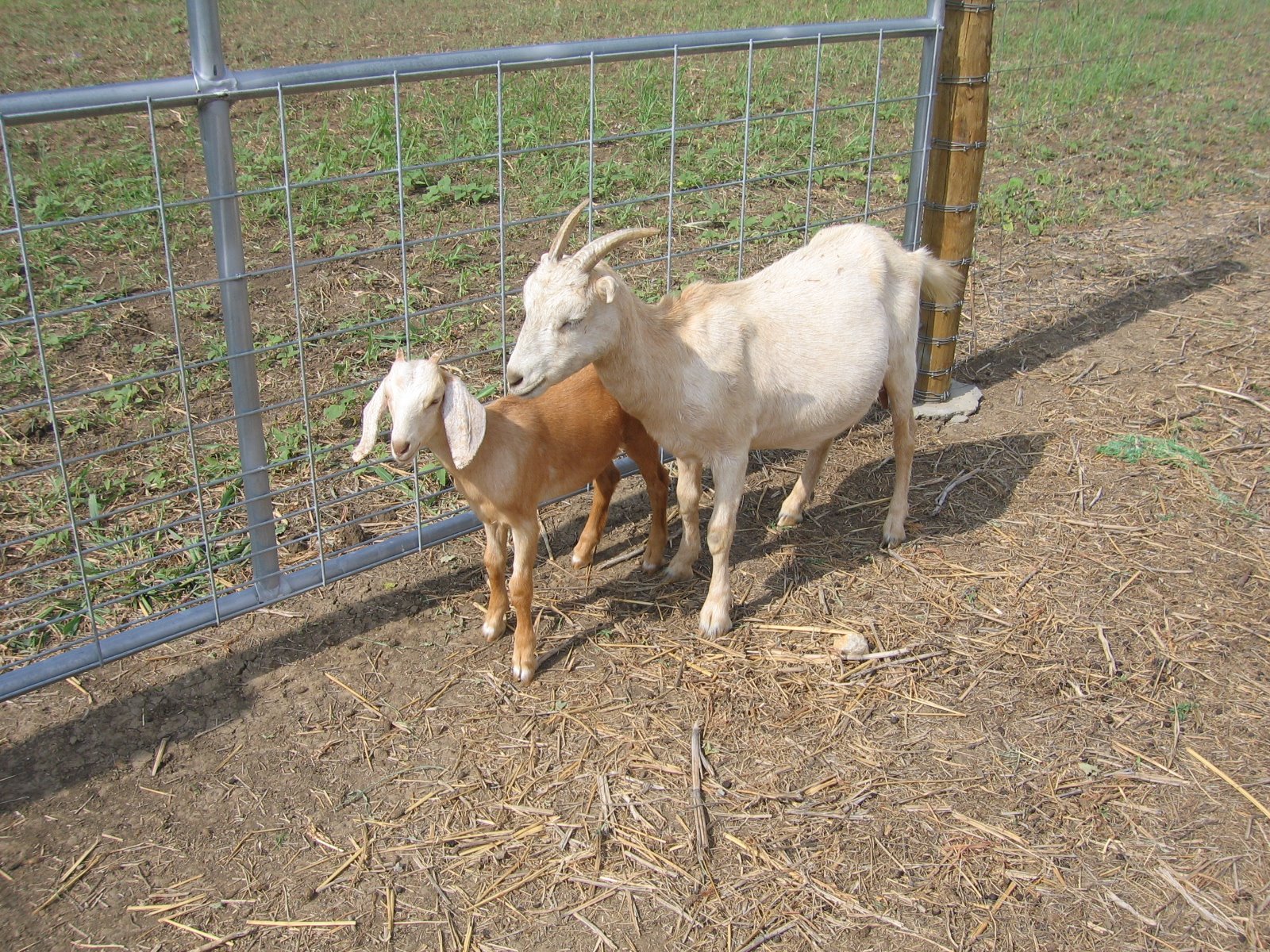
Goats

video


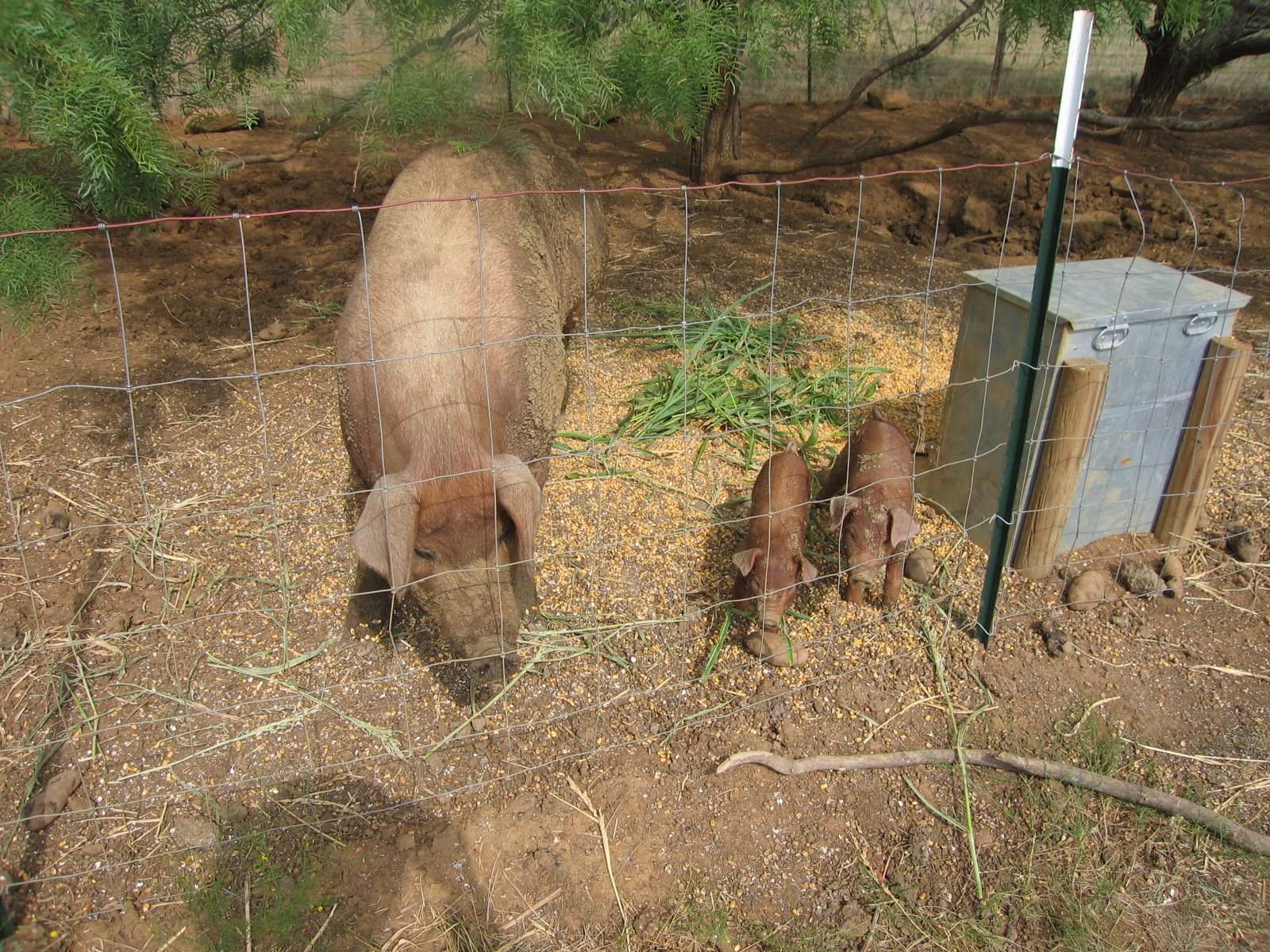
Pigs

video


We are grateful to the Lord for the provisions of these animals, and may we use them for His glory.

-- David

Labels: , , , , , , , , , ,

Bookmark and Share

Friday, May 1, 2009

Providence's Providential Provisions: Wild Hogs

Around 6PM two evenings ago, a couple of the men spotted some wild hogs hanging around our (Sue and my) domestic ones. Well, we rounded up a couple more of the guys, and the hunt began! We were able to nab three of the four; they didn't go easily, some being shot several times before a finishing shot to the head was required.

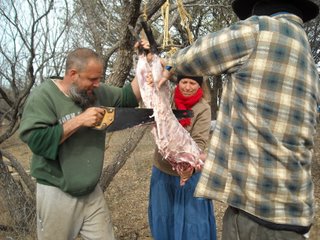
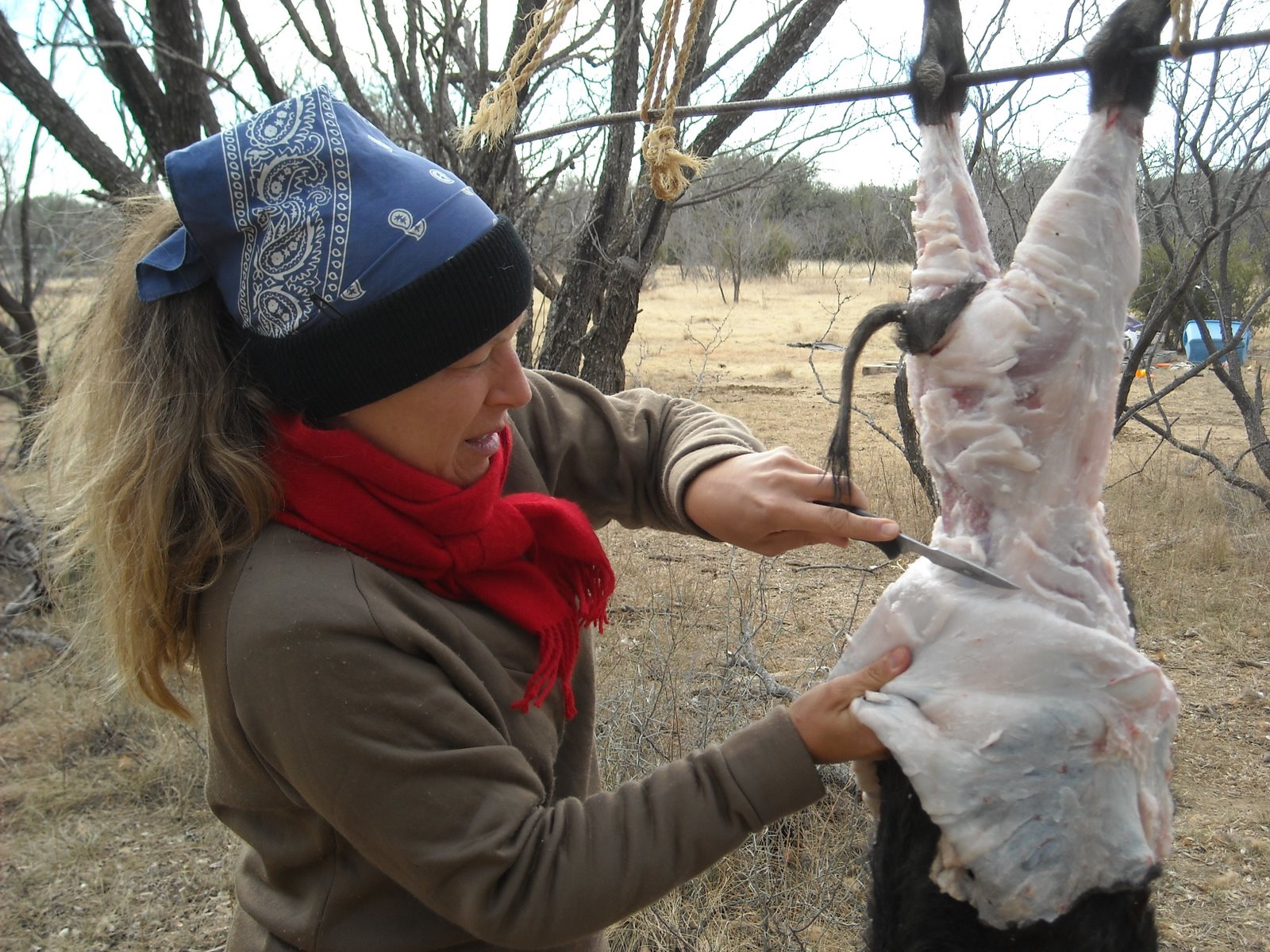
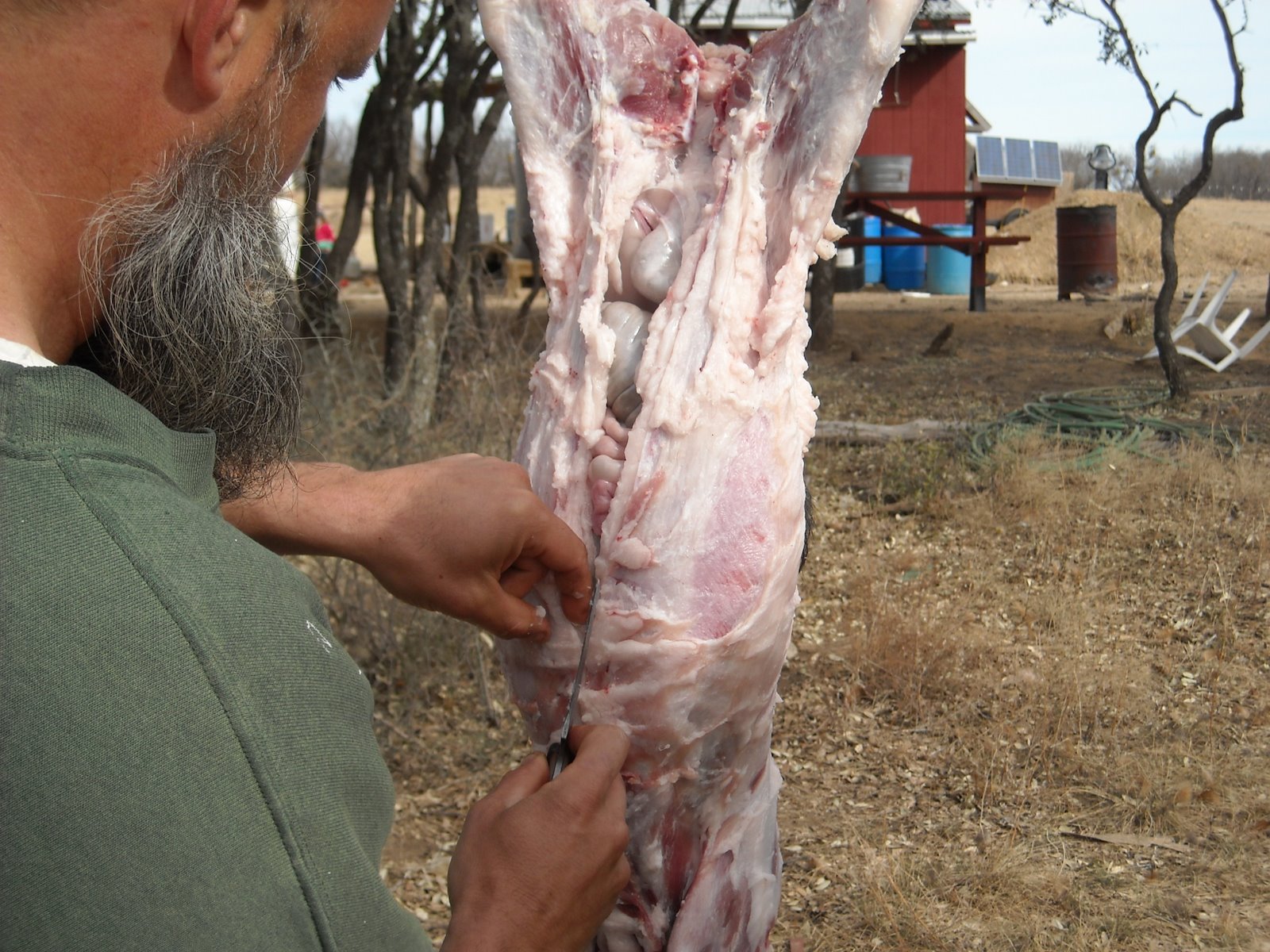
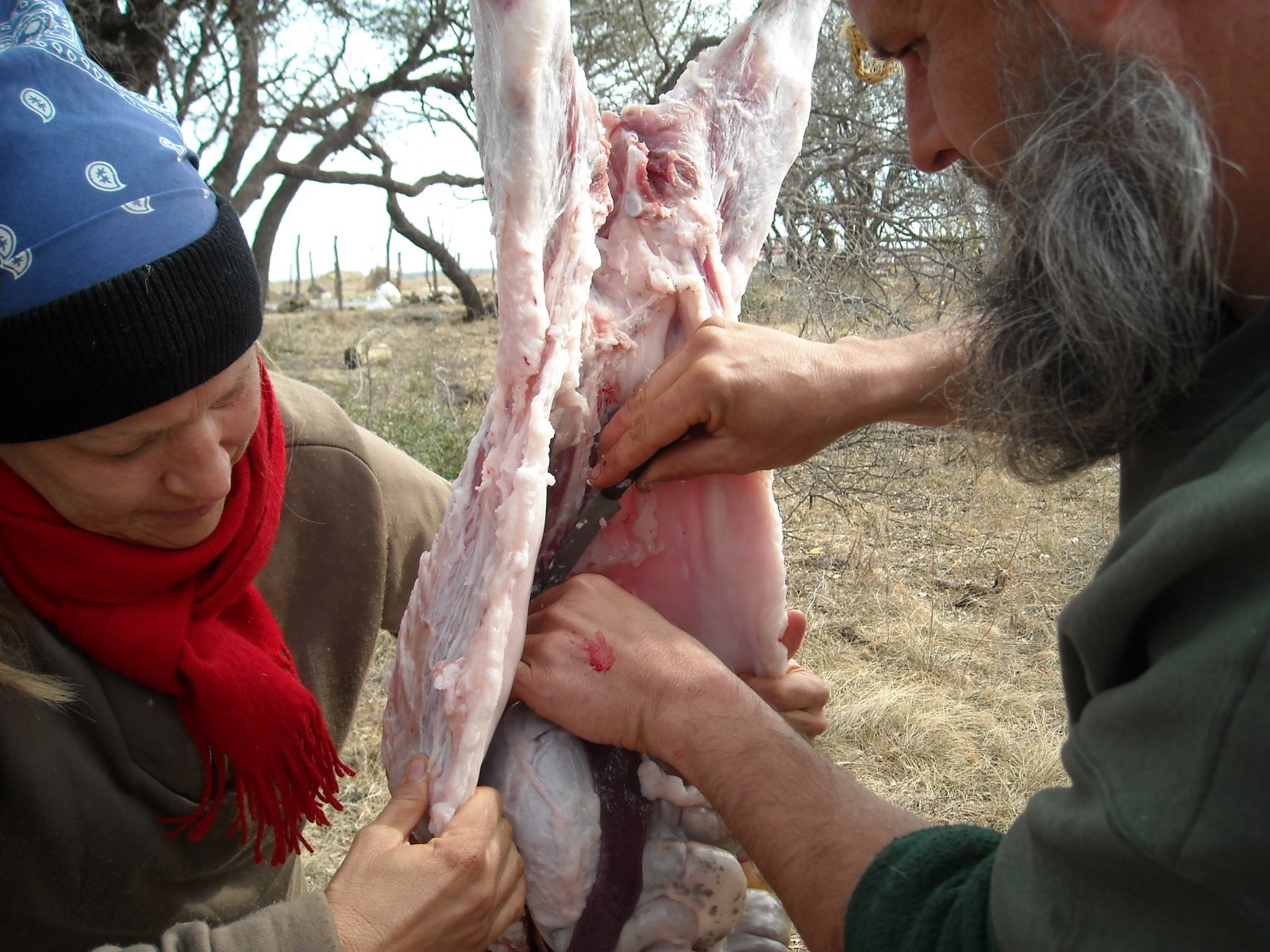
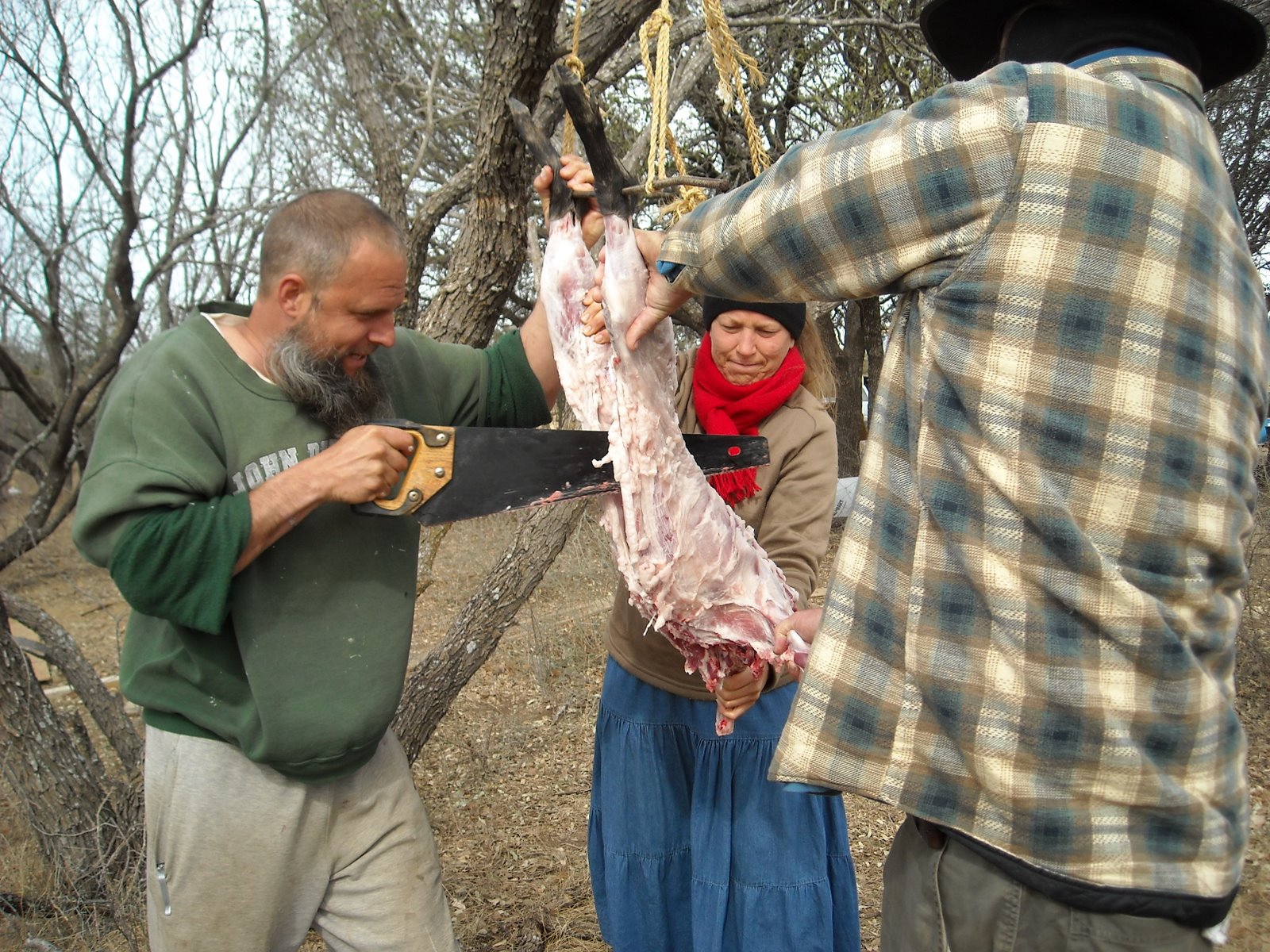
And then the butchering began, with 7 or 8 folks involved. It was probably about 45 minutes to an hour before sundown, and so we all put it into high gear, trying to get them skinned, gutted and quartered before dark. With all of the practice we've had, we were able to get it done pretty much with no problem.

Apparently, the wild hog population is exploding and becoming a real problem, which is bad in that they can be destructive to land and animals, but good in that there's a bunch of free meat running around.

And so, we are very grateful to the Lord for granting this food. He is most gracious and merciful.

1 Tim 6:8 - "And having food and raiment let us be therewith content.

-- David

Labels: , , ,

Bookmark and Share

Saturday, March 7, 2009

Providence's Providential Provisions: Wild Hogs

Again, one of the reasons we moved out here was to try to remove ourselves from dependency upon the world and its systems and place ourselves directly under God's providence. Well, as I mentioned with water, the Lord's faithfulness continues to be shown.

An acquaintance of one of the men on the land here informed us that he had been catching wild hogs, and quite a few of them. This being brought to Michael's attention, he thought it would be of great benefit to the community to take advantage of this gift of meat from God. And so, he put together a plan, which involved building a pen to hold them. We built the pen, bought the wild hogs for a very nominal fee, and began to raise them. The whole community has been involved and has benefited from this provision from the Lord. We have since been able to gather several more pigs the gentleman has captured.

However, with this has brought the processing of the pigs from the very beginning to end, which for Sue and I has involved a new venture for us in the realm of farming: slaughtering and butchering. For me personally, this has been interesting, given what I said in a previous David's Digest; however, as we continue to progress into more proper, biblical perspectives, the Lord has shown us that He has granted us dominion over these animals and has provided them as food.

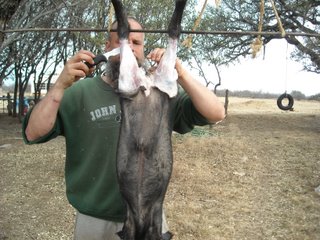
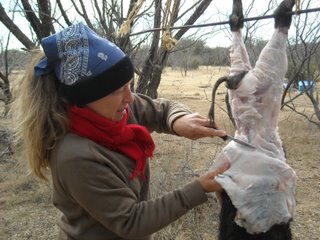
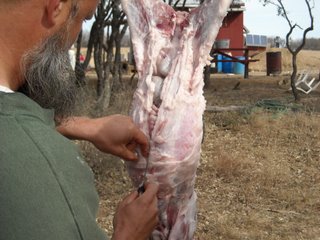
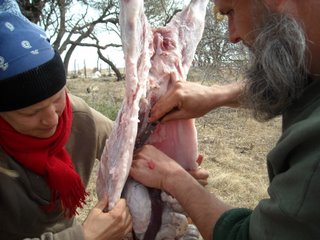
And so, it had come time to do what needed to be done. Here are some pictures (for those that aren't used to seeing this process, it may be a little discomforting).


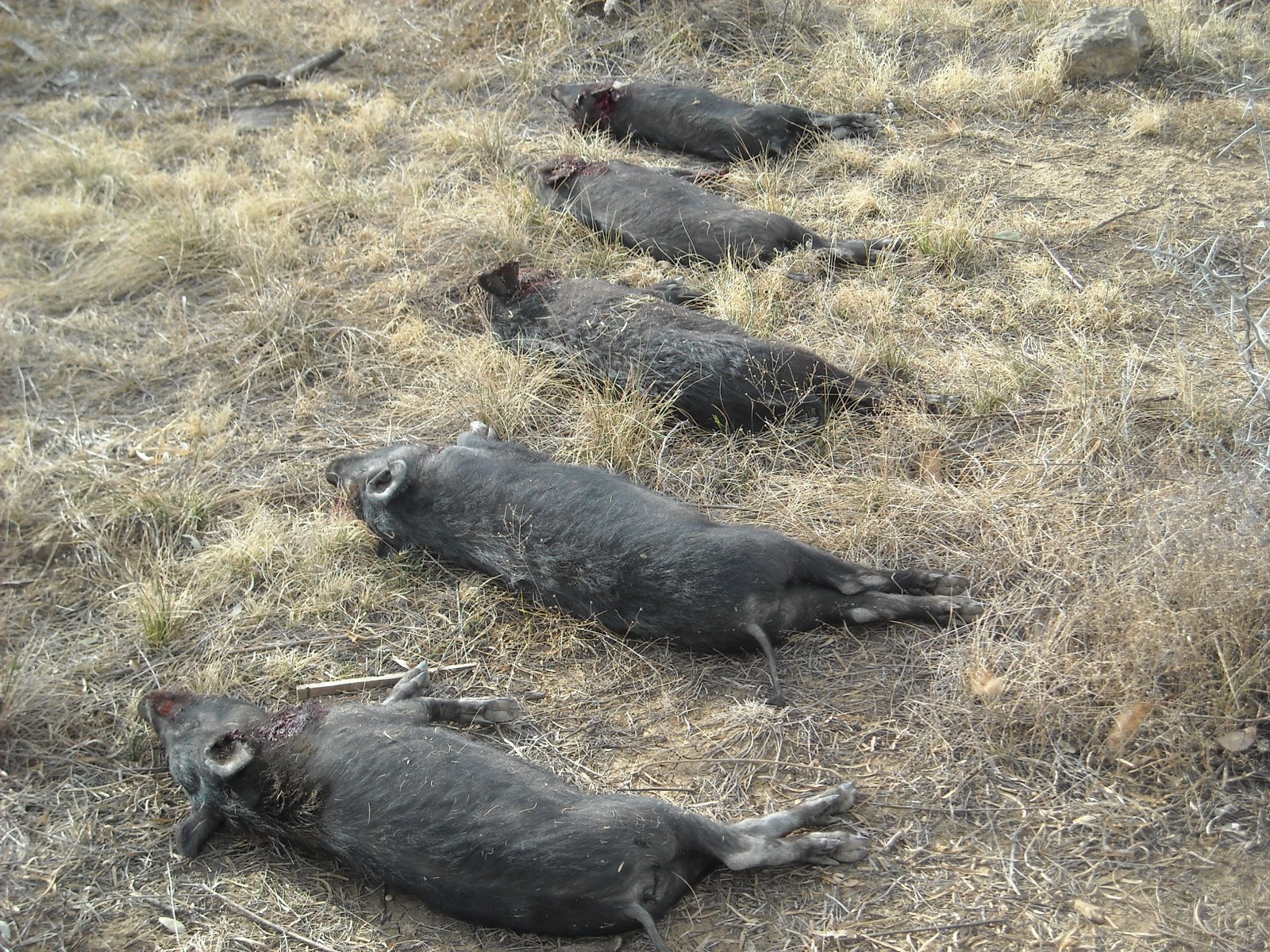
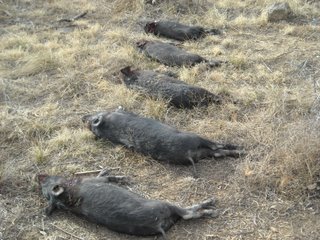
Here are several after being shot in the head with a .22 caliber rifle (meaning they were basically instantly dead) and their throats being cut to bleed them out:


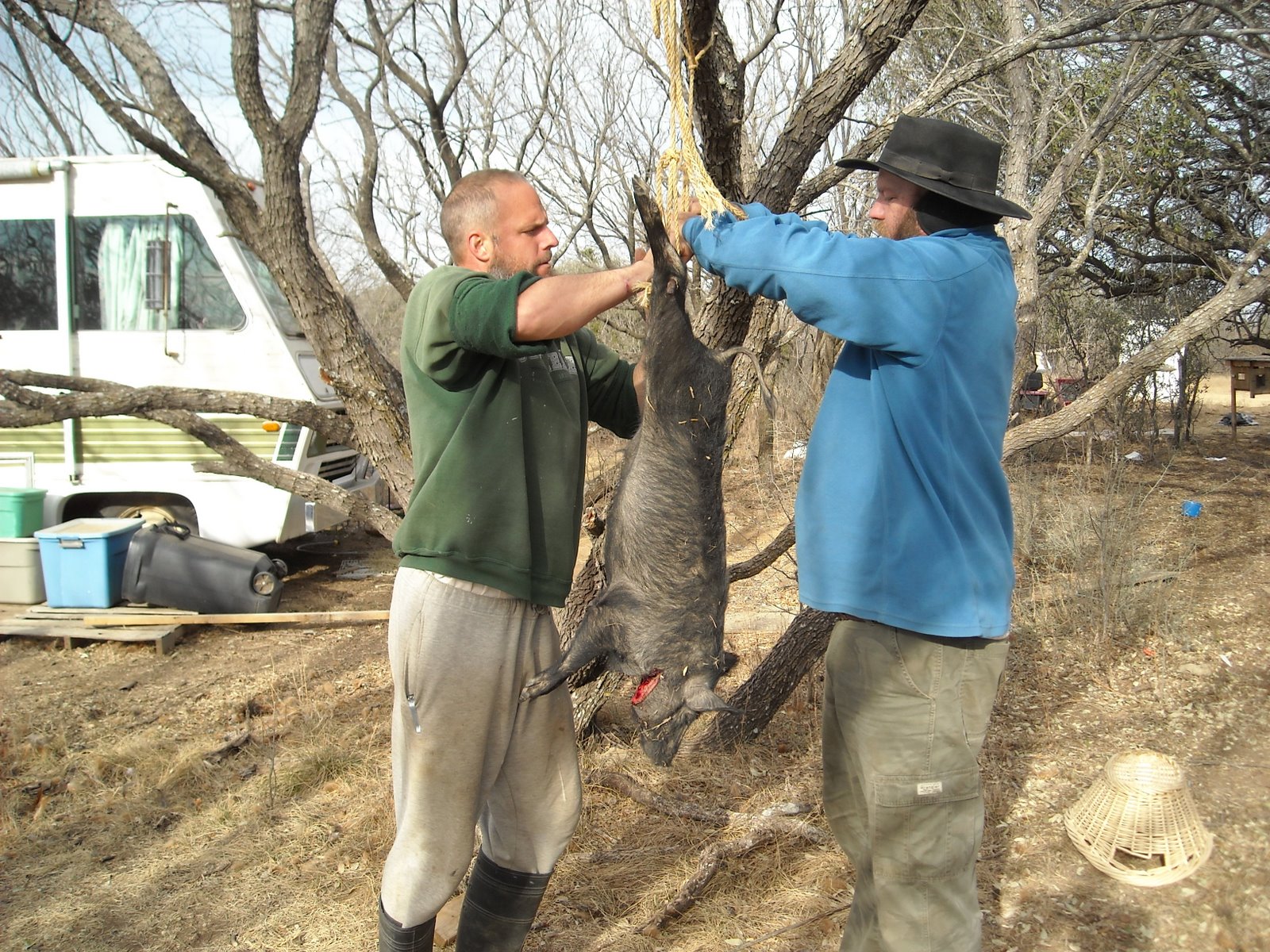
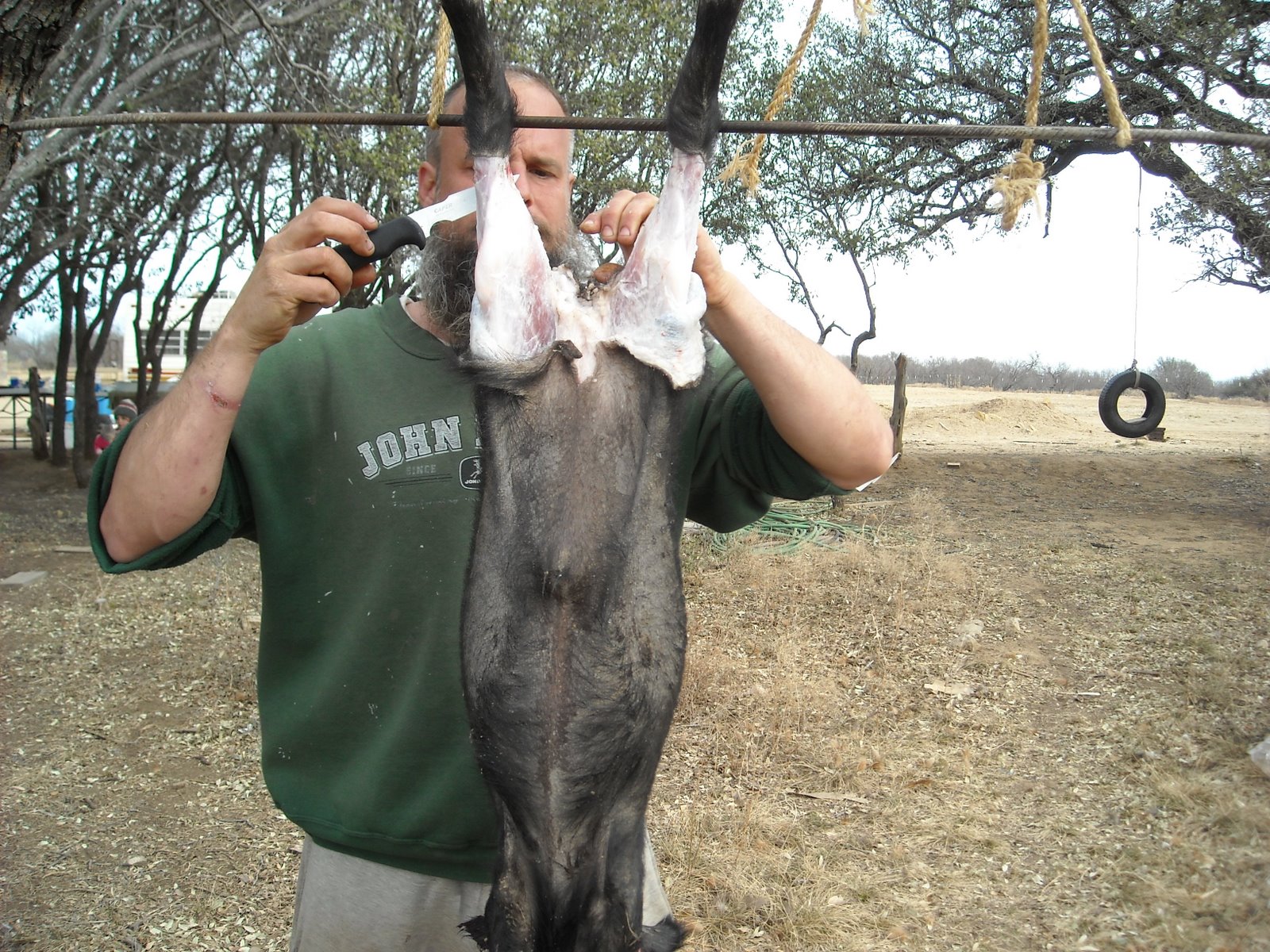
And then the butchering began:
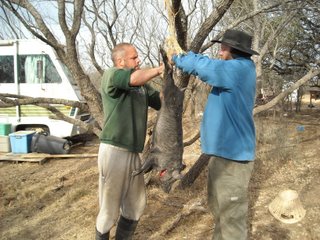


In reality, it wasn't too bad. And for me, once you get the skin off, it really just starts to look like meat from the store. Also, now after participating in this process several times, it is not as shocking as it was at first.


Preserving

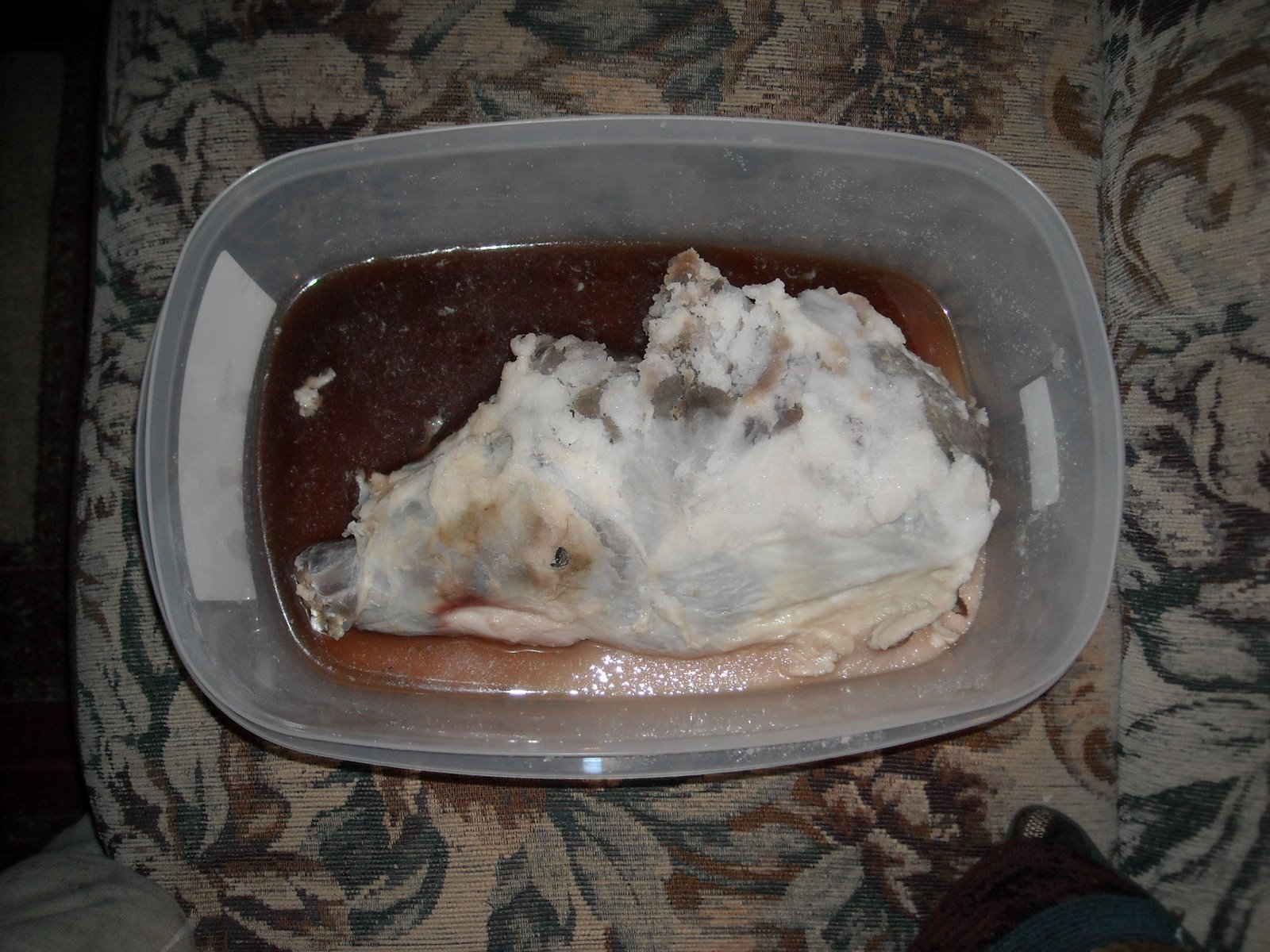
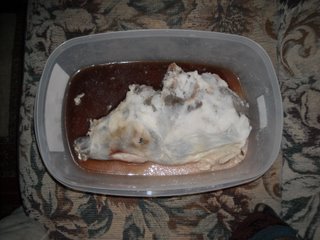
Typically with our pigs in the past, we would simply can the meat in all of its various forms (bacon, sausage, chops, etc.) after getting it back from the meat processing place. This time though, in hoping to continue our education in the old paths, which includes reducing our dependency on the world for its canning supplies, I wanted to take one section of the meat obtained from one of the pigs, and dry cure it by hand. And so, Michael gave us a recipe, which started by rubbing the meat all over with a mixture of salt, sugar and salt petre, followed by covering it with a cloth and storing it in the root cellar for a week, after which time the container is cleaned and the rub-down step is repeated. This sits in the root cellar for 1 week per inch of meat thickness. After that, it is washed and soaked for an hour in cold water, is drip dried, and then it sits in the container for 2 weeks to "equalize" the meat, which helps permeate the curing mixture throughout it. And then technically that's it; it's ready to be cooked to eat, and should stay preserved in the root cellar for some time. Here is a picture of the ham with the dry cure mixture on it:


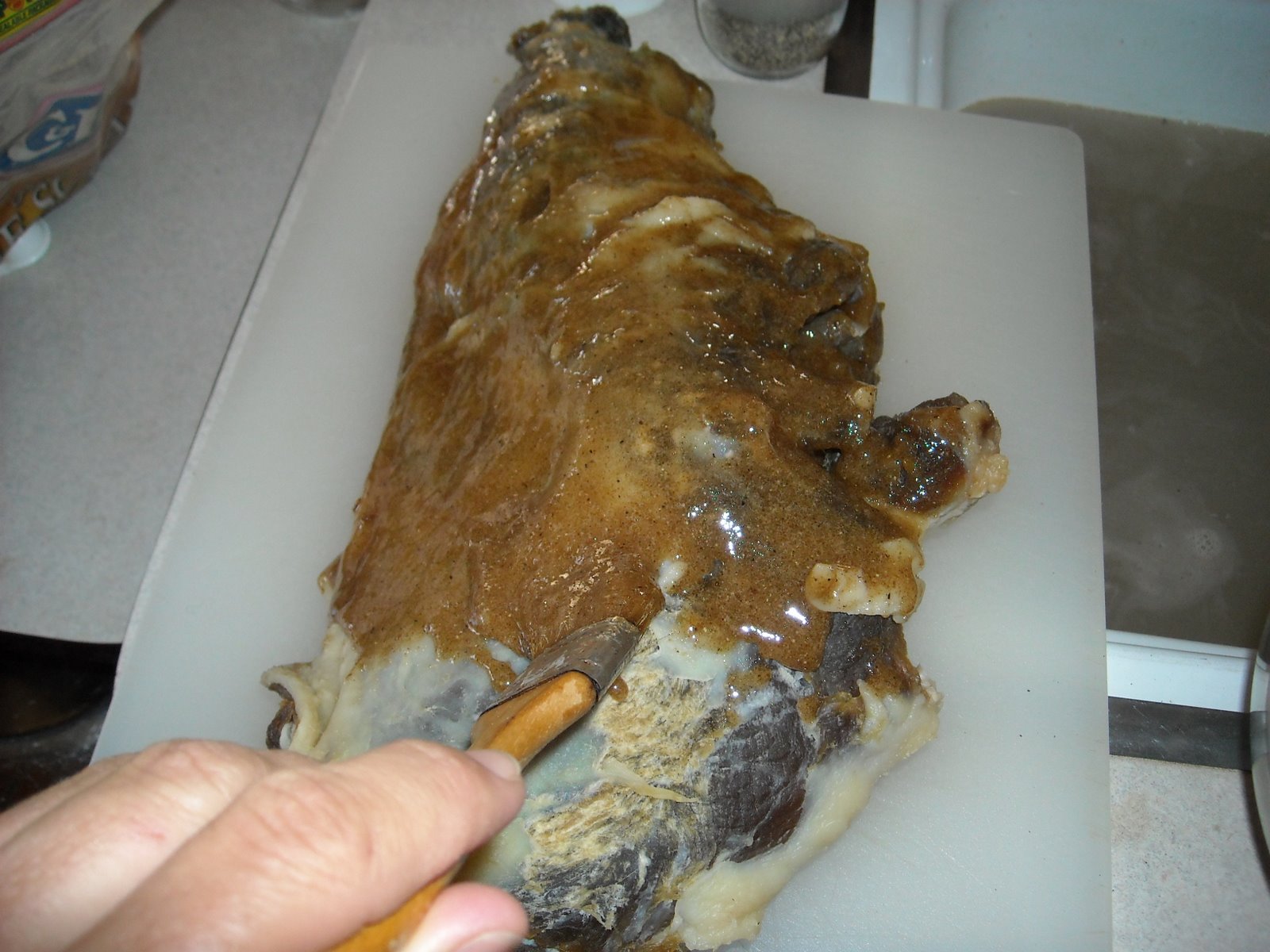
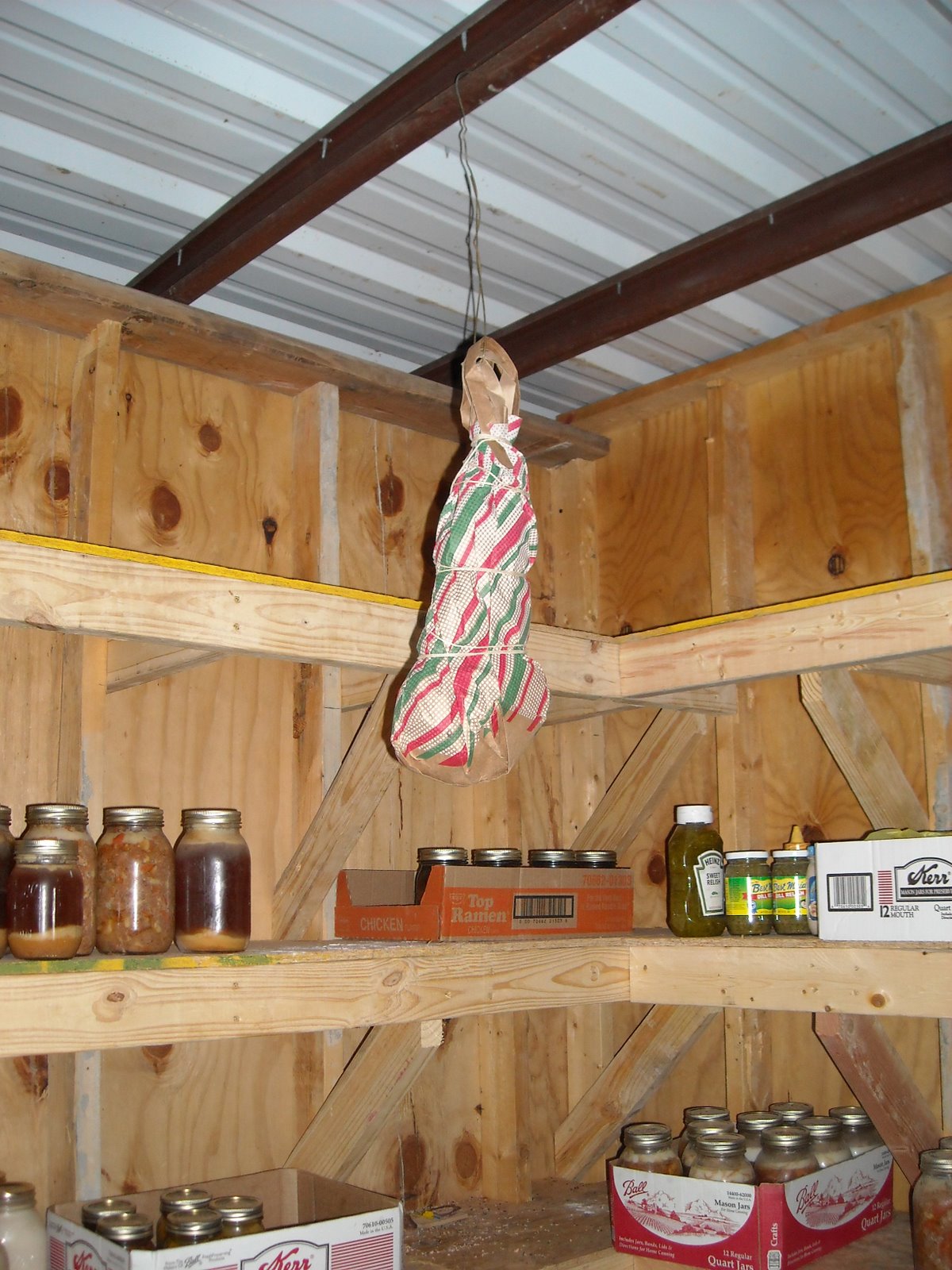
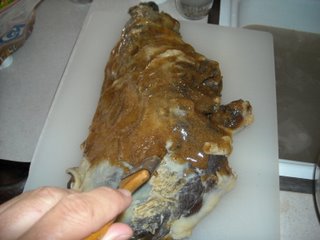
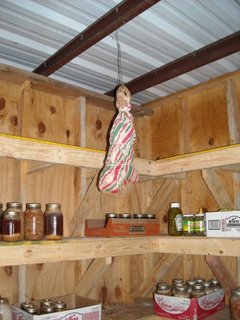
Before final storage, Sue "painted" on a flavoring mixture of brown sugar, honey, pepper and salt petre, and we hung it in the root cellar for future use:


We pray the Lord continue to teach us His ways and grant us His continued provisions, in accordance with His will. And we are most grateful to Him for both.

-- David

Labels: , , , , ,

Bookmark and Share

Monday, November 10, 2008

Hogs, Hogs on the Range

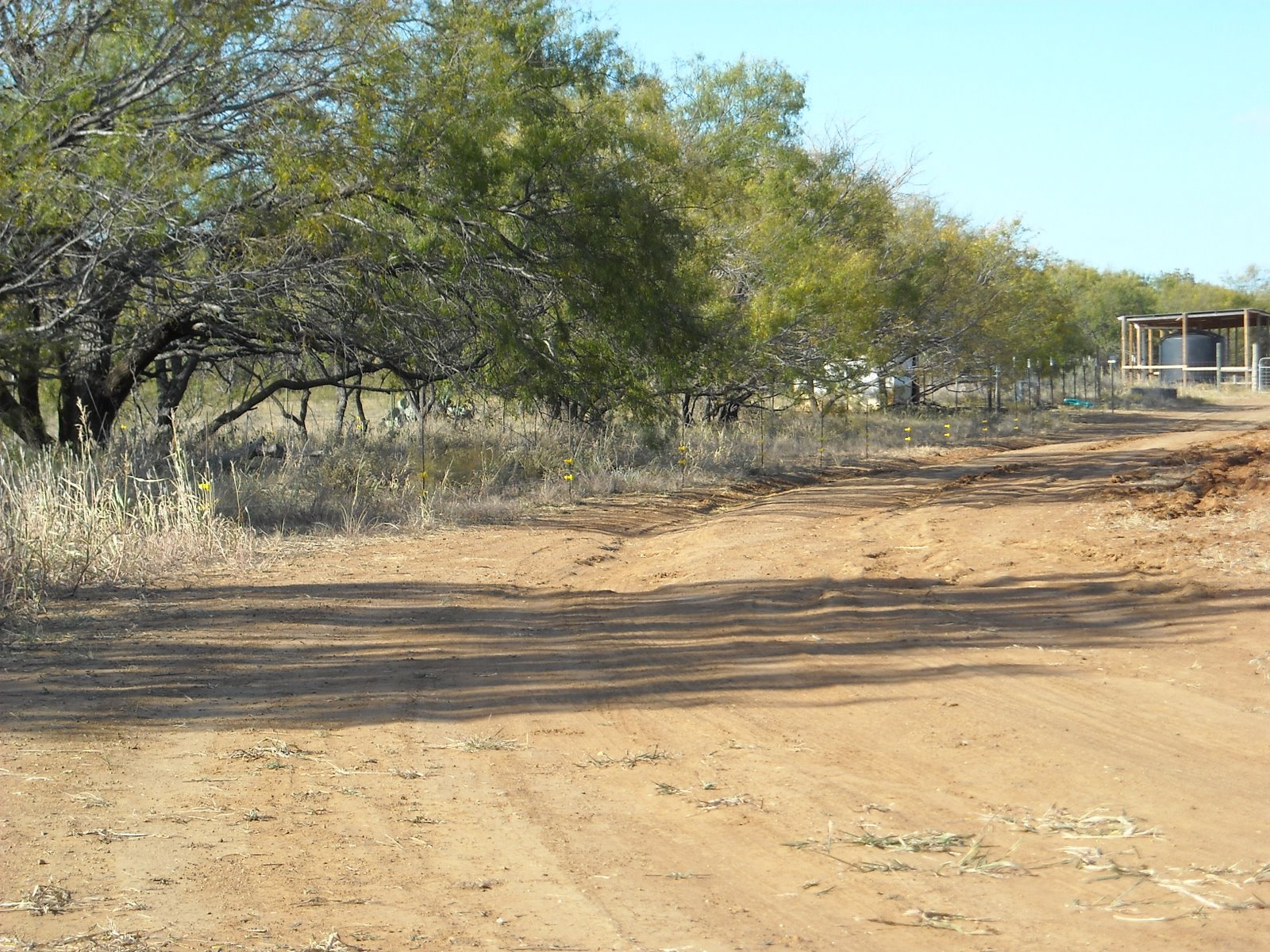
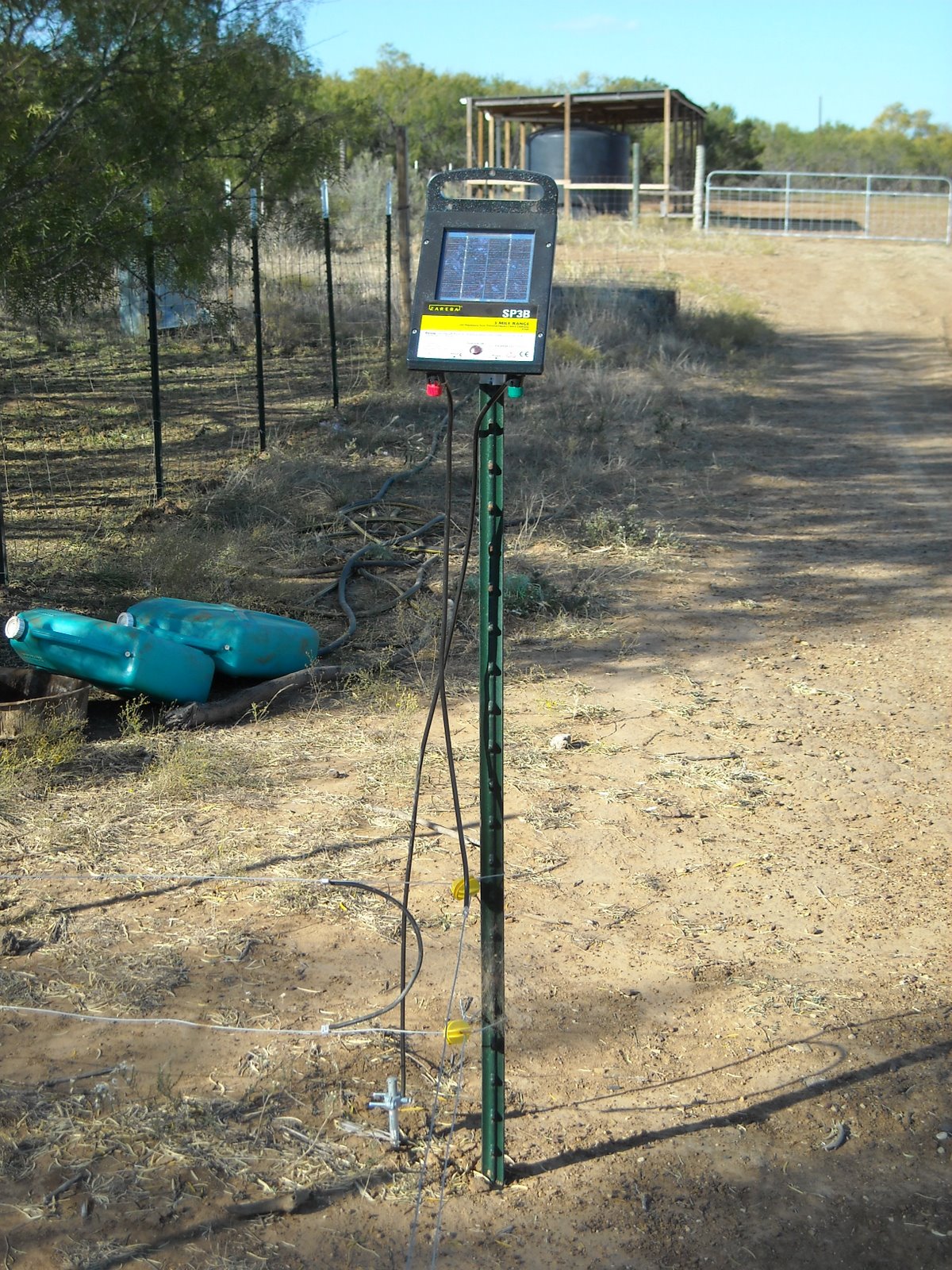
Currently, our only pig pen area is the place set up with the farrowing shed. One day if the Lord wills, we hope to have pigs as part of an animal rotation scheme. But until then, I thought it might be beneficial to try to allow the pigs in the farrowing area to semi-free range (allow them out of the pen but still keep them controlled) where there was grass and other eatables available. This hopefully would also help us cut back on the store-bought feed. Michael had done this with his pigs by surrounding a forage area with electric fence driven by solar power, and so I thought I'd go the same route.

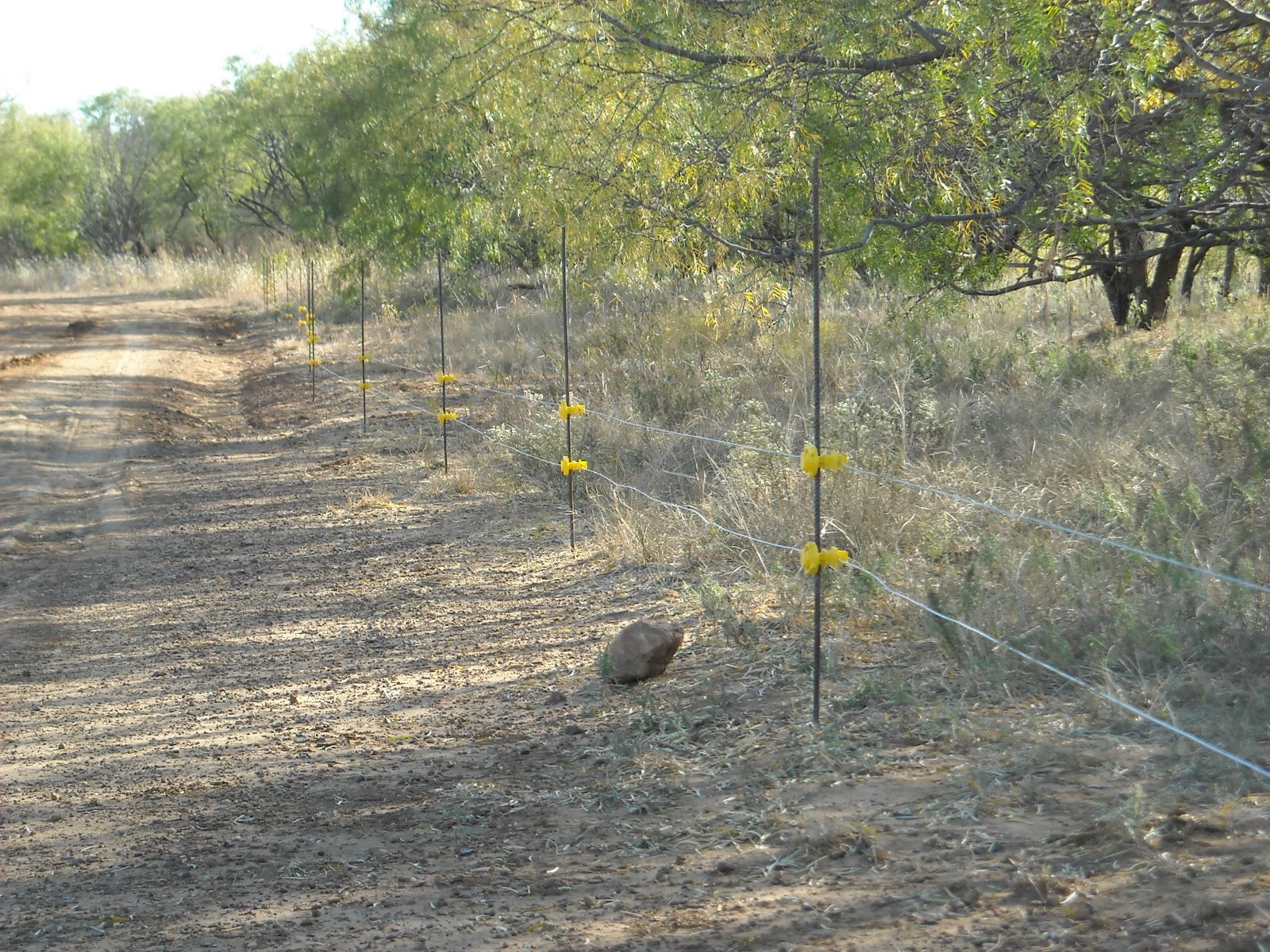
For us, this involved pounding rebar stakes into the ground every 12 or so feet apart, pounding metal T-posts at the corners, attaching the proper plastic electric fence wire insulators for rebar and T-posts, and then running the electric wire. Here is a picture of the fence:


And here is a reverse pictured of the same area:


In running the first wire strand, I found that I needed to attach the plastic insulators for the T-post corners after running the main fence wire through them. If you wire them to the corners before hand, which I did and initially thought was just part of a good preparation process for running the fence wire, there was no way to then actually run the fence wire through them when running the wire off of a spool. So I had to undo and redo the wired corners as the wire was run by. Oops. I did however get it right on the second strand.

But once the wire was run, it was time to hook up the solar powered electric fence power source. Part of wiring it up was driving into the ground a 6' galvanized rod for grounding:


Oh Give Me a Home

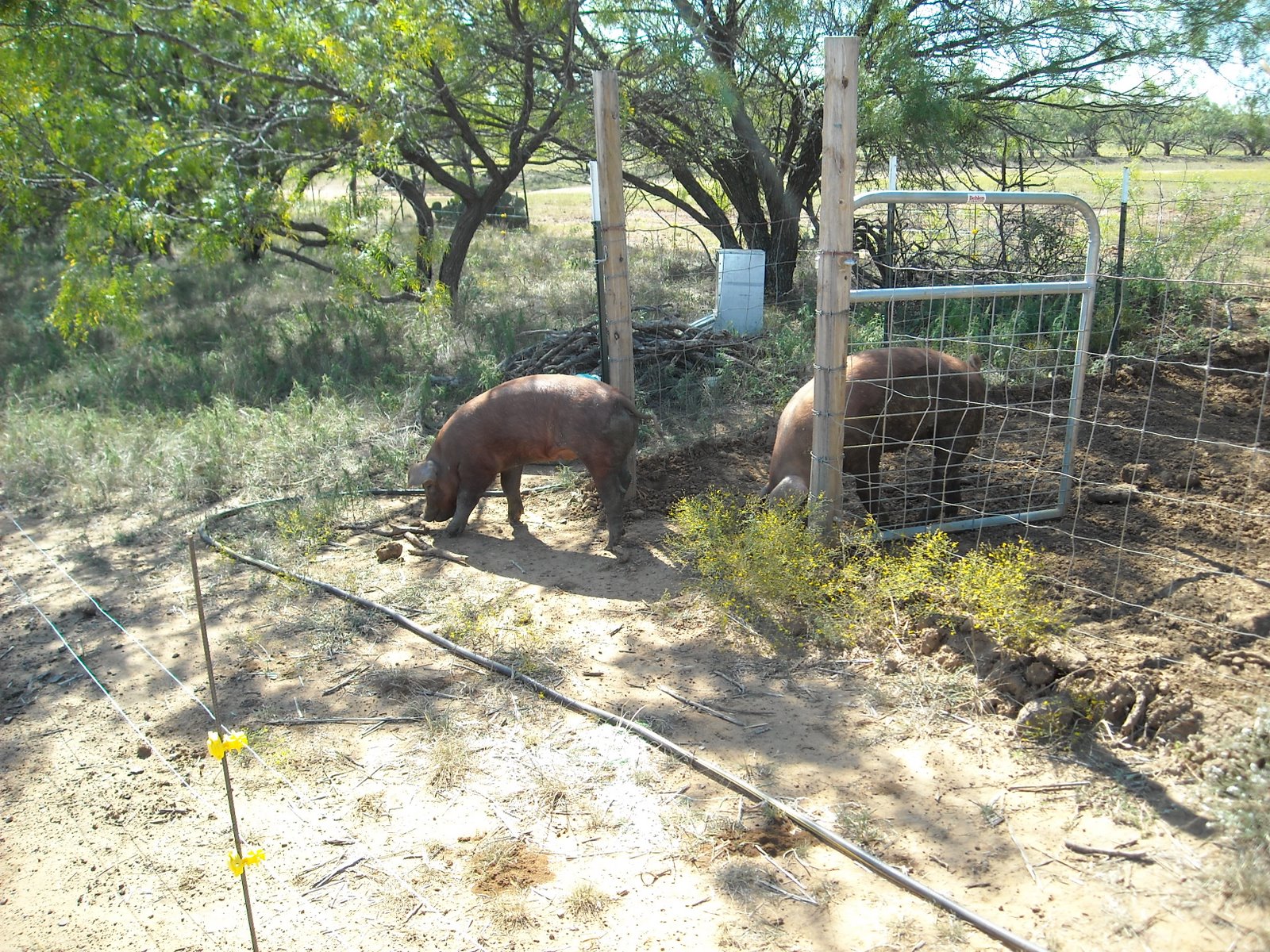
In considering the distance between the ground and each of the fence wires, I set the plastic wire holders attached to the rebar about one middle finger to thumb hand span above the ground and then then same span above that for the second wire. Well, once we turned the system on and let the pigs out, apparently not only did we agitate them too excitedly for the moment, but the upper wire just said "doorway" to the pigs; and they both proceeded to hurtle between the two wires and off into the field.

Well, after chasing them back into the pen area, and with the obvious fence failure, I was unsure as to how to proceed. However, I decided to try lowering the top wire half the span between it and the lower wire; and also thought that when we would let them out we would try to make sure they weren't stirred up so much.

That seemed to help. Here they are discovering their new roaming land:


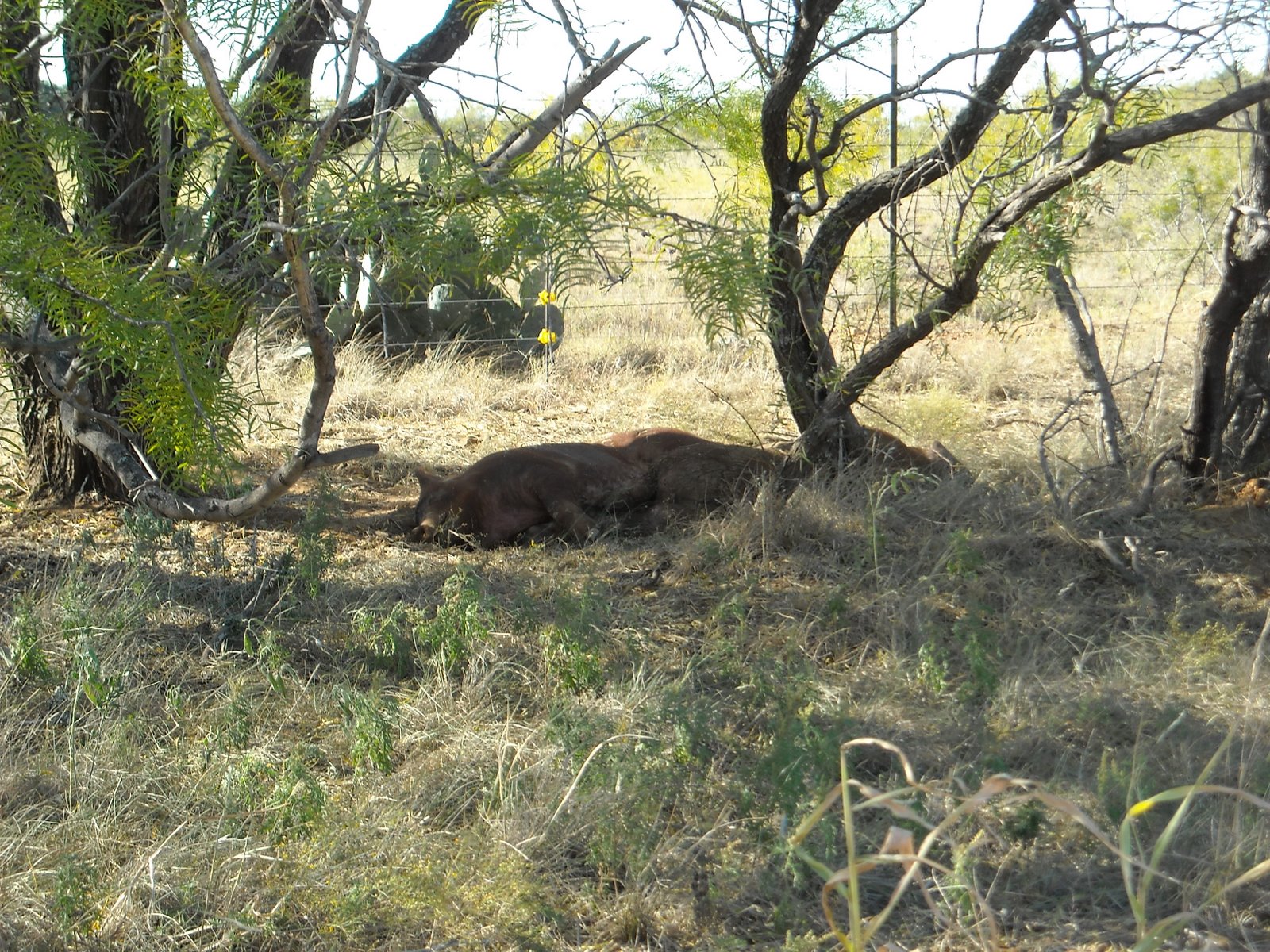
And...well, I guess things are all right now:


We once again thank the Lord for His provisions and wisdom, insight and help with the processes of building our homestead.

-- David

Labels: , , ,

Bookmark and Share

Friday, August 1, 2008

Providence's Perpetuation Provisions

In trying to separate from dependence upon the world, we are hoping and praying that the Lord will perpetuate our animals here, so that we may have ongoing provisions, according to His will. These will be updates on any the Lord has graciously granted.


Chickens

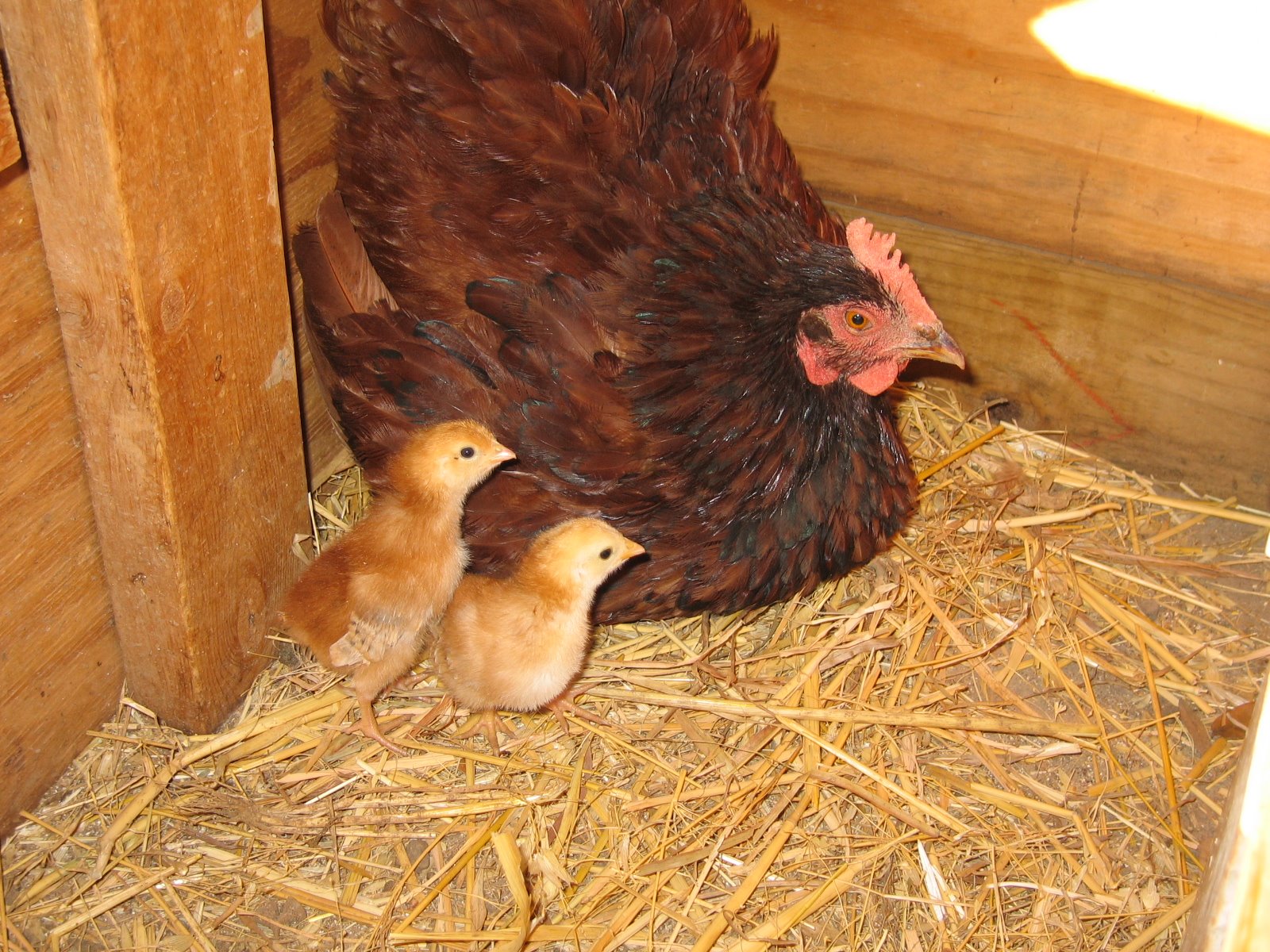
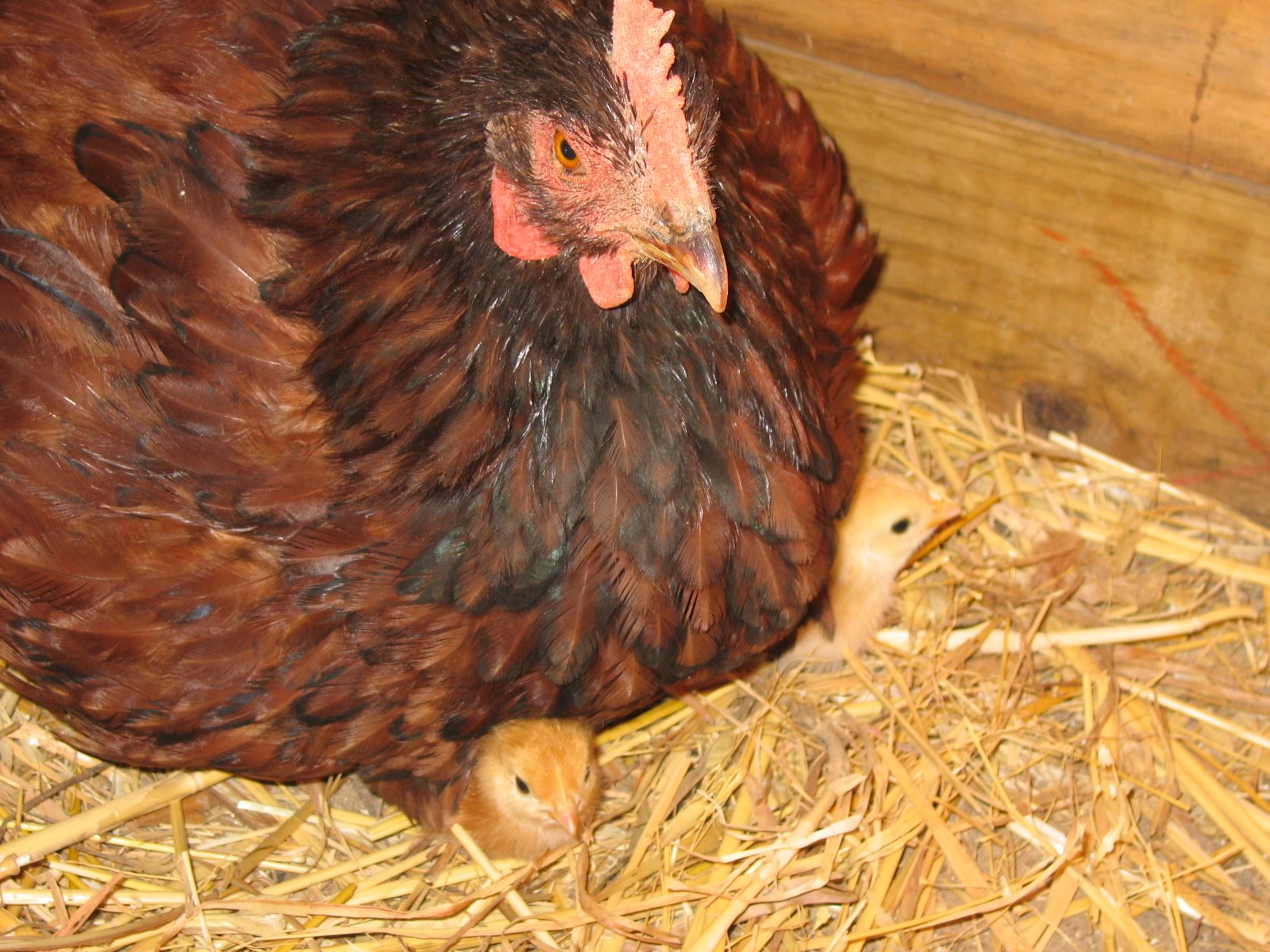
The same hen that has gone broody every year so far did again this year. A hatching cycle is 21 days, and you can almost set a clock by it. She sat through one cycle of our eggs with no chicks hatching. Last year she sat through another cycle of eggs that didn't hatch before we borrowed eggs from the Bunkers to put under her for her third cycle (which worked last year). This year we didn't wait, and the Bunkers graciously allowed us to have some more of their eggs to put under her in the second cycle. And sure enough, the Lord graciously brought forth 2 chicks!

Here they are still pretty new:


How's that for a blanket!


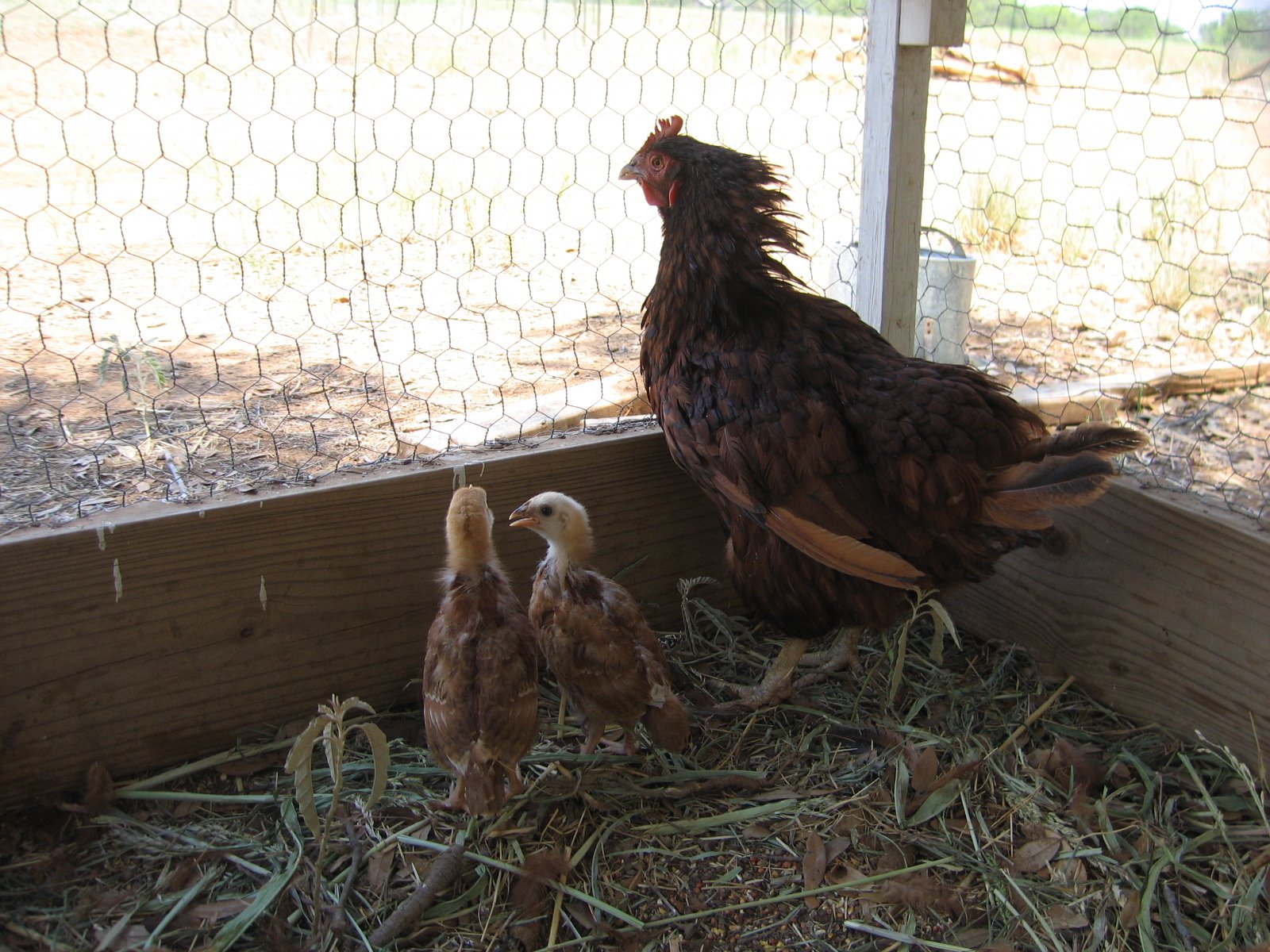
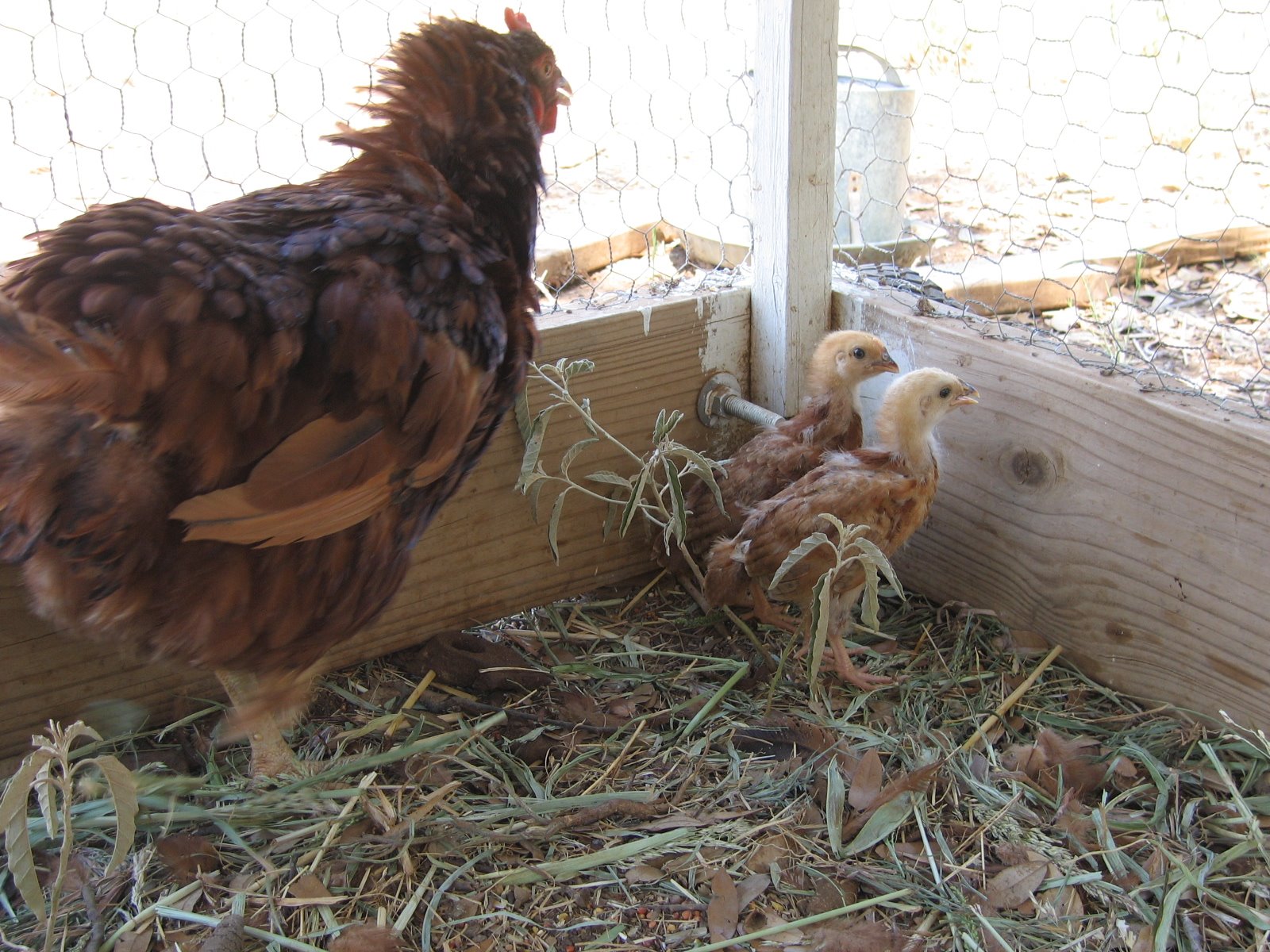
Here they are recently:


"Momma always says..."


"'Life is like a bag of hen scratch. You never know what you're gonna get.'"


Taxi, please!

video


Goats

Here's the latest of Winnie and Minnie:


Don't let Minnie's mature act here fool you in this up close and personal moment – she still likes to jump all over Sue's back:

video


Pigs

The Lord graciously granted our female pig to give birth to 5 piglets mid June. In His wisdom though, one was still born, and 2 more died within a week or two. However, again by God's graces, we still have two healthy piglets running around, both which we believe are females.

Here they are lined up for a photo op:


And here's up close and personal with the pigs, although I think a little too up close and personal for the sows liking. In the second part of the video though, I got smart and recorded from the outside of the pen:

video


Actually, I think she thought it was watering time. :)


Once again, we are grateful to the Lord for His provisions!

-- David

Labels: , , , , ,

Bookmark and Share

Monday, May 26, 2008

Pork Chopsh and Apple Shaush


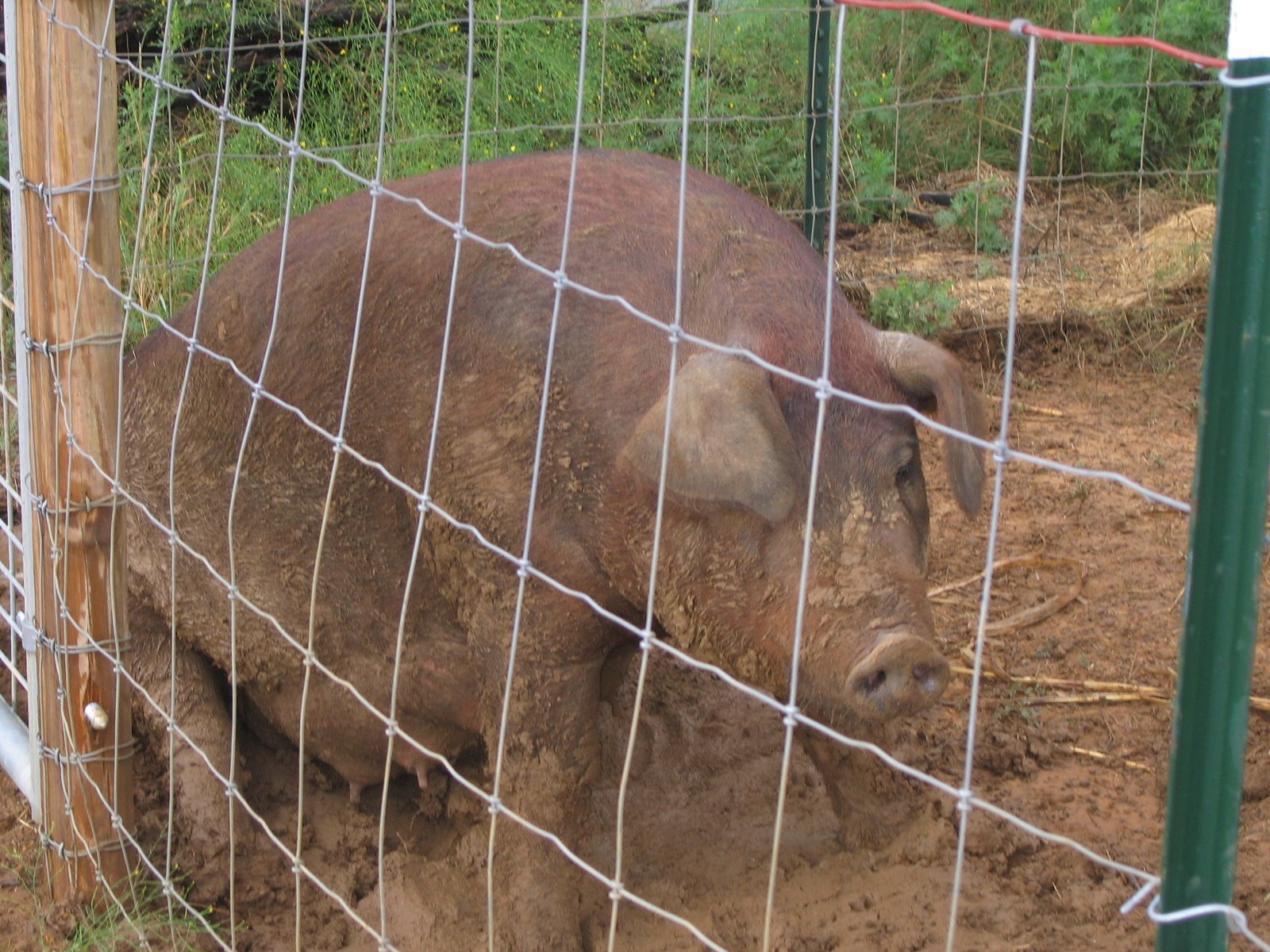
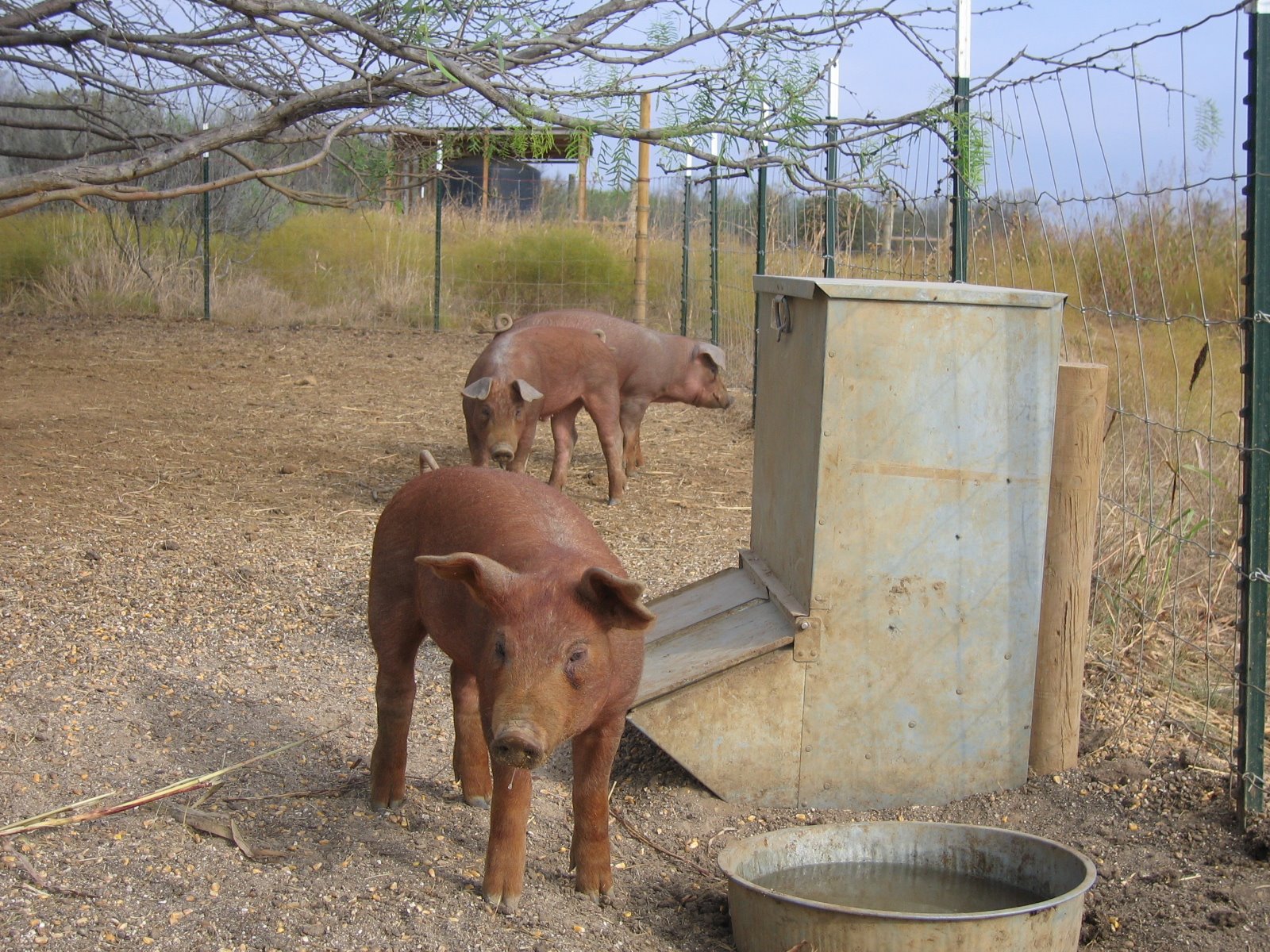
In desiring to become food sustainable on the land, we decided to join other families in starting hog production. In a local ad paper, someone found what were called Duroc pigs, and after some research into them, we all decided they would be good for us. Initially all of the families' starting pigs were placed together in the Bunkers' pens; but eventually we separated them out, and this picture to the left is the pig with which we ended up. She was big as a hippo when we got her, and so we named her after a famous one of the past: Henrietta (think "New Zoo Review").


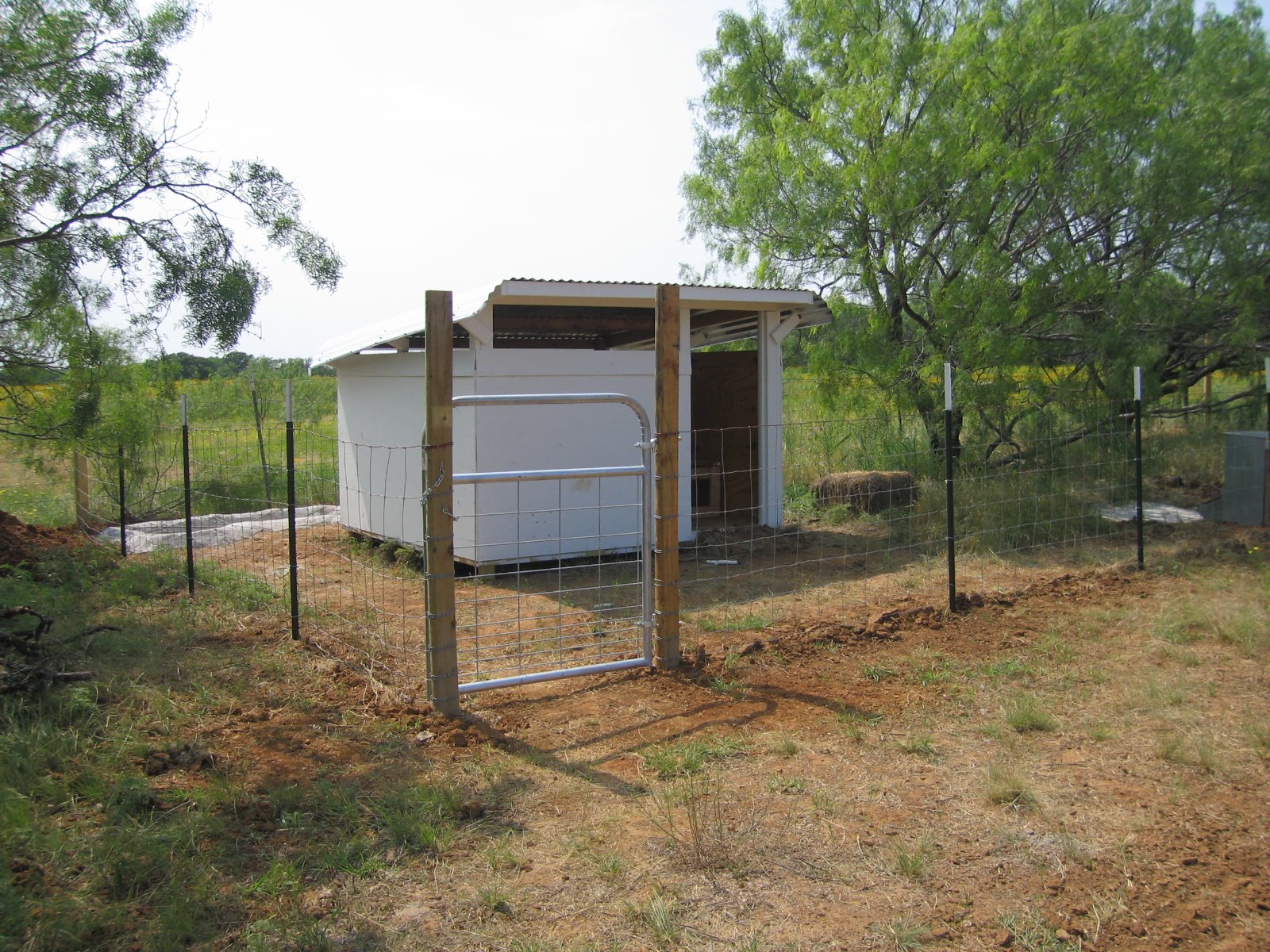
Before moving her to our land, we built her a farrowing pen and shed so that she would have a place to give birth. Here are some pictures before moving her in:


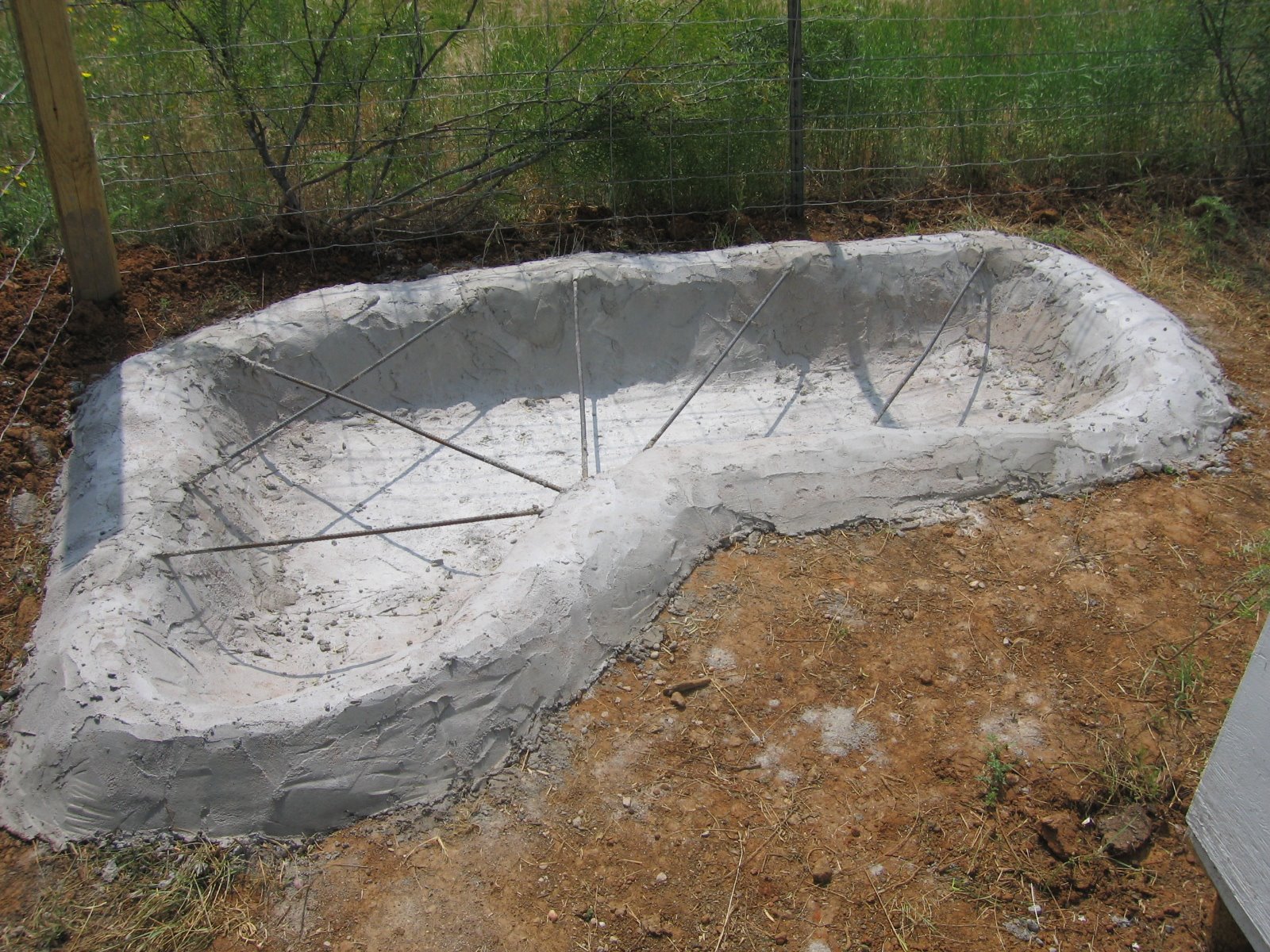
Here is the watering trough, made from mortar around rocks. I put rebar across it to keep the pigs from laying in it but ended up cutting a couple off because they interfered with them getting to the water, and the pigs have since dislodged one. Also, the trough is in the direct sunlight, and the water gets algae very easily during Spring and Summer. So, if I had to do over again, I'd add a rock/mortar divider in the middle to split the trough into two sections, to act as a better barrier in keeping them from laying in it, and to be able to have one side functioning while I let the other dry out so that it can be cleaned. I would also build the rebar lower into the rock/mortar walls for added holding strength, and I am planning on putting some sort of sun canopy over it to try to help with the algae (so as to not use chemicals):


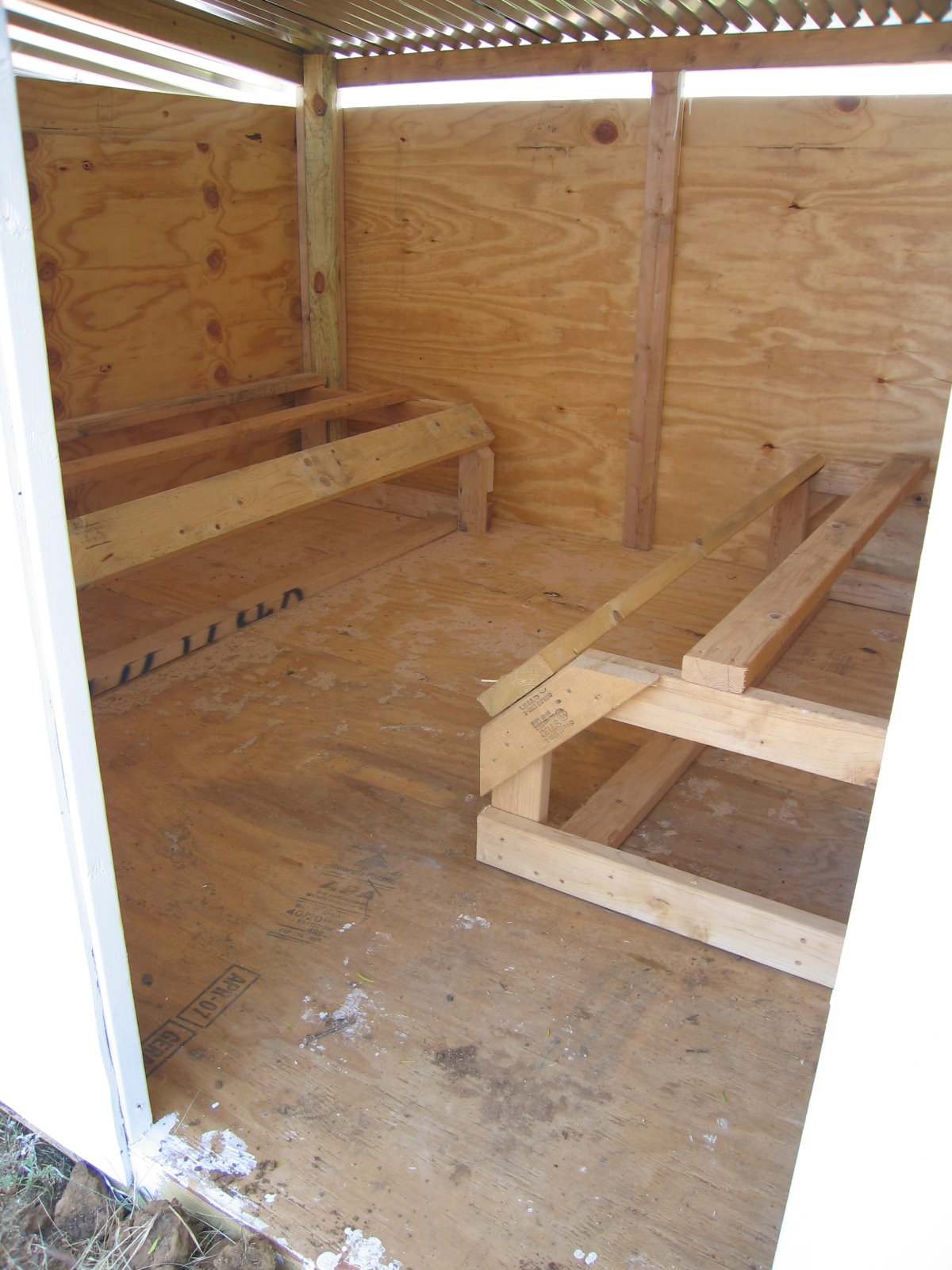
This is the inside of the shed. The railings inside are there to give the new mother support as she lays down after giving birth, and it allows for the piglets to have a place to move out of the way so as not to be laid on by the sow (which apparently happens quite often). I also made it so the railings are removable so that once they are no longer needed the pigs can have use of the full shed:


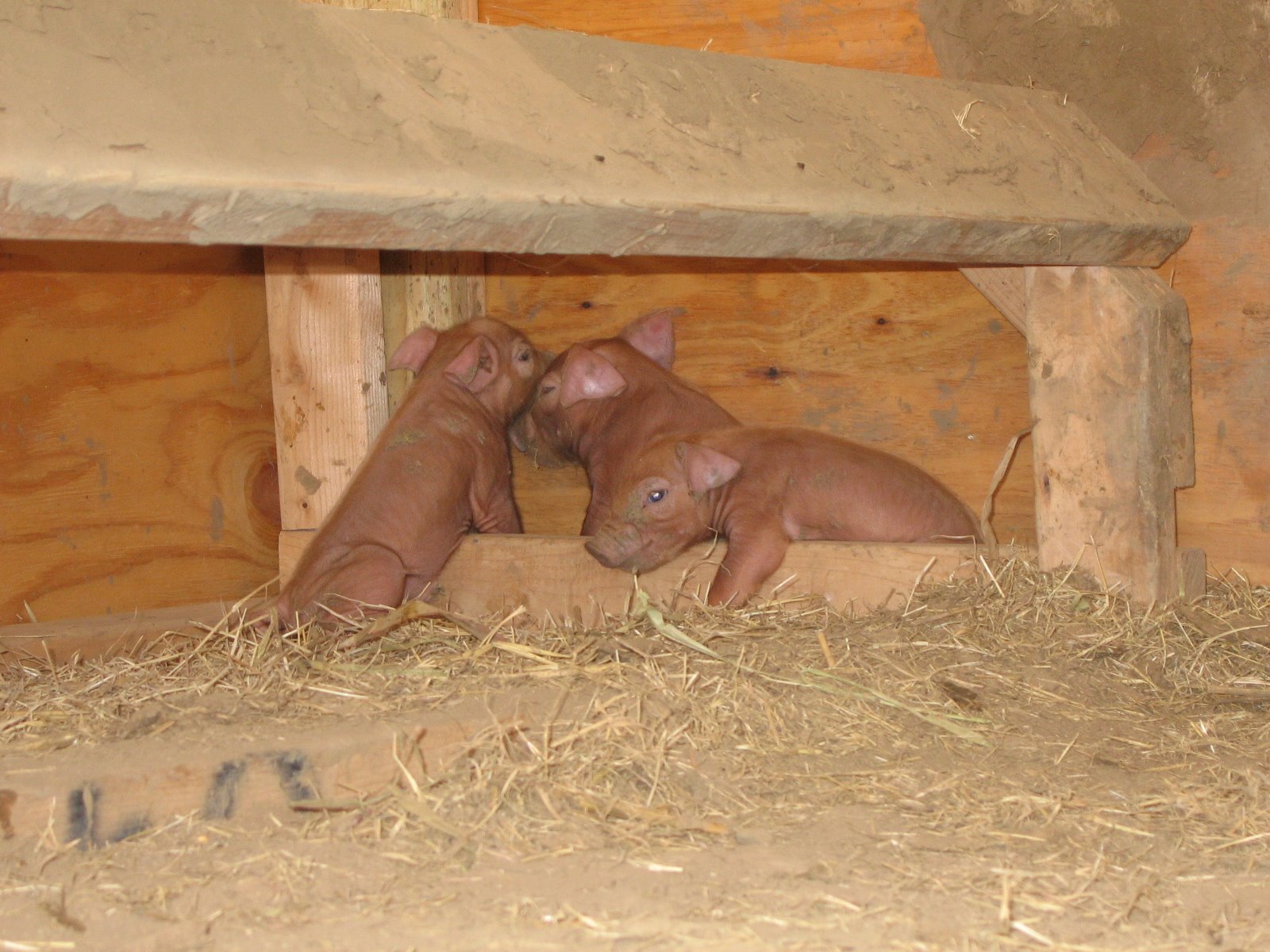
Well, Henrietta was indeed pregnant when we moved her, and the Lord graciously granted us piglets! 9 were originally born, 4 dead and 5 alive (3 male and 2 female):


Over the first couple of weeks, within about a week of each other, the two females died of unknown reasons; and we were left with 3 males and no way to reproduce. So, we made a deal with the Bunkers that they could have one of our males (which usually grow bigger than the females thus giving more meat) in exchange for one of their females, allowing us to hopefully perpetuate our hogs.


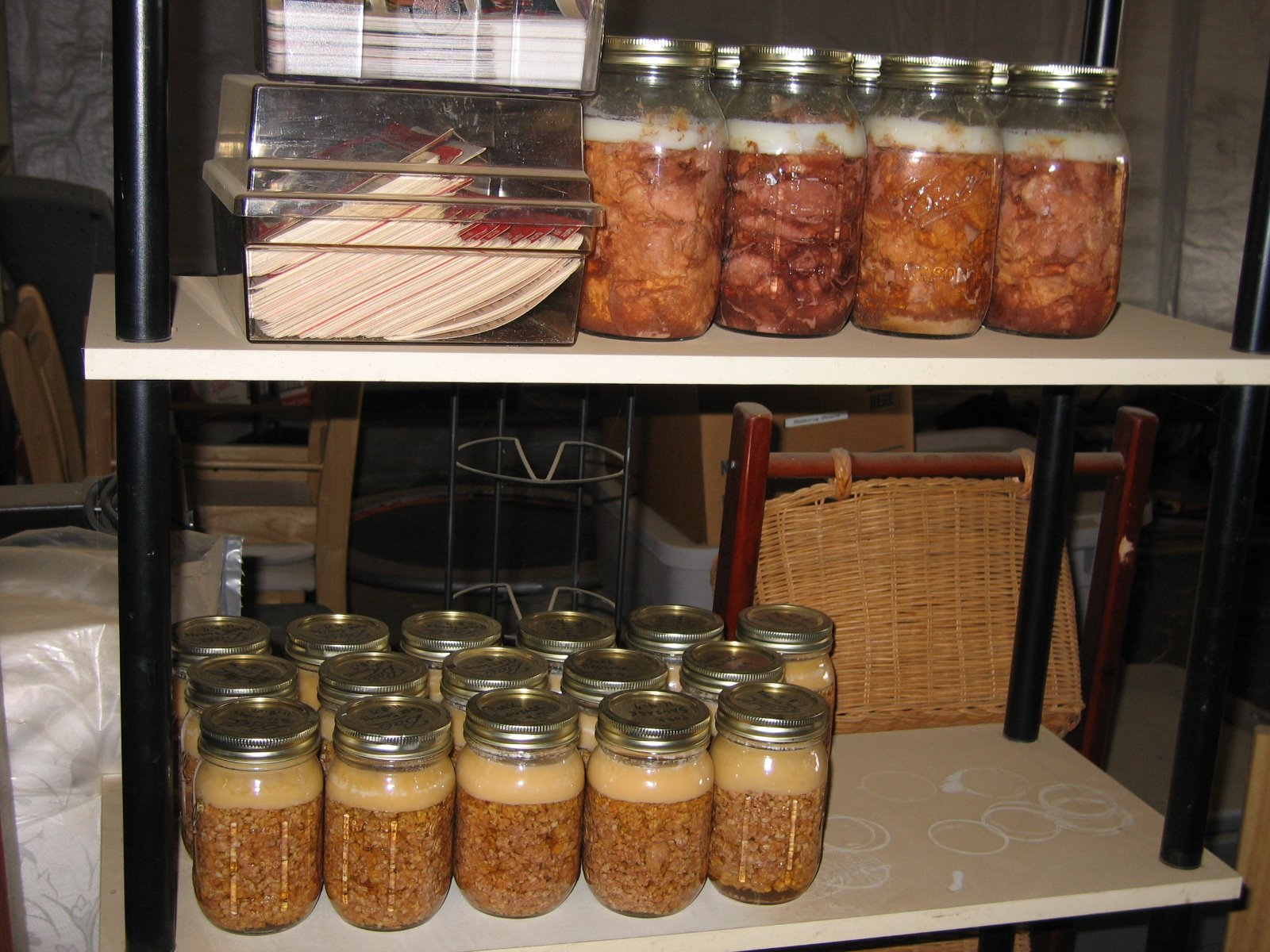
When the piglets were at the age to be weened, we took Henrietta in to be processed by the butcher. When we got her back in packages, Sue spent a good deal of time learning to properly can the different parts of a pig (from bacon to pork steaks to ground pork), and we were able to can her in entirety (except for what we were eating during the canning process). Here is a picture of the result of Sue's excellent job, and we are still benefiting from God's provisions of this pork:


Sue also learned how to render and can the lard. Lard, we have learned, is very useful in many ways, including replacing butter (even for cooking popcorn!) and fueling "fat lamps" (which are similar to oil lamps):


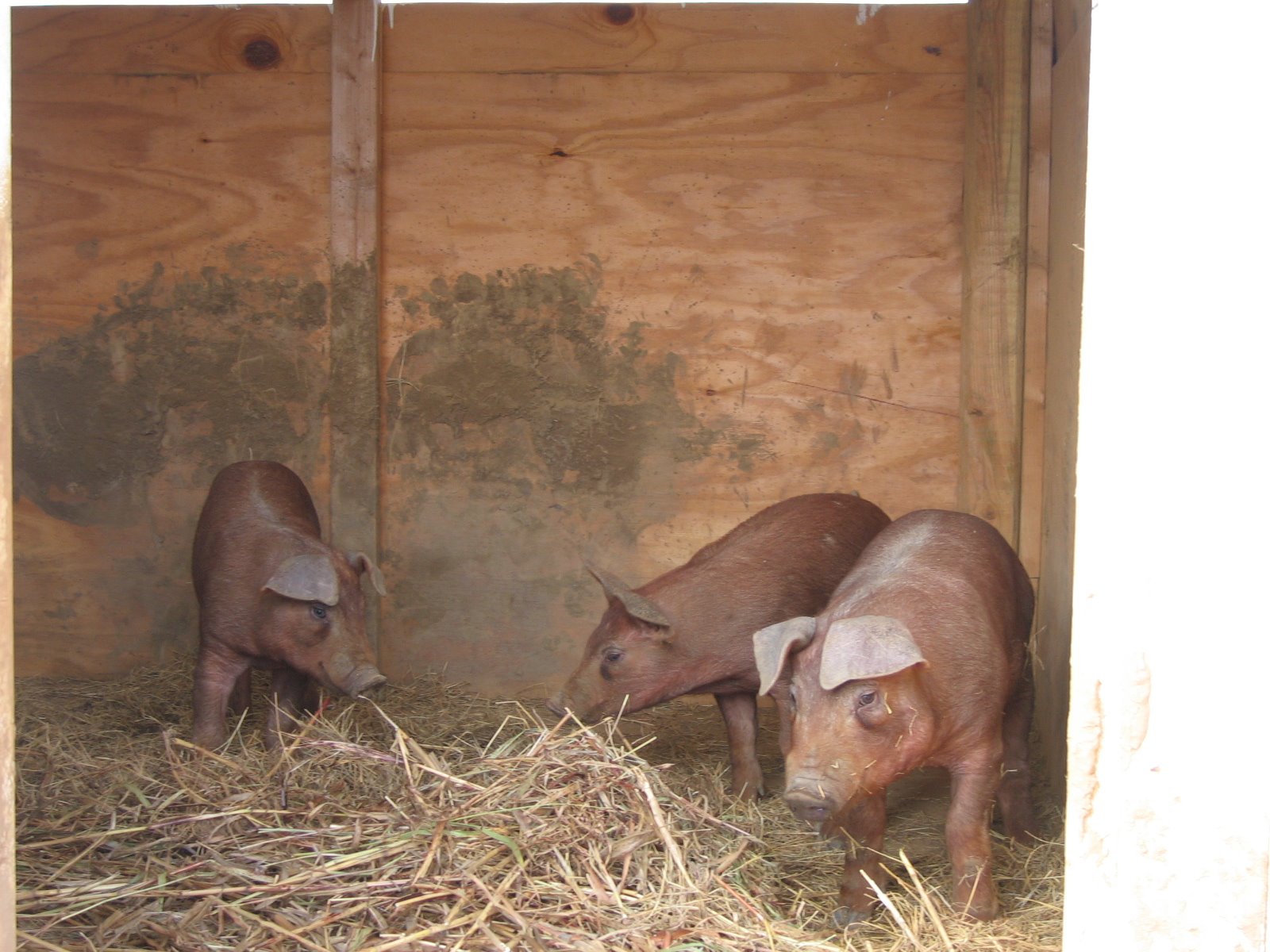
Out of the 3 piglets, one has been processed, one is planned to be be processed soon, and we pray the traded for female is pregnant. Here is a current (Spring 2008) picture of our male and female:


We hope to eventually learn to do our own processing too, and to learn ways to store the meat without canning.

We are again thankful to the Lord's providence for granting us the successful raising of the pigs.

Now we have that certain something that goes great with apple sauce! :)

-- David

Labels: , ,

Bookmark and Share