Our journal of what we pray is our sojourn of life along the narrow way, even the old paths, submitting to the Bible as a light unto both.

Author: David & Susan Sifford (Page 6 of 95)

David’s Digest: Of Desiring Christ, Part 1

Isaiah 53:2 – “For he shall grow up before him as a tender plant, and as a root out of a dry ground: he hath no form nor comeliness: and when we shall see him, there is no beauty that we should desire him.

Is Christ Jesus desirable to us? Is He our one great desire? Should He be?

Psalm 73:25 – “Whom have I in heaven but thee? and there is none upon earth that I desire beside thee.
Isaiah 26:8-9:

8 Yea, in the way of thy judgments, O Lord, have we waited for thee; the desire of our soul is to thy name, and to the remembrance of thee.

9 With my soul have I desired thee in the night; yea, with my spirit within me will I seek thee early: for when thy judgments are in the earth, the inhabitants of the world will learn righteousness.

Isaiah 53 is all about the Lord Christ Jesus. Amidst His humiliation, He is glorified in His great sacrificial work.

And man by nature will see no loveliness in Him.

But, if we claim the name of Christ to ourselves, how much loveliness do we see in Him?

Puritan Thomas Manton did a great exposition on this chapter in Isaiah. It’s not just a verse-by-verse commentary, but also how it all should apply to us in practical ways.

You can read it here, or listen to the whole thing here.

I am planning on a set of these related blog posts, going through a section I found important that discusses a level of desire for Christ that we can compare our own to.

The section starts here if you want to read it, or you can listen to it in this audio section.

The first bit are points that lead into the “Use” section, which is where I’m looking to focus.

From Thomas Manton:

Doct. 4. That Christ is so outwardly mean [low], that the men of the world do not any way desire him, or that carnal men do see nothing in Christ wherefore they should desire him. To his spouse he is all beauty, ‘altogether lovely;’ but to them there was no beauty why they should desire him.

The reasons of the point are these:-

  1. Because carnal men neglect the study of Christ; their hearts are so taken with the things of sense, and the beauty of the creatures [all things created], that they do not look any further.
  2. Because they reject Christ; he is not for their turn; nay, he is quite contrary to their ends [purposes]. Carnal men have not all the same ends, but they all agree in this, their ends are carnal.

Use 1. It serves for information, to teach us the difference between God’s people and carnal men.

To God’s people he is all their desire; to carnal persons there is nothing desirable in him.

It is good to observe their several verdicts of him: 1 Peter 2:7, ‘To you that believe he is precious, but to them that be disobedient, the stone which the builders disallowed, the same is made the head of the corner, and a stone of stumbling and a rock of offence.’

To the world he is base and ignominious: Ps. 22:6, ‘A worm, and no man, a reproach of men, and despised of the people.’ To the spouse, glorious and full of allurements: Ps. 45:2, ‘Thou art fairer than the children of men: grace is poured into thy lips.

To the world he appeared deformed and contemptible: Isa. 52:14, ‘Many were astonied at thee; his visage was so marred more than any man, and his form more than the sons of men;’ but quite contrary to the spouse: Cant. 5:10, ‘My beloved is the fairest of ten thousand.‘ The Hebrew word signifies an ensign-bearer.

In the world’s view there is no form nor comeliness in him; he is without beauty. To the spouse he is ‘altogether lovely,’ Cant. 5:16.

Well, then, you see here is the true differencing note between us and the men of the world, whether we see anything in Christ why we should desire him.

And it is both an inclusive and an exclusive mark. Some marks are inclusive; that is, if a man find them in him, he may be sure he is in Christ; but if not, he is not to determine he is out of Christ. As the eminent and vigorous workings of holy graces, they do not take in every state of Christianity, they do not take in the infancy of grace.

Other marks are exclusive; that is thus, they knock off the fingers of pretenders, and serve to show a man out of grace, but not in. As frequenting of the ordinances, a care of duty; if a man does not these things, he may be sure he is none of God’s, though he cannot be sure he is of God because he does them.

But now this is a mark that is inclusive and exclusive too. It is inclusive, for if your desires be to Christ, no doubt he is yours. It is a true mark, and a mark that is compatible to the weakness of grace. It is a true mark, for God looks to the heart more than to the duty: Prov. 23:26, ‘My son, give me thy heart.’

And desires are the chiefest part of that. Desires are most genuine and suitable to the judgment and determination of the soul. They are a mark in which God’s weakest servants may comfort themselves. Those that fail in other things are not wanting [lacking] in desires. However they may have many defects in their carriage and in their duties, yet they are sure their desires are towards him. If they cannot be much in duty, they will be much in their desires and valuations of him. Peter, that durst not appeal to his own conscience for other things, dares appeal to God’s omnisciency for this: John 21:17, ‘Lord, thou knowest all things; thou knowest that I love thee.’

And the people of God often vouch this: Isa. 26:8, ‘The desire of our soul is to thy name;’ Neh. 1:11, ‘Thy servants who desire to fear thy name.’ Therefore it is comfortable; and it is convincing too, and exclusive.

Wicked men feel no desires; they have some slight wishes, carnal and weak velleities [the lowest degrees of desire], but they have no serious desires, nor true volitions [will, or power to will]. Balaam may wish to die the death of the righteous, Num. 23:10. So they may desire Christ out of some general conceit [conception] of happiness; but they do not desire Christ for holiness.

So there is no beauty in him why we should desire him. They do not desire him as seeing any beauty in his ways John 6:34, ‘Lord, evermore give us this bread.’ When Christ said he was the bread of life, those that would not come to Christ would fain [gladly] have the bread of life.

Nay, heaven itself is not really desired by wicked men; it is true, they may desire it in a carnal way, as a Turkish paradise, and such a place of ease and delight as the Koran sets forth; but not as it is in itself, to enjoy God, and Christ, and more grace, and to be more free and undisturbed in respect of the prevailing of sin and corruptions.

Those that desire Christ truly, desire him not for ease (the spirit of the world may do that), but from the beauty and excellency they find in him, and in his ways. His service is of a high and honourable nature, and therefore they desire it. So that you see here is the note of trial, and the main difference, viz., a desiring of Christ for the rare beauty and perfections that are found in him.

Do you, then, try yourselves by this note.

But that you may not deceive yourselves in this matter, I will give you a few notes. I will not speak anything of the cause of desires. A high value and price set upon Christ, and a seeing rich beauties in him, of that I shall speak in the next verse. I shall only treat now of the effects of this desire. If it be earnest and strong after him, it will be manifested by these things.

“These things” follow in part 2!

May God grant His blessed Son to be our great desire!

— David

Providence’s Perpetuation Provisions: 2024’s 3rd and 4th Round of Chicken Chicks

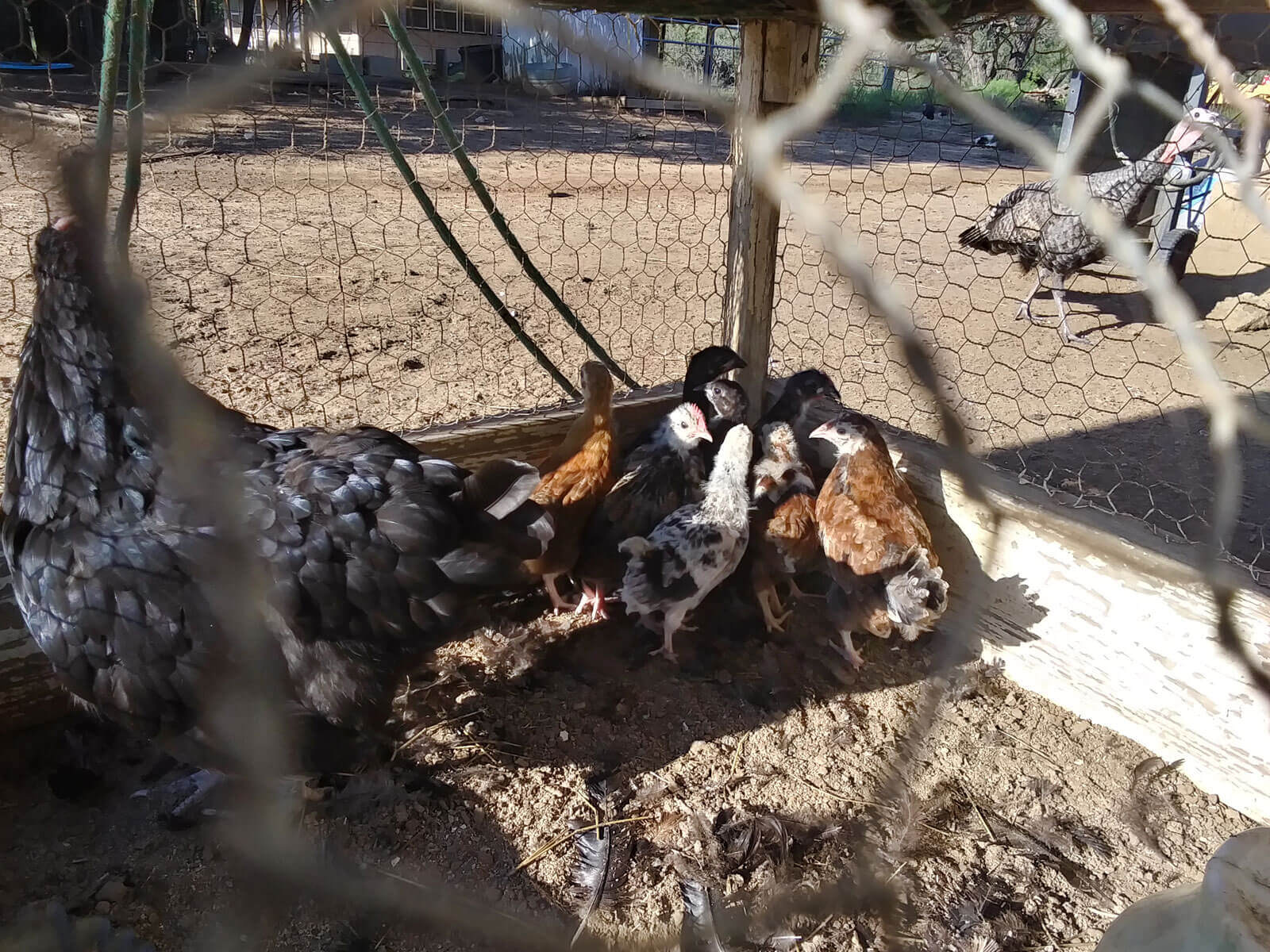
The Lord graciously granted another two rounds of chicken chicks this 2024! 6 from one mommy and 3 from another, both about the same time.

Sadly, with one of those hens no longer with us, I thought the other hen might adopt the other chicks, and so I put them with her, and thanks to the Lord it has worked out.

Sadly again though, I found one of them dead this morning in the coup part of the mini-chicken tractor, but we are always thankful for any God continues to grant.

Here’s another picture:

And here’s their quick video:

Again, we thank the Lord for His provisions of these new chicken chicks!

— David

Providence’s Perpetuation Provisions: Turkey Chicks of 2024

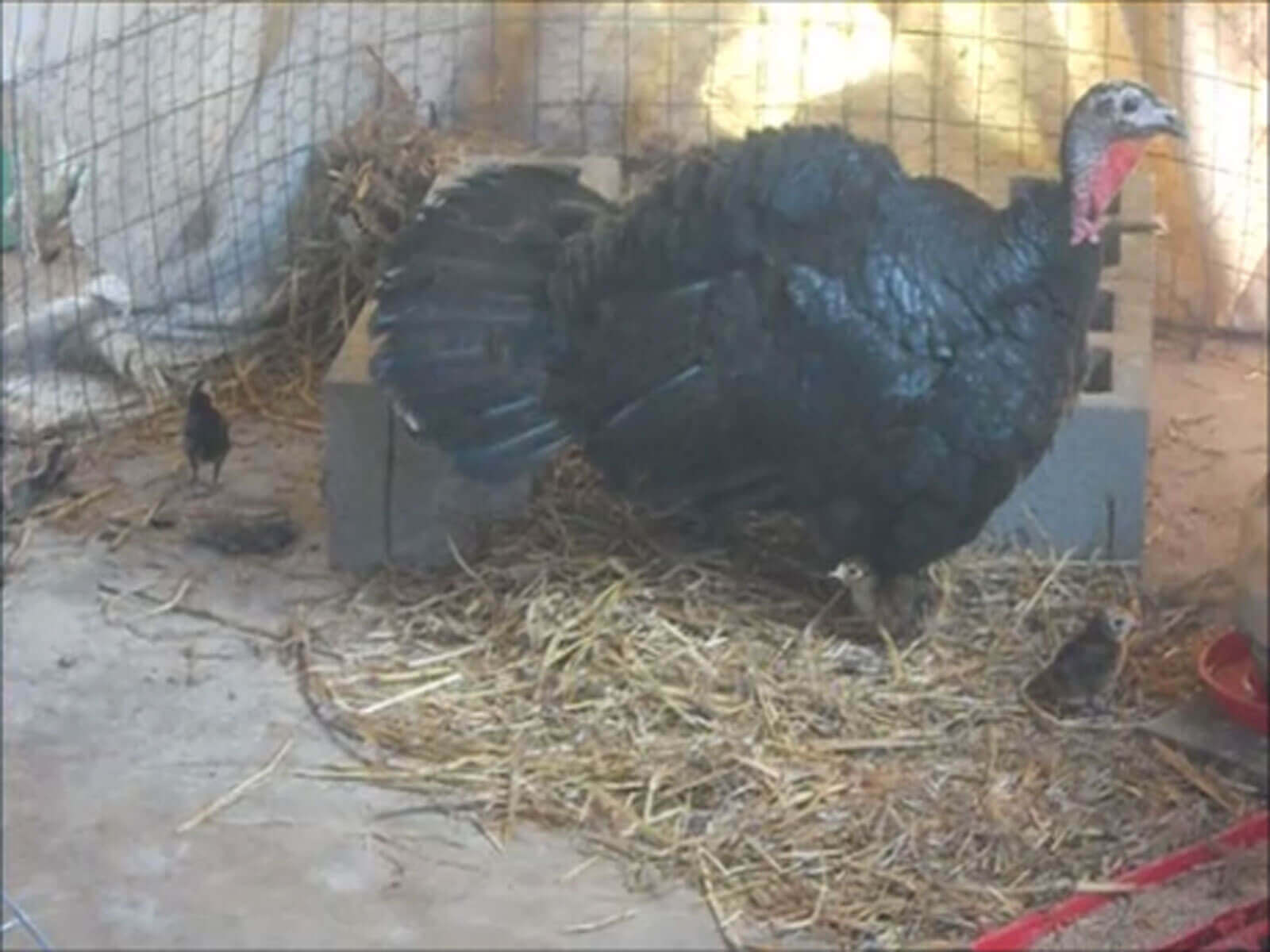
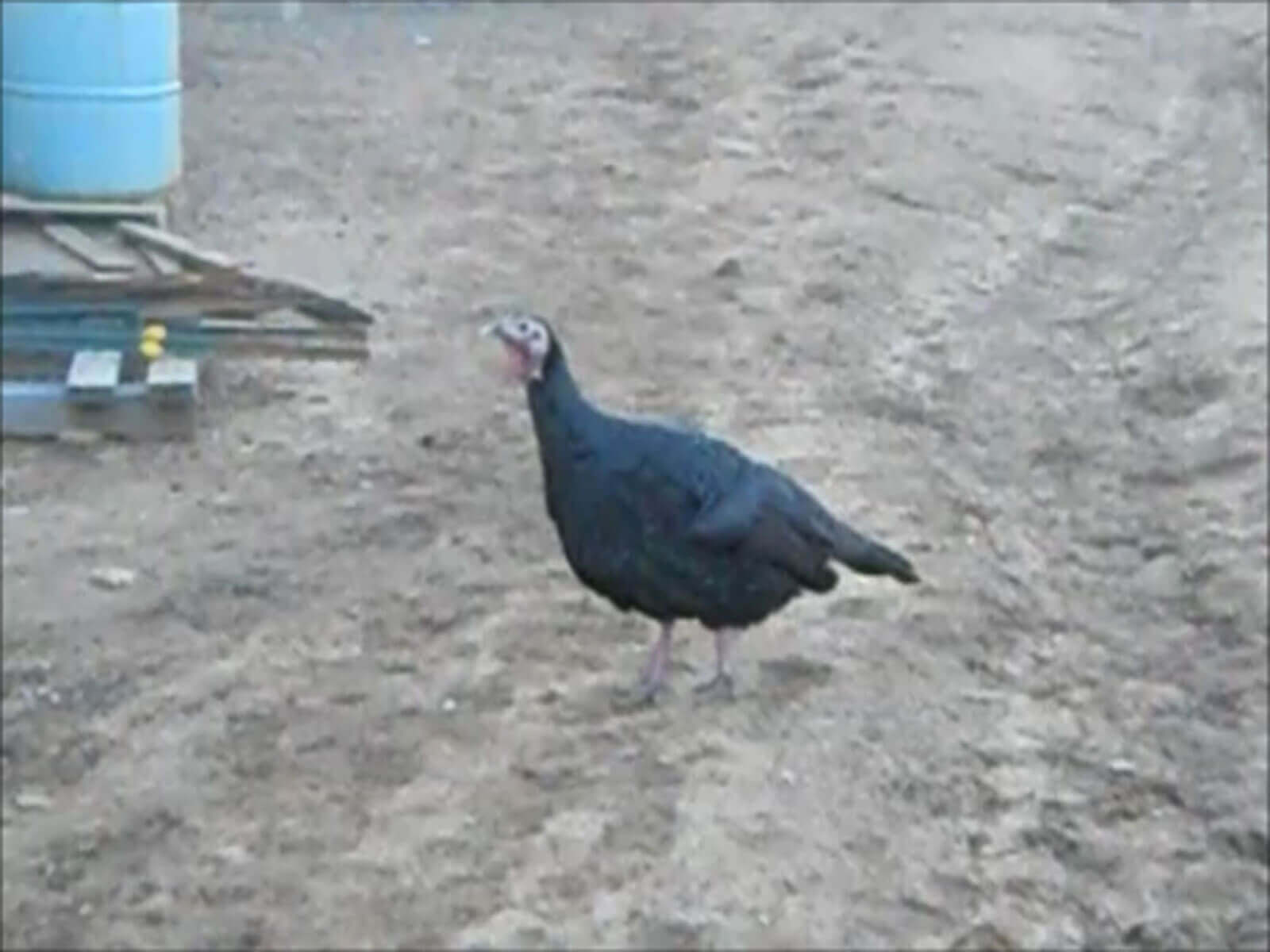
The Lord has graciously started to grant turkey chick hatchings for this 2024!

We only have one turkey run, which is in our brooder barn/summer kitchen, so like last year, the plan is to grab the first mommy and her turklets and put them in there. And then if any other turkey hens hatch any, grab them and put them in the brooder barn with mommy #1.

And so far, we’ve had about 4-ish hatch-outs! We feel badly taking the new turkey chicks from the new mommies, but it’s kind of the only way I see we can handle the situation at this time.

They have nested in the barn, and in areas outside the barn, in our inner area, and even in the orchard. We have lost quite a few…I wonder if they get stepped on at times. But God has kept around quite a few as well, and here’s their video:

As always, we thank Him for His graciousness in granting these provisions!

— David

Psalm Singing – May 2024

Once again, Sue and I have continued recording Psalm singing from the psalter we use. And again, we always hope others will want to learn the Psalms and that this might encourage and help them in that.

The next set was 113A-118C.

And this set was a little different. If you’ll note, our last blog post about singing was back in February. We were able to get this next set recorded so quickly because we had already learned them before. And this is because in times past here, we as a group would gather and go through a Passover seder, but in a way that was a fulfillment-version of Passover pointing to Christ Jesus. And so, the seder went through the normal Passover elements but then showed what they pointed to either in the Old Testament, with the sufferings of God’s people in Egypt, or again, with Christ as the fulfillment, especially as the Passover Lamb.

And then as part of the seder, we would sing through one of the versions of each of the Psalms 113-118, as those are part of what’s called “The Hallel”, which apparently were sung at Passover.

And so, that’s why Sue and I already know them and were able to get them recorded so quickly. 🙂

And here they are:

(If the above player doesn’t work, or if you would like to save any of the files locally to your computer, you can click the Download link below, or right click it and click Save As in the popup menu.)

Psalms 113A-118C

May we always be in an attitude and voice of praise to the Lord!

Psalm 113:1-3:

1 Praise ye the Lord. Praise, O ye servants of the Lord, praise the name of the Lord.

2 Blessed be the name of the Lord from this time forth and for evermore.

3 From the rising of the sun unto the going down of the same the Lord’s name is to be praised.

— David

Previous Psalms singings:

Psalms 1A-12B (minus 4B)
Psalms 4B & 13-18L
Psalms 19A-22E
Psalms 22F-24C
Psalms 25A-27F
Psalms 28A-31G
Psalms 32A-34D
Psalms 35A-37F
Psalms 38B-40F
Psalms 41A-44F
Psalms 45A-49C
Psalms 50A-53
Psalms 54A-59B
Psalms 60A-65B
Psalms 66A-68E
Psalms 69A-71D
Psalms 72A-76B
Psalms 77A-78H
Psalms 79A-84B
Psalms 85A-89H
Psalms 90A-93A
Psalms 94A-98B
Psalms 99A-103D
Psalms 104A-105E
Psalms 106A-107E
Psalms 108A-112B

Providence’s Perpetuation Provisions: 2nd Round of Chicken Chicks for 2024

One morning I walked into the barn and heard cheeping on the ground. Uh oh! A chick! So, I found it and rounded it up, and called for Sue’s help.

There had been a chicken mommy sitting up in the barn loft on eggs, and Sue had been monitoring them, but it looked like the little one I found had taken the 10-foot or thereabouts leap! But, thankfully it was ok, and we found the hen and her troupe up in the loft, reunited the chick I found, grabbed her, them, and the rest of her eggs, and put them in the summer kitchen.

She actually ended up hatching out one more I believe, and they’re thankfully all still alive!

And here’s their video:

We are always grateful to the Lord for His perpetuating provisions!

— David

David’s Digest: A Threefold Cord of Self-Denial

Ecclesiastes 4:12 – “And if one prevail against him, two shall withstand him; and a threefold cord is not quickly broken.

After two previous ones, I recently came across in the Bible what I believe brings a third “cord” to a subject that I believe is extremely important — self-denial.

In fact, it’s a requirement for someone who wants to be a follower of Christ:

Matthew 16:24 – “Then said Jesus unto his disciples, If any man will come after me, let him deny himself, and take up his cross, and follow me.

Puritan Thomas Manton did an excellent treatise on it, and I recorded it for those who might like to listen to it instead of read it.

If you would, I’d like to bring forth what appear to me to be three important pieces of a life of self-denial.

Loving Your Enemies

Matthew 5:43-44:

43 Ye have heard that it hath been said, Thou shalt love thy neighbour, and hate thine enemy.

44 But I say unto you, Love your enemies, bless them that curse you, do good to them that hate you, and pray for them which despitefully use you, and persecute you;

I did a larger blog post that discusses this more, but the next verse is the following:

Matthew 5:45 – “45 That ye may be the children of your Father which is in heaven: for he maketh his sun to rise on the evil and on the good, and sendeth rain on the just and on the unjust.

This shows the children of God do these things.

It has four actions toward those who would do us harm: Love, Bless, Do Good, Pray For — a strong cord of self-denial.

And did not Christ love us in the ultimate way while we were His enemies?

Romans 5:8 – “But God commendeth his love toward us, in that, while we were yet sinners, Christ died for us.

Giving to the Abuser

Luke 6:29-30:

29 And unto him that smiteth thee on the one cheek offer also the other; and him that taketh away thy cloak forbid not to take thy coat also.

30 Give to every man that asketh of thee; and of him that taketh away thy goods ask them not again.

This to me shows at least in part an emptying of ourselves in relation to the temporal goods God has granted us — another solid cord of self-denial.

Even though someone may abuse us in these things, and indeed be wrong in their actions, this indicates to me we are to deny ourselves and let it go. God knows.

And didn’t Christ empty of Himself for us sinners?

Philippians 2:5-8:

5 Let this mind be in you, which was also in Christ Jesus:

6 Who, being in the form of God, thought it not robbery to be equal with God:

7 But made himself of no reputation, and took upon him the form of a servant, and was made in the likeness of men:

8 And being found in fashion as a man, he humbled himself, and became obedient unto death, even the death of the cross.

Washing Judas’ Feet

John 13:1-5:

1. Now before the feast of the passover, when Jesus knew that his hour was come that he should depart out of this world unto the Father, having loved his own which were in the world, he loved them unto the end.

2 And supper being ended, the devil having now put into the heart of Judas Iscariot, Simon’s son, to betray him;

3 Jesus knowing that the Father had given all things into his hands, and that he was come from God, and went to God;

4 He riseth from supper, and laid aside his garments; and took a towel, and girded himself.

5 After that he poureth water into a bason, and began to wash the disciples’ feet, and to wipe them with the towel wherewith he was girded.

And it seems clear that Judas was there because after Jesus said some things, John says this about Him:

John 13:21 – “When Jesus had thus said, he was troubled in spirit, and testified, and said, Verily, verily, I say unto you, that one of you shall betray me.

Just ponder those moments, when Jesus washed Judas’ feet. Isn’t that quite a scene? He knew what Judas was about to do, and He did it anyway — a very powerful cord of self-denial.

And should we not imitate our Master in this denying of self as well, not necessarily actually washing their feet, but in similar acts of charity [godly love], even though we know someone might not have the best intent toward us?

We are by nature full of pride, but the Lord Jesus showed us the ways of love, humility and service.

May God grant us His graces to be like our blessed Lord Christ Jesus, including in these ways of pride-killing self-denial.

— David

David’s Digest: Never Take That First “Drink”

The Lord delivered me from alcohol abuse, for which I’m eternally thankful.

There was a saying in AA that said, “Never take that first drink.” It was a warning, because the first one makes it much easier to get to the second, and so on.

I very sadly found that out the hard way, and the Lord delivered me again. I talk about it all in a blog post here.

It is my belief that this can be applied to the world.

Man by nature has a “carnal” man, also called the “flesh” in the Bible. This carnal man can do no work that is spiritually good. In fact, it can only do evil:

Romans 8:7 – “Because the carnal mind is enmity against God: for it is not subject to the law of God, neither indeed can be.

The “world” in the Bible is often painted in the same light:

John 15:18-19 – “If the world hate you, ye know that it hated me before it hated you. If ye were of the world, the world would love his own: but because ye are not of the world, but I have chosen you out of the world, therefore the world hateth you.

You can see it in alcohol abuse, but I believe you can apply it similarly spiritually:

Since those two are of the same nature, I would suggest that our carnal man is addicted to the world. Since the world brings wicked pleasures, and the carnal man is wicked, it would seem to make sense. I would suggest:

The carnal man is going to be a world-aholic.

But then God says that a person who loves even the things in the world (which must be the things in the world’s kingdom vs. God’s kingdom and His creation) does not have the love of God in them:

1 John 2:15 – “Love not the world, neither the things that are in the world. If any man love the world, the love of the Father is not in him.

If we are Christians, we have an internal, spiritual war going on inside us:

1 Peter 2:11 – “Dearly beloved, I beseech you as strangers and pilgrims, abstain from fleshly lusts, which war against the soul;

And then there’s the devil, who is the prince of the world — not in absolute terms, but we are either slaves to sin and his works or to God:

Ephesians 2:2 – “Wherein in time past ye walked according to the course of this world, according to the prince of the power of the air, the spirit that now worketh in the children of disobedience:

Romans 6:17 – “But God be thanked, that ye were the servants of sin, but ye have obeyed from the heart that form of doctrine which was delivered you.

Satan is all too dutiful to work with the world and our carnal man to lure us to things sensual (simply, things delighting the senses), which automatically lure us from the things of God and His kingdom.

But, we are commanded to mortify (kill) the flesh:

Romans 8:13 – “For if ye live after the flesh, ye shall die: but if ye through the Spirit do mortify the deeds of the body, ye shall live.

Colossians 3:5 – “Mortify therefore your members which are upon the earth; fornication, uncleanness, inordinate affection, evil concupiscence, and covetousness, which is idolatry:

Further, the Bible says the world is supposed to be crucified to us, and us to it:

Galatians 6:14 – “But God forbid that I should glory, save in the cross of our Lord Jesus Christ, by whom the world is crucified unto me, and I unto the world.

This would seem to mean it should be dying to us — having less and less of an effect or attraction to us. And because crucifixion was slow, I would suggest it may happen over time, but God appears there to say it will happen.

And so, with the evil trinity of our flesh, the devil and the world, all working together to seek our eternal destruction, wouldn’t the cautious individual look at all of them as something to repel from?

Wouldn’t then the caution be this?

Don’t ever take that first “drink” of the world, its accoutrements, entertainments and dainties, its culture, its ways of doing things.

A few extra work chores or leisure activities on the Lord’s Day here, a little step away from stricter modesty there, just a little vanity somewhere. That first “drink”.

Some might decry the slippery slope concept, but it’s obvious that’s exactly what happens — in alcohol abuse, where it usually gets worse over time, and I would suggest, also with the world. A garden un-kept is slowly overgrown with weeds, not immediately.

I would suggest this happened to the western church coming out of the 1800s and through the 1900s. A little less Lord’s Day strictness, worldliness creeps in, then to the daily lives of Christians. And now, some churches purposely try to be like the world.

Now, while the true Christian will not fall away totally, I believe there potentially could be bad and unintended consequences:

  • Becoming more like the world make ones less more like a peculiar people, as God would have Christians. And so the witness can be tainted.

  • While one may not fully slide away to the world, the next generation might, or the one after that, because:
    • They’re closer to the world each generation.
    • They’ve been taught it’s ok to take a “drink” of the world.

  • The carnal man increases, and thus Christian graces decrease. Again, as in a garden, the more weeds, the fewer good plants, and vice-versa.

While some might not agree, I believe this is extraordinarily serious to consider. The war is real. The devil would have us destroyed, and he has a myriad of tools at his disposal, including ourselves — the body of death we carry around with us:

Romans 7:24 – “O wretched man that I am! who shall deliver me from the body of this death?

May God grant us a love for Him above everything. May He help us to mortify the flesh, resist the devil, and love not the world. May we seek Him diligently in these, and we pray He grant us His graces to be faithful to Him, and may He keep our feet from sliding.

May we thirst only for Him and look to Him alone to satisfy:

Psalm 42:2 – “My soul thirsteth for God, for the living God: when shall I come and appear before God?

Psalm 63:1 – “O God, thou art my God; early will I seek thee: my soul thirsteth for thee, my flesh longeth for thee in a dry and thirsty land, where no water is;

Psalm 81:10 – “I am the Lord thy God, which brought thee out of the land of Egypt: open thy mouth wide, and I will fill it.

— David

« Older posts Newer posts »