Our journal of what we pray is our sojourn of life along the narrow way, even the old paths, submitting to the Bible as a light unto both.

Category: farm hacks

Orchard Update – Early Spring 2026 – Underground Gravel Watering System

With the drought times we’ve had here in recent years, the orchard trees have taken a pretty big hit. And I believe it’s not really feasible to keep them in water, which I have to do by hauling water container by wheelbarrow, especially larger trees, trying to get water down to their roots.

I lament a little in the blog post on the recent song I wrote, which included some special verses my wonderful wife sent me to encourage and exhort me with, which again were:

Habakkuk 3:17-19:

17 Although the fig tree shall not blossom, neither shall fruit be in the vines; the labour of the olive shall fail, and the fields shall yield no meat; the flock shall be cut off from the fold, and there shall be no herd in the stalls:

18 Yet I will rejoice in the Lord, I will joy in the God of my salvation.

19 The Lord God is my strength, and he will make my feet like hinds’ feet, and he will make me to walk upon mine high places. To the chief singer on my stringed instruments.

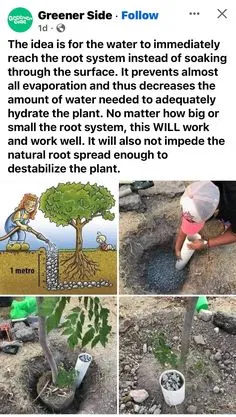
Not only did she encourage me spiritually though, she also has tried physically, in sending me something she found online about an underground gravel watering system for each tree, with pipe down to it to get the water down there, where water is always available directly to the roots:
Nice! So, I thought I’d try it with the planting of some new fruit trees…

Here’s where a tree was previously planted, which I was going to replace, since the rebar pieces that allow me to tie the tree in place were already there, along with the chicken wire to keep chickens out:
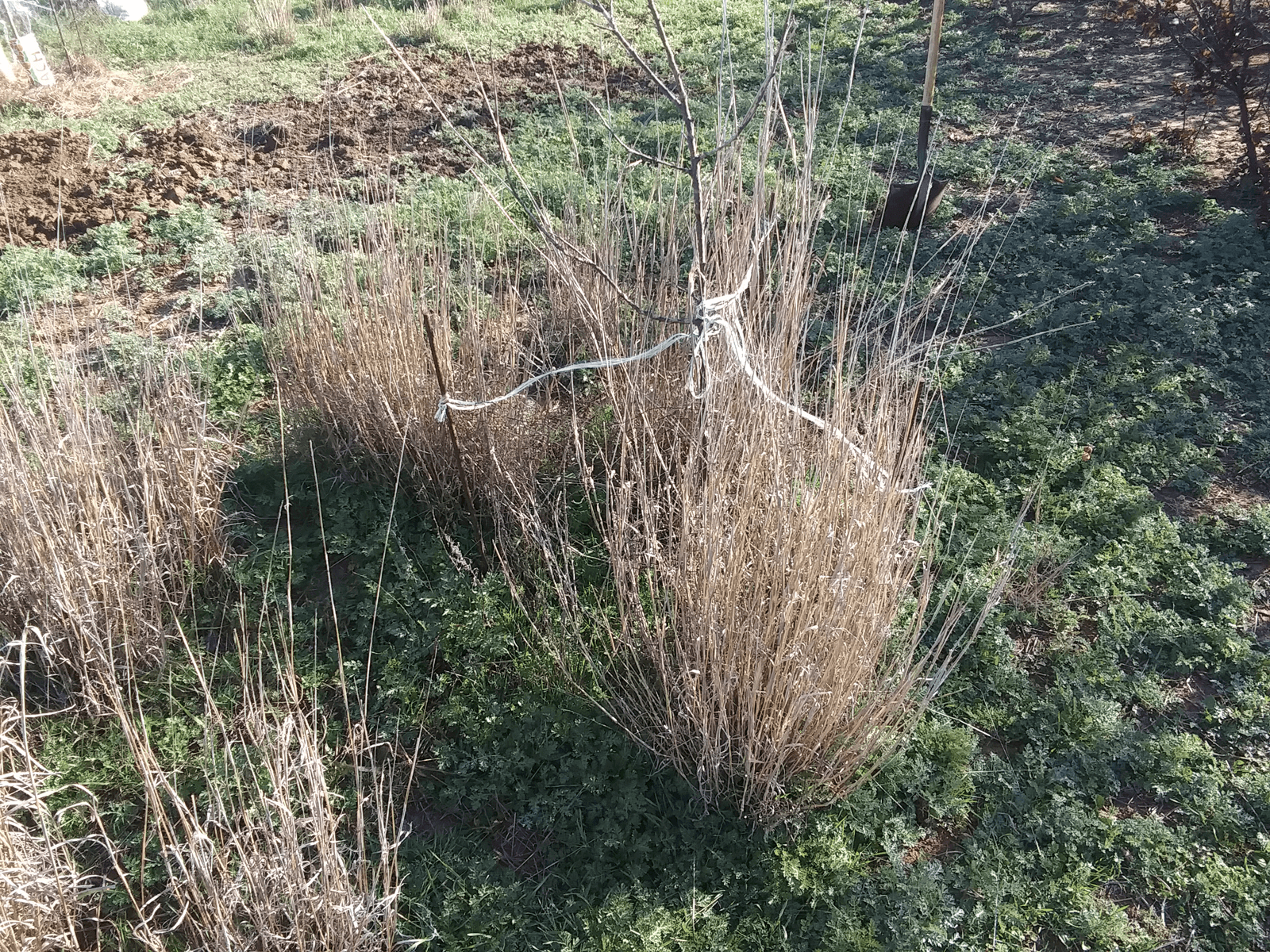
First, the “fun” part…getting the dirt out of the hole 🙂 . The image said 3+ feet, but I just wasn’t going to do that for these fruit trees, so I went probably 2 1/4-ish feet down:
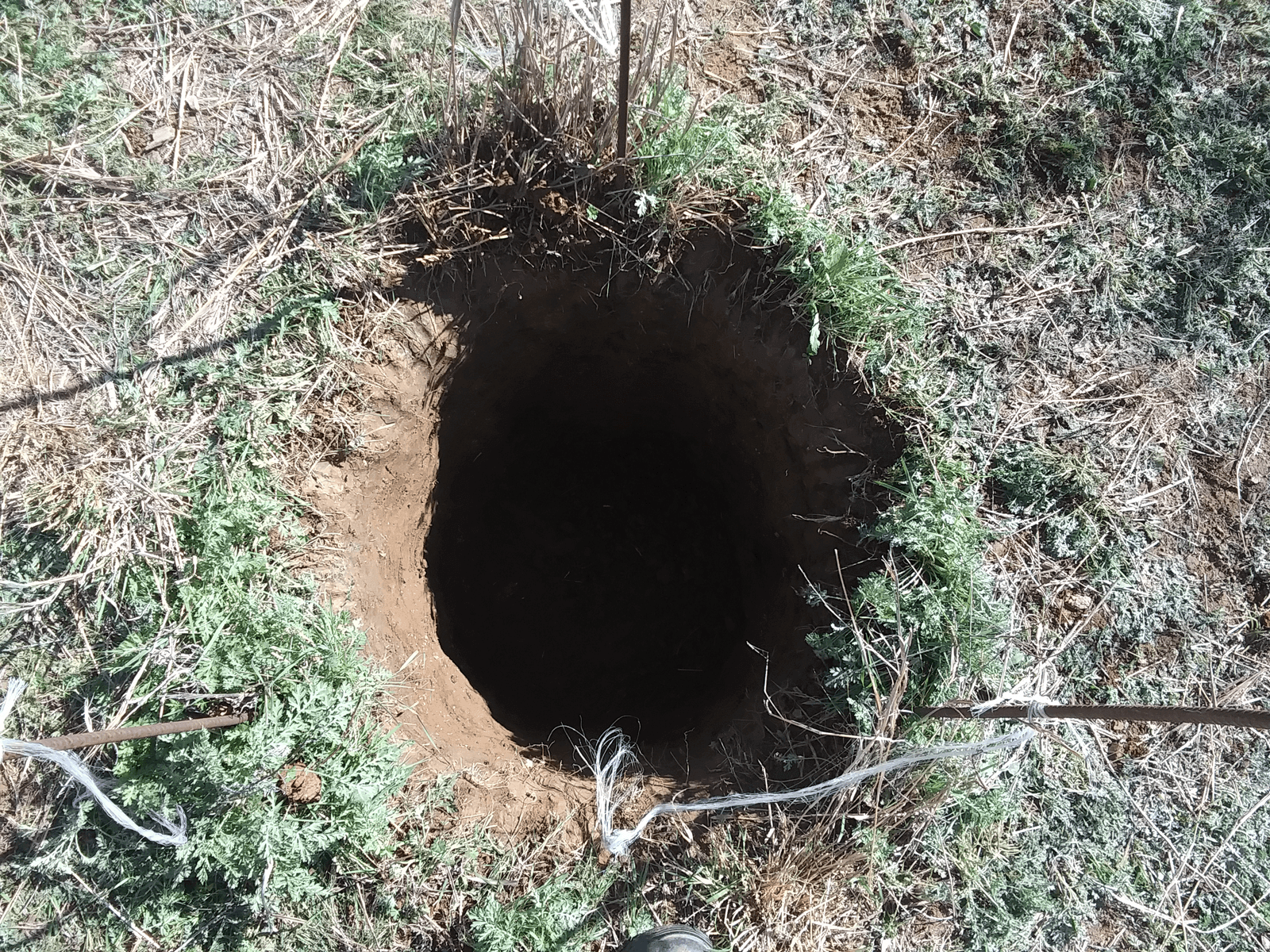
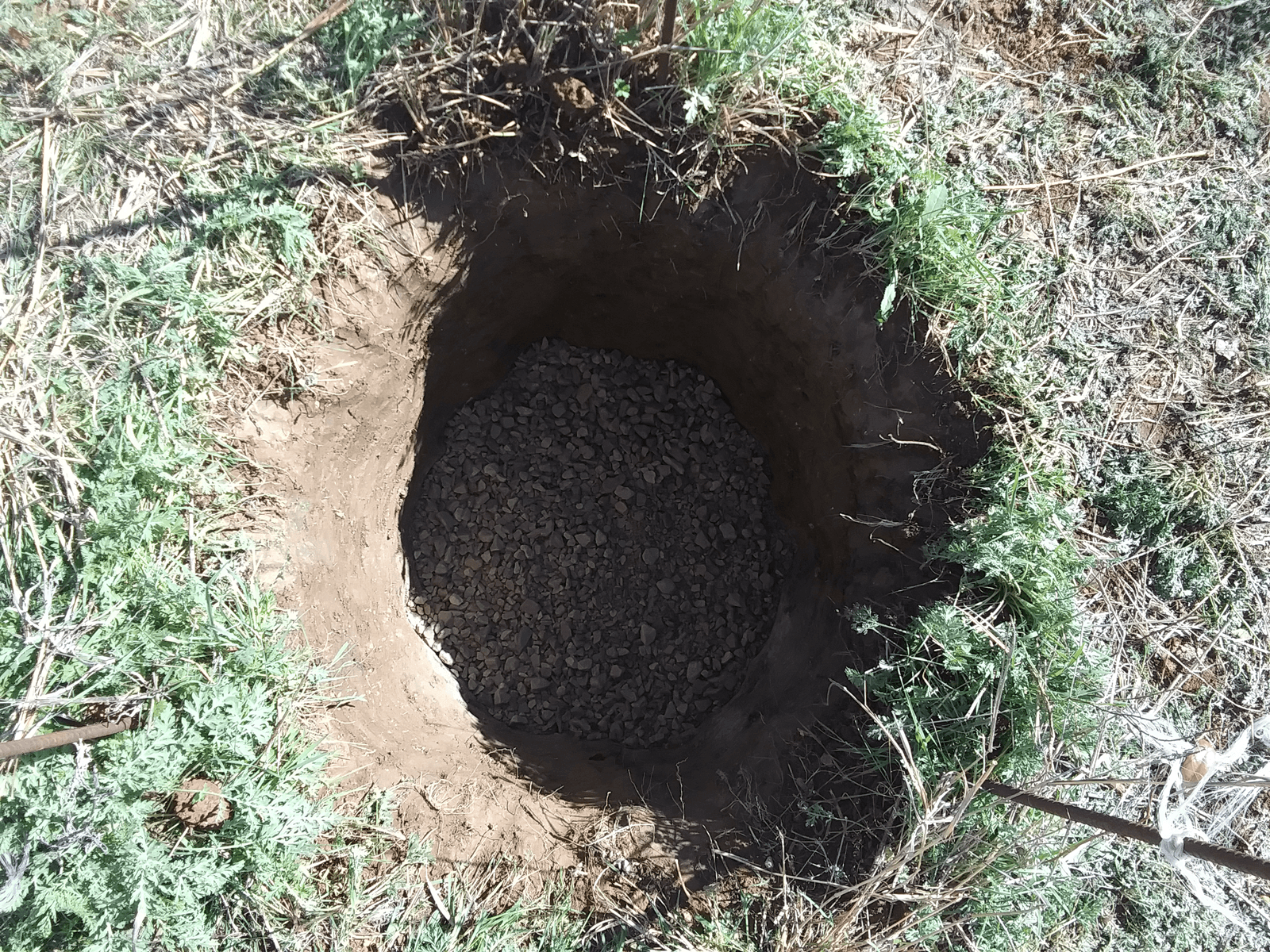
Then, 2 bags of 0.5 cubit feet drainage gravel:
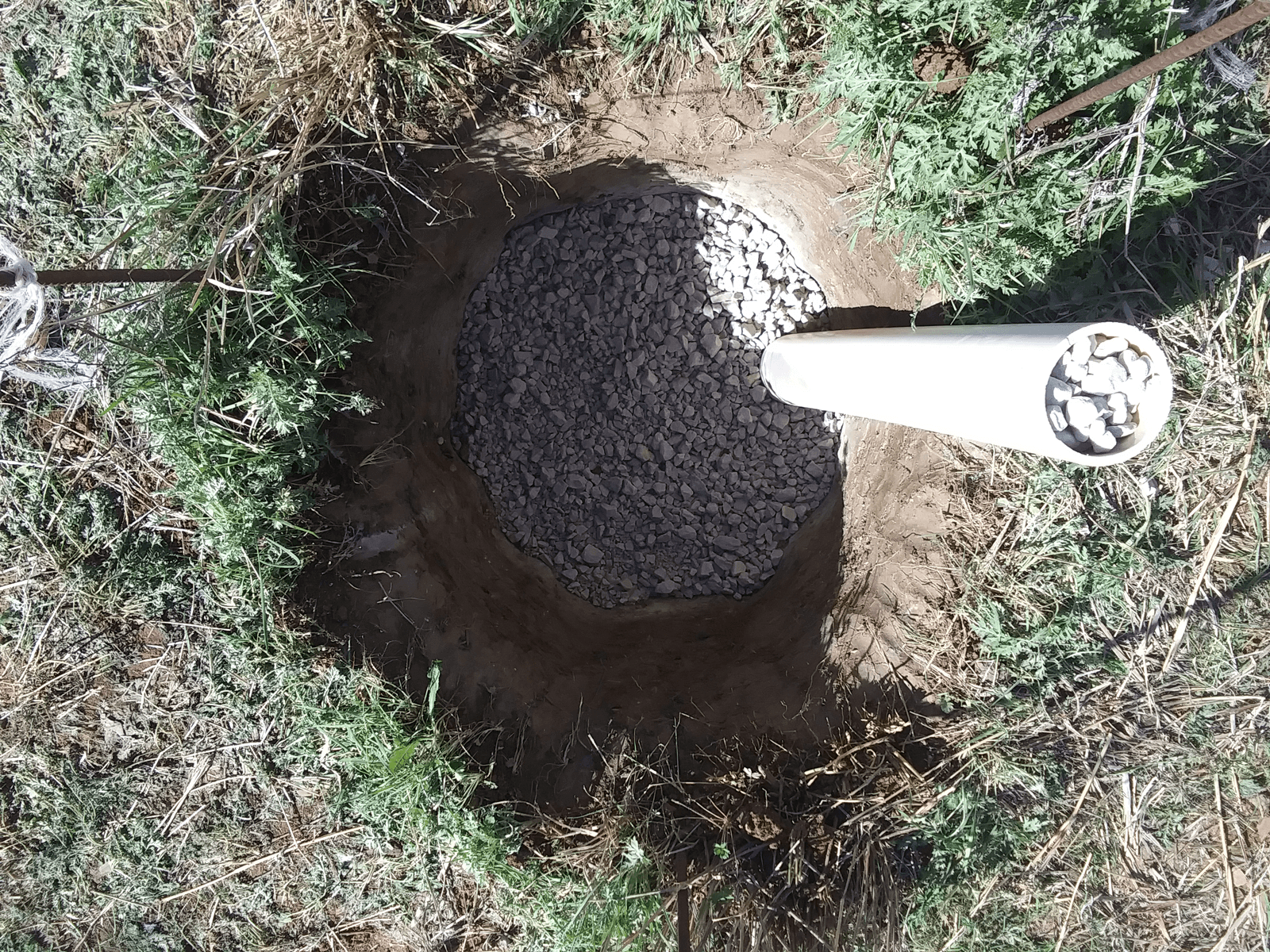
Then 3-inch PVC pipe, filled with gravel:
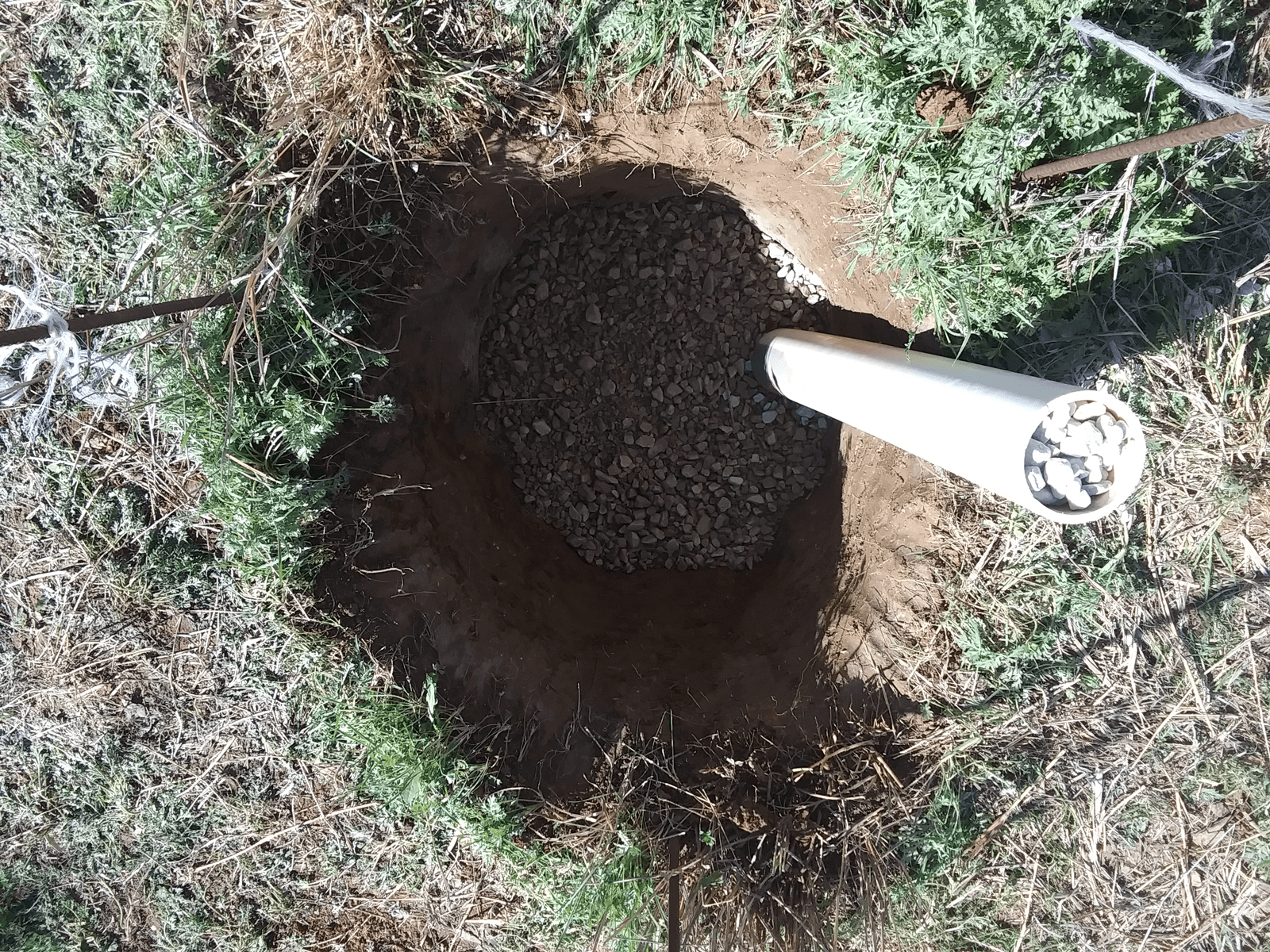
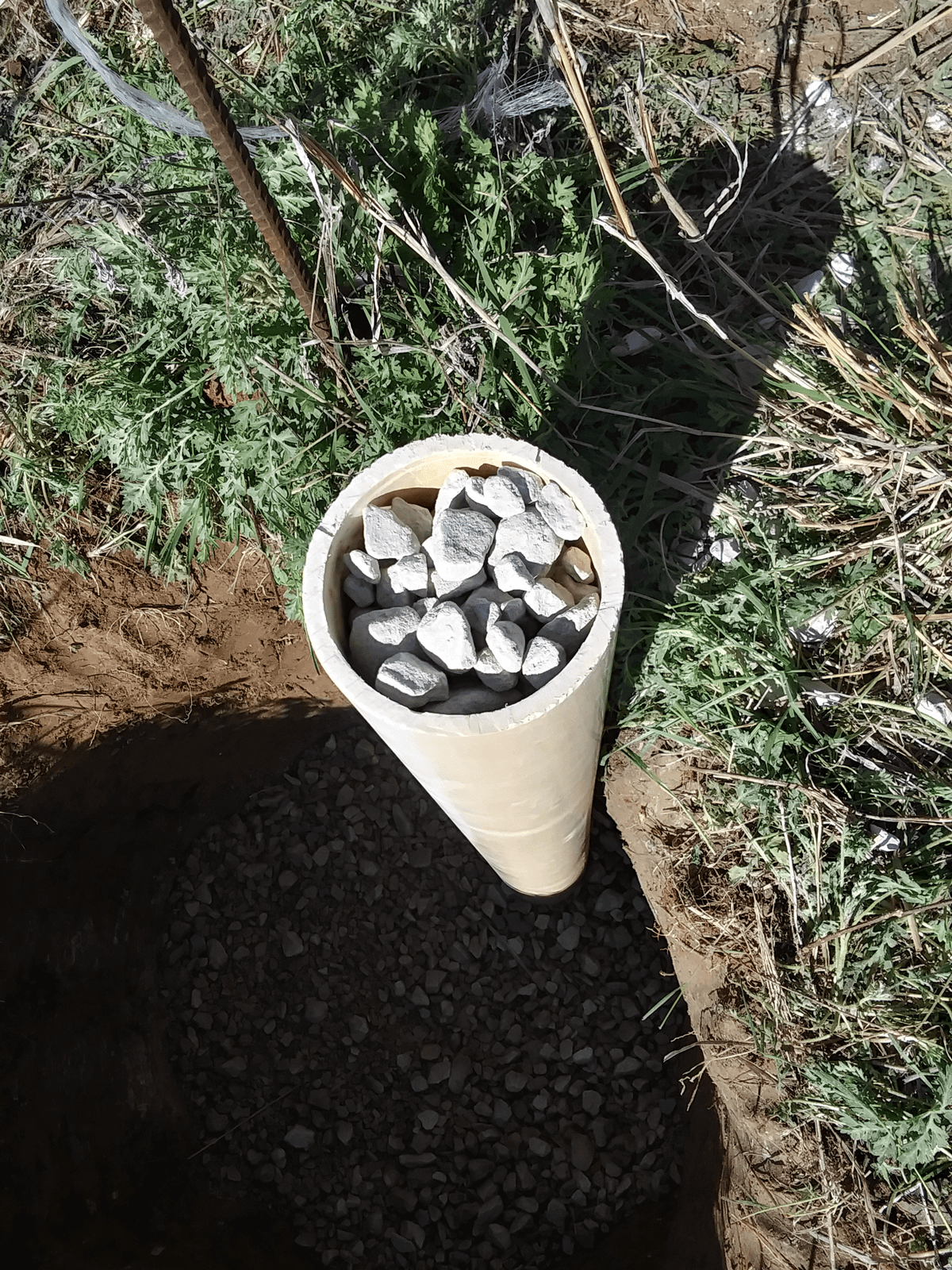
And then another bag of gravel in the hole to cover the bottom of the pipe so it hopefully doesn’t get clogged with dirt a its bottom:

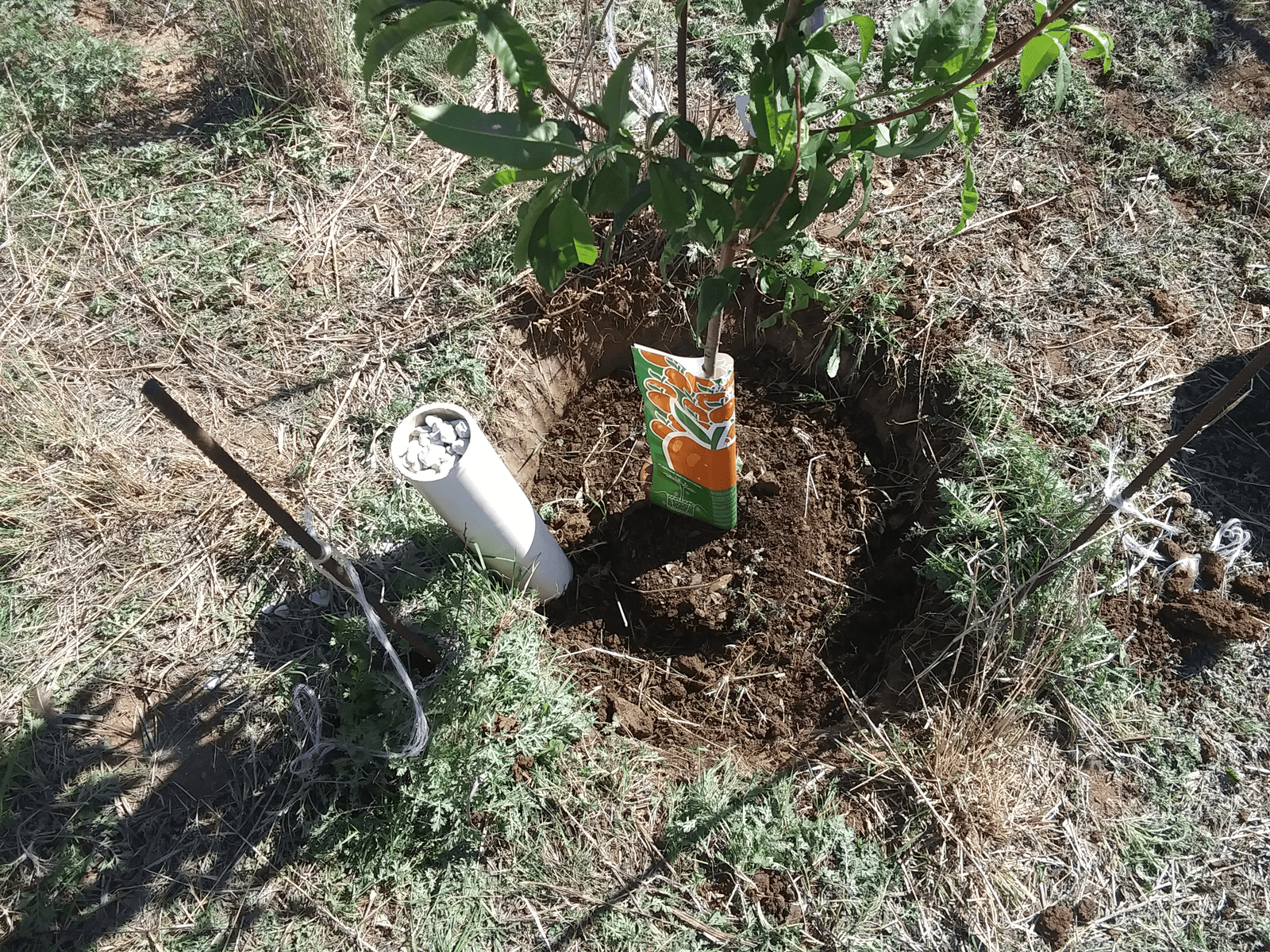
Then, some dirt in the hole to the proper tree placement (always easier dirt going that direction vs. coming out of the hole 🙂 ), the tree in place, more dirt back into the hole around the tree:
Then, off to the compost pile in our garden….
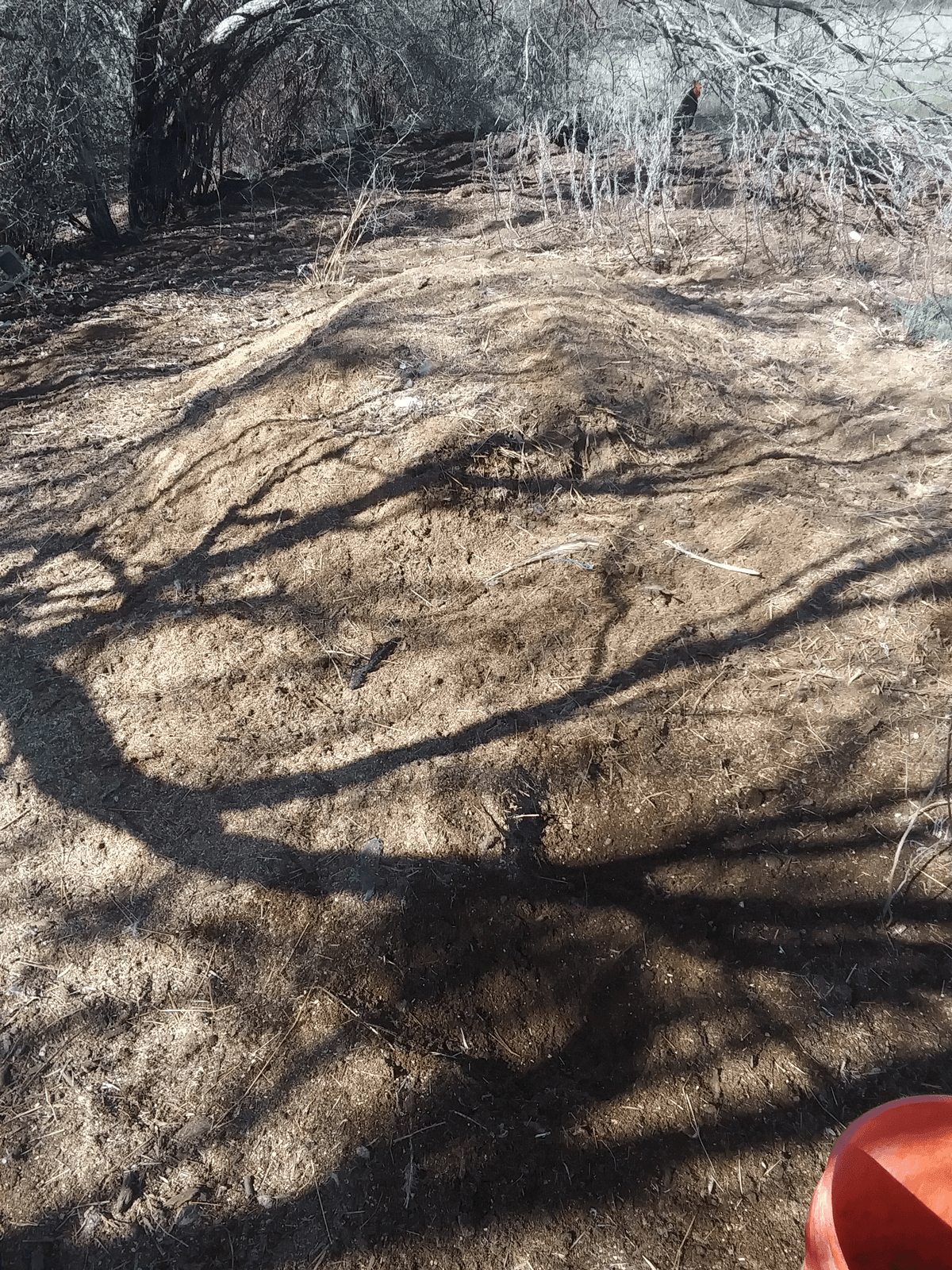
…for a 5-gallon bucket of compost:
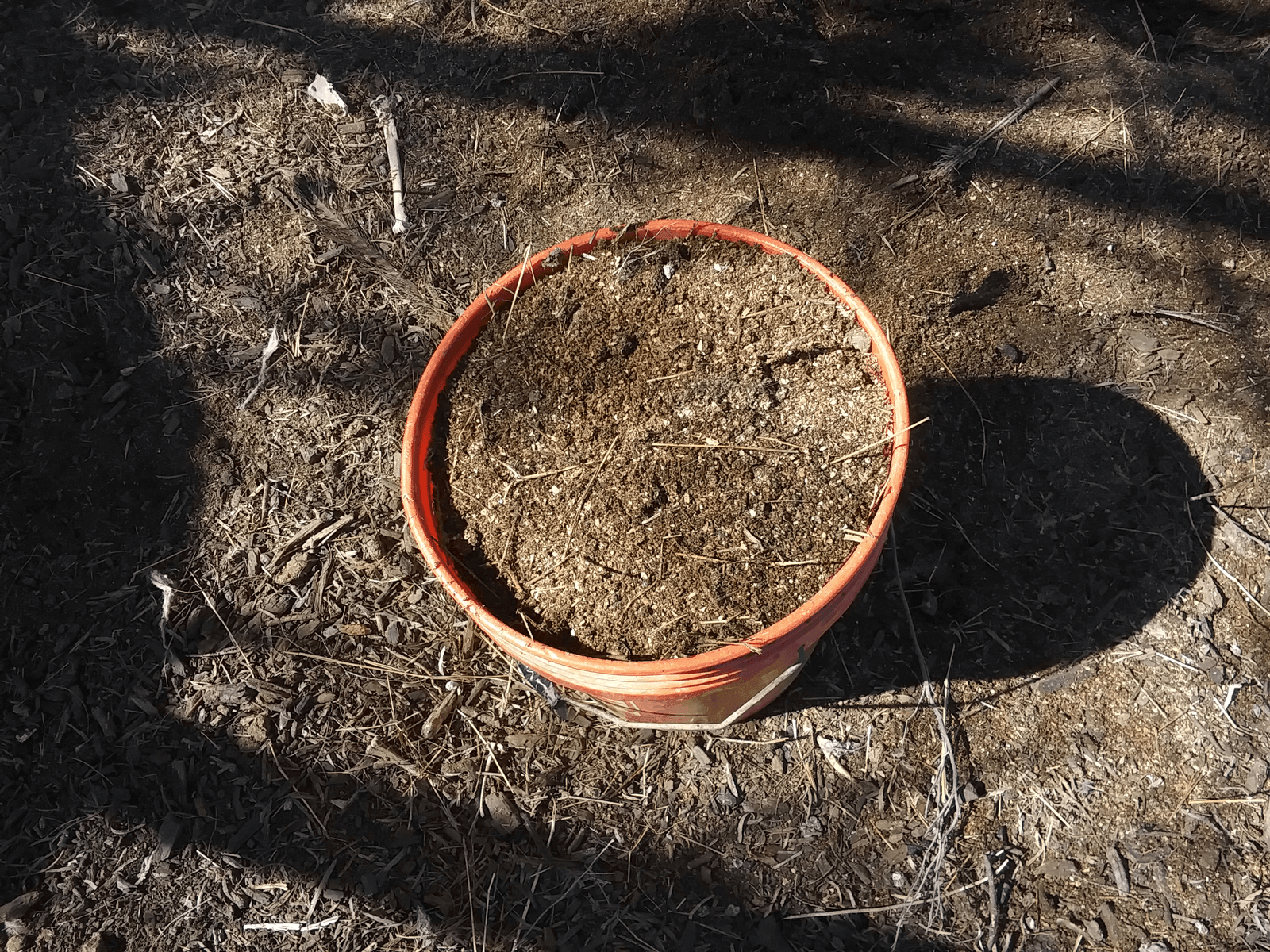
And then into the hole around the tree:
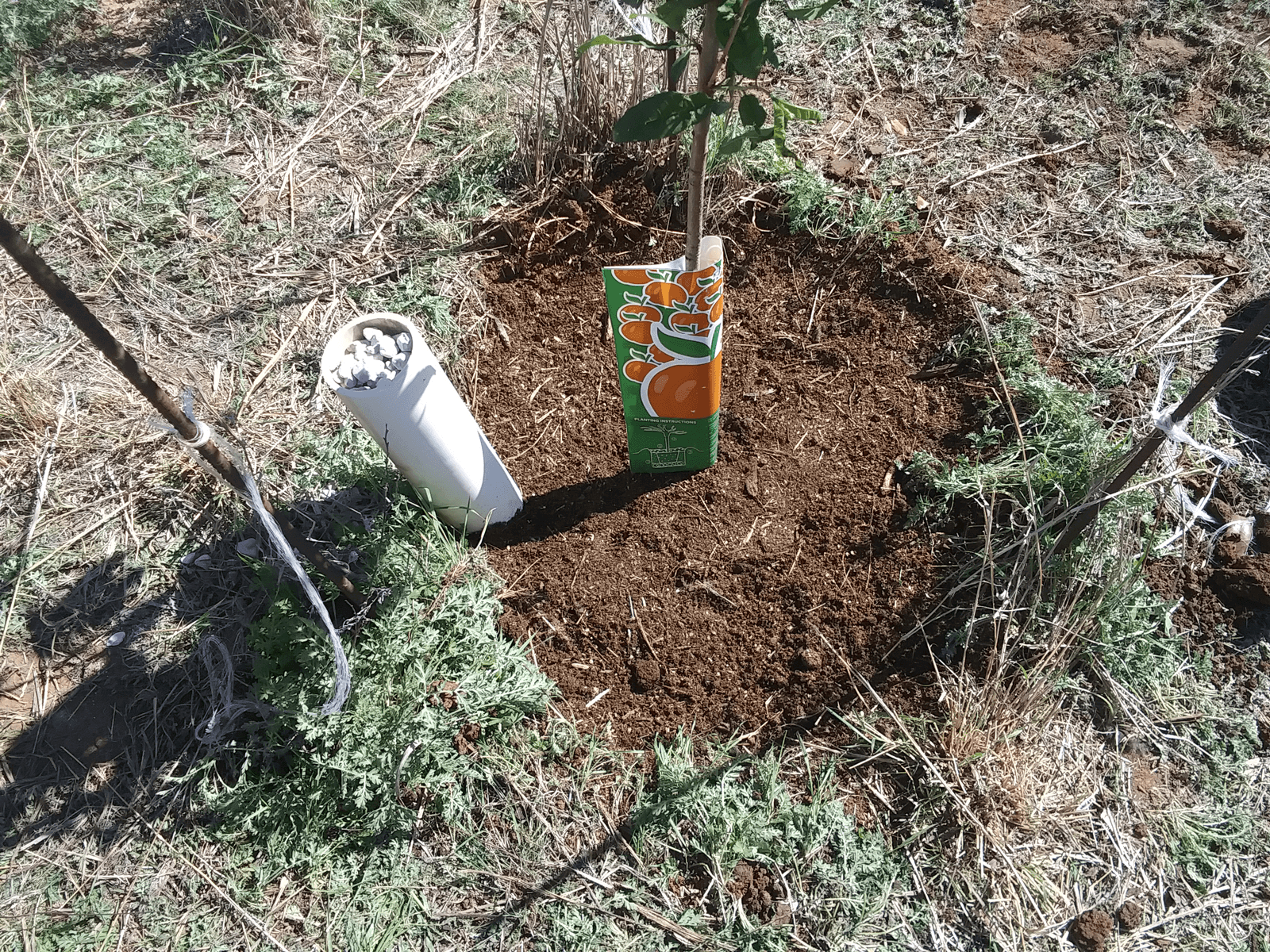
And then some hay from the hay field for a mulch-type covering to try to help keep moisture in:
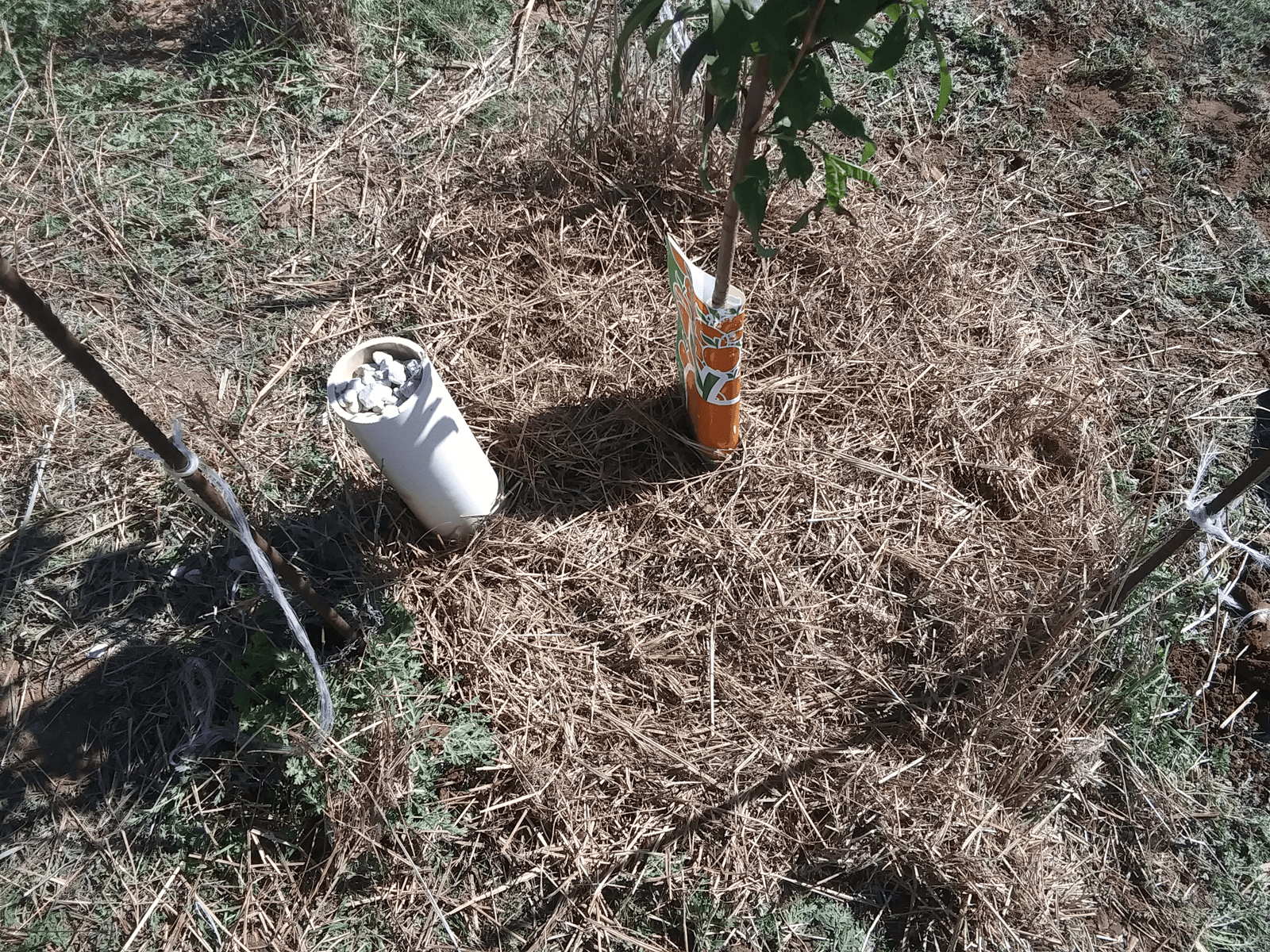
Then the chicken wire around:
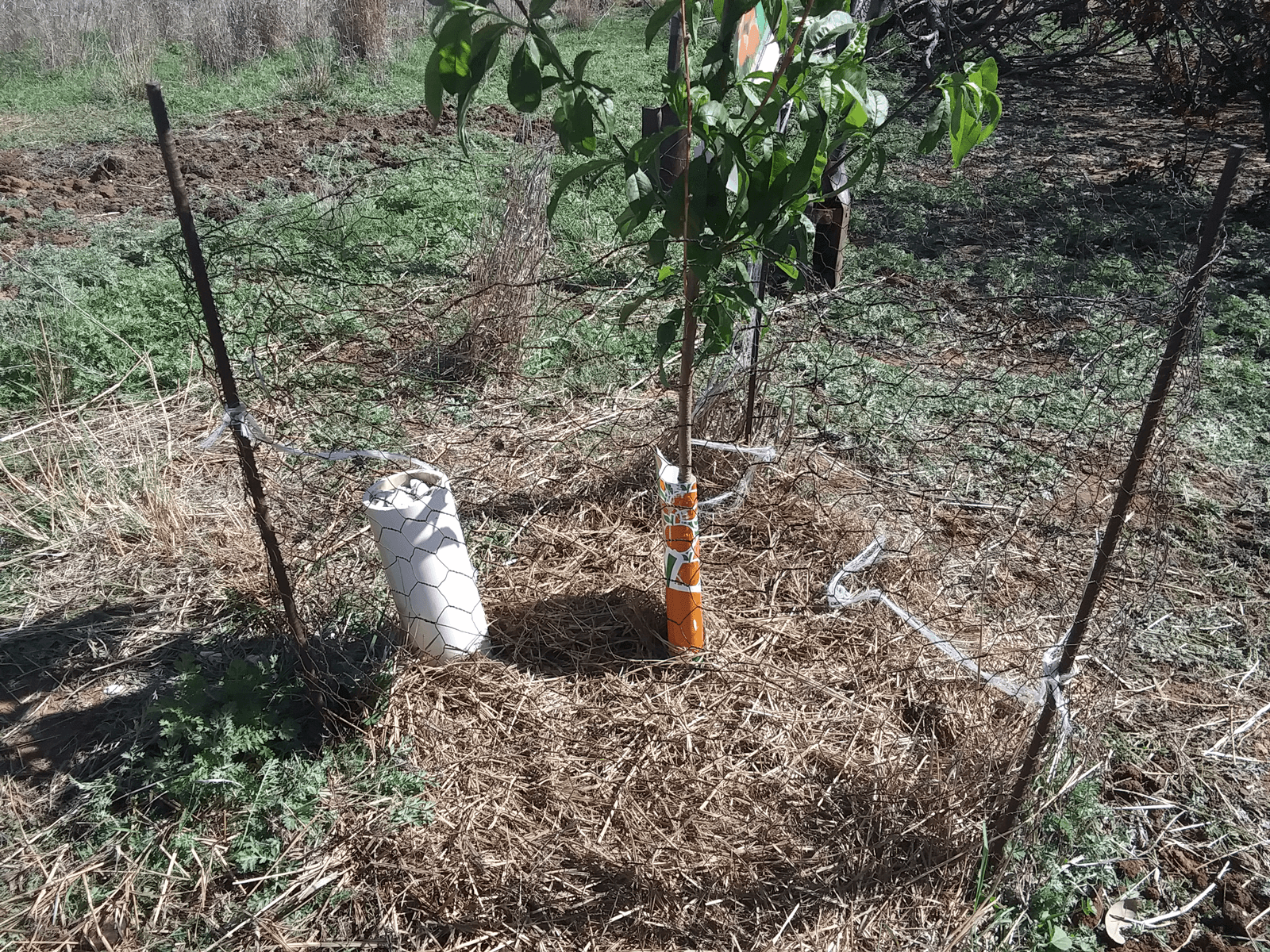
And finally, tying the tree to the 3 rebar posts to try to keep it from moving around in winds:
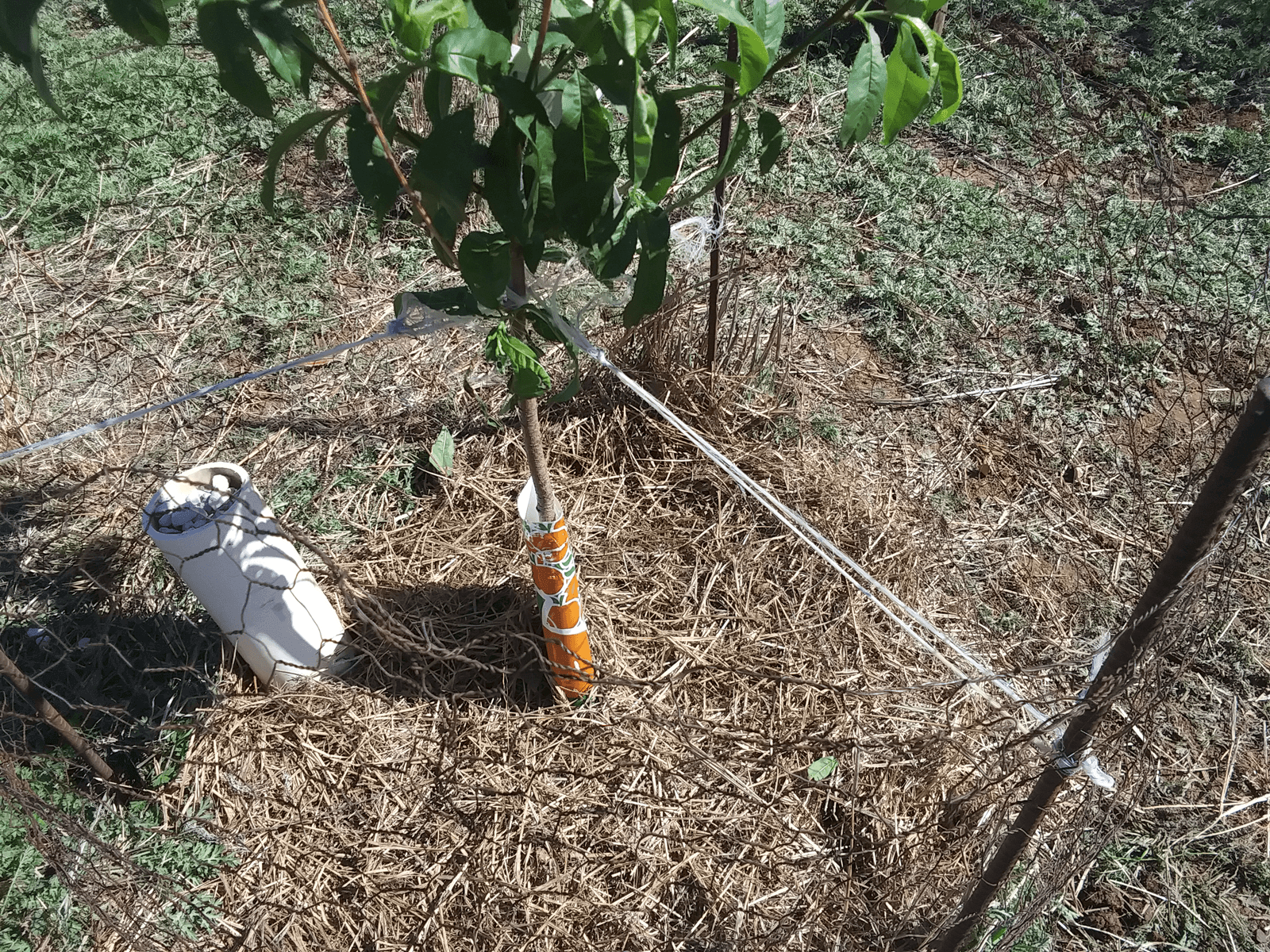
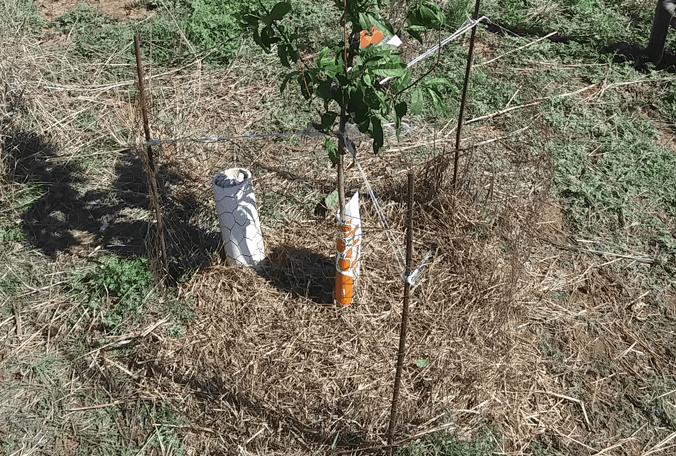
And here it is:
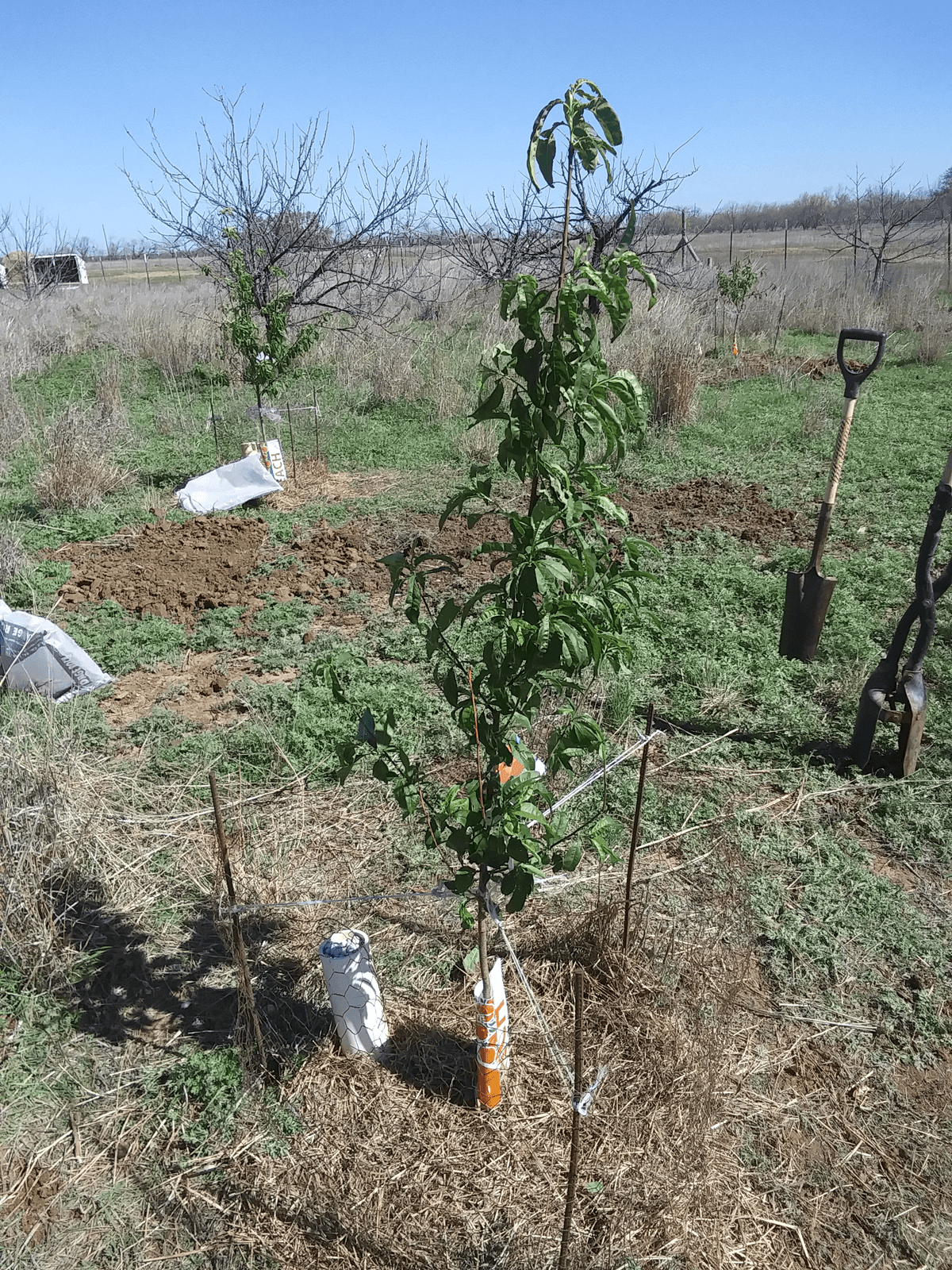
I’m still planning on watering on top while the roots get established, but I’m hoping long term the underground gravel watering system keeps them going.

We thank the Lord for the idea and provisions to put this together and for the trees, and we hope they’ll be fruitful, as we always pray God brings forth fruit from our lives:

John 15:4-8:

4 Abide in me, and I in you. As the branch cannot bear fruit of itself, except it abide in the vine; no more can ye, except ye abide in me.

5 I am the vine, ye are the branches: He that abideth in me, and I in him, the same bringeth forth much fruit: for without me ye can do nothing.

6 If a man abide not in me, he is cast forth as a branch, and is withered; and men gather them, and cast them into the fire, and they are burned.

7 If ye abide in me, and my words abide in you, ye shall ask what ye will, and it shall be done unto you.

8 Herein is my Father glorified, that ye bear much fruit; so shall ye be my disciples.

— David

Introducing the Hoevator

Since most of the chickens that we raise end up spending some time growing up in the chicken pen area, which was put in an area shaded with oak trees, they end up liking to stay, considering that home base, and often perch in the trees when bedding down for the night. Well, out here there are just too many harmful critters that roam around at night, so we try to make sure to get the chickens into the chicken tractor. If I couldn’t stand on the chicken pen’s coupe, I was having to climb some of the trees to get them down. This got tiresome quite quickly.

One night, I thought I would try to just poke them out of the tree with something, and decided to try using the garden hoe. When I put the hoe head up to the chicken to push underneath it, I believe it just sort of hopped on; and I was able to just lower it down while it sat perched on the hoe head. Hmmm….let me try that again. And it worked again! And again, and kept working with very good success! Hey, pretty nifty! So, we thought we’d offer a demonstration of the Hoevator in action!

Once in a while, especially if I start the process too early in the evening, the chicken will fly off; but for the most part, it all works very consistently.

I know, it’s a simple thing, but it beats climbing the trees or trying to get the chickens to fly down. We’re thankful to the Lord for Him allowing us to discover this little chicken-retrieving technique!

— David

Poor-Man’s Net-Wire Fencing

Our main working area is about 6 acres or so, where our barn, the pig pen, the chicken tractor and pen, the orchard, the goat pens, and a field area for crops are. To the south and west are barbed-wire fences.

One of the things we have hoped to be able to do is allow the cows and goats to roam in our main working area, eating either weeds or the left-overs from the crops. This saves costs and allows them to forage more, which is more natural to them. However, you find out really fast that 1) they prefer fruit and nut trees and hay bales first, and 2) what’s available on the inside of a fence is apparently not as enticing as what’s on the other side (regardless of what that is).

In the past, hoping this would be good enough, I had hand pulled net-wire fencing across t-posts around the orchard and pecan trees. Well, that alone proved to be a little less than successful as the goats would just go right through the barbed-wire fence to the south, and the cows decided to hop the orchard fencing to get to hay bales we had been storing in that area.

Arg.

And so, in order to allow our animals to be able to graze/browse this area, we needed to first stop the goats from getting through that south fence. This usually means putting up some form of net-wire fencing, which, besides the cost of the fencing, would mean I would have to basically re-do the whole south fence, which would mean the fence would be down for some time as I fixed or put in new posts and pulled the fencing, which would defeat the purpose of having an enclosed (ie. protected from the cows) area.

When we fix barbed-wire fences around here, often we add wire stays in certain places on dilapidated areas to keep the cows from going between barbed-wire strands. And then it struck me that I might be able to actually just do that for a whole fence line, mimicking a net wire fence. It would be kind of a tedious, time-consuming process; but to me, it was better than re-doing the whole fence.

And so I began. For the stays themselves, I have found that galvanized electric fence wire is relatively inexpensive and pliable yet sturdy, and so I chose to use that. When placing the stays, I decided to put them about 10 inches apart — hopefully far apart enough to save on wire usage, but close enough to keep the goats from trying to get through it. At first, I started just trying to do a few stays each day. But that was going a little slowly, so on some days when I had time, I would do several sections (a section being between two wood posts), but generally got into the groove of doing a section a day.

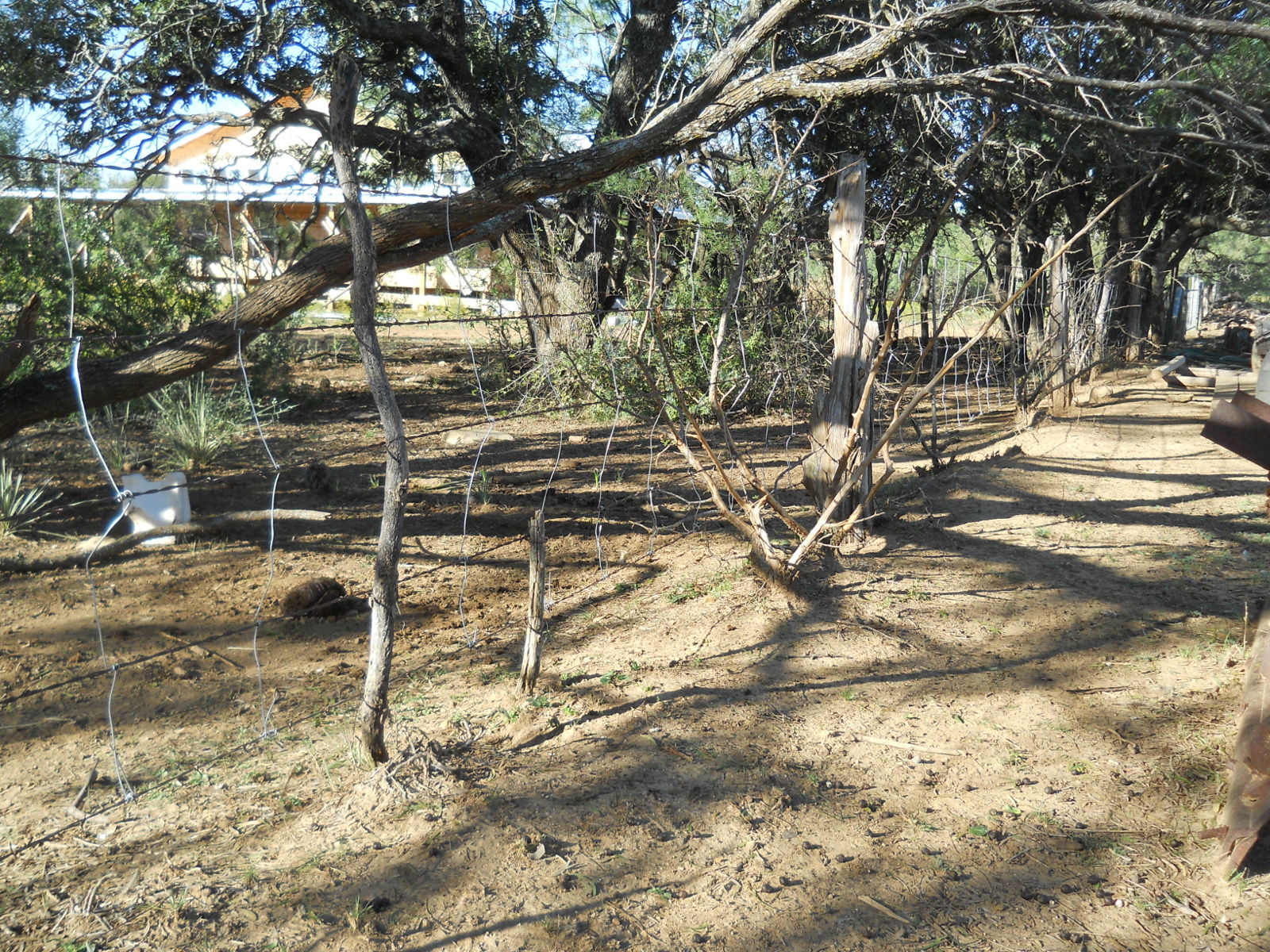
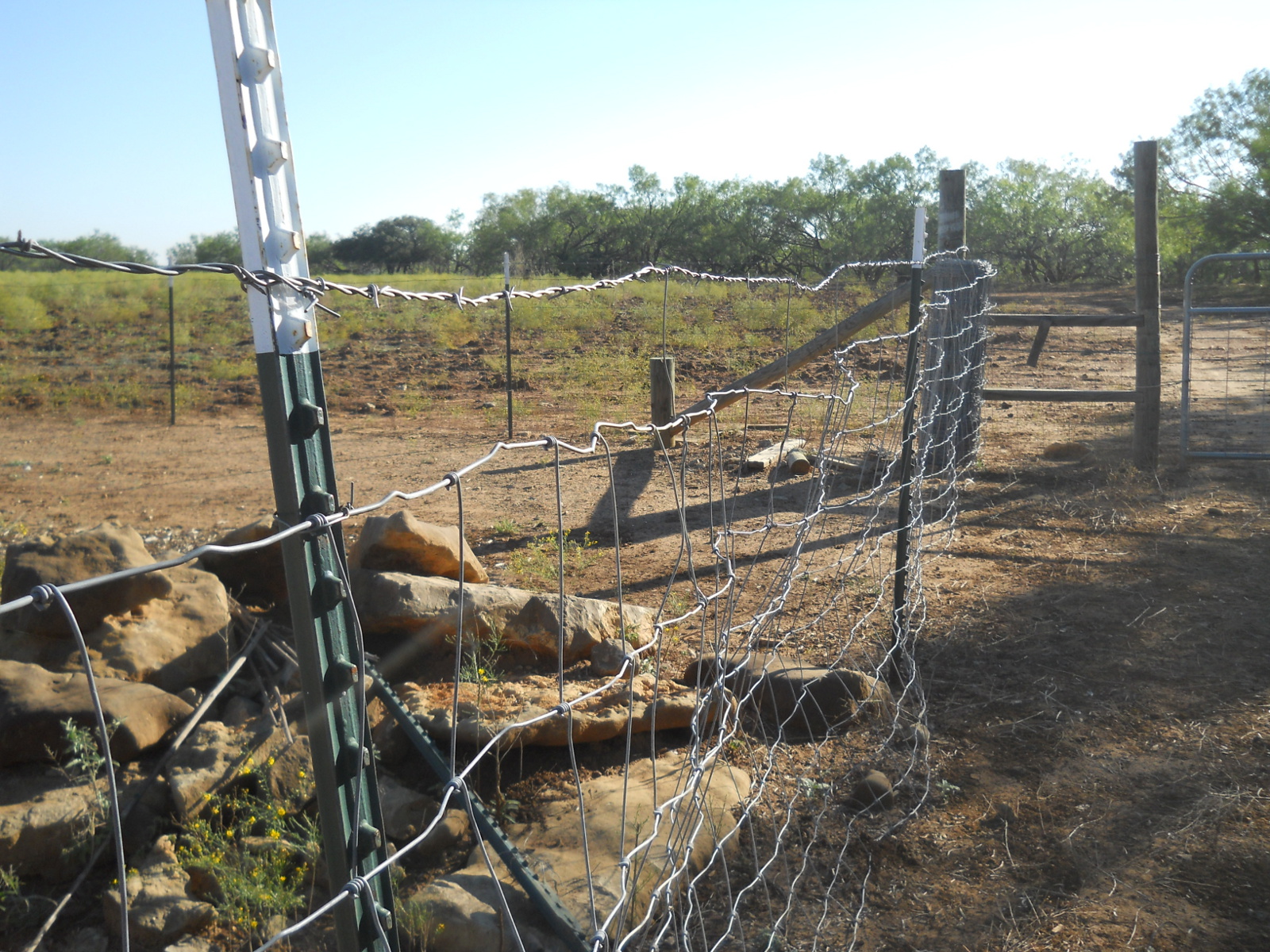
And here are the results!

Barbed-Wire Fence Turned into a New-Wire Fence Small Section
Barbed-Wire Fence Turned into a New-Wire Fence Larger Section

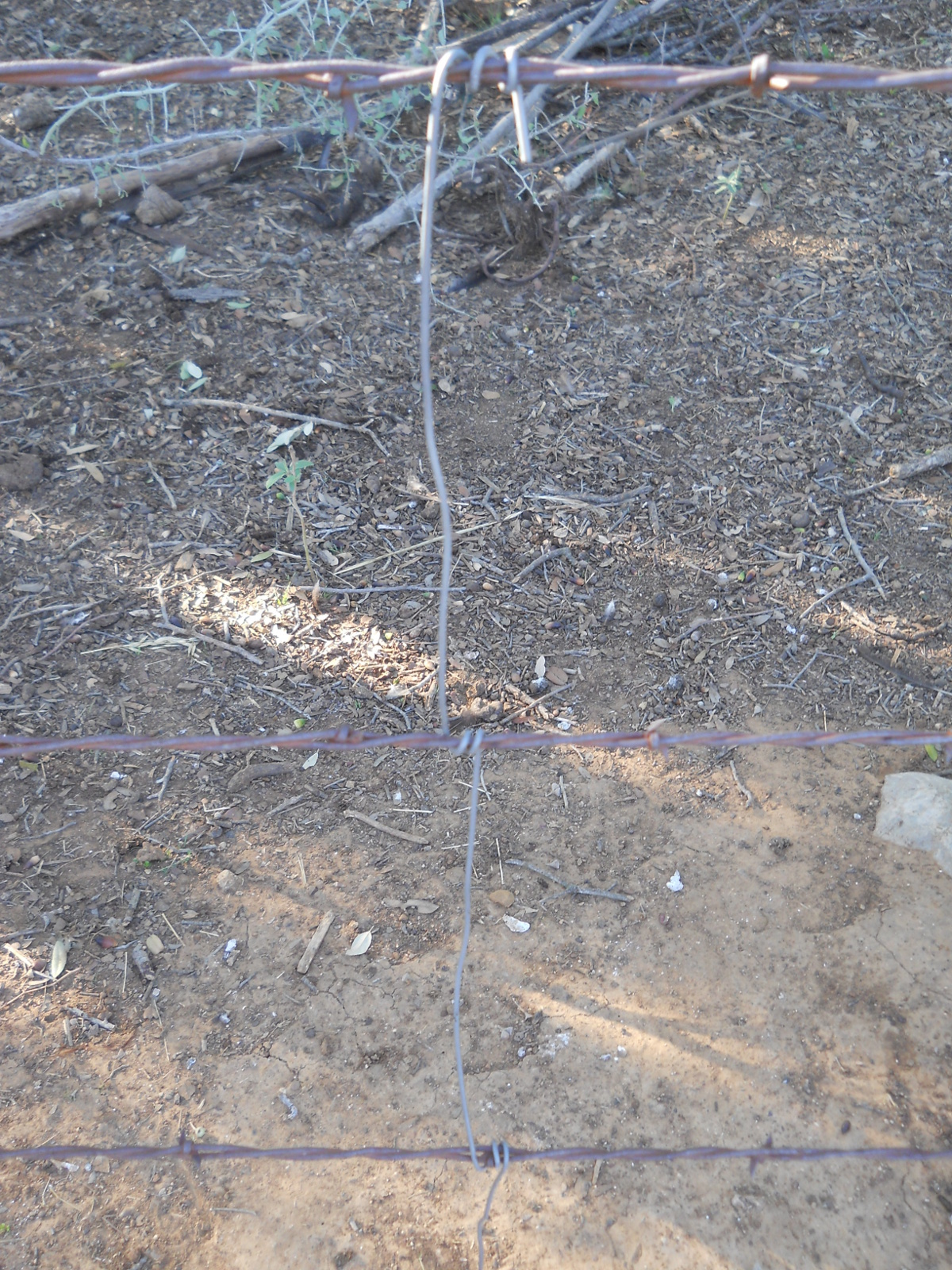
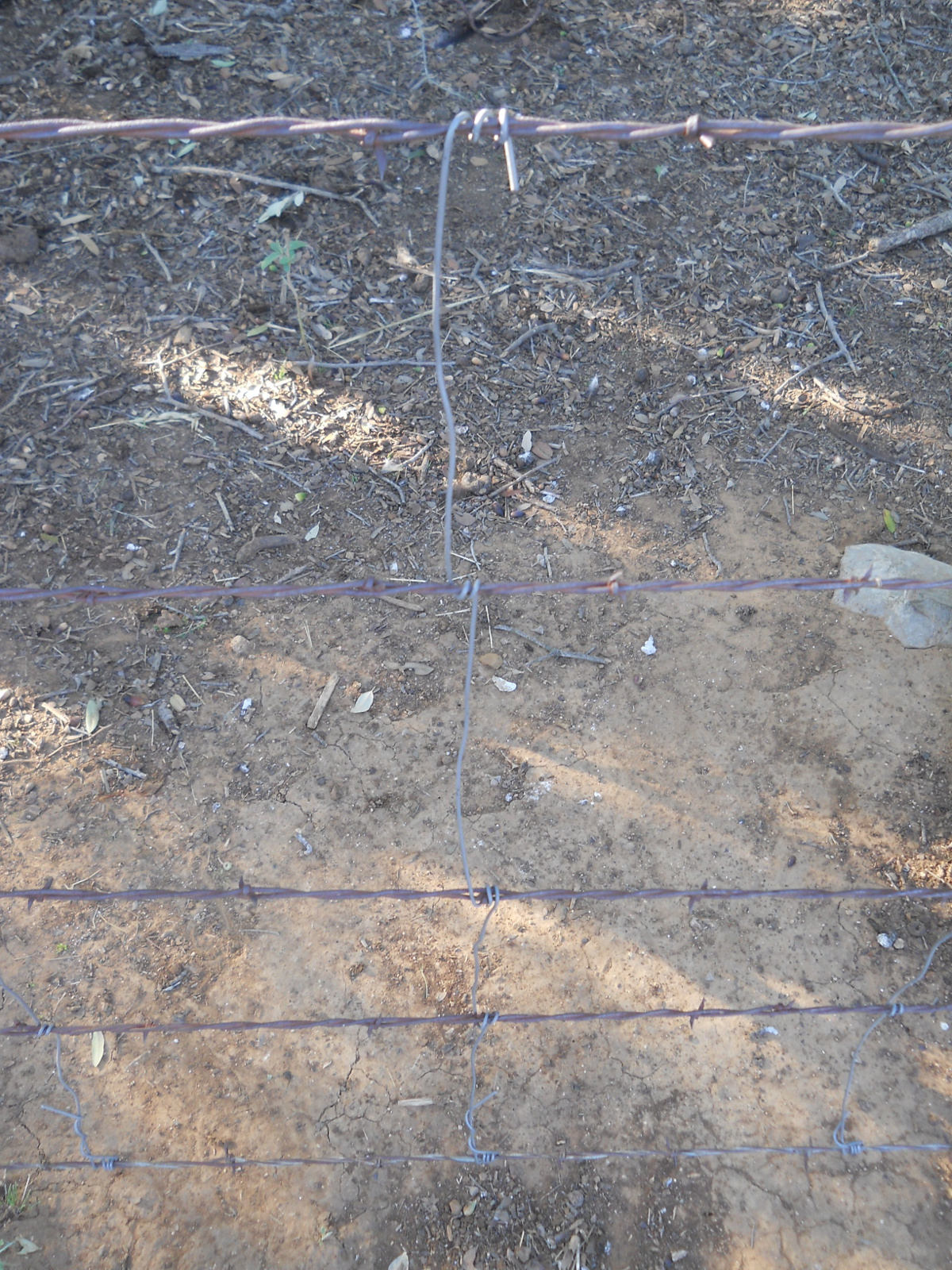
Here are some pictures as to how I wrapped the wire — starting at the top, two loops around each barbed-wire strand, alternating starting from the front or back of the wire as I went down each strand. Once wrapped, I would take my wire pliers and “crush” each set of loops down onto the barbed wire to keep them from sliding:

Barbed Wire Wire Stay Close Up
Full Barbed Wire Wire Stay from the Top
Full Barbed Wire Wire Stay from the Side

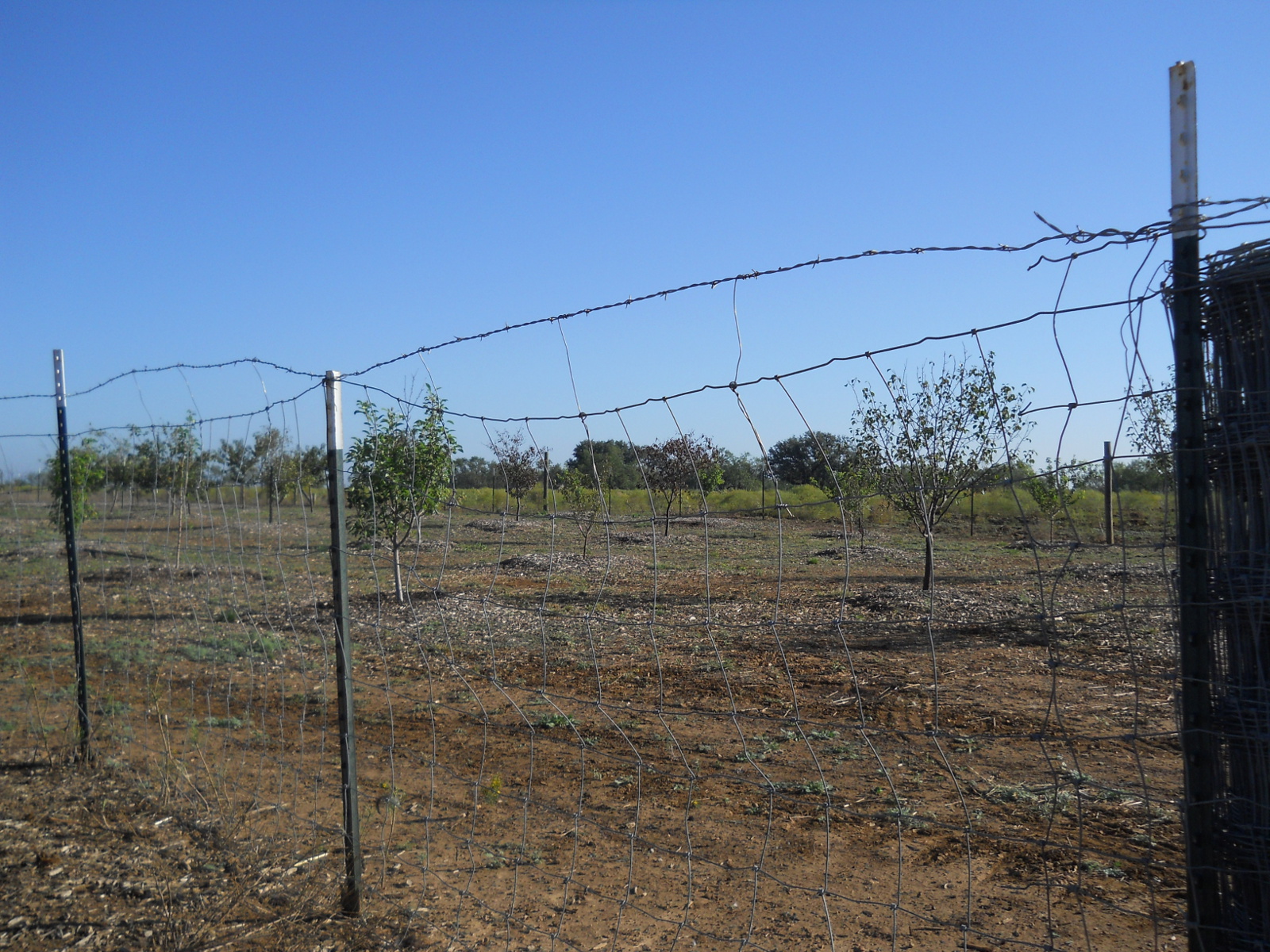
Besides turning the south fence’s barbed wire into net wire, I needed to do something about keeping the cows from jumping the orchard fence. What we normally do for a fence is add a strand of barbed wire above the fencing, but I certainly couldn’t stretch barbed wire on a hand-pull, t-post-only fence. But, I thought I might be able to use wire stays here as well to elevate the barbed wire, thus at least causing a visually higher fence for the cows, which hopefully they would not attempt to jump.

And here is how I wrapped the stays to do that:

Wire Stays to Elevate Barbed-Wire Strand Above Hand Pulled Fence
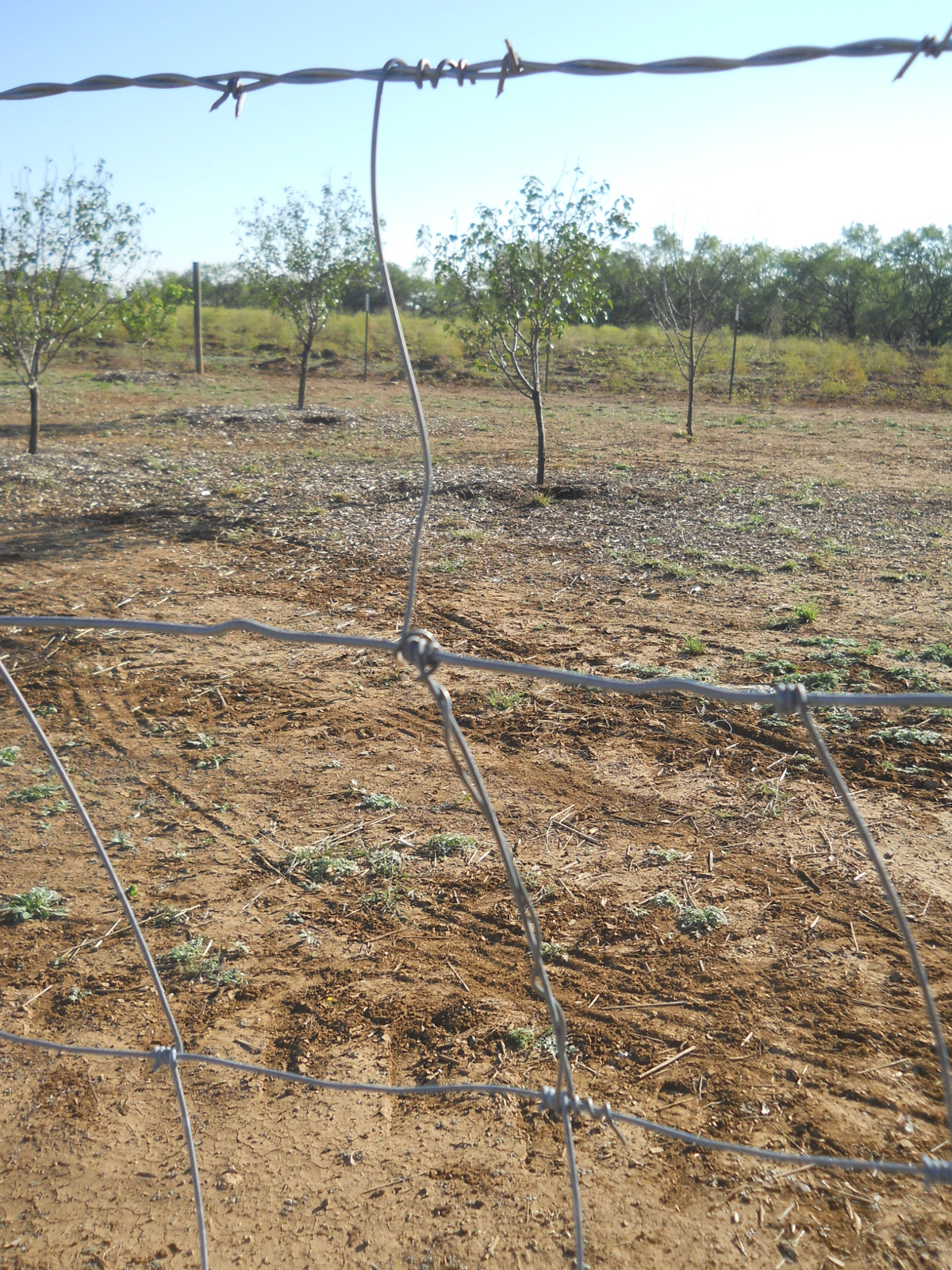
Wire Stay to Elevate Barbed-Wire Strand Above Hand Pulled Fence Close Up

And here is a close up. I did some extra wrapping of the wire down the net-wire fencing to hopefully make it a little more sturdy:

And lo and behold, it actually worked! Thanks to the Lord! The cows stopped jumping the fence; and when we started letting the goats out into the field after the cows had finished with what they were going to do with it, the goats couldn’t get through the south fence!

I was worried though they would try to do that on the west fence, but thankfully they never did, although I did add a barbed-wire strand along the bottom of that fence line because in some places the soil had eroded, and it seemed at least some of them could have fairly easily gone under it.

Our littlest doe from this year would sometimes go under the new “net-wire” fence to the south, and we’d have to shoo her back in, but being separated from the herd, she wanted back in (and would audibly let us know that!), and then eventually figured out how to get back herself. (We had one other doe figure out some way to the other side too, but it was only a few times, and she would want back in as well).

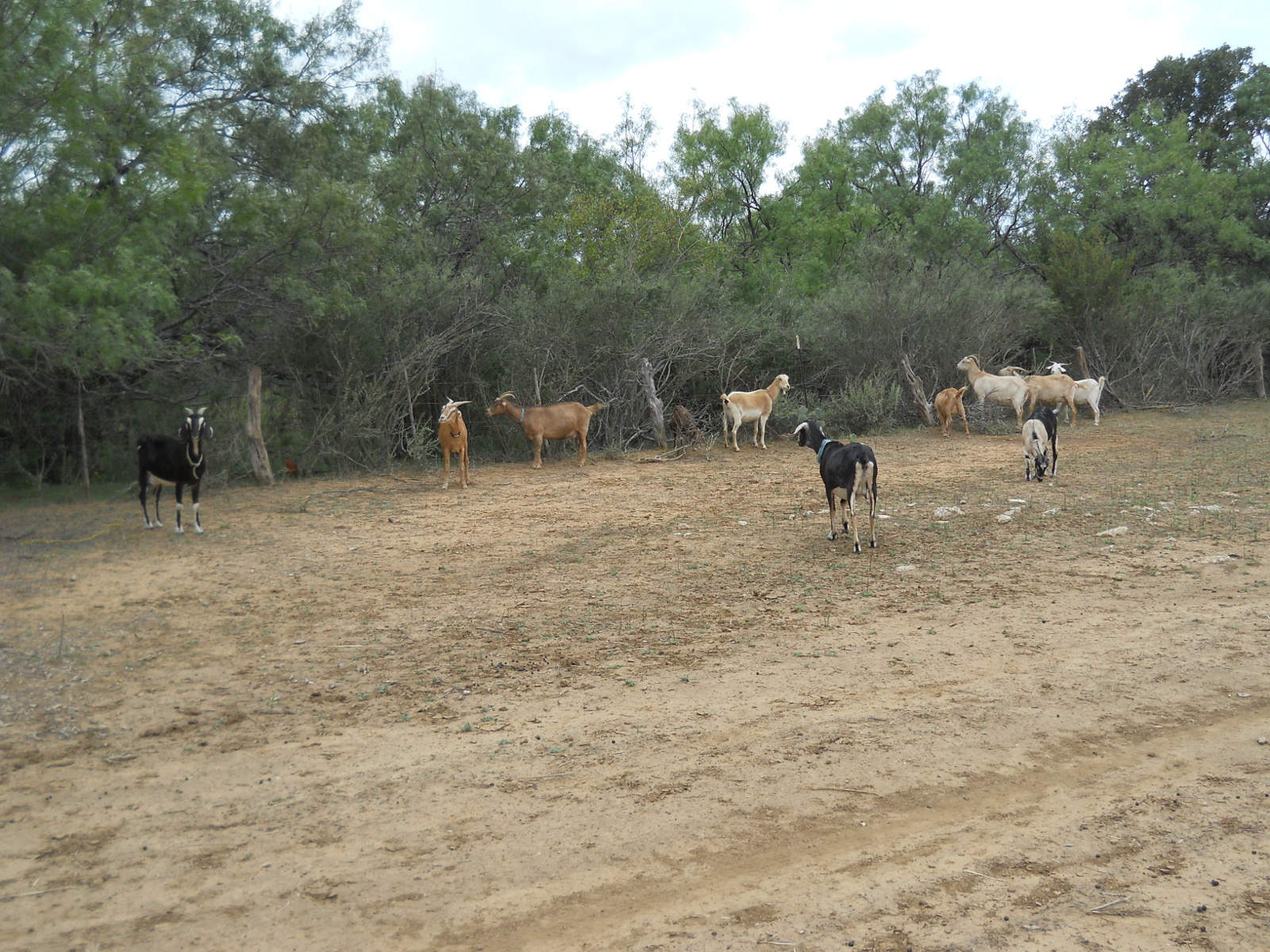
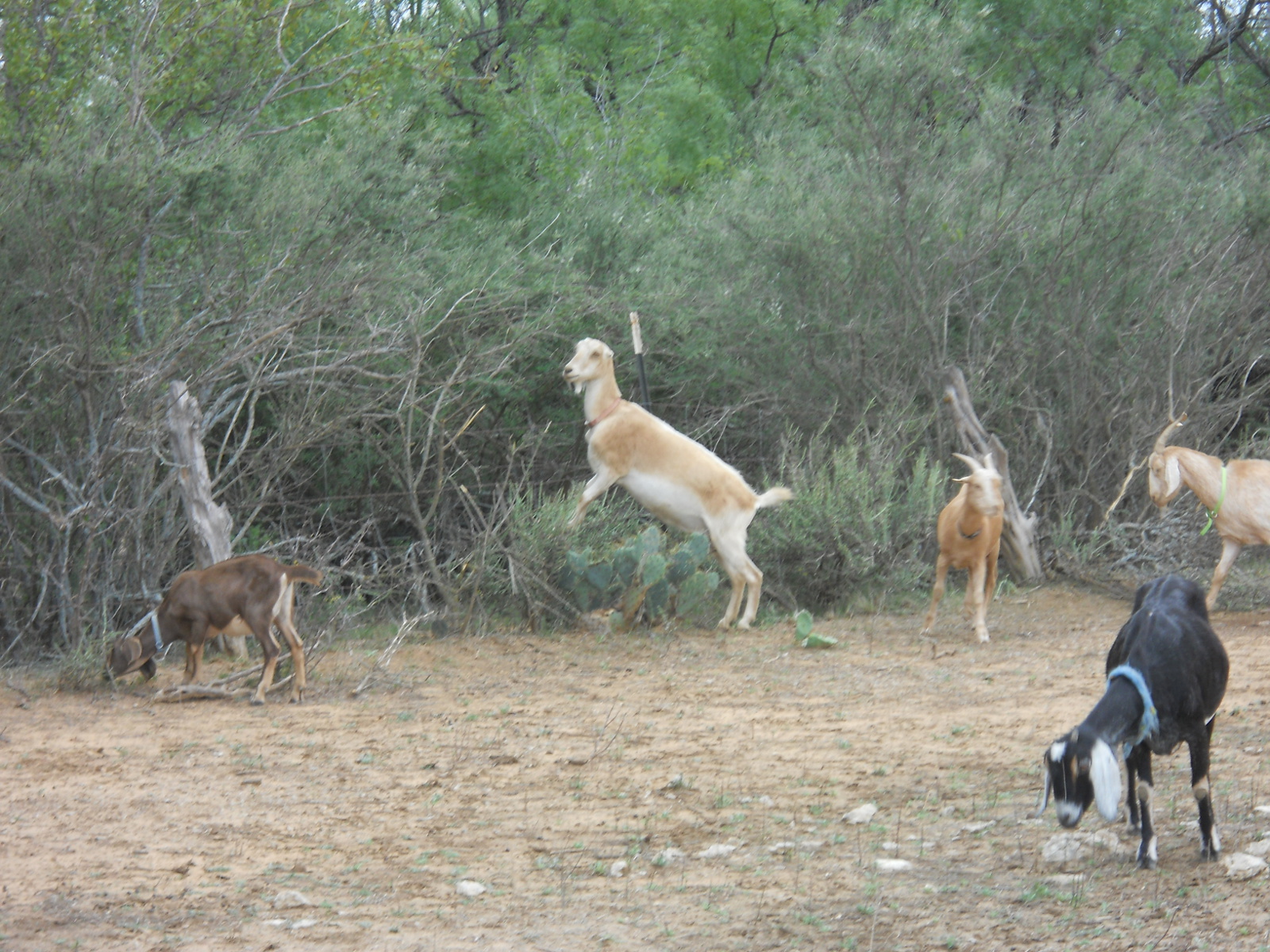
Here are goats, kept in by the “new” fencing:

I had to shore up the orchard and nut-tree fencing, adding a few t-posts, as the goats and cows would push on the fencing or lean over it to try to get to the trees (I didn’t add a barbed wire strand to the nut tree fencing); but all in all, this has worked well enough to be able to allow the animals access to some more, previously unavailable, grazing land.

We are thankful to the Lord for this idea and for allowing it to work, for the land He’s granted us all out here, and for the opportunity to further separate from dependence on the world to more dependence on Him and His direct provisions.

— David