Our journal of what we pray is our sojourn of life along the narrow way, even the old paths, submitting to the Bible as a light unto both.

Category: food (Page 31 of 35)

Garden 2009 – Update VI – Onions

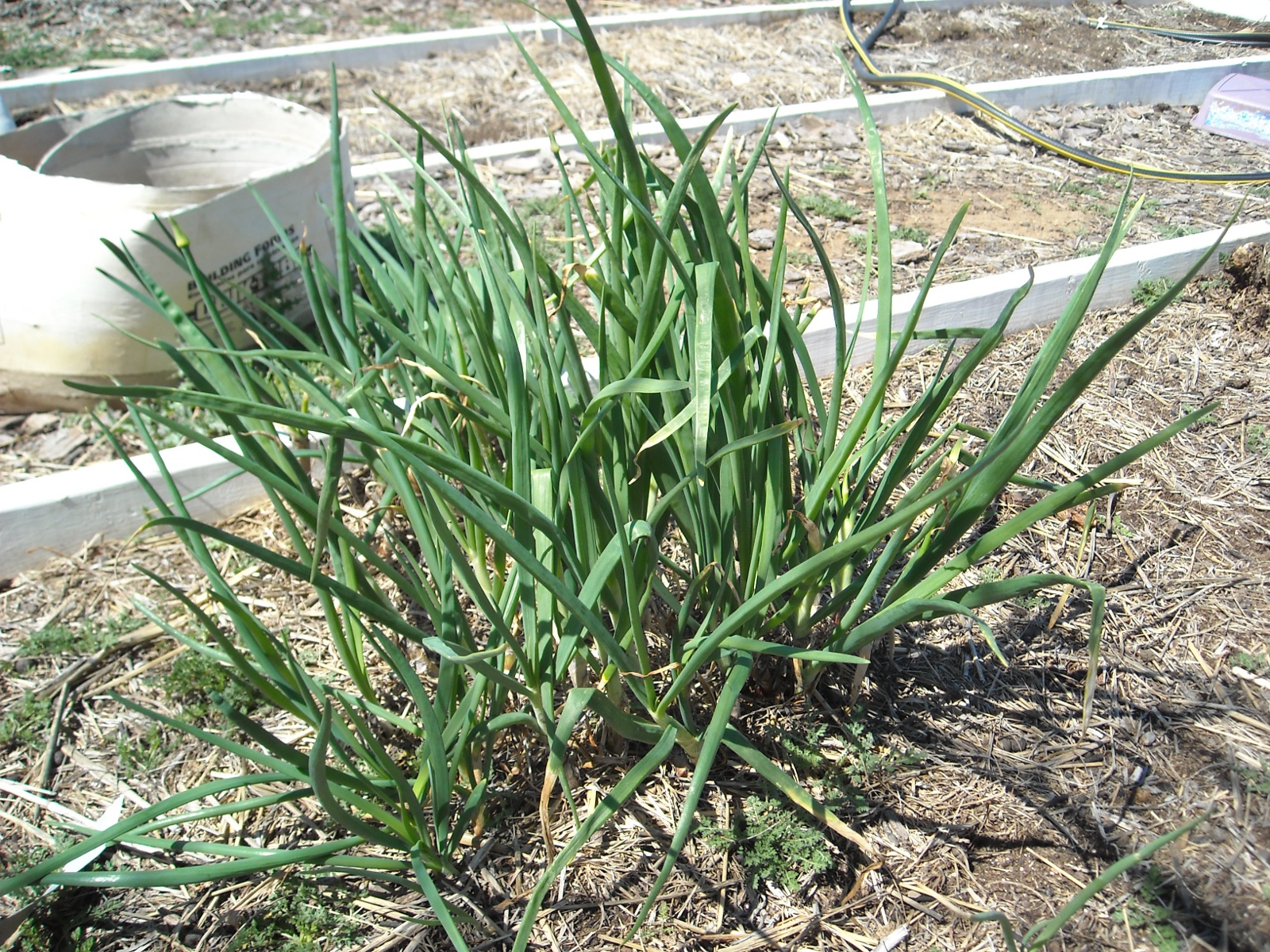
Garden 2009 Growing Onion GreensI sit here writing this blog post on the first full day of Spring 2010. Wow, I never thought I’d still be writing about our Spring 2009 garden! In it, we planted onions; and they have been going strong through the wettest, harshest winter we’ve had since we’ve lived here in Central Texas. I had picked all of the green onion stems off of the onions last summer in order to dry them in our solar food dehydrator, and decided to leave the remaining onions in the ground and pick them as needed as we entered into Fall. In actuality, once everything else in the garden had come to its natural end, I forgot to go out and pick the onions much of the time. Then, mid-way through winter, Dave noticed there were green onion stems (aka: scallions) that had grown back long and healthy. Boy, talk about a gift that keeps on giving!

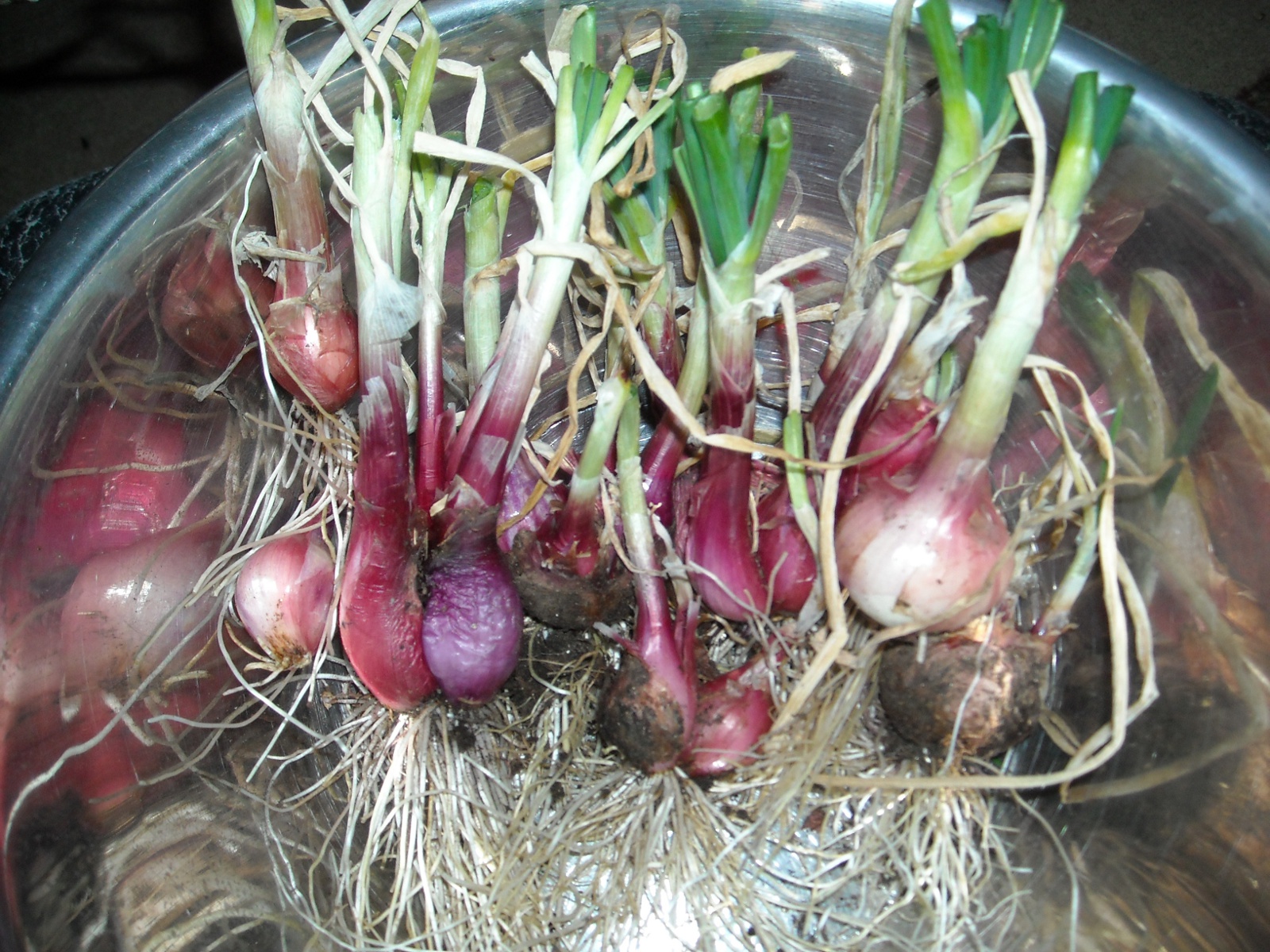
One recent evening I went out and pulled several onions when my supper dish recipe called for it. These bulbs are much smaller than regular onions you buy in the store, but the taste is delicious and robust. I was pleased and surprised with how well the onions had survived through Winter, and with the bright, healthy color and texture that had been maintained:

Garden 2009 Picked and Clipped Onions

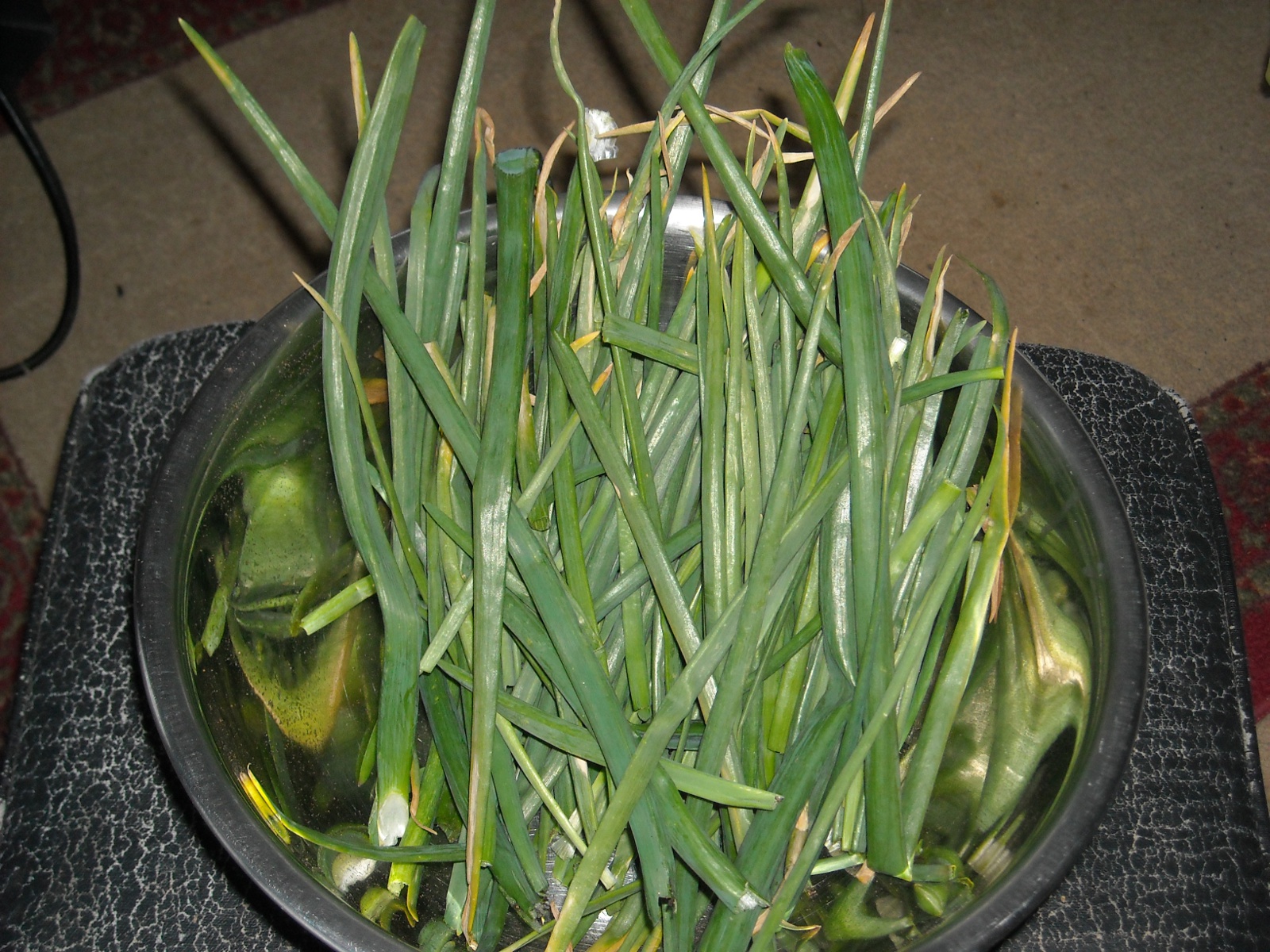
You really do get two vegetables for the price of one with these onions. The green onion stems are potent with their own milder onion taste. They also looked green and very healthy. It’s amazing how some garden vegetables are so fragile when severe weather comes; and others, like these green onions, seem to thrive:

Garden 2009 Picked and Clipped Onion Greens

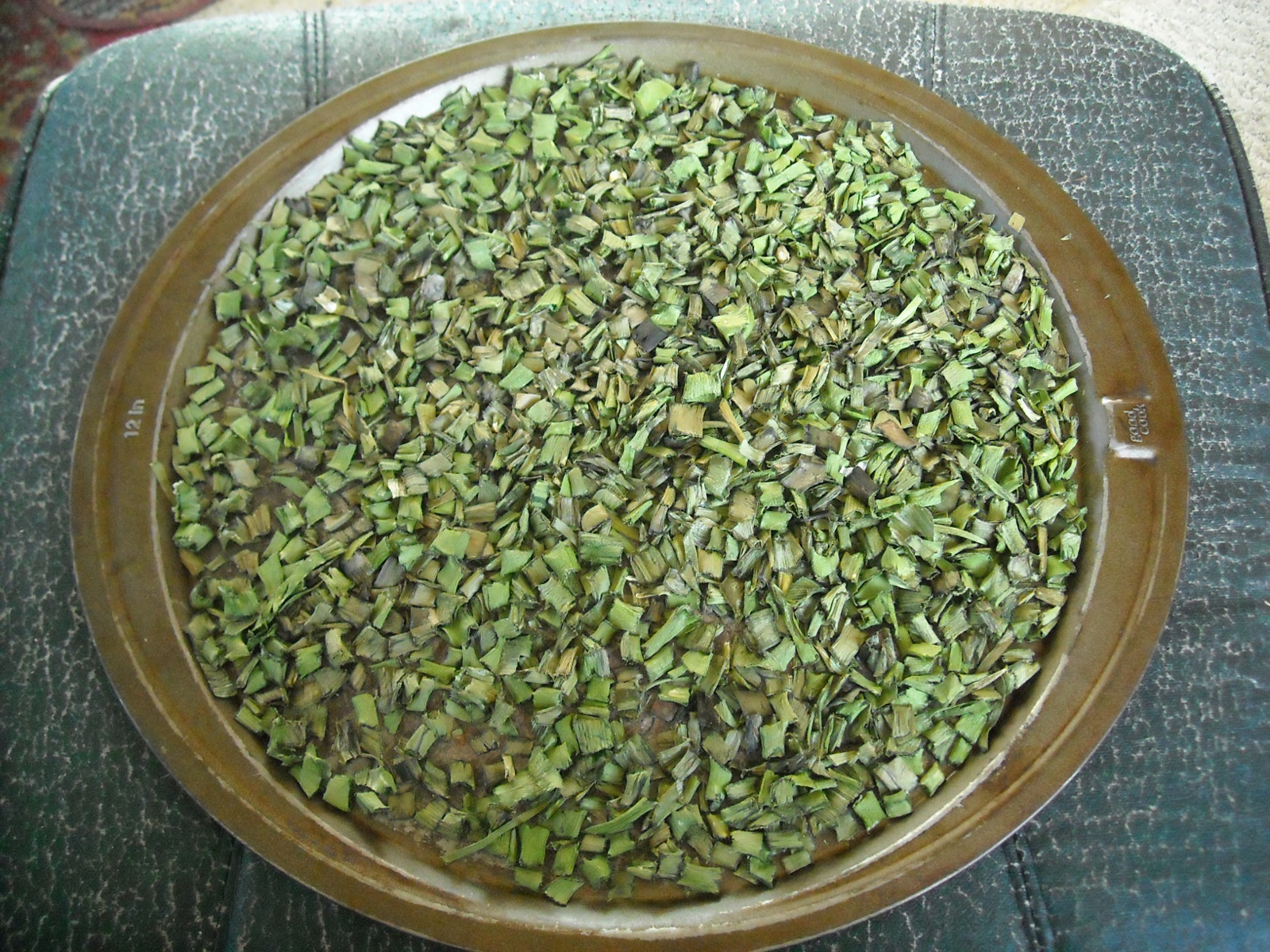
I didn’t want to waste any of the green onions, and the weather we have been getting has been too overcast to use the solar food dehydrator much of the time, so I decided to put them in the oven overnight to slow dry. I cleaned and cut up the green onions and put them on a pizza pan sheet, set the oven to 150 degrees (or thereabouts), and left them overnight. They needed to stay in the oven a bit longer the next morning; but the end result was delicious, crispy, preserved green onion bits! I have since used them in a few various dishes; and it adds a nice, subtle onion flavor:

Garden 2009 Dried Onion Green Bits

We never tire of giving our Father thanks for His direct provisions. And we pray He grant us strength, resilience and growth through times of the spiritual winters of His chastisement, affliction, or the lessening of His presence to teach us to desire Him more.

Susan

Providence’s Perpetuation Provisions: New Kids “George” and “Gracie”

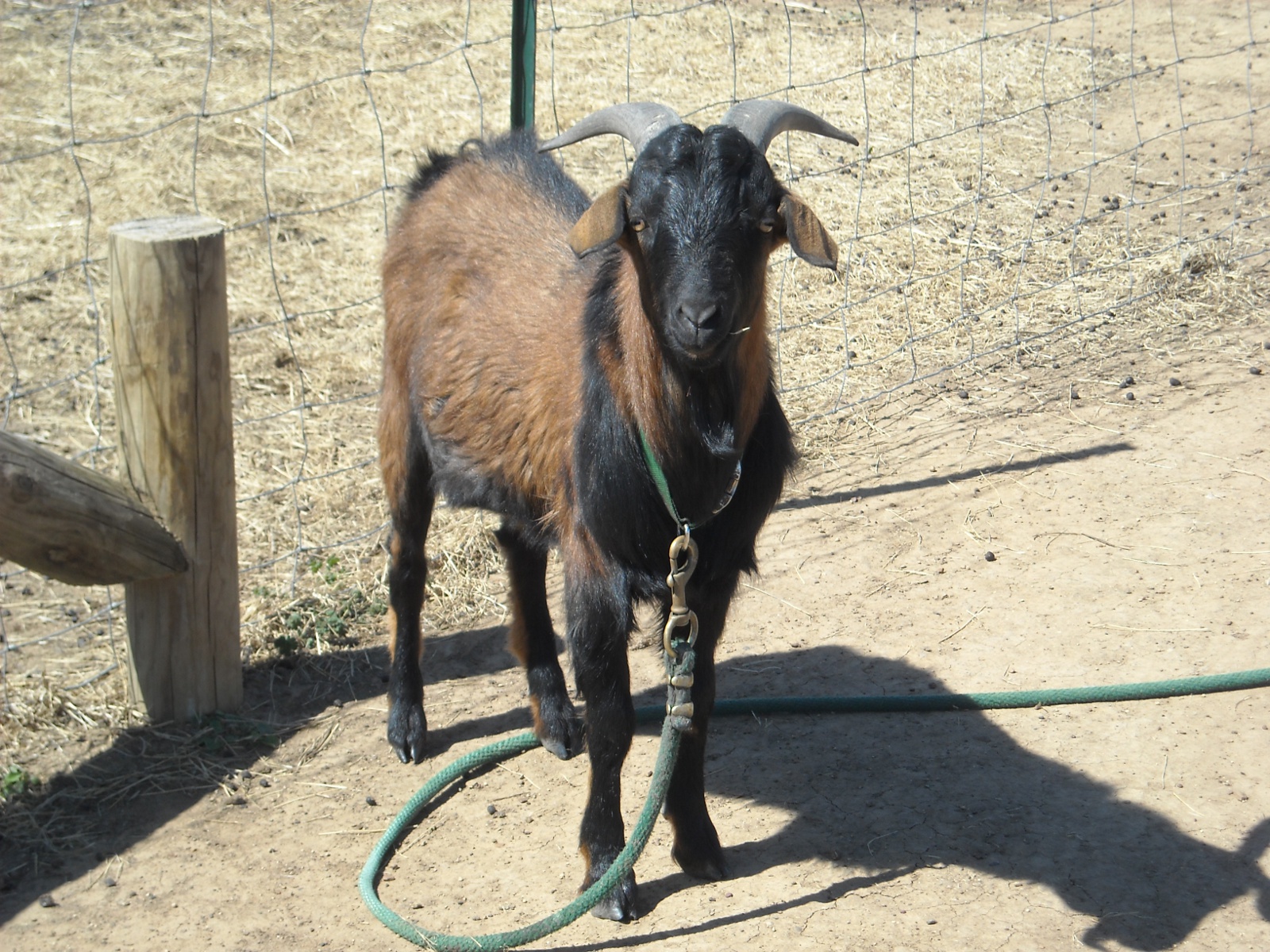
For our breeding scheme this year, we previously discussed our separating out our older does to be with our main buck Shatner, and the younger does, his female offspring, to be with Eastwood, a goat we traded one of our triplet bucks for. Well, there have been a couple of updates: first, Eastwood died during the Winter; so we borrowed a buck from our neighbor. He’s apparently pure Spanish, and we call him John Buck (think what you might call an unknown female goat ๐Ÿ™‚ ) :

Spanish Goat Buck Borrowed for Breeding

We had put the bucks with our does in the beginning of November so they would give birth no earlier than April, where they should be mostly out of the cold. Well, Sue was out near the goats the other day, and she heard a very young sounding bleat. Umm…huh? She went to see what was going on, and lo and behold, our doe Pammy had given birth to twins! While quite surprising, we were both very thankful to find out God had granted us two new goats — a male and a female. We decided to call them George and Gracie, and here is your introduction to them:

New Goats George and Gracie with their Mother Pammy

And here is a video:


As I briefly mentioned in the video, last year, when Winnie had her triplet bucks, the middle one, Porthos, seemed to often have physical problems, from pink eye to swollen front knees. And he was smaller than his brothers, and so we kept him with Winnie much longer than we did the others, so he could continue to have her milk. Well, apparently we kept him in too long, as nearest we can figure, he is the father of the new kids. Porthos has grown up to be about as big has his younger brother now, and seems to have also matured normally. ๐Ÿ™‚ Even though this is a possible situation of some in-breeding, which we were trying to avoid, since it’s Pammy it’s not too bad as the worst Porthos might be is Pammy’s nephew; with Betsy, she’s of a whole different line, so if Porthos got to her as well, it’s fine. However, he may have gotten to his mom, Winnie; we’re hoping not, but I guess we’ll have to see what happens. And now we know better for the future.

We are grateful for the Lord, in His graces and mercies, granting us these new provisions; and we pray that He might grant they be productive members of the herd, according to His will.

— David


Farmer’s (Goat) Cheese aka Neufchatel

I just finished eating a few crackers topped with my first (successful) attempt at Farmer’s Cheese, a soft “cream” type cheese.

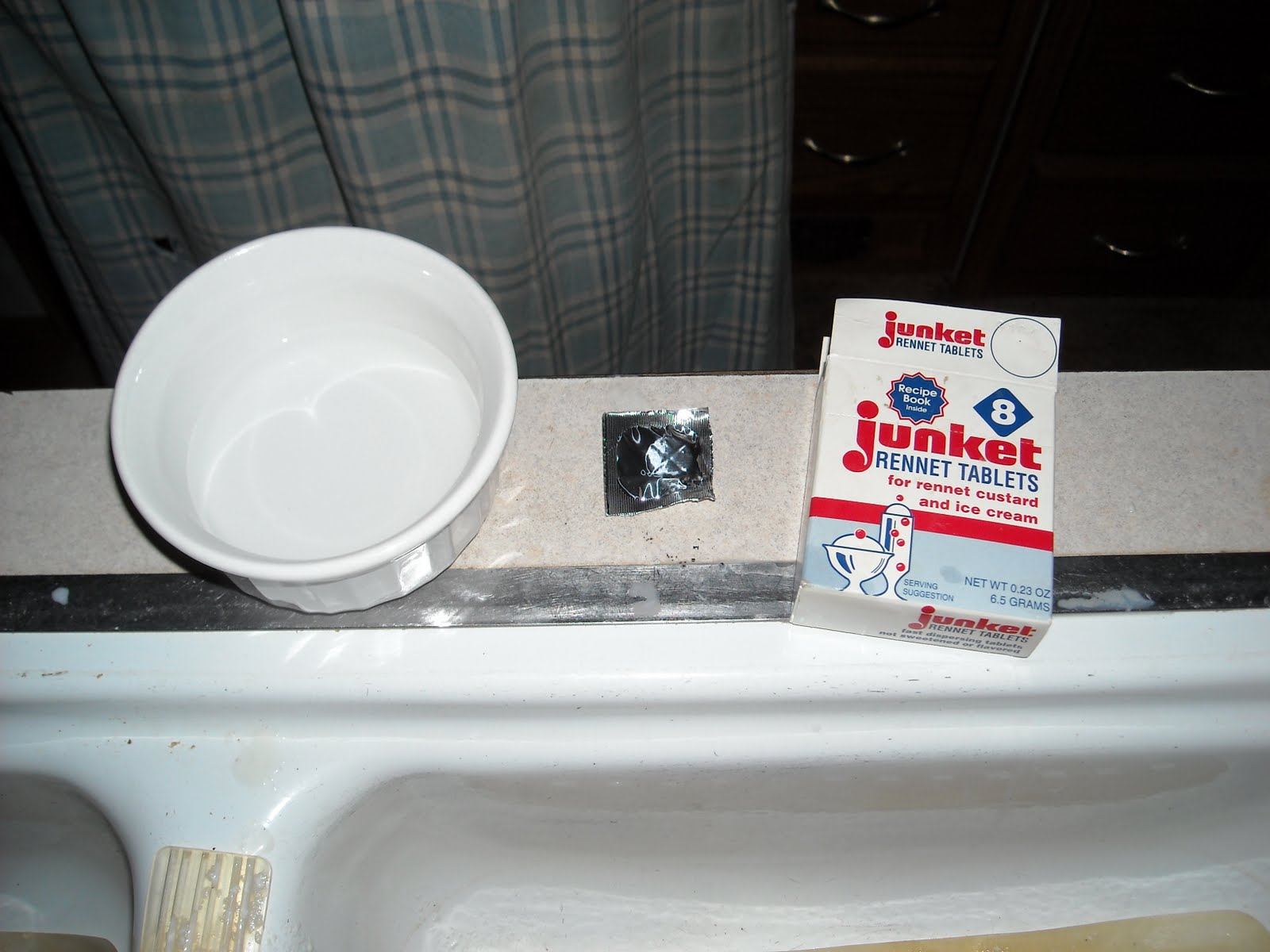
A neighbor said she had made some Farmer’s cheese with the inexpensive Junket rennet tablets found in the local grocery store, so I thought I would try that first. An online cheese making blog said not to use Junket rennet because it is not the same as cheese rennet. But it was here and within my budget, so it was cheese rennet to me! ๐Ÿ™‚

Goat Milk Cheese Rennet

My “first” first attempt was a bust, using the original recipe from the Junket instructions. Not to say it doesn’t work, but that my attempt didn’t work. The recipe calls for buttermilk, which I didn’t have; so I looked online and found you can substitute with milk and lemon juice. So I did that, along with adding 1/4 tablet of rennet dissolved in a little water. In hindsight, I don’t think the combination of those was enough to coagulate the milk. I heated the milk to 65 degrees F according to the recipe, added the “buttermilk” and rennet, and left the covered pot out overnight per the instructions. It was supposed to solidify overnight; but it just never did, even after I left it another 12+ hours. So that went to the chickens.

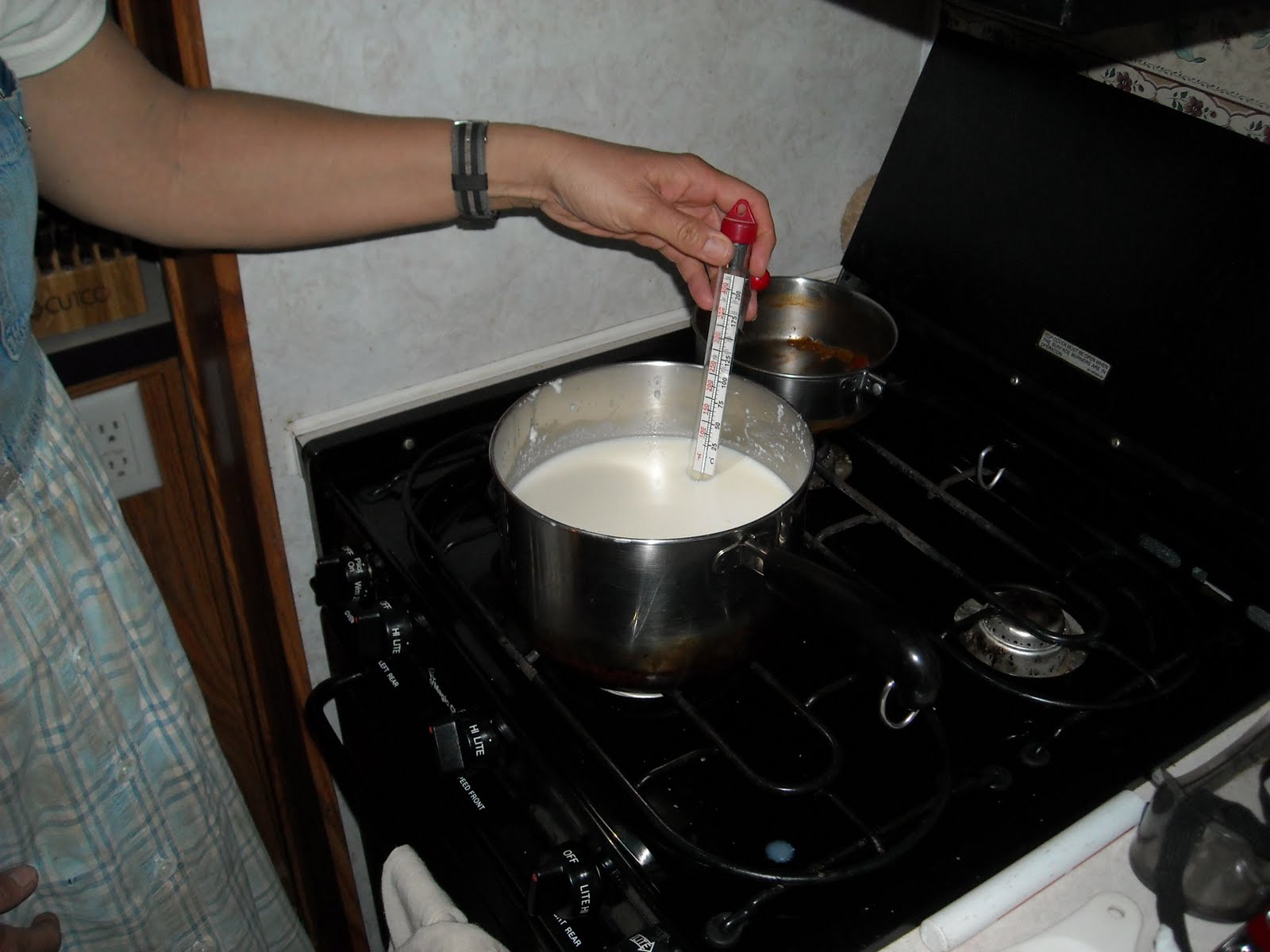
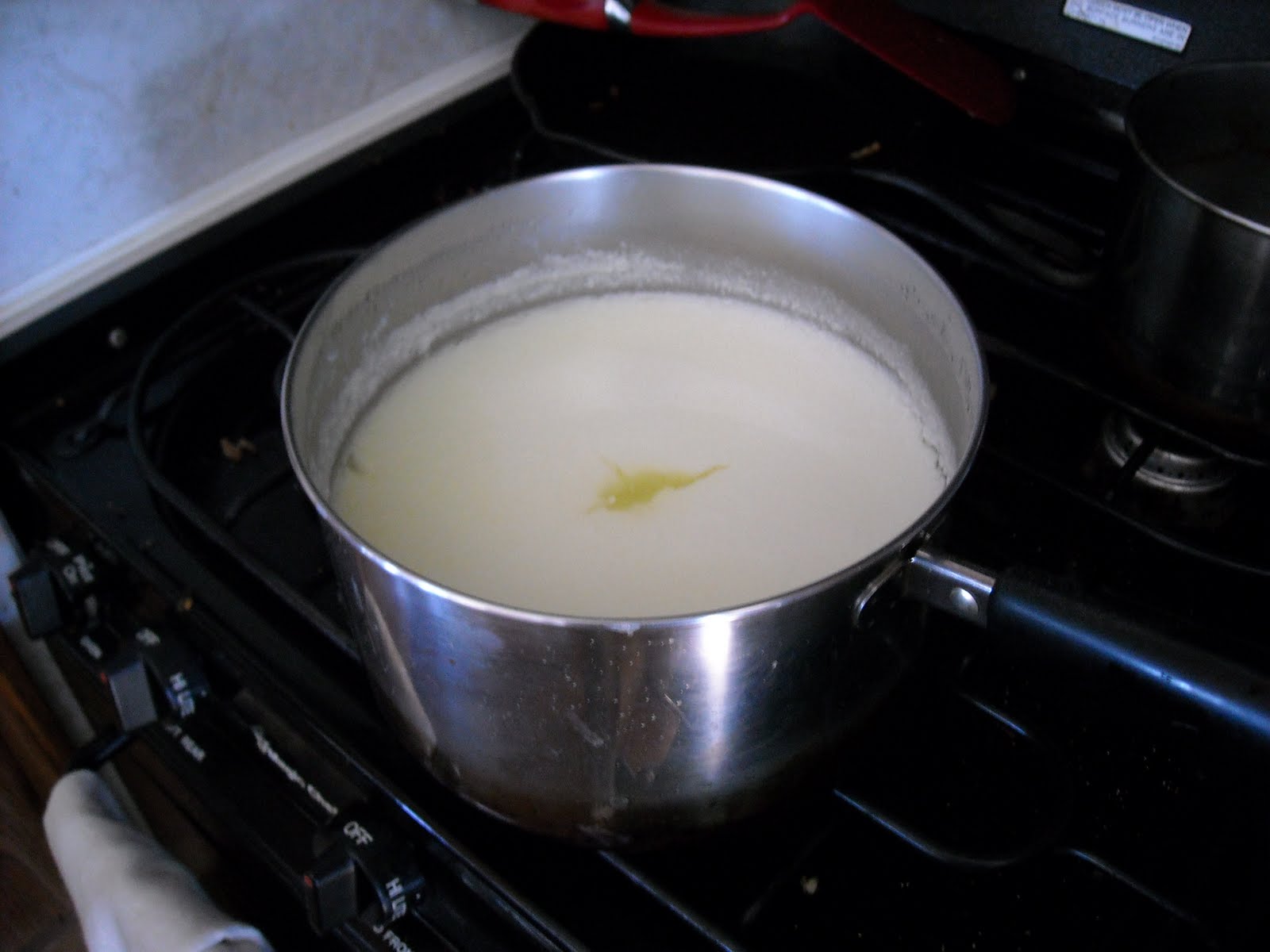
My next attempt was a conglomeration of a couple of recipes. This time I heated two quarts of our raw goat milk to just below boiling, and added two generous tablespoons of white vinegar (one per quart) and 1/2 tablet of the Junket rennet dissolved in a little water. Since this was previously frozen milk, it was a bit watery; so I decided to err on the side of caution and add too much vinegar and rennet rather than too little. The last thing I wanted was to ruin another batch:

Goat Milk Cheese Milk Heating

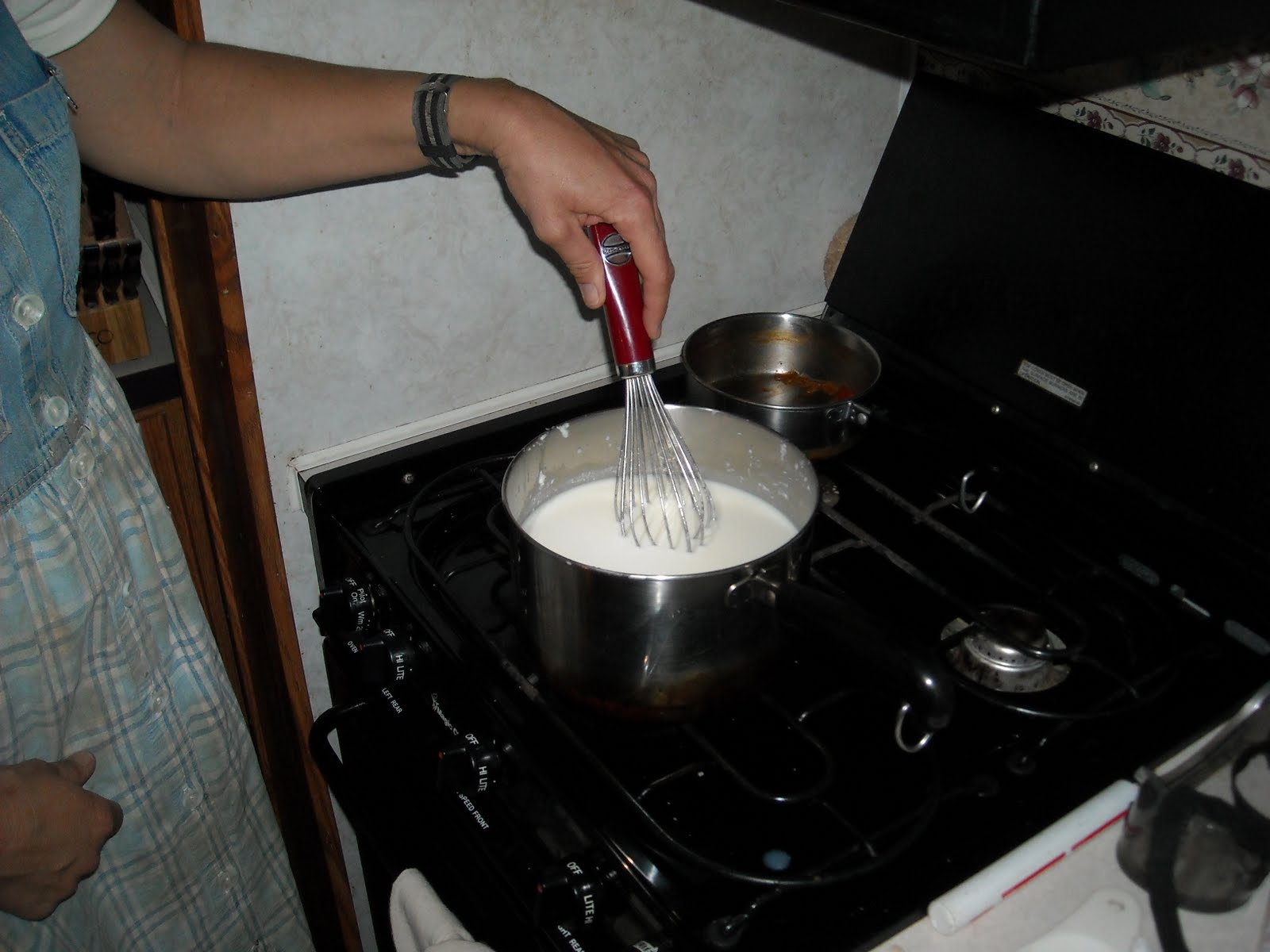
I whisked it all together, covered the pot, and hoped for the best. Well, this time it started to coagulate much more quickly, which gave me hope. By the next day, it was not as solid as I imagine a really good cheese probably would be; but it was close enough!

Goat Milk Cheese Milk Whisking

According to the recipe, the cheese is ready when you can poke your finger in and lift the top, gelled layer cleanly from the lower, liquid layer:

Goat Milk Cheese Curds

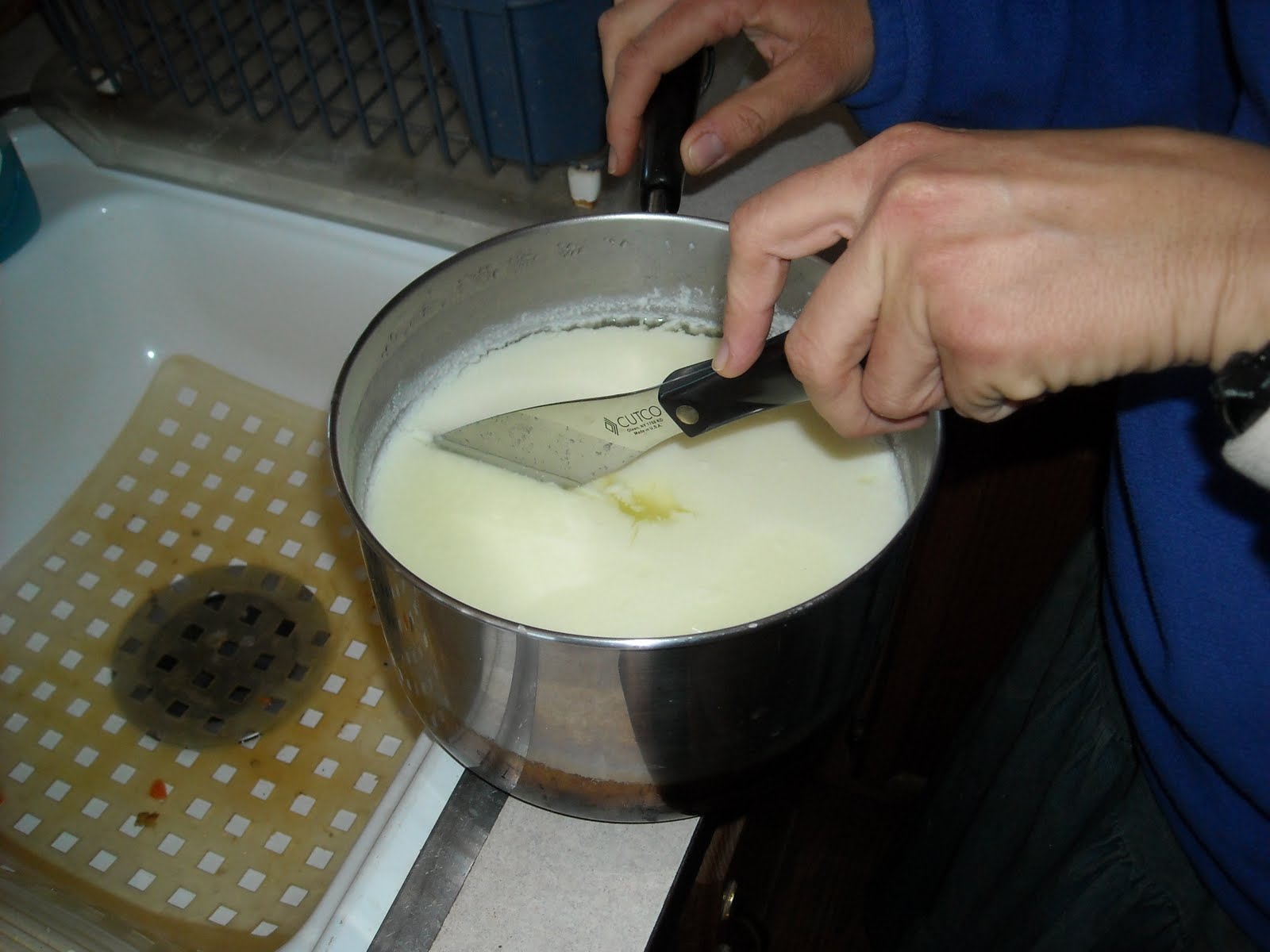
Then, you are supposed to cut it into 1/2 to 1 inch cubes in order to assist with the “draining of the whey” (sounds like a ceremony). The instructions call for the first cut starting down the middle, holding the knife at a 90 degree angle, and then each subsequent cut tilting the knife a little until you get to 45 degrees by the time you reach the side of the pot. You turn the pot 1/4 turn, and repeat the process, which eventually makes a grid of curd cubes. I forgot to tilt the knife as I cut — oh, well. But, it came out okay anyway:

Goat Milk Cheese Cutting Curds in Pot

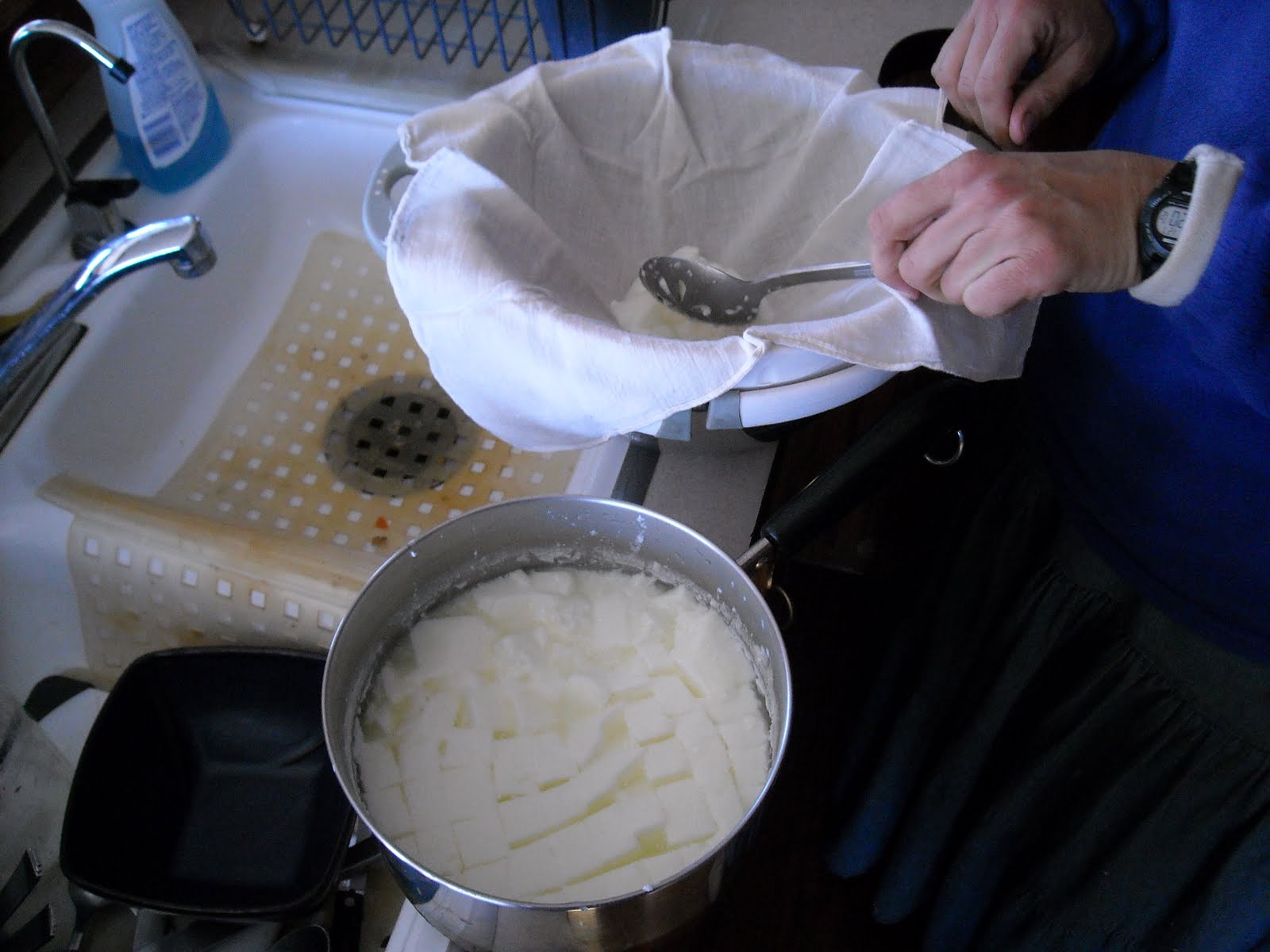
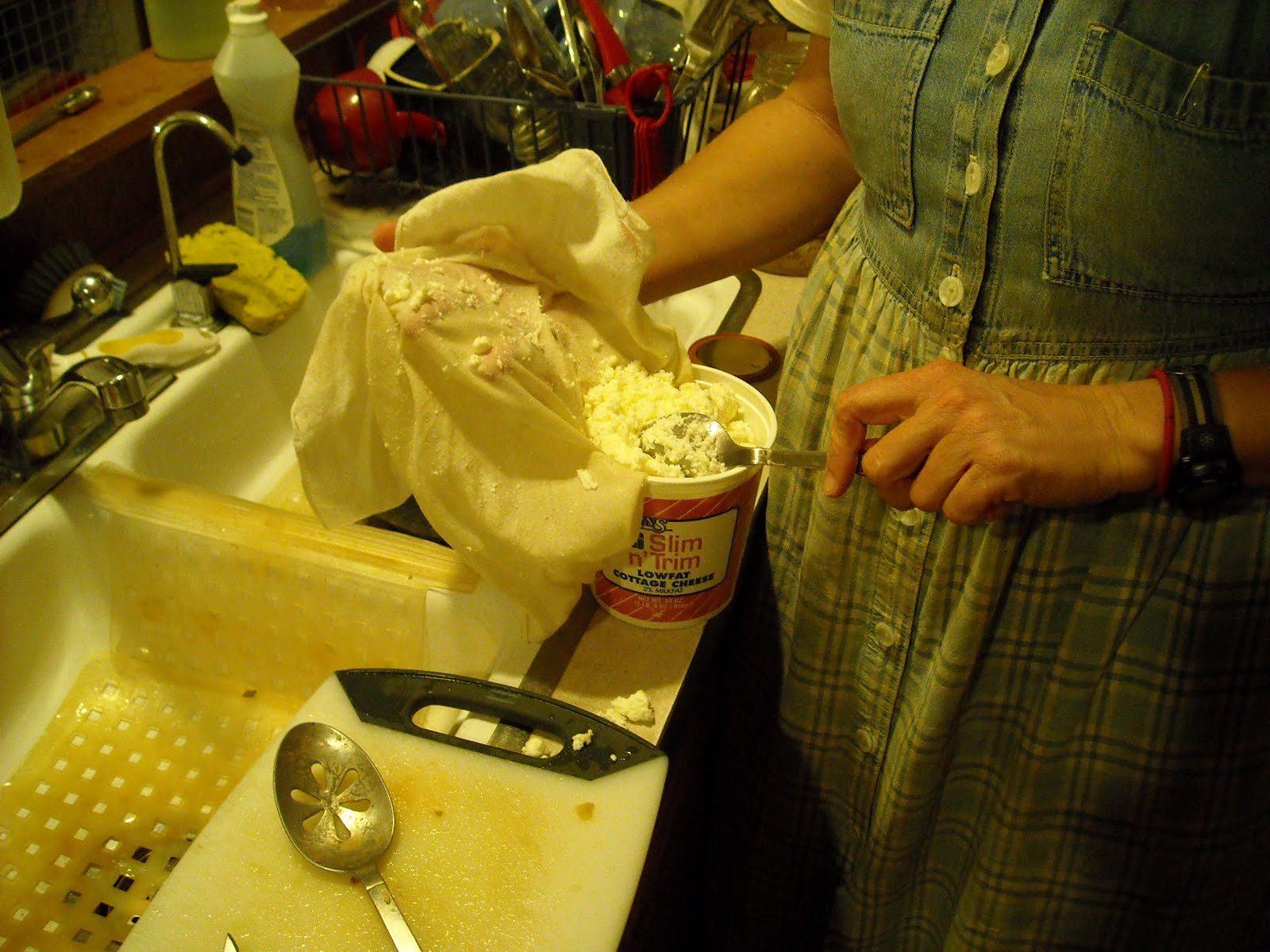
Then, I spooned out the cubes of curds into a handkerchief-lined strainer with a bowl underneath to catch the whey drippings. They say to use cheesecloth, but it just seemed too loose of a mesh, and the handkerchief worked very well for this type of cheese:

Goat Milk Cheese Spooning to Handkerchief

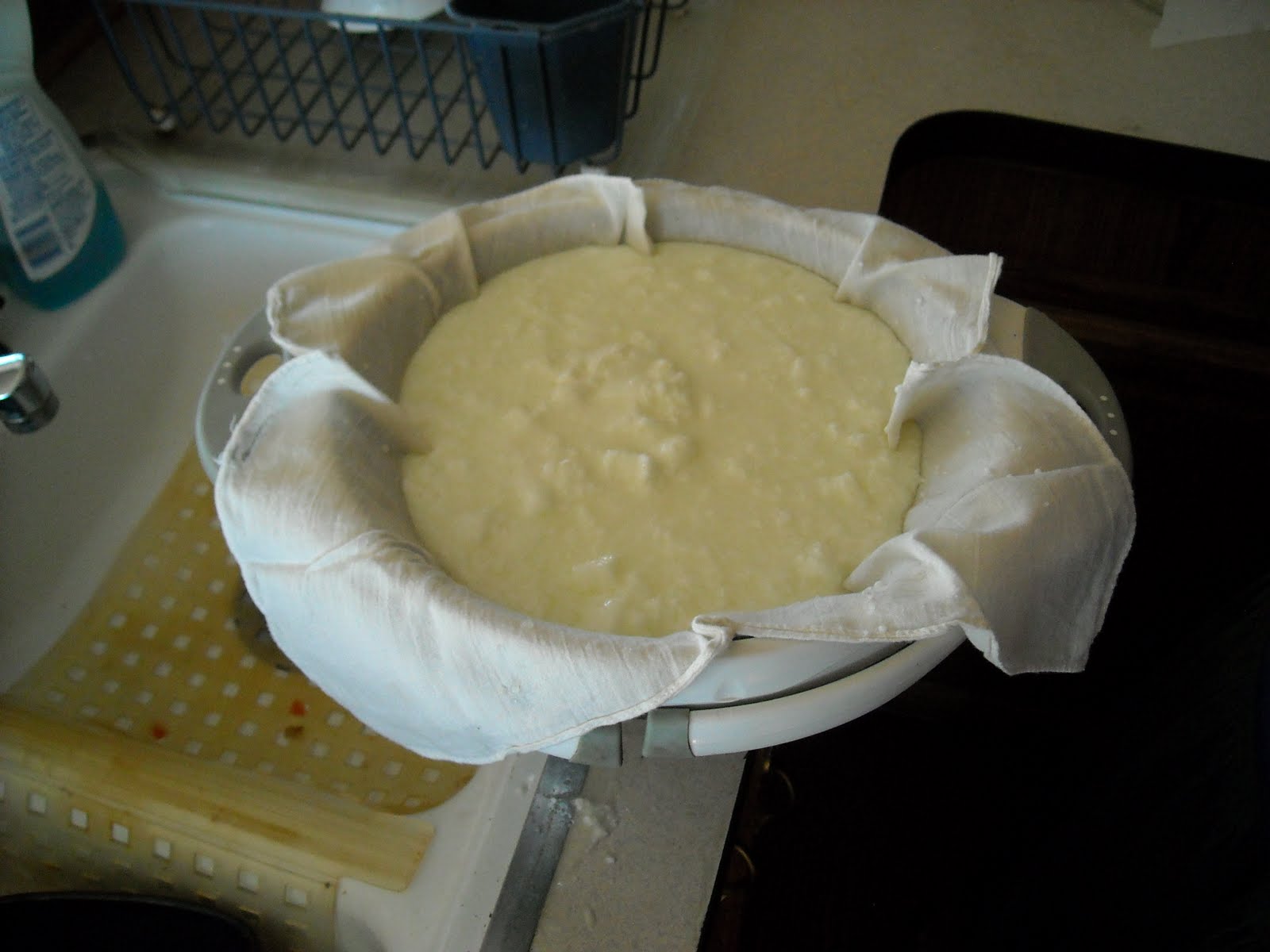
Here it is all spooned into the strainer. You can’t tell here, but it’s draining like crazy underneath:

Goat Milk Cheese Whey Draining

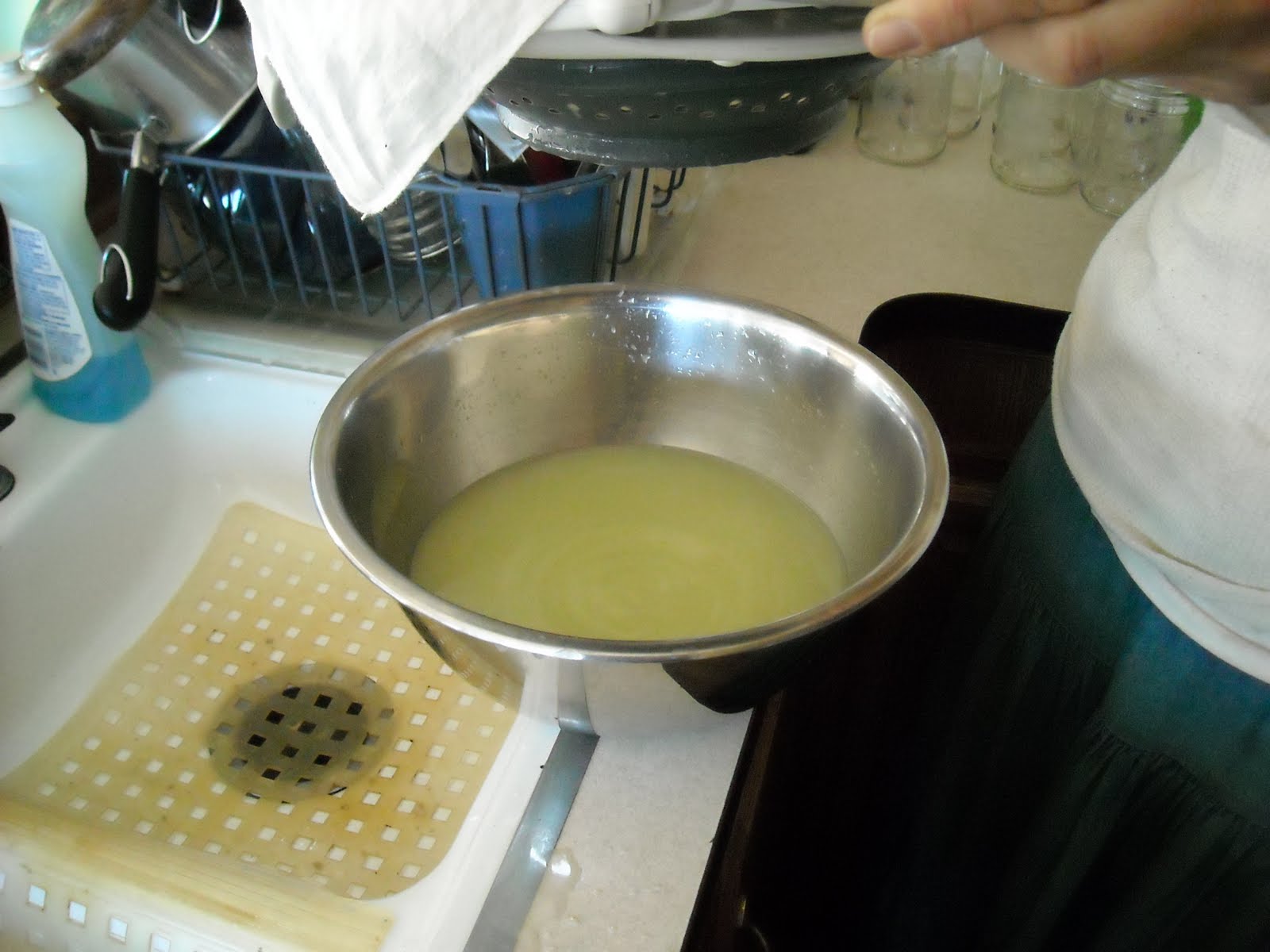
Quite a bit of whey drained quickly, but it takes 2-3 hours to fully drain:

Goat Milk Cheese Whey

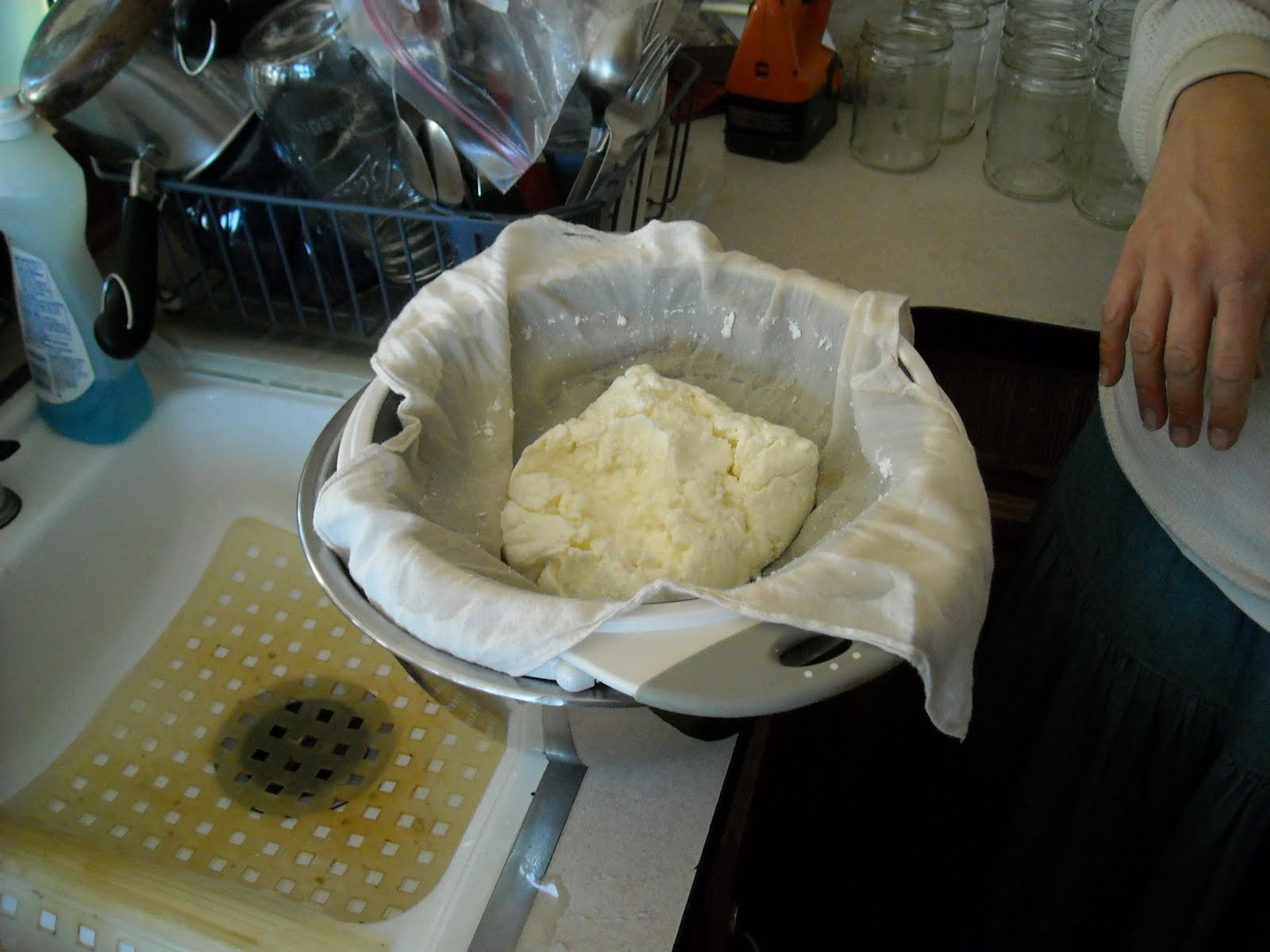
Here are the curds with the majority of the whey drained. Pretty cool, huh?!

Goat Milk Cheese Curds with Whey Drained

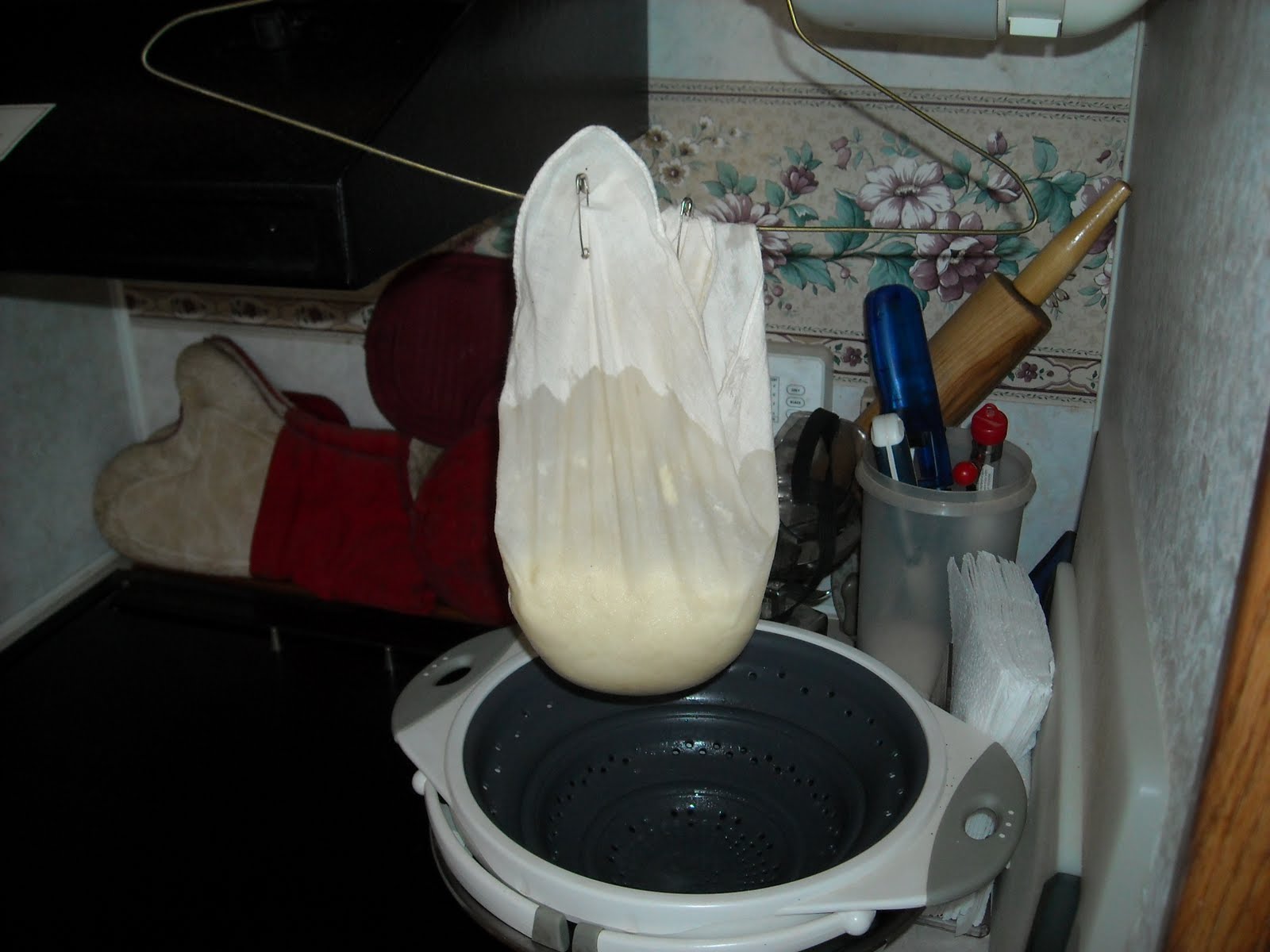
After the main draining, I hung up the handkerchief to draw out the rest of the whey with the help of a bit longer exposure to gravity:

Goat Milk Cheese Curds Drip Draining

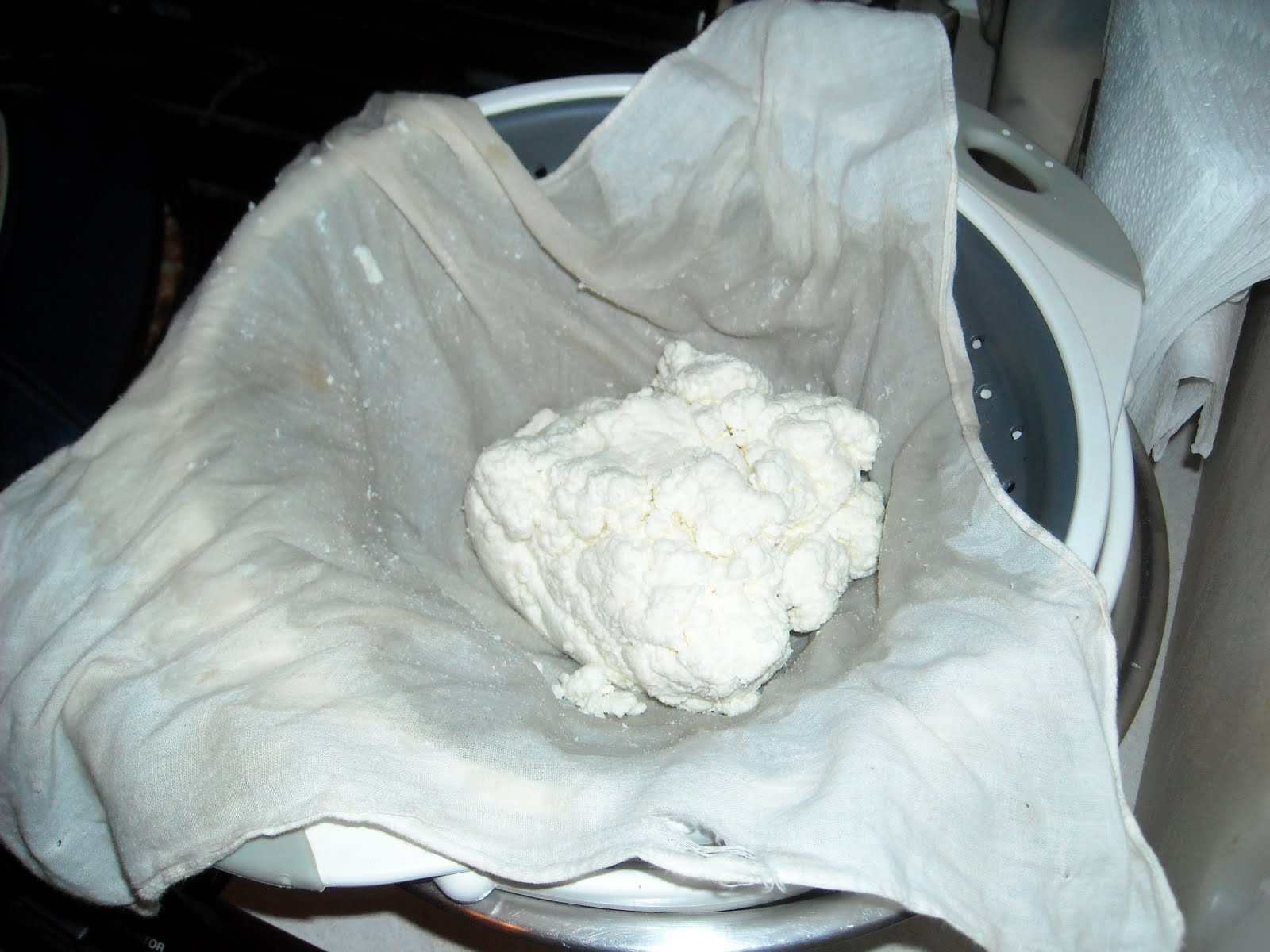
Well, this looked like it might resemble Farmer’s, or some kind of cheese, and not too much like a train wreck:

Goat Milk Cheese

So I seasoned it with a little salt, garlic and onion powder, spooned it into a container and put it in the refrigerator overnight. Using two quarts of milk is supposed to make approximately 3/4 lbs. of cheese, and this looked about right:

Goat Milk Cheese Storage

I’m very pleased with the mild, seasoned taste. It has been too easy to eat a lot of crackers topped with the cheese at one sitting! But I’d rather have to combat will power than have to hold my nose closed and gag it down ๐Ÿ™‚

Goat Milk Cheese on Crackers

All of our does have dried up in preparation to deliver more kids in the Spring, if the Lord wills; so this was my last opportunity to attempt making goat cheese until then; and I’m very thankful it turned out. I’m excited (and not as scared) at the future possibilities! What a great way to preserve milk; and we are, as always, very thankful for God’s direct provisions. Believe me, I know I probably could have done this much better and more “properly;” but, hey, it worked for me; and it’s food! I hope to continue to improve with more practice and maybe somebody out there can learn from my mistakes. Bon appetit!

Susan

Garden 2009 – Spring – Update V – Sweet Potatoes


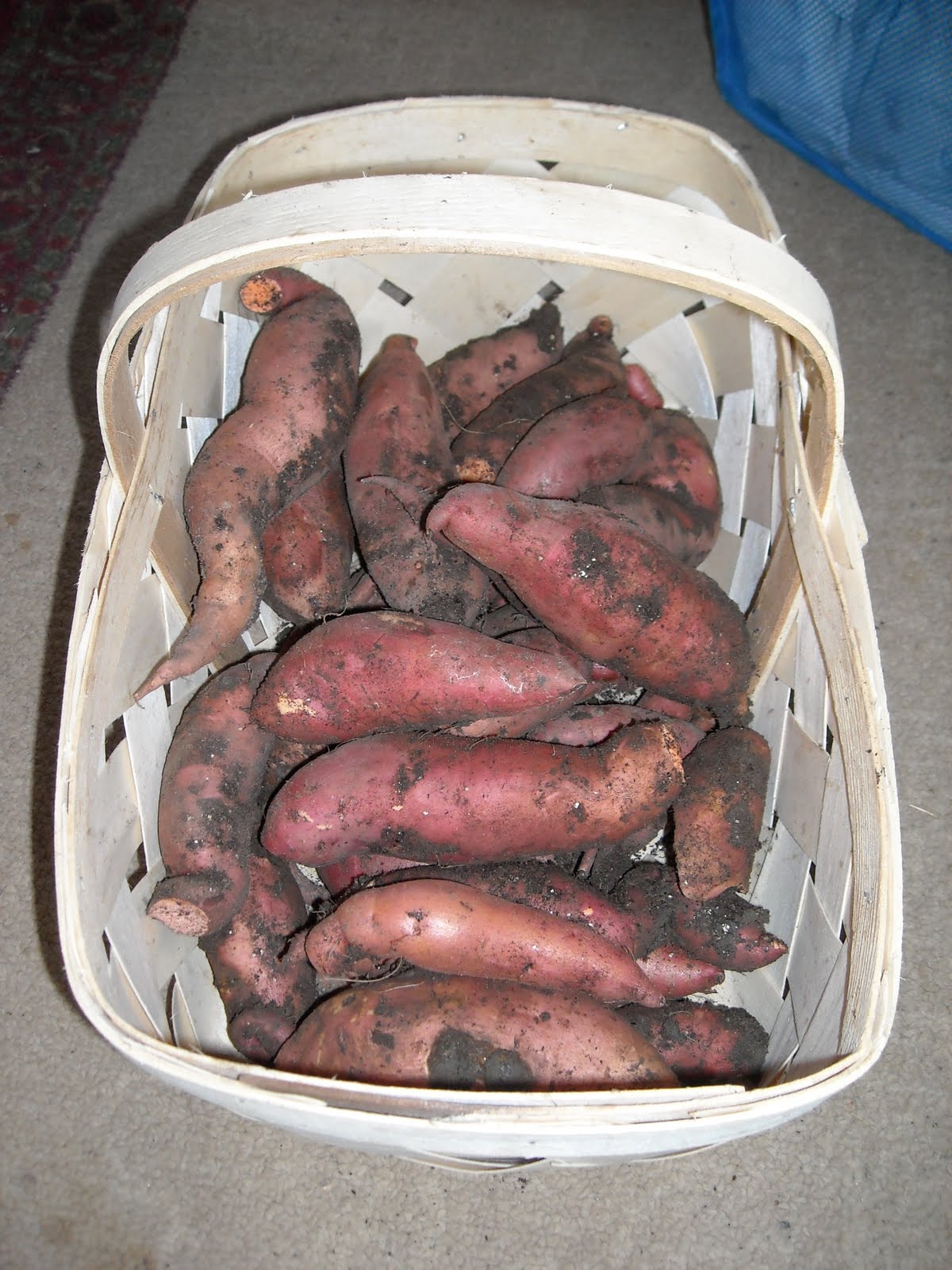
Last year, Dave and I cut up some sweet potatoes and planted the pieces in one of our garden beds. We were very excited at the end of summer to dig up our hopefully large, robust sweet potatoes. Well, when we dug them up, about the only thing they were good for was to use as replacement shoe strings ๐Ÿ™ We sort of gave up after that and planted turnips in that garden bed this year. About half way through summer, we started to see these weird green leaves coming from the turnip bed; and by the end of summer, the leaves had taken over the entire bed. Go figure, the sweet potatoes from last year had been growing and had really taken off. The picture above is our yield! For reference, the larger ones are at least 6-7″ long. What a blessing to have this unexpected crop of good lookin’ sweet potatoes.

(I was so inspired about it, I’m writing the sequel to the children’s book “Green Eggs and Ham” entitled “Sam I Yam”…….and I’m also waiting to hear back from the Broadway producers regarding my musical remake of “Anna and the King of SiYAM.” Hmmmmm, not sure why I haven’t heard back from them yet. Another musical I’ve pitched is “Yamalot.” Then there’s my nursery rhyme “Mary Had a Little Yam”…..I got a million of ’em folks…well, four anyway…….<tap, tap>…um, is this thing on?)

I was excited to start using them, so I made sweet potato biscuits for our Sunday community fellowship meal. Here they are before being put into the oven. (Note to self, let the potatoes cool before mixing them into the dough. That’s why these are spoon-dropped biscuits and not perfectly round):

And here they are fresh out of the oven:

We’re very thankful to God for the unexpected blessing and provision of these sweet potatoes.

Susan

Garden 2009 – Spring – Update IV – 24 (Pint) Carrot Gold and Other Precious Commodities


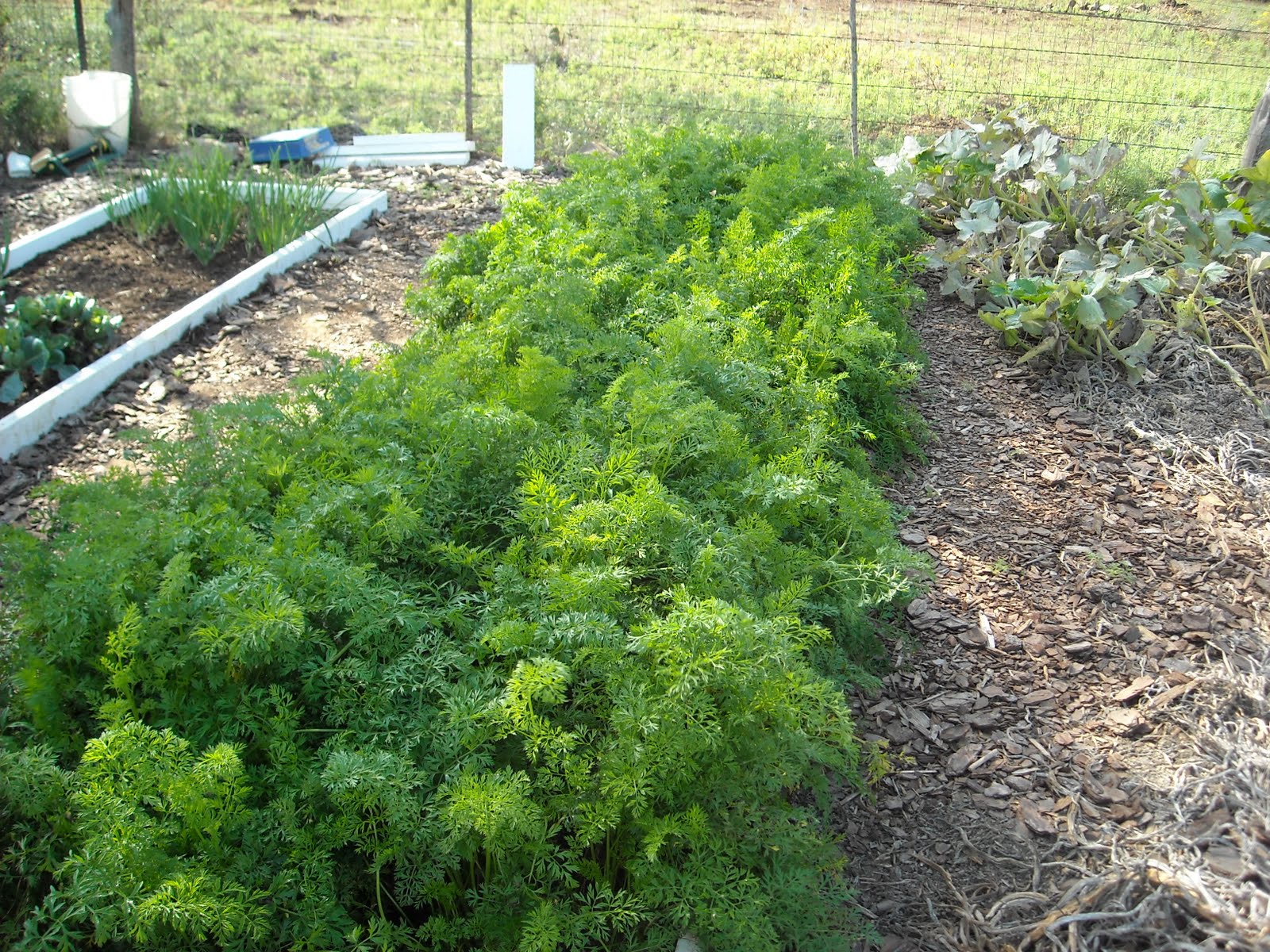
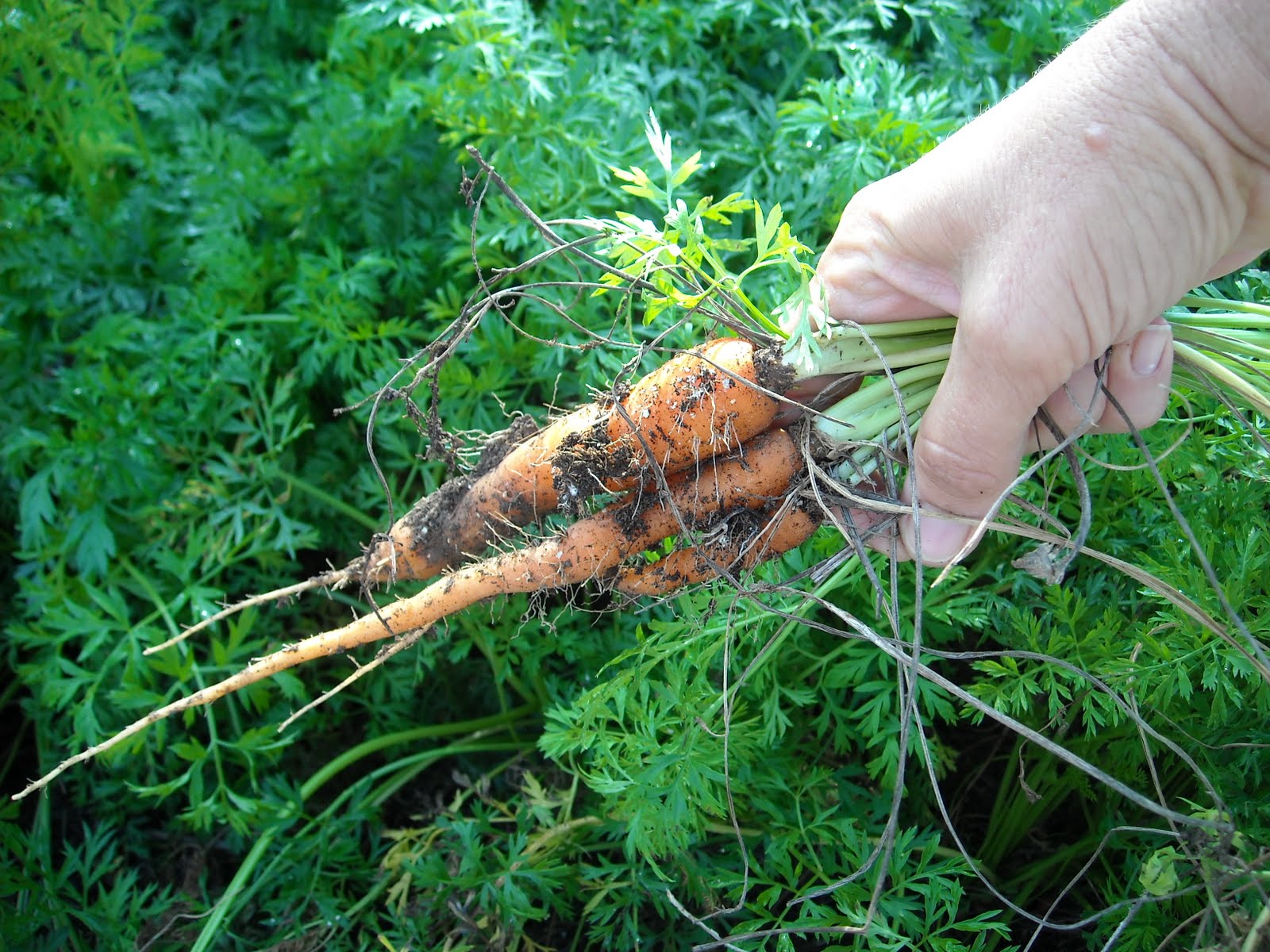
Boy, if there was any doubt carrots grow well in West Central Texas, may it be forever removed. We planted carrot seeds in one entire bed this year; and, wow, the carrots took advantage of every bit of space in that bed. This blog post reflects the second round of thinning of the carrots; and I still have one, maybe two, rounds to go!

The carrots grew very densely because there was so much depth for them to grow in the double-dug, raised bed. So each pull of the greens revealed a handful of carrots:
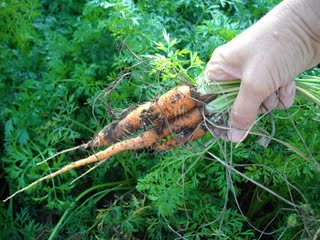
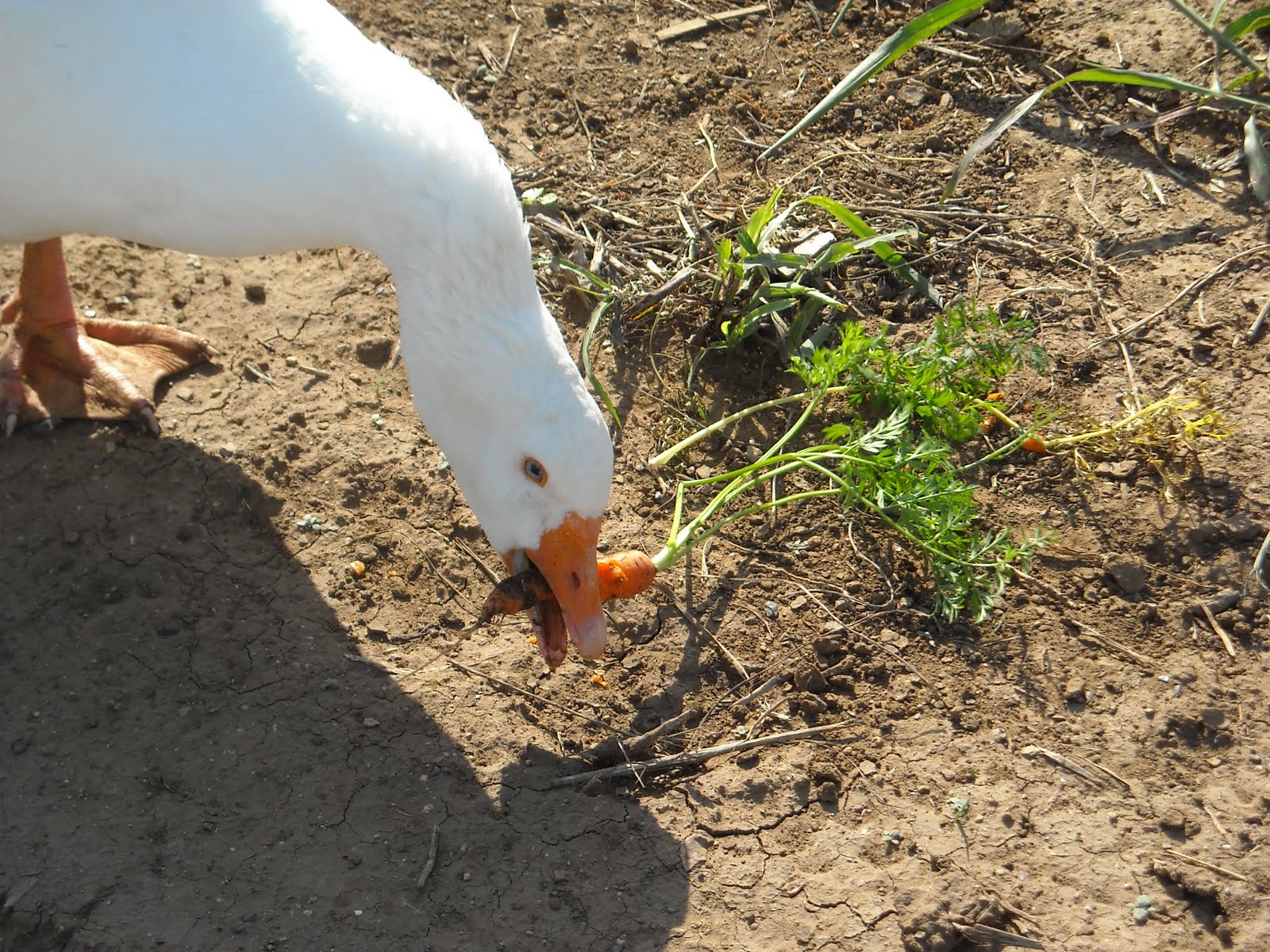
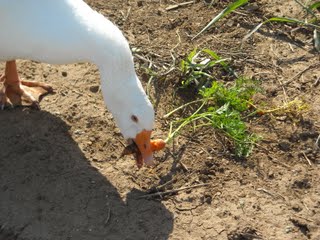
“Ehhhhhh……what’s up, doc?” Gary loves carrots. The greens, eh, not so much:
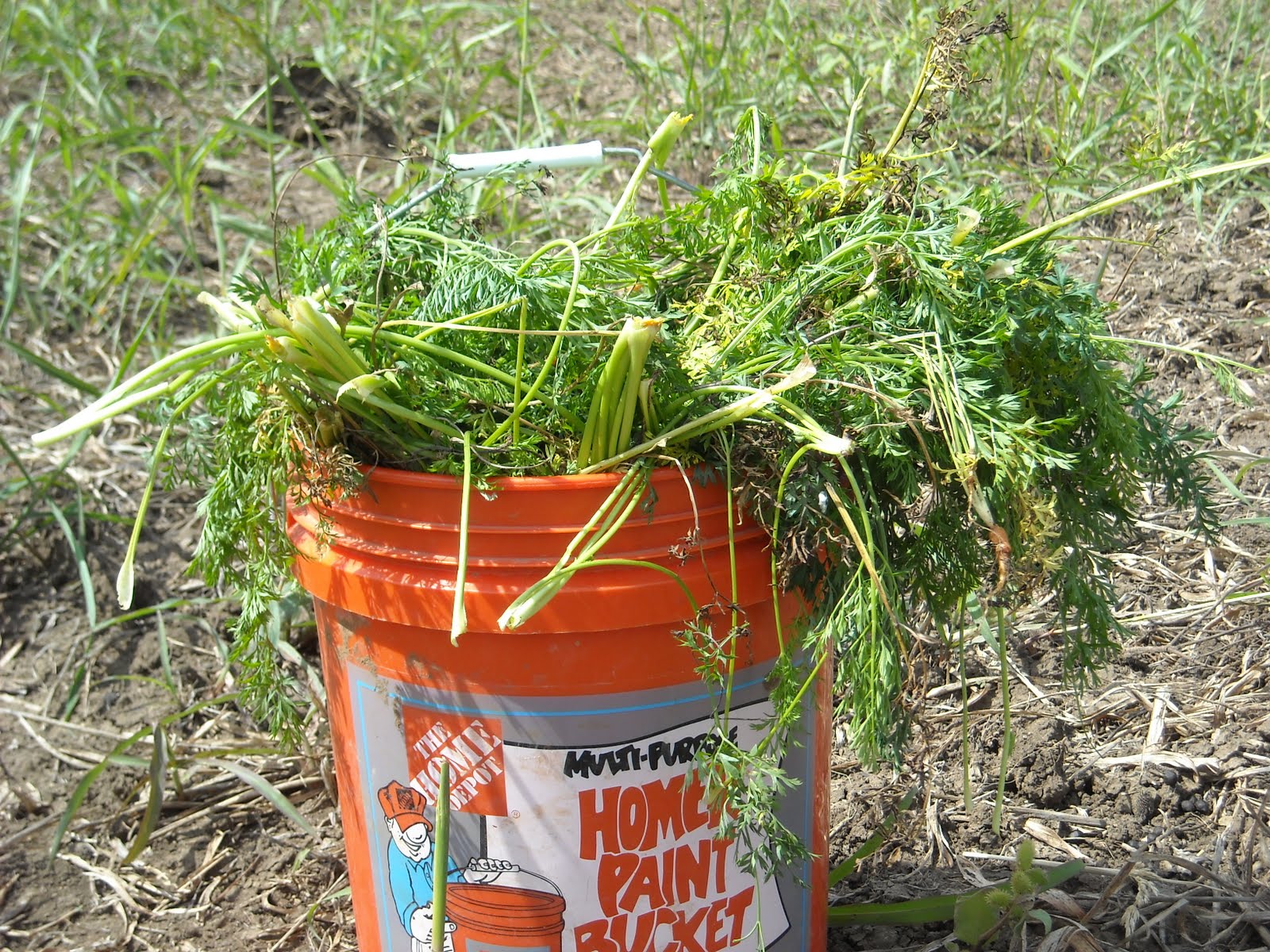
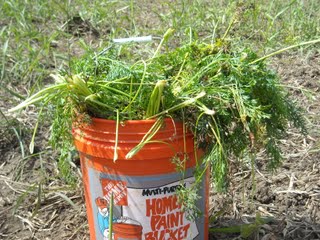
So I filled the bucket with greens knowing they would be appreciated somewhere else……
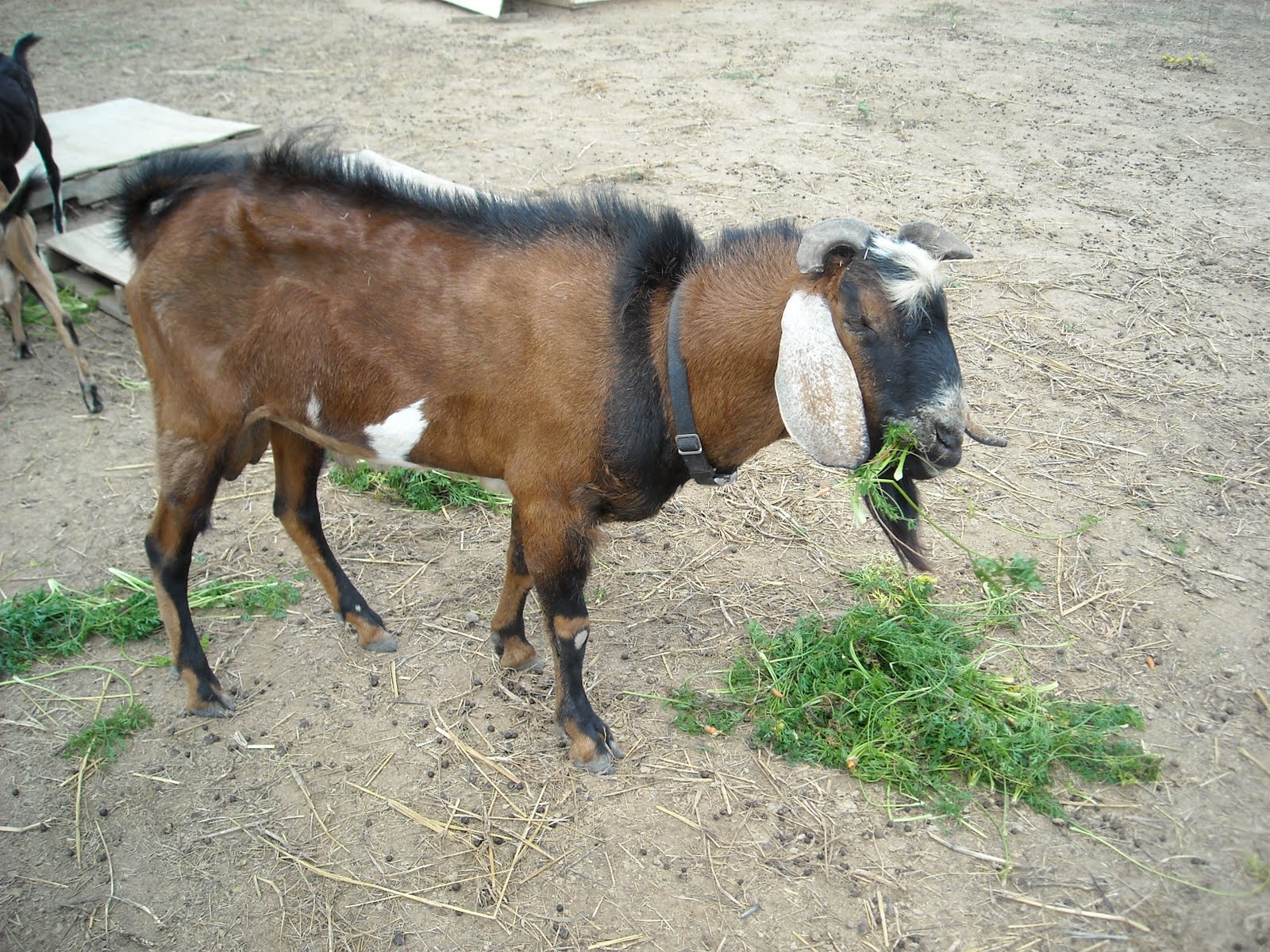
Shatner, on the other hand, loves carrot greens. (In a high-class maรฎtre dโ€™ French accent…”Taybelll for one, Monsieur?”)

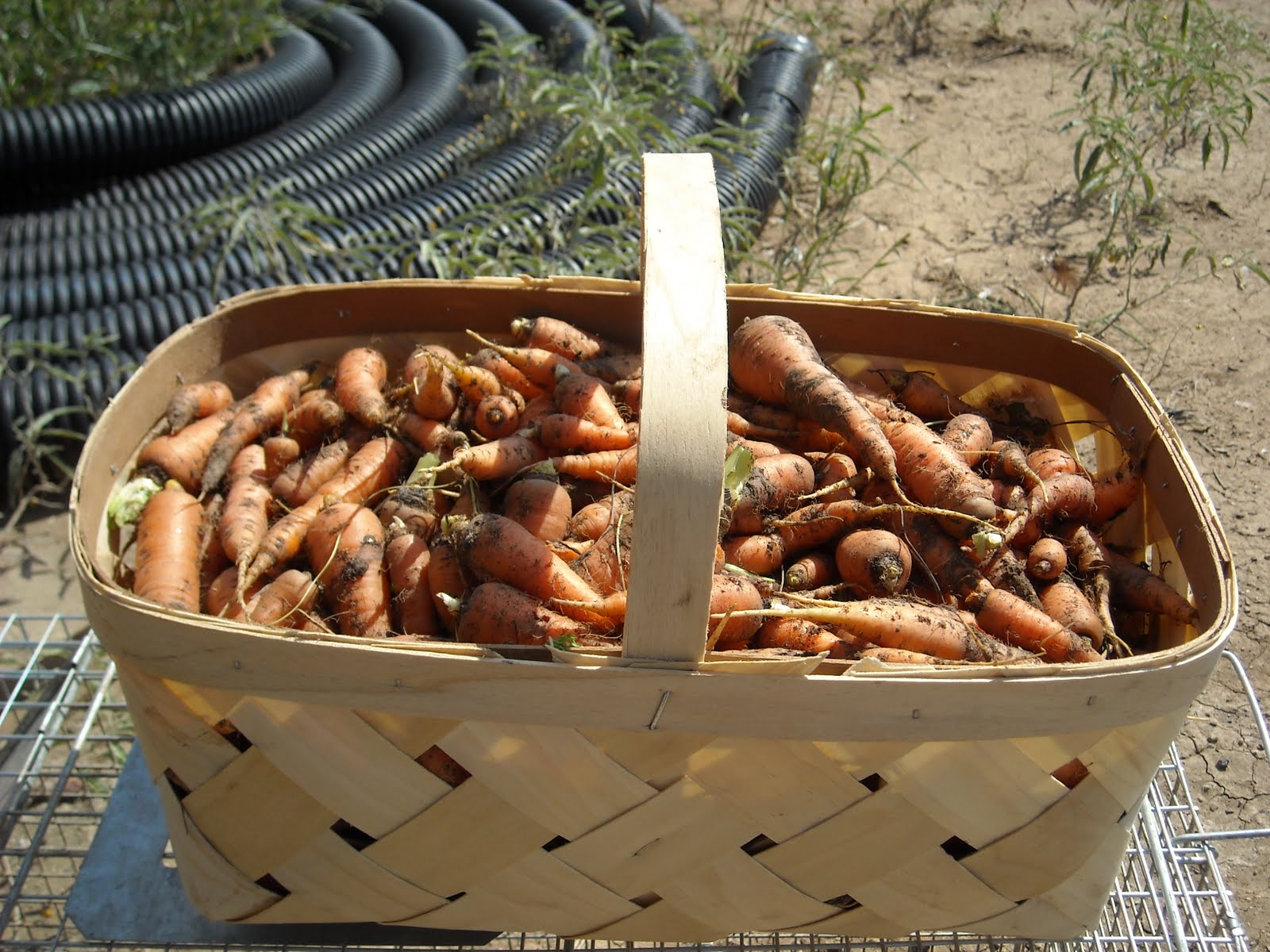
I stopped pulling carrots when the basket was fairly full, knowing this many would take several hours to prepare for canning:
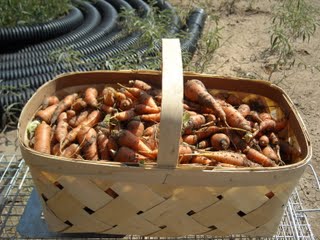
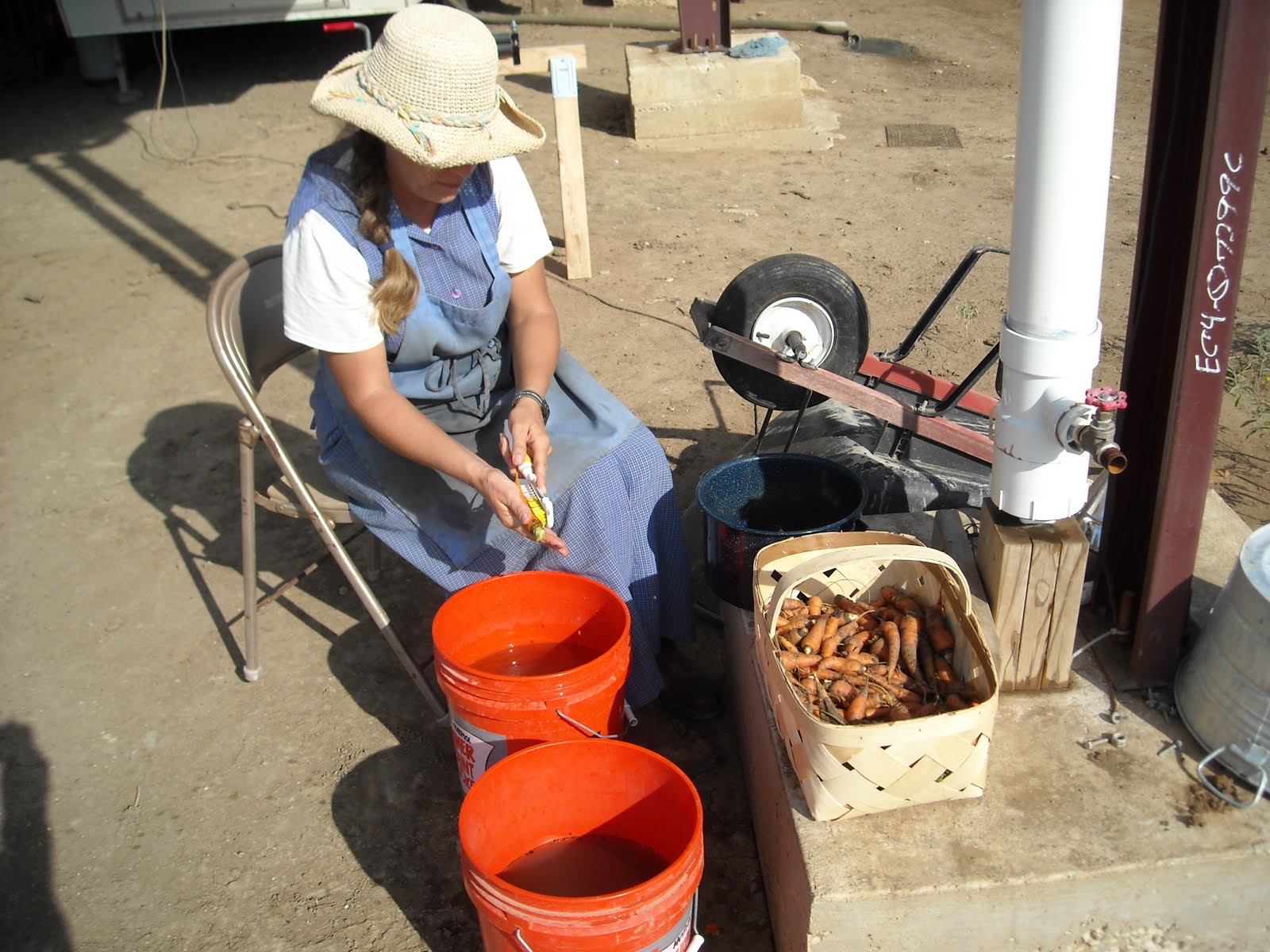
What a blessing to sit out in the fresh air and sunshine to work at my “day job.” I had two buckets for the initial processing of the carrots: one was for a first rinse to get the major dirt off, and the other was to give them a good scrub with the vegetable brush to get them as clean as possible:
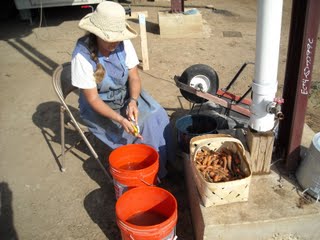
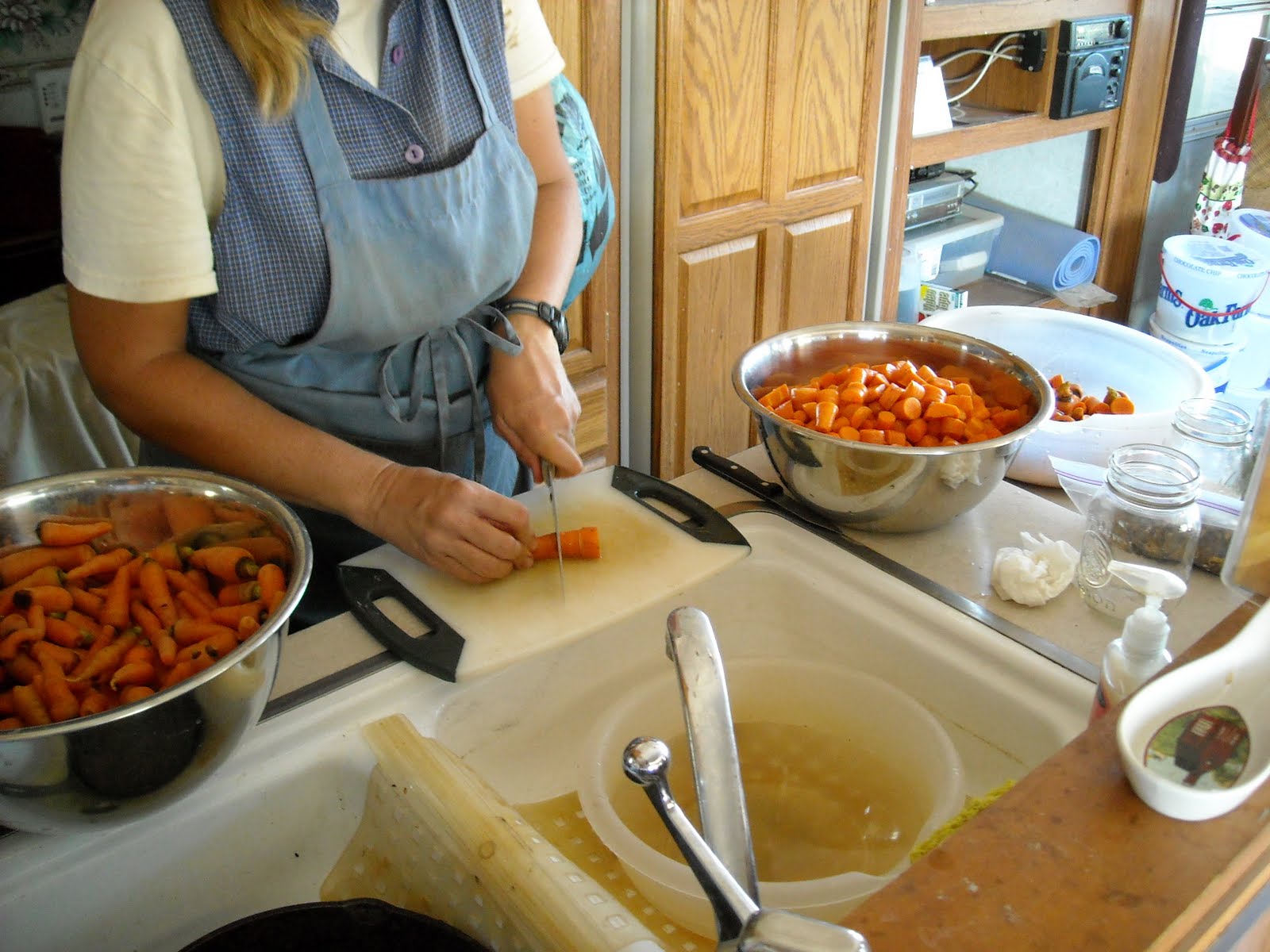
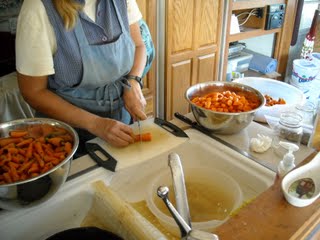
Next, I gave them a final rinse, cut off the ends, and cut up the carrots into smaller pieces. I munched along the way and loved knowing these carrots are God’s direct provision, and that any middle men and chemicals have been eliminated:
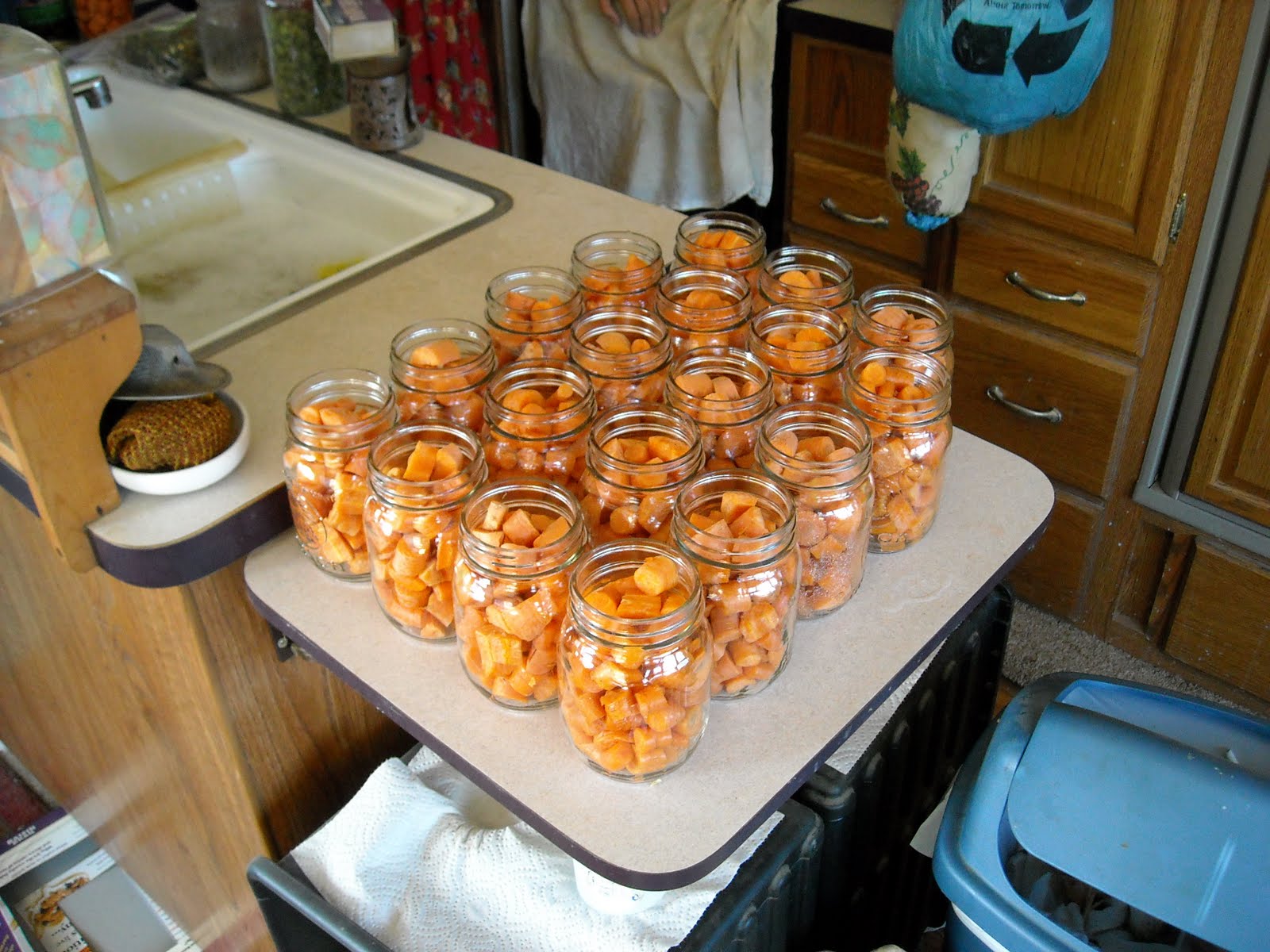
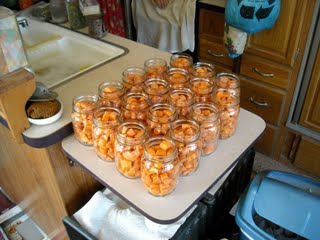
Here they are in the jars ready to go into the canner:
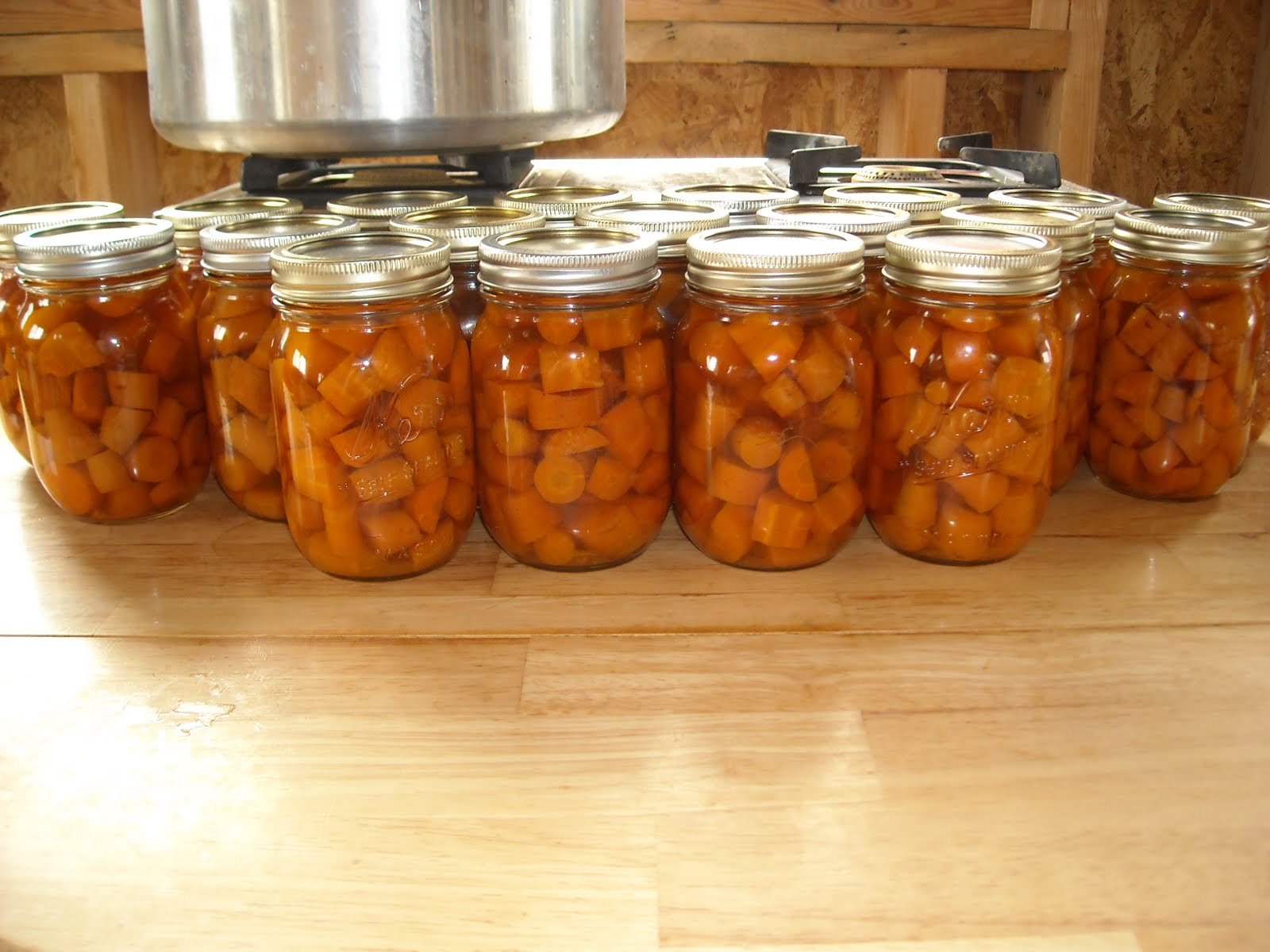
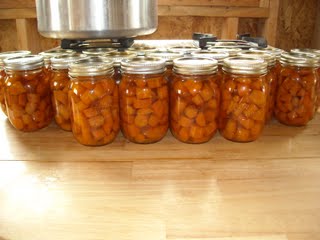
And, yippeeeee! Fresh garden carrots preserved to be used in many delicious dishes:
And speaking of delicious things for meals, I thought I’d provide an update on our other garden adventures.

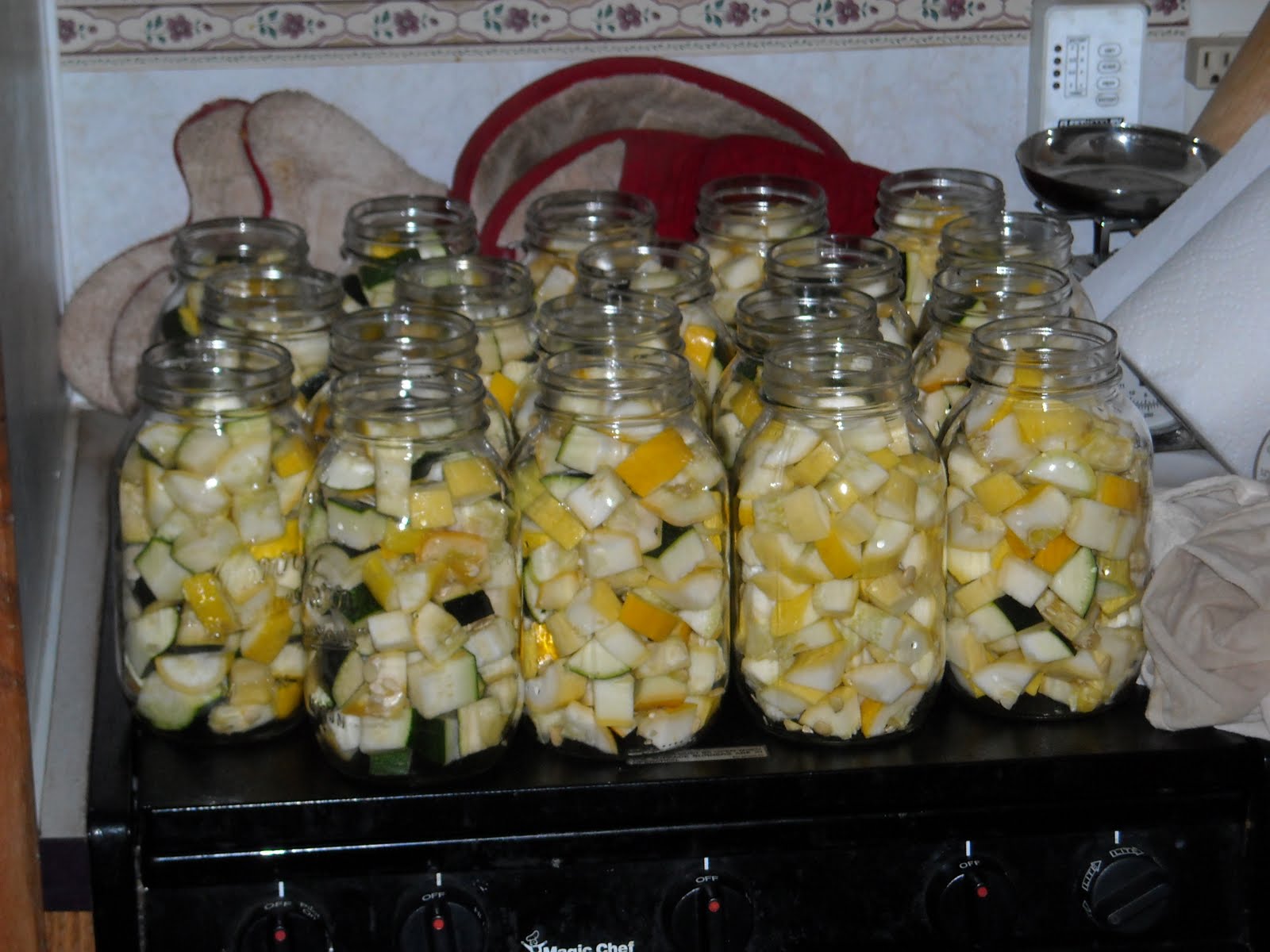
In addition to our abundant yield of Zuchini, we were blessed with an abundance of summer squash:
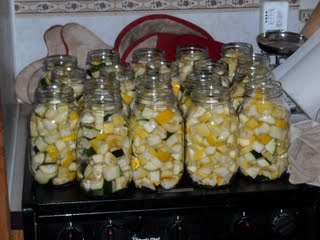
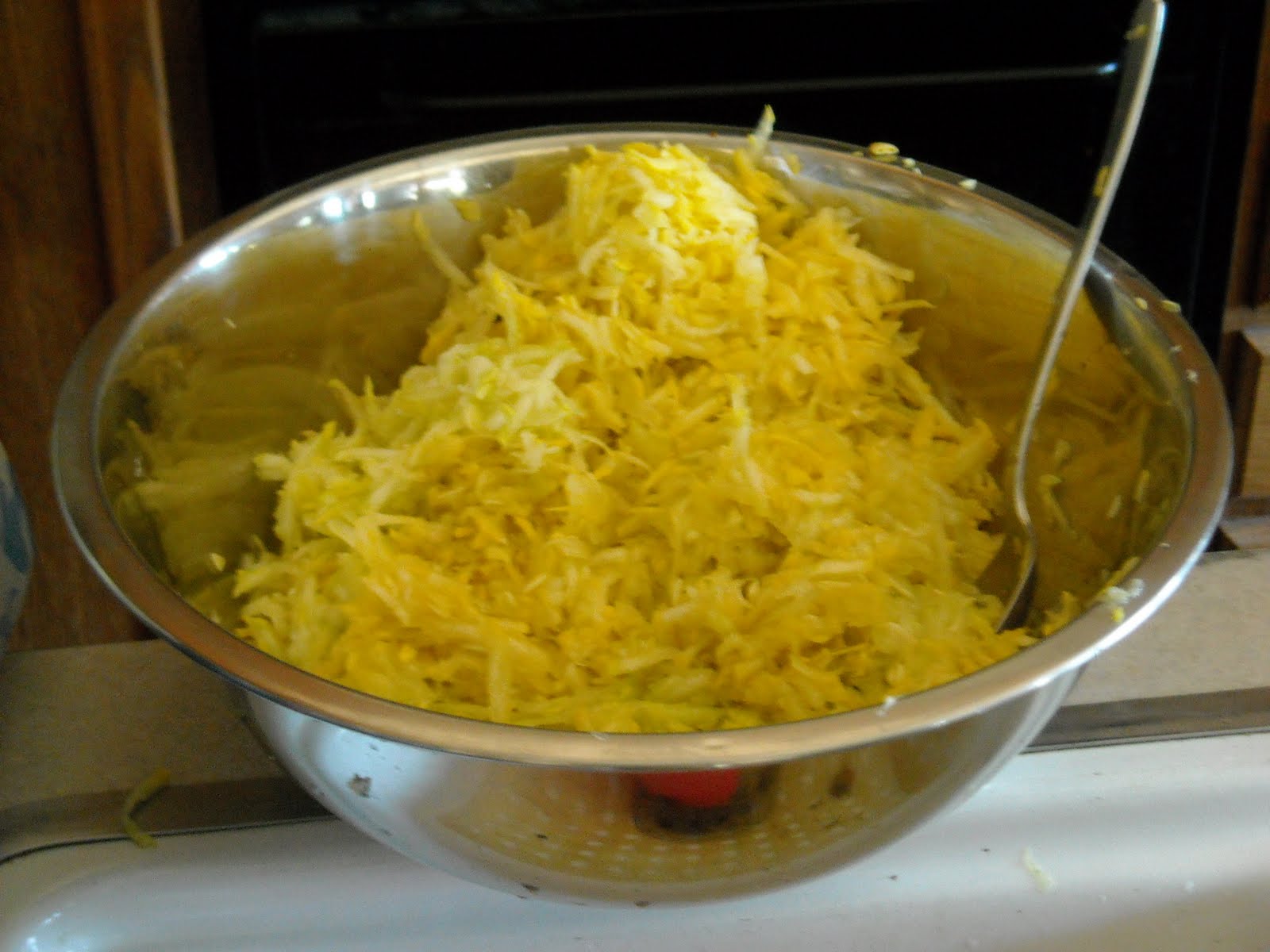
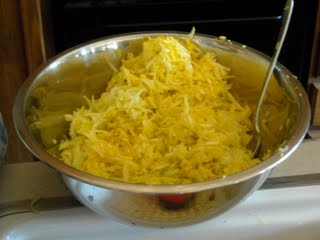
We also shredded up much of the summer squash and put it in jars with salt for lactic fermentation, and placed them down in the root cellar. It tastes great – just like sauer kraut. And it makes a very flavorful and healthy salad when you add cucumber and tomato:
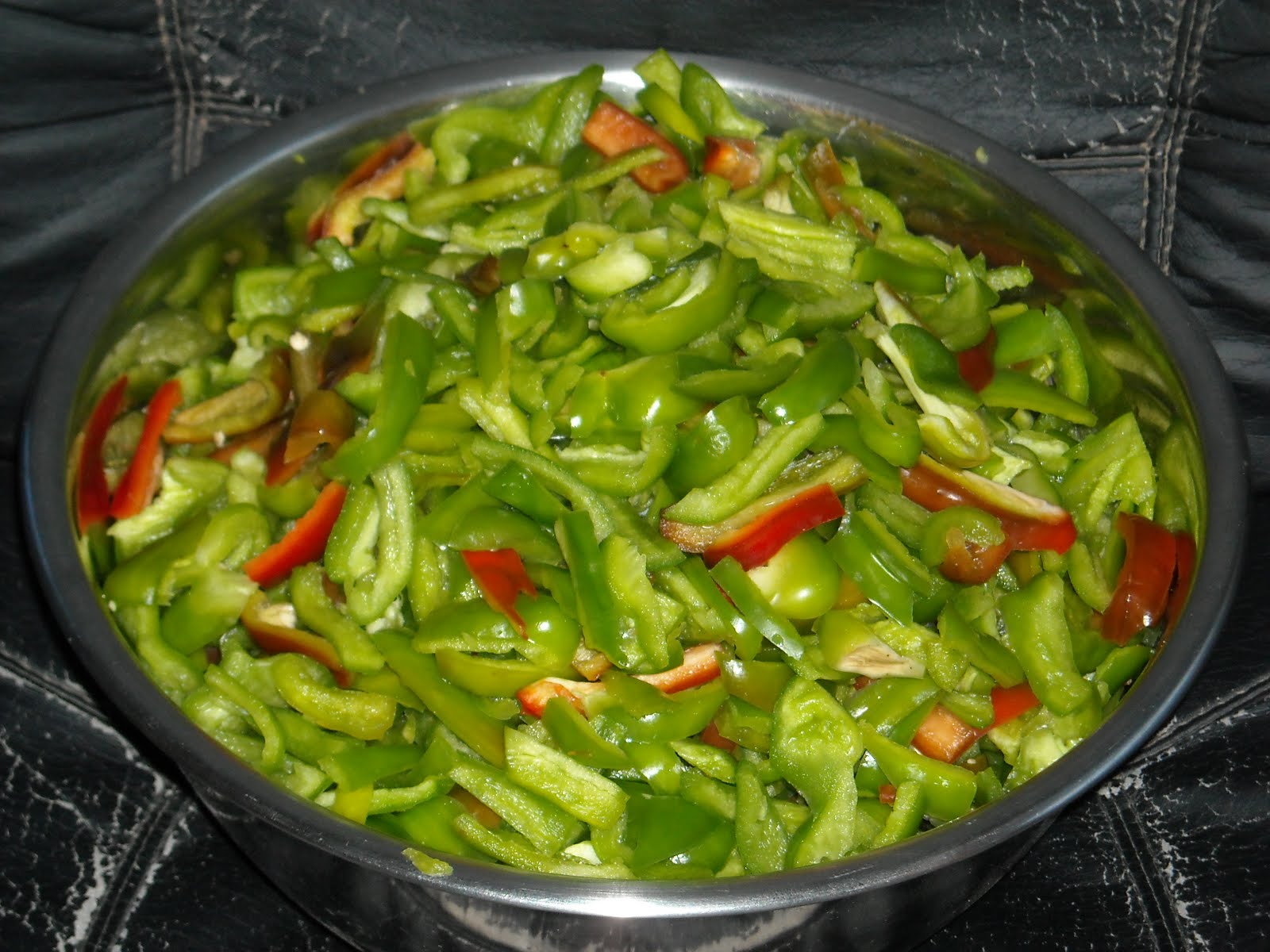
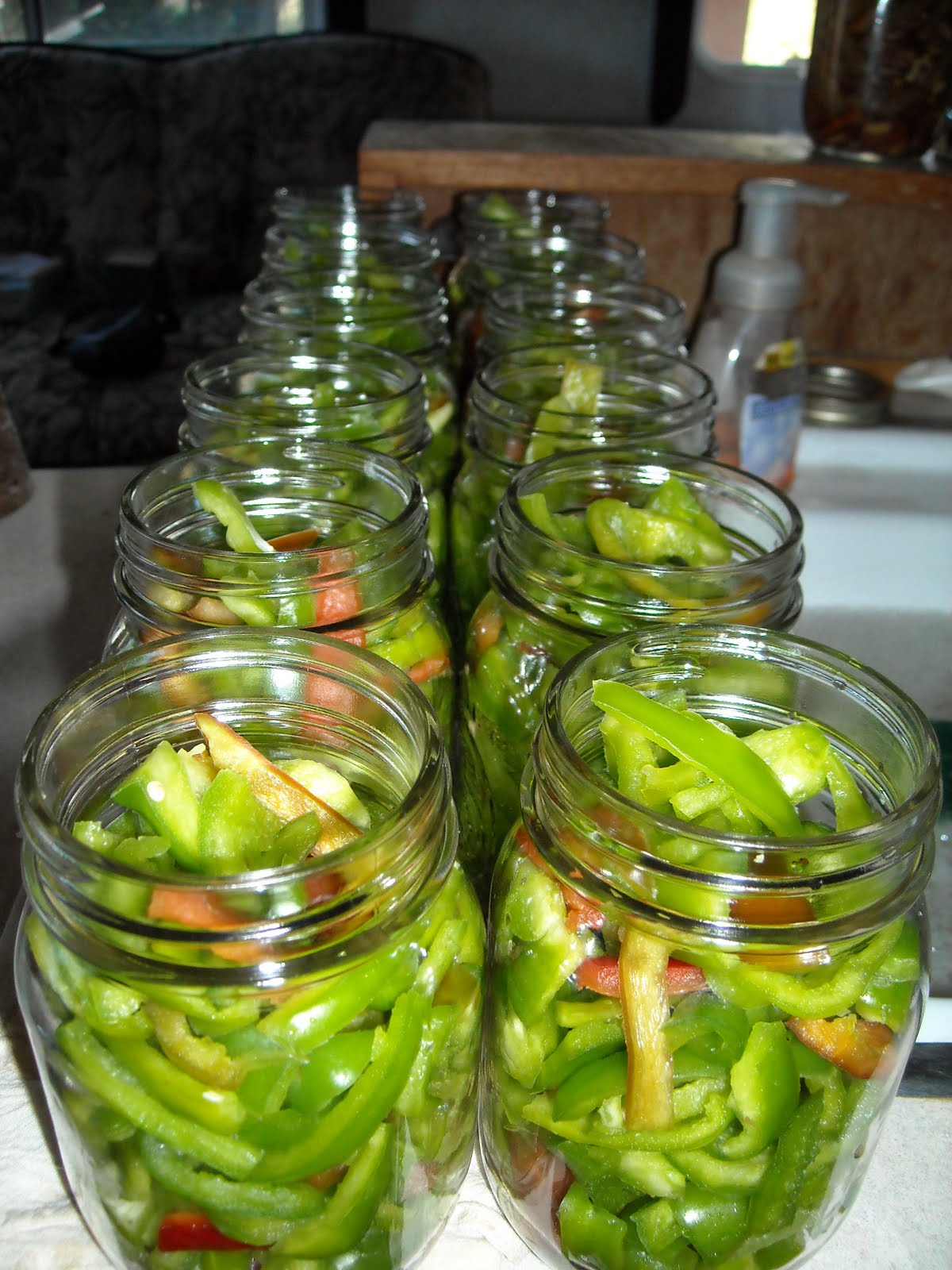
Our peppers are still going gangbusters. Here is a bowl of freshly cut peppers ready to be put in jars. I have found it to be very handy to grab a jar of these off the shelf and saute them with onions when I’m making fajitas. Thanks to one our readers, Ginny, we also got the idea to cut them up and dry them in our solar dryer. They are great to add into recipes, and I was very pleasantly surprised at how much taste is packed into even one of these small pieces:
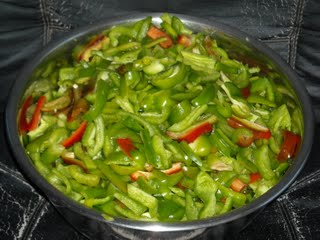
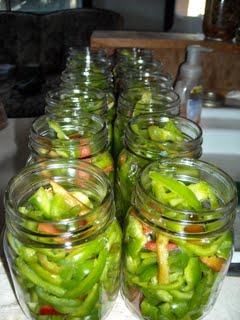
Here they are ready to be canned. As I was going through the pepper plants harvesting the ripe ones, I found that a plant with smaller red and green peppers resembling chili peppers had popped up. (Imagine, if you will, what the Chili’s Restaurant pepper logo looks like.) Well, I haven’t been canning those because Dave likes to eat them raw here and there. HOWEVER, we have found that somehow these peppers were rubbing elbows with some of the other peppers; and sometimes when we bite into a sweet red or green pepper, we’ll get a HOT surprise! So some of these jars are packed with more taste than we bargained for! ๐Ÿ™‚

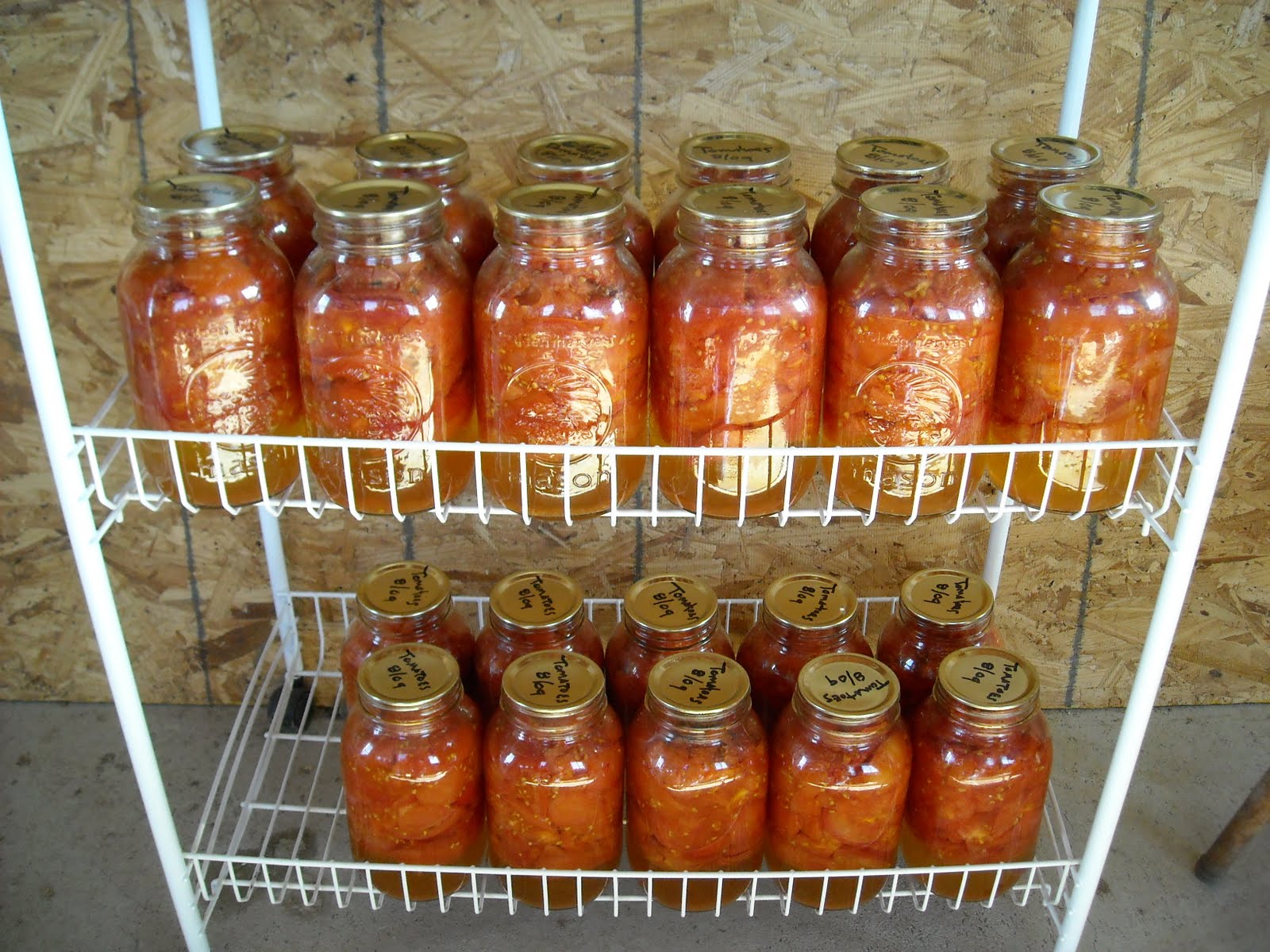
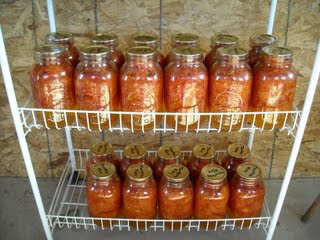
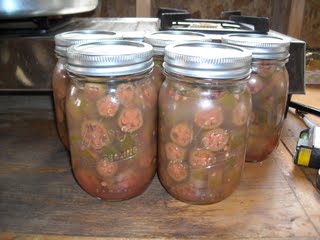
We planted 17 tomato plants this year hoping that we might have a successful crop; but for some reason, none of them did well at all. We have harvested probably fewer than 40 tomatoes the entire summer. Not sure what happened. But, thankfully, the local produce market was selling fresh tomatoes at a fraction of the normal price to keep them moving. We paid a whopping $5.00 for these tomatoes and got 22 quarts! Thanks to the Lord!
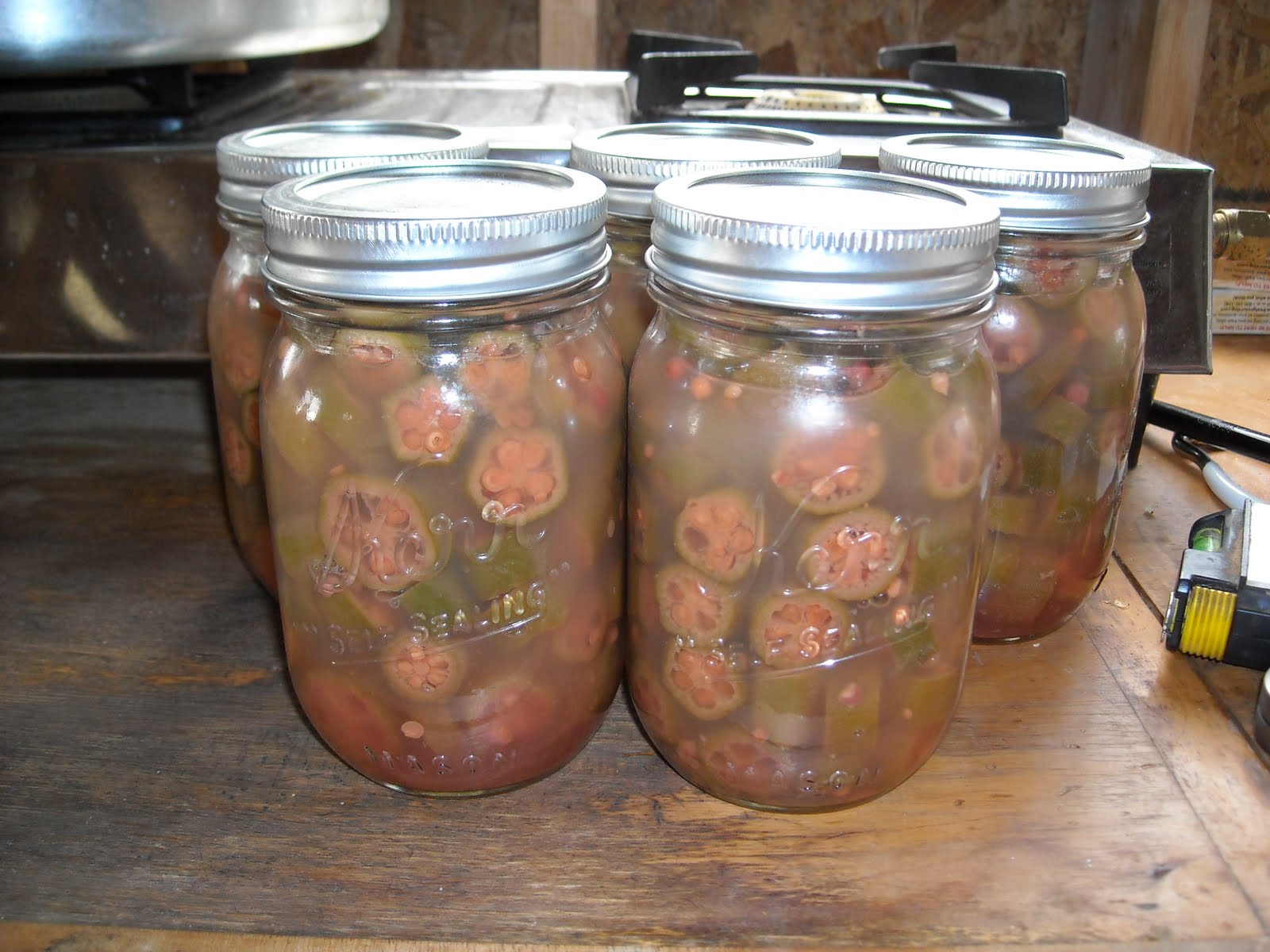
Hmmmmmm, then there is okra (not to be confused with Oprah). Okra and I are still getting to know each other. Coming from the West Coast, I had never eaten okra and don’t believe it is on any menu I’ve ever seen in California. So I’m still becoming acquainted with these Southern crops. To be completely honest, okra and I have a kind of love/hate relationship. They are SO prolific, I could not keep up with them. Do you know that okra can grow to maturity in four days?! It’s almost too much of a good thing. They are fibrous by nature; so if you don’t catch them when they are young and tender, they can get pretty tough and stringy. However, in the canning process, they do soften up and are very edible. I only tried to fix fried okra once but had to put doing that on the back burner (no pun intended) after that until I have more time to experiment with the seasonings. For now though, we are very grateful to have several jars of nutritious okra put away in the root cellar. They’re actually quite tasty when I process them with lemon juice and a little salt:
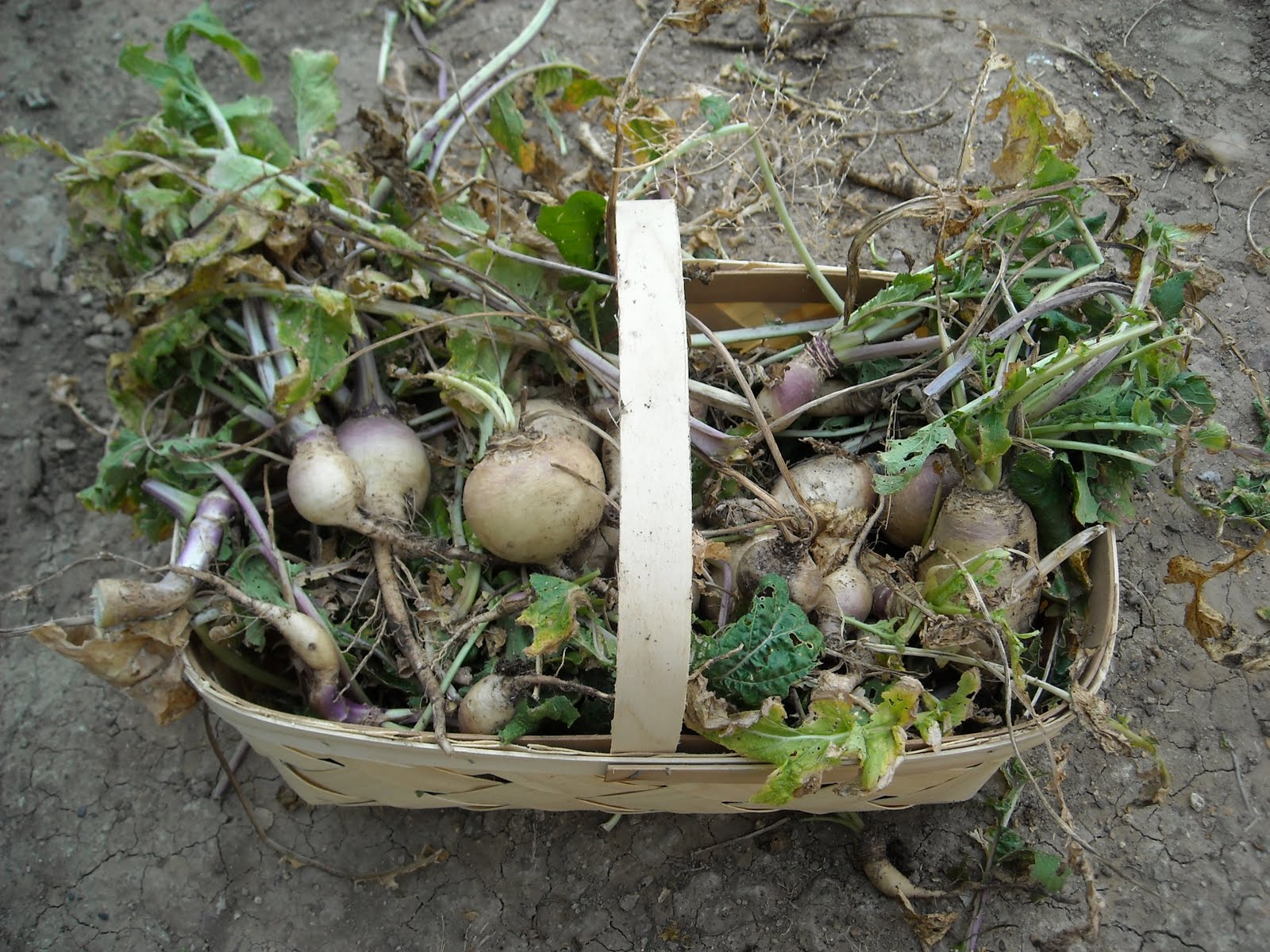
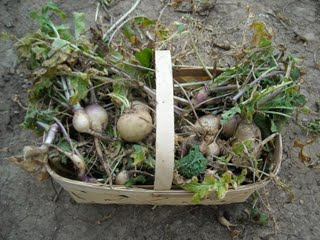
We planted a half bed of turnips this year as a kind of experiment to see how they would grow. They did very well, and we had many great salads with turnip greens. The greens are a bit misleading because the actual number of turnips that were harvested were not that many. But we were very thankful to have this basket full of them:
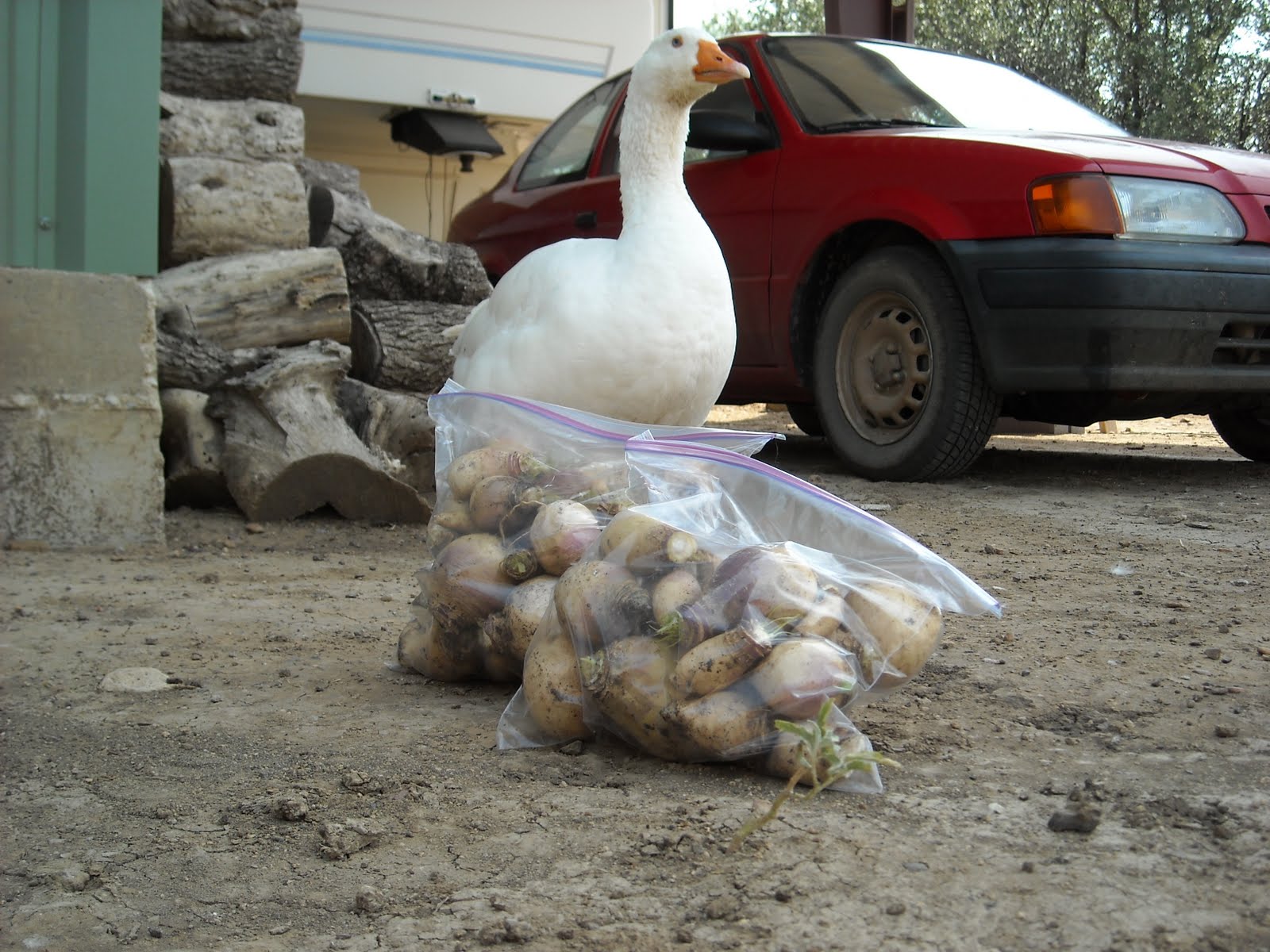
Dave put them in freezer bags to be kept in our large freezer (which we had running because I was in the process of canning our two butchered hogs at the time) until I could get around to canning them. Here, we paid Gary a couple carrots to guard them until Dave could put them in the freezer:
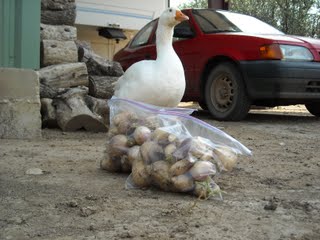
Sadly, they thawed just enough in the freezer that they started going bad by the time I could get to them. So our turnips were, instead, enjoyed by our hog, Missy. Maybe next year…….

We also have gotten some great green onions and red onions from our garden, of which I don’t currently have pictures. I still haven’t gotten used to knowing I can just walk outside over to the garden and pick a bunch of fresh produce to put into our meals. What an amazing blessing for which we are so thankful to God.

Susan
Garden 2009 – Spring – Update III – A Borsch is a Borsch, Of Course, Of Course

We planted cabbage in our summer garden again this year. If you’ll remember from our garden last year, we didn’t have any cabbage heads to speak of; but this year the Lord has graciously blessed us with large, beautiful cabbage heads to eat fresh and preserve.

I can probably count the number of ounces of cabbage I’ve eaten in my life in single digits. I have nothing against cabbage in the least but just didn’t grow up eating much of it. So I was stumped to find a good way to preserve all of this cabbage with which God had blessed us.

I surfed online a bit under canning cabbage and found a recipe that sounded pretty tasty to me. Fast forward several weeks, and I now have over 60 quarts of borsch in my root cellar! (NOTE: For you proper spellers, “borsch” is, indeed, an approved variant spelling of “borscht.”) I had heard of borsch but had never eaten it to my recollection. I’m not certain if this recipe is an “official” borsch; but, regardless, it’s tasty! Wow! All these years I’ve been missing out! This recipe calls for five pounds of tomatoes per batch, so we were very thankful when we discovered the local produce market was having a sale on tomatoes at about $.50 per pound.
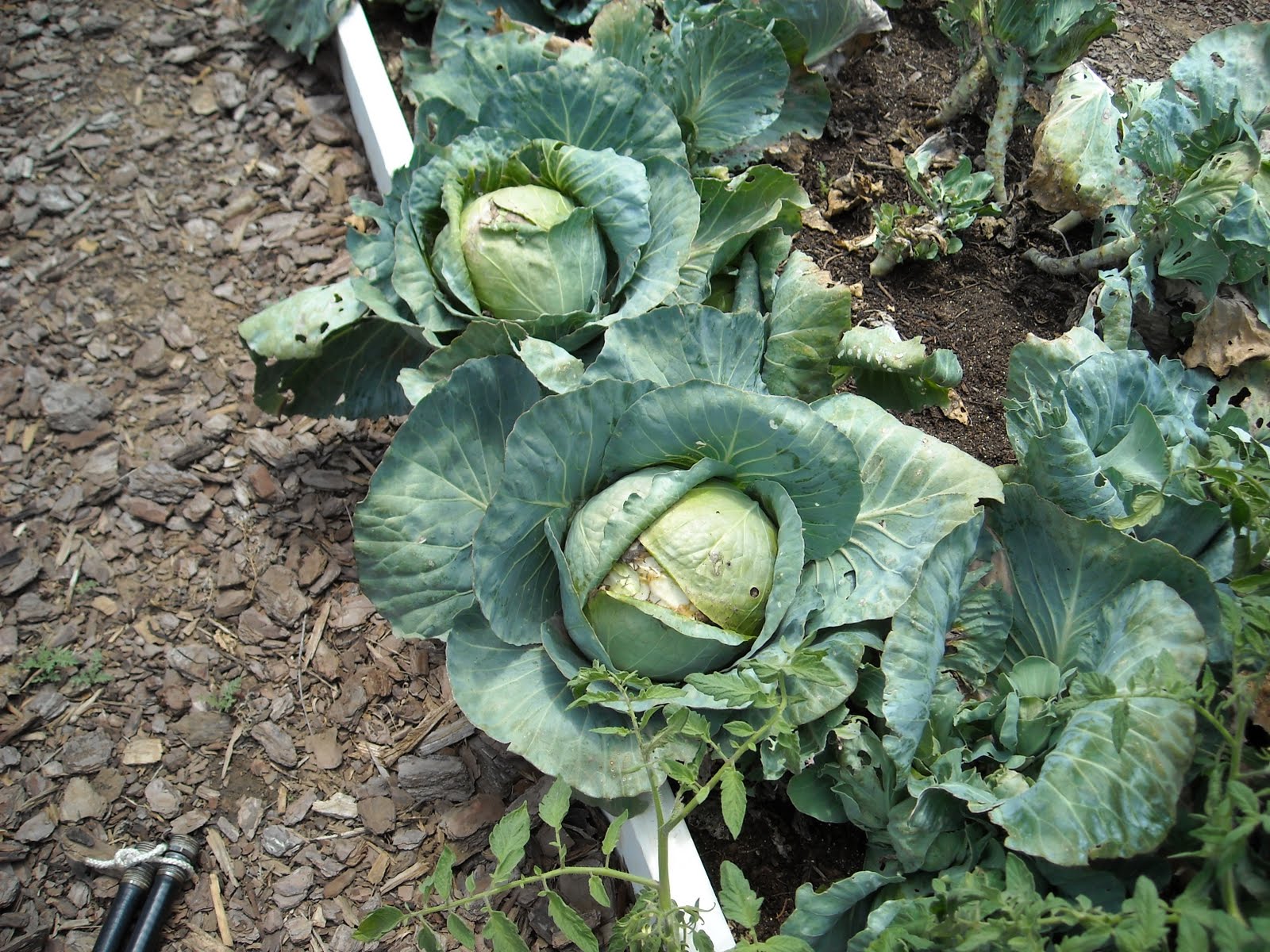
I’ve listed the recipe below in case anybody is panicking like I was, wondering how to capture and preserve their garden cabbage crop. Or if you just have a “hankerin'” for borsch ๐Ÿ˜€

Here is the official link to the recipe, but I made a few changes so I thought I would post it here also with a few personal notes in italics:

Yield: Eight pints (or four quarts) although I was generous with the ingredients and consistently got five quarts each time.

  • 5 lbs. tomatoes (about 20 medium tomatoes)
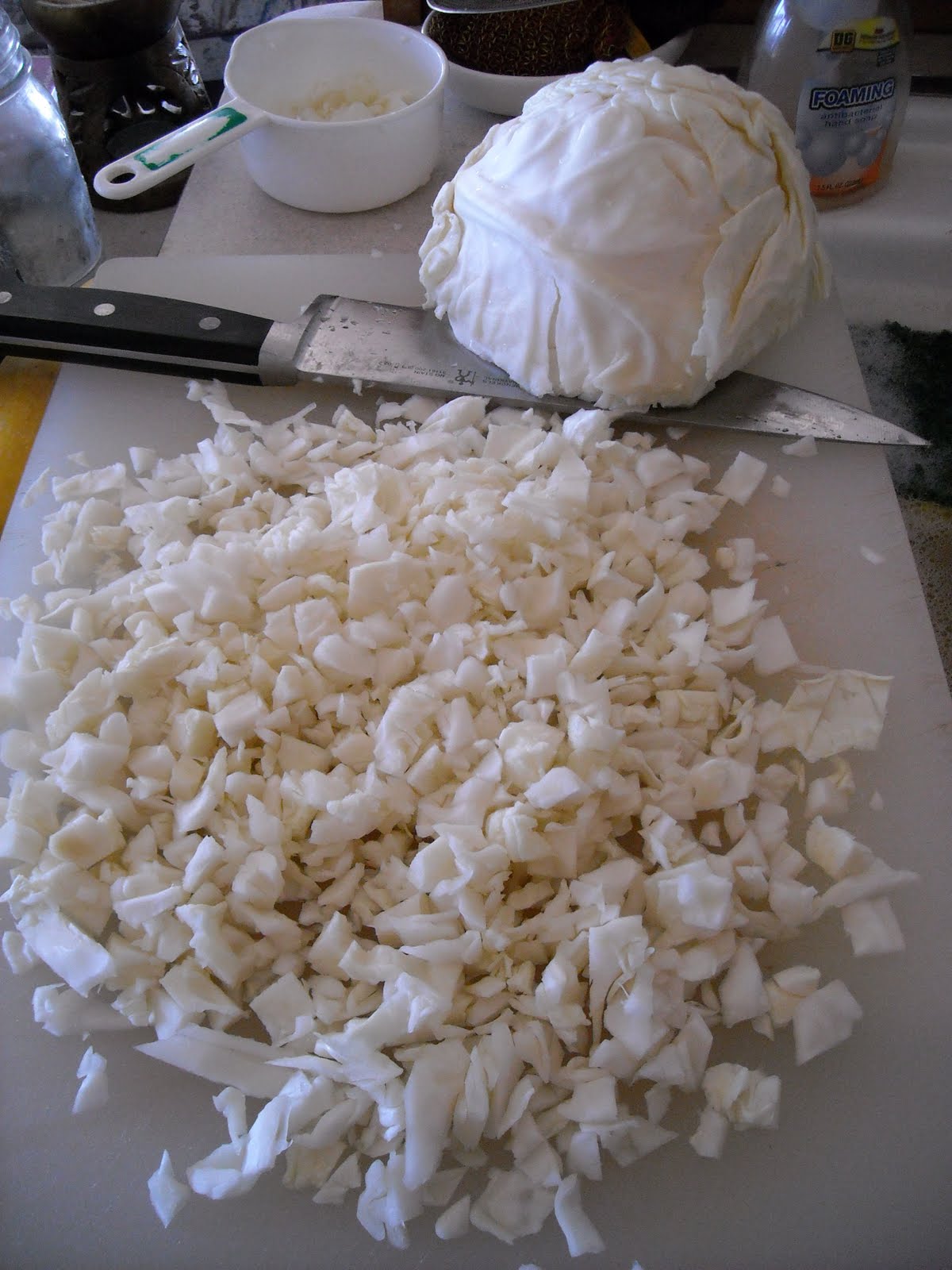
  • 8 cups coarsely shredded cabbage (I tried using a grater but realized coarsely chopping the cabbage works just as well and is much faster)
  • 6 cups water
  • 2 cups chopped onions (approx. 2 medium onions)
  • 1 cup chopped apple (approx. 1 medium apple)
  • 2 tablespoons instant beef bouillon (store-bought bouillon contains MSG, so on some of the batches I used pork stock from previous canning sessions of our pigs in place of the six cups of water, and added a little garlic and onion powder seasoning in place of the bouillon; and it worked fine)
  • 2 tablespoons sugar
  • 2 tablespoons lemon juice
  • 1 teaspoon salt
  • 1/8 teaspoon pepper
  1. Wash, peel, remove stem ends and cores, and quarter tomatoes. Use a small spoon to scrape out the excess seeds, if desired. (I didn’t take the time to peel the tomatoes or scrape out any seeds, and it was fine)
  2. In a four to six quart kettle or dutch oven combine all ingredients. Bring to a boil; boil uncovered five minutes.
  3. Ladle hot soup into hot jars, leaving 1/2 inch head space.
  4. Adjust the lids.
  5. Process in canner at 10 pounds, 45 minutes for pints or 55 minutes for quarts. (Please look online for altitude instructions if you live 1,000 feet or more above sea level)6. Makes eight pints (or four quarts) (As I stated before, I was generous with the ingredients and consistently got five quarts)

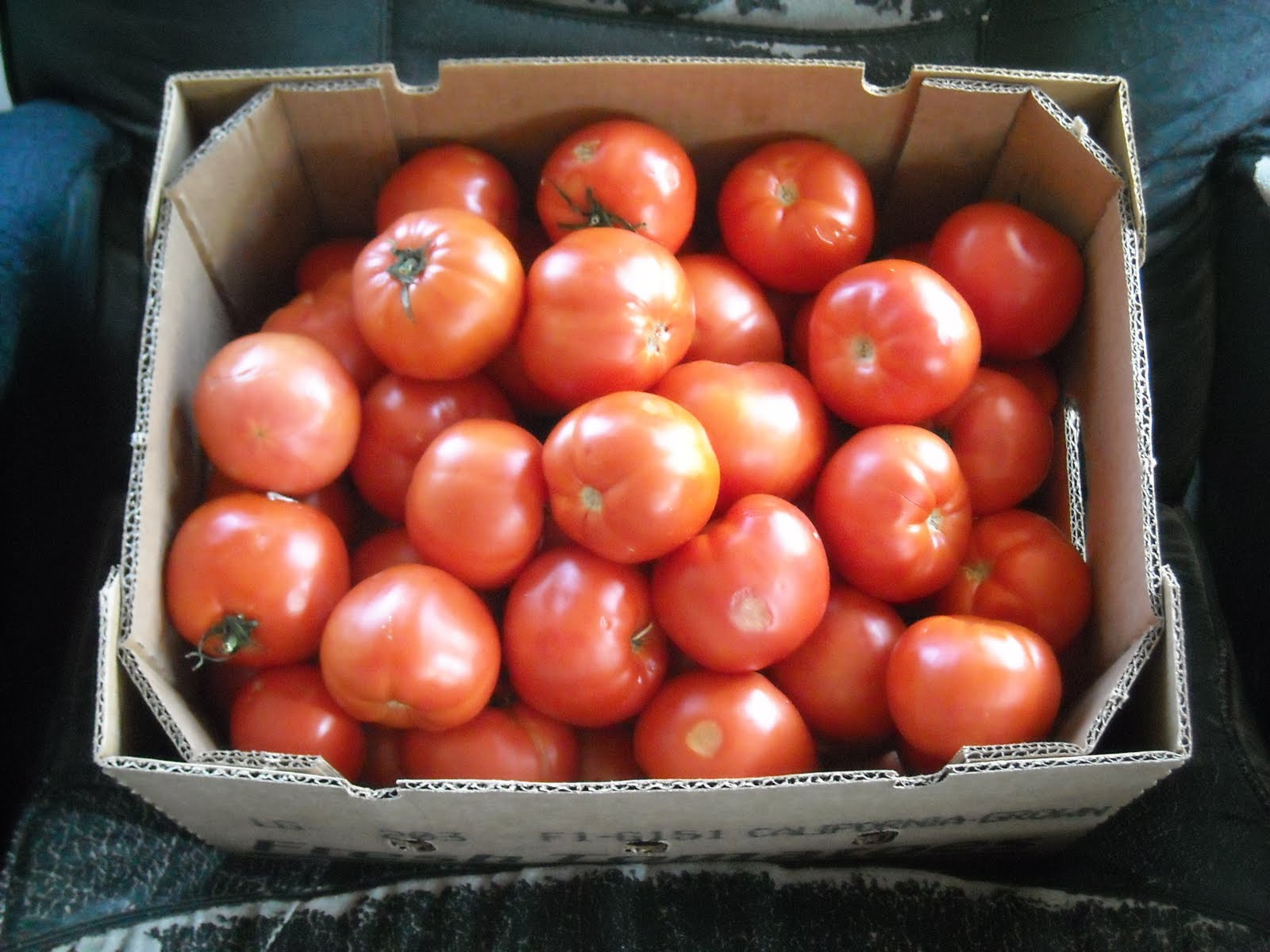
Here are the tomatoes we were blessed to be able to buy very inexpensively. A 20 lb. box yielded three to three and a half batches:

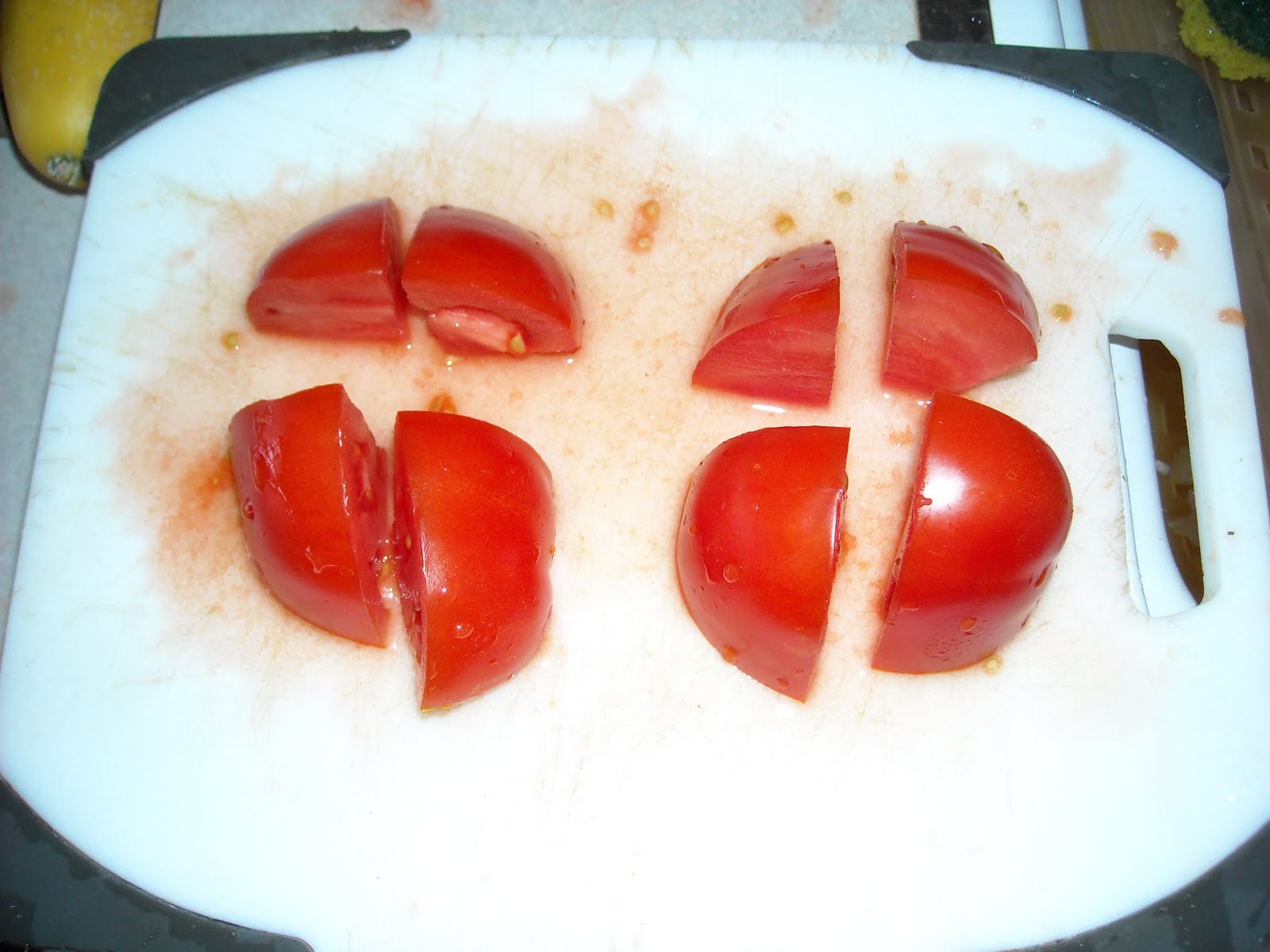
I cut up each tomato in half and then into quarters and placed them in the soup pot:

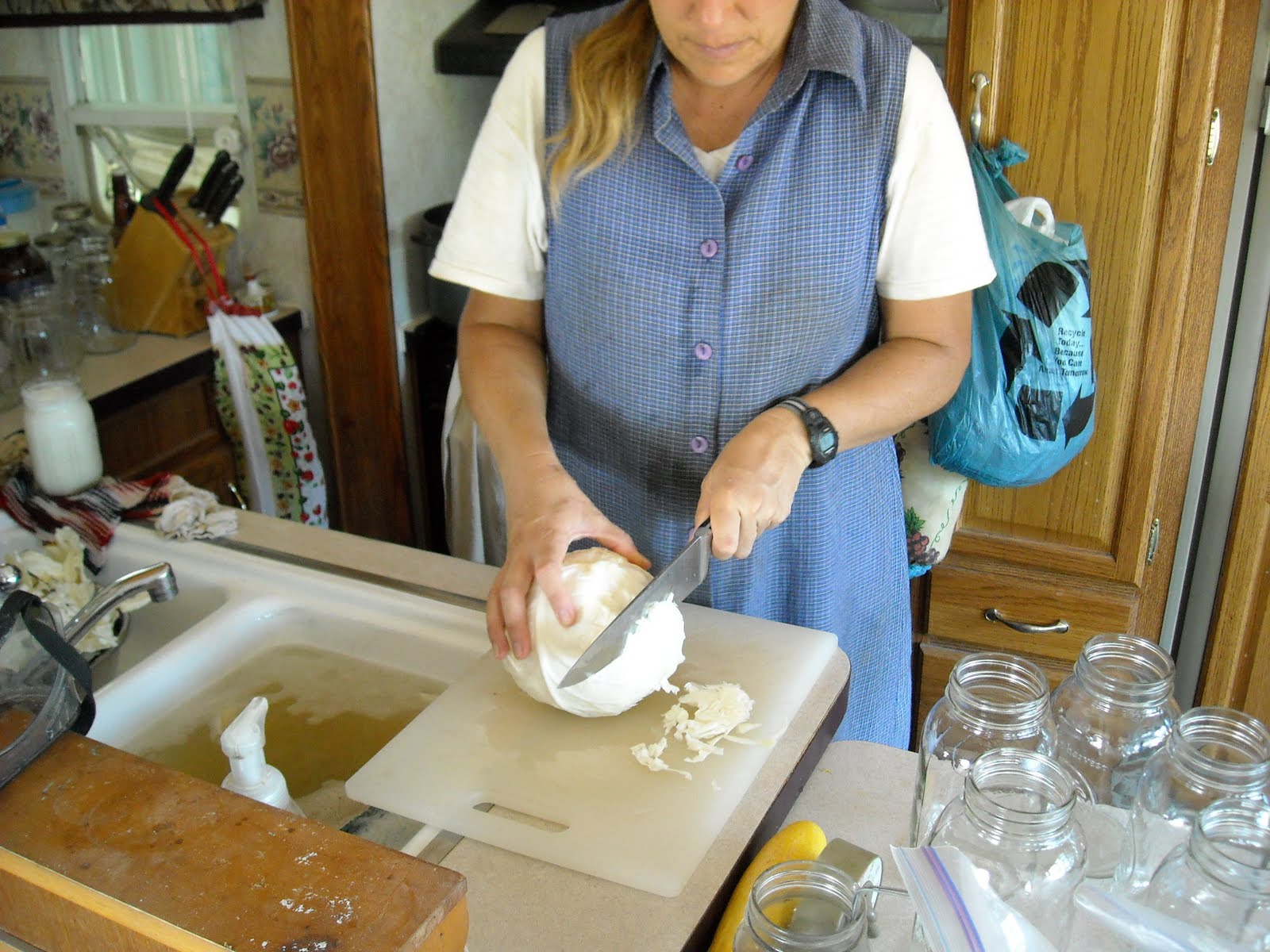
I coarsely chopped up the cabbage and placed it in with the tomatoes:

I was amazed at how many cups each head of cabbage yielded:

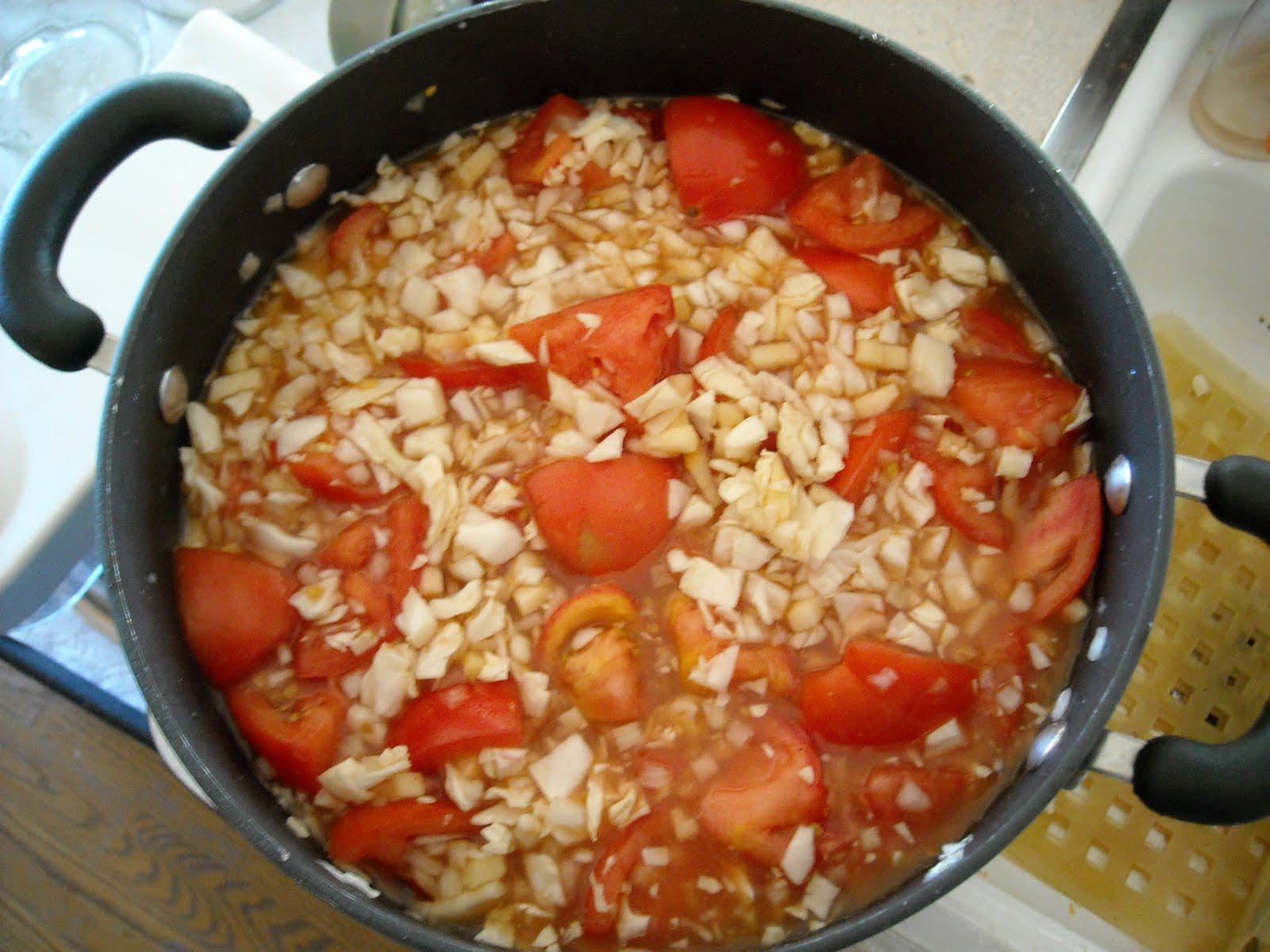
Here are all of the ingredients introducing themselves to each other and ready to be boiled:

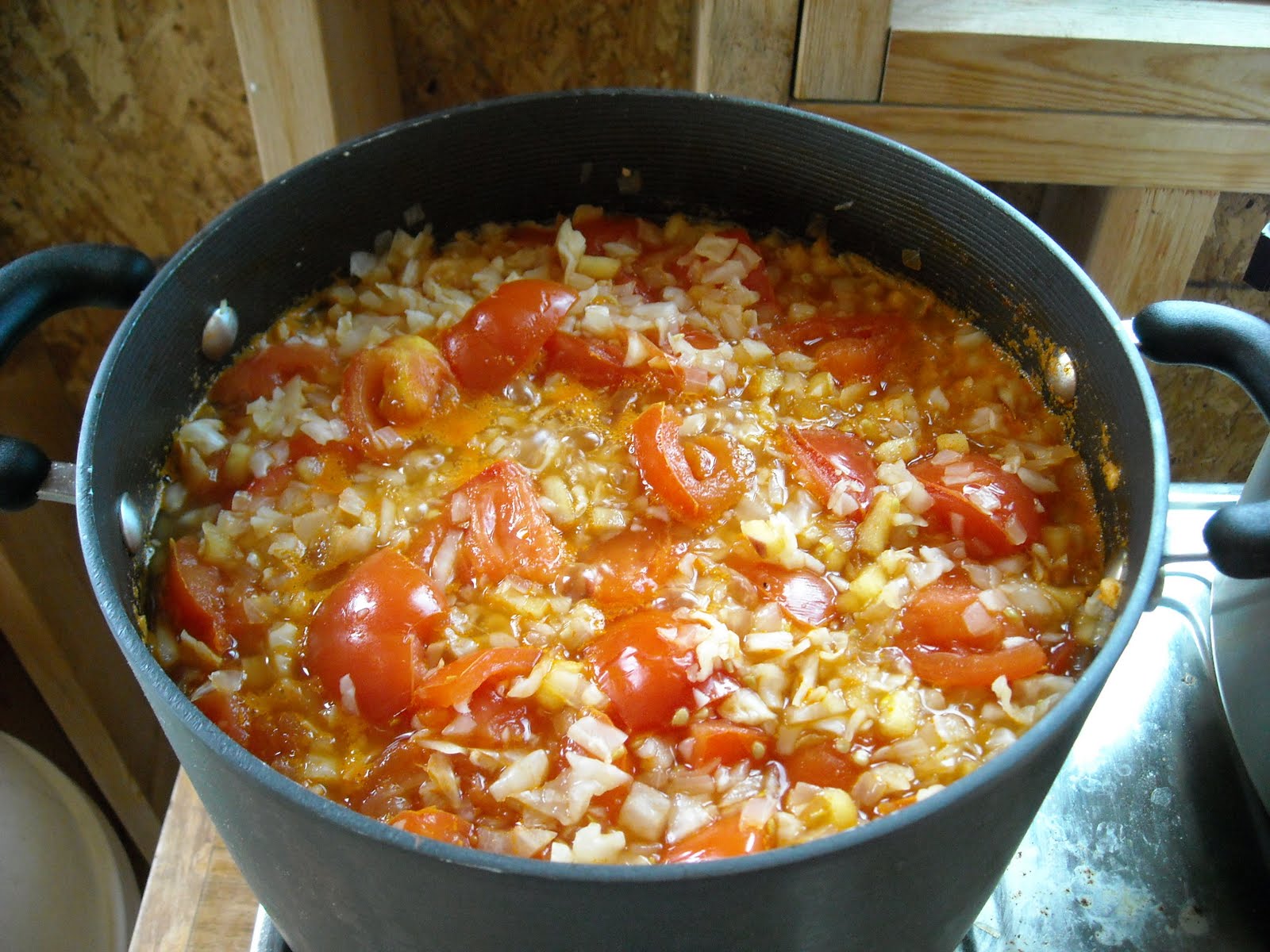
The ingredients have now been boiled for five minutes and are ready to be ladled into the canning jars for processing:

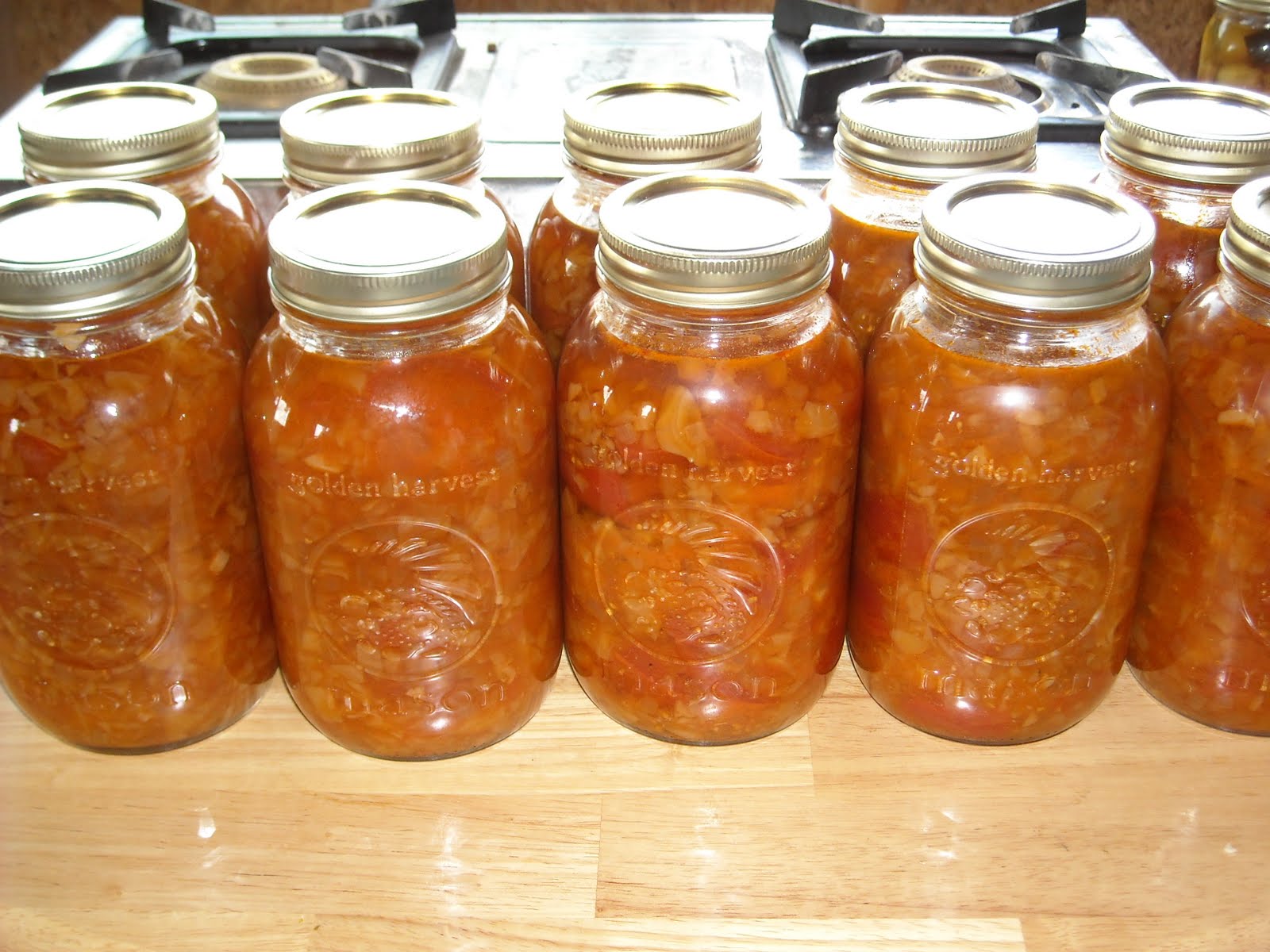
MMMmmmmm, delicious Borsch all cooked, processed and ready to eat!

What a blessing to have been able to capture and preserve these abundant, direct provisions from God. Dave and I have had some borsch for supper a couple of times now. Dave said it doesn’t smell that great but tastes delicious! It can stand on its own as a very tasty and nutritious soup, or meat may be added to make a wonderful stew. I added in some canned brisket meat recently along with some homemade bread, and it made a well-rounded supper for us. All thanks to God for granting us this food from our garden as a type of the spiritual food He gives us from His Word.

Susan


Goat Milk?

The background music came from fiddle champion Tony Ludiker’s free mp3s page. The recordings have Terry Ludiker and Darin Meeks on guitar.

This was fun to do. Here’s a bit of raw footage, some of which hit the cutting room floor.

In this first one, I held out as long as I could, until the end:


I almost didn’t get the part after this take. Also, based on the last few seconds, it appears that for some reason eating cookies makes me think I’m playing Hannibal Lecter:


Here, finishing up after getting the last goat back into the pen didn’t work out quite as expected:


And just for the record, the milk I drank was from a previous day’s milking that had been kept very cold. Apparently, it’s better tasting and lasts longer when the goat milk is chilled well right away.

There is a lesson in the main video, in case it wasn’t evident: most people go to the store for their provisions; agrarians go straight to the source, which is provided by God directly in accordance with His will, without the need for the world and its government approval, degrading pasteurization, shipping companies, grocery stores, and all of the other in-between means the industrial system requires for sustenance to go from where it’s produced to where it is used or consumed.

Which way is the proper way for a Christian to live?

We are thankful to the Lord for the provisions of our goats and the milk He is allowing us to have.

— David

P.S. In case you weren’t aware of the TV commercials, etc., our video is a take off of the California Milk Processing Board (and then licensed by others) ad campaign, “got milk?”


« Older posts Newer posts »