Our journal of what we pray is our sojourn of life along the narrow way, even the old paths, submitting to the Bible as a light unto both.

Author: David & Susan Sifford (Page 76 of 96)

A Mulching We Will Go

One thing about living out here in untamed territory is that everything is on the dirt. This makes for dirty clothes, dirty belongings…dirty everything. And then when it rains…well, you know the equation: dirt + water = mud.

Dealing with the mud around here has been an interesting experience. It gets everywhere (like the dirt); we have to park cars up at the front of the land in advance of rain to be able to go to town; and you get to slog around in it sometimes for an extended period, which actually isn’t so easy for days on end. Anyway, these things in the end can be a means of revealing a lack of graces in our lives, which should cause us to pray on bended knee for forgiveness and for the proper graces of patience, contentment, etc.

I wouldn’t have it any other way. 🙂

However, from a practical standpoint, there are some things that can be done to help with problems that occur from things like dealing with mud. One thing I did was add gutters to our Summer kitchen and cistern, which has helped keep water from collecting around them — water which sometimes leaked into the stairway of our root cellar. Also, our barn’s North lean-to is actually slanted slightly uphill; and so, when it rained heavily, especially from the North, the whole North lean-to area would flood, which would also leach under the barn’s concrete footer, soaking the floor near the footer on the inside of the barn. Well, I figured this could eventually cause problems with those areas of the foundation. But what to do?

Michael some time ago came up with the idea of hauling in free mulch that was available from a local town’s landfill, and using it for any pathways and areas where people needed to walk in the rain. This was a great idea, as it ended up working very well for him.

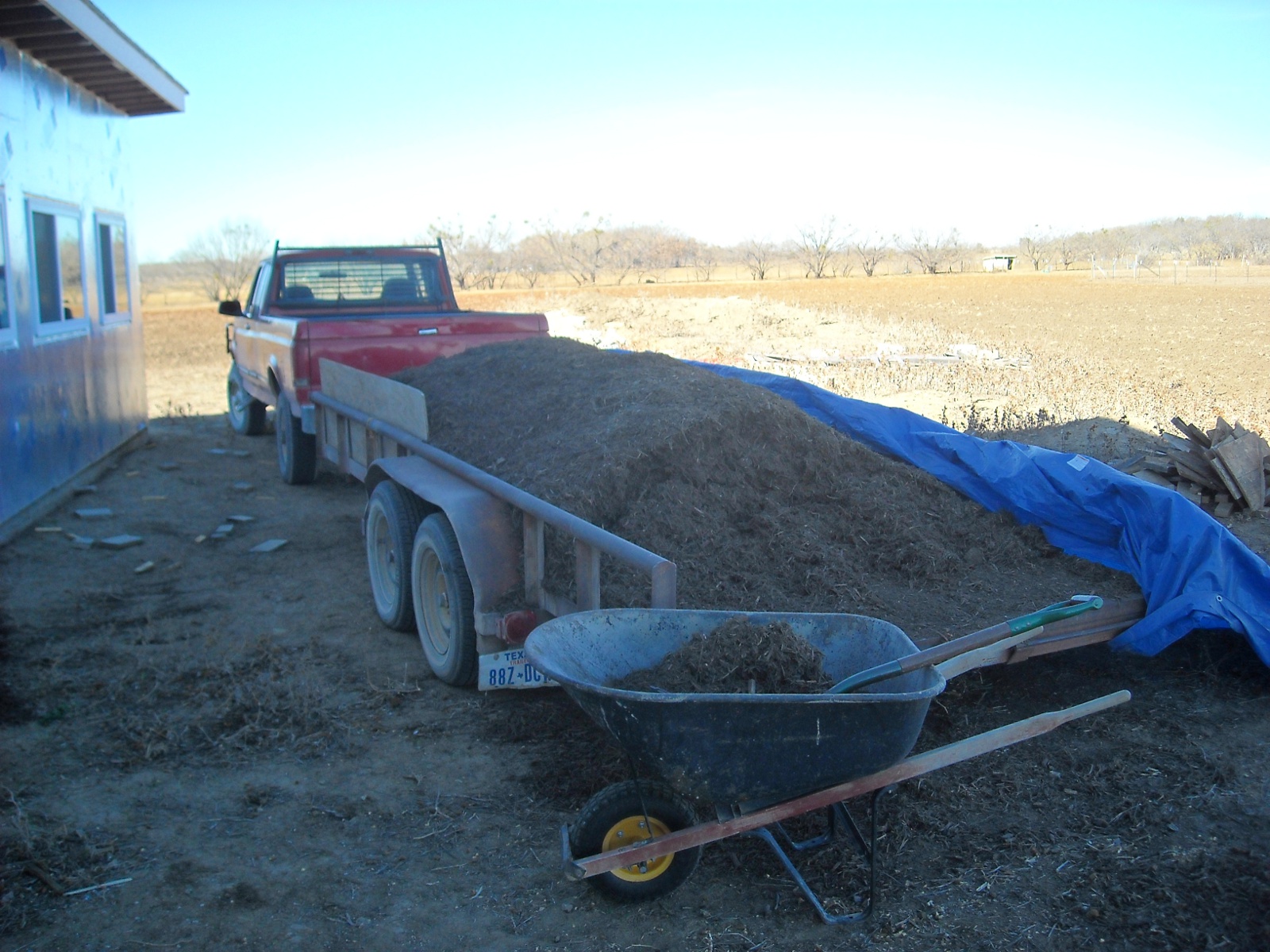
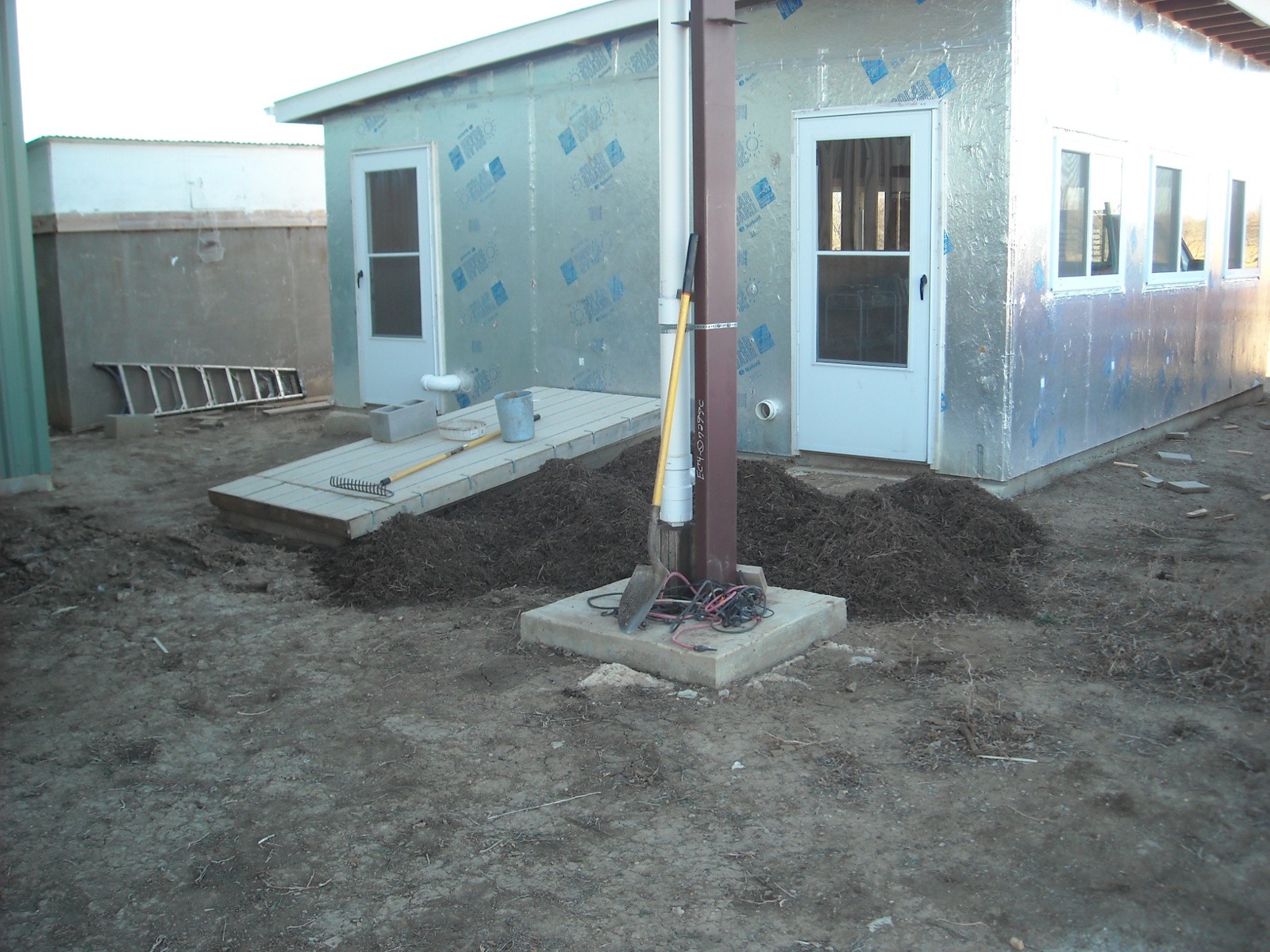
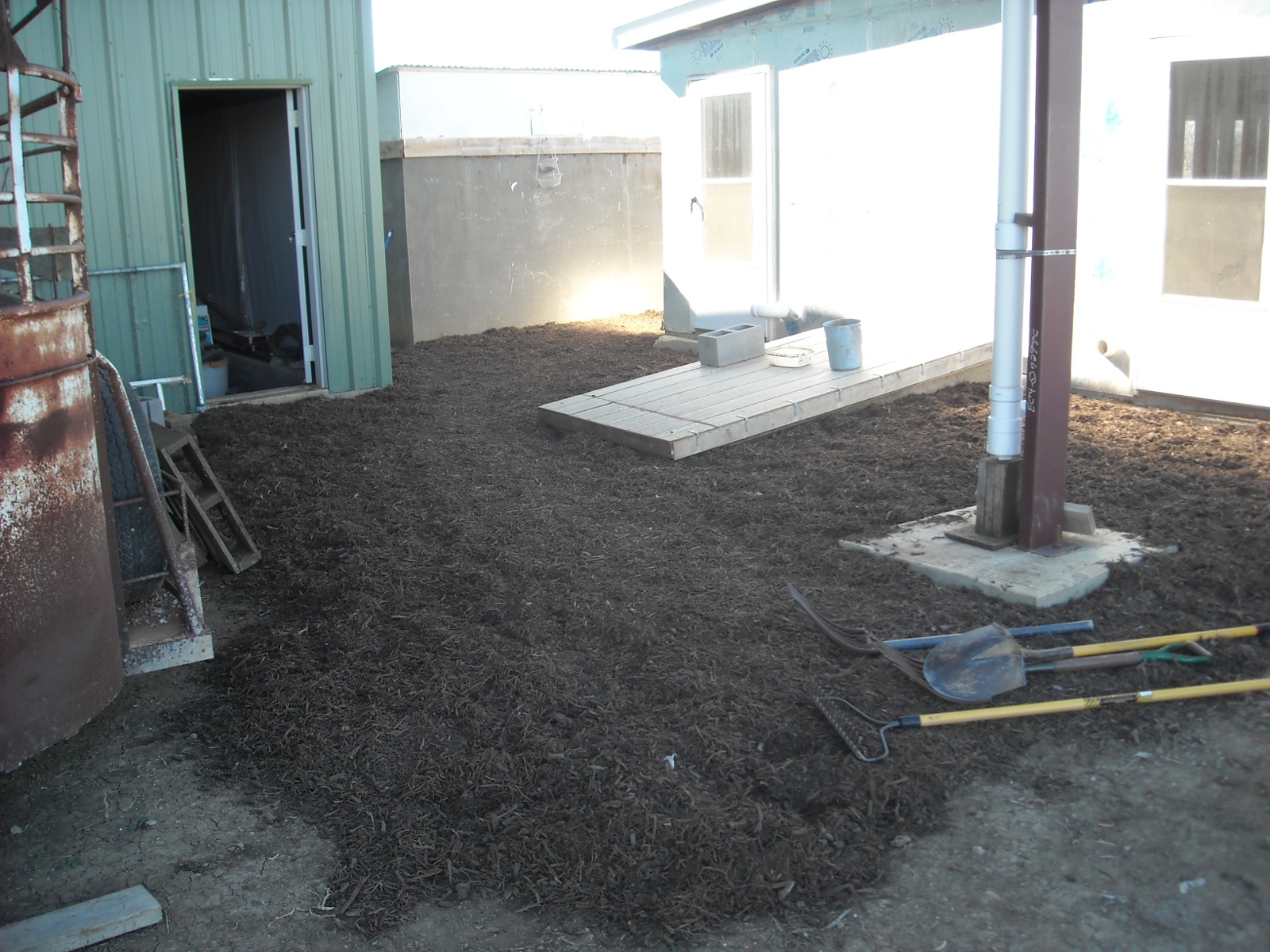
And so, I was able to finally transport some loads here (which sadly weren’t quite free anymore, but not too expensive) to begin filling in the North lean-to area, and around the Summer kitchen and root cellar:

Landscaping Mulch in Flatbed Trailer

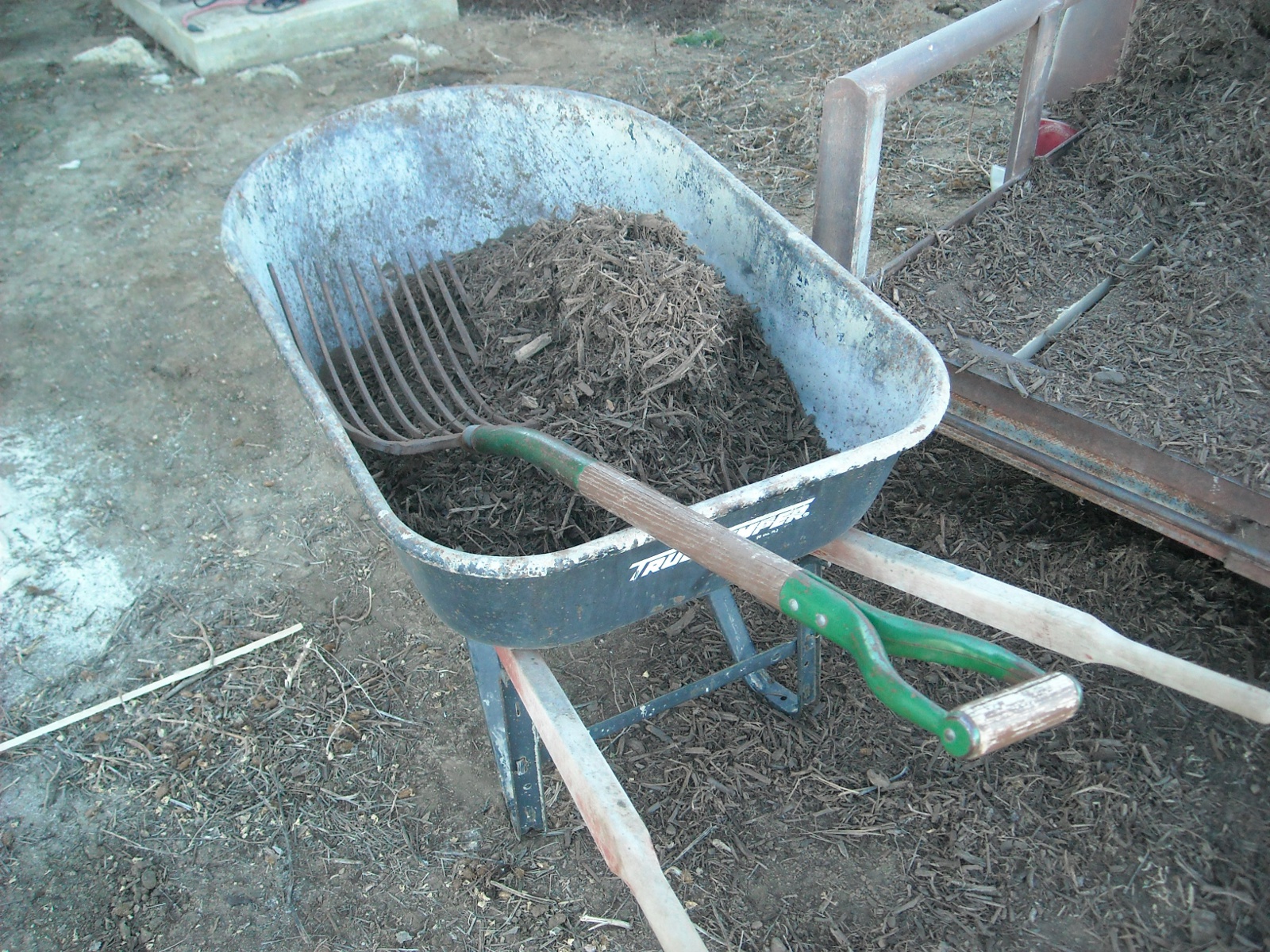
The hay pitchfork worked best:

Hay Pitchfork and Tools for Laying Landscaping Mulch

And here are some pictures of the coverage. This is the beginnings of laying it out:

Beginning to Lay the Landscaping Mulch

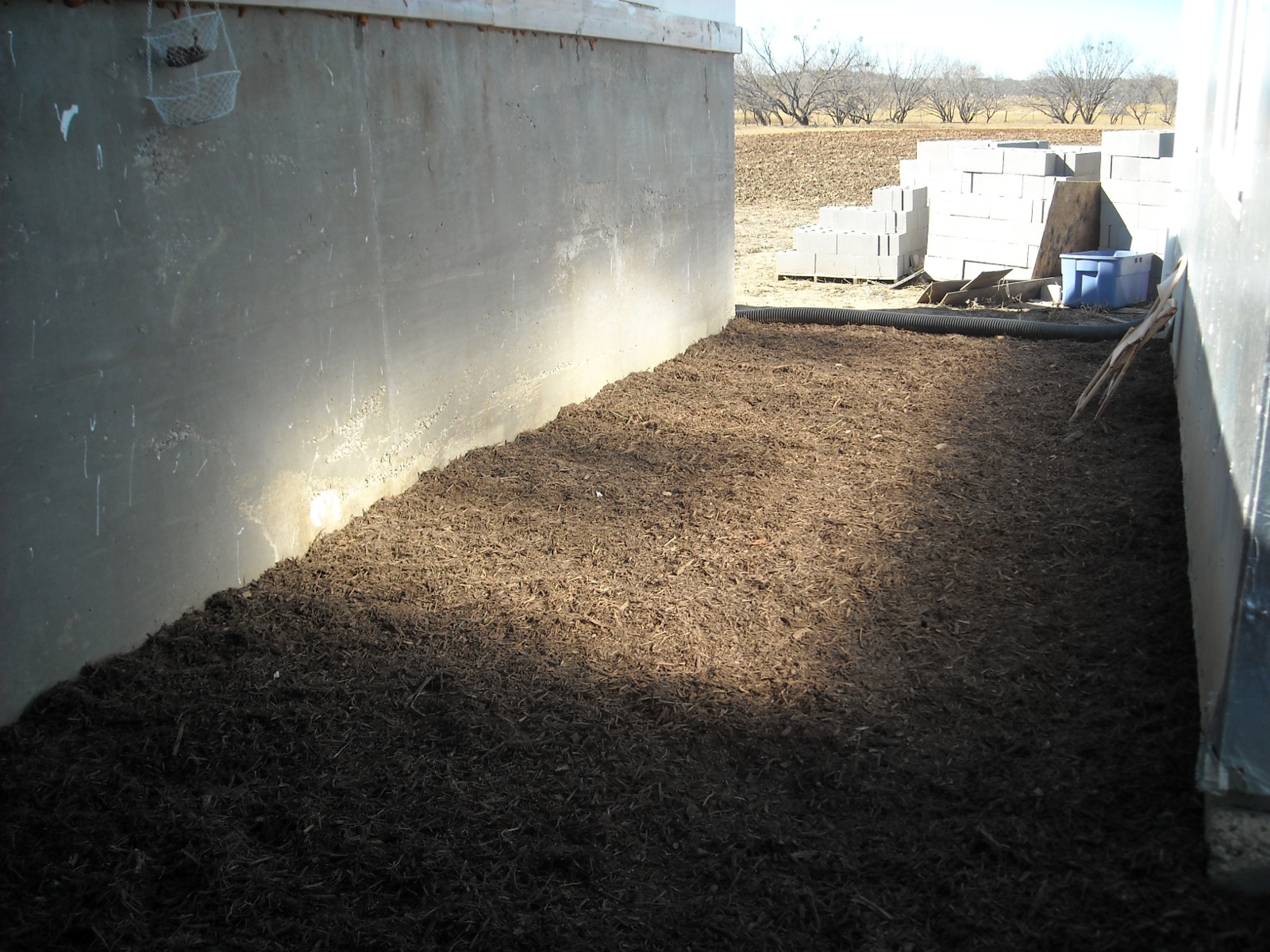
Here is the mulch around the root cellar:

Landscaping Mulch Around Root Cellar

And between the cistern and Summer kitchen:

Landscaping Mulch Between Cistern and Summer Kitchen

With the first flatbed trailer full, we filled most of what you’ve already seen, and started in on the North side lean-to:

Landscaping Mulch Beginning on North Side Lean-to

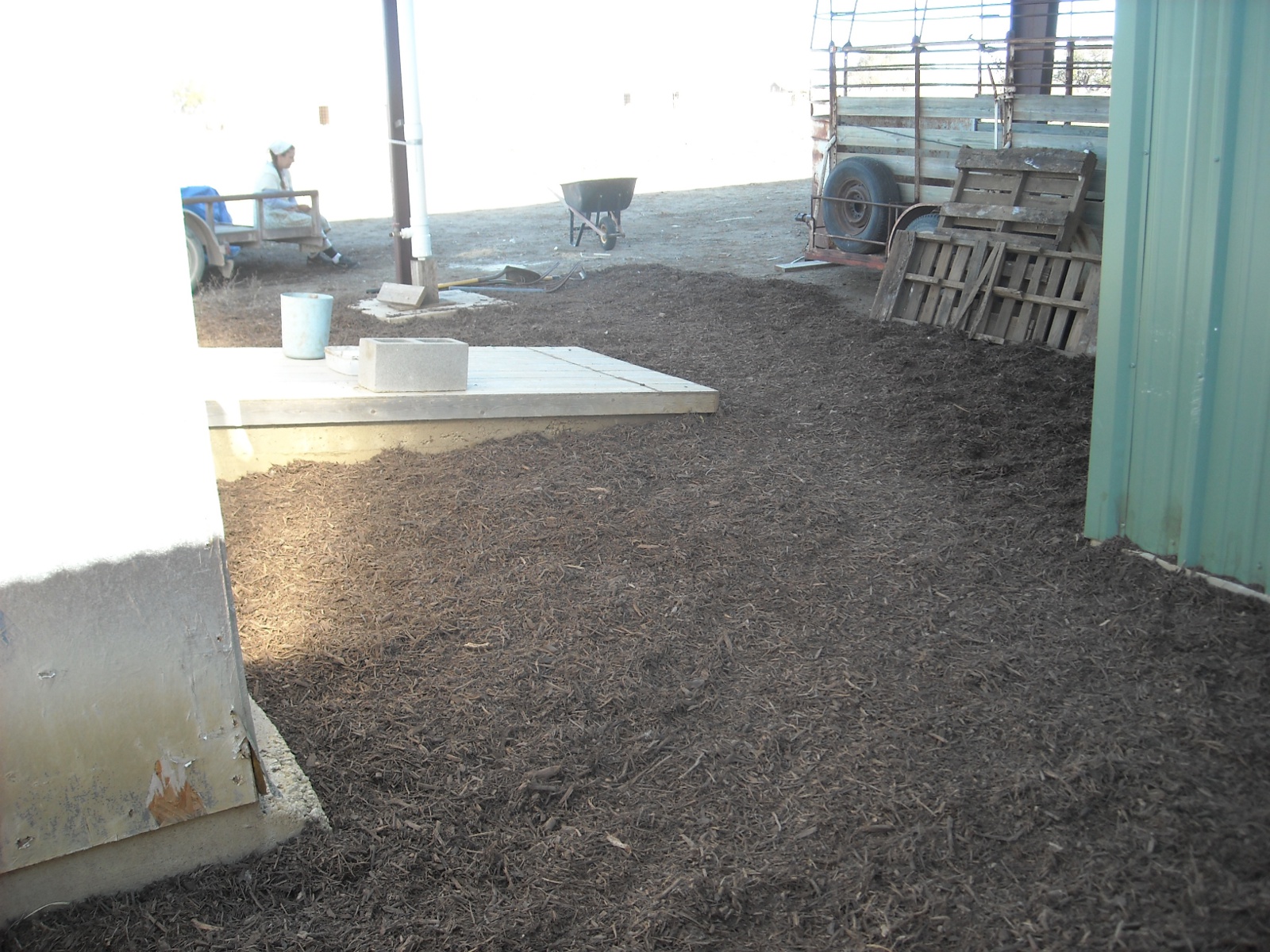
With two more loads, we were able to complete the whole area under the overhang:

Landscaping Mulch Under North Lean-to Complete

It has worked out really well for us too — we can walk around those areas now, even when it is raining; the root cellar leaking is much better, as is the inside of the barn floor.

We’re thankful to the Lord for granting this idea, and for the provisions for the mulch and help in continuing to improve the homestead.

— David

It Was a Little Chilly Outside

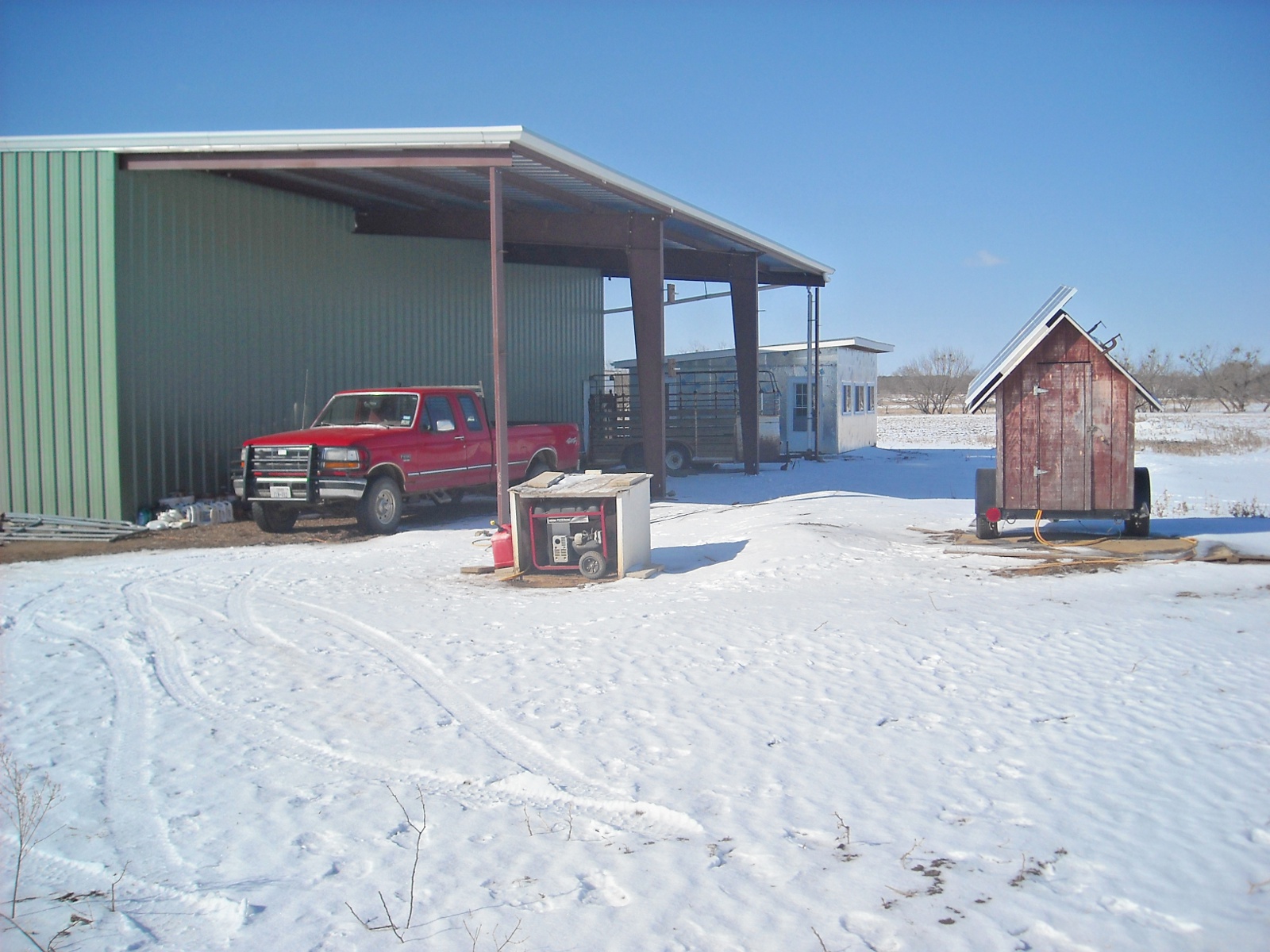
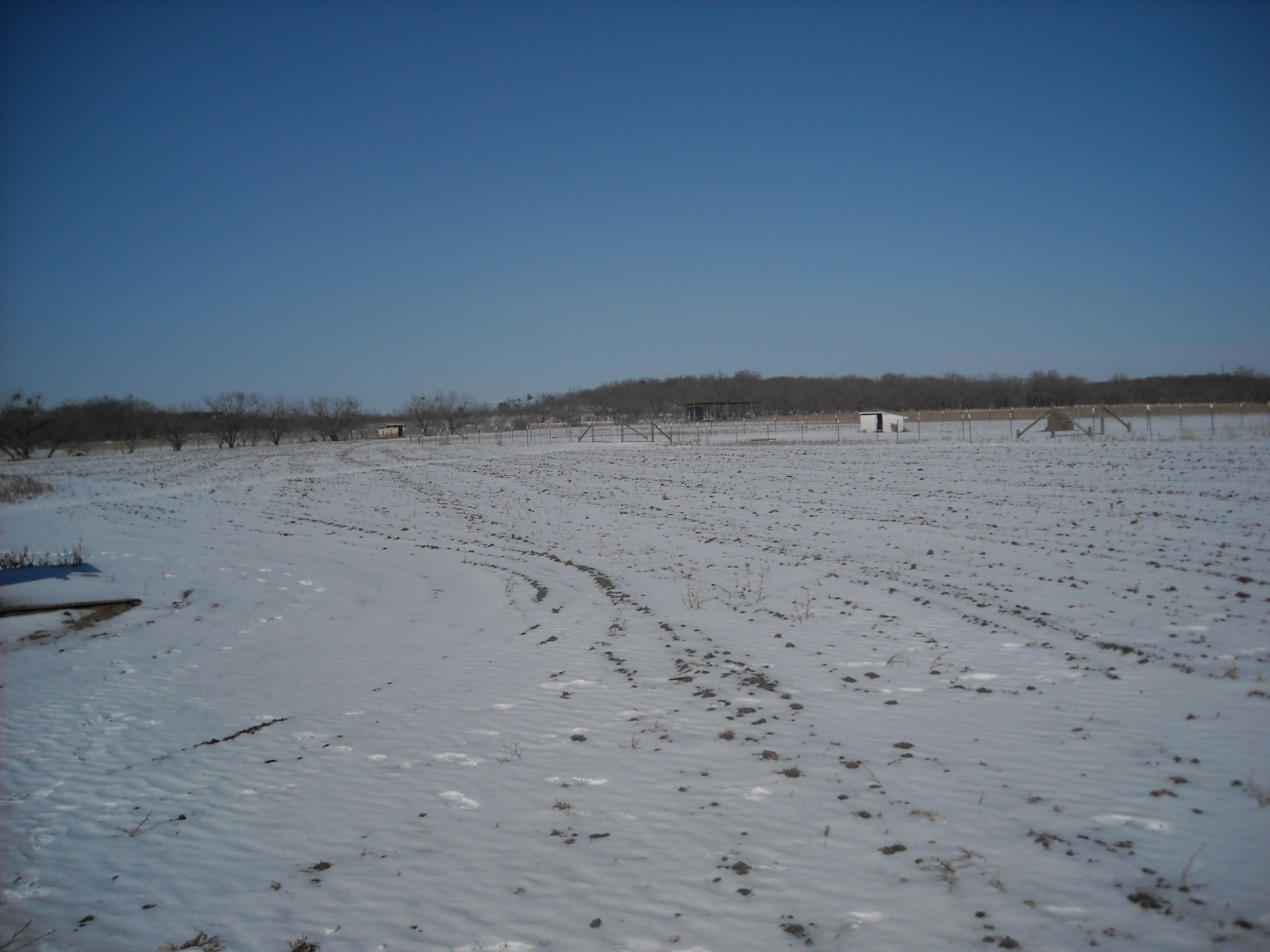
So, we usually try to get a blog post out quicker than this; but this last week has been interesting. We just went through probably the coldest weather we’ve experienced since moving out here 5 1/2 years ago. It was a doozy, for us anyway. It was originally supposed to only last a couple of days, but it stretched out to three full days with temperatures between the upper single digits to lower 20s, with only on day four us hovering around the freezing mark. Also, it was breezy or windy most of the time, and we had rain right before and snow during; and with the winds, the wind chills got to below zero. After our cold weather training trip (see the “Preparation and Education” section of that link) of a few years ago, in preparation for any future trips, I obtained some extreme cold-weather clothing, like polypropylene long underwear, socks, glove inserts and balaclava, and some lined coveralls. Those polypropylene accouterments are the best, and have really helped Sue and me.

Now, while we’ve been able to figure out some of our own cold-weather clothing issues, some of our animals, and the situation we have available for them, aren’t really set up for these kinds of temperatures. We lost a goat in the cold last year; and we currently have just a few-month old chicks, which we’ve already lost 2-3 because of me exposing them to 20-degree weather — I thought because they had their feathers they were ok, but apparently not with that much cold. And so, we spent all day Monday preparing for the arctic front that was due to come in that night.

Longhorns

Before I get into the other animals, I have a little story. Two and a half weeks before the cold front, we found our most traditional-looking, original breed Longhorn cow, Amistosa, laying down on the left-over hay on our upper field, where we have been putting their hay bales, and not getting up. The next morning she was still there, and when I brought out range cubes to see if she would come and get some, given she’s a range-cube hog, she didn’t get up; and then I figured something was wrong. Soon after, she did stand up, but was very evidently hurt in her left front leg, as she almost fell forward into the ground just trying to stand up. We watched her limp around, and saw she was at least able to move, but then found her 60-70 yards away laying down again, this time on the outside of the berm that makes up our pond. I was able to get her to stand up, and then again later that night, with the help of several of the guys. We tried to get her to move with the herd as they were heading toward our upper field again, so that she would be with the herd and nearer us, thus hopefully providing her protection from critters, and away from the pond so she wouldn’t stumble in and drown. I wanted to keep watching her that evening, and instead of finding her with the herd, she had headed the other direction, and was in a grove of trees. I brought her some range cubes, and left them, and came back later, only to find her not there. I looked around, and she had moved to a little bit more of a secluded place, between a large juniper tree and some over-growth. And she had laid down again. I tried getting her up, and even with the guys again, but she wouldn’t stand up. Well, I figured she knew best where to place herself (as part of her God-granted and sovereignly-directed instinct); and so, we started bringing her hay and water.

After several days of this, with her only switching her body from side to side at various times of the day, I decided to see if the vet would come out to look at her. Like I said, she is probably our best looking cow as far as Longhorn traits, and it was very possible she was pregnant. He did come out, tried to get her to stand up, examined her, etc. To make a long story short, he decided she probably needed some better mineral nourishment, given the grass on the land was eaten down, that she was indeed about four months pregnant, and that it was most likely she wasn’t going to get up again, as typically they don’t. He also suggested some feed, and just suggested we try to keep her going, if we wanted. With that information, I had to decide if we were going to put more money into her, or just butcher her, and then basically lose the calf too. Given there was hope, I decided to keep going.

And so, we bought the feed, fed her with that, and continued with the hay and water and cleaning up after her. We also bought some loose minerals in case the rest of the herd was suffering from lack of minerals, but apparently they were generally ok, as they really didn’t spend much time eating the minerals (all of which I believe goes to show the hardiness of the original-breed Longhorns, even with very little native food).

Fast-forward to Sabbath day, 15 days after the last time she walked, and 3 days before the arctic front was due. I had previously asked some of our Longhorn experts (who figured she was just injured and not suffering from malnutrition), and I had asked our local feed-store guys if they had heard of our situation before, and they had but indicated 99% of the time they don’t get up. Well, I figured then that I needed to start trying every time I was around her to get her up, because the longer she stayed down, the worse she was going to get. That midday, I tried to get her up, and she stood up! I thanked the Lord, and called for Sue, who was pretty excited and thankful when she saw her. I coaxed Ami to walk to get the food, and she did, but she was very wobbly, and soon laid down again, although her left leg didn’t seem to be giving her trouble. I also got her up again that evening; and then next day, after giving her a taste of the food, and taking it about five feet away, she decided to get up on her own, and go to the food! Thanks to God again!

Step forward to that Monday before the storm. I was trying to think of ways we were going to be able to protect her from the wind and cold, but before I really had to put a plan into action, she was gone! I found her in some other thickets a little ways away, laying down; and when I went to try to find her with some food that night, she ended up finding me. At this point, she was sort of on her own now as far as the weather; and so we prayed for the best.

Again, to shorten things, the next day in the snow, I found her across the property standing; and I think by the next day, she was on the front field at the hay bale eating with the rest of the cows.

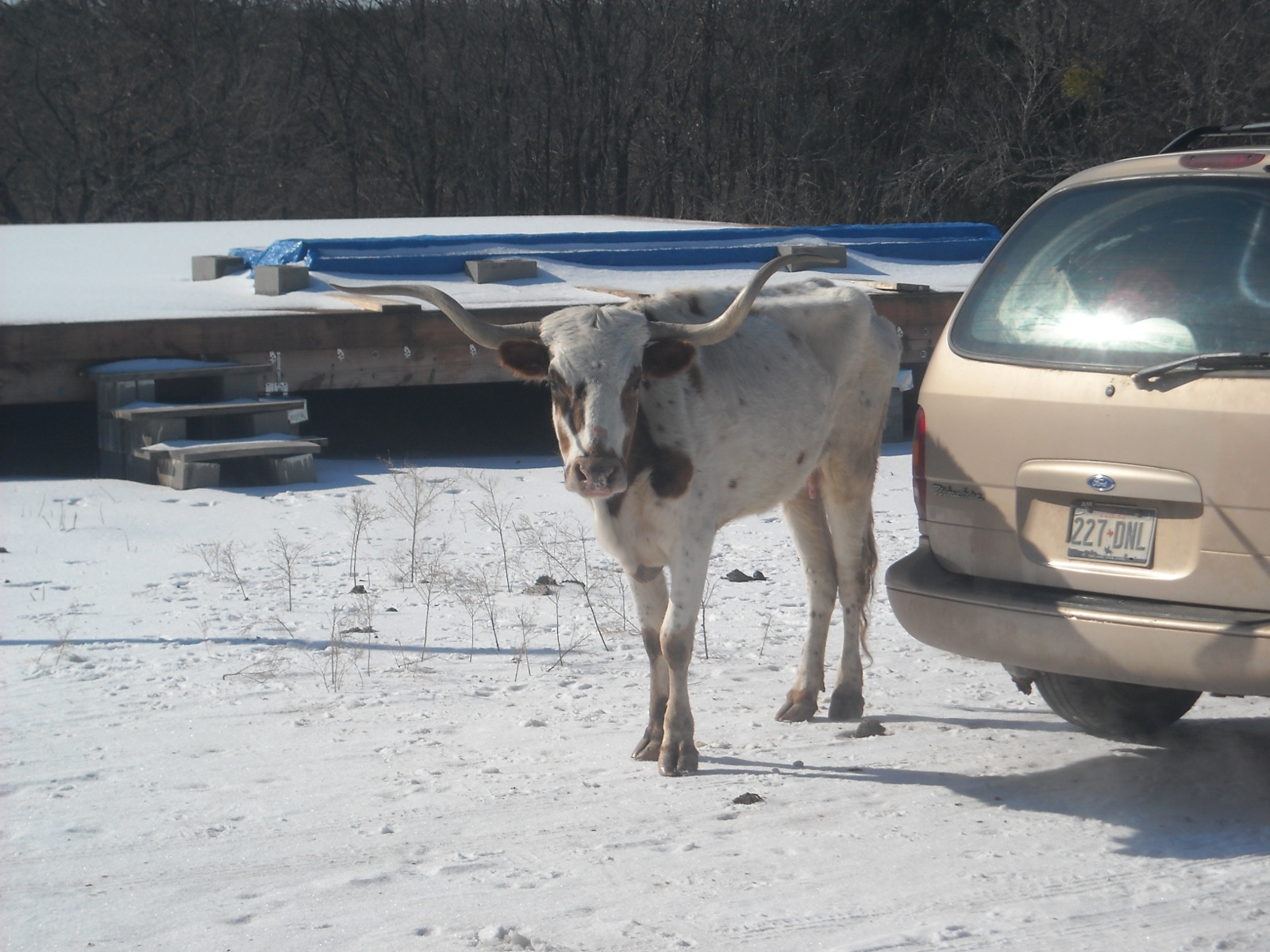
Here she is after the storm, waiting for some feed:
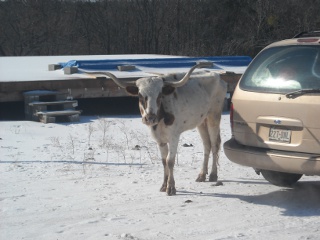
Longhorn Cow Amistosa Standing After Laying Down for Over Two Weeks

And so, we are most thankful to the Lord for granting her healing, that we didn’t lose her or the calf, and that the Lord granted her to be mobile before the freezing weather. God is most gracious and merciful.

Arctic Weather Around the Farm

Now, God IS most gracious and merciful, regardless of what happens; and it’s more evidence of His graces and mercies when He reveals those attributes in some form of grace and mercy He extends us. And He granted many during this storm.

Here are some of the things we did in trying to keep the animals going. But even though we did these things, the outcome was of course always in God’s hands:

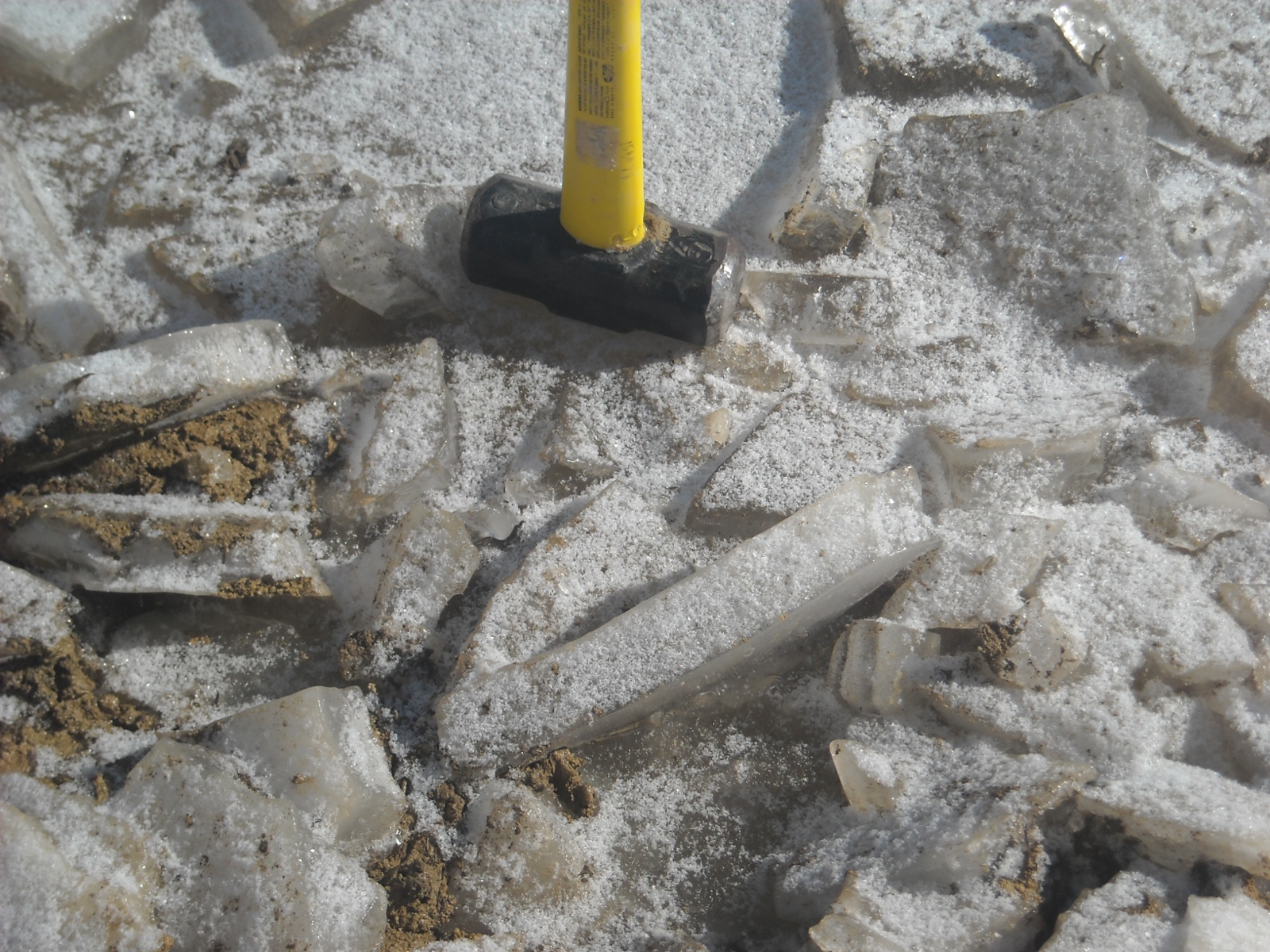
  • The pure Longhorns are a tough breed, and I figured we didn’t have to do too much with them, except make sure they had hay and hopefully water. And so, we put bales out before and during cold for that; and each day I would go down to our pond to try to sledge-hammer through the ice. Here’s a picture of how thick it was one day:
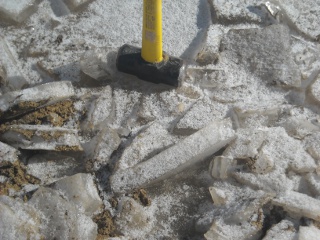
    Frozen Pond Ice Thickness

    One night, several of the Longhorns and calves spent the night on the hay area where the bales usually are, which is an open field; and one of our group’s milk cows did too. Well, with the below-zero wind-chill temperatures, she didn’t fare well, and they sadly ended up having to shoot and field dress her to get some meat off of her before she died, while the Longhorns, even the calves, although shivering, had gotten up and walked away. Again, I believe it just shows the hardiness of the pure Longhorn breed.

  • The pigs we brought a little extra food, and we’d haul out warm water for them to drink. They were often thirsty when I got out there with the water. And they seemed to make it fine.
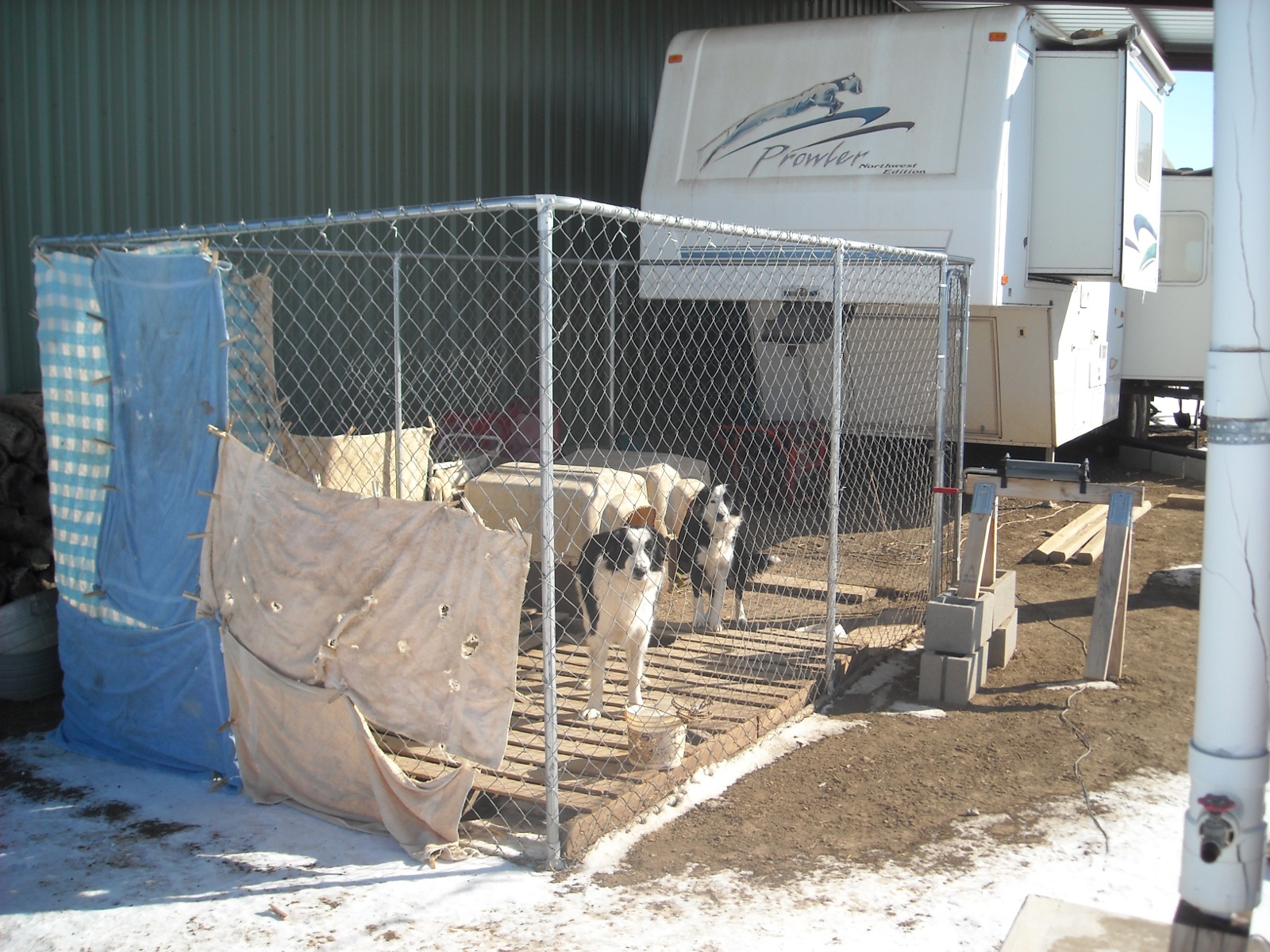
  • For the dogs, we moved their kennel under the barn overhang in front of the camper; and they seemed to fare very well, and didn’t seem to be really cold at any time:
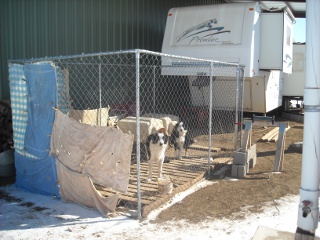
    Border Collies Brodey and Nessa in Kennel Under Barn Lean-to

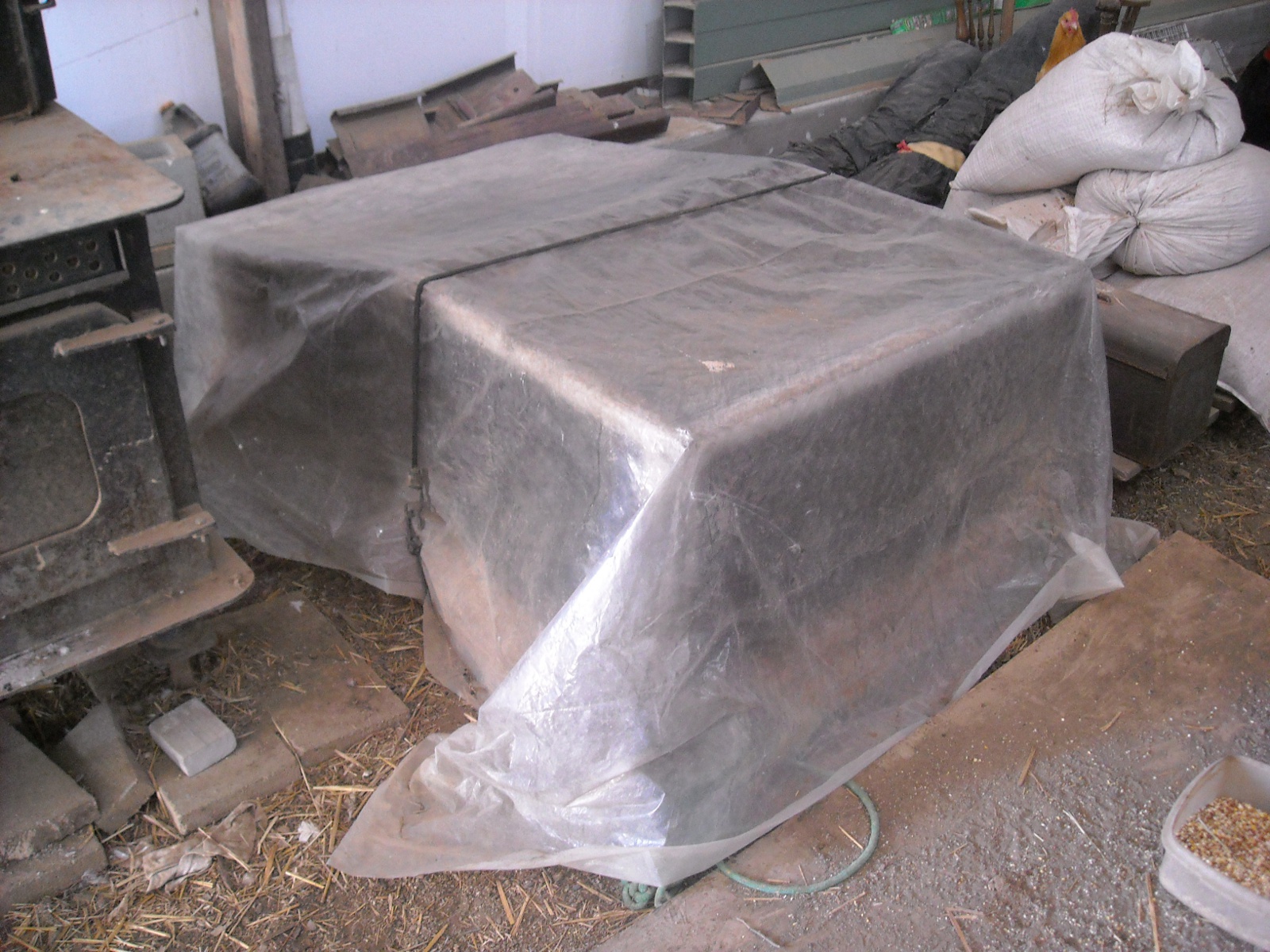
  • Our big chickens didn’t even come out of their coup the first day, so we just kept them in the whole time, bringing food and water. However, we have chicks we’re raising right now (which in retrospect was not such a great idea to be doing during the Winter). They are in our mini chicken tractor, which Sue had the great idea to cover with clear plastic, which is what we do when the weather is somewhat normal:
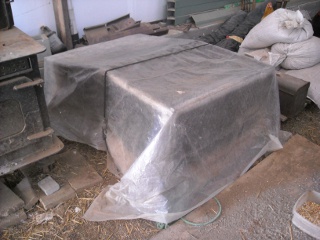
    Clear Plastic Over Mini Chicken Tractor

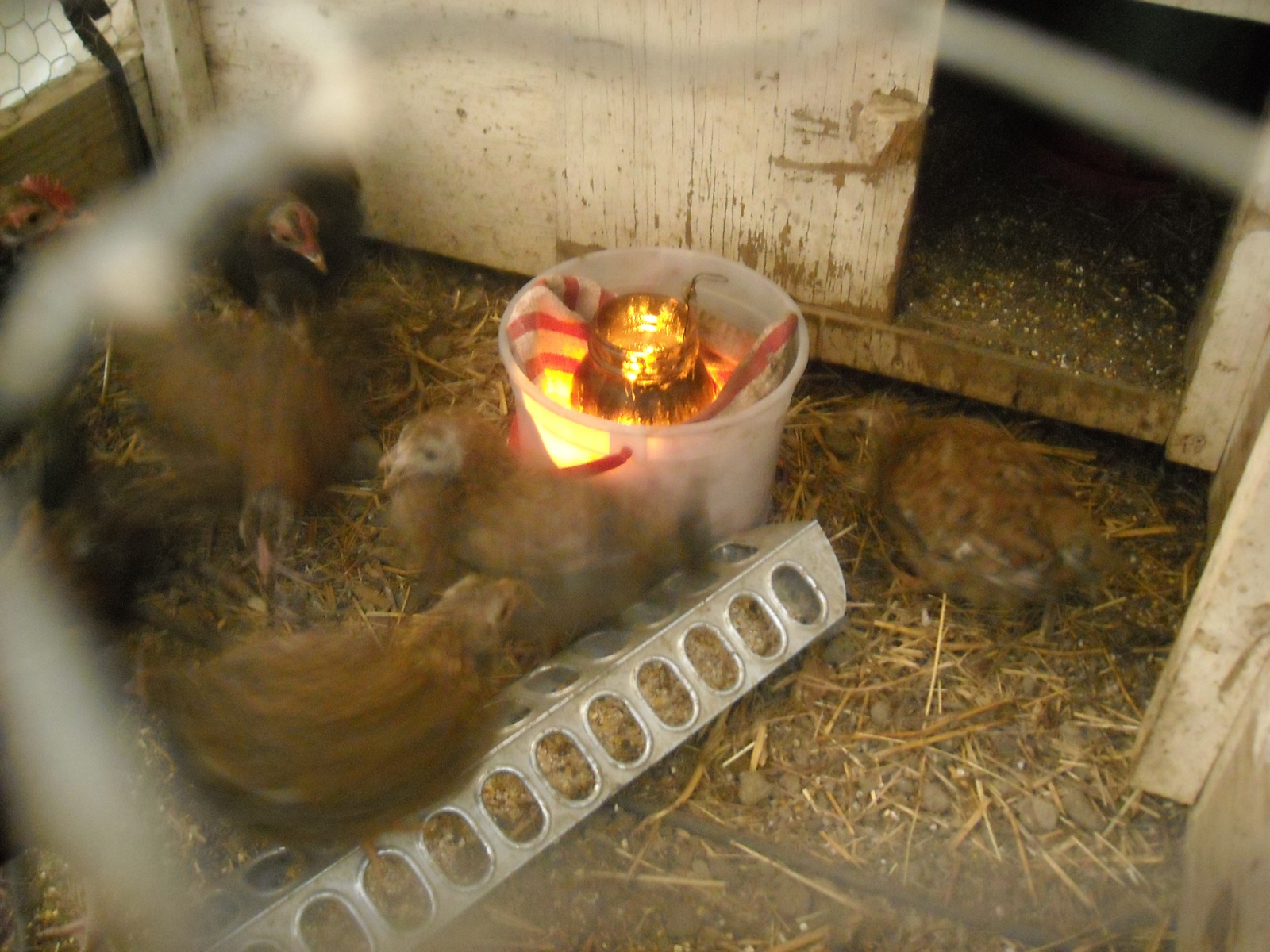
    For the dangerously cold days and nights, we now bring the covered mini tractor into the barn; and during the days we set up a homemade fat lamp to burn in their little open yard area. Here’s a picture of that, which, with the moisture from probably their breath, turns it into a quite warm sauna bath in there:
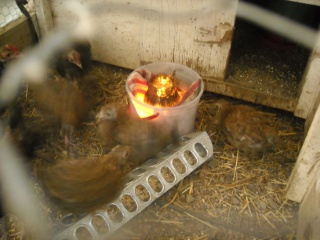
    Fat Lamp in Mini Chicken Tractor

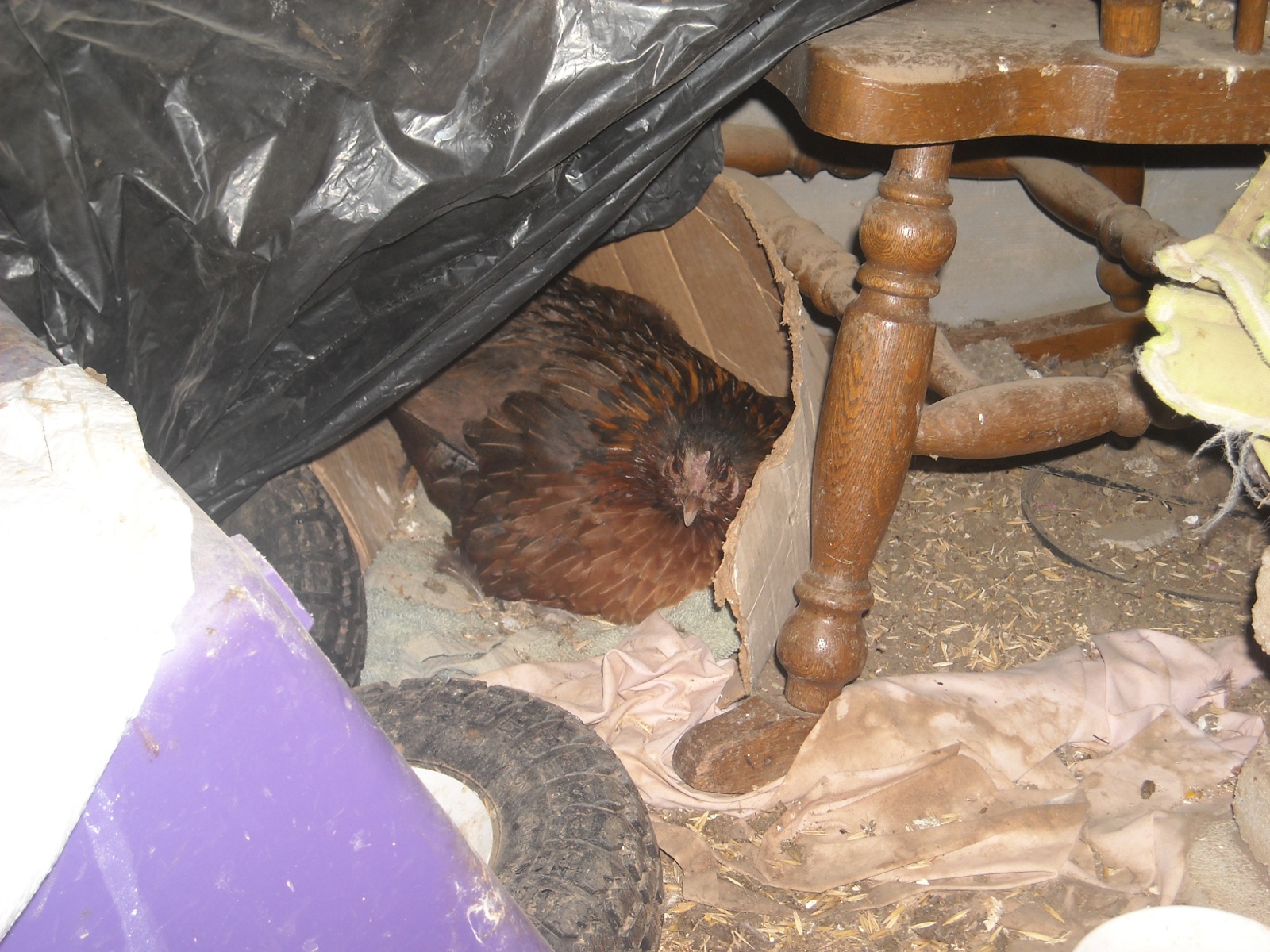
    We have also had a broody chicken sitting on eggs in the barn for who-knows how many weeks now (we put some new eggs under her a week and half or so ago), and she seems to have not been phased by the cold:
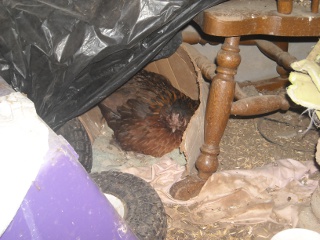
    Broody Chicken in the Barn

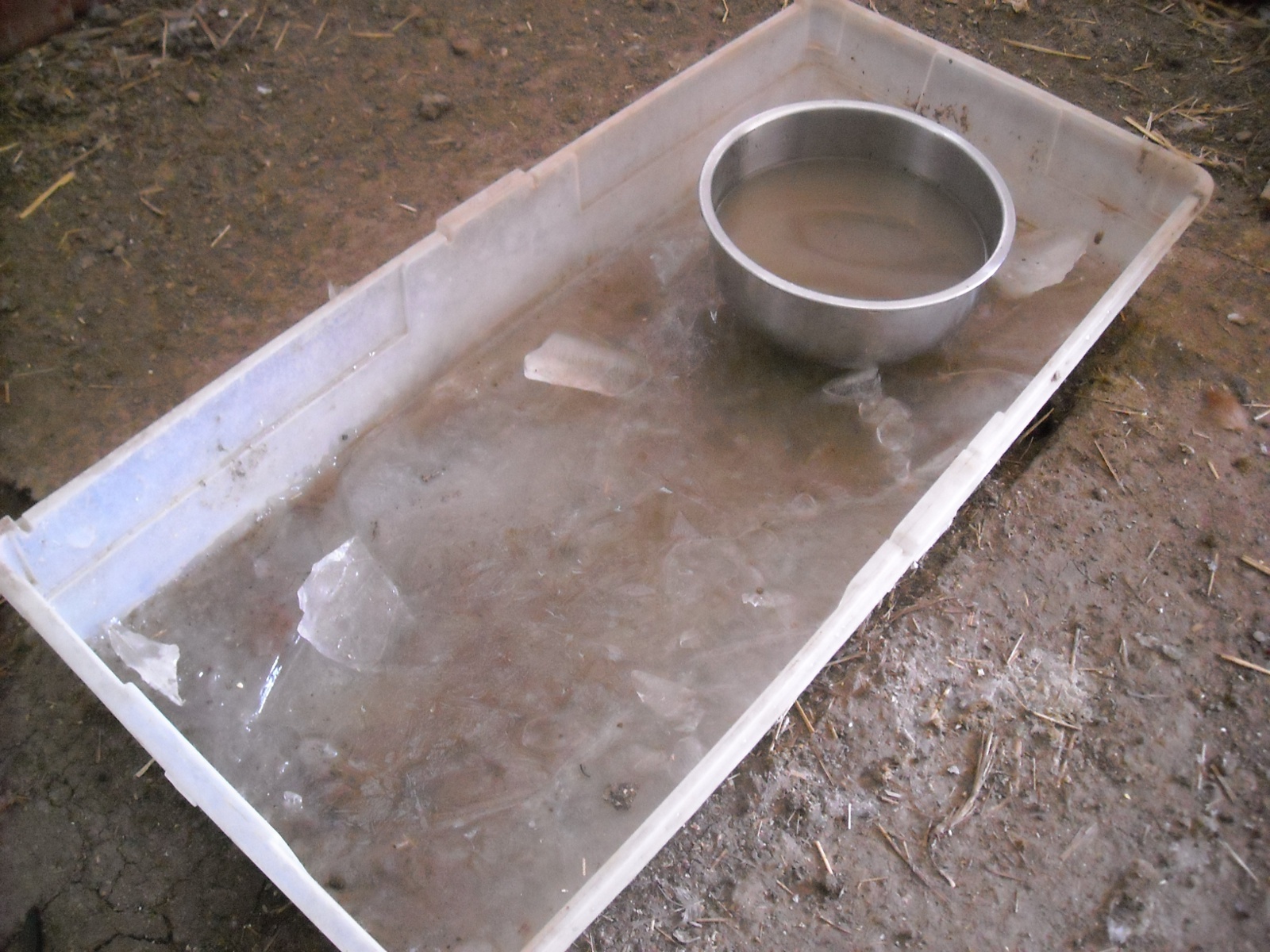
  • After spending the first day front-first into the North winds, Gigi, our goose, started hanging out in the barn; and so, we then just closed her in there. It was cold in there too, as evidenced by her water in the barn being frozen; however, with those down-comforters geese wear, she had no problems:
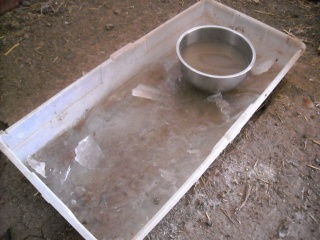
    Gigi the Goose's Water Frozen in the Barn

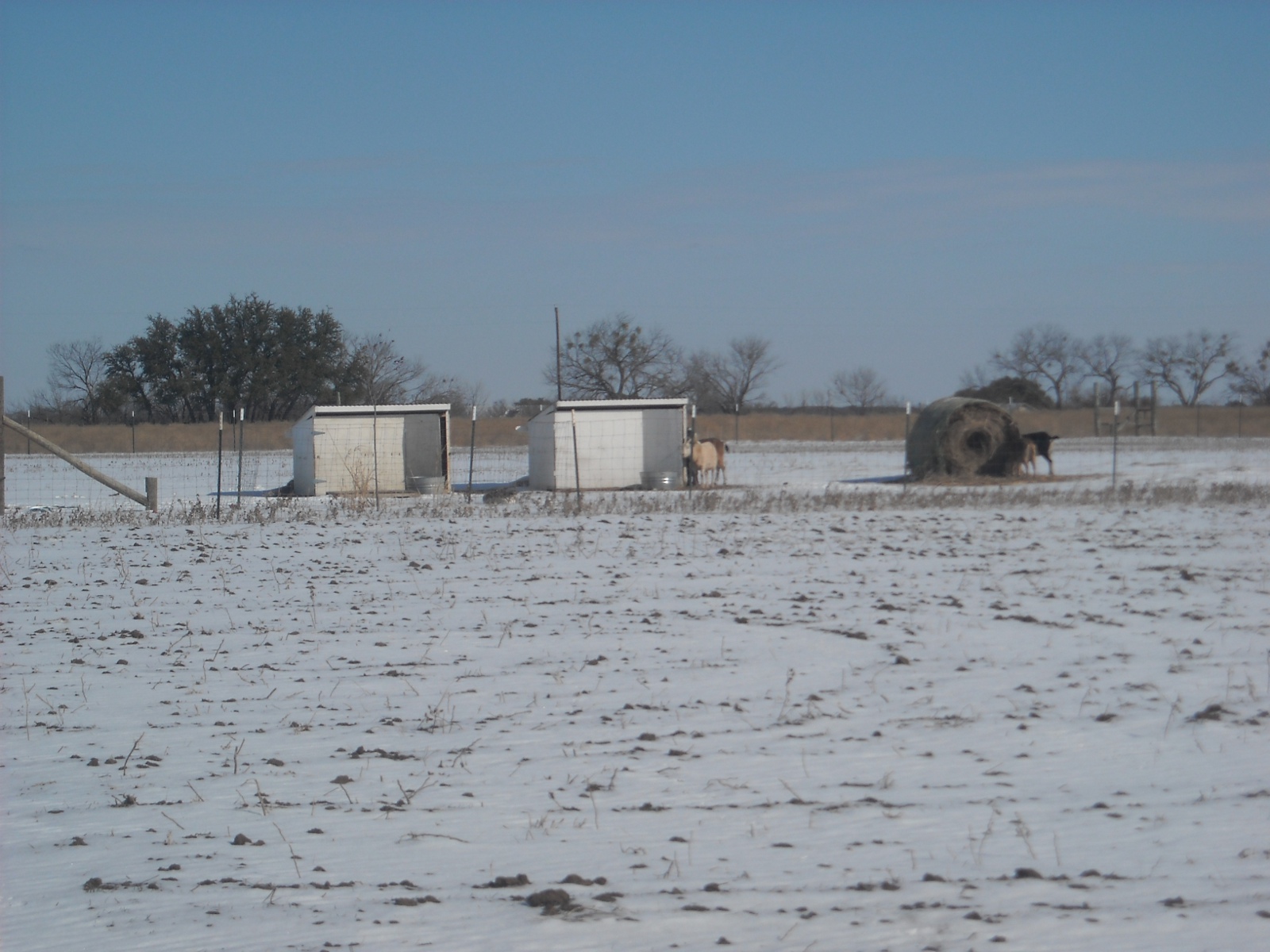
  • For the goats this time, we had started to feed them a little more feed a few weeks previously, to generally help with colder weather; and during this cold snap, we kept them fed two to three times a day as needed; and for the most part, except to let them out a little at the “heat” of the day (when it was 18 degrees!), we kept them boxed in their sheds. We had replaced all of the hay in their sheds before the cold came, and we also put blankets in the sheds. During the frozen days, we would bring out warm water a couple of times a day; but I noticed with the goats, the first thing they always wanted in the morning was food (whereas the pigs wanted the water). There was some shivering, but thankfully they all made it through. Here are the goats and sheds after the storm:
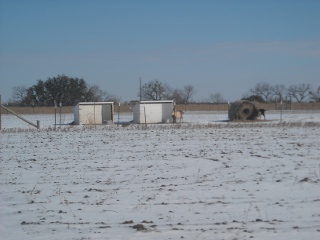
    Goats and Goat Sheds After Arctic Storm

    We hope to one day have a place in the barn set up to bring animals in as needed for this type of weather.

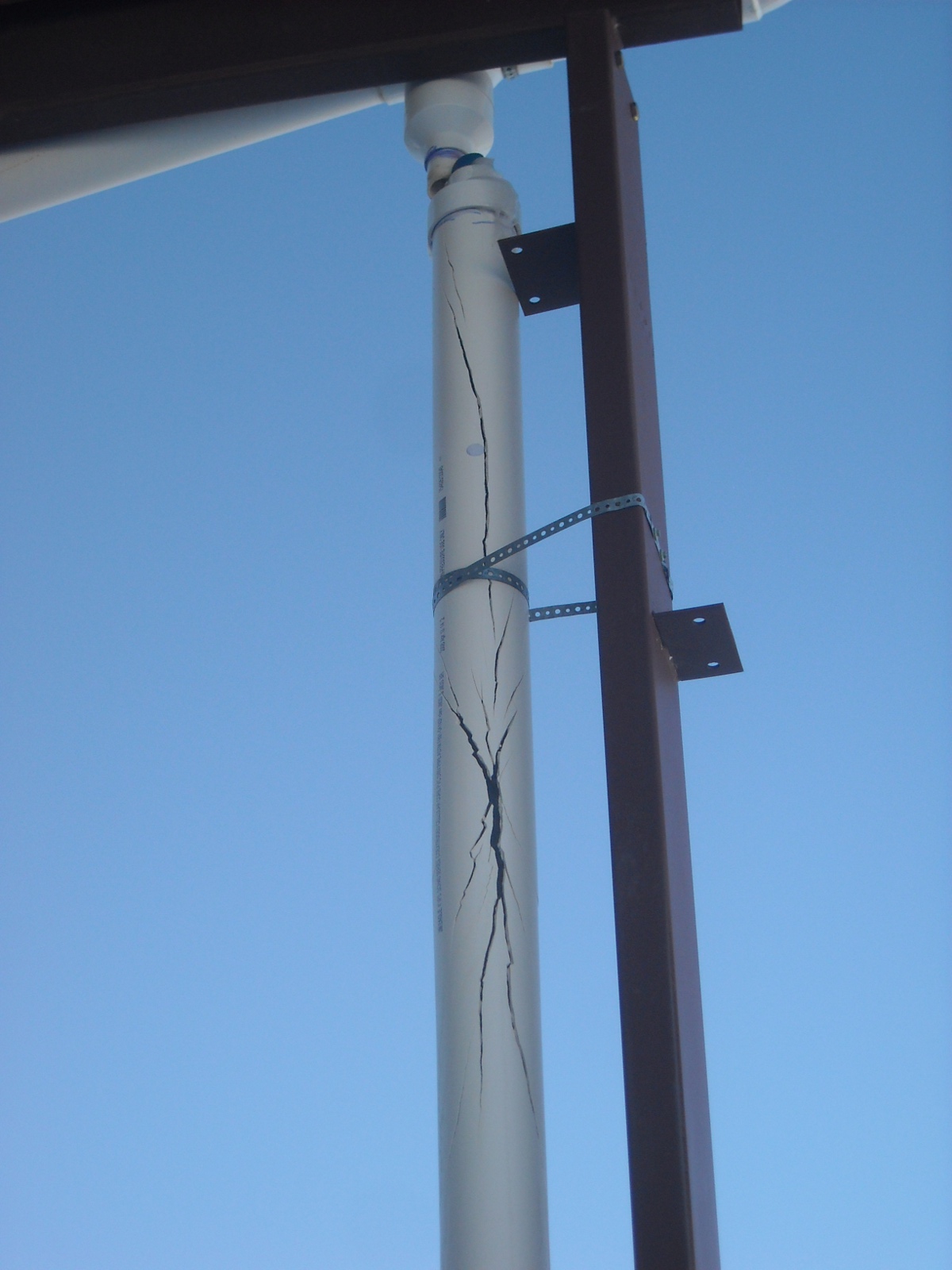
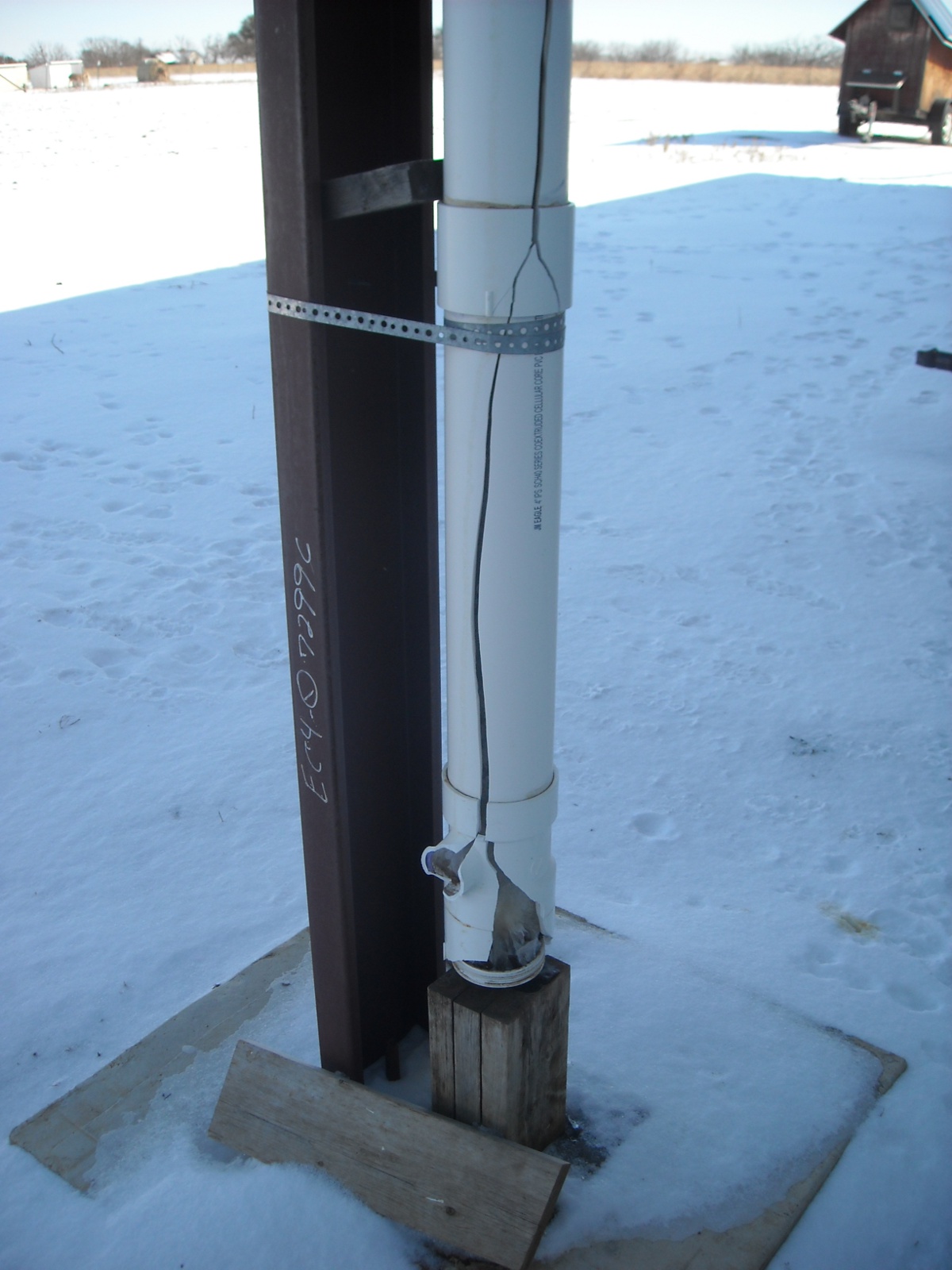
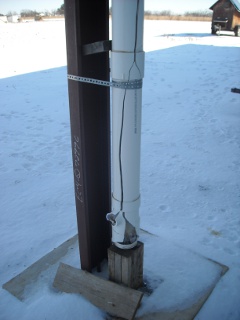
One thing that didn’t go so well for us was the roof-washer parts of our catch water system from the barn that feeds the cistern. With the rain that fell, and the quick freezing temperatures, and me not being quicker on the draw, the water in the roof-washer pipes froze, and split them all apart. Here are some pictures:
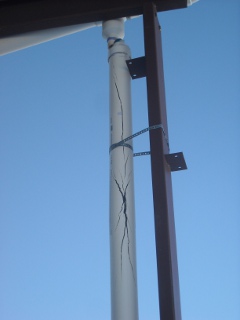
Upper Part of Catch-water System Roof Washer Cracked from Being Frozen
Lower Part of Catch-water System Roof Washer Cracked from Being Frozen

One of our other roof washers expanded and popped connectors out, but it survived it seems because they weren’t all glued. I think I may try a similar strategy when I put together the new roof washer pipes next time, Lord willing.

We did, however, cover the cistern spigots with blankets, which allowed us to retrieve water from the cistern, even with the temperatures being what they were. These spigots also face South, into the Sun, out of the North wind:
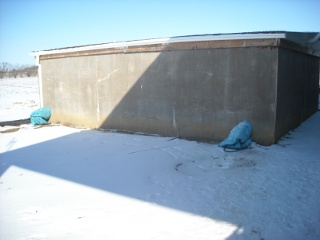
Cistern Valves Covered with Blankets

For our camper, we have a small propane heater, which, for times like this, just sort of takes the edge off, although we often saw our breath; and at night, we’d basically wear our outdoor clothes to bed under the comforters, which actually was quite warm. And William, our cat, spent most of his time inside with us. 🙂

One of the things we’ve learned to do for situations like this: the condensation in the camper eventually freezes the door latch, and so we spray it with cooking oil spray (I assume just about any oil would work), and that has helped keep the latch from sticking.

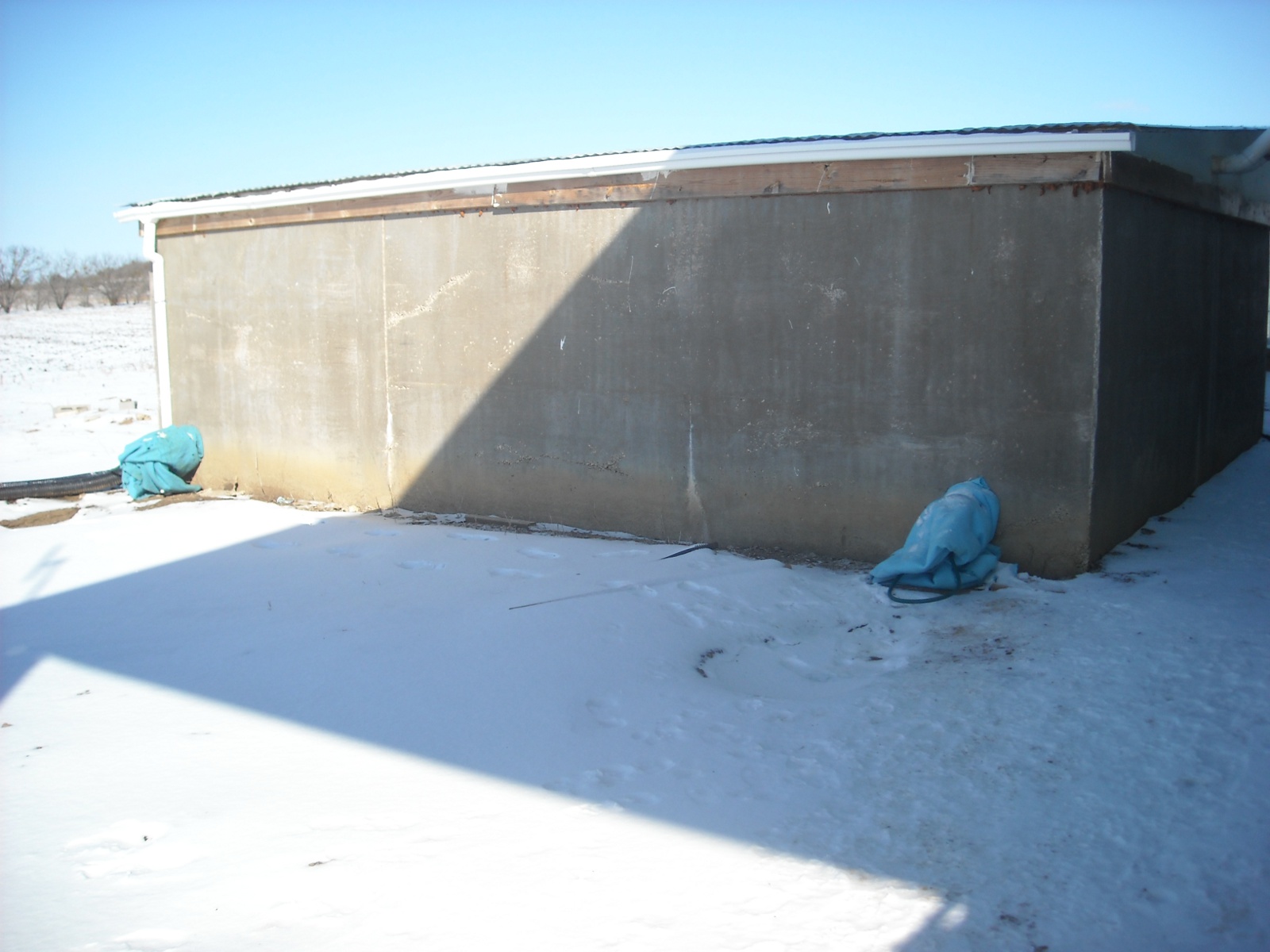
Here are some other pictures of the scene:
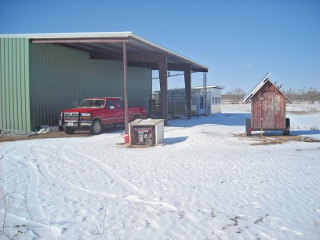
Barn Lean-to After Arctic Storm
Field After Arctic Storm

Well, that about sums it up. All in all, it was a rough one, and we worked pretty much non-stop each of the cold days, and not all of the community folk’s animals made it. However, we are very grateful though to the Lord for His continued provisions, and His many continued graces and mercies, and for His help through this difficult time of weather.

— David
Garden – Spring 2010 – Update I

You may be wondering why I’m talking about our 2010 Spring garden now instead of several months ago. Well, our garden seemed to have a mind and time line of its own this past year; and I just recently finished processing the last of our tomatoes. I plan to write a separate blog post on those but am just now getting down to chronicling the rest of the garden in an update. I figure for us gardeners, what better time to dwell on Spring, gardening, new growth and warmth than in the thick of Winter!

Onions

Believe it or not, these onion plant blossoms are from our 2009 Spring garden! But they have faithfully kept producing, so we decided not to pull them and continue to let them grow. The underground onion bulbs are rather small, but I have been able to pull and use them in many meals over the past couple of years:

Spring Garden 2010 Mature Onion Plant

I clipped the plants down to the ground but left the bulbs in case they would continue to produce green onions (which they have as of this update). Here is a bowl full of the blossoms I am saving to plant again in our Spring 2011 garden to see if they will reproduce:

Spring Garden 2010 Onion Plant Blossoms

I cut up and dried the stalks in our solar food dehydrator, but they came out unusable in my opinion. I let them get too fibrous and leggy before picking them. Note to self: Don’t do that!

Spring Garden 2010 Dried Green Onions

Zucchini

Due to a drought and large numbers of grasshoppers, our zucchini harvest was a fraction of the size of years past; but I picked these last few:

Spring Garden 2010 Zucchini Harvest

I decided to go the quick and easy lactic fermentation route and made some zucchini pickles and relish. I can’t believe how easy it is to preserve by lactic fermentation. You just add about two teaspoons of canning salt per pint in alternating layers with whatever vegetable you are using; fill the jar to about 1/2″ head space with water (preferably not tap water but distilled or filtered rain water); close with lid and move to a cool, dark place to ferment and develop those wonderful bacteria and enzymes for your gut and digestion. Once done, I put the jars all down in our root cellar. Due to our interest in zucchini, we traveled across the globe (ie: to the other side of our RV) to see the eighth wonder of the world, “Zucchini-Henge.” We were startled when we witnessed a rare sighting of the gargantuan feline monster on the left!

Spring Garden 2010 Zucchini-Henge

End of the Garden Pickles

Here is our last harvest of green beans for the season. Since there weren’t that many, I decided to experiment with lactic fermentation with two pint jars full of beans, water and salt, combining the rest with other garden vegetables to make some “End of the Garden Pickles” from the recipe in the Ball Blue Book of Preserving:

Spring Garden 2010 Bowl of Freshly Picked Green Beans

Here are the green beans all washed, cut and ready to go:

Spring Garden 2010 Bowl of Cut Green Beans

Can you find our freshly picked garden carrots in this picture packed with all things orange?!

Spring Garden 2010 Freshly Picked Carrots

Here are all the ingredients ready to go for the “End of the Garden Pickles” recipe. In this batch I included green beans, zucchini, carrots, peppers and onions:

Spring Garden 2010 End of the Garden Pickles

And here are sugars, spices and vinegar combined and ready to be mixed in with the vegetables:

Spring Garden 2010 End of the Garden Pickles Sauce

I brought the liquid to a boil and then added the vegetables and brought it to a boil again. Then I turned down the heat and let it simmer for about 15 minutes:

Spring Garden 2010 End of the Garden Pickles cooking

It was then ready to be ladled into hot jars and pressure-canned! How easy is that!

Spring Garden 2010 End of the Garden Pickles in Canning Jars

Tomatoes

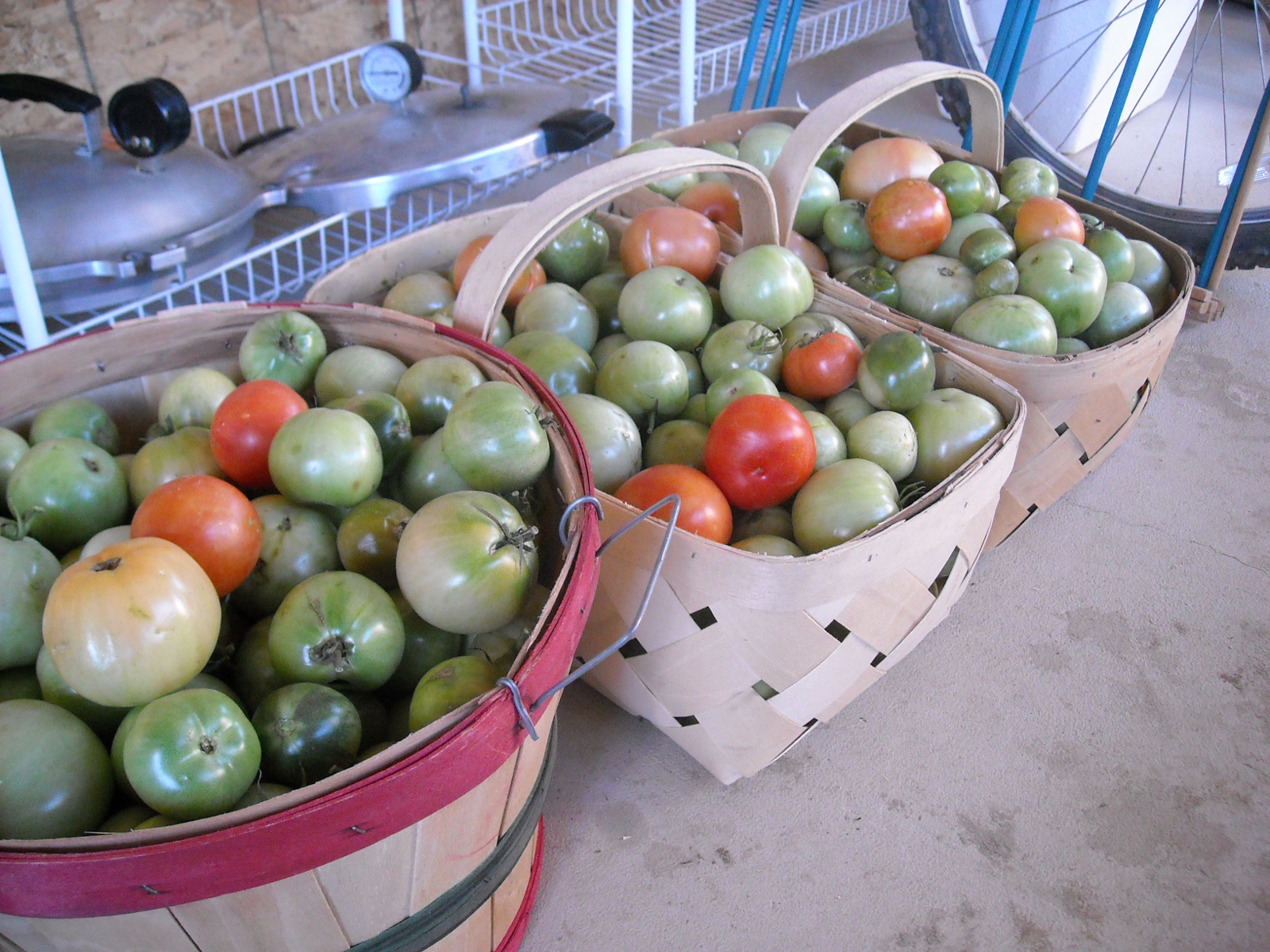
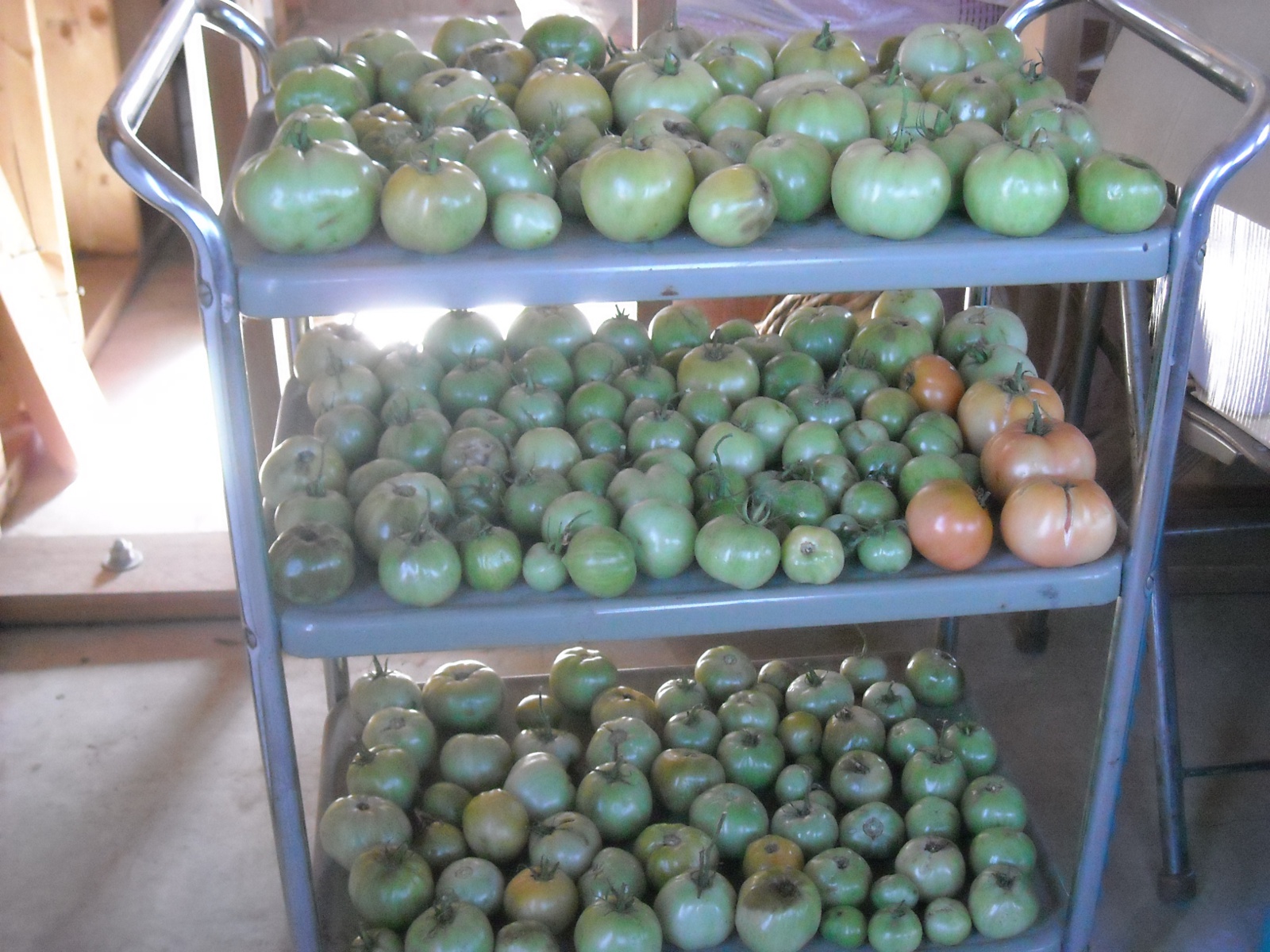
Here are some tomatoes given to us by a neighbor. As I hinted at above, our own tomato crop didn’t produce until November, so we were very thankful to have received these:

Spring Garden 2010 Tomatoes

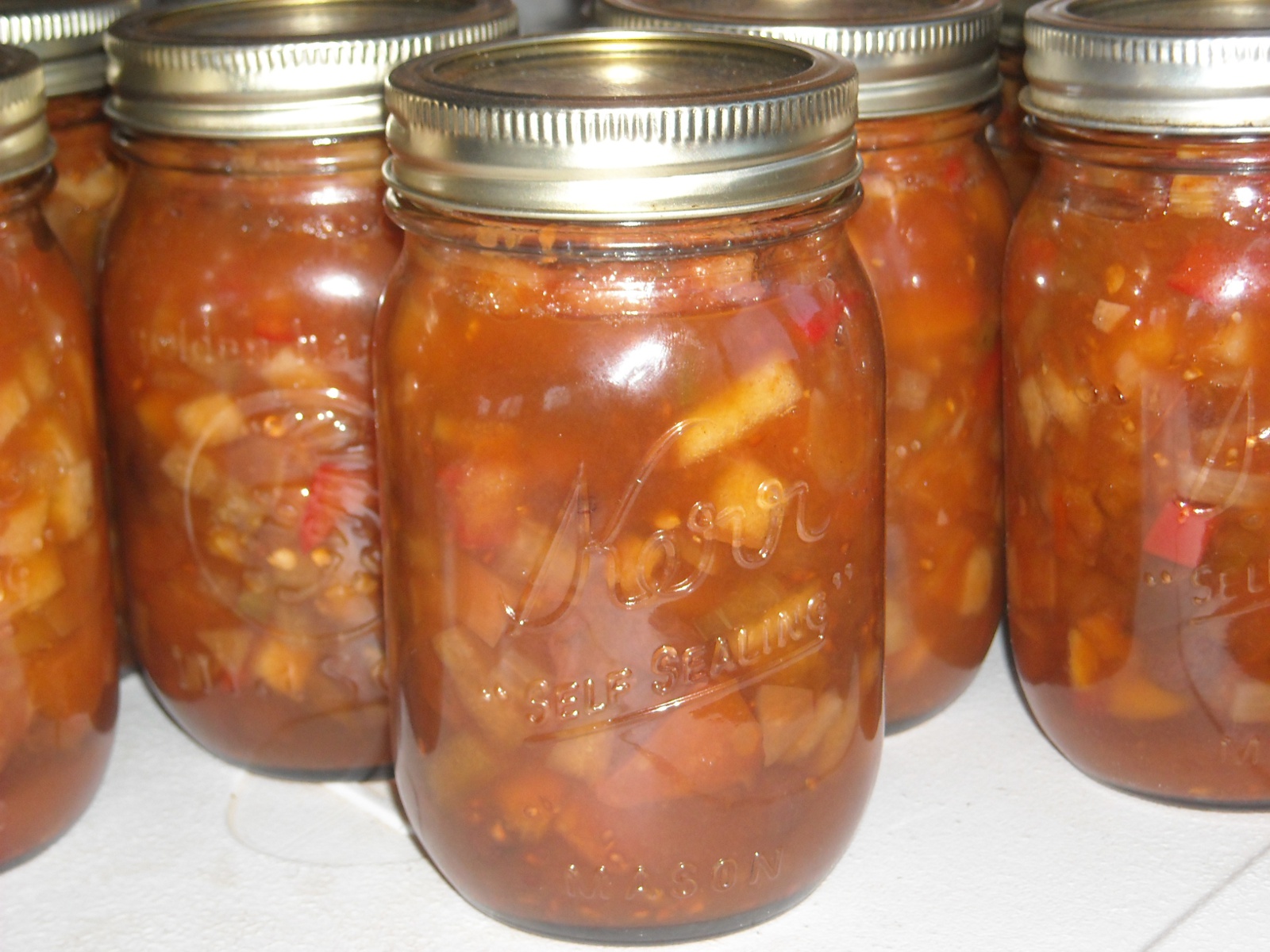
I decided to make some Sweet Yellow Tomato Chutney out of these tomatoes. All my chutney recipes so far are taken from the Ball Blue Book of Preserving. I think these recipes are top notch and delicious. A friend suggested putting some tomato chutney in with pasta sauce. I have done that many times and find it adds a delicious “tangy twist” to traditional pasta sauce:

Spring Garden 2010 Canned Tomato Chutney

Bread and Butter Pickles

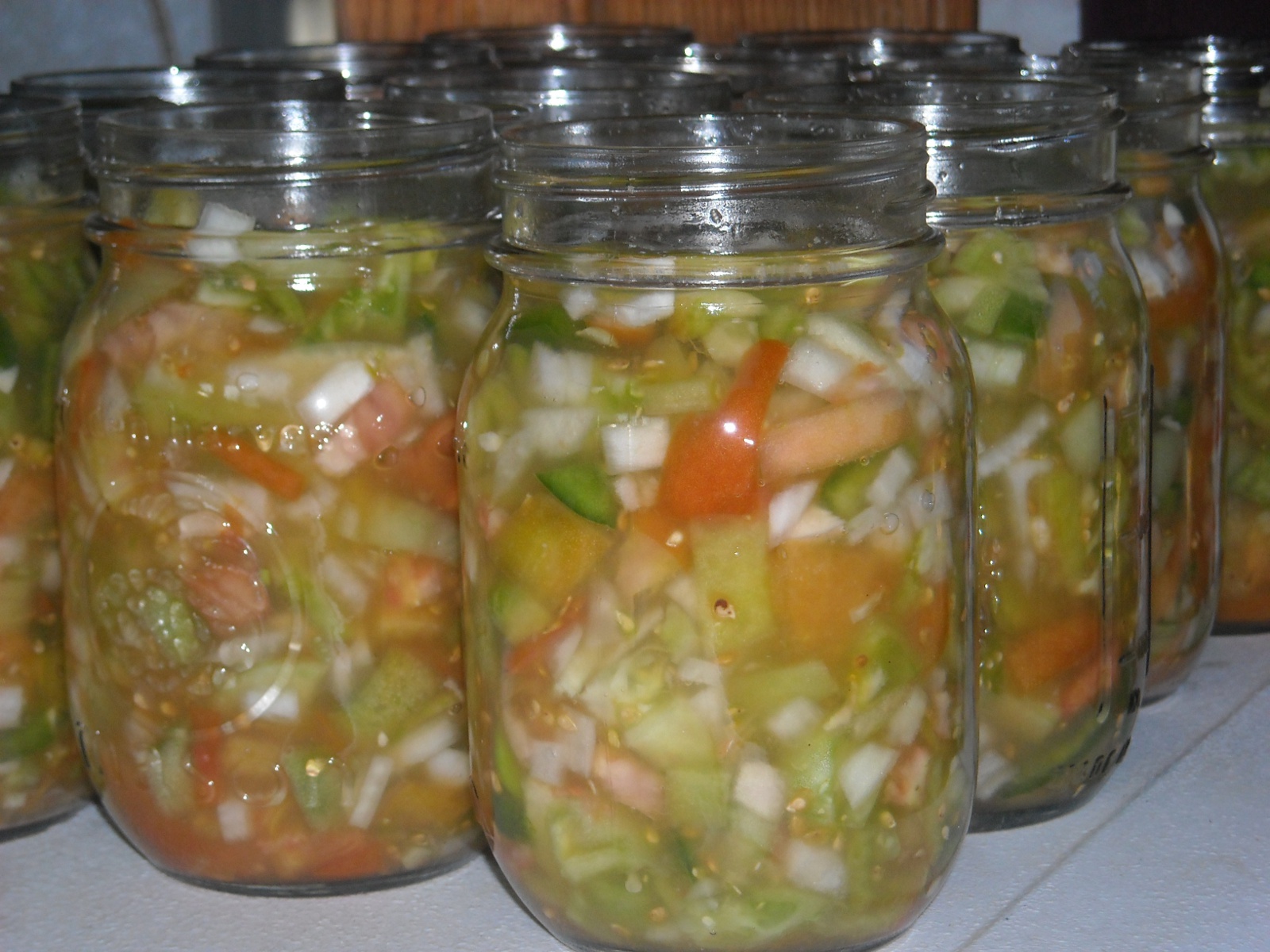
Lastly, I honestly can’t remember where I got the cucumbers to make this batch of “Bread and Butter Pickles” (page 47 from the Ball Blue Book of Preserving). The cucumbers from our garden just did not do well, but someone must have given these to me, or I got them on sale or something. Another delicious recipe!

Spring Garden 2010 Canned Bread and Butter Pickles

Thanksgiving

We are thankful for this late harvest from our garden, and once again are very careful to thank our Creator for His direct provision. It is now Winter, and we have accessed and incorporated much of the above from our root cellar into our meals. We are also looking forward to the opportunity to do it all again this Spring, Lord willing!

Susan

Our First Fellowship Betrothal

Well, it has been a few years since several of us started living here on the land. When we first got here, all of the children were just that — children. But, after five years, as you would imagine, that’s not exactly the case for all of them any more. In fact, one of our young misses just recently became betrothed — our first betrothal on the land!

Webster’s 1828 dictionary defines “betroth” as the following:

BETROTH’, v.t. [be and troth, truth, faith. See Truth, and Troth.]

1. To contract to any one, in order to a future marriage; to promise or pledge one to be the future spouse of another; to affiance; used of either sex. “The father betroths his daughter.’

2. To contract with one for a future spouse; to espouse; as, a man betroths a lady.

“Betrothed?” you might ask? Yes, betrothed. The ideas of “romantic love” and engagement, or even “courting,” are foreign to the Bible; not that there can’t be romance, but it is not the main driver or motivator behind relationships; and in fact, betrothal is what is prescribed in the Bible. Why might it be important to have betrothals instead of typical engagements? First, the Bible prescribes it as the only pre-marriage methodology; and second, it was set up as a picture or “type” of the relationship between Christ and His bride-to-be. In this current reality of time, Christ’s chosen bride, the elect from the foundation of the world, is not married to Christ yet — that happens at the marriage supper of the Lamb (Rev 19:6-9). His chosen is betrothed, or espoused, as expressed in 2 Cor 11:2 – “For I am jealous over you with godly jealousy: for I have espoused you to one husband, that I may present you as a chaste virgin to Christ.” God instituted the “type” of betrothal to show the unbreakable bond of His chosen bride to Himself based on His volitional, self-sacrificing, and unconditional agape love.

A betrothal would usually include the father of the daughter making the original offer to potential groom, and if he accepted, the father and man would form the contract for the man to marry the daughter, with various other agreements between the father and the man. Although not absolutely necessary in the strictest sense, since an older and hopefully wiser parent, with God’s help, should be able to determine which man would be good for a daughter to marry, the father might first allow for the daughter’s approval of the gentleman in question, and ideally she would. 🙂

And I believe these are the things that occurred in our first betrothal here. 🙂

Lastly, the following is a video from the evening of the betrothal party day, after gathering for a time of celebration, fellowship, and a meal, which includes a discussion about the betrothal ceremony and some important parts of the ceremony itself (please forgive the quality of the video as our camera doesn’t film well at night):

We are thankful here on the land to be able to be a part of a couple joining in the way the Bible prescribes. We pray for many more, as the Lord wills, and that He continue to grant us understanding of His revealed will as described in the Bible.

— David
That’s Berry Nice!

Blackberry BushIt was about 25 degrees outside this morning, so I thought no better time to think of the warmth of the sun and our trip to a blackberry farm last Spring!

Most of us from our community one day drove in a caravan to a local pick-your-own blackberry farm in Cottonwood, TX. Neither Dave nor I had ever been berry picking of any kind before, so it was a new experience for each of us. Here are some of our community leisurely strolling down one of the rows picking blackberries as they go:

Community Folks Picking Blackberries

I was pleasantly surprised at how relaxing it was. Some of the bushes, however, didn’t relinquish their berries without brandishing their thorny weapons; but I prevailed and took the valued treasure with just a little blood shed (ouch!) But it was well worth it: 🙂

Susan Picking Blackberries

After a couple of hours, we had filled our buckets; and the farm owner and his wife weighed our haul and charged a very reasonable fee. Apparently, they also open their farm at other harvest times (eg. pecans, black-eyed peas, other fruit trees, etc.), so we look forward to perhaps returning again:

Buckets of Picked Blackberries

Afterward, many of us stopped at the farmer’s little picnic area and had a nice time of food and fellowship in the cool shade:

Blackberry Farm Picnic Area

When we returned home from our lovely outing, reality set in; and it suddenly occurred to me that I had no idea how to make anything from berries; and we would probably get sick if we tried to eat them all before they went bad. Dave recommended doing something with them in the solar food dryer; and sometime just previously to that, one of our neighbors had suggested making fruit leather. Capital ideas!! So I did a little research online and gave fruit leather a try. First, I pureed some blackberries:

Pureed Blackberries

Then I poured the pureed mixture onto two sheets of waxed paper and shaped it into a thin layer on each sheet:

Blackberry Fruit Leather on Wax Paper

Then I placed the sheets out in the solar food dryer:

Blackberry Fruit Leather on Solar Food Dryer

I can’t remember exactly how long it took but not long (a matter of a couple of days in the hot sun), and the consistency of the blackberries was a bit sticky but dried where I was able to peel it off of the sheet. I then broke it up into small pieces to store in glass jars. It is December now, and I ate a piece yesterday that tasted fresh just like when I first stored it!

Removing Dried Blackberry Fruit Leather from Wax Paper

Then I took the remainder of the berries we hadn’t eaten or dried and followed a simple blackberry syrup recipe using very little sugar:

Simmering Blackberry Syrup

I was able to make several pints, and went ahead and pressure canned it (I forgot about the water bath option because I’m so used to pressure canning – oh, well 🙂 ). But it turned out fine anyway:

Pint Jars of Canned Blackberry Syrup

And we were able to have it on our whole wheat pancakes soon after. Delicious, and what a healthy change from the “faux” maple syrup sold in stores these days. It was more of a topping than a syrup but still delicious:

Pancakes with Blackberry Syrup

There is one thing I would do differently in retrospect. I was just trying to go the easiest and quickest route, and I didn’t take time to extract the seeds. The fruit leather and syrup taste fine but are obviously a bit “crunchy.” So I would definitely recommend removing the seeds; and I plan to do it next time, Lord willing. But we are thankful for such a wonderful opportunity to capture and learn to preserve more of God’s harvest bounty.

Susan

Fred and Wilma, and New Chicks

Just wanted to give a quick animal update on some of the new animals here at the homestead:

Pigs

In exchange for taking care of the Bunker’s boar Wilbur for an extended period of time, we were given one of their males to be the mate of the one piglet we kept out of the last litter of piglets the Lord granted out of Wilbur and Missy, our gilt. We kept the smallest female (in hopes of having her and her offspring of more manageable size: in just dealing with, and in feeding and butchering them), who was also quite feisty — she never had a problem getting in to suckle amongst the rest of the larger piglets.

And so, in honor of her sire Wilbur, we decided to call her Wilma. And given that, we’re calling the male Fred. In this picture, Fred is on the left, and Wilma is on the right. If you’ll notice from the above piglet blog post, Wilma looks just like here “daddy” too:

Duroc Boar Fred and Gilt Wilma

How romantical!

Duroc Boar Fred and Gilt Wilma Lounging Together

New Chicks

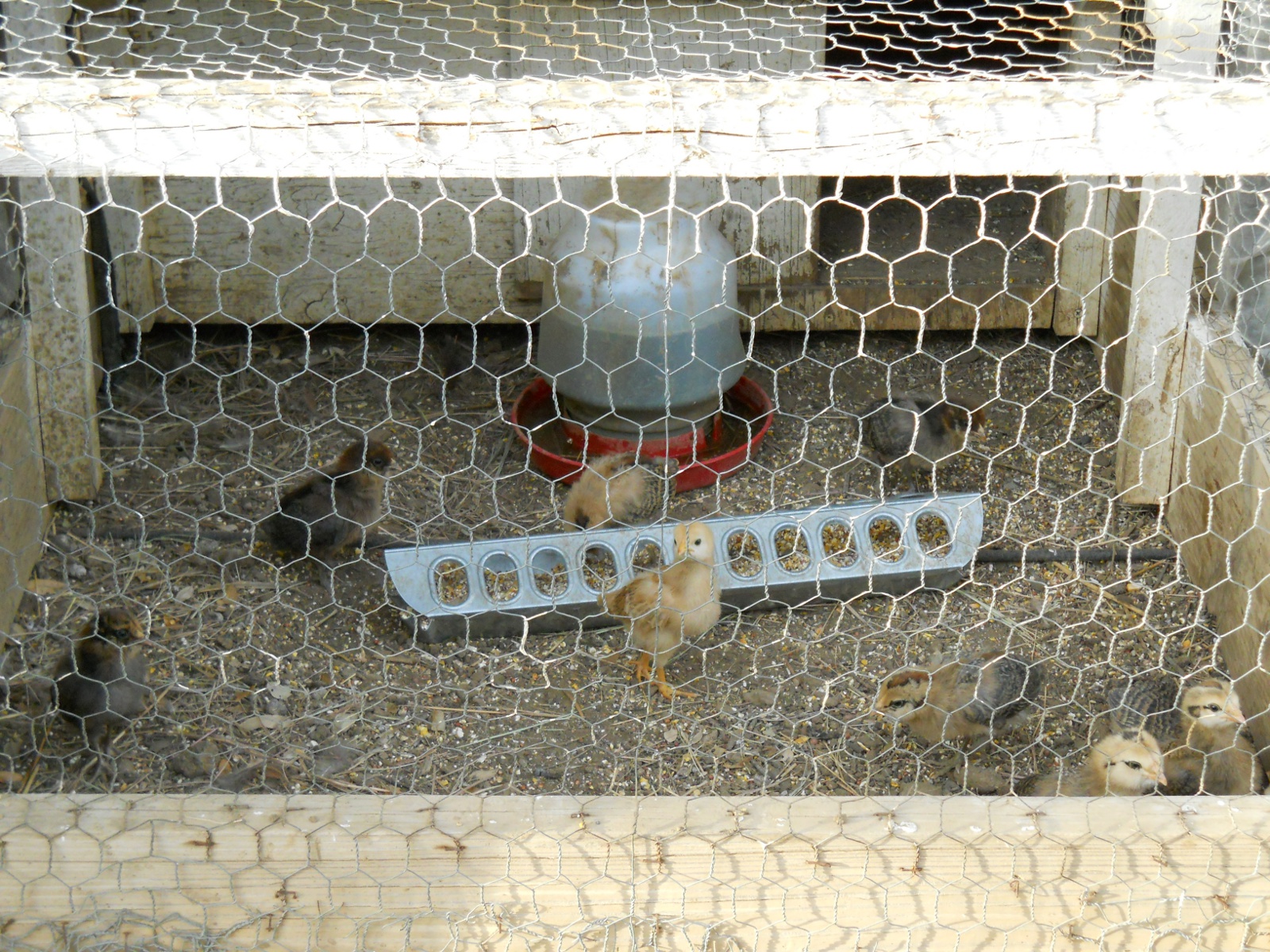
Also, we were able to find a local man who inherited an egg incubator and has been hatching out and selling bunches of chicks. We bought 20 from him and have kept them in the mini chicken tractor until they’re ready to run around the chicken pen area (which is our staging area for the main chicken tractor coop). They are all still alive, with thanks to God.

And here they are:


As always, we are grateful to the Lord for allowing us these provisions; and we pray they are all productive resources for the homestead and community.

— David
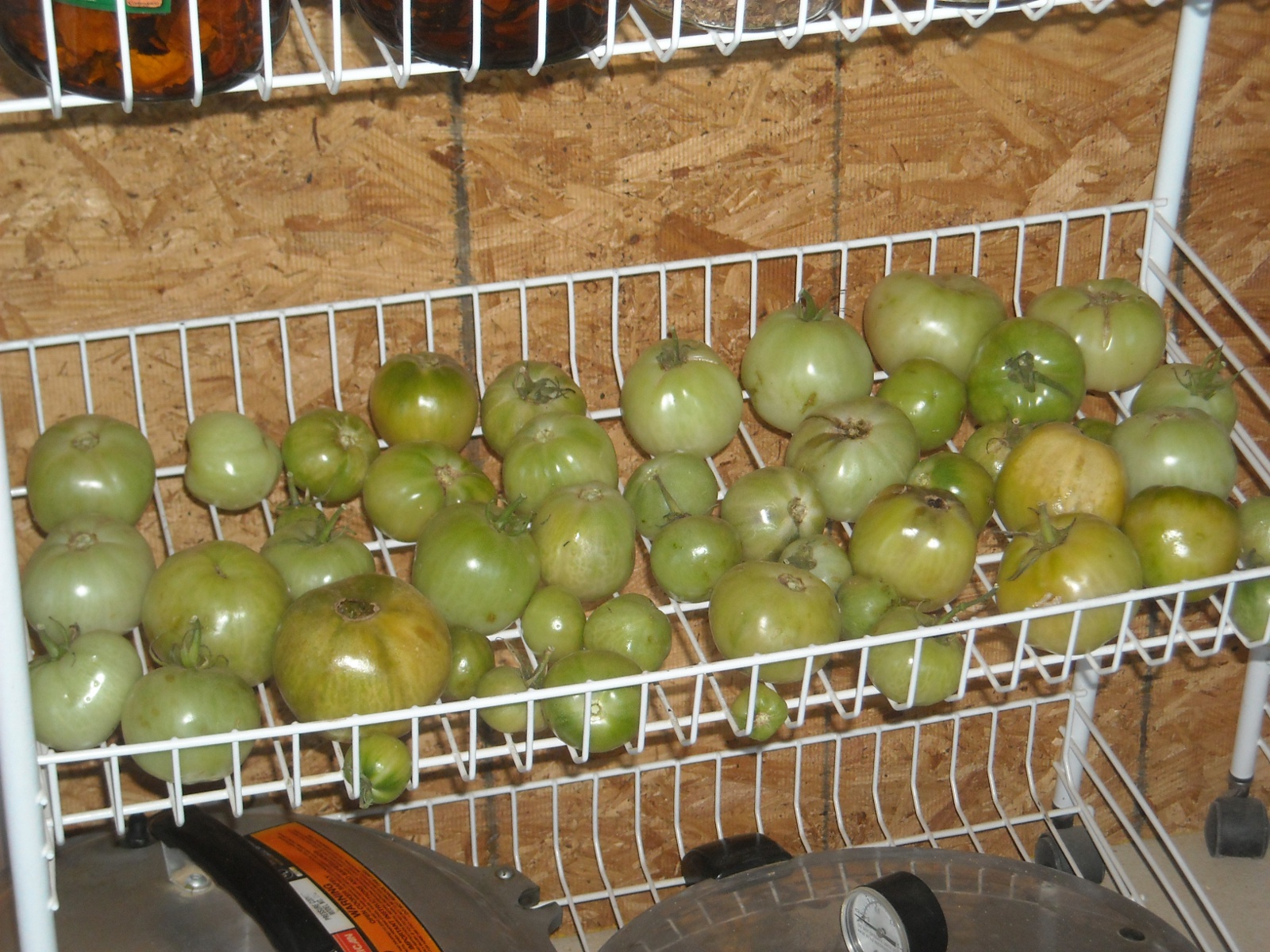
The Great Black-Eyed Pea Adventure

Our neighbor, Mr. Bunker, planted his large field (about 5 acres) in black-eyed peas this past Spring. It was no small amount to purchase the seed and pay to have the ground plowed and planted. He had every right to keep it all to himself for his family and to have a cash crop. Instead, he graciously opened up the field to our community to come and tend it and reap its harvest together along with his family. We greatly appreciated his offer and spent many hours over several weeks in the Summer sun weeding and then picking the beans when they grew to maturity. It was a great opportunity for our community to learn what it means to come together for a common cause and share God’s bounty as a group. It was also the first major crop for the community to cultivate, so this was a new experience on multiple levels.

I learned many things through the experience. The women and children devoted several community work days towards weeding and tending the field, which turned out to be rich times of work, fellowship and getting to know each other better. Working in the field introduced me to the joys of blisters from the Blister Beetle; and I received my first wasp sting, not to mention the potent burning sting of the Stinging Nettle plant. It also forced me personally to come out of my own little homestead world to focus on a larger cause, and required additional discipline to go out into the field even when I didn’t “feel” like it or when I was really busy with other things.

The Lord did a little weeding of my own heart during this process as well. The Bible says we are to mortify (kill) the flesh (Rom 8:1-13), the carnal (non-spiritual) man of sin, which means we need to examine ourselves for sins of the flesh. At times when I was tired or really hot and sweaty wanting to quit, I had to reel myself back in and remember to be thankful for this opportunity and provision, and to work for Christ’s sake and as unto Him and nobody else. Just as with God’s grace, this provision was being offered undeserved as a gift; but I still had to beat down the flesh and submit myself to what was required to persevere to the end (the harvest). The field was so big it felt very overwhelming at times, when the weeds were growing so fast it was impossible to keep up with them. I could usually only get through one half to one row in a one to two hour time period. During the times when it was just me in that big field, my flesh would say, “It’s just too big. You’re not making a bit of difference. The weeds are going to take over this field, and there won’t be any beans left to harvest.” It was easy to forget that other members in the community were out there at different times doing the same thing, and we were all in it together. I also found myself at times to be even a little resentful that the entire community couldn’t put in more time and were jeopardizing the crop and some deserved more than others because of the different investments of time. The Lord had to remind me (strongly) that this was a REALLY good opportunity to step outside of myself and practice meekness and selflessness. I had to repent of that and remember it was not for myself but for the good of the community. I was saddened and surprised at how quickly my flesh had wanted to take over my spirit.
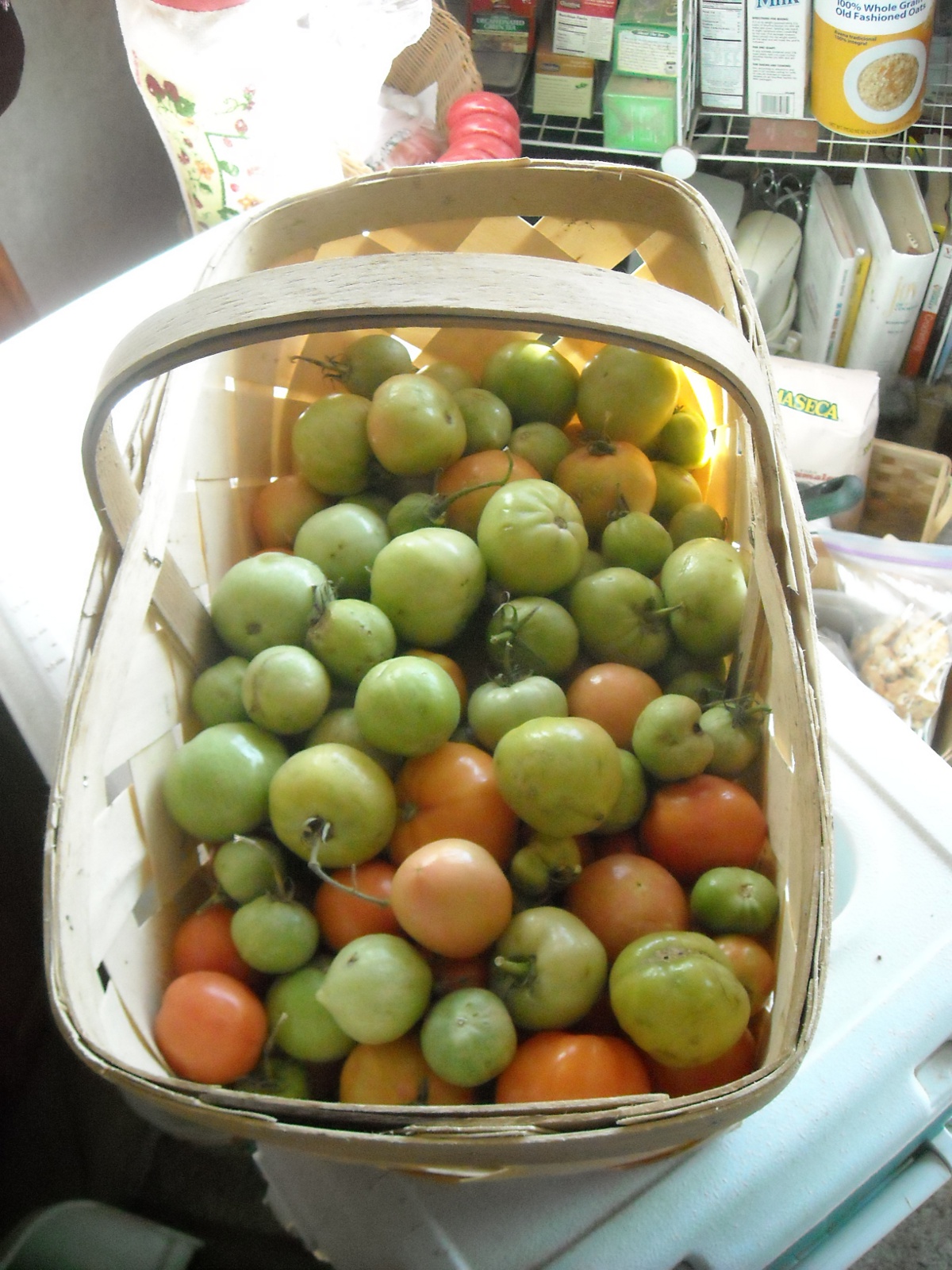
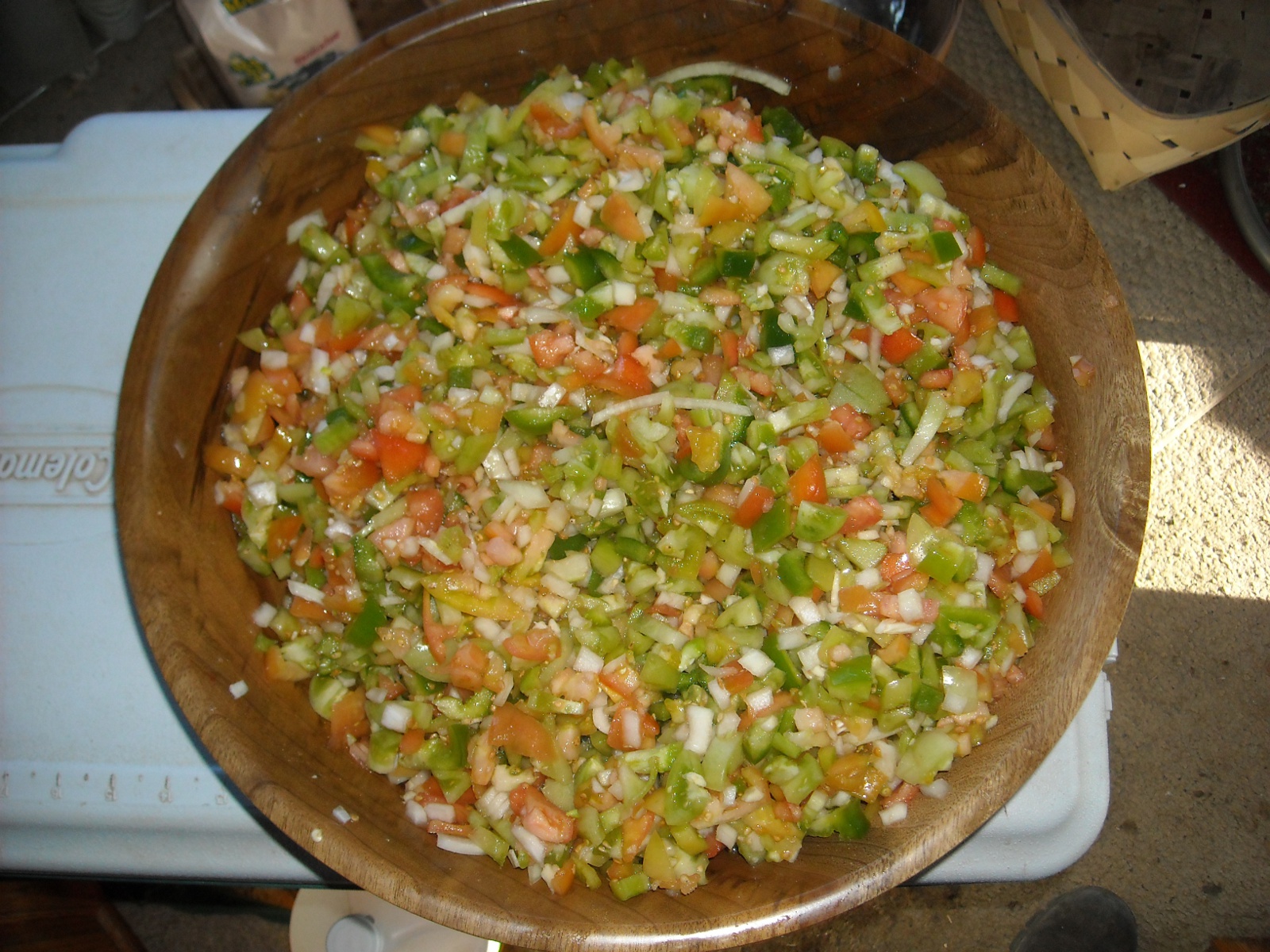
When it came time to harvest, there was plenty for everyone; and I learned the beans that weren’t picked could be turned back into the soil to nourish it. So no part of the whole process was wasted — another reminder that even when I don’t see the big picture, God does, and is in control and all knowing of every aspect of the situation. I believe the spiritual weeding of my heart truly paralleled the physical, and I praise the Lord for His patience with me to teach me these things. It was a valuable lesson in so many areas of my life, and I’m grateful to Mr. Bunker for his personal sacrifice in order for our community to grow spiritually and physically on individual and corporate levels.

I had not eaten black-eyed peas much growing up in California; it seems like more of a southern food. But I am now sold on growing them to harvest and preserve. Did you know it is a three-for-one crop: in that the first harvest produces long, tasty green beans; the second when they are a little dry, the moist bean could be shelled and preserved; and then at the end of the harvest when the bean pods have all dried up, you can go through again and pick the dried pods to shell and keep the black-eyed peas as a dried bean until you’re ready to cook them, or use them to re-plant. Wow!

Here are a couple of five-gallon buckets from the first green bean stage harvest:

Black-Eyed Pea Green Beans

I was able to pressure can over 20 quarts:

Canned Black-Eyed Pea Green Beans

And here are the dried beans we harvested. It doesn’t look like much, but this represents a lot of food for the two of us:

Dried Black-Eyed Peas in Jars

We thank the Lord again for His direct spiritual and physical provisions and lessons from the experience of this first community crop. I hope I will have grown in spiritual maturity the next time, Lord willing, and pray for God’s blessing on Mr. Bunker and his family for their sacrifice and love for the community.

Susan

« Older posts Newer posts »