The Sifford Sojournal

Our journal of what we pray is our sojourn of life along the narrow way, even the old paths, submitting to the Bible as a light unto both.

Page 84 of 95

David’s Digest: Introduction to Type and Antitype (Typology) in the Bible

This is just an introduction to a large topic, but I wanted to take a moment and talk about it briefly in hopes it might benefit someone as it did me when I first learned about it.

There are two elements of the Bible called “type” and “antitype” (together referred to as “typology”). Types, or shadows, are spiritual “pictures” shown in the Bible that represent concepts or persons. The fulfillment of a type is referred to as its “antitype.” Some have been fulfilled, perhaps in multiple ways (or layers) over time, and some have not. Also, a type may not represent an antitype completely, and the picture may only go so far; and there can be multiple types for one antitype.

Webster’s 1828 dictionary defines type and antitype as follows:

type:

A sign; a symbol; a figure of something to come; as, Abraham’s sacrifice and the paschal lamb, were types of Christ. To this word is opposed antitype. Christ, in this case, is the antitype.

antitype:

A figure corresponding to another figure; that of which the type is the pattern or representation. Thus the paschal lamb, in scripture, is the type of which Christ is the antitype. An antitype then, is something which is formed according to a model or pattern, and bearing strong features of resemblance to it.

The following are just a very few, brief examples:

Type

Antitype

Egypt

The world, its systems and culture

God bringing the Israelites out of Egypt.

God separating unto Himself a specific people; the people of God leaving the world (including its systems and culture) to worship God; the salvation of God’s chosen from the bondage of sin and the world

Angel of death passing by those households in Egypt with blood on the door posts

Christ’s blood saving His chosen from eternal destruction

Noah saved in the Ark

Salvation in Christ

Ark of the Covenant

Christ, His humanity (ark made of wood) and His deity (gold); as Christ’s blood for propitiation (blood sprinkled on mercy seat for propitiation)

Sun – too bright to behold its glory; brings life; is the light of the world

Christ, the Son – too bright to behold His glory; brings life; is the Light of the world

Israel of the Bible (physical Israel) – God’s chosen people on earth

Spiritual Israel – God’s chosen people who are or will be in heaven

Moses – the deliverer of God’s chosen people (physical Israel)

Christ – the deliverer of God’s chosen people (spiritual Israel)

Joshua – brought God’s chosen people (physical Israel) into the promised land

Christ – brings God’s chosen people (spiritual Israel) into the Promised Land (heaven)

High priest for Israel and all of his duties

Christ in His office as spiritual High Priest of His people

David – King of Israel; savior of His people against their enemies; shepherd; the least of his brothers

Christ – King of spiritual Israel (and over all); Savior of His people against spiritual enemies; Shepherd of His people; clothed in servanthood and humility

Saul – enemy of David

Antichrist – enemy of Christ (who is the antitype of David)

Goliath – enemy of David and God’s people

Antichrist/Satan – enemy of Christ and God’s people

The animals slain, and skins clothing for Adam and Eve after the fall

Christ’s sacrifice with blood, and the clothing of righteousness for His people

The 12 tribes of Israel (12 is the number of completion) – all of God’s chosen people at the time

All of God’s spiritual chosen people (His elect, throughout time)

High priest entering the Holy of Holies with the names of the 12 tribes (God’s chosen people), and only them, written on the stones put on the shoulders of the ephod (Ex 28:11-12) on behalf of those with whose names he enters (and thus on behalf of only them)

Christ entering the Holy Place with the names of His chosen people, and only them, on behalf of those with whose names He enters (and thus on behalf of only them)

The paschal lamb during Passover

Christ as the sacrificial Lamb

Marriage of a man and a woman

The union of Christ and His bride (the Church)

A woman taking a man’s last name upon marriage, forsaking her own name for his (Isaiah 4:1). Keeping her name or any part of it is not forsaking herself to her husband completely

A Christian taking the name of Christ, forsaking their own name for His. Their forsaking of themselves must be totally

Jonah – in the belly of the whale for three days and nights (Jonah 1:17); vomited out from the belly of the fish after that (Jonah 2:10)

Christ – in the grave for three days and nights; resurrected out from the grave after that (Matthew 12:40)

Christ raising Lazarus – he was dead, He gives him life, calls him forth, Lazarus is now able (now that he’s alive) to respond and does so

The beginnings of salvation – the person Christ will call is dead in his sins, He gives him spiritual life (regeneration), calls him forth to Himself, and the person is now able (now that he’s alive spiritually) to respond and does so

God’s people, whose who were disobedient, although there were a some righteous, like Joshua and Caleb, or the remnant gathered by God (Jer 23:3; Jer 31:7) after His judgment against wicked Israel (Jer 1-23:2), or His true disciples while He was here on earth vs. the religious leaders of the day

Professing Christians, those who are disobedient (Matt 7:21-23), although there are some righteous (true Christians), who are the remnant/elect of God, the true spiritual seed of Abraham (Rom 9:6-8; Gal 4:22-31)

Sabbath day rest

Resting alone in Christ’s righteousness (working on the Sabbath breaks this “antitype,” in essence claiming our works are our righteousness); eternal rest with Christ in heaven

Learning about type and shadow in the Bible really opened it up to me, especially the Old Testament. I believe the Old Testament events truly happened; but I believe just about everything in it also is some sort of type, mostly of Christ as the anittype. Hebrews talks quite a bit about Christ as the fulfillment of many of the Old Testament types. It’s a beautiful work of wisdom by the Holy Spirit that paints such glories and wonderful pictures of our Saviour and His essence, characteristics, offices, etc.

If you have never heard of type and antitype in the Bible, I really hope you will spend some time learning about them. Here are a couple of starting points:

We are very thankful to the Lord for His gift of His word, preserved in our language through heavy persecutions; and we thank Him for granting us this understanding of type and shadow that He put in there to help us understand Him and His glory better.

— David

Garden 2009 – Spring – Update III – A Borsch is a Borsch, Of Course, Of Course

We planted cabbage in our summer garden again this year. If you’ll remember from our garden last year, we didn’t have any cabbage heads to speak of; but this year the Lord has graciously blessed us with large, beautiful cabbage heads to eat fresh and preserve.

I can probably count the number of ounces of cabbage I’ve eaten in my life in single digits. I have nothing against cabbage in the least but just didn’t grow up eating much of it. So I was stumped to find a good way to preserve all of this cabbage with which God had blessed us.

I surfed online a bit under canning cabbage and found a recipe that sounded pretty tasty to me. Fast forward several weeks, and I now have over 60 quarts of borsch in my root cellar! (NOTE: For you proper spellers, “borsch” is, indeed, an approved variant spelling of “borscht.”) I had heard of borsch but had never eaten it to my recollection. I’m not certain if this recipe is an “official” borsch; but, regardless, it’s tasty! Wow! All these years I’ve been missing out! This recipe calls for five pounds of tomatoes per batch, so we were very thankful when we discovered the local produce market was having a sale on tomatoes at about $.50 per pound.

I’ve listed the recipe below in case anybody is panicking like I was, wondering how to capture and preserve their garden cabbage crop. Or if you just have a “hankerin'” for borsch 😀

Here is the official link to the recipe, but I made a few changes so I thought I would post it here also with a few personal notes in italics:

Yield: Eight pints (or four quarts) although I was generous with the ingredients and consistently got five quarts each time.

  • 5 lbs. tomatoes (about 20 medium tomatoes)
  • 8 cups coarsely shredded cabbage (I tried using a grater but realized coarsely chopping the cabbage works just as well and is much faster)
  • 6 cups water
  • 2 cups chopped onions (approx. 2 medium onions)
  • 1 cup chopped apple (approx. 1 medium apple)
  • 2 tablespoons instant beef bouillon (store-bought bouillon contains MSG, so on some of the batches I used pork stock from previous canning sessions of our pigs in place of the six cups of water, and added a little garlic and onion powder seasoning in place of the bouillon; and it worked fine)
  • 2 tablespoons sugar
  • 2 tablespoons lemon juice
  • 1 teaspoon salt
  • 1/8 teaspoon pepper
  1. Wash, peel, remove stem ends and cores, and quarter tomatoes. Use a small spoon to scrape out the excess seeds, if desired. (I didn’t take the time to peel the tomatoes or scrape out any seeds, and it was fine)
  2. In a four to six quart kettle or dutch oven combine all ingredients. Bring to a boil; boil uncovered five minutes.
  3. Ladle hot soup into hot jars, leaving 1/2 inch head space.
  4. Adjust the lids.
  5. Process in canner at 10 pounds, 45 minutes for pints or 55 minutes for quarts. (Please look online for altitude instructions if you live 1,000 feet or more above sea level)6. Makes eight pints (or four quarts) (As I stated before, I was generous with the ingredients and consistently got five quarts)

Here are the tomatoes we were blessed to be able to buy very inexpensively. A 20 lb. box yielded three to three and a half batches:

I cut up each tomato in half and then into quarters and placed them in the soup pot:

I coarsely chopped up the cabbage and placed it in with the tomatoes:

I was amazed at how many cups each head of cabbage yielded:

Here are all of the ingredients introducing themselves to each other and ready to be boiled:

The ingredients have now been boiled for five minutes and are ready to be ladled into the canning jars for processing:

MMMmmmmm, delicious Borsch all cooked, processed and ready to eat!

What a blessing to have been able to capture and preserve these abundant, direct provisions from God. Dave and I have had some borsch for supper a couple of times now. Dave said it doesn’t smell that great but tastes delicious! It can stand on its own as a very tasty and nutritious soup, or meat may be added to make a wonderful stew. I added in some canned brisket meat recently along with some homemade bread, and it made a well-rounded supper for us. All thanks to God for granting us this food from our garden as a type of the spiritual food He gives us from His Word.

Susan
 

A House – Update II – Foundation

We just wanted to catch you up on the progress of the house the Lord is granting that we be able to build right now.

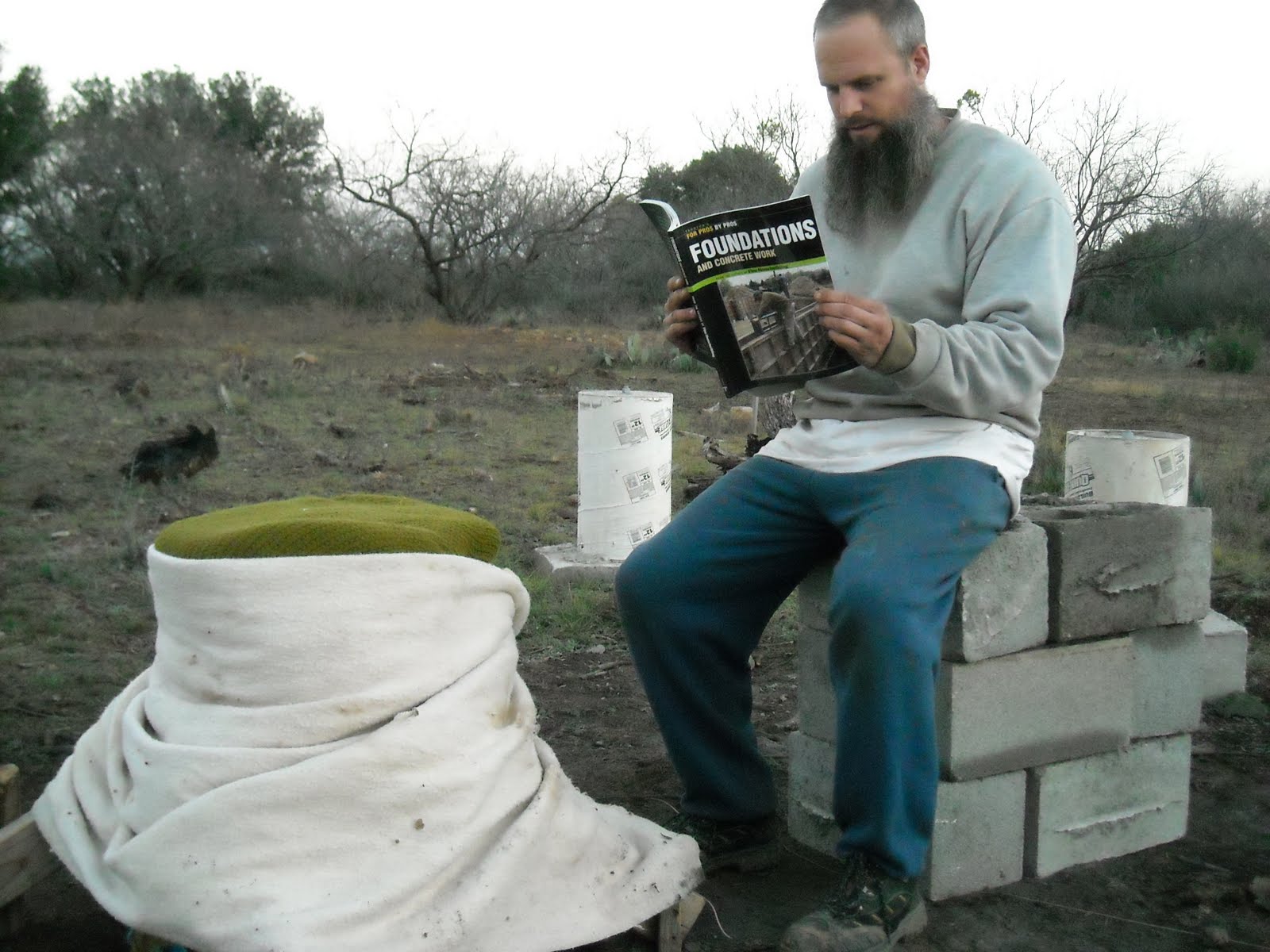
I decided to use a pier and beam foundation, using 12 inch concrete piers.

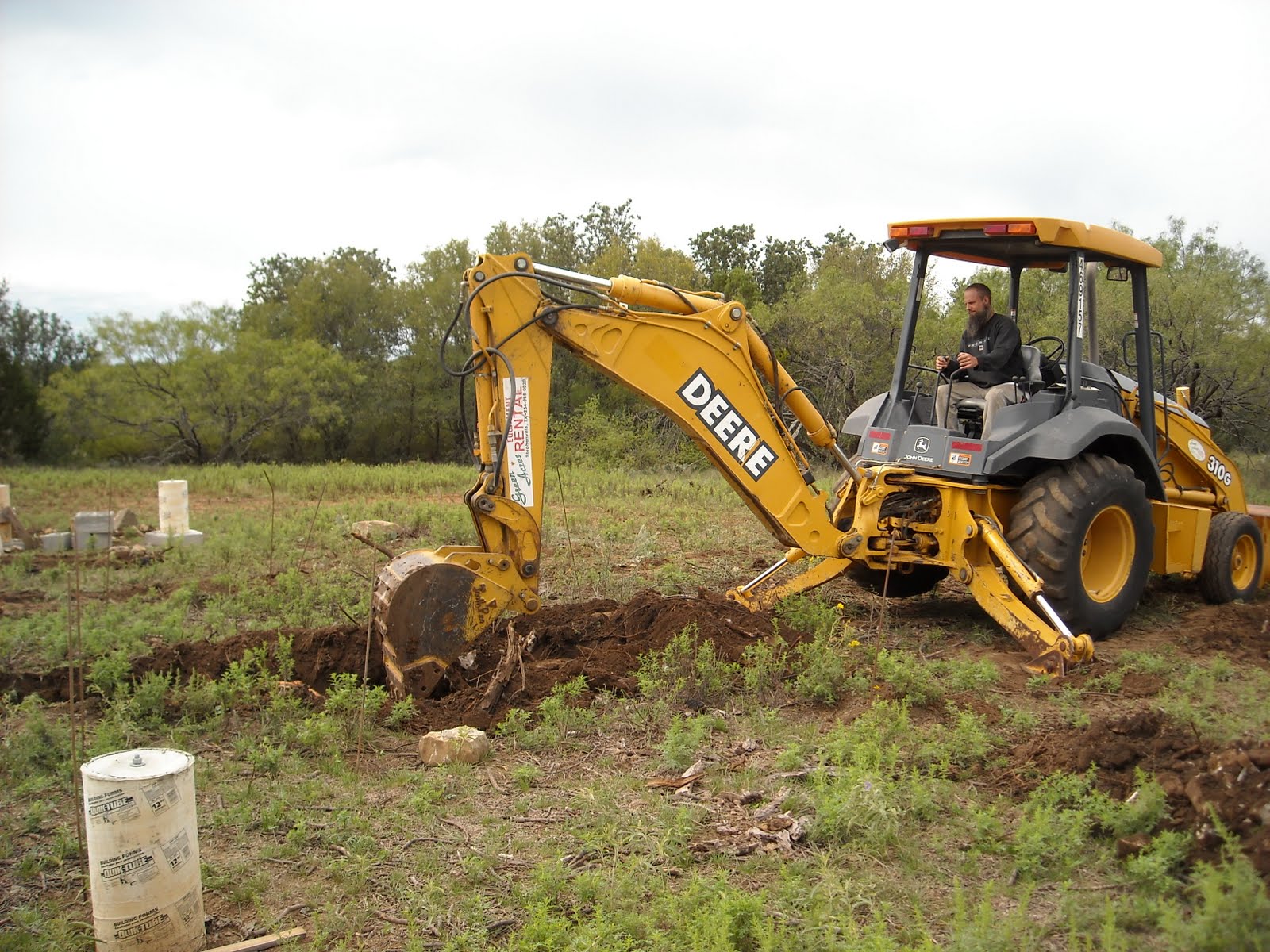
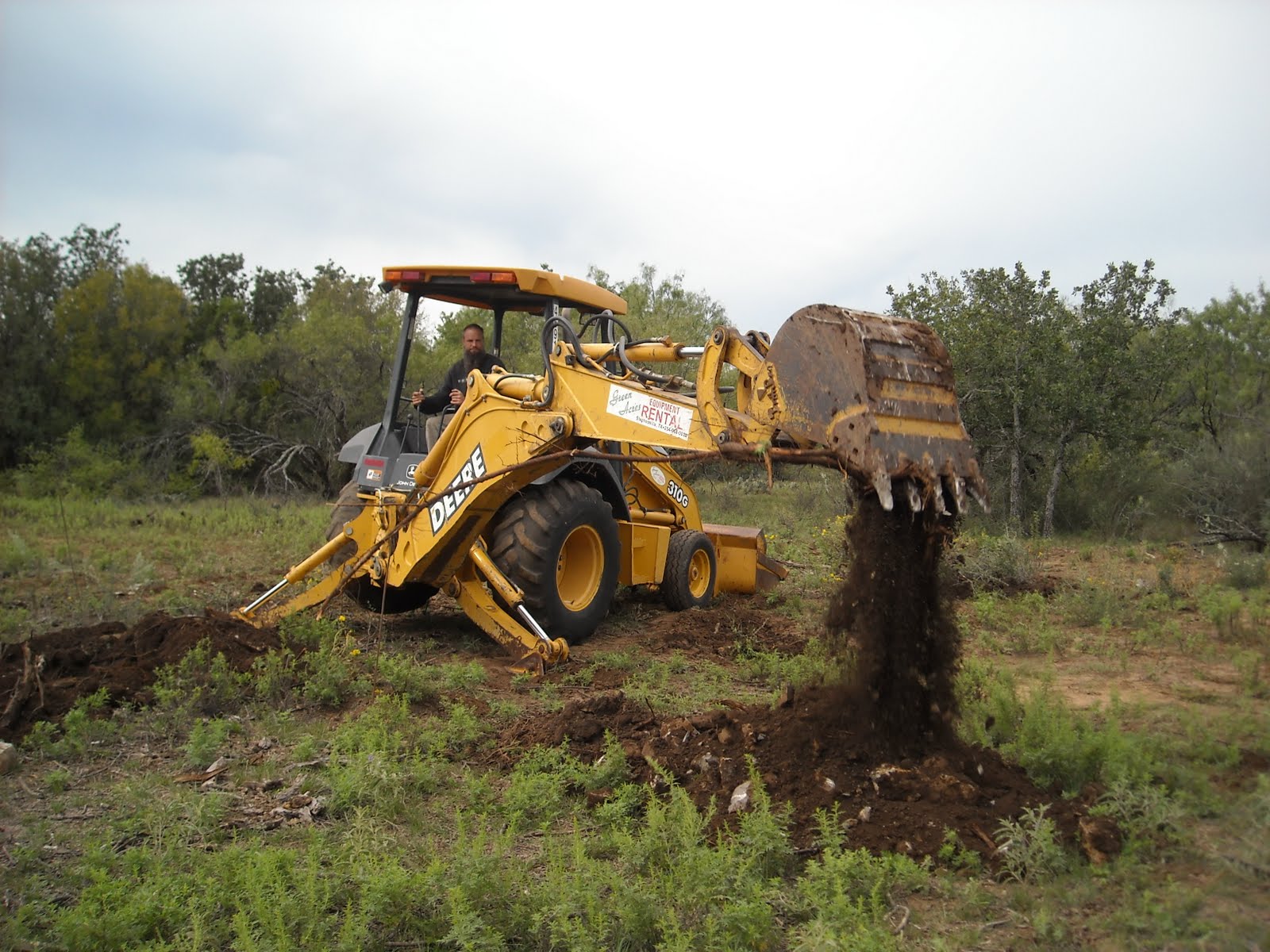
And here is the first hole! I’ve found that below the surface is a layer of boulder rocks; and so I’ve been digging down to that point and leaving them so the piers will sit on the rock, hopefully creating a more firm foundation:

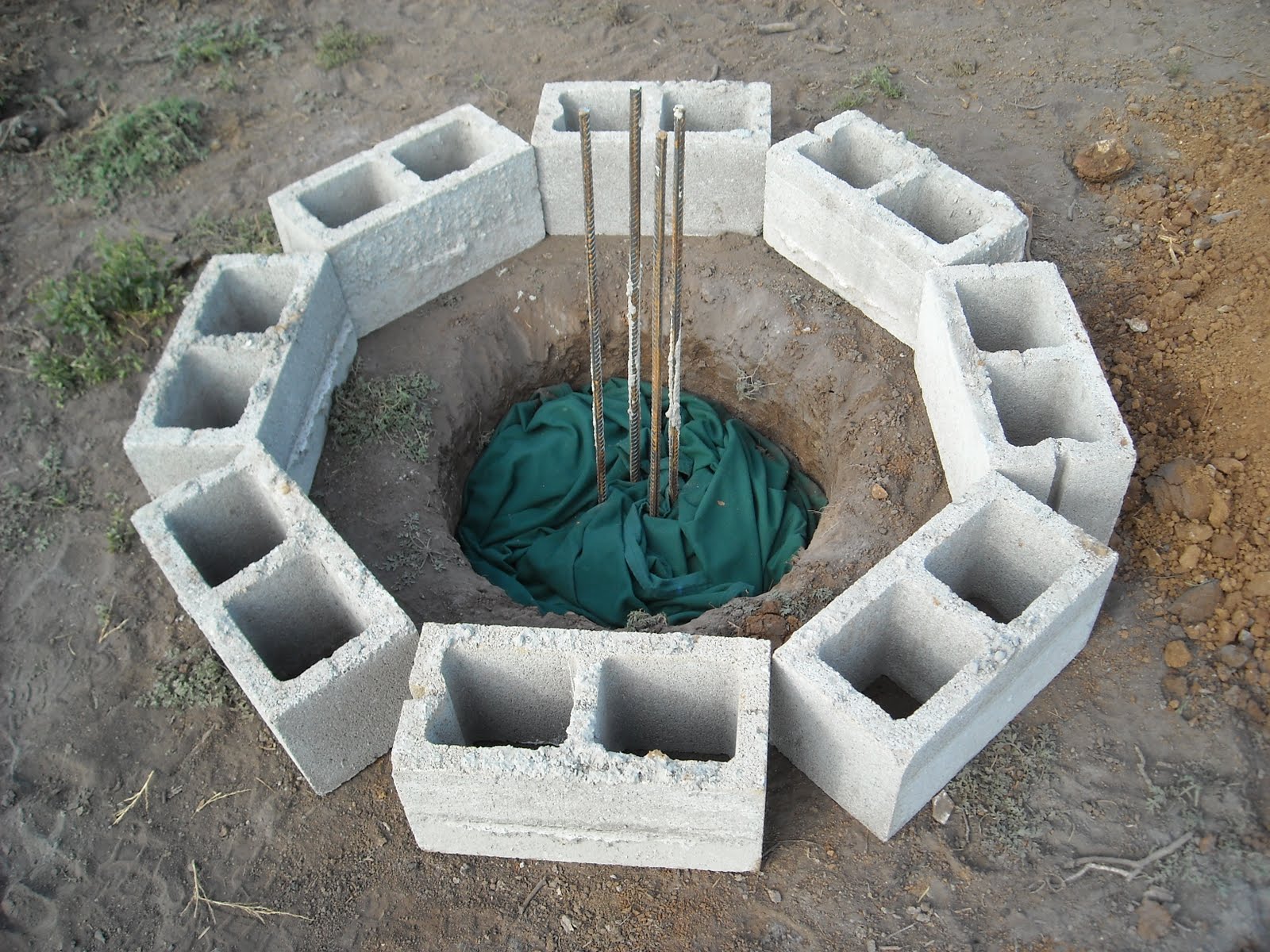
I cut rebar pieces and pounded them into the sides of the hole in eight places to help hold the pier in the ground against any lift that might occur:

And I tied them together with cross pieces so they act as a single piece in the concrete:

Here I tied in some vertical rebar pieces that would actually stick up into the pier:

And here is the base after the concrete pour:

For the pier part, I decided to use concrete tube forms. We’re finding the height of each tube by using a water level, which is just clear, plastic tubing with water in it. One person takes one end to an already established pier, the other person the other end to a leveled, empty concrete tube in place on the concrete base. The person next to the unfilled concrete tube gets in place, and the person at the established pier moves the tube up and down until their water level is level with the top of the pier. Then, the other person marks the concrete tube where their water line is showing. We’re doing this on four places on the tube, then marking a line all the way around the concrete tube and cutting it to size on that line. Also, we take each measurement from the same pier so that any error introduced only affects the new pier and doesn’t compound from pier to pier:

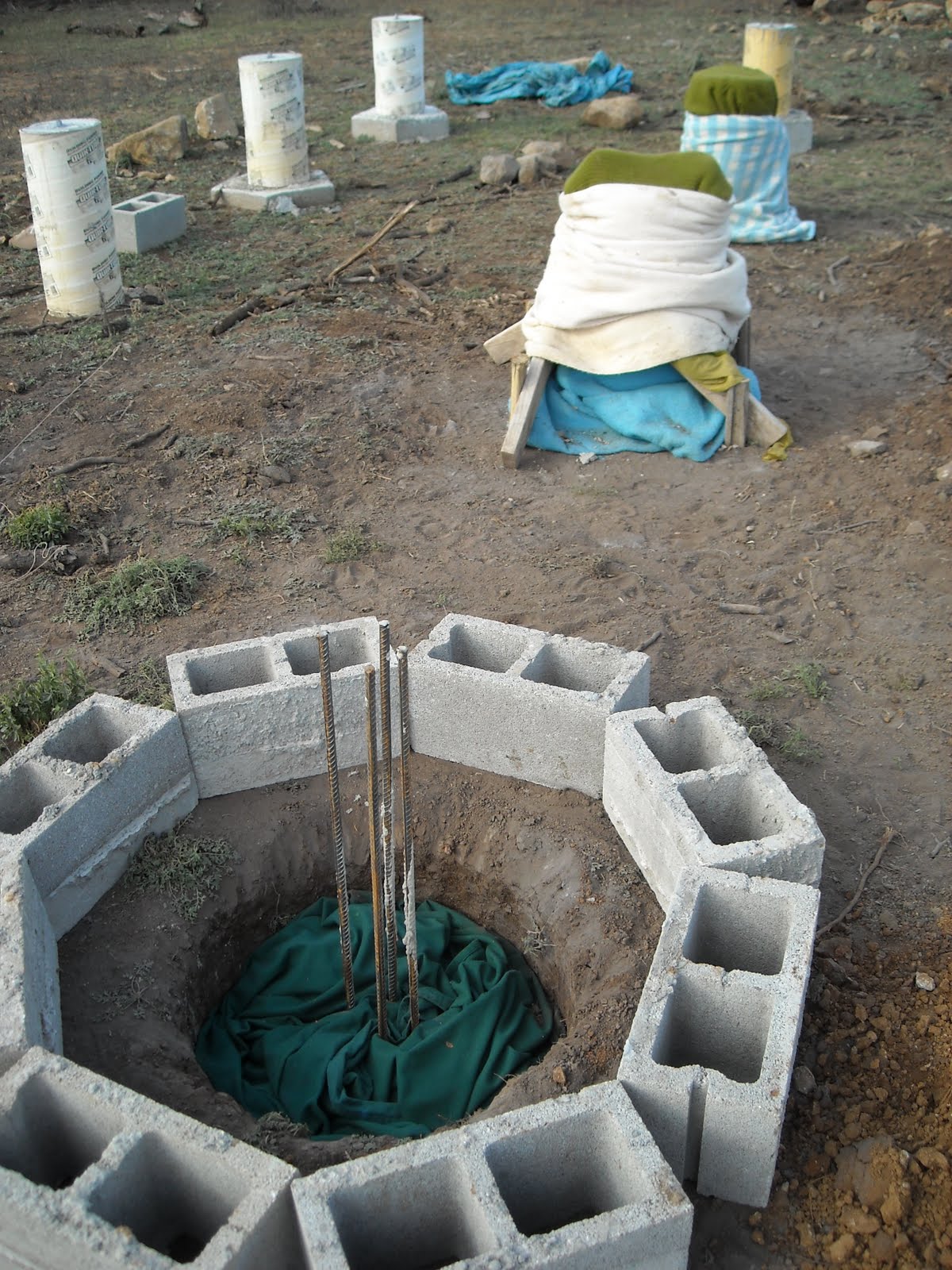
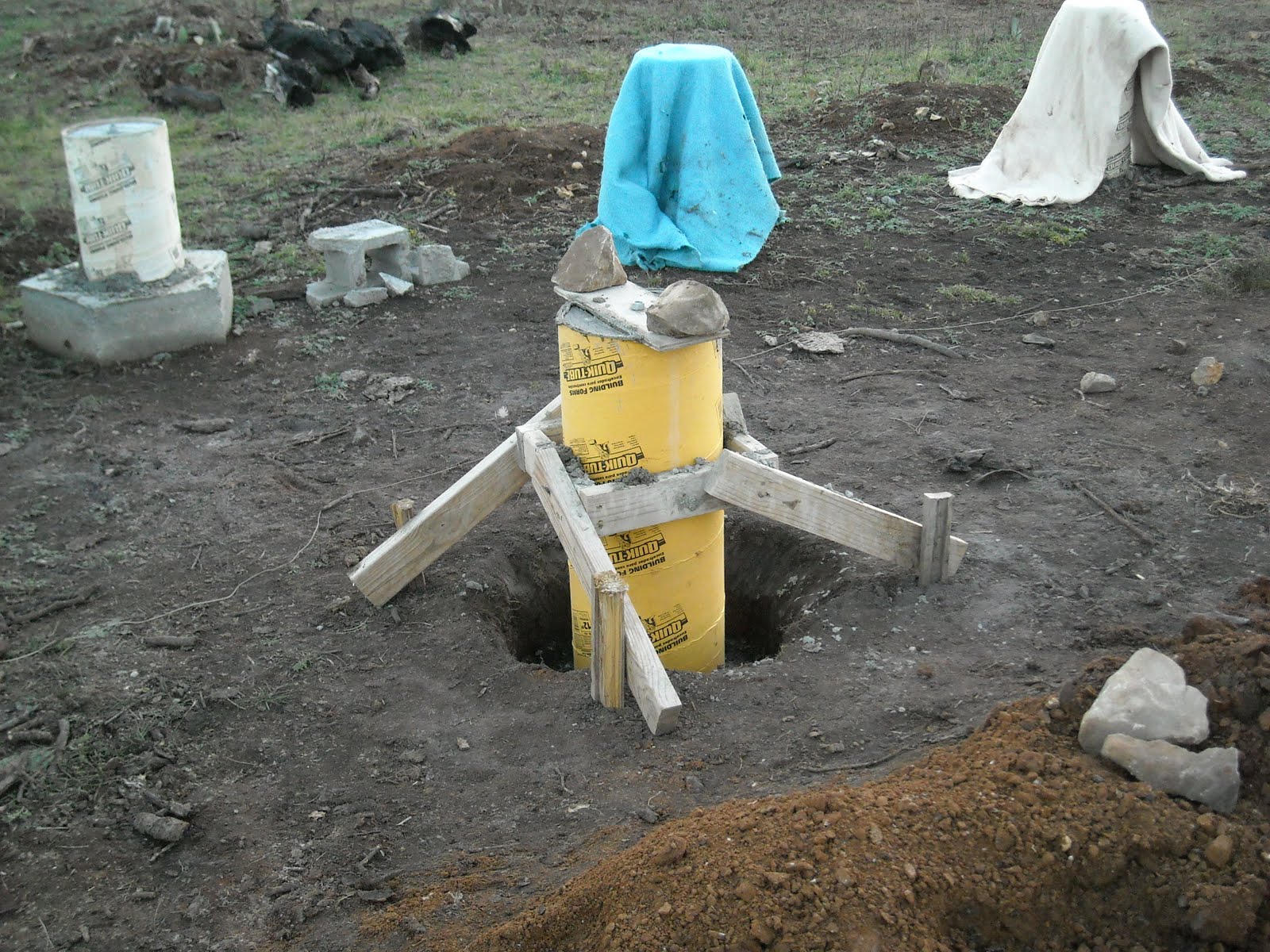
Once the tube is cut to the proper height, it is re-leveled on the concrete base and held in place by a wood form and stakes pounded into the ground:

This is the bolt that is set in the concrete which will hold on the brace which holds the beam. I tied in a couple of small pieces of rebar at the bottom to a washer held on by a nut to better lock it into the concrete:

And here the bolt is ready to be set into the concrete using the plywood to hold it “suspended” in the concrete:

Here is the pier after the concrete pour with the bolt set into place:

I decided to do the first two front corner piers so I could run a string between them so as to be able to line up the whole row of piers:

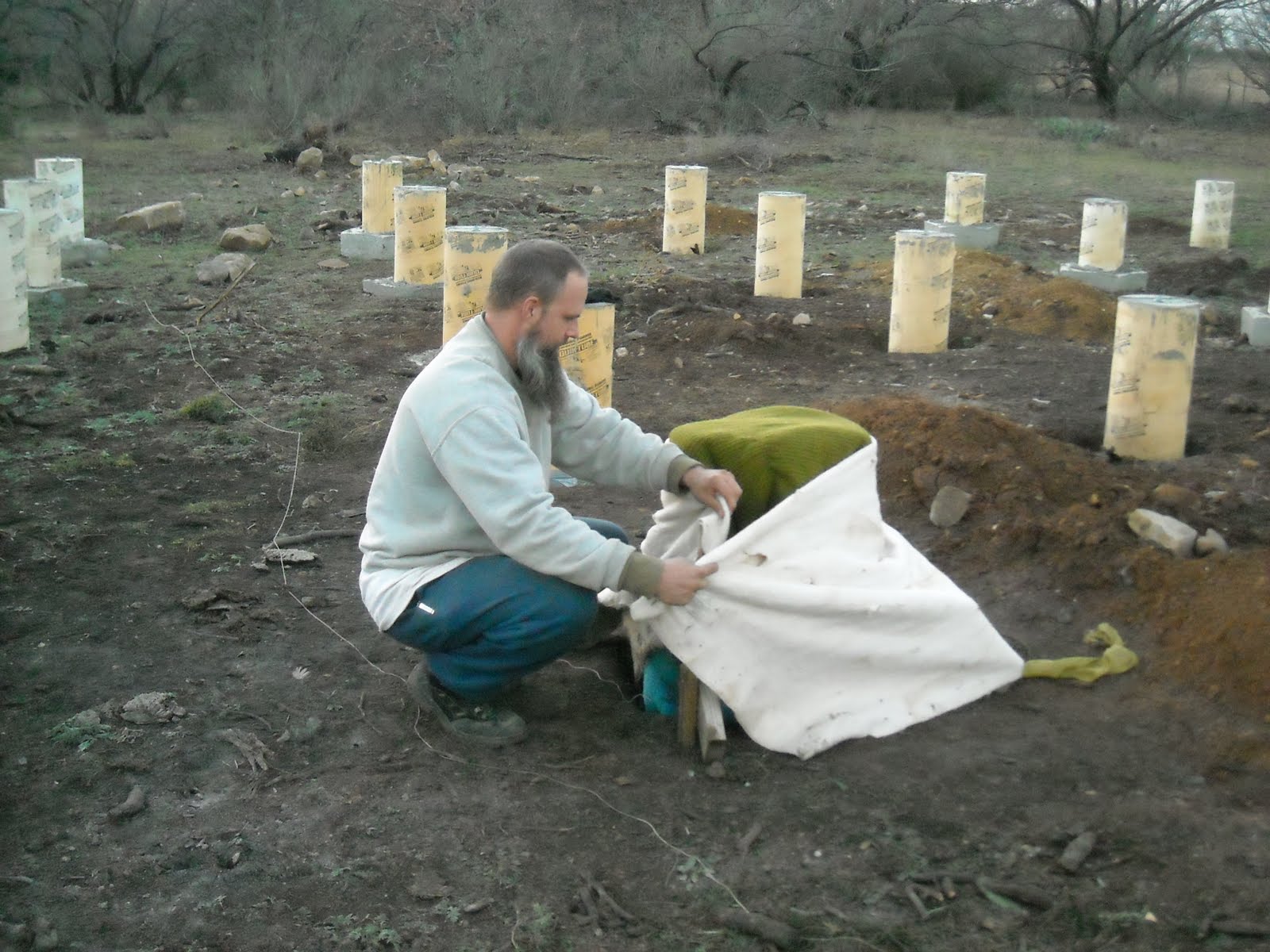
And here is the first row completed!

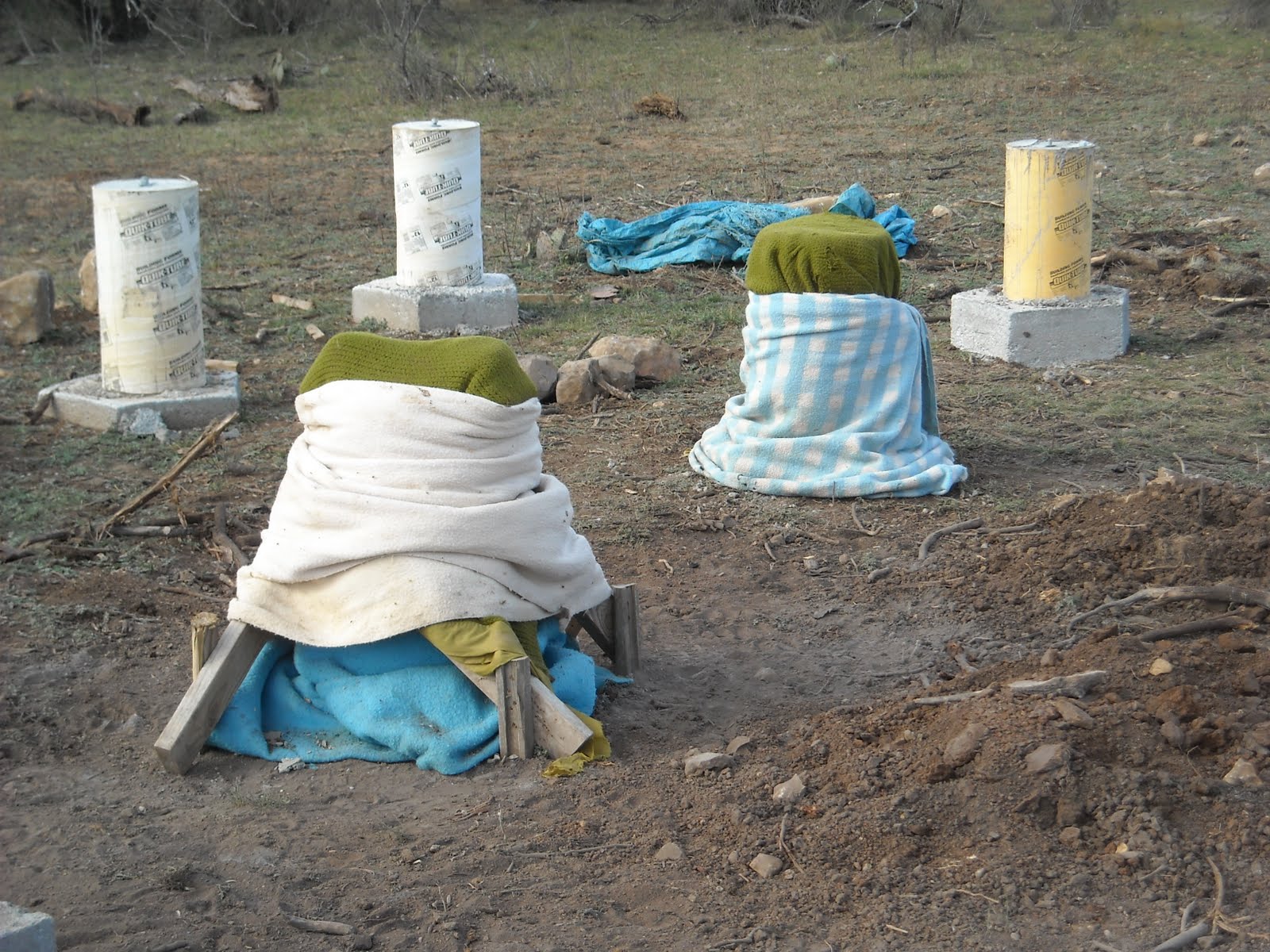
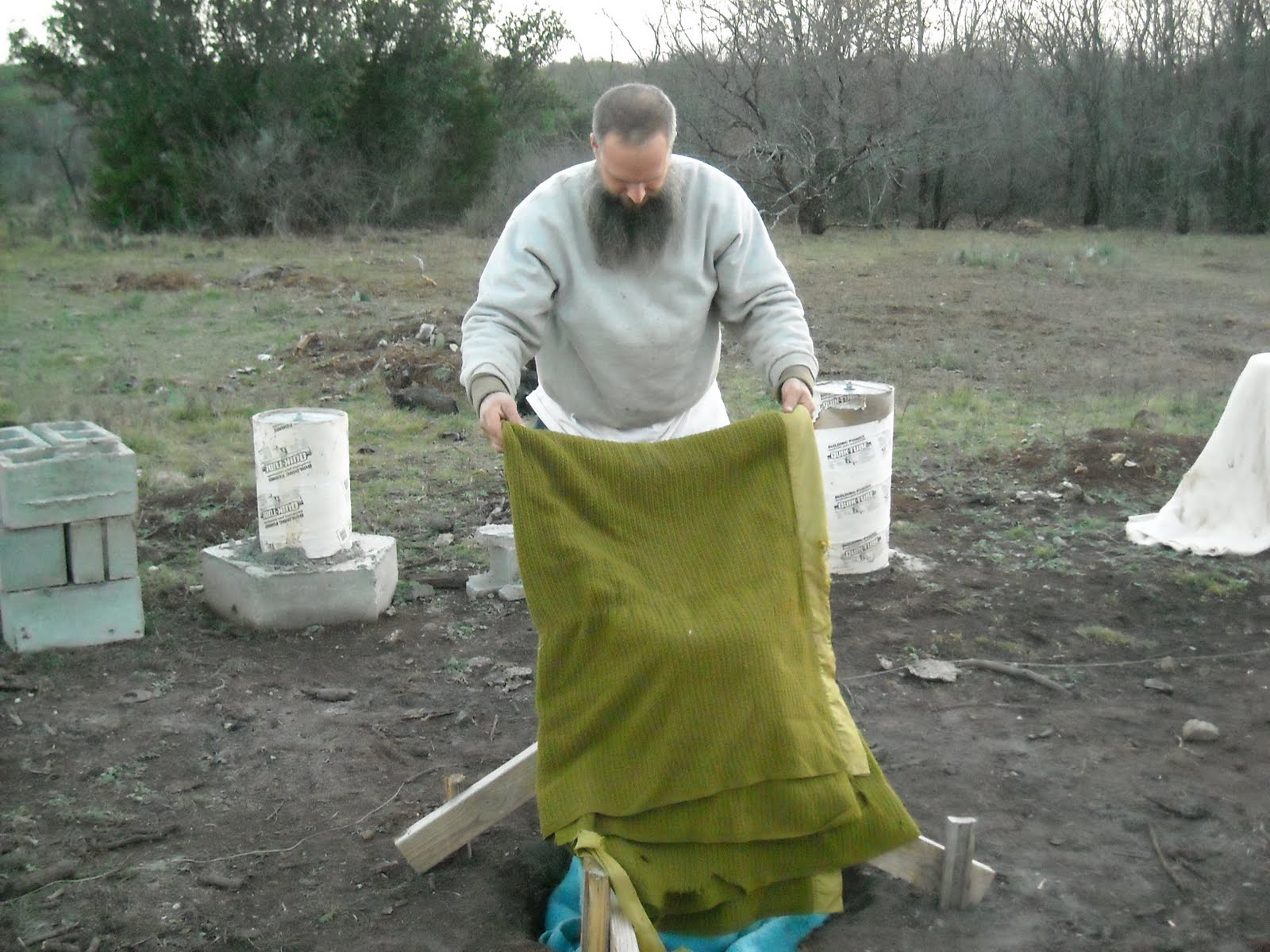
This past first Wednesday of the month was our community work day, and the men helped us with our foundation work. We poured a pier and three new bases:


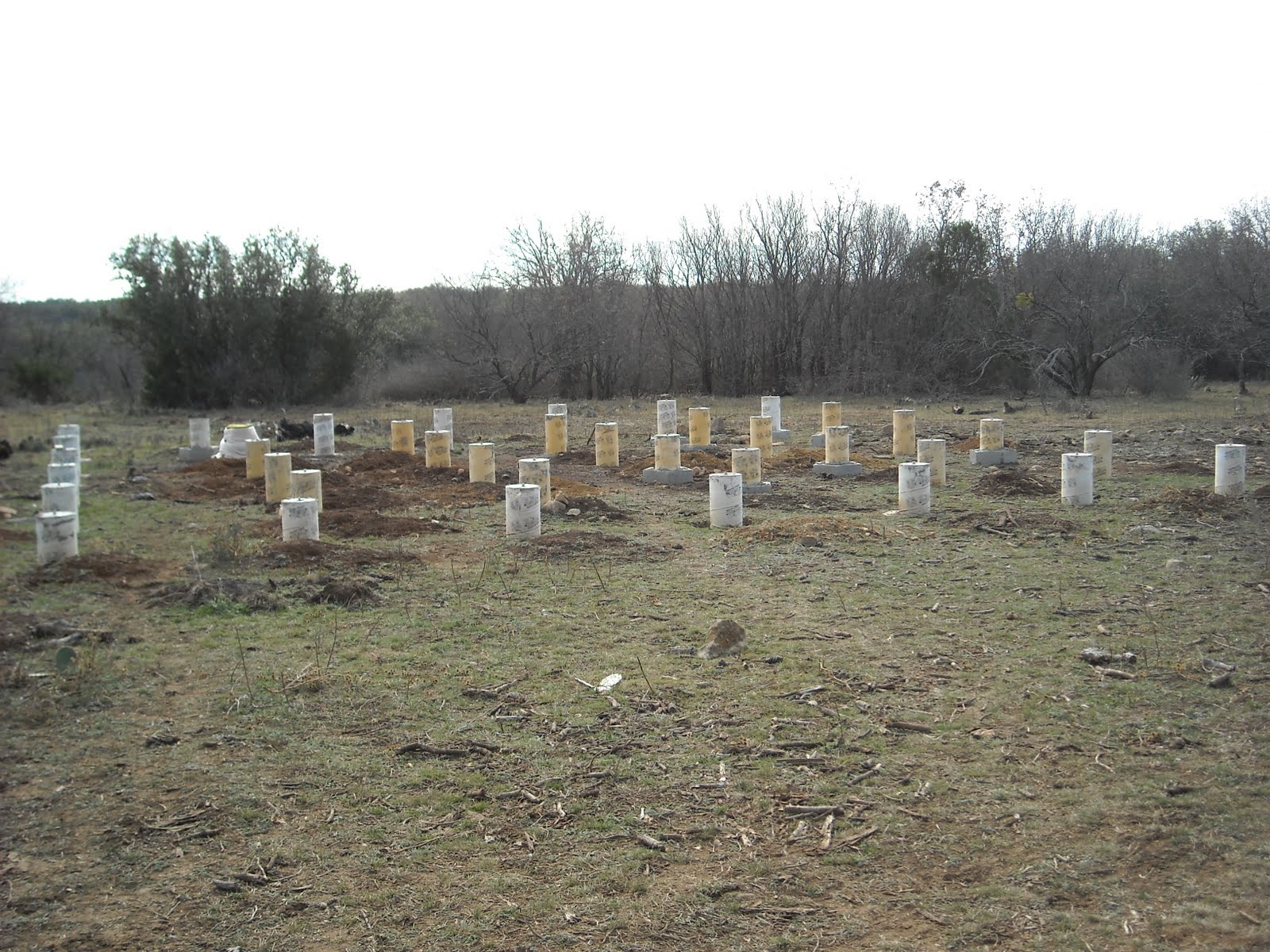
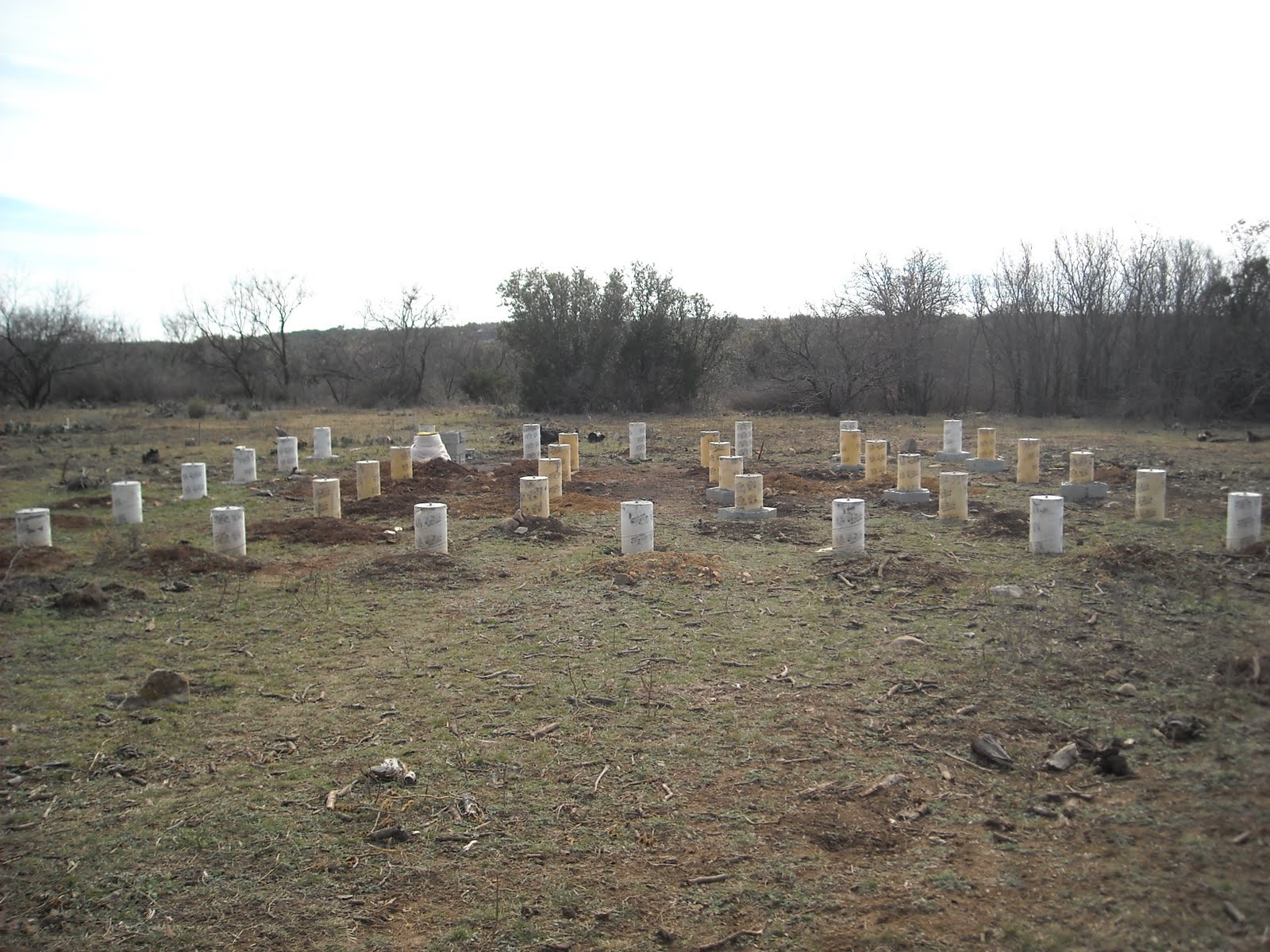
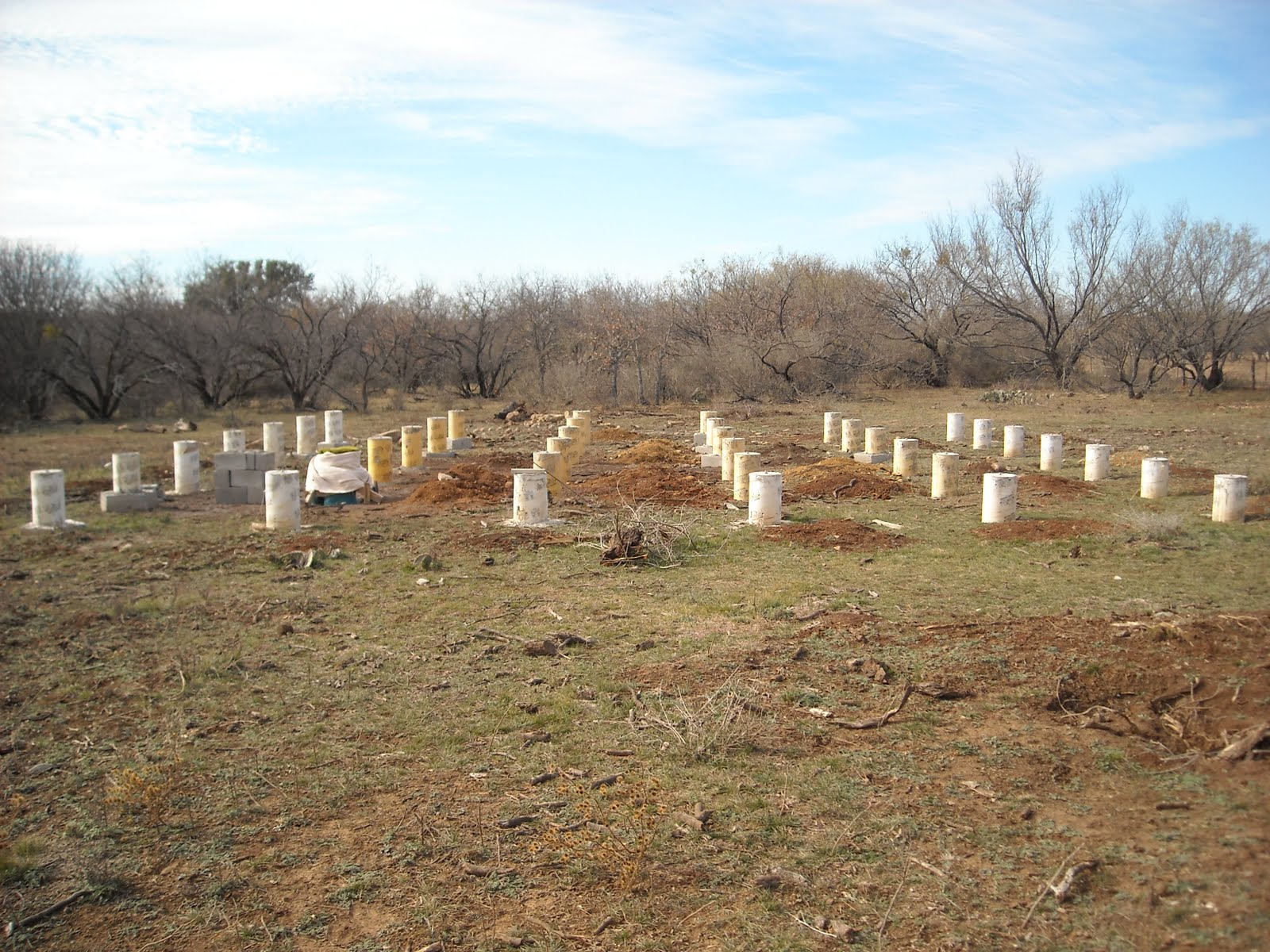
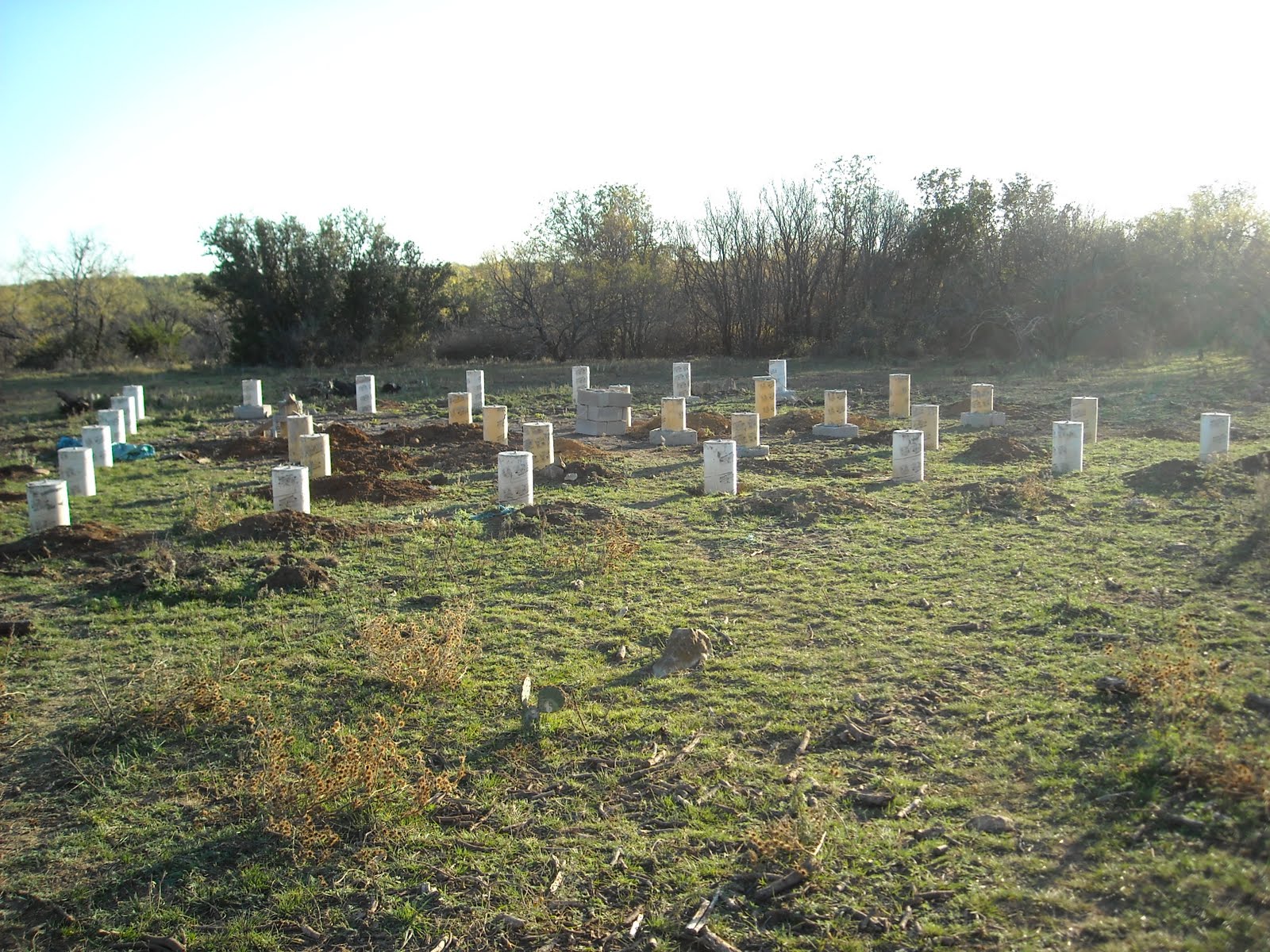
I decided to complete the other two corners so I could have straight lines for all of the other outside piers, and here is where we are now:

We are again grateful to God for the provisions, ability and community to work on the house.

— David


Storing Rain II – Update

In a previous blog post, we showed a tank (pond) expansion project we worked on. As I mentioned at the end of that post, it had rained enough at one time to fill it up quite a bit, but much of it leaked out the sides; and since then it hasn’t had much water in it. In doing some other work to help fill the tank, I’ve built up a berm of dirt in a drainage area from our upper field, directing runoff water from it down toward our tank.

Well, recently, the Lord in His graces and mercies brought rain — four to five inches in around a week time period. This really did a lot with filling up tanks in the area, including here on our land. For our tank, God filled it up to about one and a half feet from the top. Again though, some of it is leaking out, but not as much as before, it appears. Hopefully over time the sides will continue to seal up.

And so, following and including the one above are pictures of the gracious bounty of water God has provided:


We thank Him for His abundant provisions, the water here on the land, and the Water of Life in His Son, Christ Jesus.

— David

Goat Milk?

The background music came from fiddle champion Tony Ludiker’s free mp3s page. The recordings have Terry Ludiker and Darin Meeks on guitar.

This was fun to do. Here’s a bit of raw footage, some of which hit the cutting room floor.

In this first one, I held out as long as I could, until the end:


I almost didn’t get the part after this take. Also, based on the last few seconds, it appears that for some reason eating cookies makes me think I’m playing Hannibal Lecter:


Here, finishing up after getting the last goat back into the pen didn’t work out quite as expected:


And just for the record, the milk I drank was from a previous day’s milking that had been kept very cold. Apparently, it’s better tasting and lasts longer when the goat milk is chilled well right away.

There is a lesson in the main video, in case it wasn’t evident: most people go to the store for their provisions; agrarians go straight to the source, which is provided by God directly in accordance with His will, without the need for the world and its government approval, degrading pasteurization, shipping companies, grocery stores, and all of the other in-between means the industrial system requires for sustenance to go from where it’s produced to where it is used or consumed.

Which way is the proper way for a Christian to live?

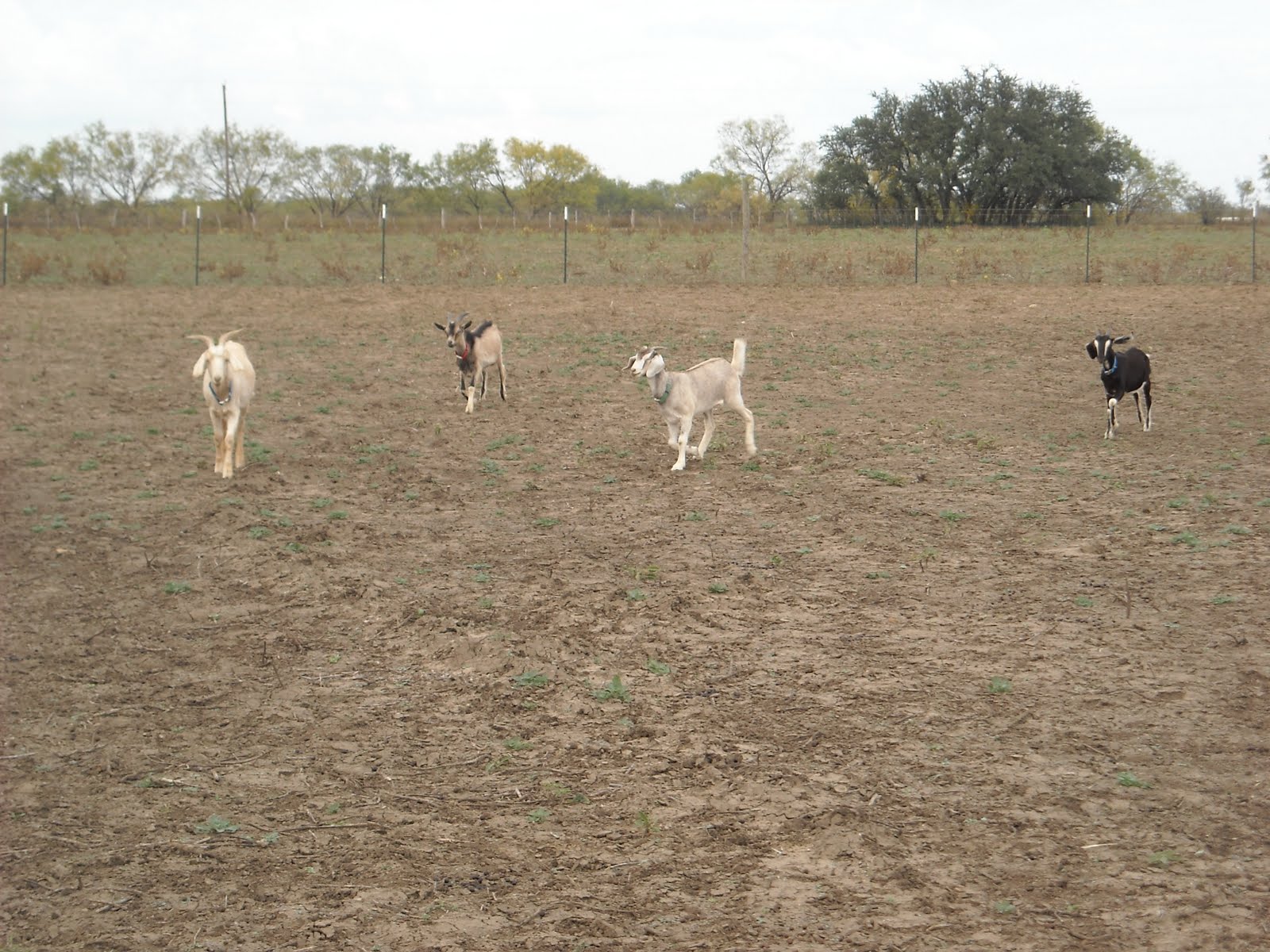
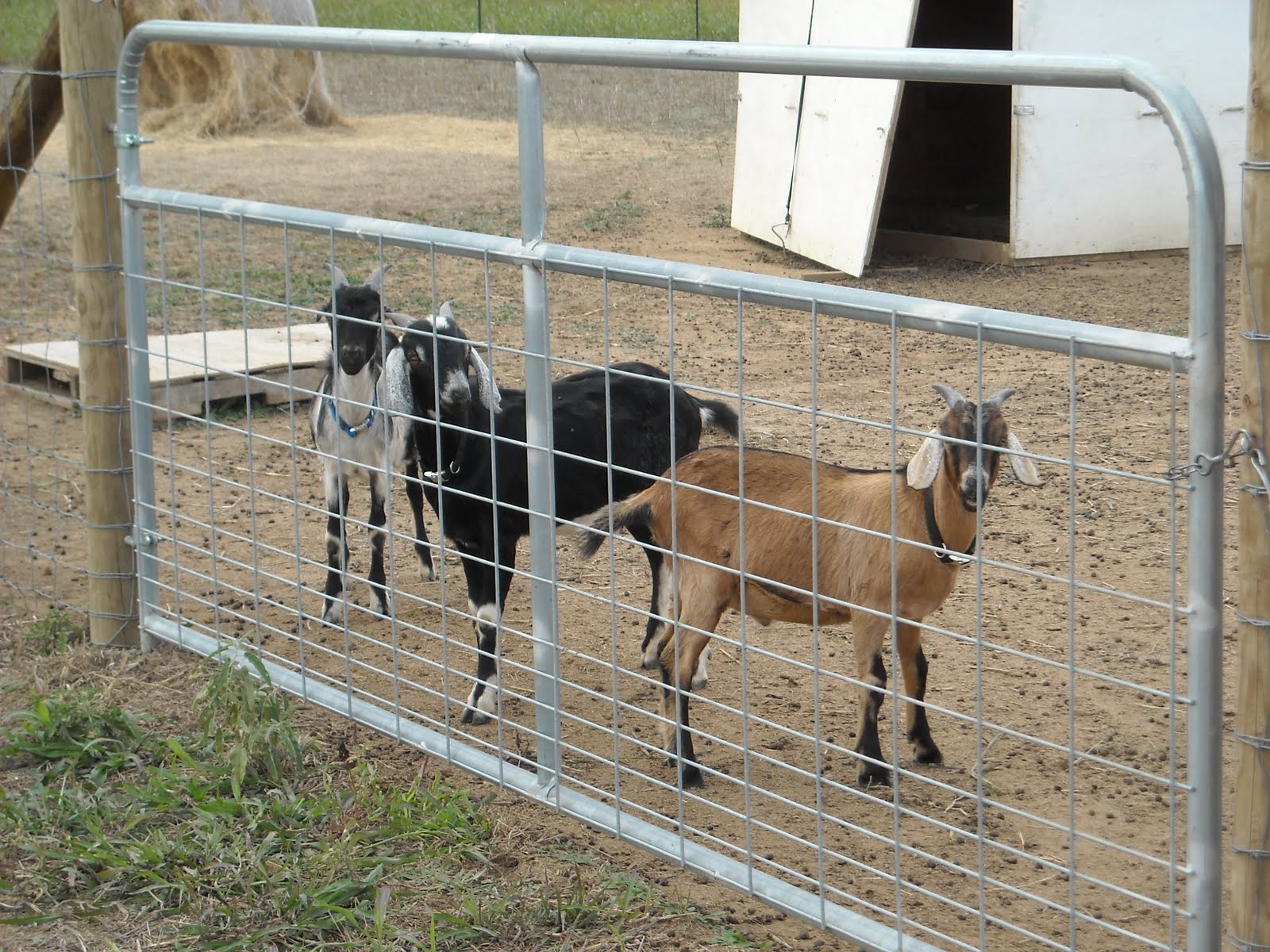
We are thankful to the Lord for the provisions of our goats and the milk He is allowing us to have.

— David

P.S. In case you weren’t aware of the TV commercials, etc., our video is a take off of the California Milk Processing Board (and then licensed by others) ad campaign, “got milk?”


Snake, Rattle and Hoe

Last night, it was time to go to sleep. Sabbath had begun a few hours earlier, I had already laid down, and Sue was preparing to retire. It seemed there were an unusual amount of insects in our camper; and while She was at the sink, a medium sized beetle-looking bug was trying to crawl out of the sink, but kept slipping back. As Providence would have it, Sue decided to help the little guy, grab him, and toss him outside. She got a hold of him with a tissue, opened the screen door to our camper, started shaking him out, and looked down only to behold something unexpected. She called to me; I was already starting to doze and wasn’t pleased: I thought she must have seen an extra large spider or something. I complained, but she said that she had seen a snake just below our camper door slithering around my rain boots, which sat next to the palette at the bottom of the steps. I looked down but didn’t see anything. She said it had crawled back underneath the camper. I walked down the steps with the flashlight; and sure enough, there it was. It was a rattle snake, and a fairly thick one too!

Wow. Ok, what to do. It was now coiled up between the two tires of the dual axle on this side of our camper. Shooting it with a pistol or shotgun, or even a .22 from the angle I was standing would probably just cause the bullet to ricochet into the camper. I figured I’d try to poke it enough with something so it would move out into the open, where I could shoot it. I got prepared with the shotgun and .22 rifle, Sue and I donned our rubber rain boots, and I grabbed our hoe and started poking it with the head-end. Well, all that did was cause it to move farther under the camper, coil up behind the rear tire, and start rattling. Hmmm. I went around to the back of the camper with all of the (literal) hardware, and examined the situation from there. It appeared I might have a shot with the .22 from back there without causing a severe ricochet. I prayed I was correct, because the 100 pound propane was off to the side but sort of down line. We prepped the shotgun in case it decided to escape, I lined up the .22 using the backside of the camper wall to brace the barrel against (the shot needed to be pretty accurate as the snake was right next to the tire), aimed for the body because I couldn’t see the head, prayed for a true shot, and fired. The Lord answered the prayer with a hit. This stirred up the rattler; it shook its tail and snapped at the bottom of the camper, but then recoiled, only this time exposing his head. I aimed again, fired, and connected. The rattling stopped, and its movements slowed. It exposed its head once again, and I shot it there again, and this time its movements mostly ceased. We waited a little bit to make as sure as possible it was dead, and using the hoe I slid it out. Sue went and got the machete for me. I pinned its head against the ground with the hoe and chopped it off to finish the ordeal.

And here it is:

This is it the next day, minus the rattle:

And here’s Sue taking it to the chickens for breakfast:

This was no youngin’! (ie. it had been to the “molt” shop for “shakes” many times. 😀 )

We thank God for His mercies in all of this (these are just the ones we’ve recognized): Sue rarely picks up bugs from inside the camper to throw them out; I often step outside with only sandals on during the night for restroom breaks; the propane tank hadn’t blown up; and the rattle snake was disposed of. Thanks to Providence for granting and causing our safety, and for His guidance and protection. We are very grateful to Him.

We also thank the Lord for granting this as a faith builder for us in His always seeing and caring eye, and we thank Him for His mercies in bringing us safely through this.

— David

Providence’s Perpetuation Provisions: New Calf “Secoya”

The Lord once again saw fit in His graces, mercies and wisdom to grant us a new calf, a heifer, to our heifer Catalina (who with this calf has now become a cow). The calf sort of has the color of a redwood tree, so we decided to call her Secoya, which is Spanish for “redwood.”

Here is the new little one:

And here she is again, in action:


We are again very grateful to God for His provisions of this new calf.

— David


« Older posts Newer posts »