The Sifford Sojournal

Our journal of what we pray is our sojourn of life along the narrow way, even the old paths, submitting to the Bible as a light unto both.

Page 83 of 95

A House – Update III – Root Cellar/Storm Shelter

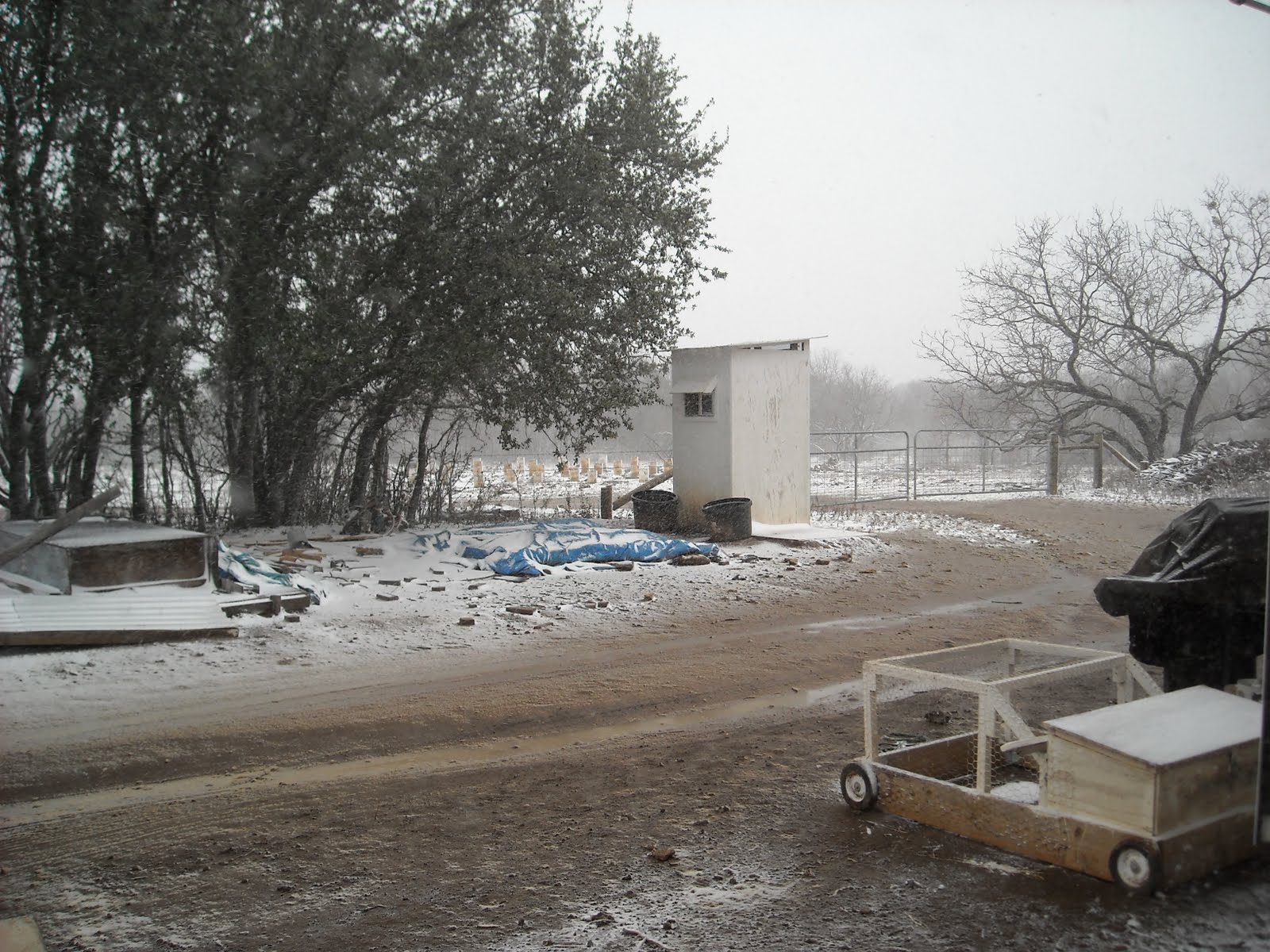
Part of the house design was to have a root cellar/storm shelter in the vicinity. I wanted to have house access to it so it would be quick and convenient to be able to get into in an emergency. In thinking about designs, I had hoped to not interfere with the layout of the foundation piers as much as possible. And so, the plan was to dig out the main area of the cellar under where the porch is to be, have the landing area go between two piers, and then have the entrance way under the actual house structure; this would allow for the cellar to be covered by structure (the porch), easy entrance from within the house, and the foundation to continue to be laid out as it was without having to add piers or other modifications to it.

I decided to hire a contractor to do the digging, partially because the hole needed to be dug fairly precisely since the landing was going between the two piers, and also so I wouldn’t have to deal with damage that might happen to the equipment. But, after several weeks of delay with an inattentive contractor, I decided to just rent a backhoe and do it myself.

And so, here I am starting the digging process:


Well, not more than a few feet down I hit that rock layer that I’ve been setting the piers on. I thought for sure I’d be able to get through it with a backhoe, but one by one the teeth caps on the backhoe bucket started to break off. I went through several before stopping. We thought about it and then came to the conclusion that it wasn’t worth proceeding because more possible damage could happen; I could possibly disturb the ground under the piers, thereby potentially weakening the house structure; and we already have a root cellar/storm shelter. So I filled back in what I had already dug, and parked the backhoe.

We had to pay for the damages, but the folks from whom I rented the backhoe went out of their way to help us. We rented from iRent in Brownwood, TX, and Milt the manager there really helped us in diminishing the fees as much as possible. He was a breath of fresh air in customer service, especially given our experience with the local contractor noted above.

I lost about a month of time with all of this but have restarted the foundation building process, and here is where it is currently…only five piers left!

Thanks again to Milt at iRent for his excellent customer service; and we again thank the Lord for His graces, mercies, wisdom in and sovereign power over all circumstances.

— David

Kids’ Graduation 2009

So that they don’t have any kids until after most of Winter has past, we waited to put our bucks Shatner and Eastwood with their respective does until now, as the gestation period of goats is around five months.

And so, this past Lord’s Day was the time!

We put Shatner with Winnie, Betsy and Pammy (shown back to front):

And we put Eastwood with their daughters Minnie, Tapioca and Marie (shown left to right, with Eastwood between Minnie and Tappi). Any kids God graciously grants will be their first ones. They’ve now graduated into being a part of breeding process! (They grow up so fast! ๐Ÿ™‚ :

And here are Aramis and Porthos (left and right), and Donny (center), which, with Shatner being gone, are now kings of their castle:

We pray the Lord perpetuates the herd, in accordance with His will and divine wisdom; and we thank Him for the opportunity and resources to be able to set apart the goats for breeding.

— David

Time to Come Clean


Before Dave and I moved to Texas, we lived in a small cottage, which did not have washer/dryer facilities; so we had a laundry “date” every couple of weeks. We packed up all of our laundry and took it to my mom’s for her to do (haha Mom, just kidding). No, we took it to Dave’s mom’s house for her to do (haha, Mom Sifford, gotcha!) But seriously folks, we took it to the local laundry mat. It was so nice to get all of our laundry washed, dried, and folded in a few hours and not have to worry about it for another couple of weeks. Then on the way home, we usually picked up some tacos from the local eatery (a romantic way of saying Taco Bell) and made a fun afternoon of it.

After we moved here to Texas, thankfully there was a local laundry mat that worked well for our needs. This time, I had the pleasure of going into town with our neighbor, Danielle, for the first several months, to do laundry together. But I knew, with our new off-grid lifestlyle and our worldview, I would need to eventually set up a system of hand washing and drying our clothes here on our homestead.

I had been drying clothes on the wonderful clothes line my mother-in-law had given me but had not yet started hand washing clothes here at home, even though the Lord had by now granted enough water to be available in our cistern. To be honest, at first, I was more than a little apprehensive about washing all of our clothes by hand. Why was it that I was so afraid of broaching this laundering method with myself when it is the way it had been done for centuries before the industrial revolution? The unknown scared me a bit and seemed overwhelming. Eventually though, I began to “scour” the internet and research all of the wash tubs to be found, and spent probably too much time searching for the “perfect” set up. In retrospect, I believe I was procrastinating and in denial. Finally, Dave and I discussed it, and realized, uh, any old tub should do the trick. So we went out and bought a few inexpensive, galvanized tubs locally, I took a deep breath, and I’ve been hand washing our clothes for several months now! I know, pretty anti-climactic, isn’t it?

Anyway, for those of you who, like I was, might be wondering how to get started, it’s pretty simple. By the time I got to washing clothes this way, Danielle had already been washing clothes by hand for some time; and she helped me a lot, and has some hand washing laundry tips and then some info about her manual laundry set up. For myself, I use four buckets: one for pre-soaking clothes, one for the main washing, and two rinse buckets. I put about six ounces of hydrogen peroxide in the main wash bucket per load of whites as my bleach (try it, it works!) and I use a splash of white vinegar in the final rinse bucket to soften the clothes. One of my other neighbors puts a bit of fabric softener in her rinse, and I might try that as well.

First I put a little laundry detergent and some water into the pre-soak bucket, along with the dirty clothes, let that set for a little while, and then transfer the pre-soaked clothes to the main wash tub:

I highly, highly recommend the Rapid Washer sold by Lehmans. If anything happened to it, I might drop on the ground sucking my thumb in the fetal position — that is how valuable it is to my clothes washing experience (I wouldn’t really do that, but you get the point ๐Ÿ™‚ ). The proof is in the dirty wash water, and you can get a good amount of clothes clean in a short amount of time.

I use it for about 10 minutes per load:

Time to transfer the washed clothes to the first rinse bucket:

And then onto the final rinse. Another neighbor recommended using the Rapid Washer for not only the wash cycle but the rinse cycle too, to push all the soap out of the clean clothes. I tried that, and it works really well:

We decided to invest in a commercial grade wringer, considering the anticipated heavy usage. Dave put together a sawhorse for it as a stand, and with some bracing, it works beautifully:

Last stop, clothes line:

I also began making my own laundry detergent, which saves a lot of money. You can find recipes at the website Soaps Gone Buy. The one I use most often is to grate three bars of Fels Naptha soap, and combine that with 1 1/2 cups of Arm and Hammer Washing Soda, and 1 1/2 cups of Borax. Some people use Zote soap in place of Fels Naphta. The recipe mixture works great, and costs pennies per load, using only two to three tablespoons each. As an alternative, one lady I know uses only baking soda for her wash; and her clothes look fine!

This experience has brought me another step closer to not being afraid to try new (or old, in this case) things, and to think outside the box to do whatever works best. It used to take a good chunk out of a day away from our homestead to do laundry. Now I can simply step outside when I have a free hour to do a couple of loads, while staying at home helping Dave on the homestead. It’s also a step closer to less dependence on outside resources. What a blessing!

And I love working outside in the fresh air and not melting away in the stuffy laundry mat. It also provides a great time to pray or listen to a sermon or Christian audio teaching as well. (Eph. 5:15-16: “See then that ye walk circumspectly, not as fools, but as wise, redeeming the time, because the days are evil.“)

Once again, I’m very thankful to God for allowing me to live this lifestyle, farther from the distractions of the world, so I may focus on Him, His Word and living obediently before Him.

Susan

New Goat “Piney Tim” – Update – Name Changed to “Eastwood”

Well, because of some character traits we picked up on, and because the previous name is too much associated with Charles Dickens’ “A Christmas Carol,” which celebrates Christmas in a way, which is something that we reject, thus causing us a conscience problem, and because we were probably just going to be calling him Timmy anyway, we are changing his name to Eastwood, because he seems to often give us those squinty eyes saying, “Go ahead…make my day!”

You can see it in the difference between these two pictures. You’ll probably have to click on each picture (and maybe enlarge them from there) to be able to see it; but in the second one, he’s giving “the look”:


We probably spend a little more time than is necessary on our animals with this type of stuff (naming, etc.), but we also like to try to be cautious and consistent with what we do.

— David

New Goat “Piney Tim”

Although apparently inbreeding goats is a defined method for increasing a herd, we decided to use outbreeding instead, as inbreeding can bring to surface undesirable traits (as well as desirable ones, which from what I’ve read is why people inbreed); so our plan is to trade our males born here with other folks who are raising dairy goats. Our neighbors the Sustaires are doing just that, and the Lord had granted them twin bucks around the same time as He did our triplet bucks, which are half Nubian and half what Winnie is, which is part LaMancha. We also had Donny available, who is a little older and full Nubian. Theirs are Alpine-Nubians, and so we agreed to swap goats. They chose to take Athos, the first born of the triplets, partially because of how well Winnie is producing milk vs. how well Betsy, Donny’s mother, is; and we chose the one of theirs that had horns (one of theirs was born without them) so that he could compete with our other males since we are not de-horning our goats.

Since he’s part Alpine, that makes him rather “Piney,” and so we decided to name him Piney Tim (we’ll probably call him Timmy for short). And so here he is:


We’re thankful to the Lord for allowing the perpetuation of the animals for all of the families here on the land, and for allowing us to have this opportunity with a local family to husband the animals in this outbreeding way.

— David

Garden 2009 – Spring – Update IV – 24 (Pint) Carrot Gold and Other Precious Commodities


Boy, if there was any doubt carrots grow well in West Central Texas, may it be forever removed. We planted carrot seeds in one entire bed this year; and, wow, the carrots took advantage of every bit of space in that bed. This blog post reflects the second round of thinning of the carrots; and I still have one, maybe two, rounds to go!

The carrots grew very densely because there was so much depth for them to grow in the double-dug, raised bed. So each pull of the greens revealed a handful of carrots:

“Ehhhhhh……what’s up, doc?” Gary loves carrots. The greens, eh, not so much:

So I filled the bucket with greens knowing they would be appreciated somewhere else……

Shatner, on the other hand, loves carrot greens. (In a high-class maรฎtre dโ€™ French accent…”Taybelll for one, Monsieur?”)

I stopped pulling carrots when the basket was fairly full, knowing this many would take several hours to prepare for canning:

What a blessing to sit out in the fresh air and sunshine to work at my “day job.” I had two buckets for the initial processing of the carrots: one was for a first rinse to get the major dirt off, and the other was to give them a good scrub with the vegetable brush to get them as clean as possible:

Next, I gave them a final rinse, cut off the ends, and cut up the carrots into smaller pieces. I munched along the way and loved knowing these carrots are God’s direct provision, and that any middle men and chemicals have been eliminated:

Here they are in the jars ready to go into the canner:

And, yippeeeee! Fresh garden carrots preserved to be used in many delicious dishes:

And speaking of delicious things for meals, I thought I’d provide an update on our other garden adventures.

In addition to our abundant yield of Zuchini, we were blessed with an abundance of summer squash:

We also shredded up much of the summer squash and put it in jars with salt for lactic fermentation, and placed them down in the root cellar. It tastes great – just like sauer kraut. And it makes a very flavorful and healthy salad when you add cucumber and tomato:

Our peppers are still going gangbusters. Here is a bowl of freshly cut peppers ready to be put in jars. I have found it to be very handy to grab a jar of these off the shelf and saute them with onions when I’m making fajitas. Thanks to one our readers, Ginny, we also got the idea to cut them up and dry them in our solar dryer. They are great to add into recipes, and I was very pleasantly surprised at how much taste is packed into even one of these small pieces:

Here they are ready to be canned. As I was going through the pepper plants harvesting the ripe ones, I found that a plant with smaller red and green peppers resembling chili peppers had popped up. (Imagine, if you will, what the Chili’s Restaurant pepper logo looks like.) Well, I haven’t been canning those because Dave likes to eat them raw here and there. HOWEVER, we have found that somehow these peppers were rubbing elbows with some of the other peppers; and sometimes when we bite into a sweet red or green pepper, we’ll get a HOT surprise! So some of these jars are packed with more taste than we bargained for! ๐Ÿ™‚

We planted 17 tomato plants this year hoping that we might have a successful crop; but for some reason, none of them did well at all. We have harvested probably fewer than 40 tomatoes the entire summer. Not sure what happened. But, thankfully, the local produce market was selling fresh tomatoes at a fraction of the normal price to keep them moving. We paid a whopping $5.00 for these tomatoes and got 22 quarts! Thanks to the Lord!

Hmmmmmm, then there is okra (not to be confused with Oprah). Okra and I are still getting to know each other. Coming from the West Coast, I had never eaten okra and don’t believe it is on any menu I’ve ever seen in California. So I’m still becoming acquainted with these Southern crops. To be completely honest, okra and I have a kind of love/hate relationship. They are SO prolific, I could not keep up with them. Do you know that okra can grow to maturity in four days?! It’s almost too much of a good thing. They are fibrous by nature; so if you don’t catch them when they are young and tender, they can get pretty tough and stringy. However, in the canning process, they do soften up and are very edible. I only tried to fix fried okra once but had to put doing that on the back burner (no pun intended) after that until I have more time to experiment with the seasonings. For now though, we are very grateful to have several jars of nutritious okra put away in the root cellar. They’re actually quite tasty when I process them with lemon juice and a little salt:

We planted a half bed of turnips this year as a kind of experiment to see how they would grow. They did very well, and we had many great salads with turnip greens. The greens are a bit misleading because the actual number of turnips that were harvested were not that many. But we were very thankful to have this basket full of them:

Dave put them in freezer bags to be kept in our large freezer (which we had running because I was in the process of canning our two butchered hogs at the time) until I could get around to canning them. Here, we paid Gary a couple carrots to guard them until Dave could put them in the freezer:

Sadly, they thawed just enough in the freezer that they started going bad by the time I could get to them. So our turnips were, instead, enjoyed by our hog, Missy. Maybe next year…….

We also have gotten some great green onions and red onions from our garden, of which I don’t currently have pictures. I still haven’t gotten used to knowing I can just walk outside over to the garden and pick a bunch of fresh produce to put into our meals. What an amazing blessing for which we are so thankful to God.

Susan

Agridioms

One of the ways agrarianism still affects culture is in the form of some idioms in the English language. We thought it would be fun and educational to mention a few, which I obtained from http://www.brownielocks.com/wordorigins.html (of course, others may have different versions of the origins):

No Spring Chicken

New England chicken farmers discovered that chickens born in the Spring bought better prices, rather than old birds that had gone through the winter etc. Sometimes farmers tried to sell the old birds as a new spring born chicken. Smart buyers often complained that a tough fowl was “no spring chicken” and so the term now is used to represent birds (and even people) past their plump and tender years.

Beat Around the Bush

This comes from boar hunting in which the noblemen hired workers to walk through the woods beating the branches and making noises to get the animals to run towards the hunters. Boars were dangerous animals with razor-sharp teeth (you really did not want to meet one-to-one, esp. with no weapon). So the unarmed workers workers avoided the dense undergrowth where the boar might be and beat around it, rather than going into it. Thus, this evasive technique was termed “beating around the bush” and today represents anyone who avoids approaching anything directly

Old Stomping Ground

The prairie chicken was often observed by early settlers dancing around at dawn with their fancy mating steps, making noises and strutting as part of their courtship with the females. They were so intense on this, they actually wore some areas of the ground bare! Soon, settlers could just tell by looking at some bare land that it was the mating spots for those frisky prairie chickens, and soon got called their “old stomping grounds.” Today the term is used both for areas when males and females gather to meet each other, or for any place in which a group of people just go to have fun and kick up their heels etc.

Henpeck

Biologist W.C. Allee gained fame when he discovered the pecking order of hens, and the female’s habit of using her beak as a weapon among other females. The hens never peck the male roosters. And yet the term today is often referred to represent the verbal attacks females put upon males. Go figure!

Chicken Feed

As far as farming goes, chicken feed is the poor quality wheat or corn given to chickens. Soon, city folks used the phrase in regards to our lower denominations of coins. And, the phrase soon became really popular among riverboat gamblers to mean a small amount of money, and it stuck.

Goose Bumps

It’s a phrase used to describe visible small bumps on our skin because of fear, shivering, etc. The phrase is based on the fact that geese were plucked of their feathers every couple of months, leaving the birds pretty bare. So, when they’d get a chill from the cold air, their skin would shrink and create these large pimples.

A Gift Horse in the Mouth or Straight from the Horse’s Mouth

When you get information straight from the horse’s mouth, it means you are suppose to be getting honest, correct information. The phrase comes from the old days when determining how old a horse was was done by looking at his teeth. So, before betting on a horse, people wanting to check its teeth to see how old this horse was. Therefore, anyone who worked around the horse (stable hand?) knew how old the horse was and could let the others know. Therefore, the information was acquired, ‘straight from the horse’s mouth’ and not the owner of the horse.

On the other hand, if someone gave you a horse for free, it was considered rude to look in its mouth and check to see how old it was. Therefore, you were not to “look a gift horse in the mouth.” Today, this means not to question the quality or motive a gift you get from someone.

Wet Behind the Ears

This refers to someone who has absolutely no knowledge or skill in some craft or job assignment. It goes beyond being a beginner. It means to know zip, nada, nothing! The origin is simple. It refers to newborn animals, who are wet from the womb when born. They dry slowly and often behind their ears stays wet the longest. Newborns are pretty helpless and know nothing, just like someone who has to do something that they don’t know how to do.

Caught Red-Handed

The phrase today means simply to be caught doing something wrong, usually while you are doing it so there’s no doubt you are doing something wrong. In the old days, it simply meant to be caught with the red blood of an animal on your hands as a result of butchering an animal that didn’t belong to you. According to the laws back then, just having freshly cut meat didn’t make you guilty. You had to be caught with the fresh blood of the animal to be convicted.

To Be At the End of Your Rope

Today it means that you have used up all possible resources, solutions, ideas, etc. in order to surmount a problem you have. It originated from the tethering of horses to eat (but not allowing them to run free). So, horse would eat in the area his rope allowed. When the horse ate all the grass that was easy, he then was stretching and eating in the area that was “at the end of his rope.”

To Gum-Up the Works

Someone (or something) that suddenly stops a project from running smoothly is “gumming up the works.” The phrase originates in old lumbering days when the men had to deal with the Sweet Gum tree. It’s sap gummed up their saws. They hated that. But, they discovered that the gum was fun to chew. So, they’d go collecting it and as a result, oftentimes returned all sticky from head to foot. And, it was hard to wash off! So, a person was all gummed up and stuck (lacking freedom of movement).

Scapegoat

On the Day of Atonement (Hebrews) the priests would take a black goat as the representative of all the sins of the people. During this ceremony he would lay the sins of the people on the goat’s head. Afterwards, the goat was let go (escape). Later on, anyone who was made to take the blame for the actions of someone else was called a “scapegoat” just like the ceremonial goat did for the sins of the people.

To Go Haywire

Logically, this phrase has to do with bailing hay. Back in 1828, Moses P. Bliss patented a machine that bailed hay. It worked pretty good, but there were times when the wire used on the machine would get stuck in the machine, wrap around the horse’s legs, etc. When the men cut it to untangle the mess, it often snapped, causing injuries. The situation soon slipped into social talk to represent anytime anything gets all messed up and can’t work properly (machines, projects, ideas etc.).

Kick the Bucket

It’s an expression meaning death. The phase originates from slaughter houses. When a cow was to be killed, a bucket was placed under him, while he was being positioned on a hoist. Sometimes, while adjusting the hoist, it made the animals legs jerk and he’d kick the bucket before he was killed.

Barking Up the Wrong Tree

Settlers hunted raccoons, possums and squirrels. Most hunting dogs would chase them up a tree and then bark until their masters came and shot the animals. Sometimes, the animal managed to sneak across to another tree w/o the dog seeing. So, the dog would continue to bark up a tree that didn’t have any prey. Soon, the phrase became known in social circles to mean anyone who is wrong about something and/or is being mislead.

To Build a Fire Under Someone

We all know that mules are pretty stubborn. Sometimes they just firmly set their legs and well… So, farmers decided that building a small fire under the mule’s belly would get him moving. There’s no proof this was really done a lot by muleskinners. But, the idea and imagery was such that people started using the phrase to mean “trying to get someone to move or take some action.”

Poppycock

It’s just a name for barnyard excrements from chickens. The phrase first appeared in stories written by Charles F. Brown (aka Artemis Ward) in the Cleveland Plain Dealer in 1858. He used the phrase to described the political talk he was hearing from candidates. It seemed to then catch on as a way of expressing any talk that was worthless and stupid, whether political or not.

A Stuffed Shirt

Anyone who is rather immobile (rather in actions or in ideas) is said to be a stuffed shirt. The phrase comes from scarecrows in which shirts and pants were stuffed with hay, supported by a stiff pole to create a figure to scare away pesky crows. It didn’t really move, it just stood there.

To Live High on The Hog or To Eat High on The Hog

The origin is pretty simple. It comes from the fact that the best part of meat on a hog is cut high on the thigh. The lesser quality meat comes from the lower thigh (has lots of fat). So, the meaning of the phrase is basically when you are eating (or living) the very best that is available to you; and, are not having second best or lower quality.

Fork Over of Fork It Over

“Fork over the dough!” is often heard on old 1940’s gangster movies. The term originates from England where peasants had to pay their landlords (Noblemen) rent in silver. When they didn’t have any silver, then they had to pay their rent from their crops. Shrewd rent collectors would decrease the market value of the crops to get more. In the meantime, the peasant was paying his rent via his pitchfork as he shoveled his crop into a wagon and grumbled. Rather than a pitchfork, today we just use our hands and “hand over” whatever is asked.

Stool Pigeon

It’s not about pigeons in the park sitting on stools. The origin goes back to when pigeons were eaten as a good meat source. In order to get one, many hunters took a tame pigeon, tied it to a stool in order to attract the wild pigeons to shoot at. Because the pigeon that was tied to the stool was used to trap the other birds, the name “stool pigeon” soon was used to represent anyone to tells (betrays) on his friends.

Hogwash

Two origins: First, male pigs are called swines. When they are castrated they are called hogs. The castration process required that the hogs be washed afterwards. The water was tossed out as worthless.
Or….it’s just the name of the swill fed to swines which really has no nutritional value at all. Today, if something is said to be hogwash, it just means talk that is stupid, invalid or illogical. In other words, it has about as much value as the nutrition in hogwash.

Pull Up Stakes

When you leave a place where you’ve been and go to a new spot, you are said to “pull up stakes.” The origin goes back to homesteaders, were stakes were put in the ground to mark survey lines. But, sneaky settlers would go out at night and move the stakes of other people to their benefit.

Fishy

Benjamin Disraeli, Prime Minister of England wrote in his novel, Coningsby in which he has the phrase “the most fishy thing I ever saw.” to describe a suspicious political deal. He observed that both fish and politicians could be slippery. Today, if something is said to be fishy, it means there is something suspicious about it.

Nip It in the Bud

Horticulturist learned years ago that in order to produce good fruit, a plant had to have a lot of buds snipped off. This improved garden produce, but was disastrous to individual buds. It became proverbial that when a bud was nipped off, it would definitely no longer produce any fruit. Today the word is used to refer to a sudden halt in any plans or project in which no further progress will result.

And finally, here’s everyone’s favorite deputy sheriff demonstrating the usage of this last one…well, sort of…

๐Ÿ™‚

To me, word and phrase origins can be quite interesting. The site noted at the top of this post has many other English language words and phrases and their origins, in case you’re inclined to read about some more of them.

— David

« Older posts Newer posts »