Our journal of what we pray is our sojourn of life along the narrow way, even the old paths, submitting to the Bible as a light unto both.

Category: food (Page 25 of 35)

Garlic 2012

From our garlic harvest from last year, we thought we’d try replanting the cloves dried and preserved instead of purchasing garlic.

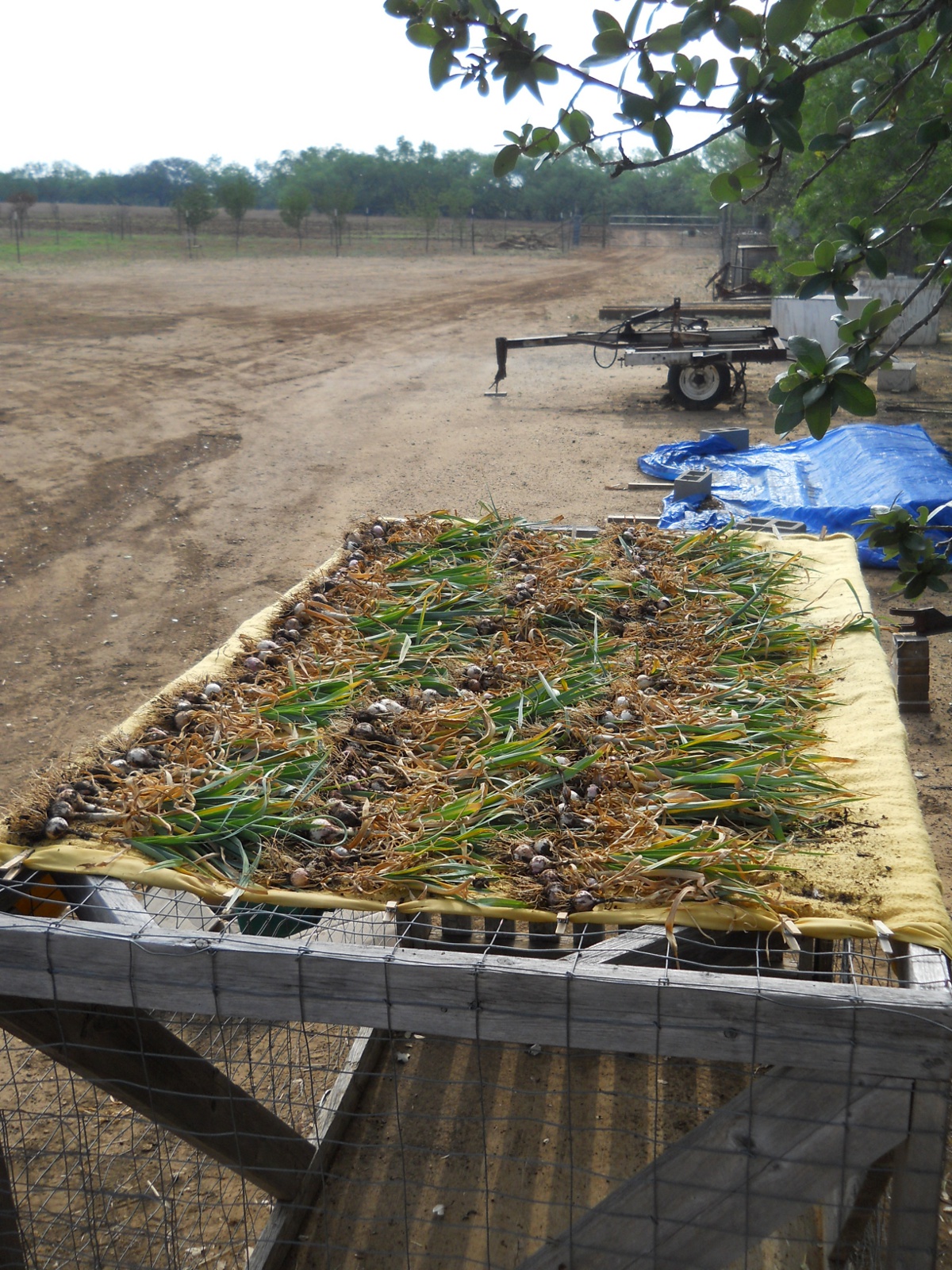
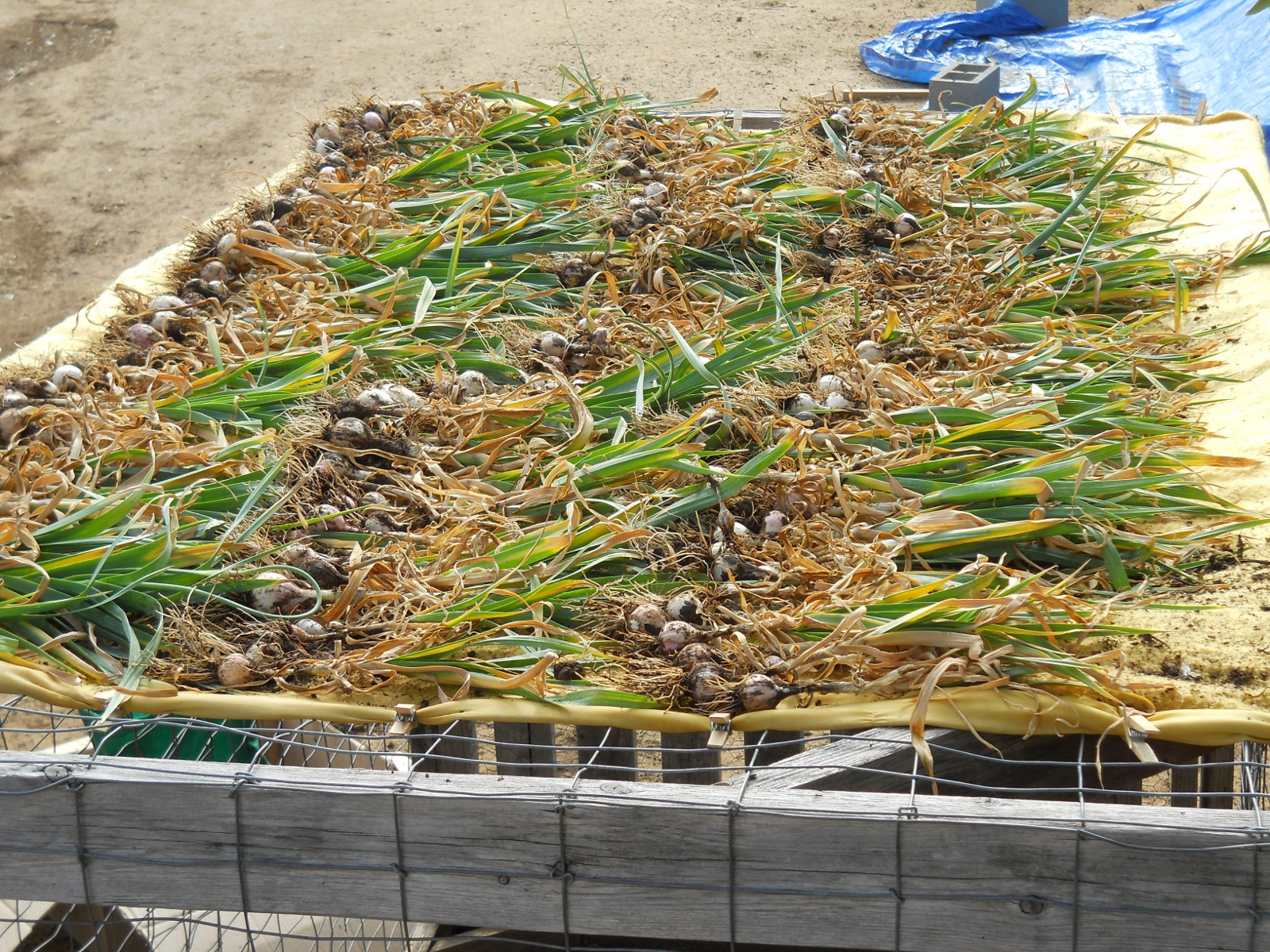
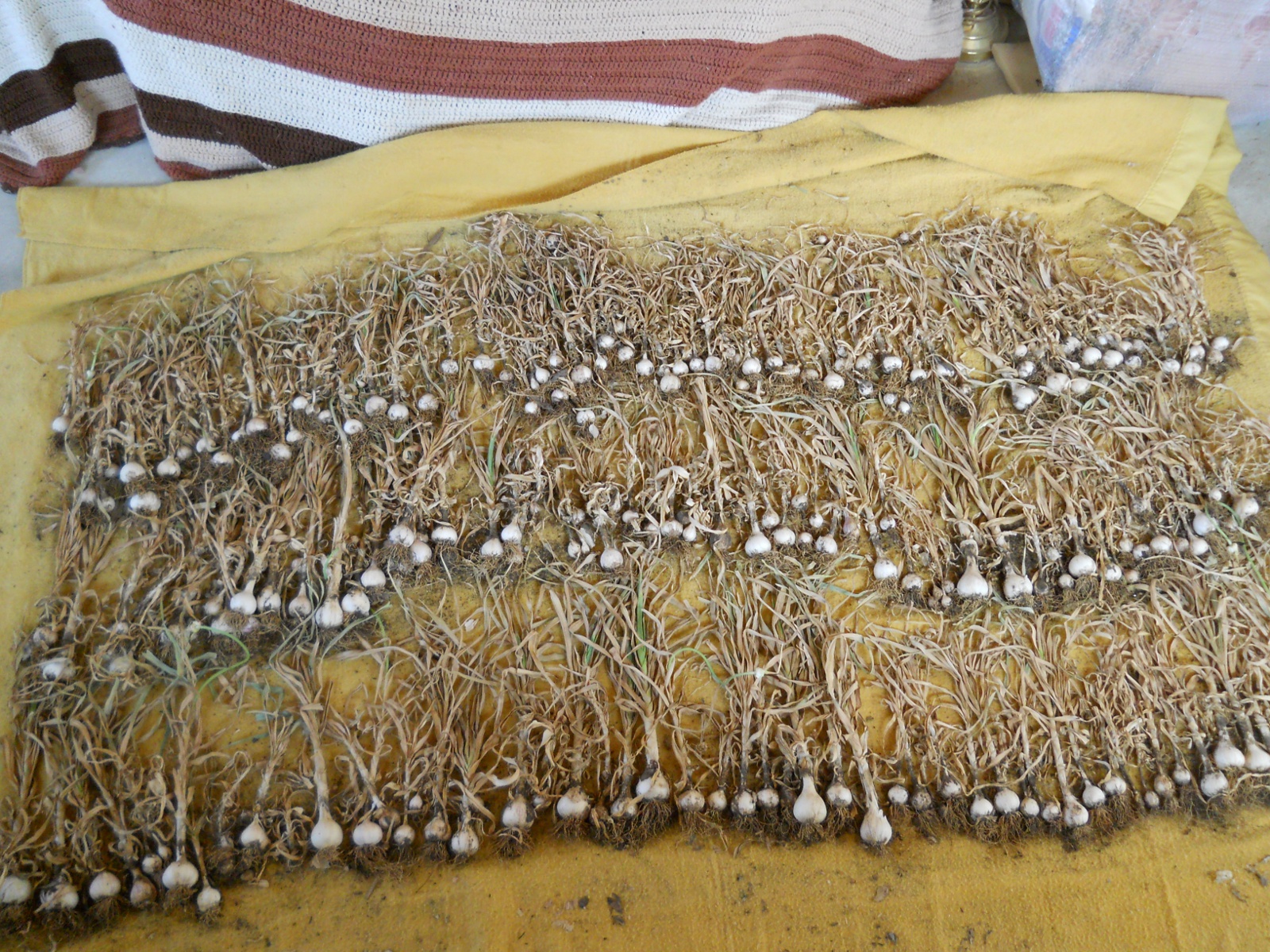
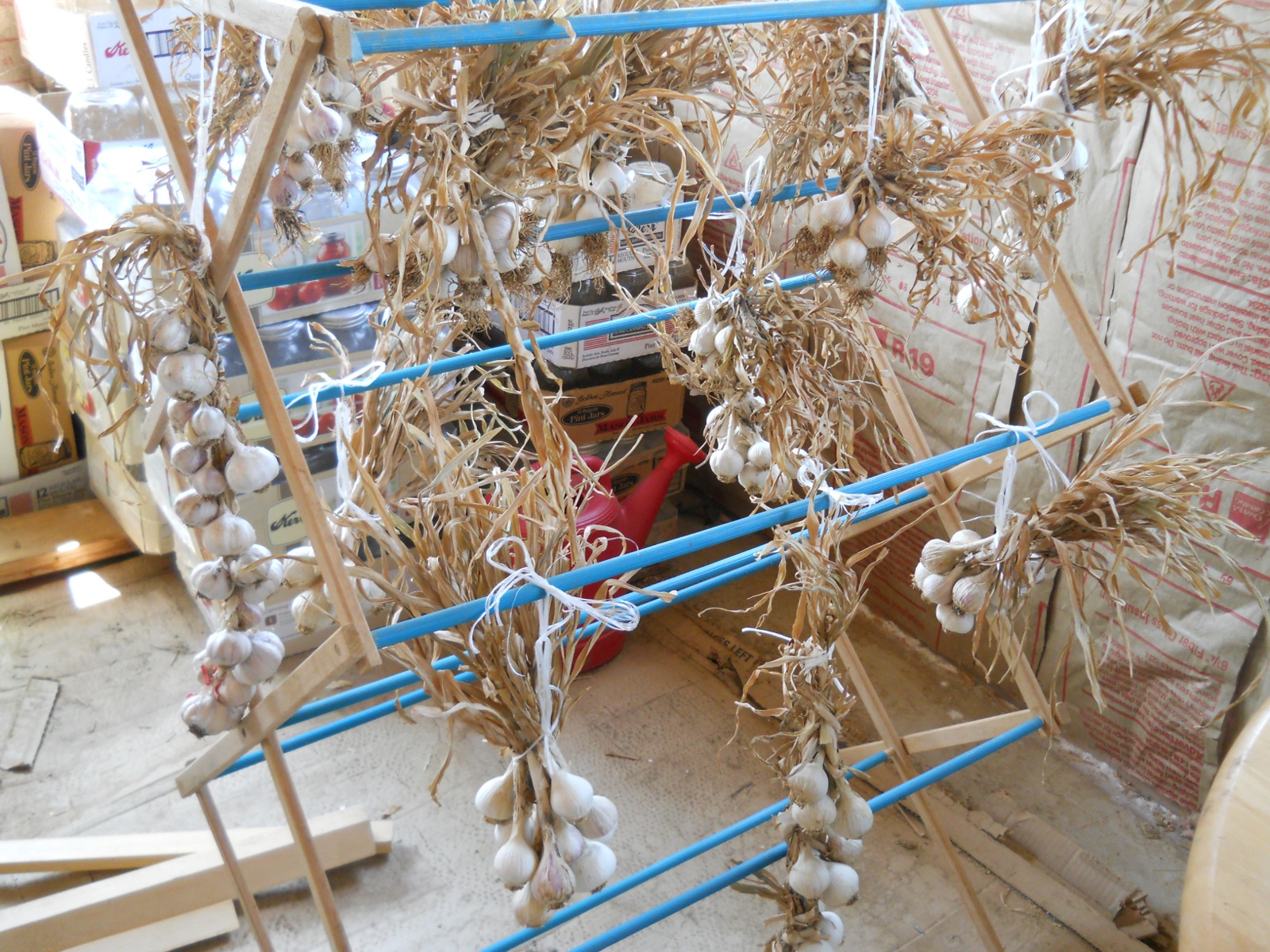
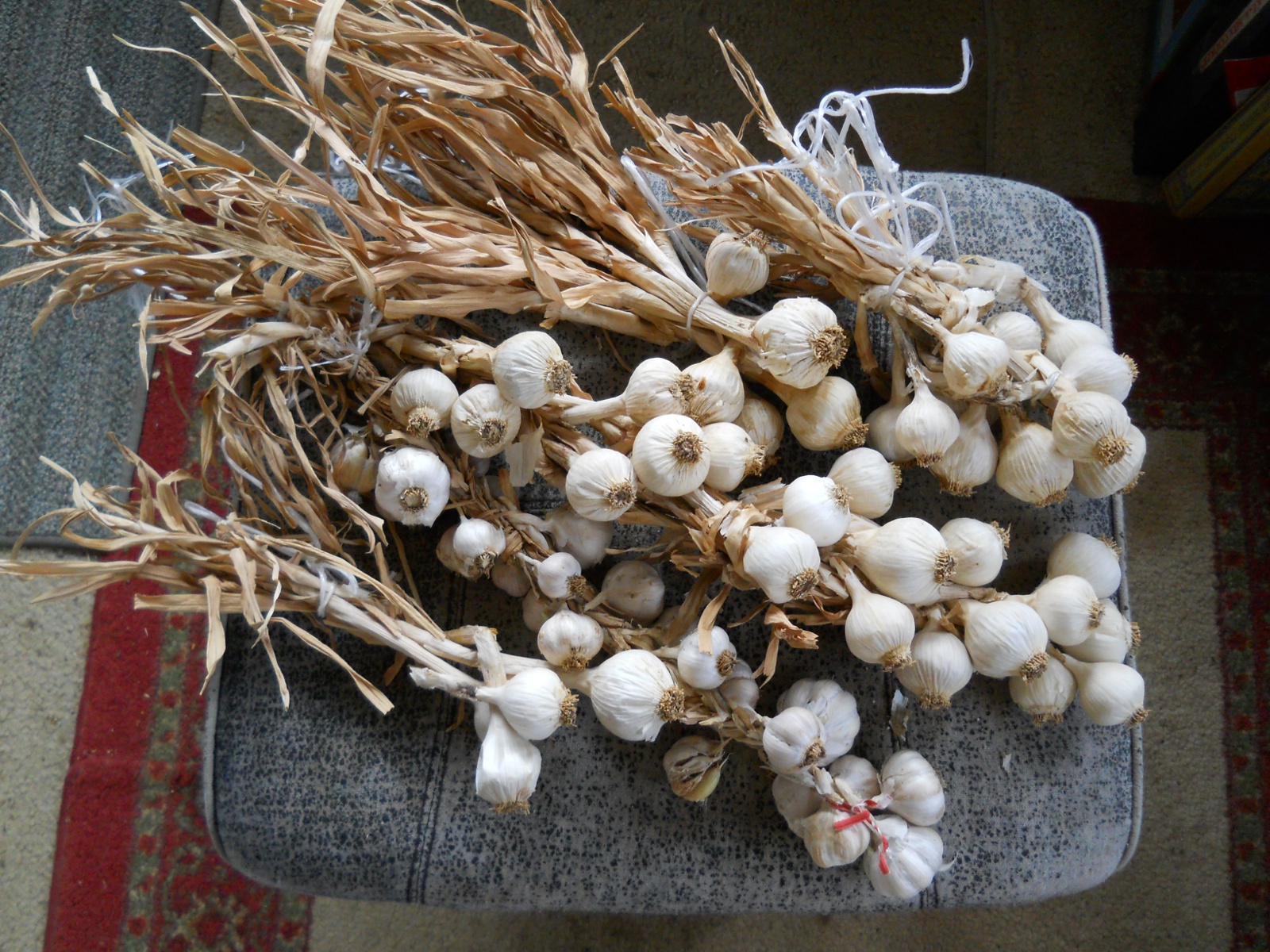
Here are the dried garlic stalks from last year:

Garlic 2012 Last Year's Garlic

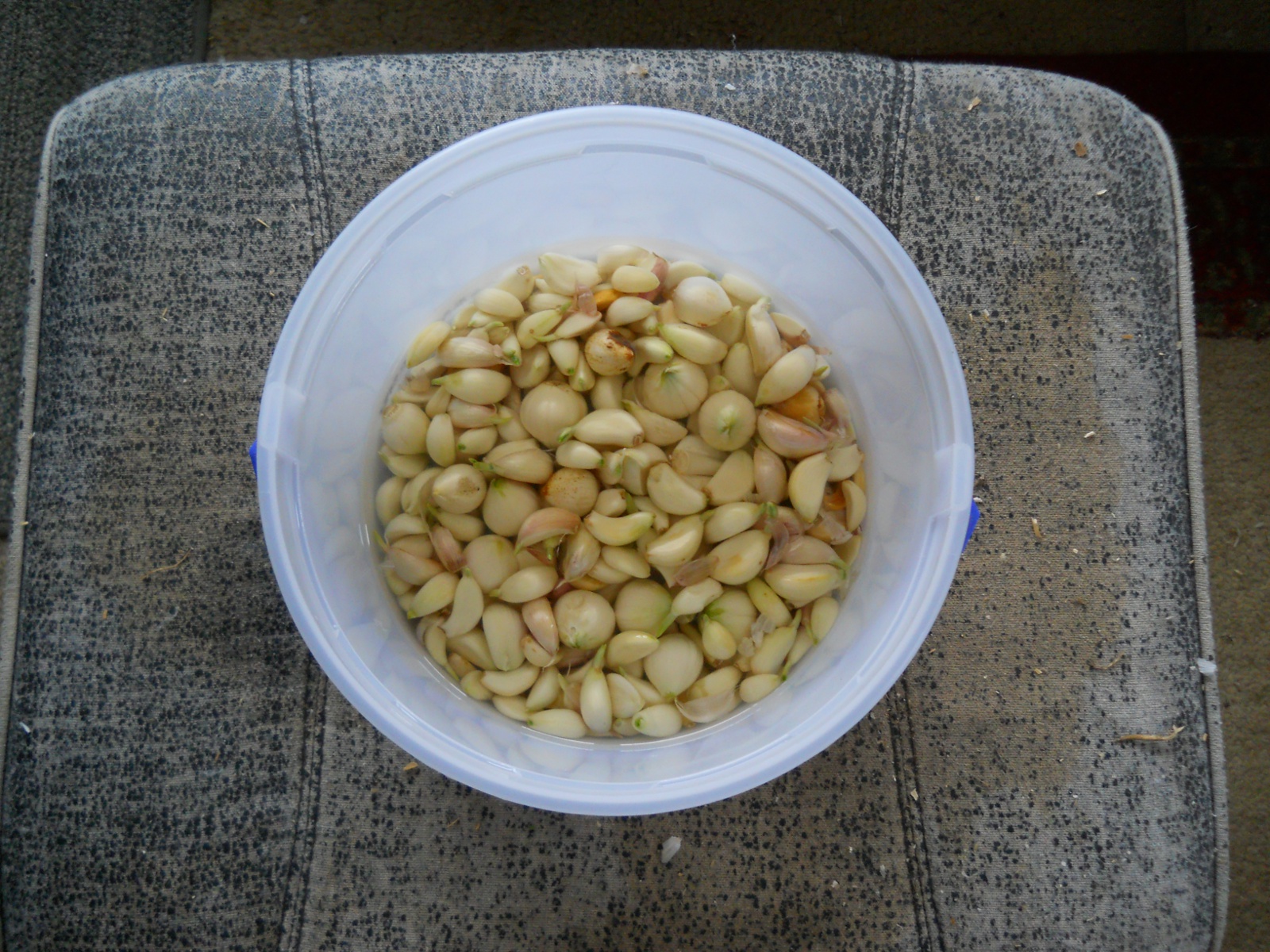
And here are the cloves soaking in preparation for planting (here is how we did the garlic preparation last year):

Garlic 2012 Soaking Cloves

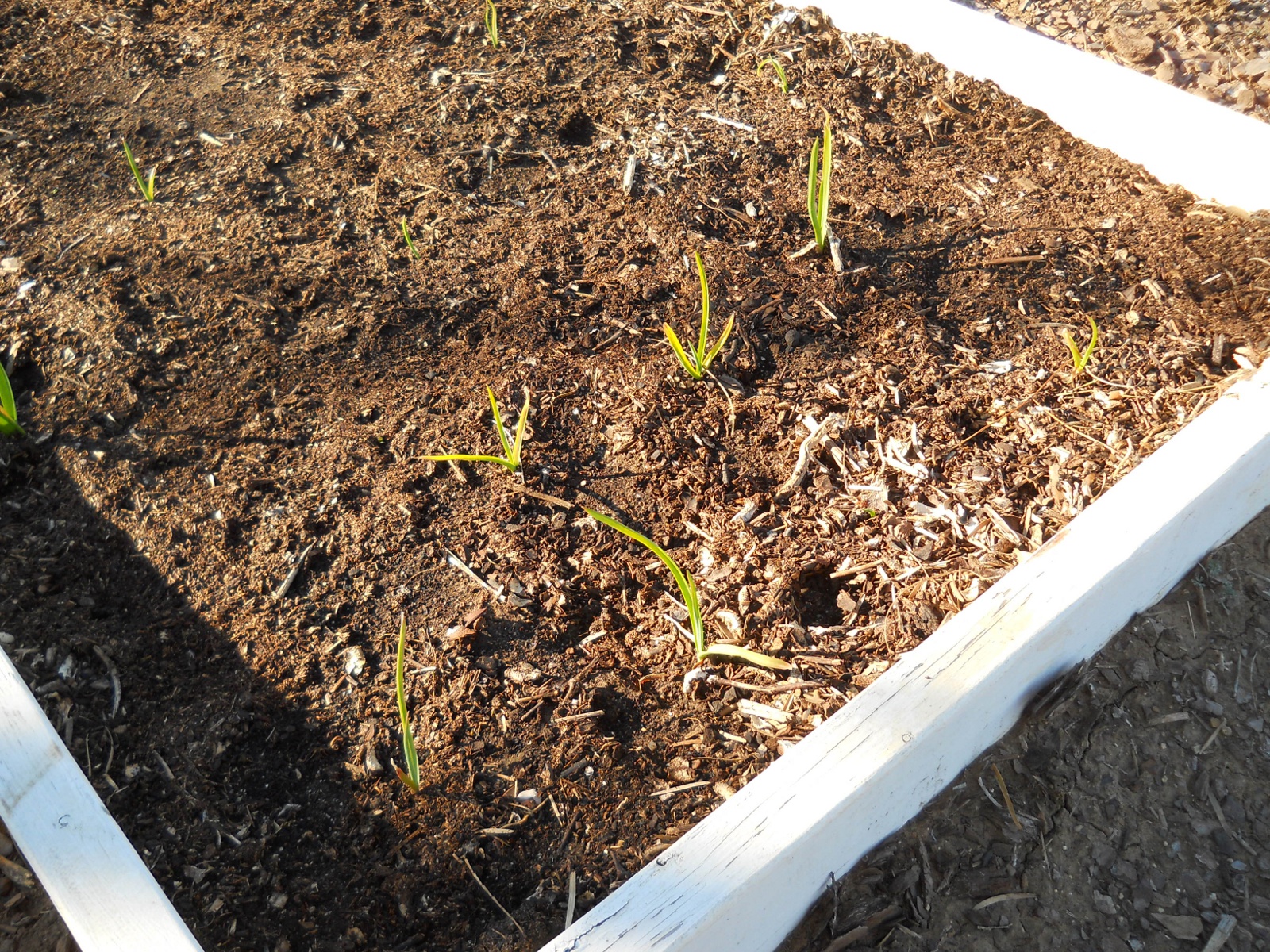
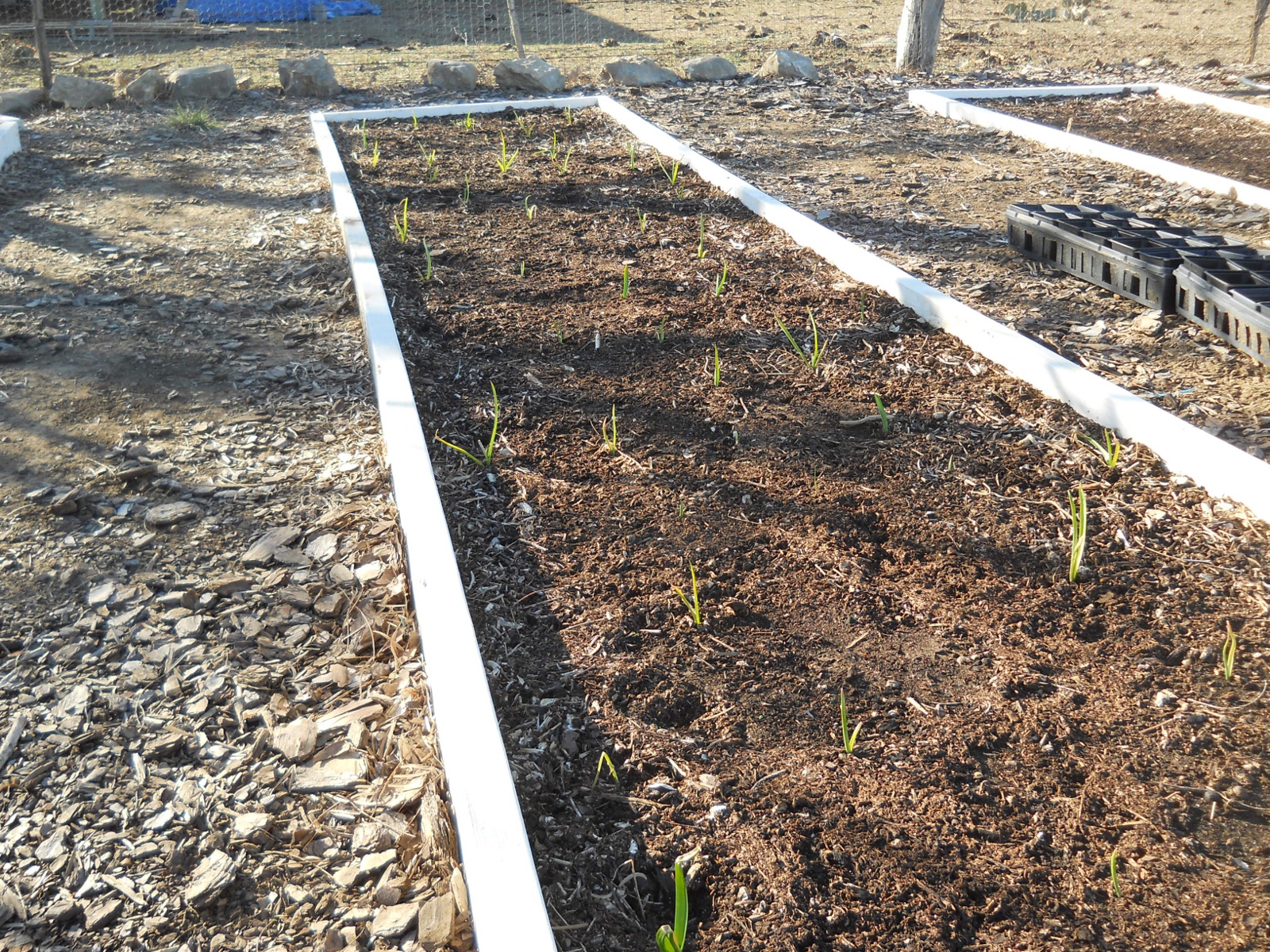
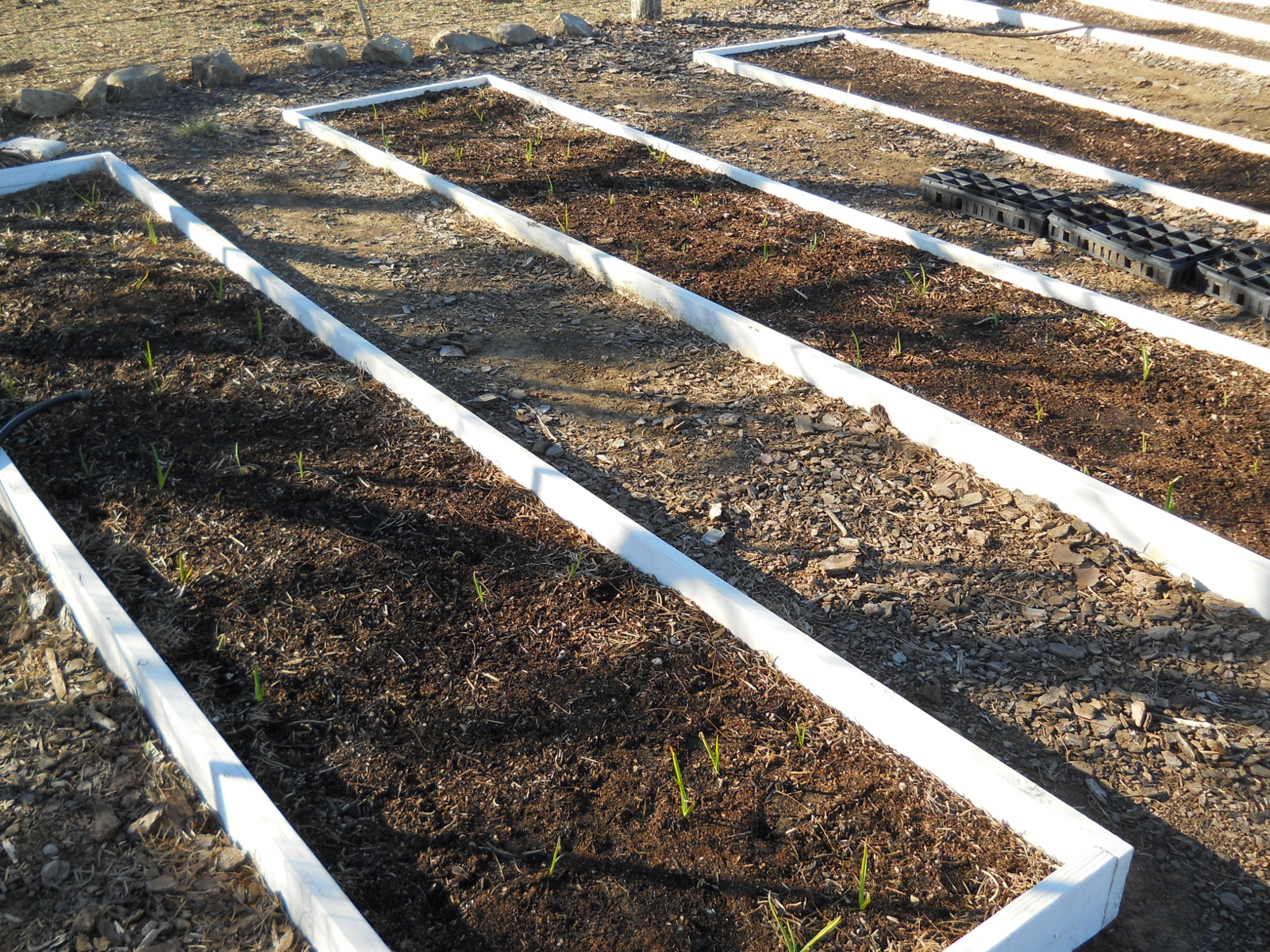
We got a bit of a late start, but here are a couple of current pictures of the growing garlic. I would that more of them had sprouted; but we know, as it is spiritually, that all that can be done by man is planting and watering, and the results are God’s, in accordance with His will:

1 Cor 3:7 – “So then neither is he that planteth any thing, neither he that watereth; but God that giveth the increase.

Garlic 2012 Planted with Growth
Garlic 2012 Planted with Growth Full Bed
Garlic 2012 Planted with Growth All Beds

We’re grateful for the opportunity to try to grow our garlic perpetuating it from the land only, and for the continued health benefits of being able to have garlic, and we pray that the Lord might grant a harvest in due season.

— David

Meat Dryer

In continued efforts to separate from the world, unto God, one of the things that keeps us currently tied to it is how we process the meat after butchering the animal. At this time, we typically fire up the freezer, running off the generator, and then Sue pressure-cans it all. Processing the meat this way has two main problems: 1) running a generator and an electrical appliance, both which require ongoing maintenance and can break; and 2) using a canner, which also can require maintenance, and for us requires propane. Now, one can pressure-can using a wood burner; but it’s apparently not very easy to do correctly; and still, the canner can lose parts or require replacement ones.

And so, how was it all done before there were these things we use today? Or even, how is it done by people today who don’t have them either?

If you’ve studied this at all, you’ll know that salt is typically used for preserving meats; but what do you do with it after that, especially when dealing with larger quantities of meat? Again, with further study, even today, especially in countries where freezers, etc. aren’t available, the meat is hung in the wind to dry — the air helping pull out the moisture — the seed bed of bacteria — out of the meat. And this can be done any time during the year.

Excellent!

And so, I wanted us to start heading down this direction. With all of the insects we have during the warmer months, I really wanted our place of drying to be enclosed in some way; but in looking for ideas on the Internet, there really weren’t many I could see — it appears in the countries where they process meat like this, they just simply hang it up in the open air. Still not really wanting to do that, I started to try to put a design together myself. And so, the plan was to have something that had removable doors, was screened in, and allowed the hanging of lots of meat of all different lengths.

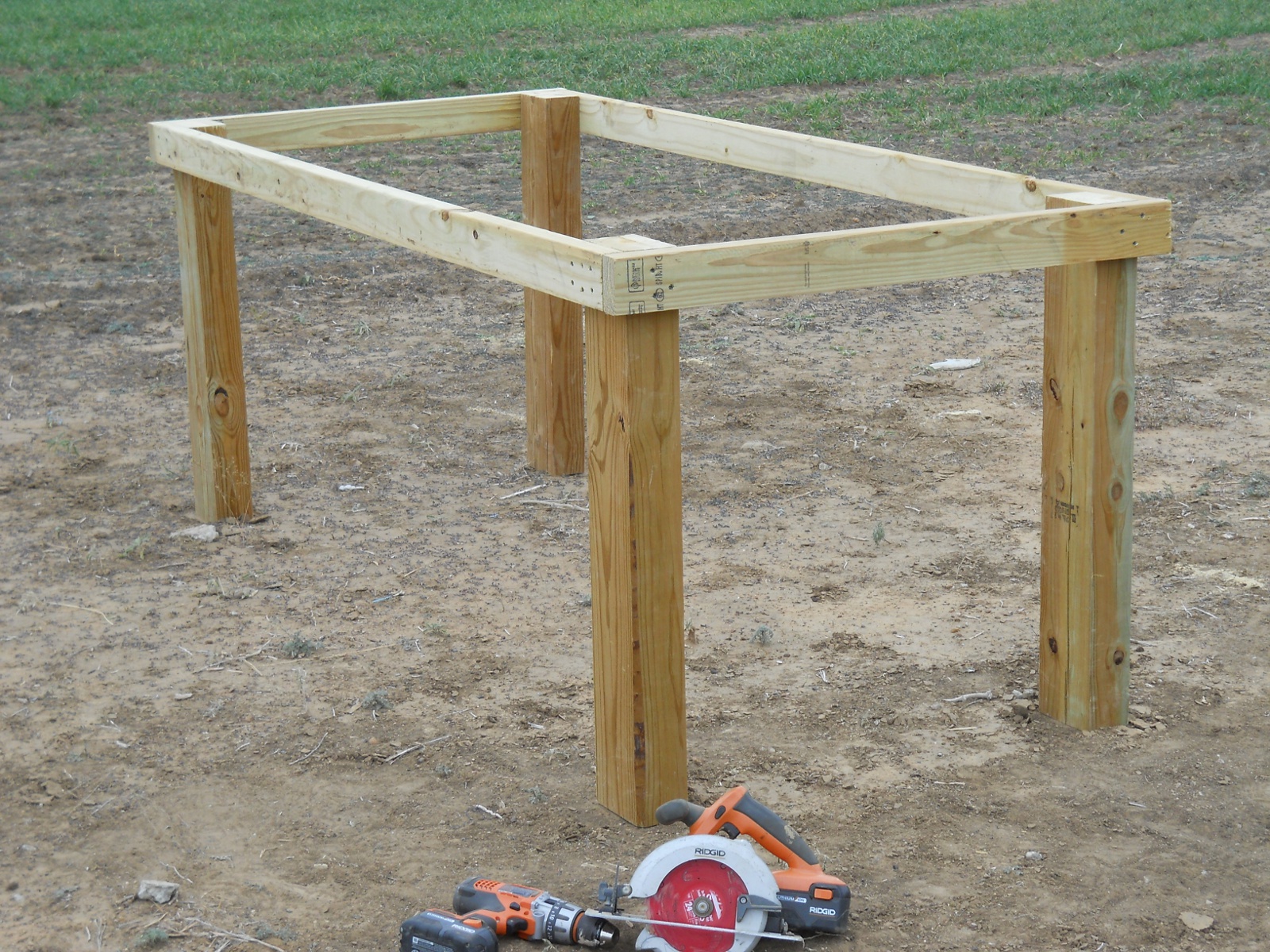
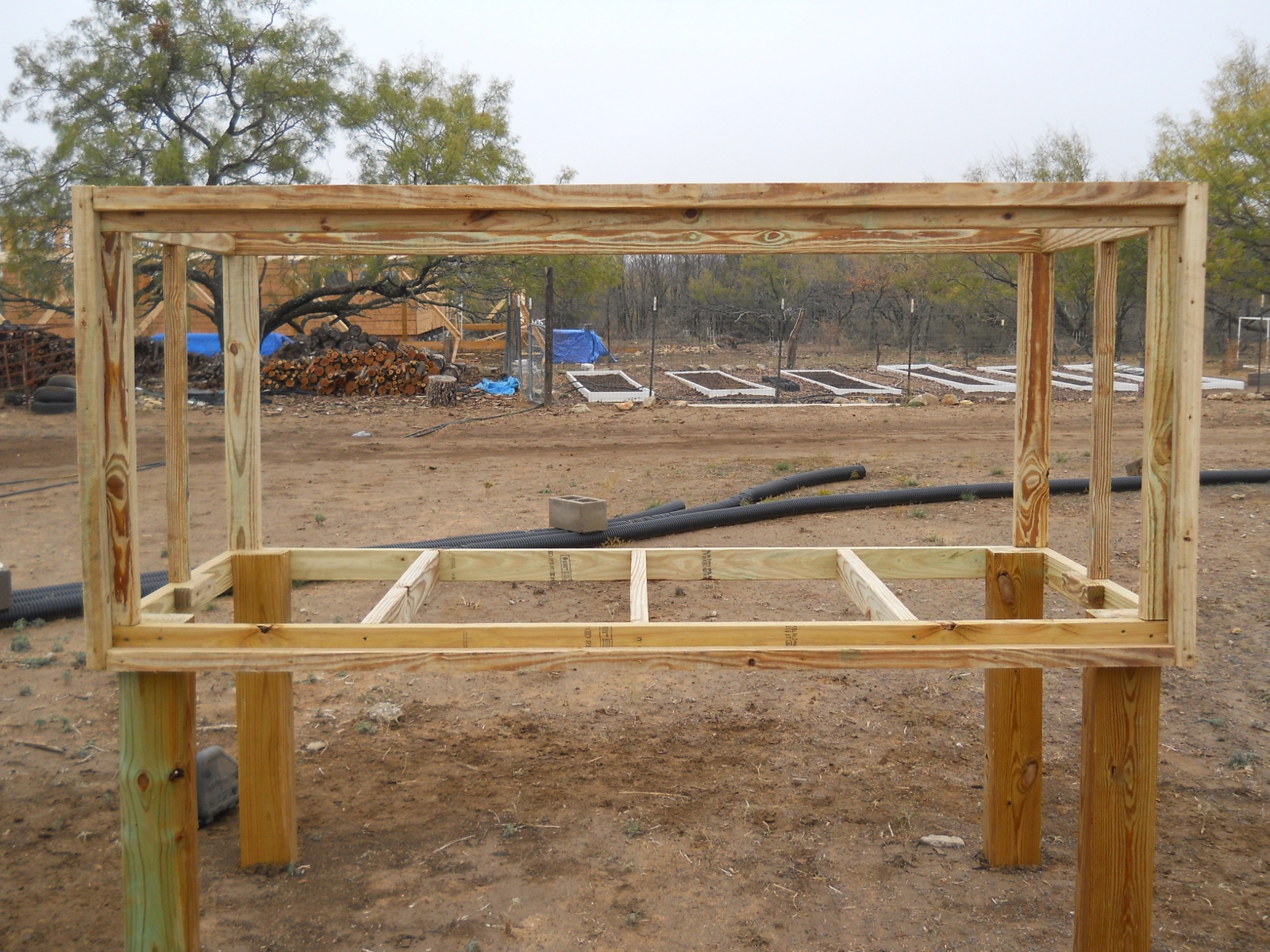
Using left over sections that were cut off from our house porch posts, I made a base frame using them and treated 2x4s. The overall plan was to use as little wood as possible, being able to fit the dryer’s frame under one piece of plywood as a roof, allowing for a little bit of roof overhang all around. I had originally thought about making a large dryer, but then figured I wouldn’t use that many more materials if I made multiple dryers instead as needed, and they would be somewhat portable:
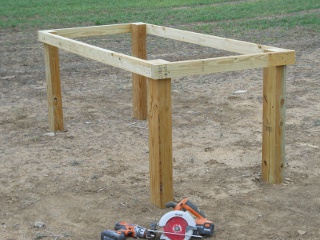
Meat Dryer Base

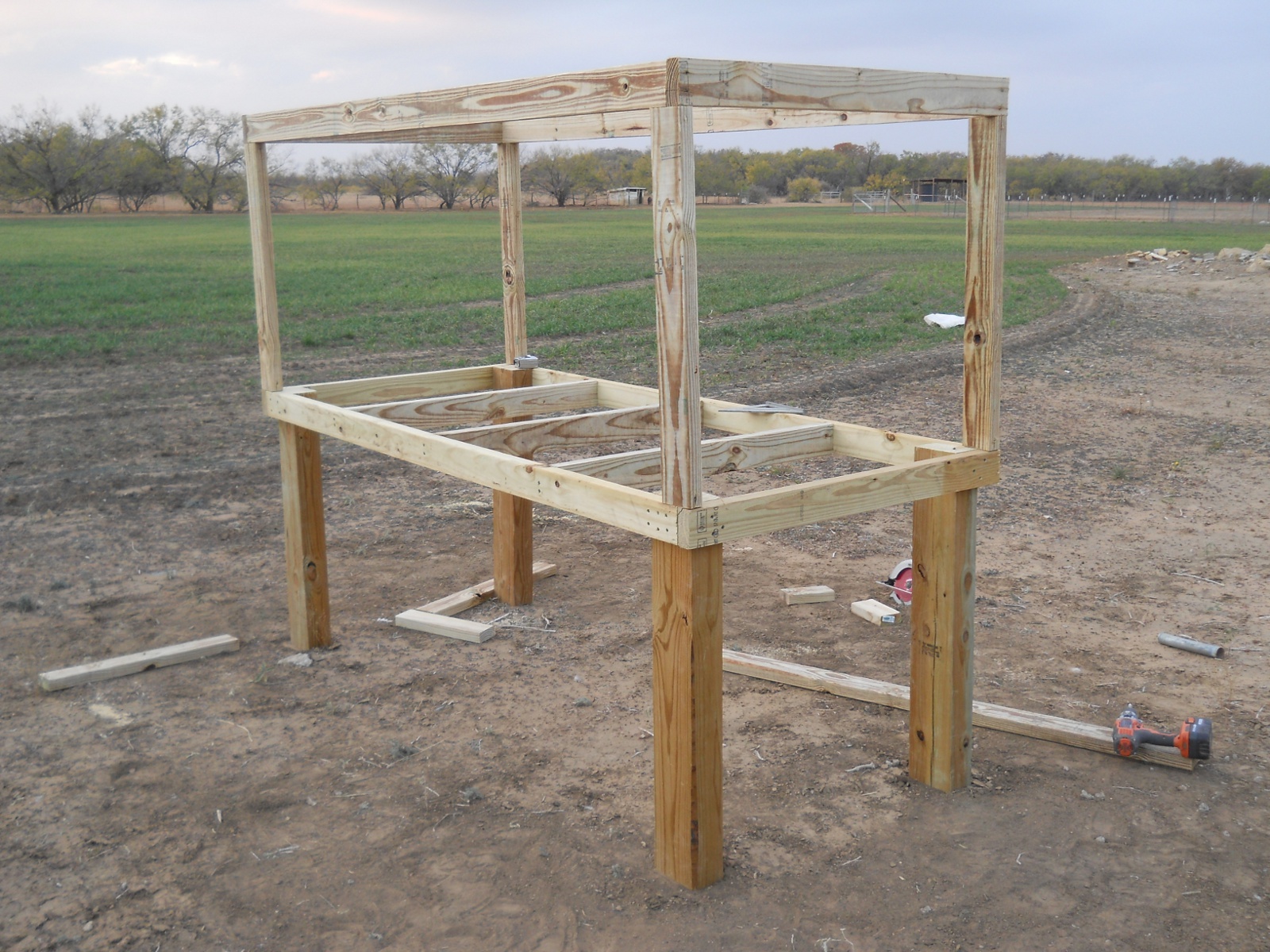
And then added the main frame and bottom frame joists:
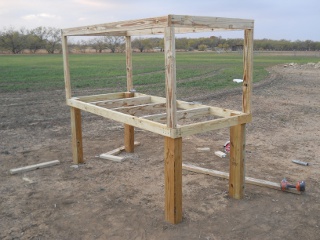
Meat Dryer Main Frame

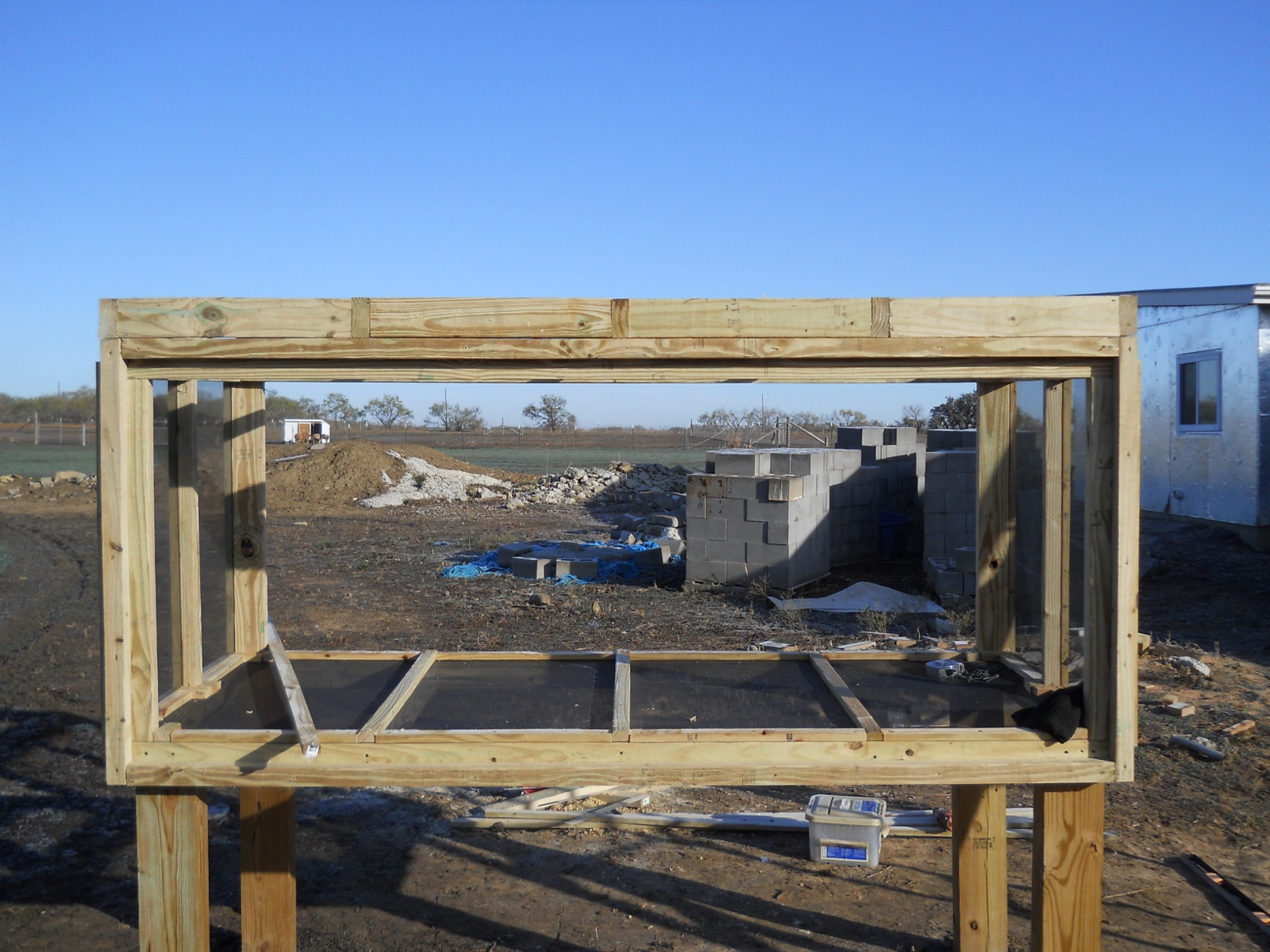
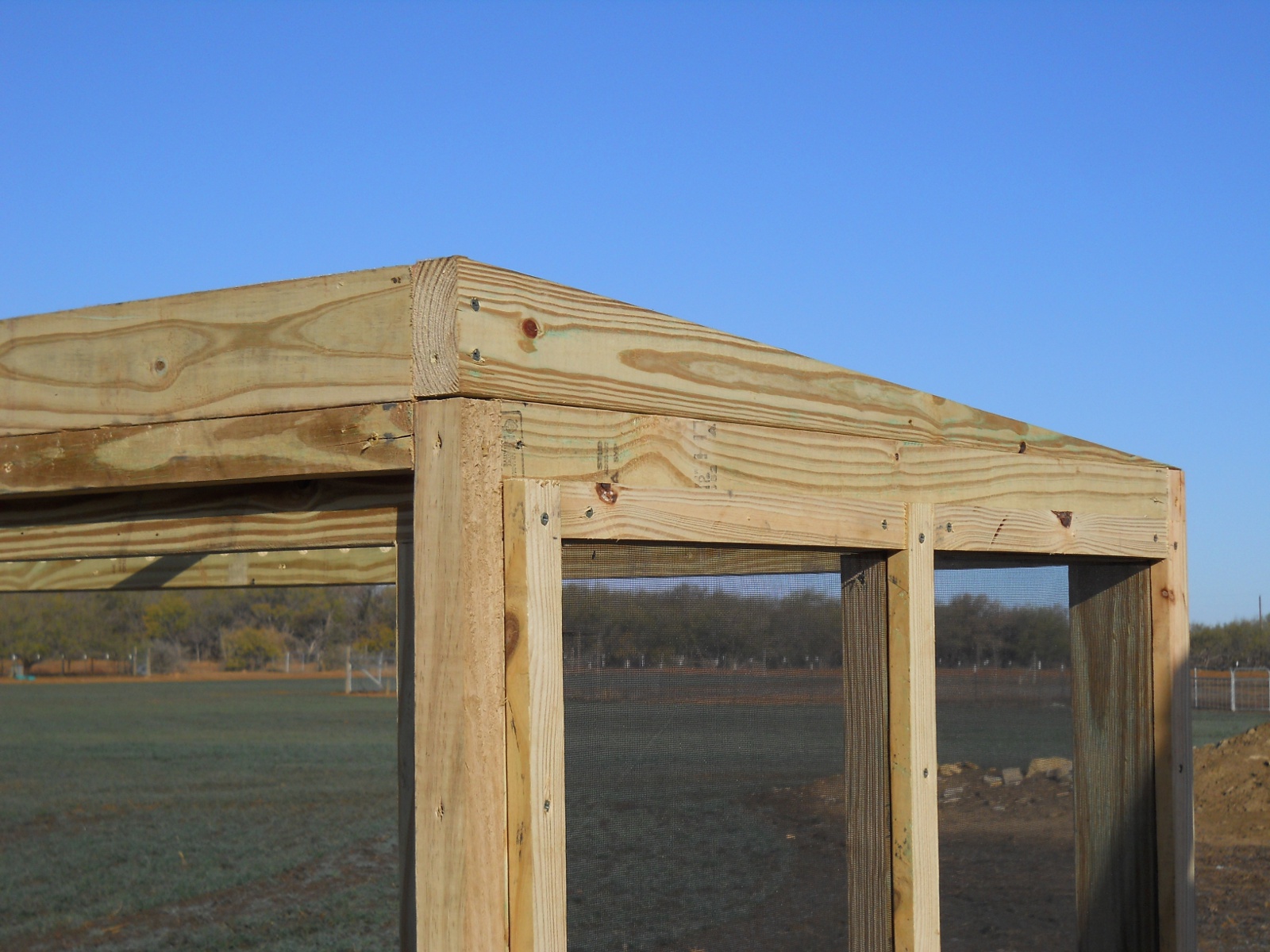
And I planned for the removable doors to fit inside a frame, which is shown here:
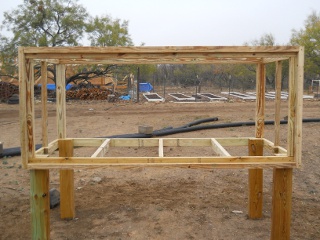
Meat Dryer with Screen Door Frame

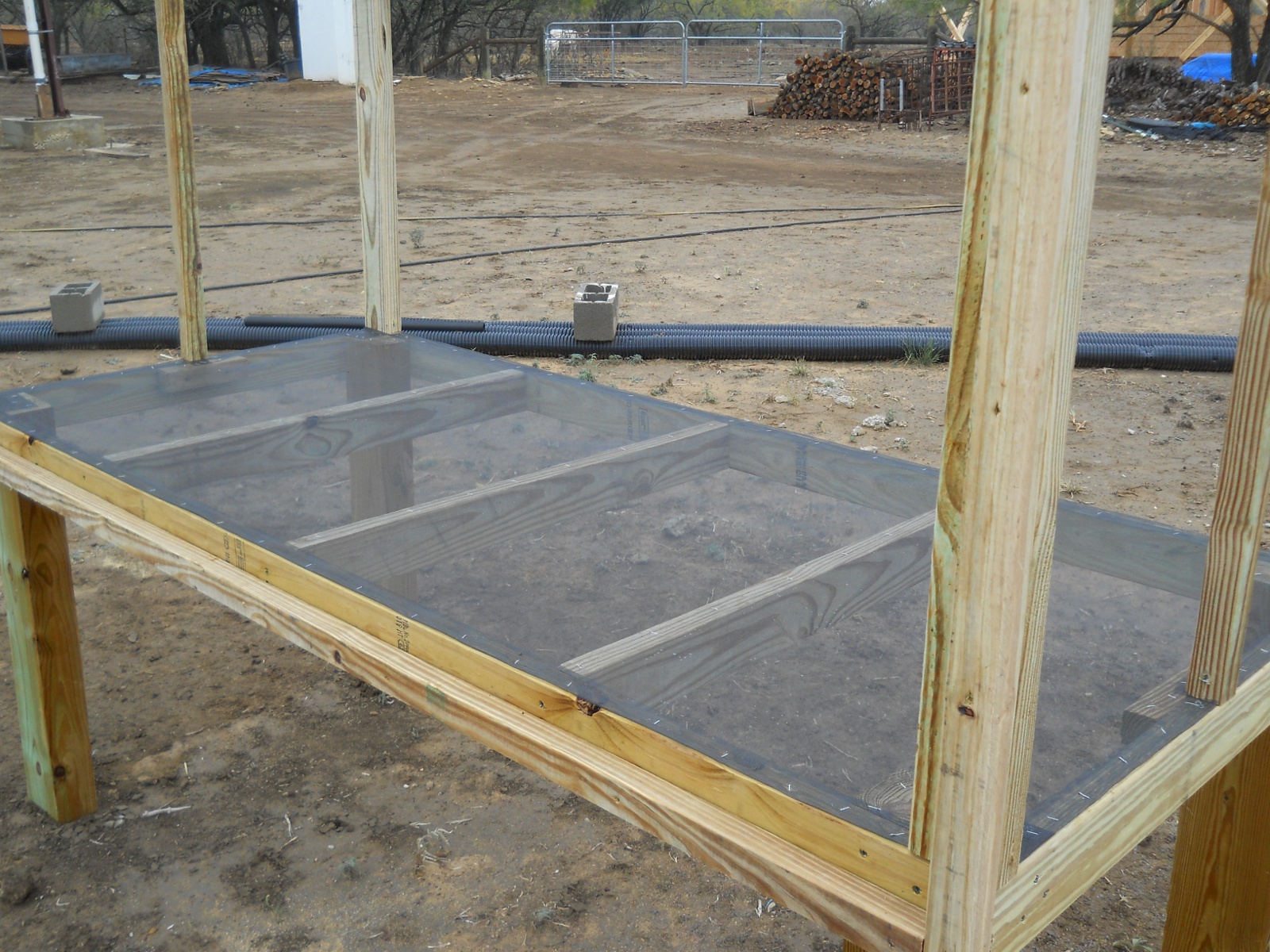
Here is the bottom of the meat dryer with the screening in place:
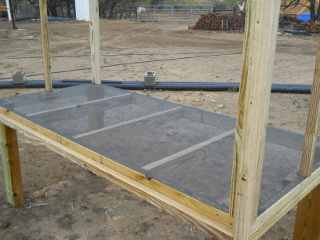
Meat Dryer Screened Bottom

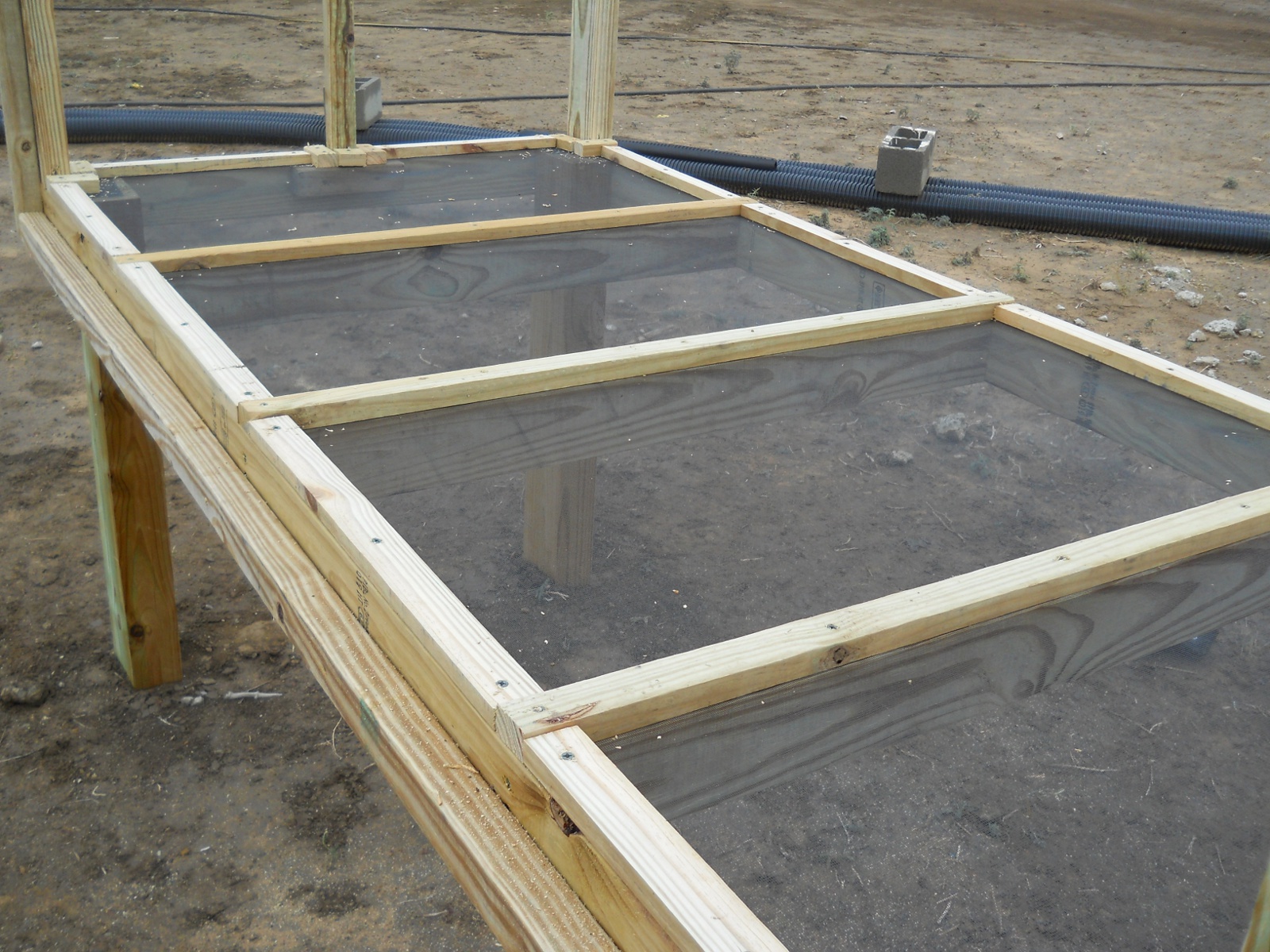
And frame strips in place to hold on the screening. The strips are made by ripping the 2x4s into 4 strips each and then cutting to size. They are held by screws, as I wanted to be able to remove them to replace the screening if necessary. I also cut them to size to run counter to the bottom frame/joists connections (the strip would overlap where the joist butted up to the frame), to make it stronger; but next time, for expediency sake, I may place them in the same directions as the frame and joists:
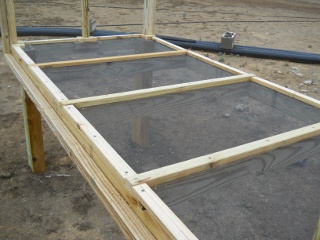
Meat Dryer Screened Bottom with Frame

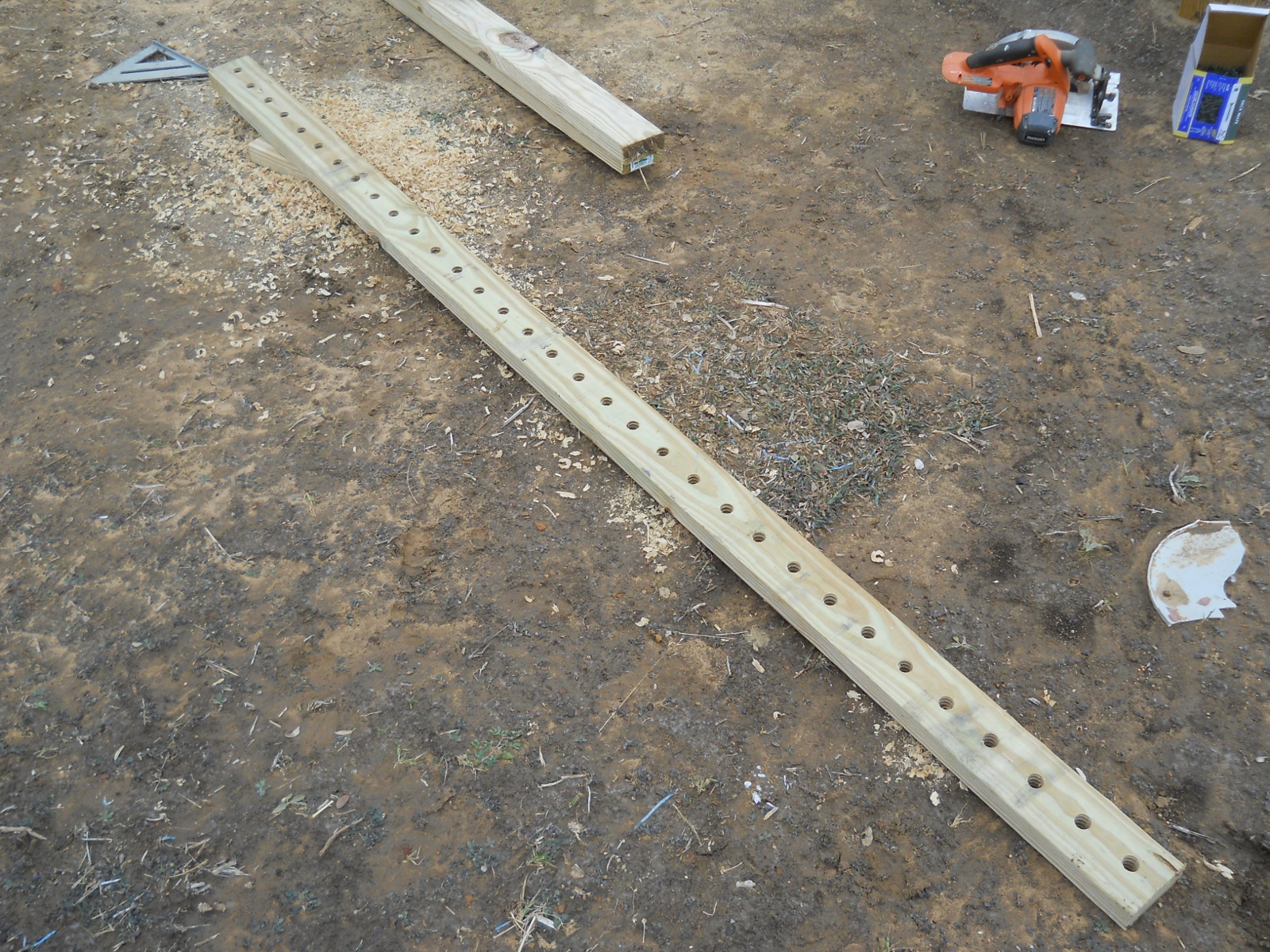
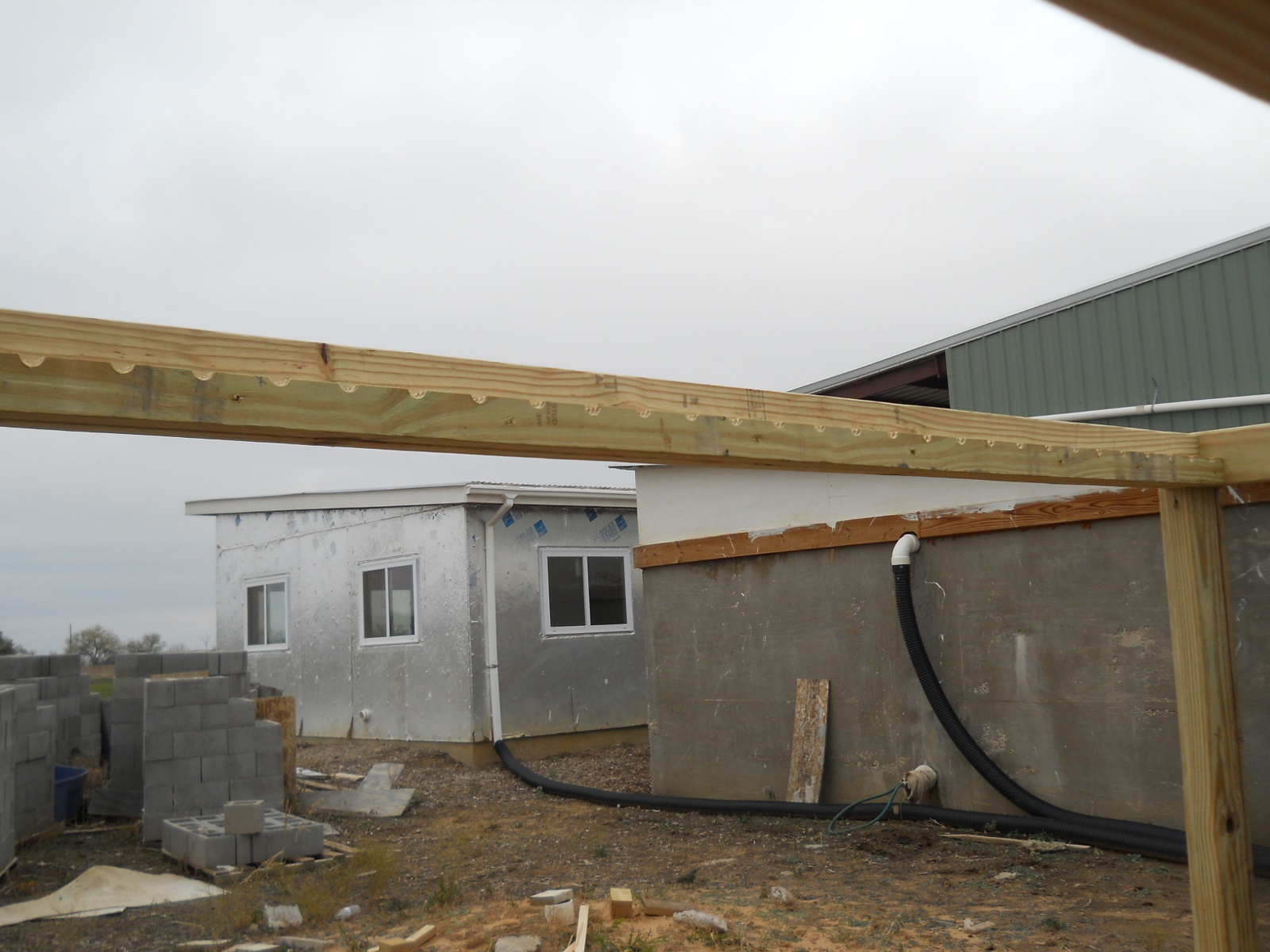
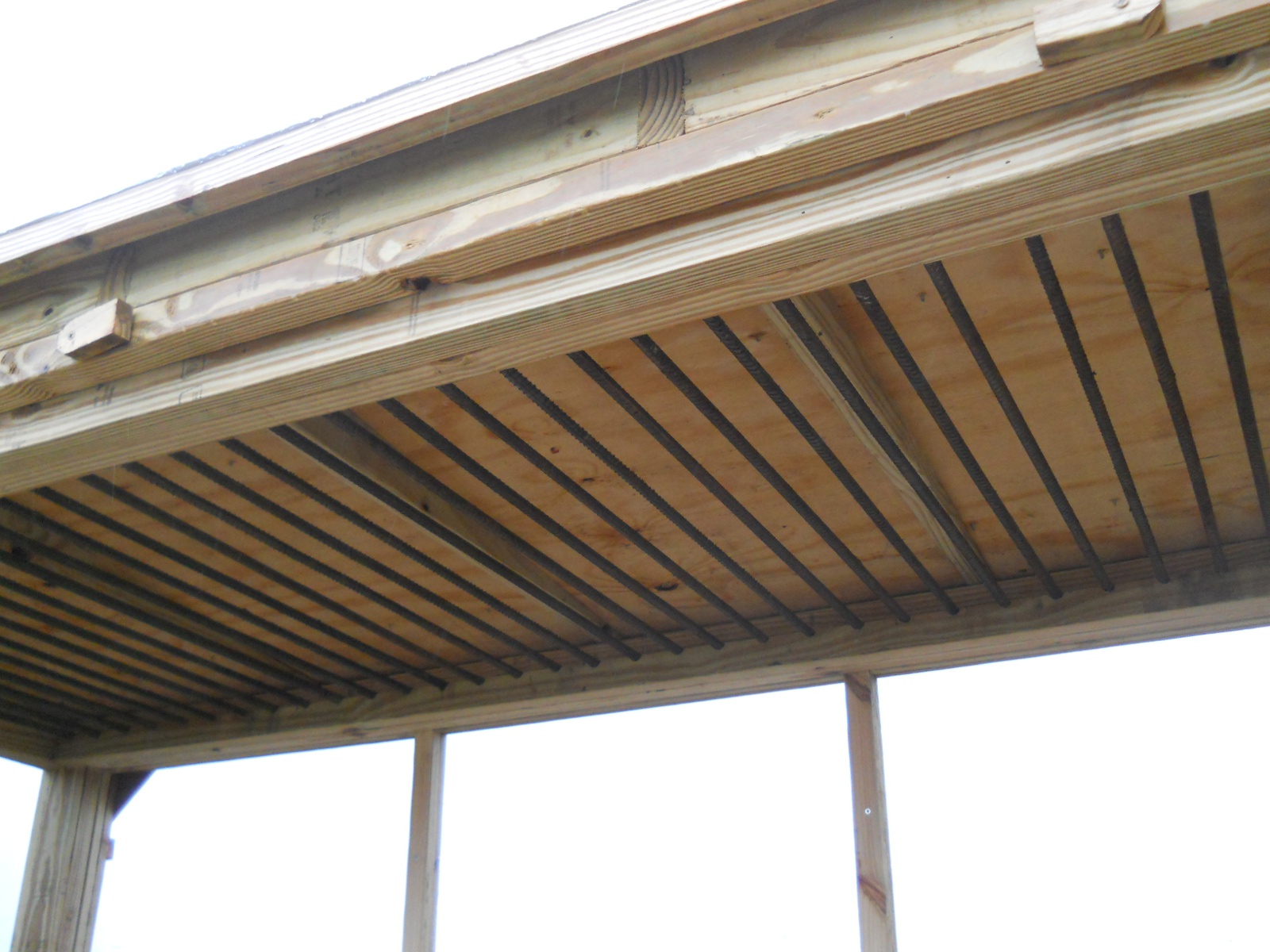
I thought to use rebar on which to hang the meat hooks. I was going to hang rebar from wires that were hanging from the roof rafters; but one of the men here suggested I take a 2×4, drill holes along it, rip it in half, and us the half circles as the rebar holders. Great idea!
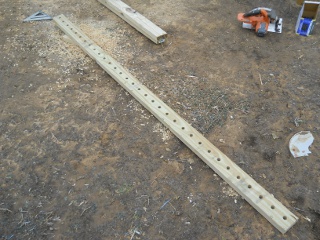
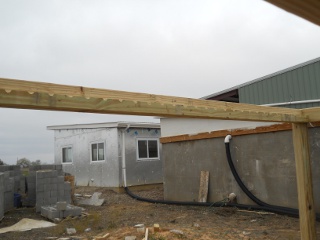
Meat Dryer Rebar Holder Before Being Ripped in Half
Meat Dryer Rebar Holder in Place

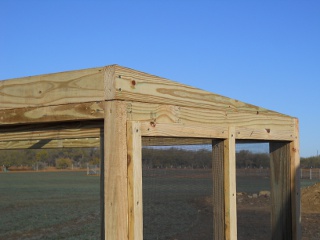
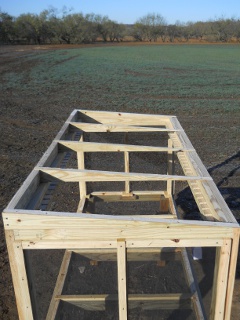
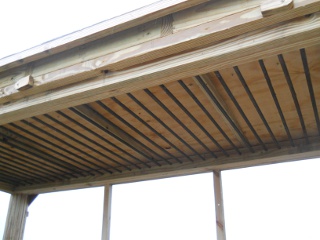
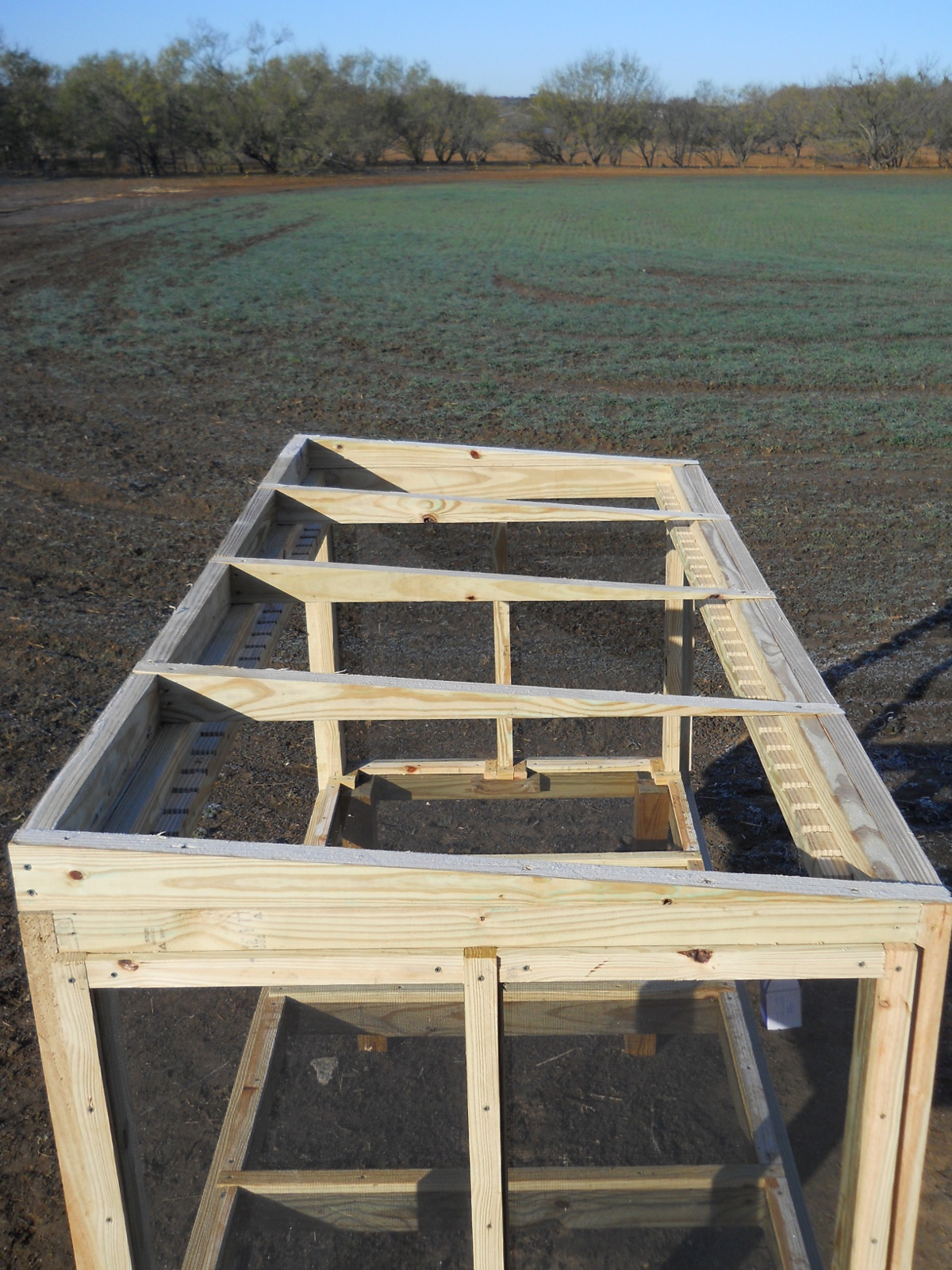
Here are the roof rafters and blocks in place:
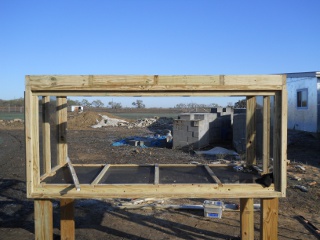
Meat Dryer Roof Rafters/Blocks, Front View
Meat Dryer Roof Rafter/Block, Side View
Meat Dryer Roof Rafters/Blocks, Top View

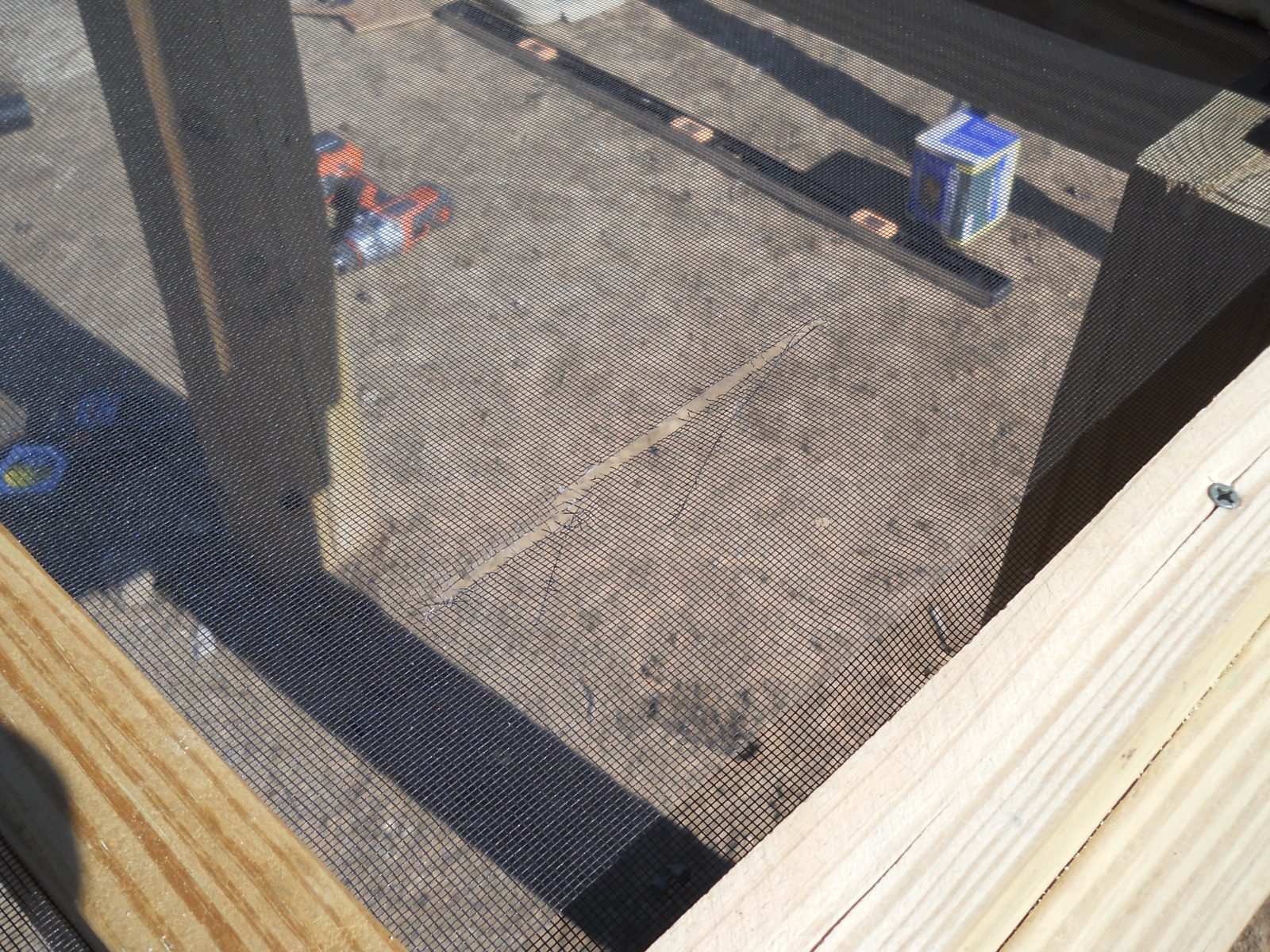
With the bottom screening in place, the one thing I told myself was, “Do not drop anything on it.” Well, that didn’t last too long:
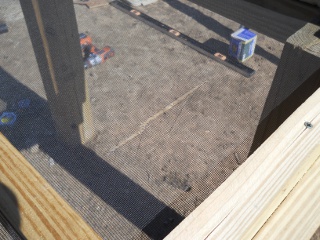
Meat Dryer Hole in Bottom Screening

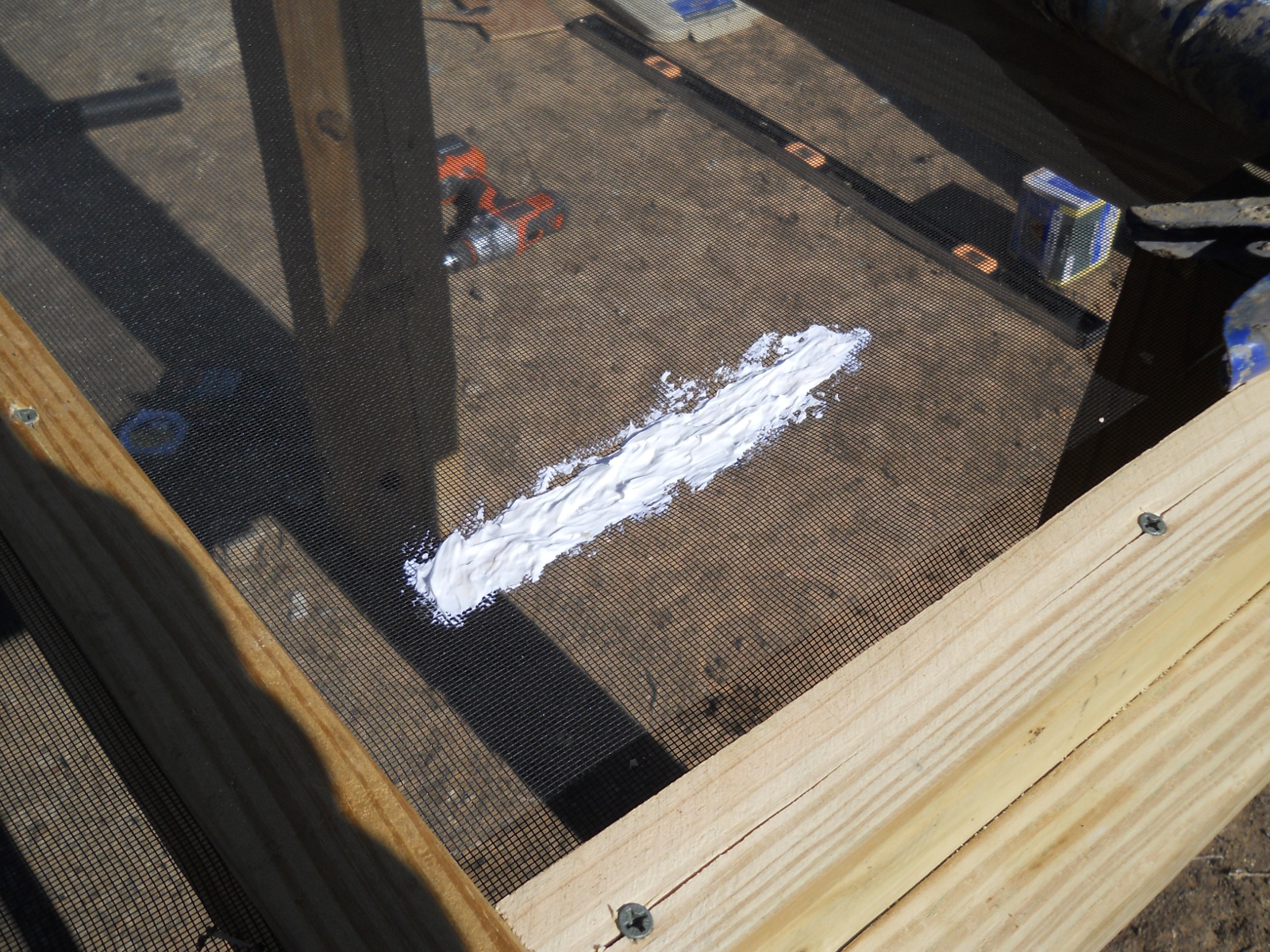
Oops. It was the thin corner of the roof rafter that got away from me. And so, I caulked it:
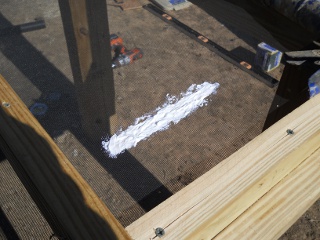
Meat Dryer Hole in Bottom Screening, Caulking Applied

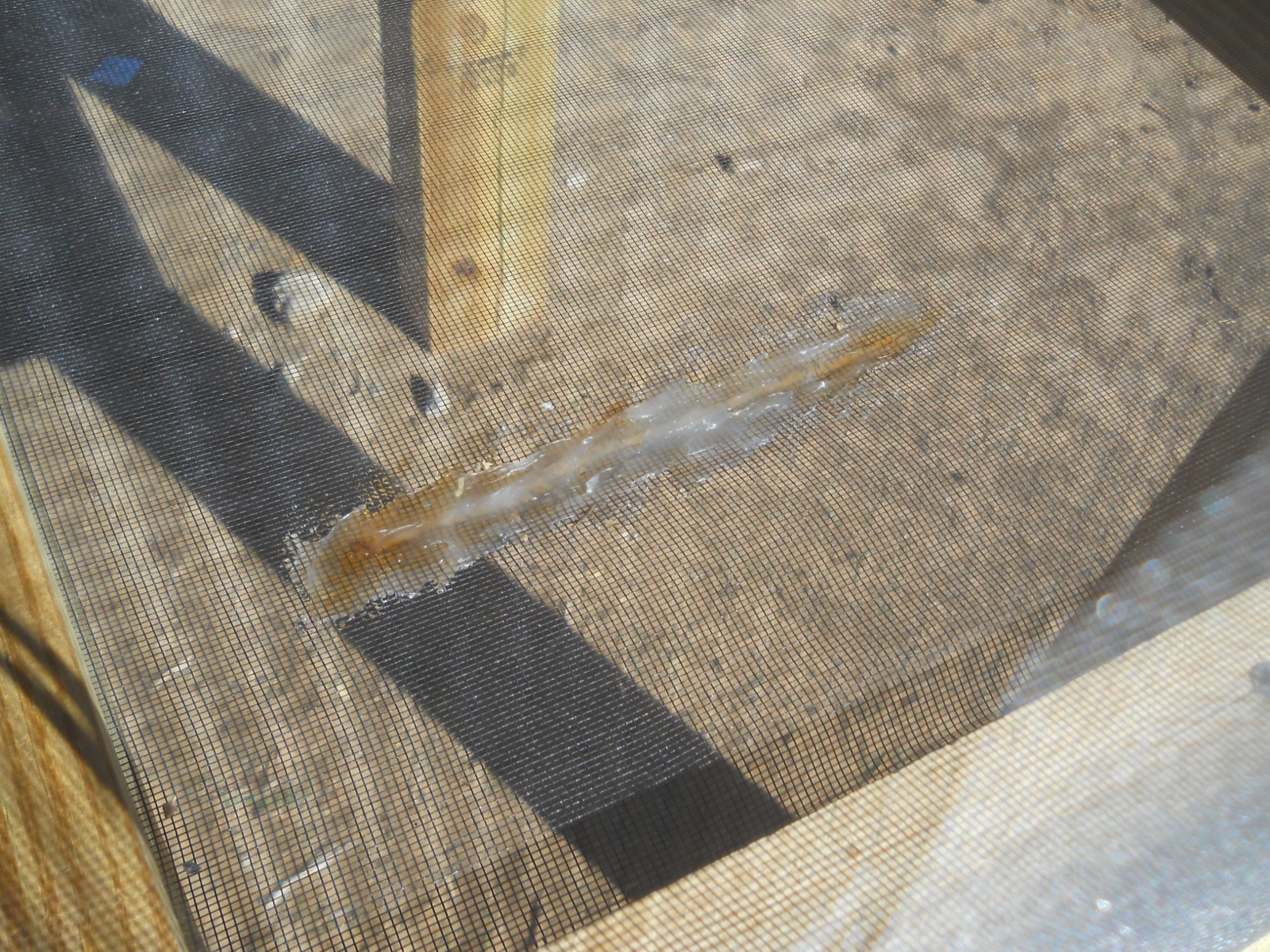
And here it is pretty much dry. I purposely designed everything (with screws, etc.) so that I could fairly easily replace the screening if I ever need to:
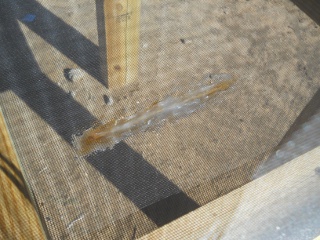
Meat Dryer Hole in Bottom Screening, Dry Caulking

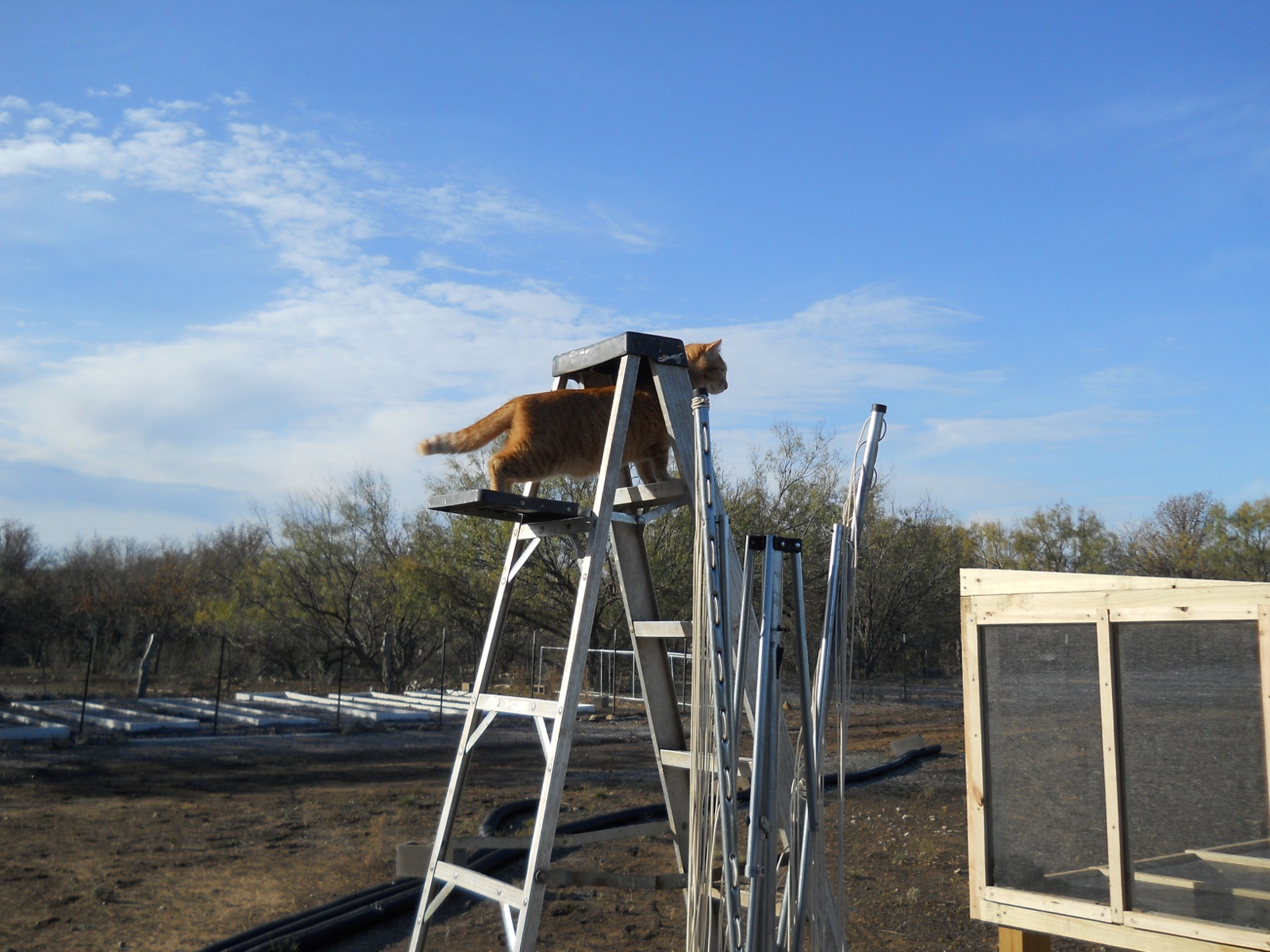
With Gary, the goose we use to have, being gone and no longer able to supervise as foreman, our cat, William, has apparently taken over:
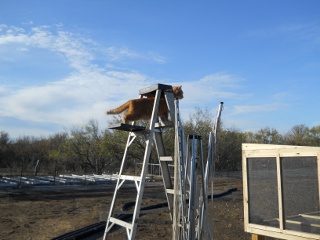
William the Cat Supervising Meat Dryer Construction

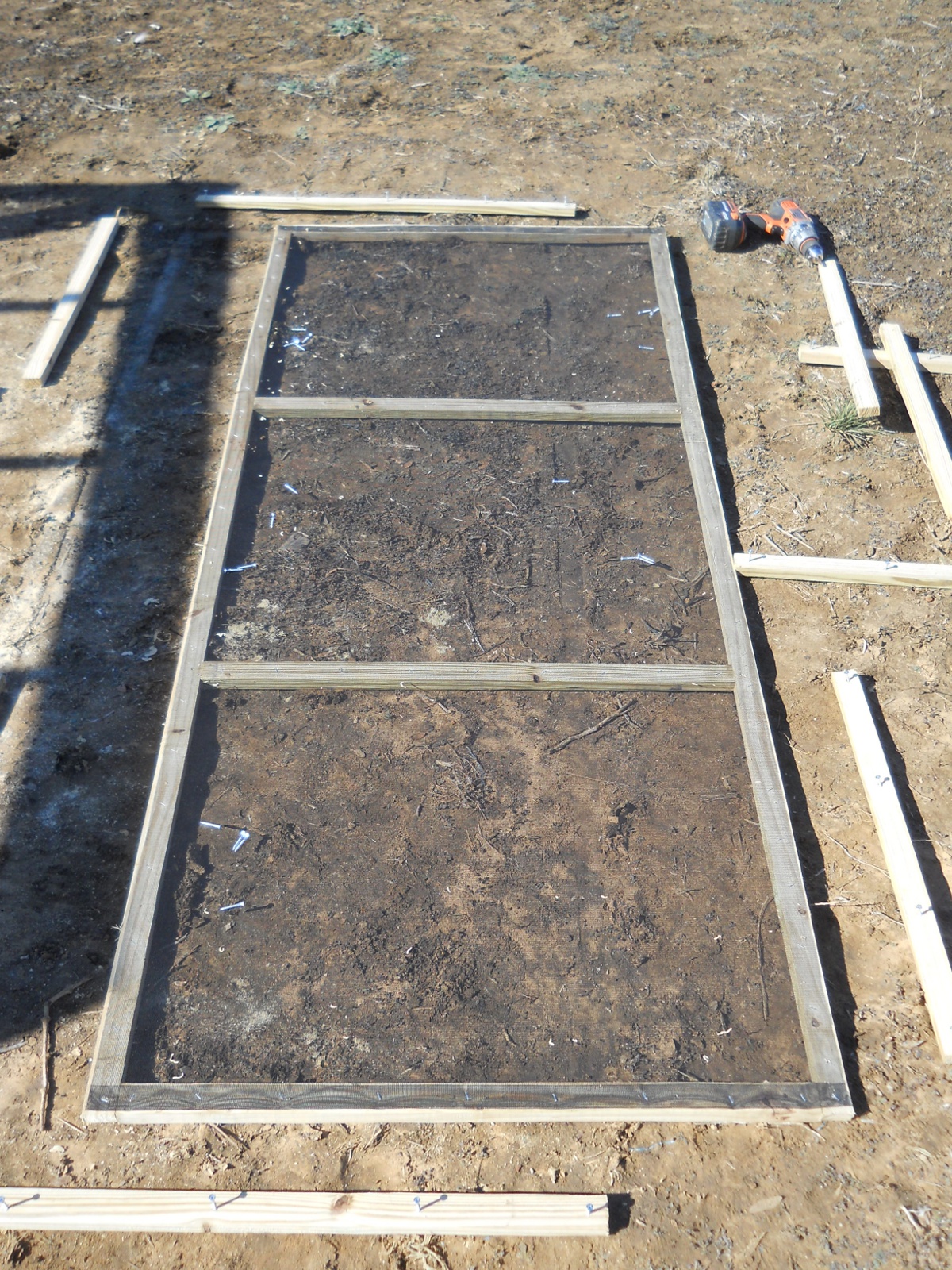
Here is the first frame of the removable screen door with the screening stapled in place:
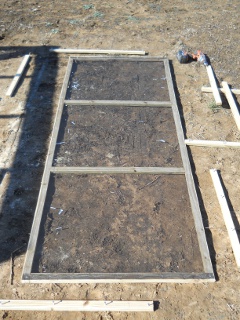
Meat Dryer Screen Door Screening in Place

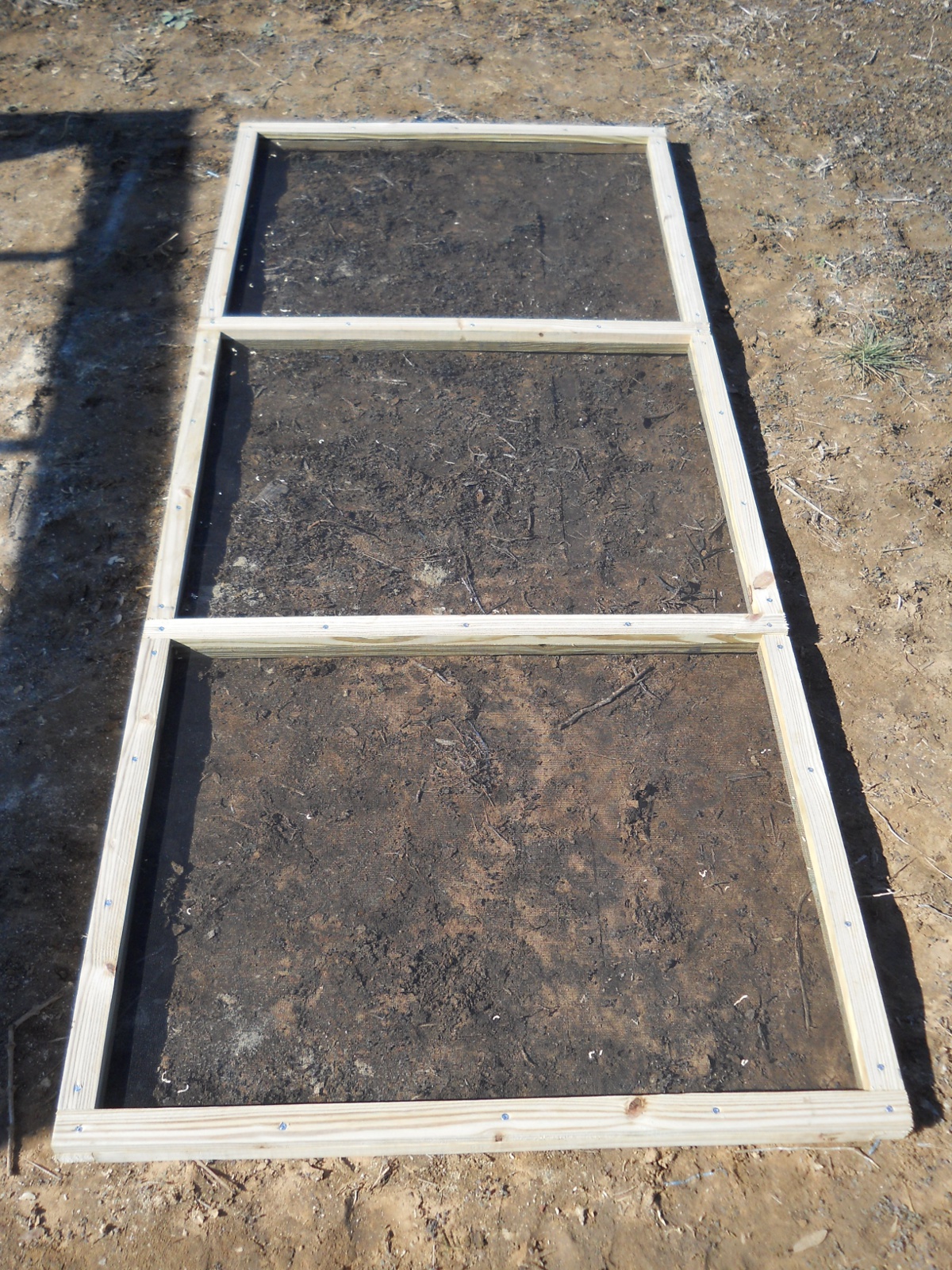
And then the other frame pieces were placed on top a piece at a time, secured with wood screws, in pilot holes:
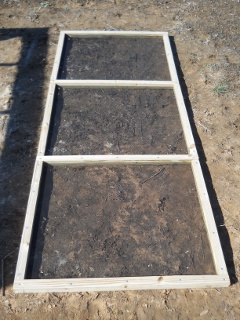
Meat Dryer Screen Door Full Frame in Place

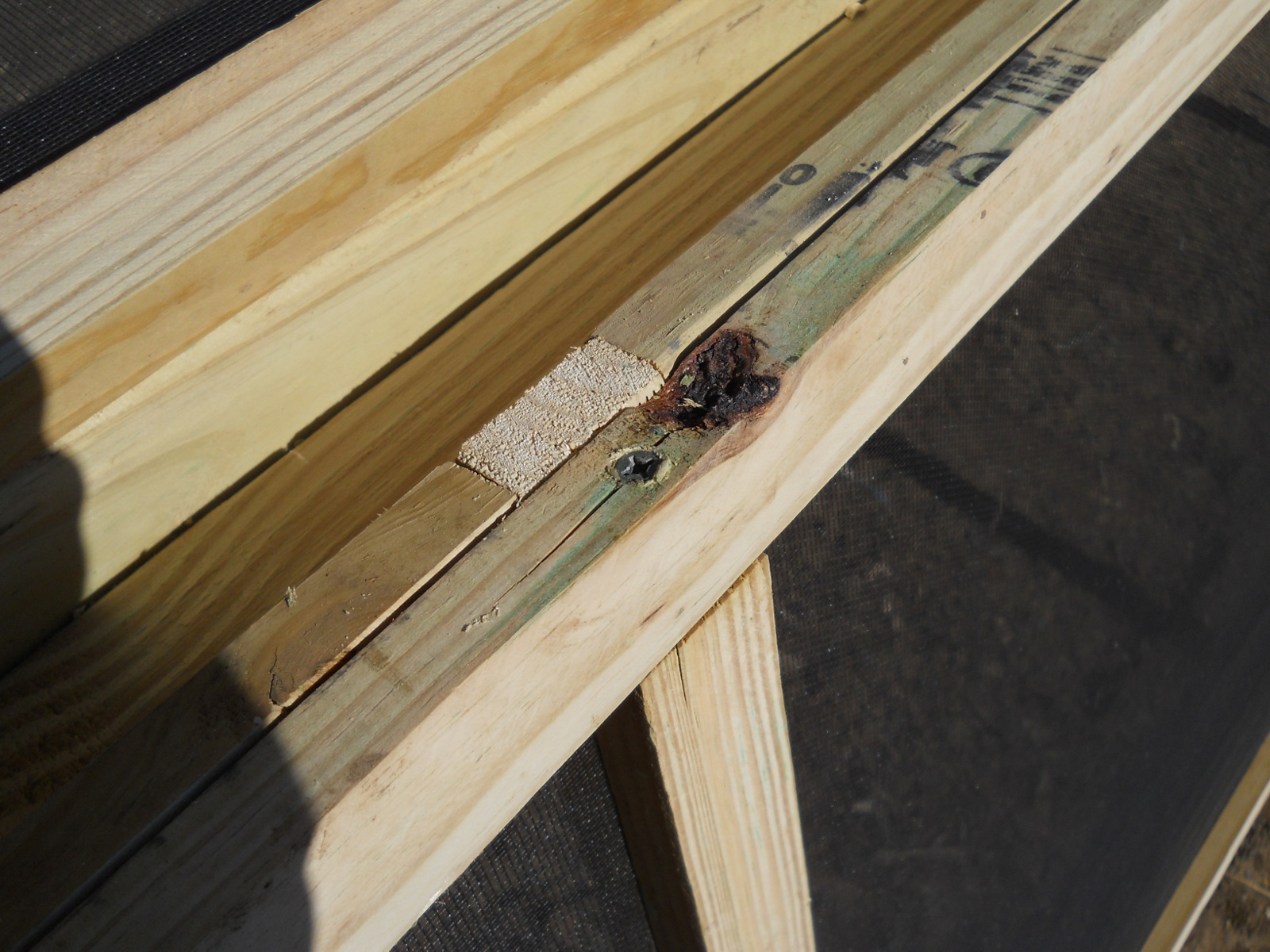
Each frame piece was cut to overlap the pieces of the other frame (like the strips over the bottom frame joists):
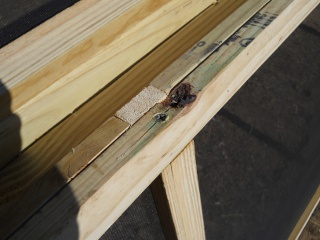
Meat Dryer Screen Door Full Frame in Place

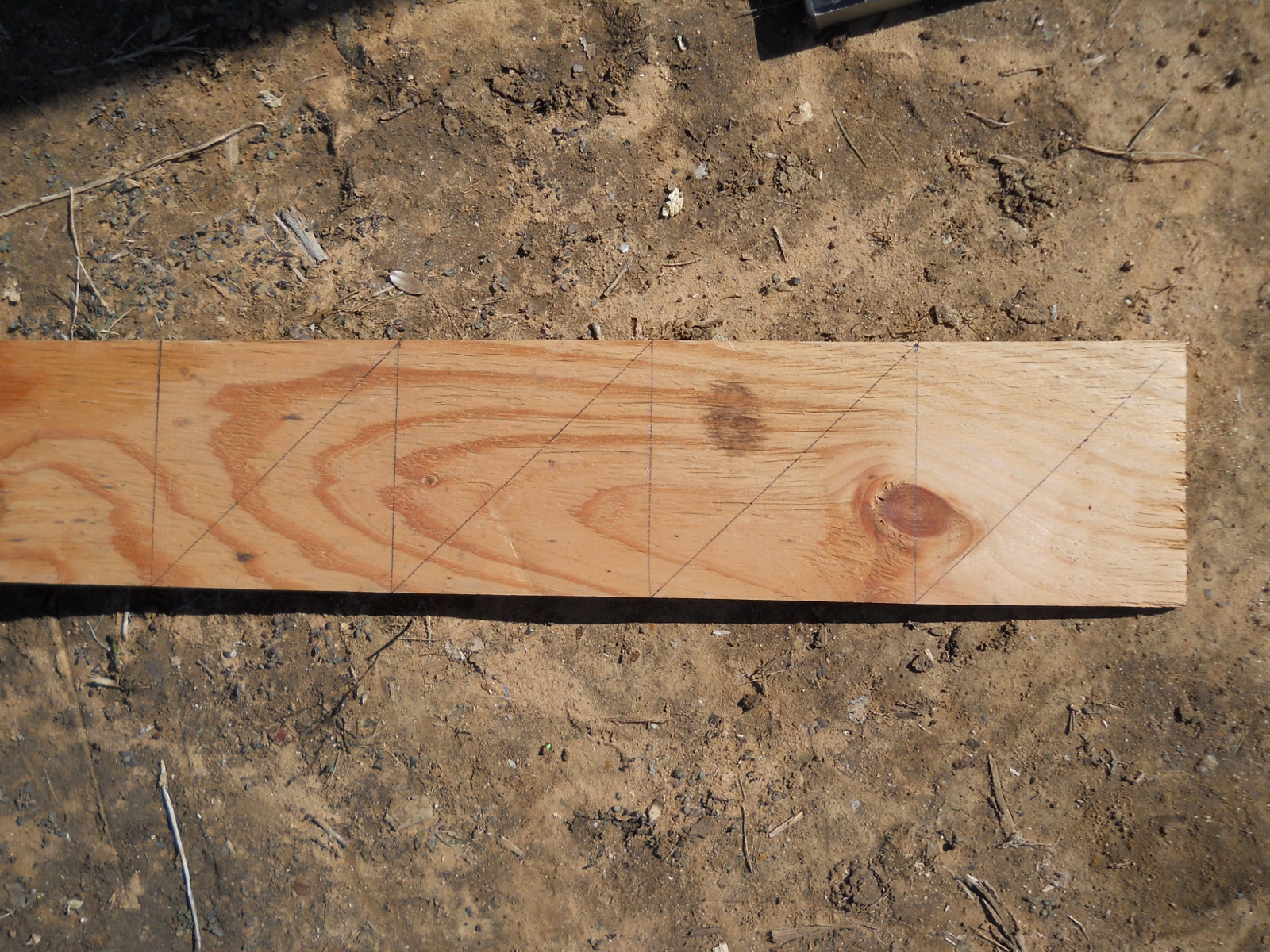
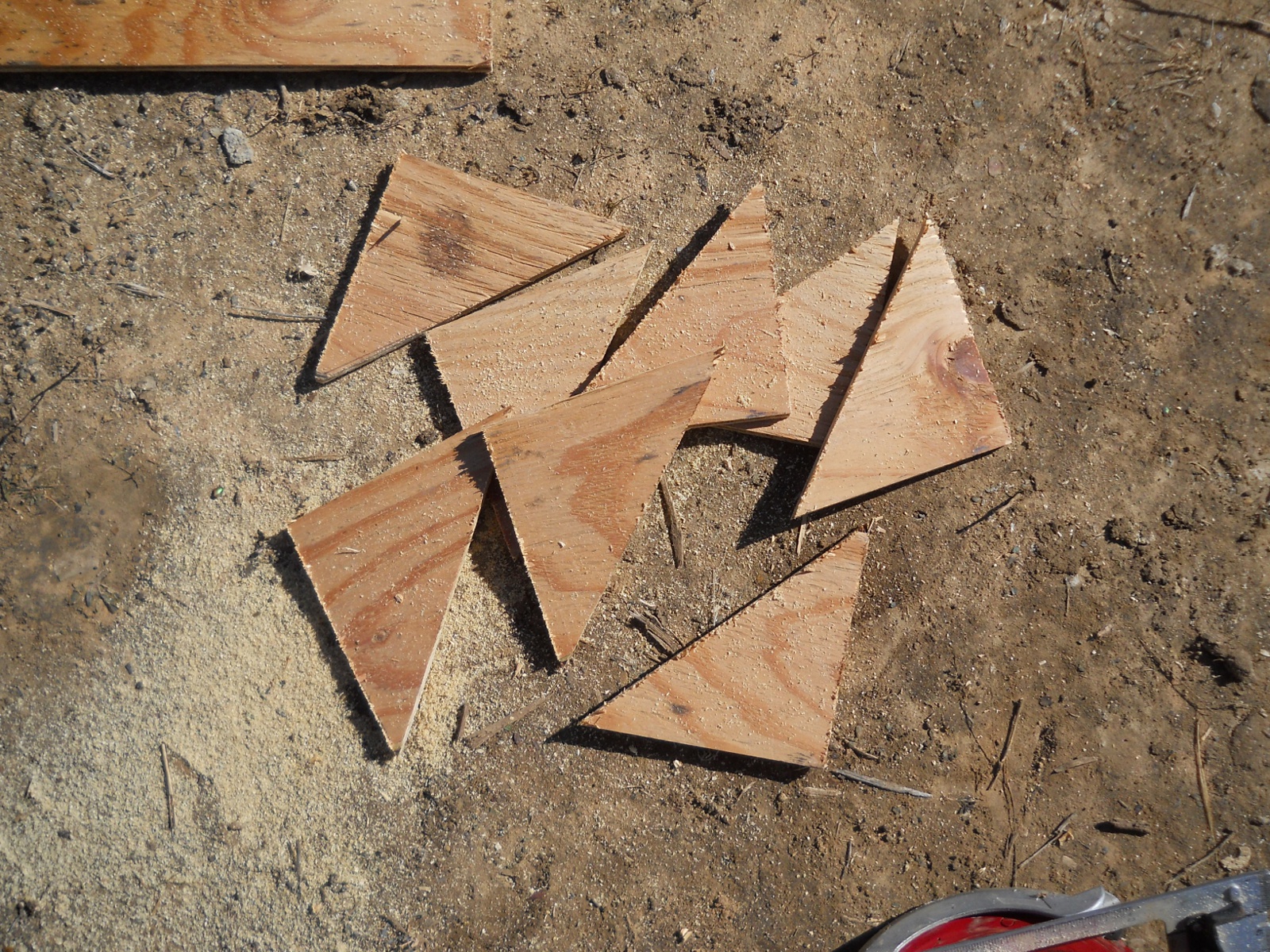
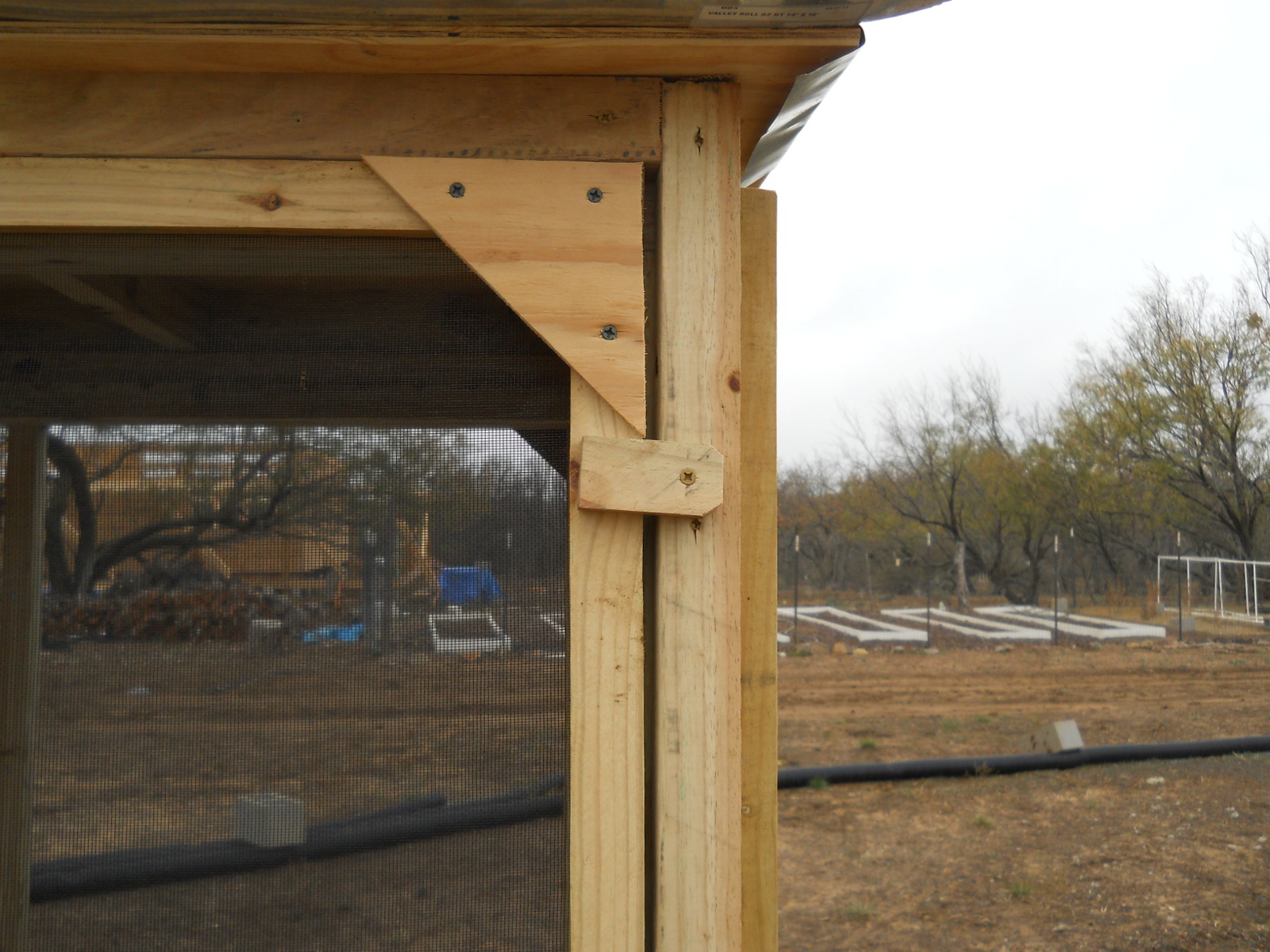
I wanted to make sure the door was fairly square and a little stronger, and so I thought to add plywood corners. Here is a scrap piece of plywood, marked for cutting the corners:
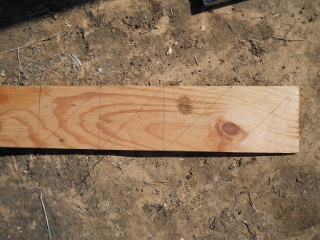
Meat Dryer Screen Door Plywood Corner Braces Marked Before Cuts

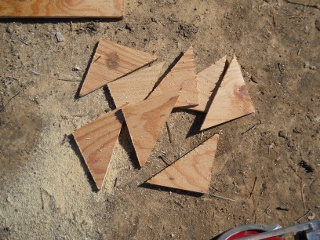
And then with the corners cut:

Meat Dryer Screen Door Plywood Corner After Cuts

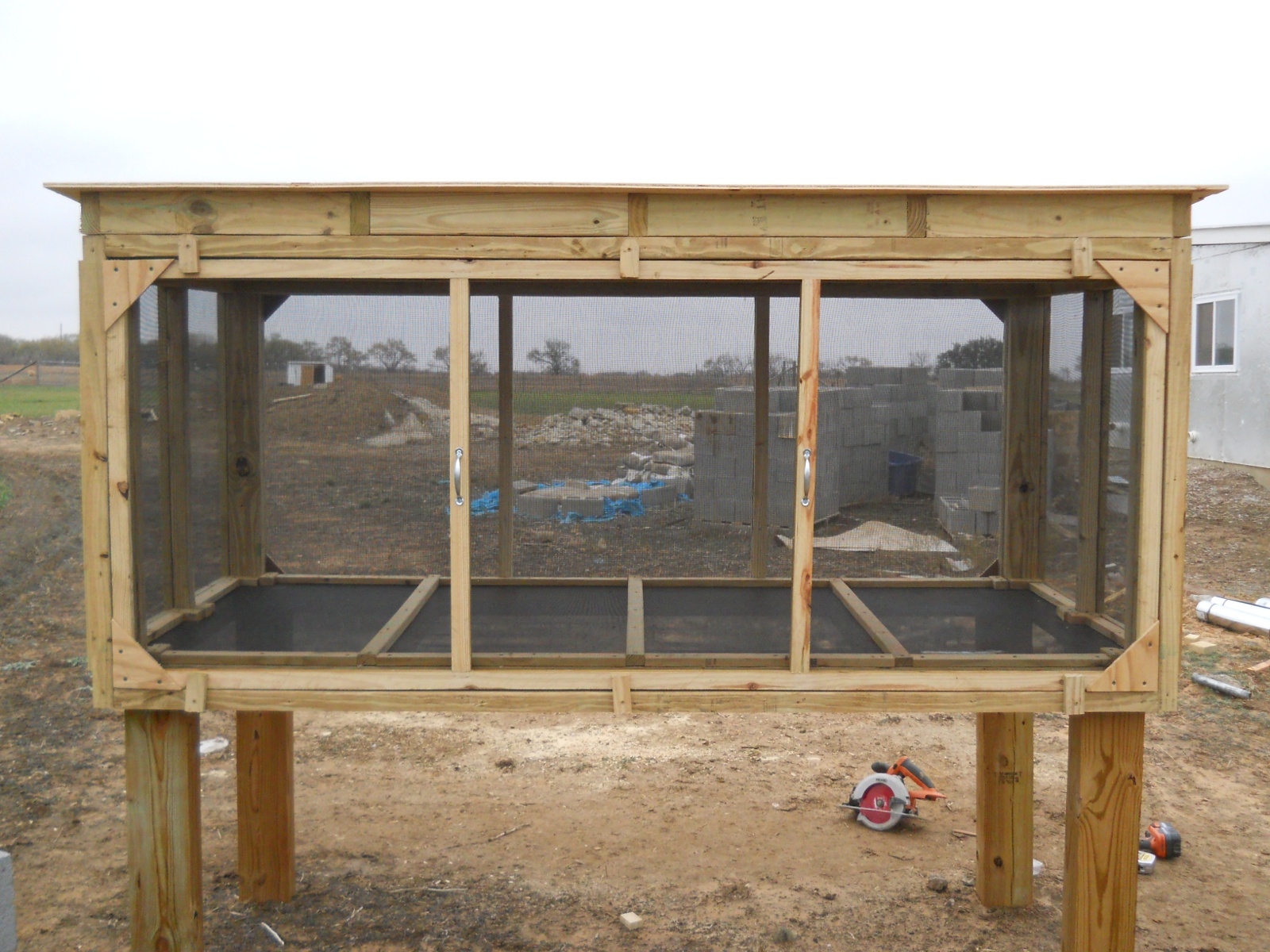
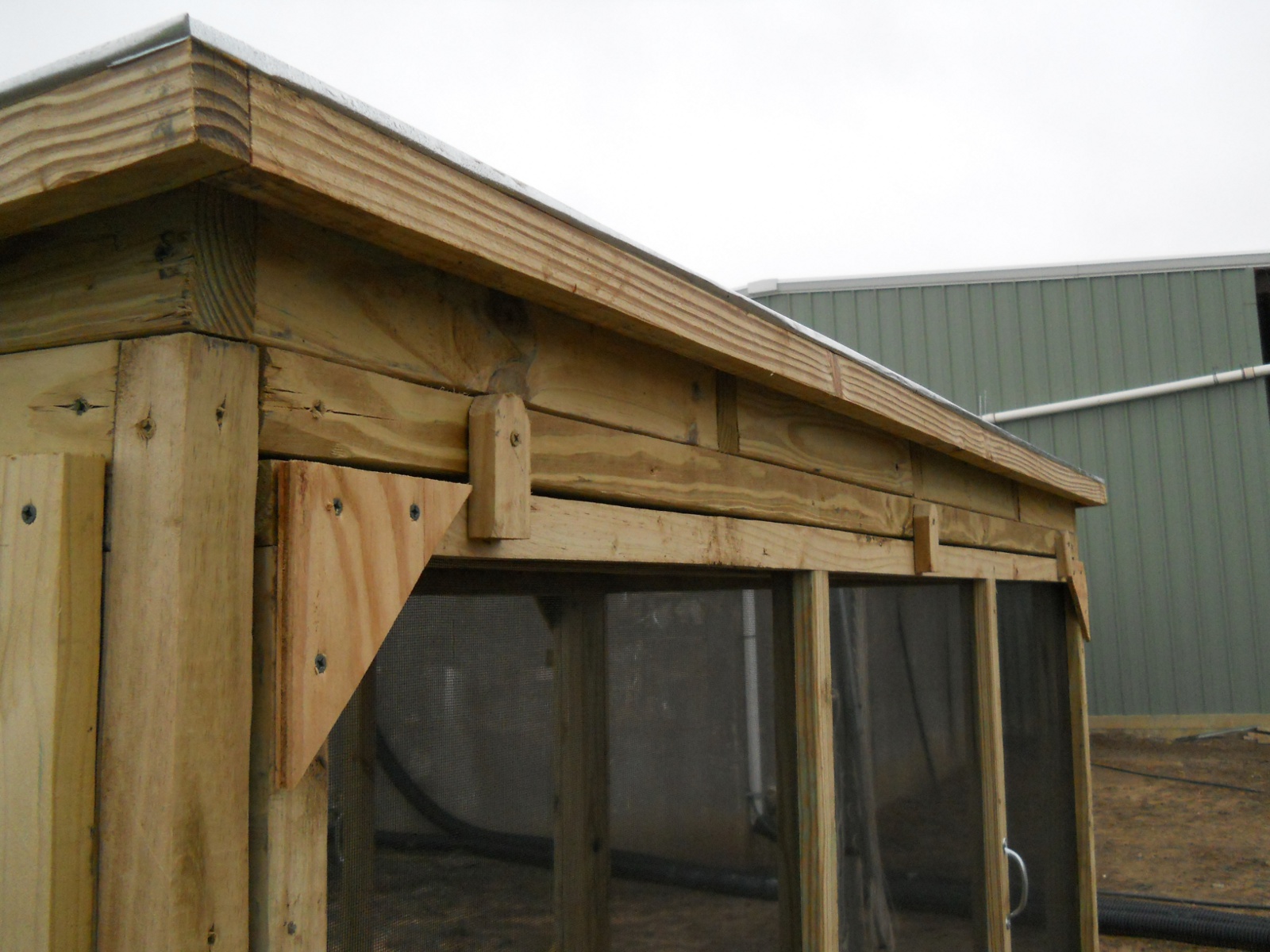
And here is the removable screen door in place on the dryer, showing the corners attached, handles in place, and wood latches on top and below, holding it in place:
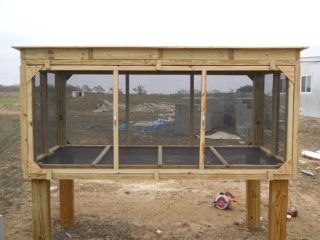
Meat Dryer with Screen Door and Screen Door Handles, Corners, and Latches in Place

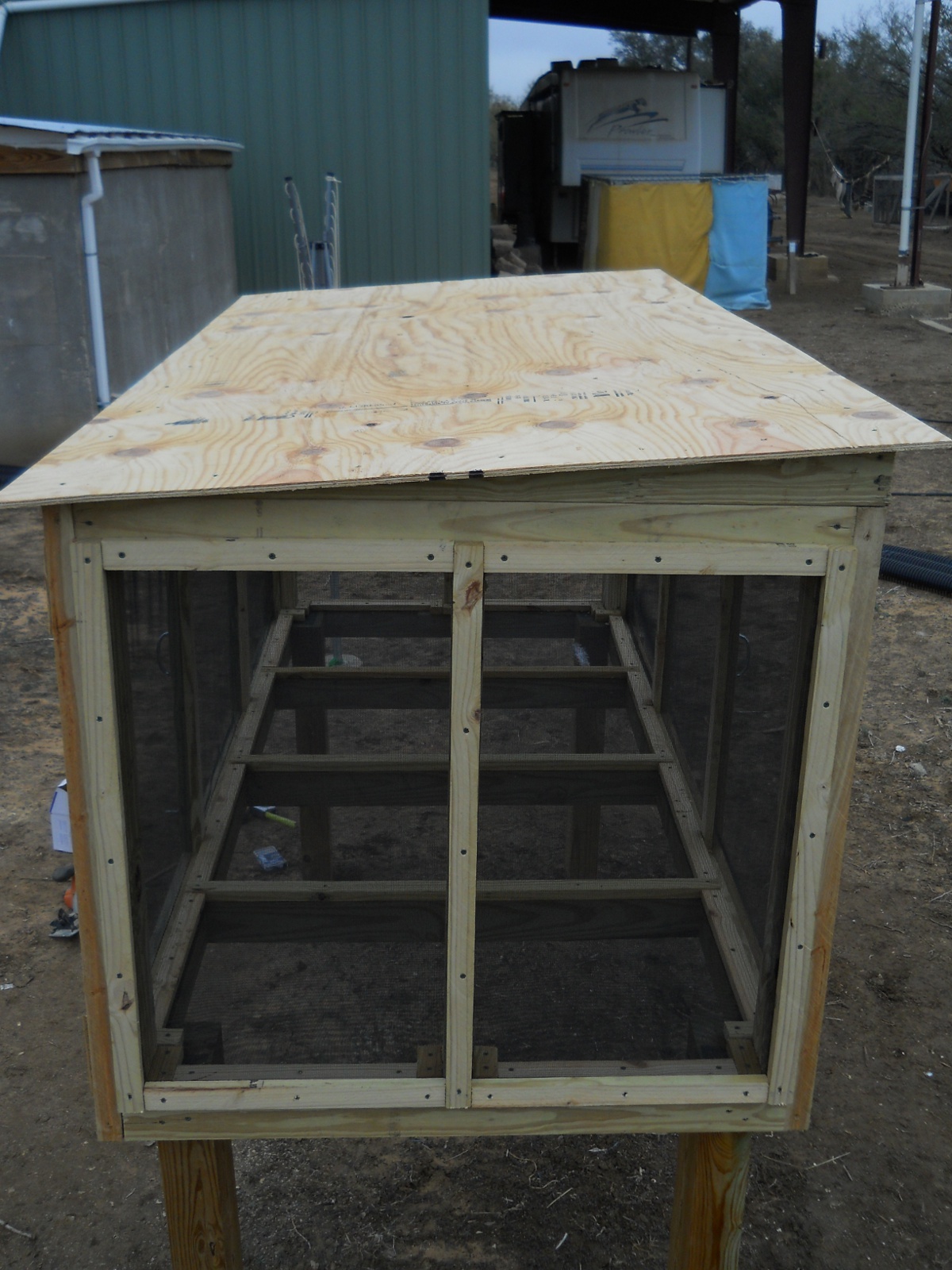
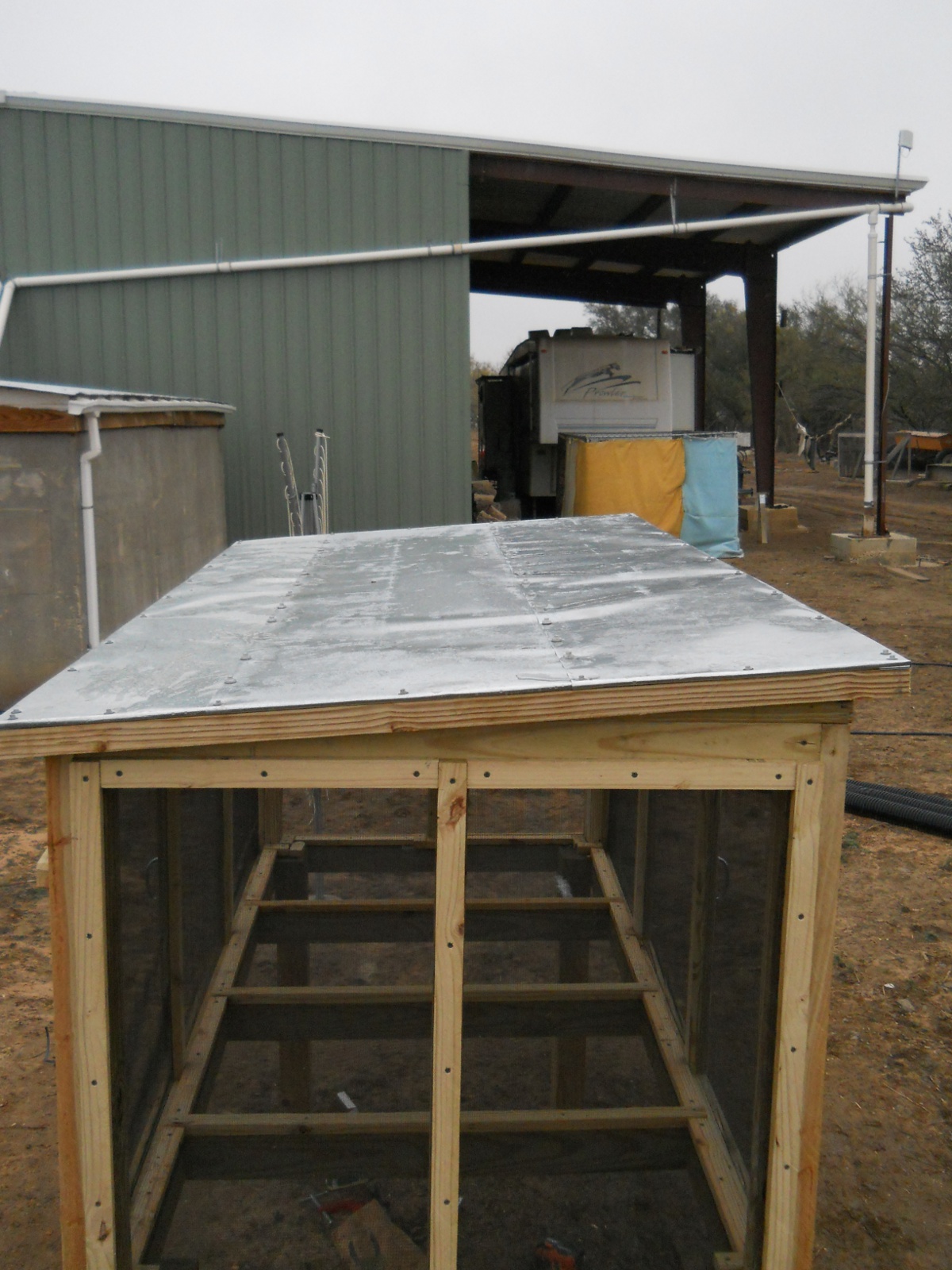
Here’s a picture of the plywood roof in place:
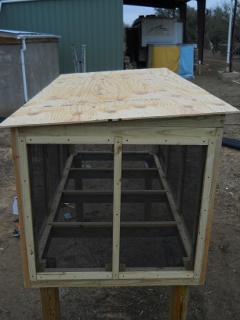
Meat Dryer Plywood Roof

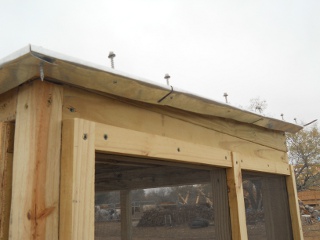
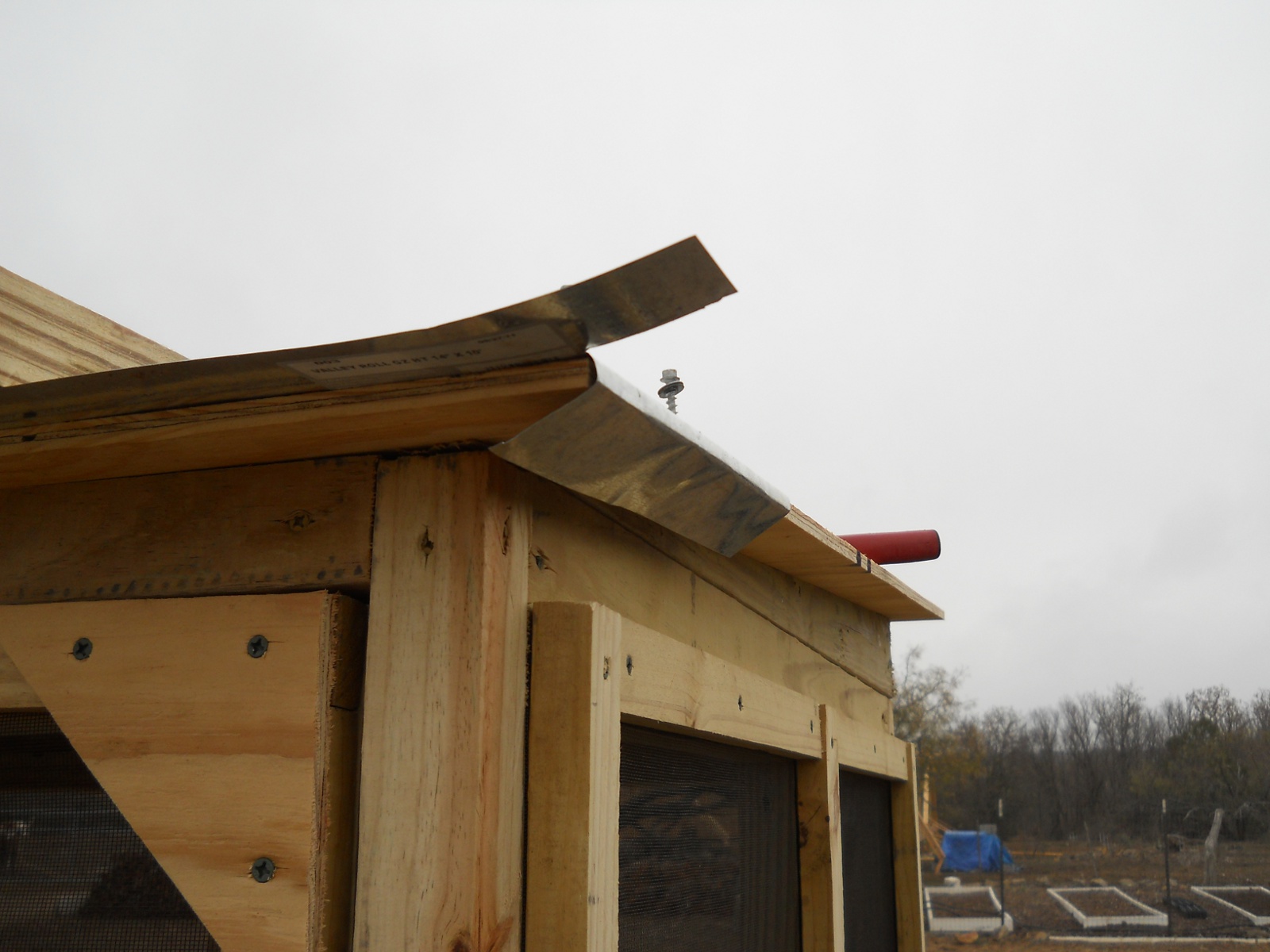
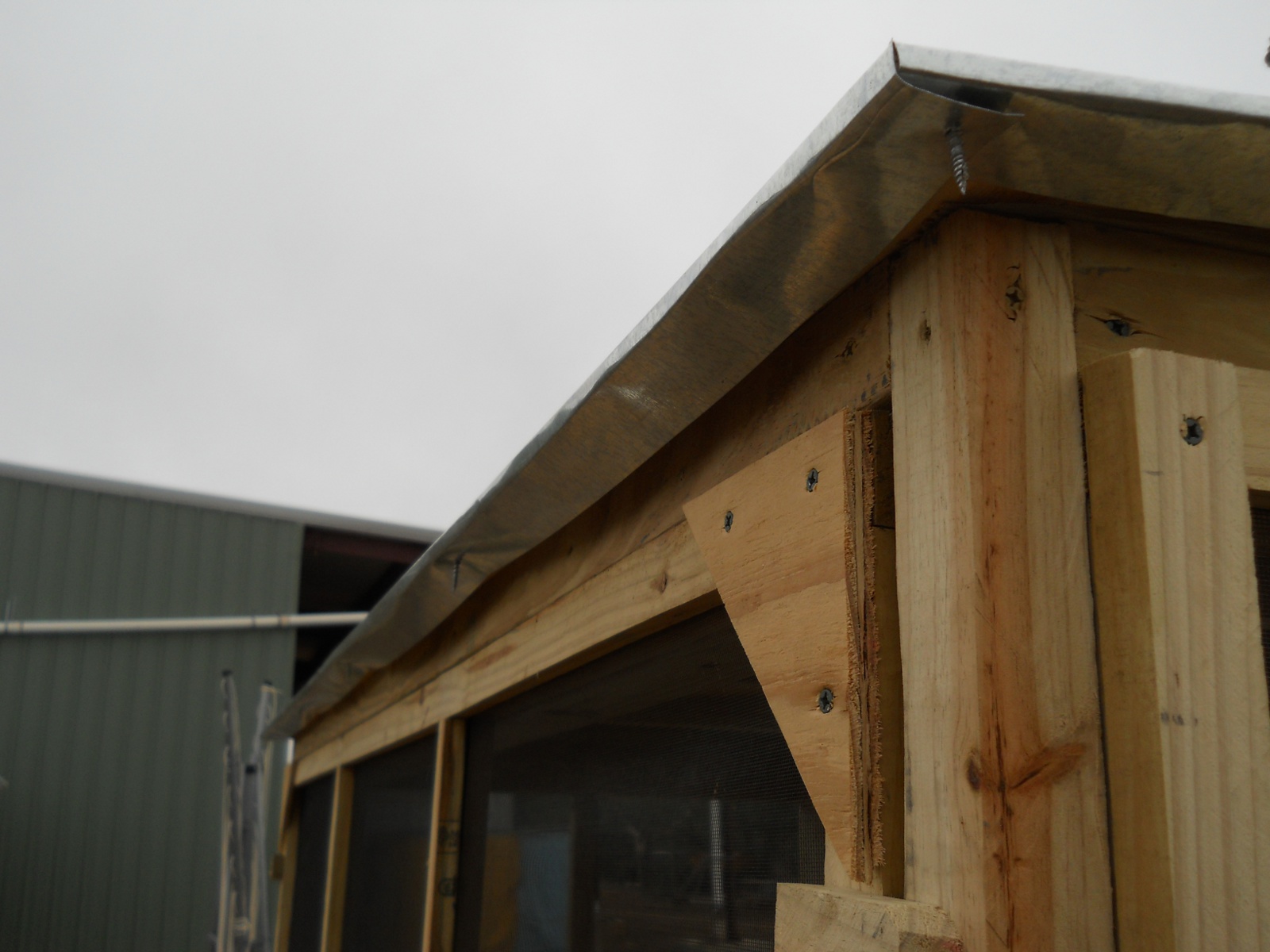
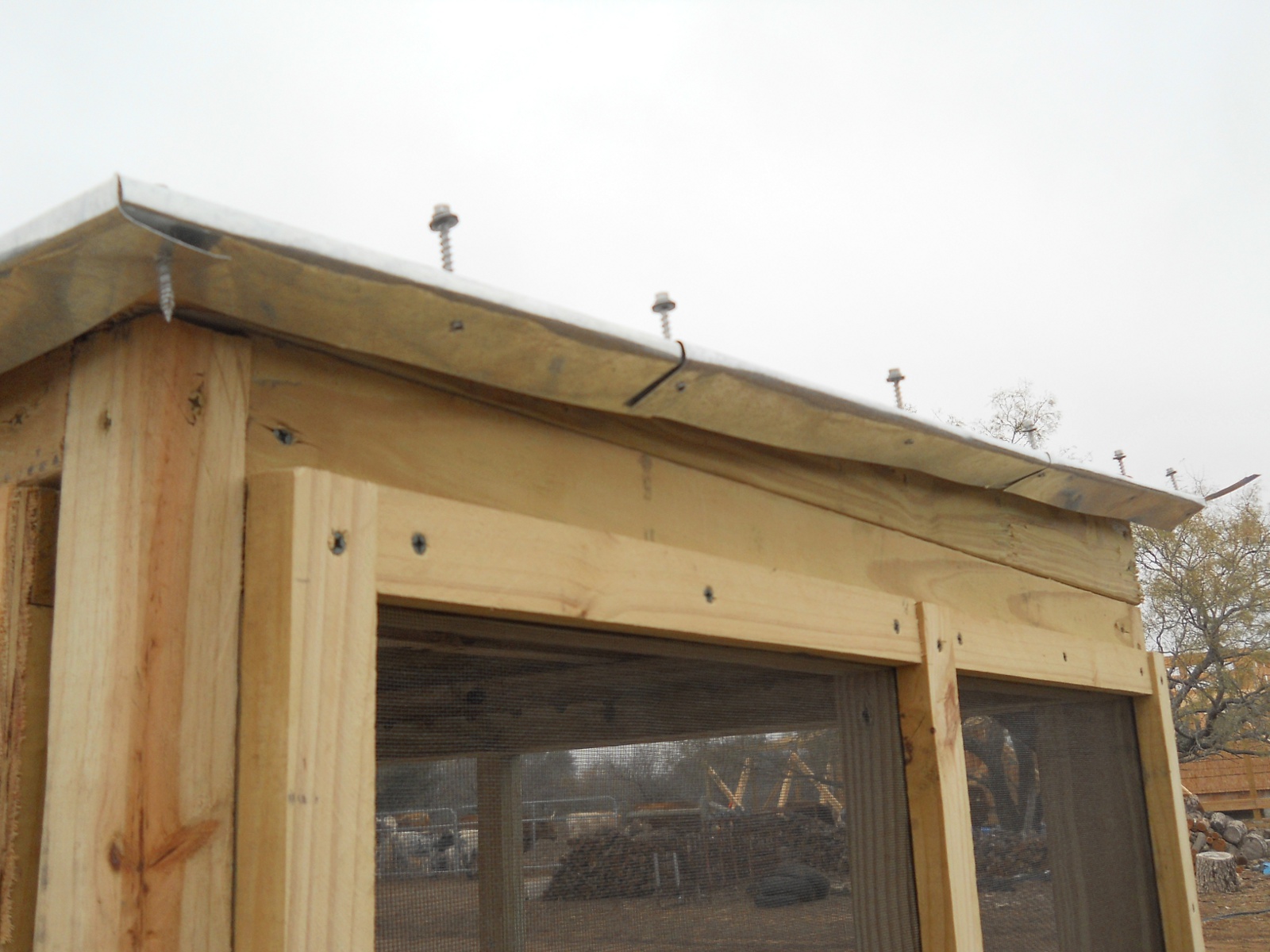
I decided to use flashing for the roof:
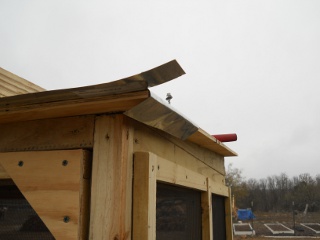
Meat Dryer Installing Roof Flashing
Meat Dryer Roof Flashing, Two Sides
Another Angle of Meat Dryer Roof Flashing, Two Sides

On the low side of the roof, I had to move the screen door latch to the side, because I had planned to attach strips of wood under the overhang that the grommeted screws would attach to (which would also help hide the screws so they wouldn’t become a skin or clothing hazard):
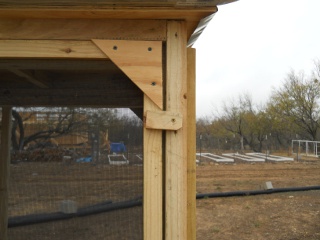
Meat Dryer Screen Door Latch Placement for Low Side of Roof

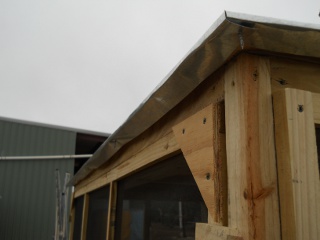
And here is the roof with the flashing installed:
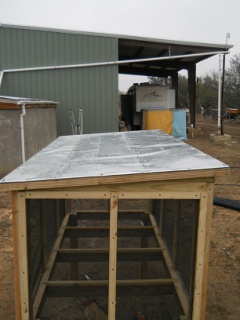
Meat Dryer Roof Flashing Installed, Top View

And here are the flashing overhang supports/screw covers:
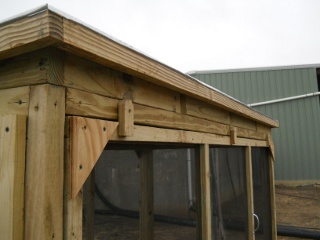
Meat Dryer Roof Flashing Supports

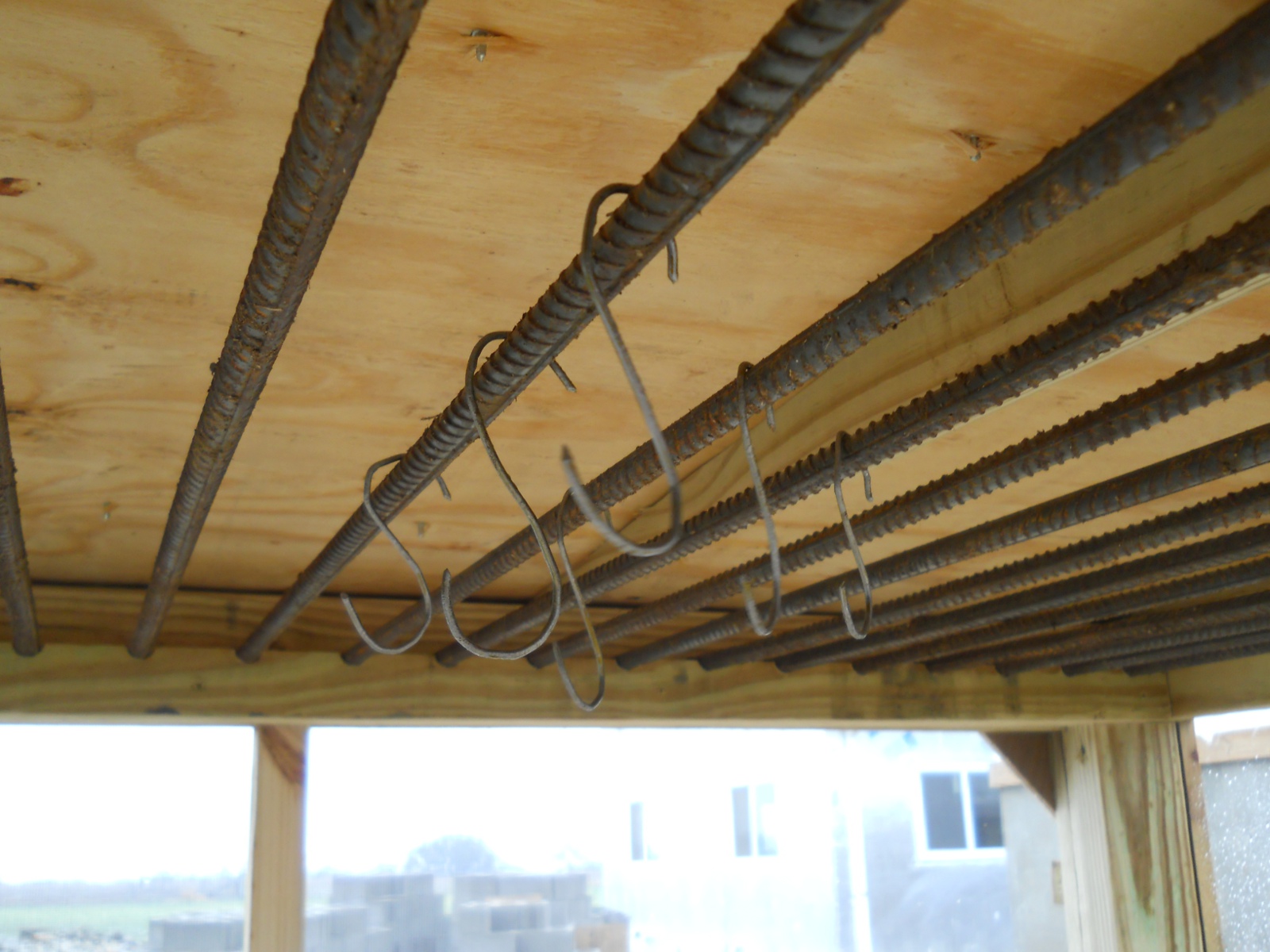
Here are the rebar hangers in place:

Meat Dryer Rebar Pieces in Place

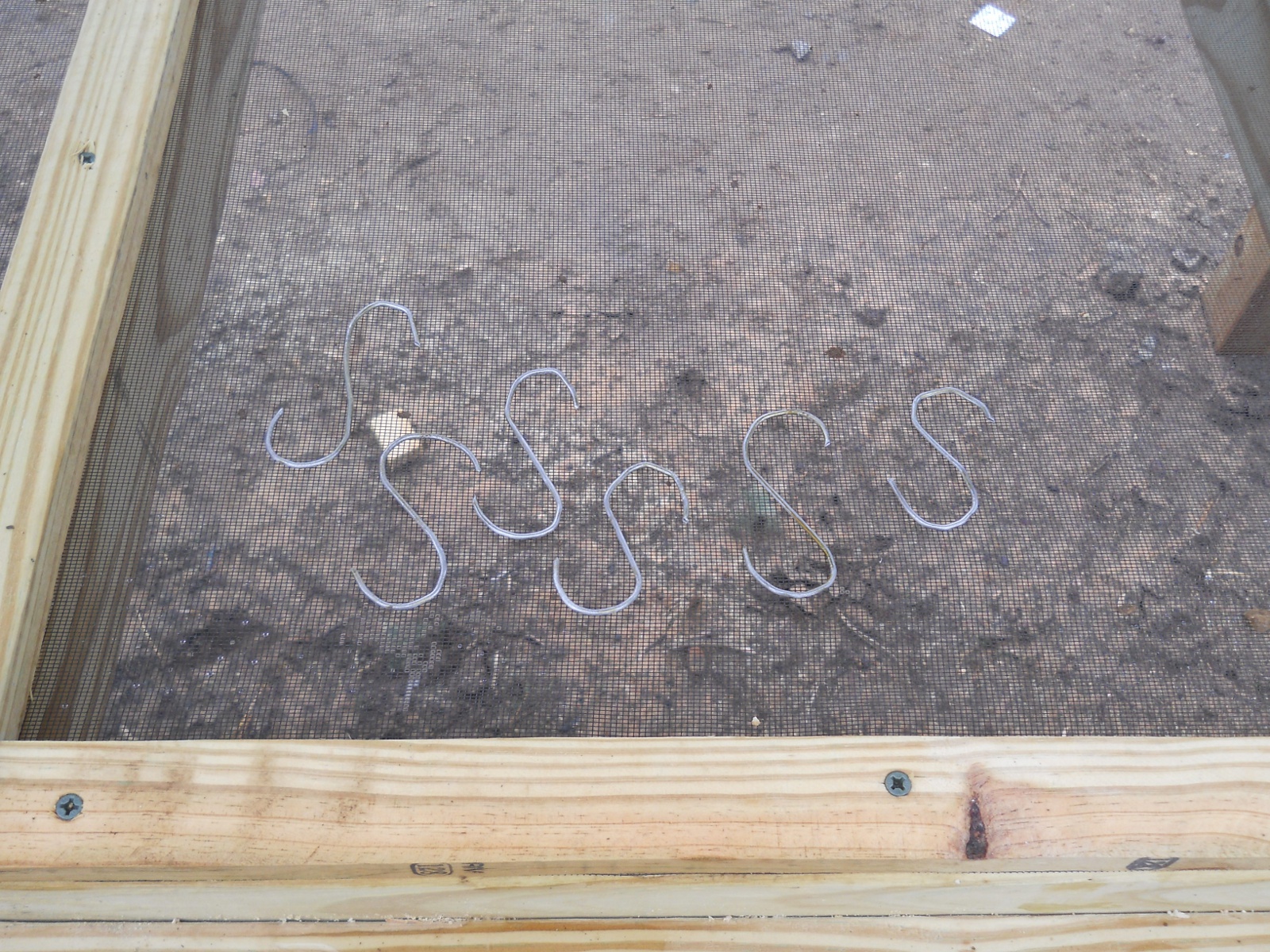
And some meat hooks bent in shape. I used a coat hanger, cutting the ends to be pointed, and I sanded the paint off. I needed an extra one after the coat hanger was used, and so I thought to use a piece of galvanized electric wire, because it appeared the coat hanger hooks were rusting some. In the end, I might need to have stainless steel ones:
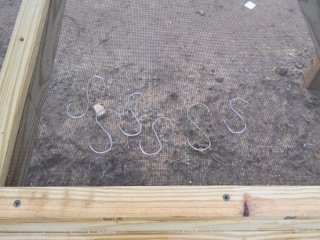
Meat Dryer Meat Hooks

Here they are hanging from the rebar:
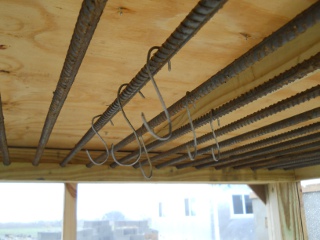
Meat Dryer with Meat Hooks Hanging

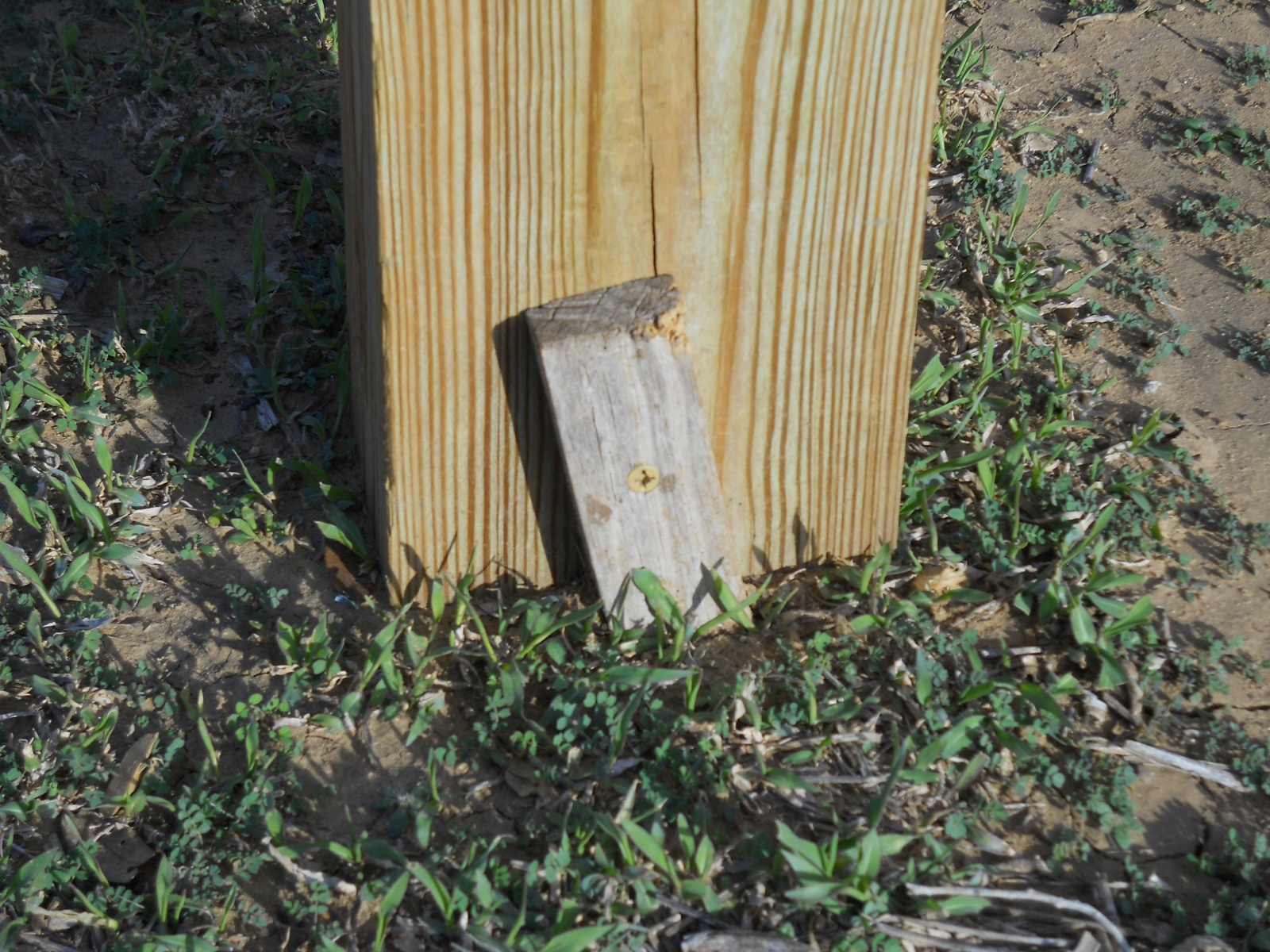
I initially had the meat dryer facing broadside to the north and learned the hard way that the dryer wasn’t very aerodynamic — a strong wind not only tipped it over, but flipped it upside down. Nice. So, I turned it to be long-ways north and south and staked the legs to the ground:
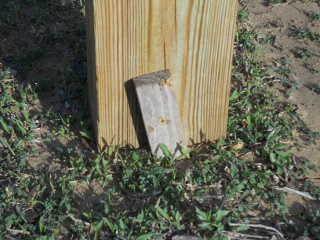
Meat Dryer Leg Staked to the Ground

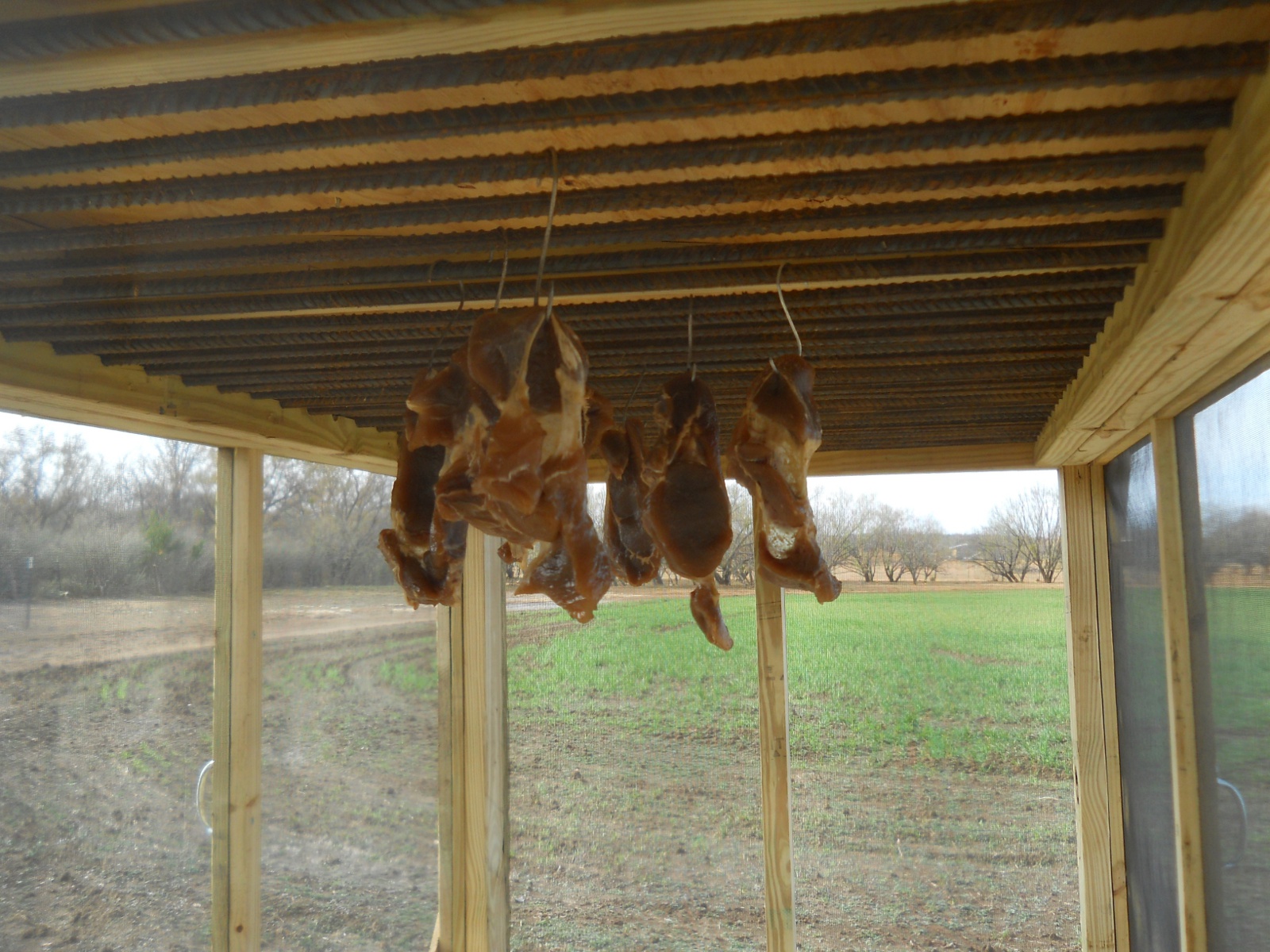
And finally, voila! Brined/spiced meat hanging in the meat dryer!
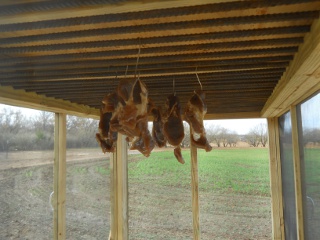
Meat Dryer with Brined/Spiced Meat Hanging

We’re still waiting for it to finish drying; and Lord willing, we’ll report on that process at a later time.

We are grateful to the Lord for His provisions, and showing us how to handle those He’s given us in a way that He has invented (with salt and air) instead of using man’s enslaving methods.

— David
Turnips & Wheat 2012

One of the things we’ve tried to get going here, but have had some difficulty, especially because of the drought, has been crops. A few years ago we tried oats, just hand spread on a field; some grew, and we harvested a few; but most went to the cows.

Last year we tried again, and the drought seemed to really keep things from flourishing. Again, we tried harvesting some literally by hand (pulling the grains off by hand) as they were pretty small to use the scythe against; and so, that was a pretty arduous task; and most of what was there went to the goats, which did help feed them, which was a good thing from our separatist perspective.

And so, this year we thought we’d try again, as we believe we should continue to try these types of things, leaving the results in God’s hands. I decided to go with wheat, in hopes that if we are able to harvest some, we would be able to use some for human consumption vs. trying to use the oats, which have an extra hull around the grain kernel that’s difficult to remove.

I also thought I’d throw some turnip seed in the ground to see what would happen.

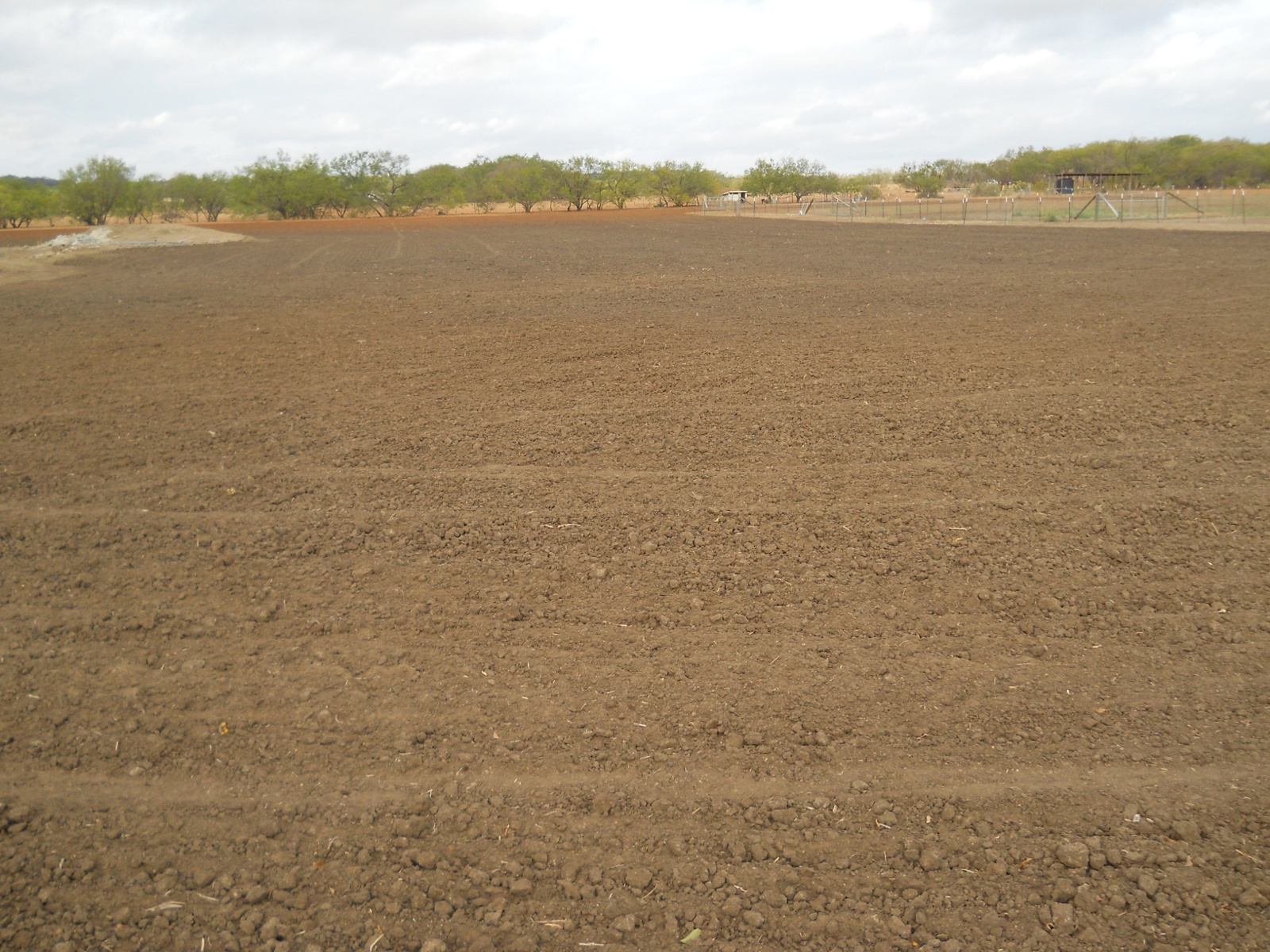
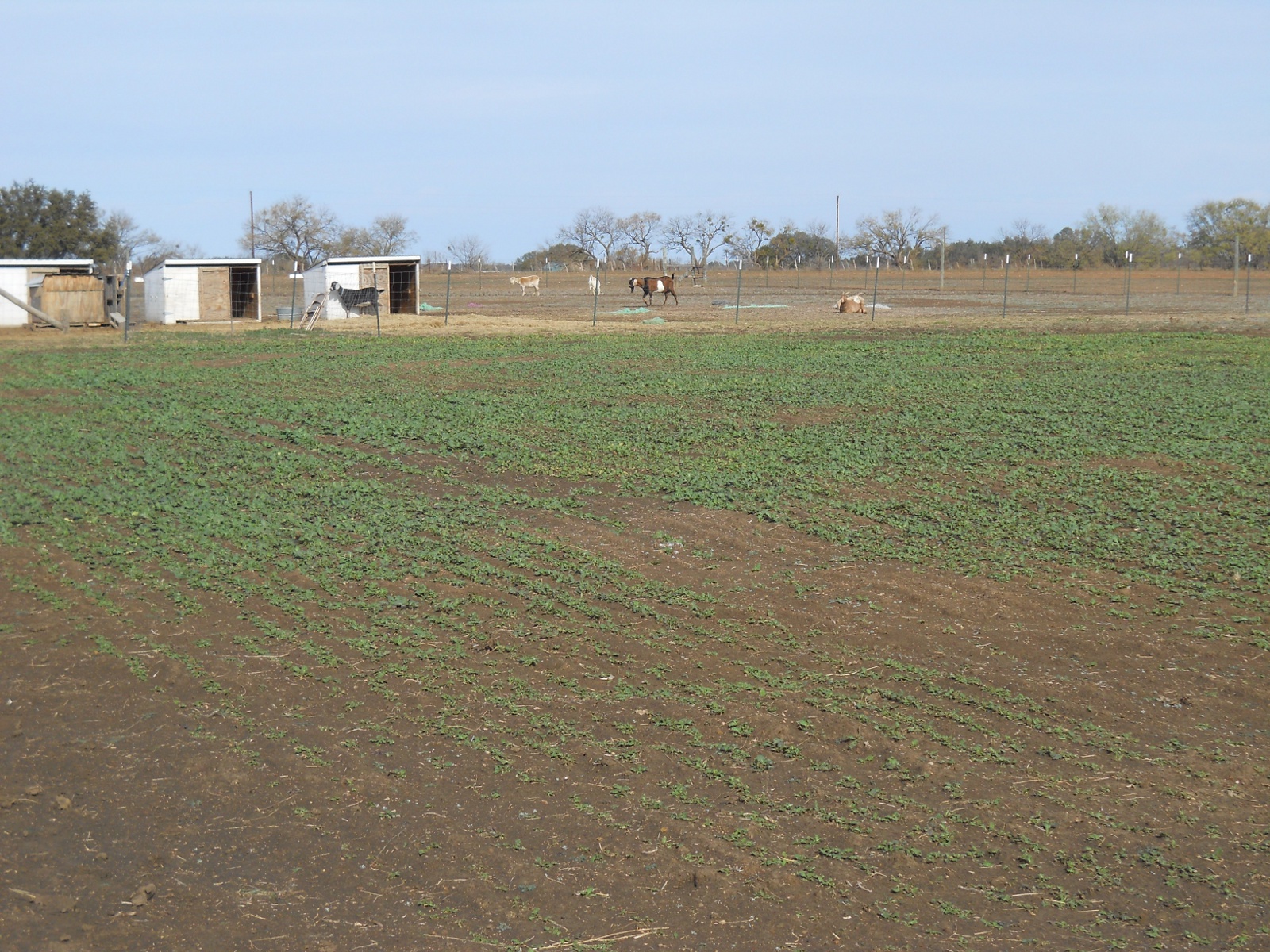
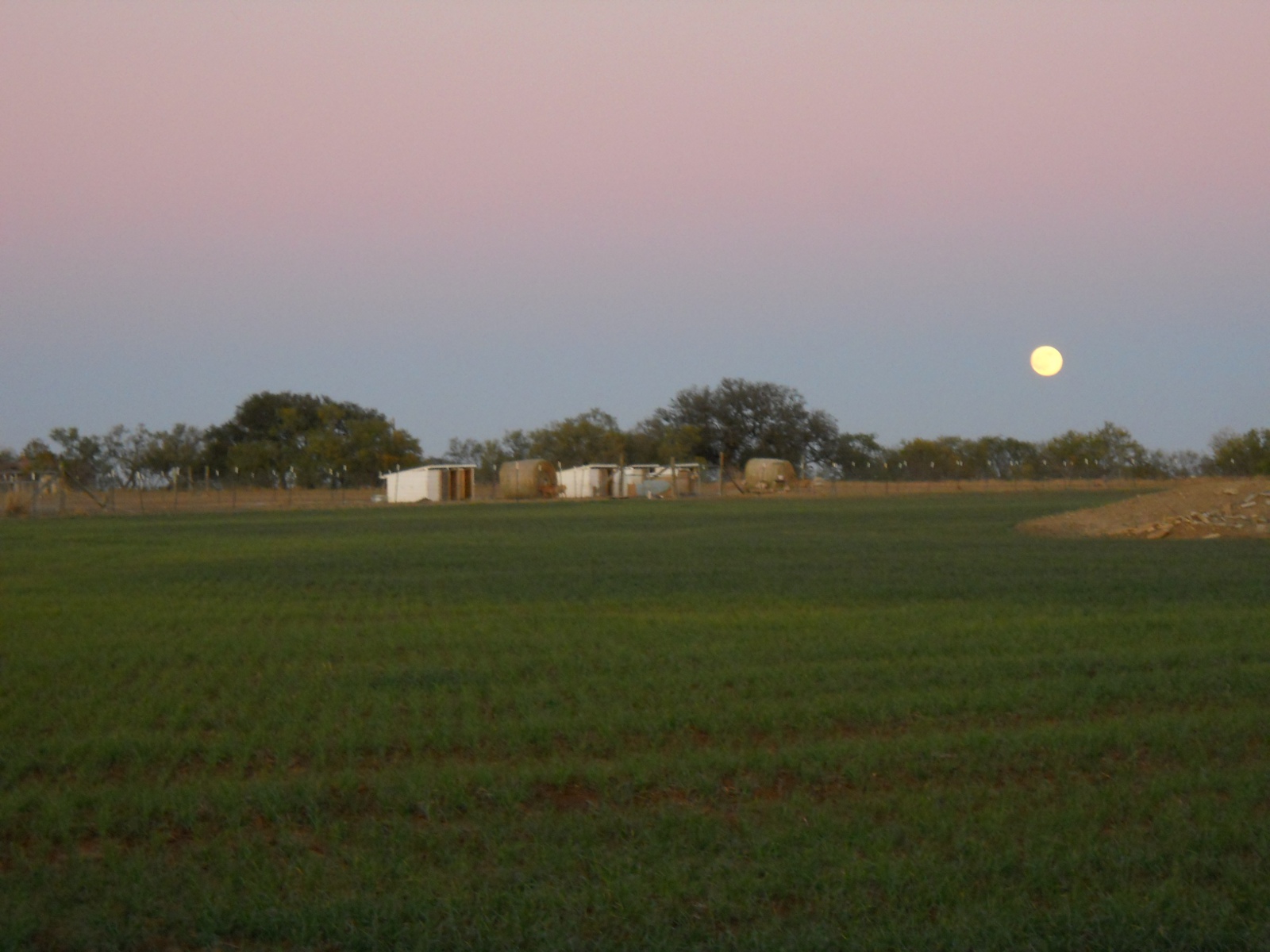
Here is the field ready after plowing and planting. We were able to get the seed in the ground before the 5-inch+ rain we got several months ago. The turnip area is probably less than 1/4 acre, and the wheat area is a little over 3 acres, I believe:

Wheat 2012 Oct 8

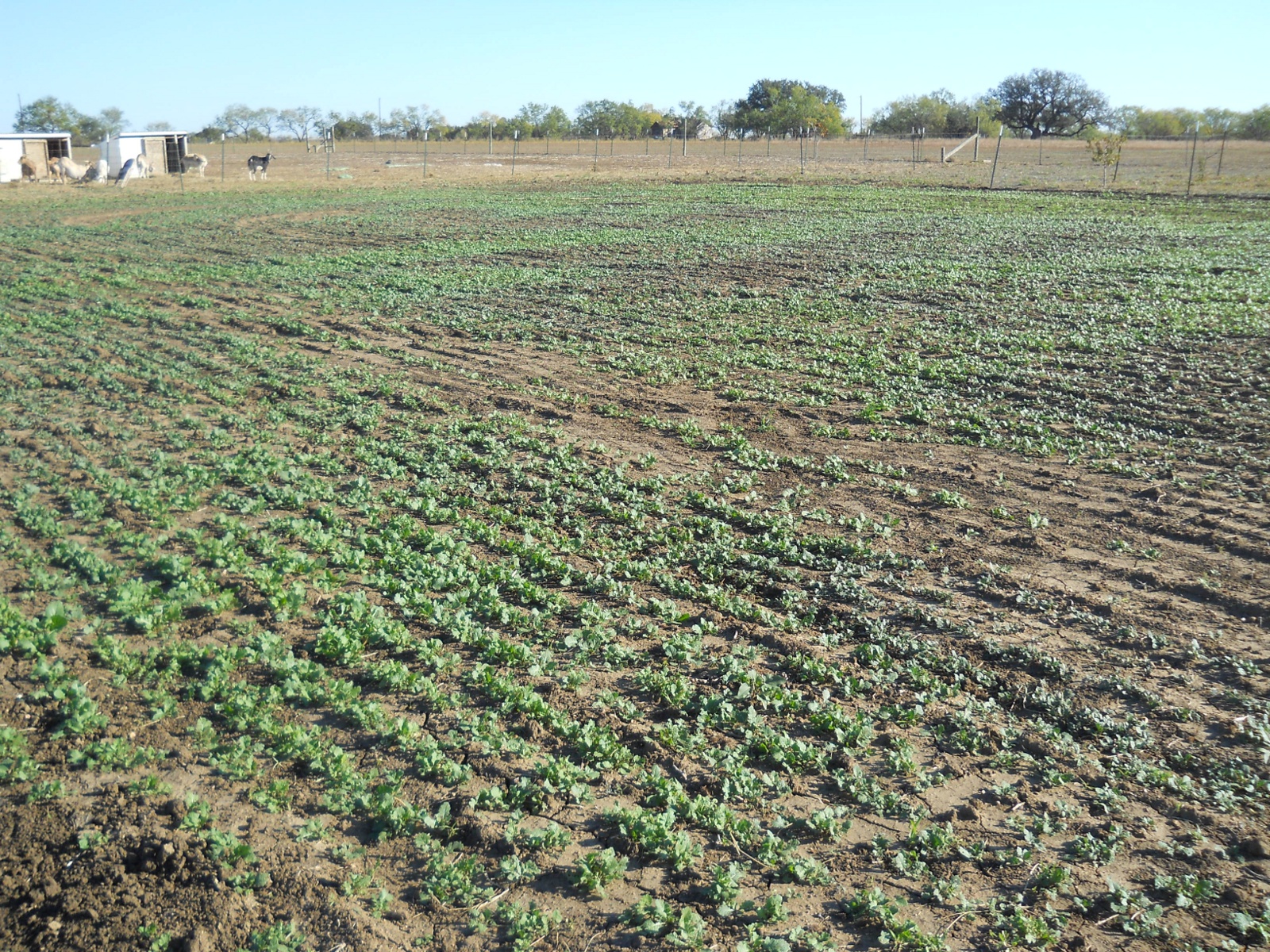
Here are the turnips on Nov 9:

Turnips 2012 Nov 9

And the other day on Dec 17:

Turnips 2012 Dec 17

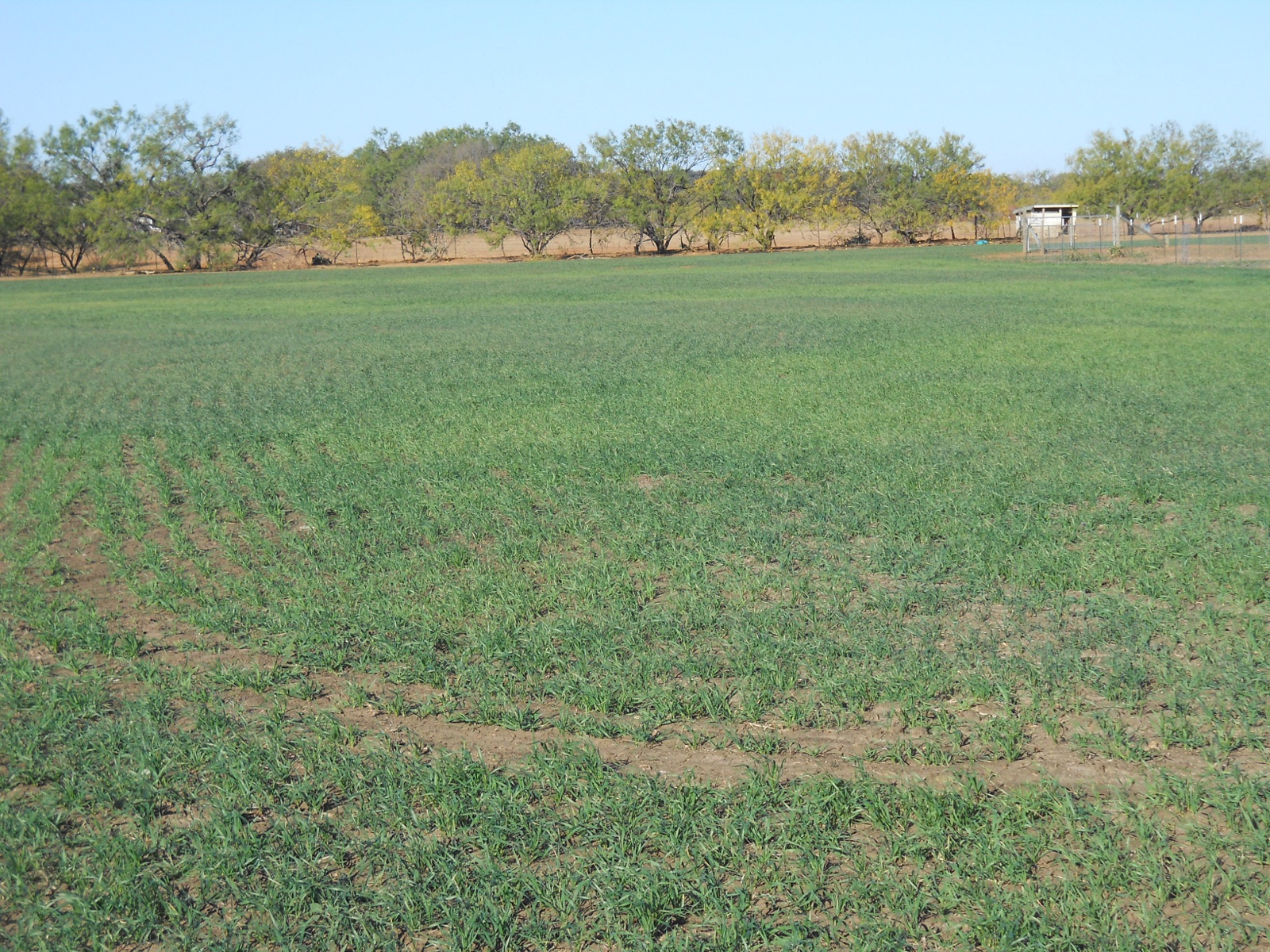
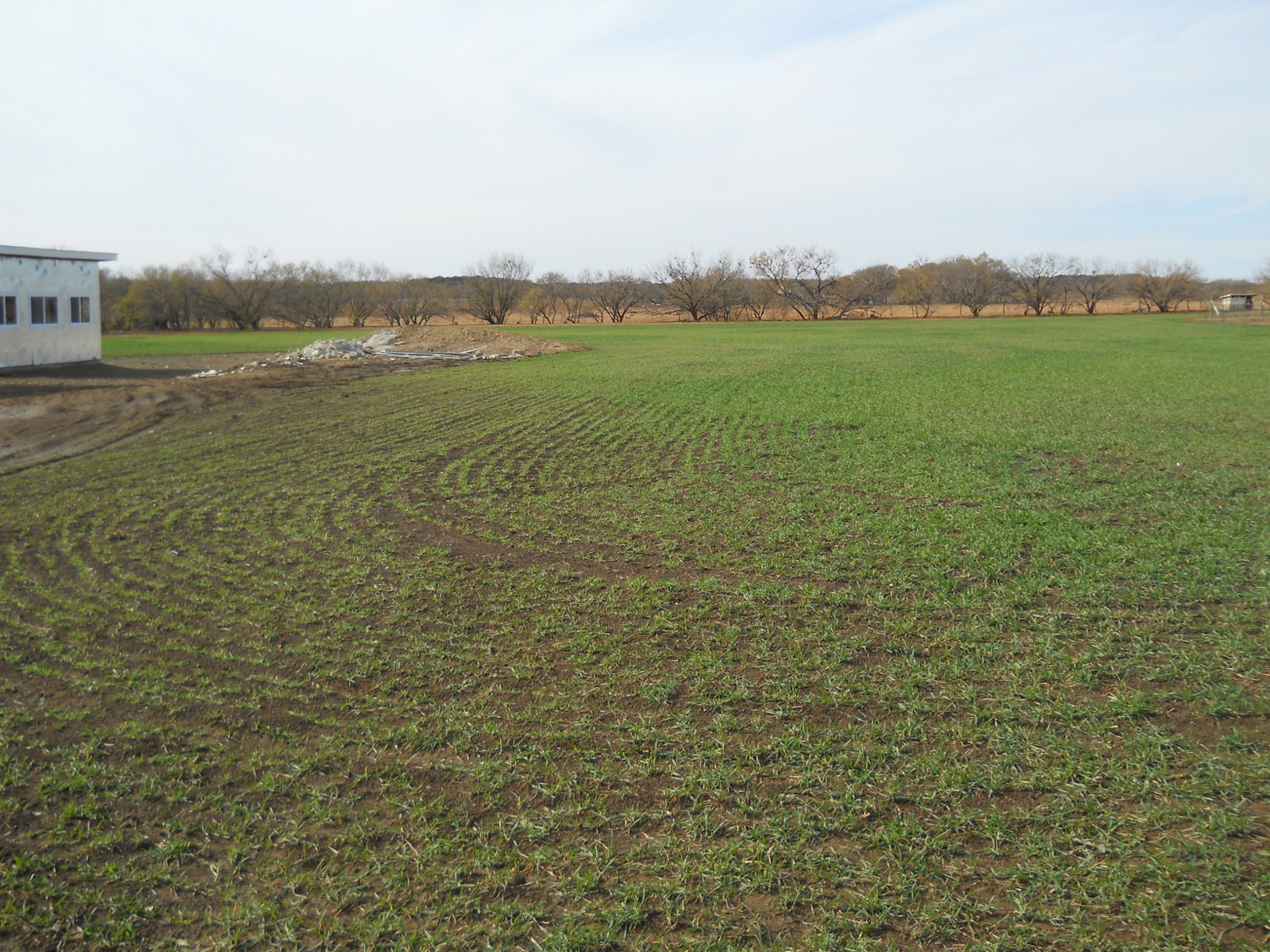
This is the wheat on Nov 9 and 10:

Wheat 2012 Nov 9
Wheat 2012 Nov 10

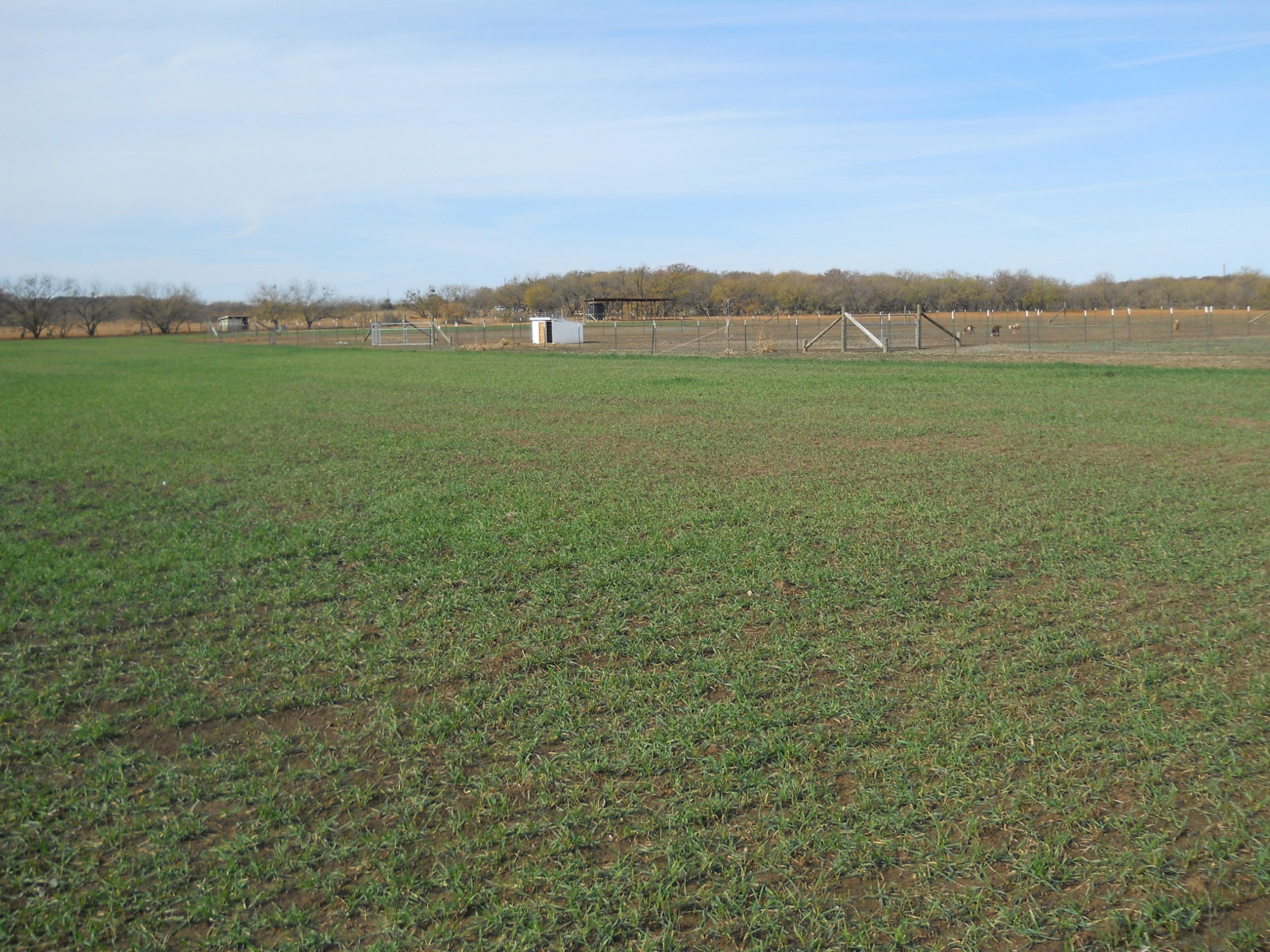
And again, the other day on Dec 17 (the more empty place on the left of the first picture is where the geese have eaten it down, but it looks like it’s coming back):

Wheat 2012 Dec 17
More Wheat 2012 Dec 17

It appears the chickens and geese love both the turnips and the wheat grass, but I’m pretty sure they can’t eat it all. 🙂

The Lord has graciously granted rainfall to continue the growth, even when it looked like things were starting to fade away some, and we pray that He might grant a harvest, so that we can further separate from dependence on a world that is at war with our love, the Lord Jesus Christ.

— David
Providence’s Perpetuation Provisions: Another Ten New Chicks

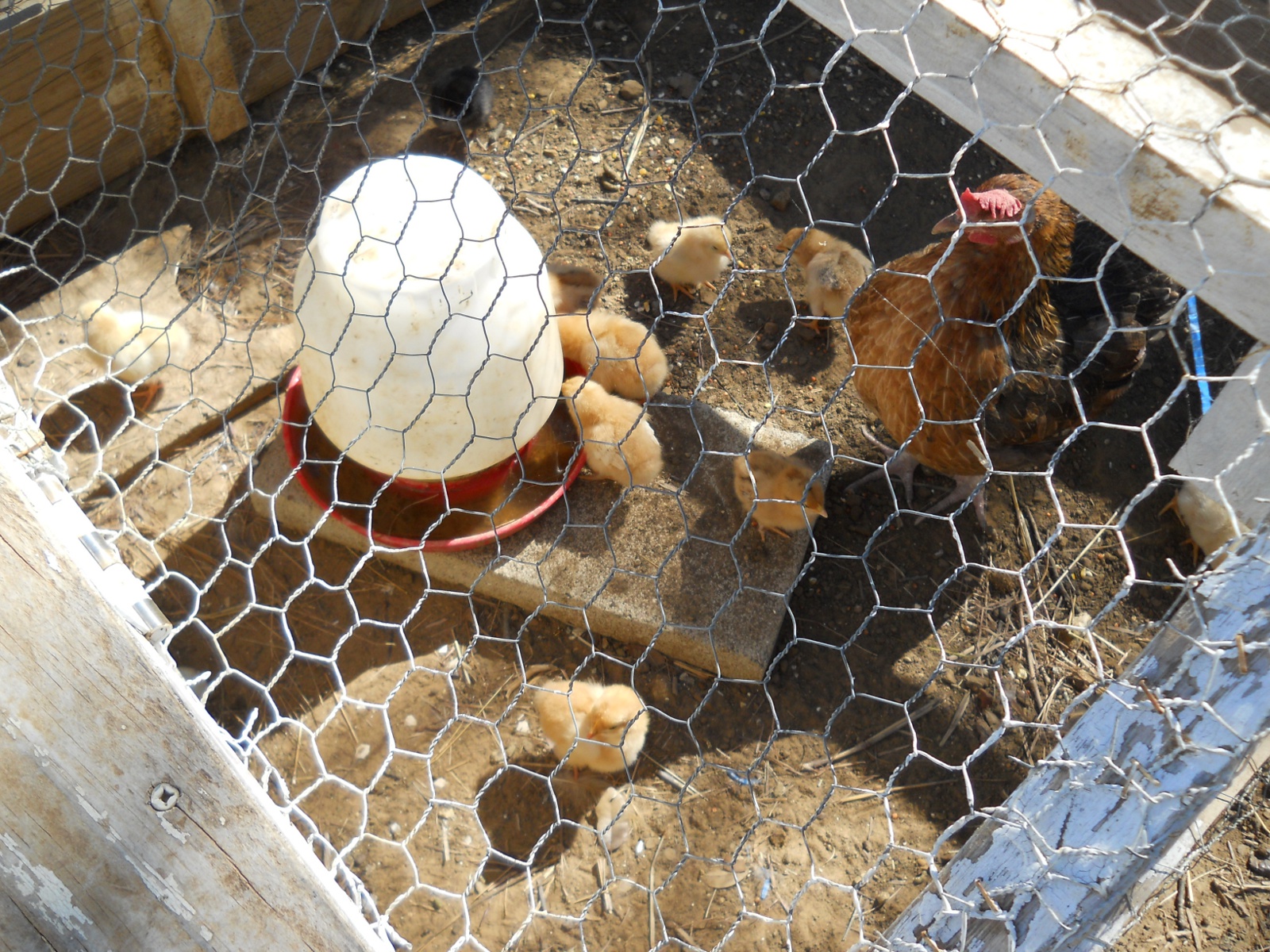
Recently, another one of our game hens went broody; and so we put a bunch of eggs under her, once again hoping the Lord might grant continued perpetuation of the chickens, thus helping us be yet a little more separate from dependence on the world.

And He did!

10 New Chicken Hatchlings Fall 2011

When culling our roosters recently for butchering (since we indeed had too many), we had decided to keep a few more roosters than what we’ve heard is a typically normal ratio, in hopes more eggs would be fertilized, as we’ve had it where no eggs were fertilized for two broody rounds in a row; and it seems to have helped — 10 out of 11 hatched. At this point, we’re probably at 1 rooster to 2 or 3 or so hens that are currently laying; and we’re probably about 1 to 5 or 6 with all of the other hens included — we’ll see how that goes when the others start also producing, Lord willing.

Below are the new ones in live action. In the video I mention helping one hatch out. It had poked a hole through the shell, where you could see its little beak; but then it sat there the rest of the day. I would tap the egg shell, and it would open and close its beak, so I knew it wasn’t dead. By the time the end of the day drew near, I was bothered it hadn’t made any progress, and was trying to think of some way to help, but had heard it’s not good to help them. And so, I had decided to just let it happen as it was going to happen…until…I thought there must be some way to help it as I thought it was probably going to die if something wasn’t done. I looked up online regarding the topic; and the site I found said not to help, but also said that after a day of it not progressing it was possible to help, and the person gave instructions on what they did. And so, figuring it was probably essentially dead already if something wasn’t done, and that in helping it, even if it died, it was going to be in no worse a situation than it already faced, I decided to see what I could do.

The Web site I found with information about helping a chick hatch said to slowly chip away at the shell in pieces, as a chick would naturally do. In the case when an egg has been opened like this one was, the inner membrane dries out, and will I guess stick to the chick; and so, if you see bleeding, they said to stop and drop warm water around on the membrane to soften it, and try again in a little while. Well, in using some pointed tweezers, I didn’t actually heed that advice at first, and saw blood, but was able to chip away at the shell and gently pull back the membrane. I did this until the chick was free enough to basically move its whole body, which meant probably 2/3 or more of the shell was removed. After, I did go warm up some water, and with an eye dropper dropped some of it on the edges of the shell that was left, in hopes to help the chick more easily separate from the membrane. It just laid there all wet and on its side, and I figured it probably wasn’t going to make it; but the next morning quite happily, there were no dead chicks, and this one was running around with the rest of the hatchlings. You could see on it that day a few places where the membrane had pulled away the fuzz off its body; but in general, it appeared to be ok. I was quite thankful to the Lord, surprised, but very joyous too!


We are once again grateful to God for granting this provision, and we pray they are used for His glory and the benefit of His Church.

— David
Our First Longhorn Feast

With the drought this year, we’ve had to be liquidating many of our own personal herd of Texas Longhorn cattle. We’ve been trying to sell as many as possible, but we also raise the cattle to eat. With one of our cows, Catalina, there seemed to be no interest in someone buying her. She also was also one of our more rambunctious cows, in that, if she wanted to jump a fence to go eat something wherever, she would. And so, given that we couldn’t control her anymore, and that she was getting into areas we couldn’t have her, and that no one bought her, we made the difficult decision to take her to the butcher, even though she might be pregnant.

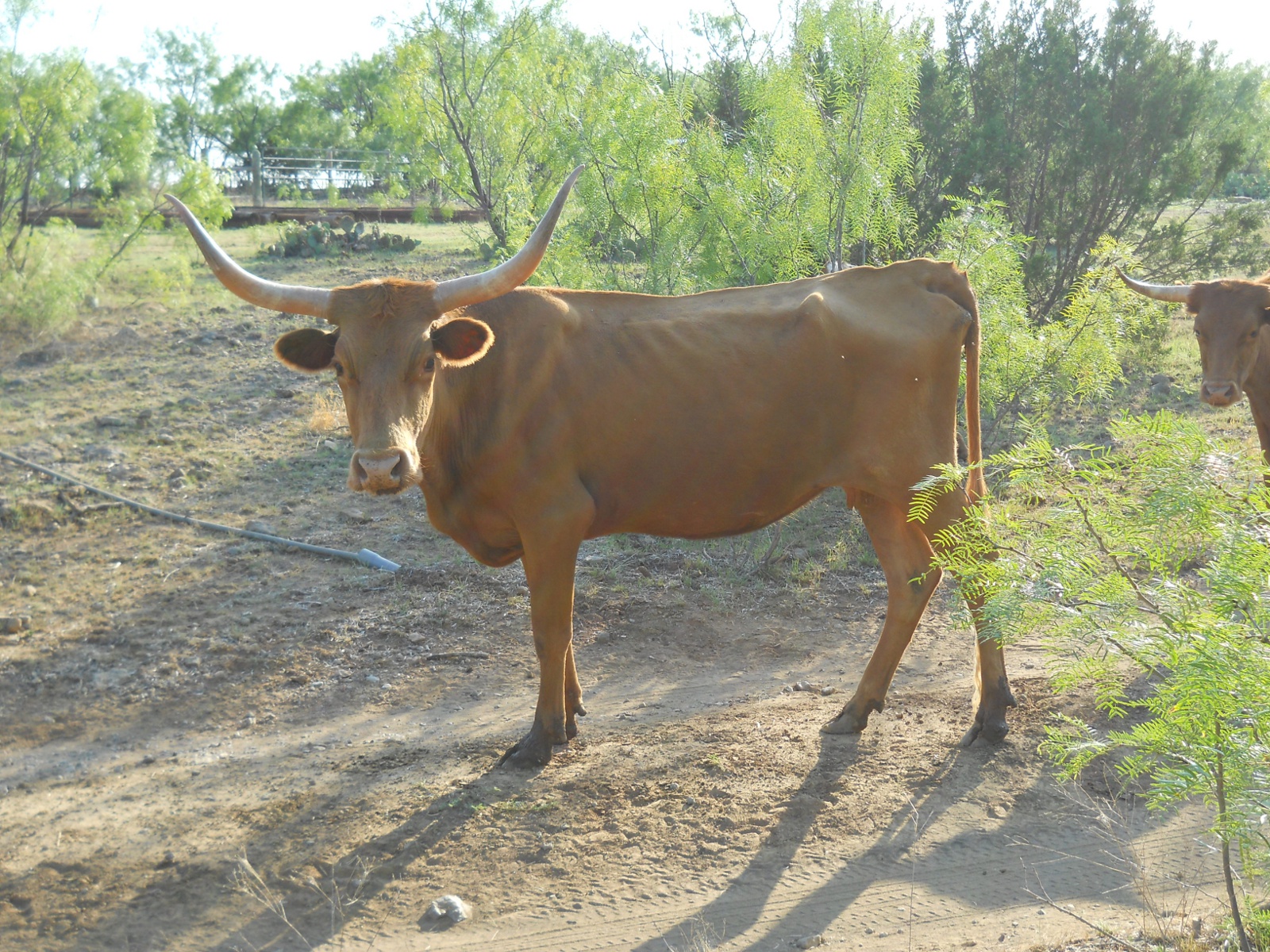
This was Catalina:

Our Texas Longhorn Cow Catalina

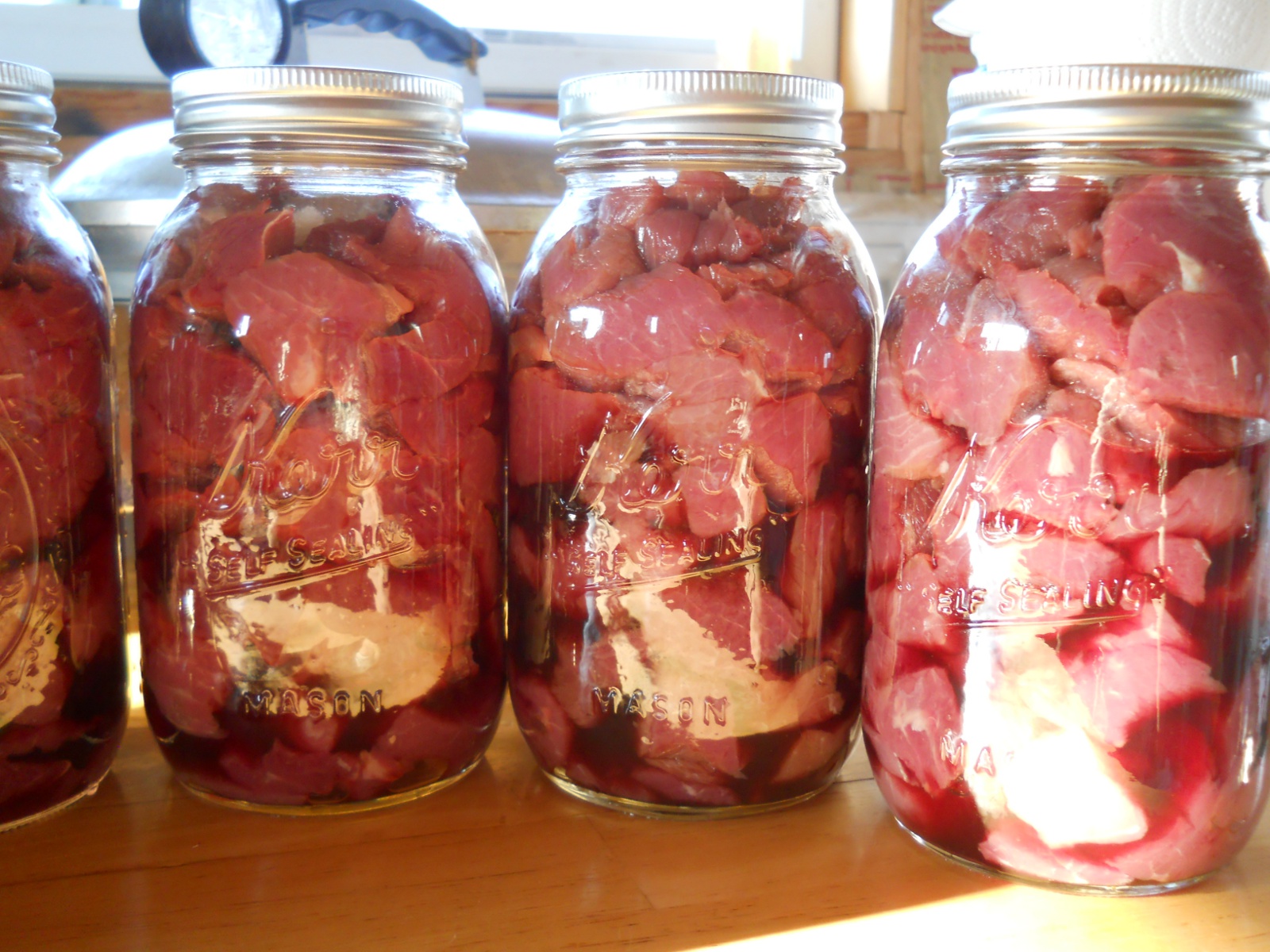
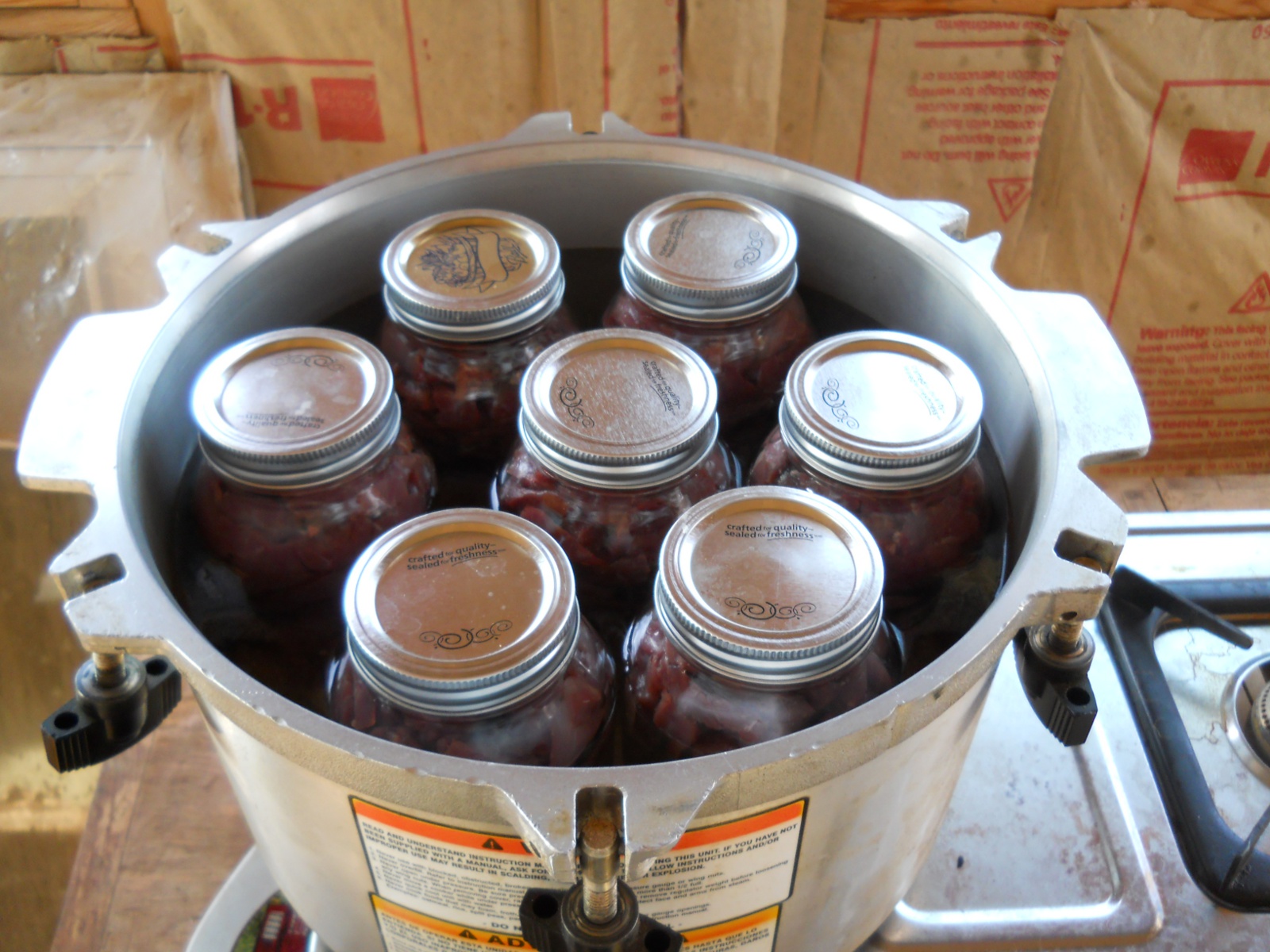
And so, after getting her back from the processor, Sue began the preserving process. When we use the butcher, we have them cube a lot of the meat into chunks all ready to go into the jars:

Catalina Our Texas Longhorn Cow in Jars Ready for Canning

And here they are ready in the canner:

Catalina Our Texas Longhorn Cow in the Canner Ready for Canning

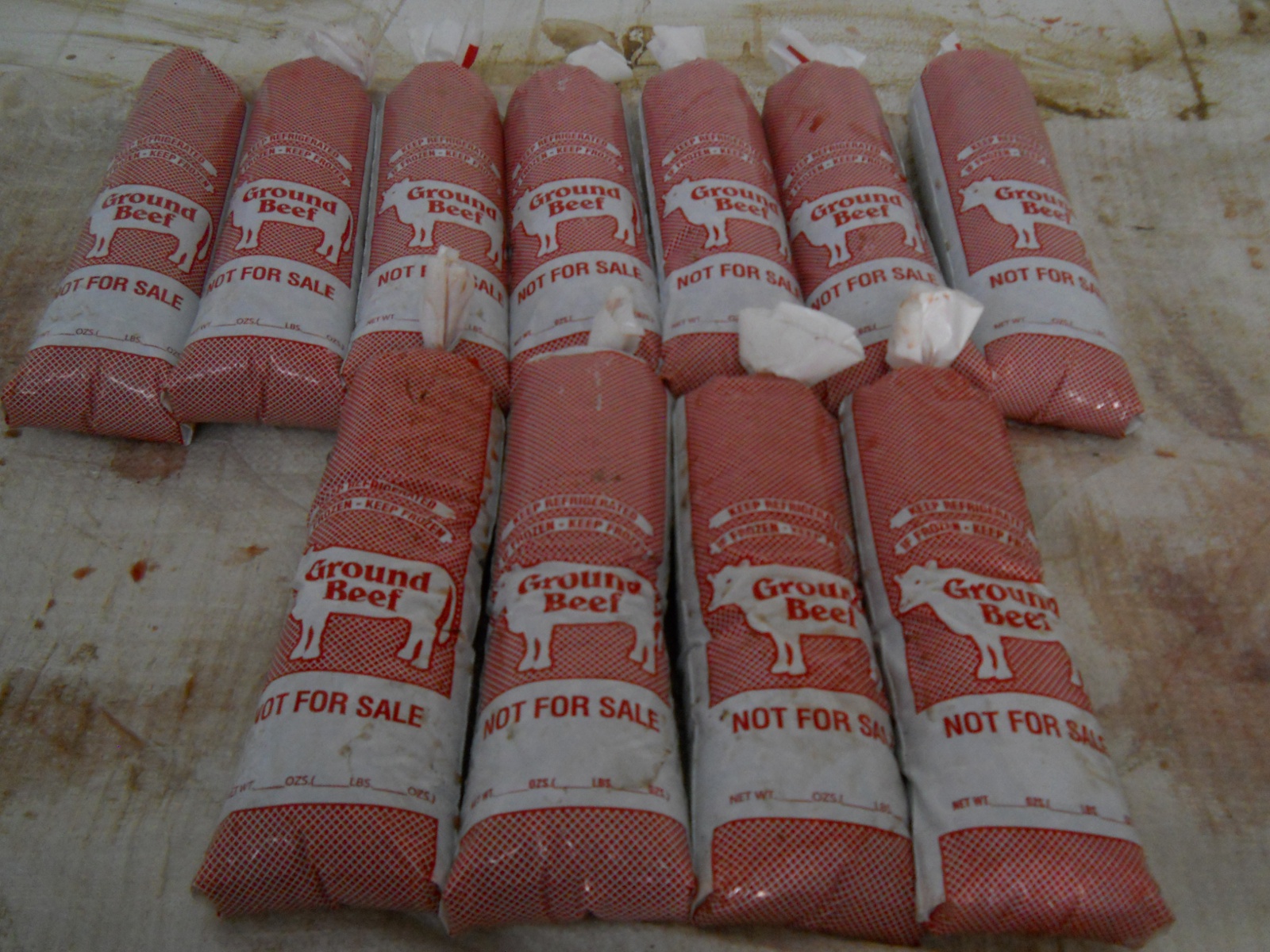
Here are some of the hamburger meat packages:

Catalina Our Texas Longhorn Cow Hamburger Meat

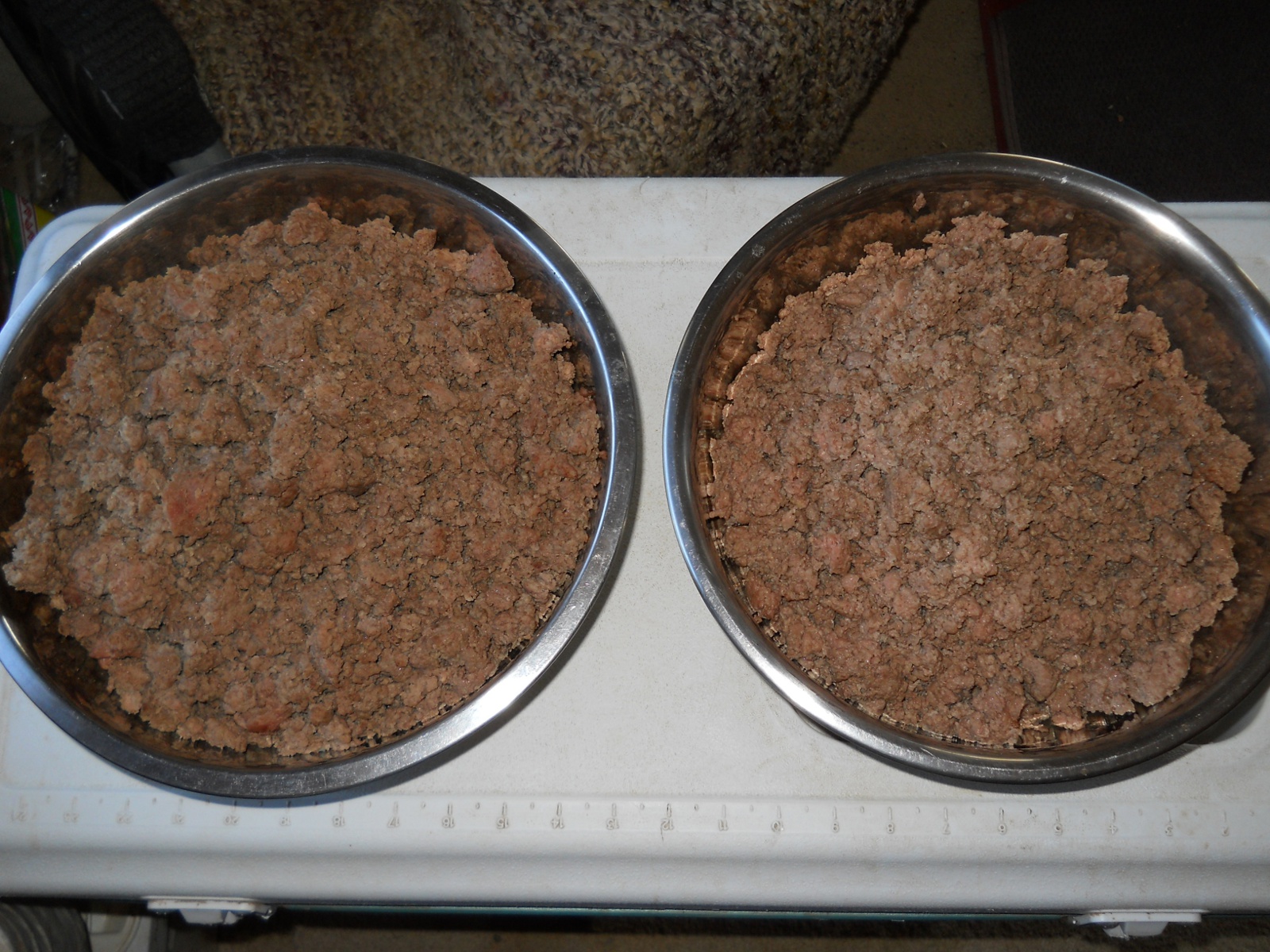
And Sue browns it before putting it into the jars to can, which apparently helps get extra oils/grease out which could overflow if not removed ahead of time:

Catalina Our Texas Longhorn Cow Browned Hamburger Meat Ready for Canning

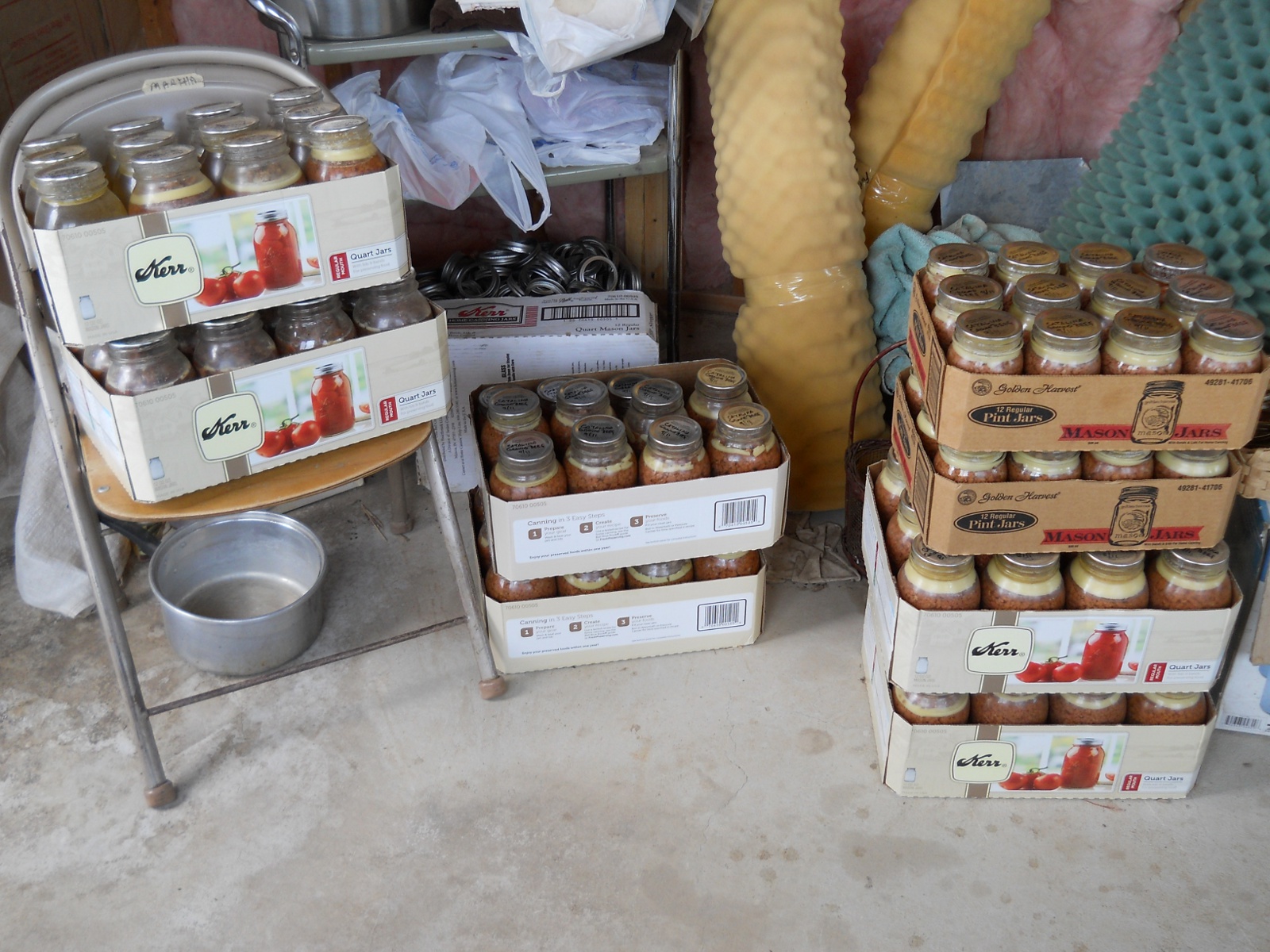
And here she is preserved and ready for the root cellar:

Catalina Our Texas Longhorn Cow Preserved in Jars

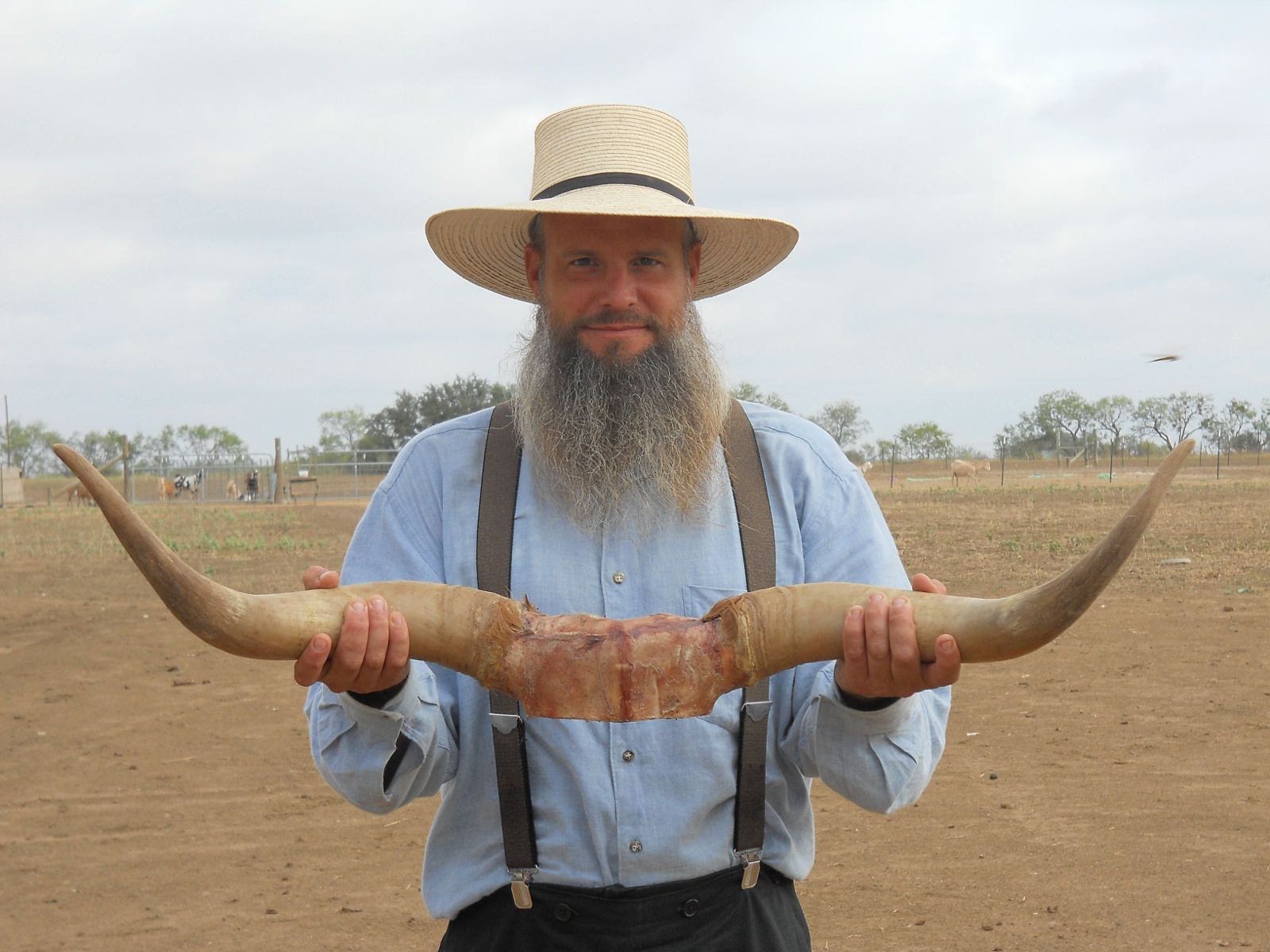
One of the benefits of the Longhorns is the use of other parts of the animal, include the horns; and so we had the butcher cut them off of the head, and hopefully I’ll be able to turn them into something mountable some day:

Horns of Catalina Our Texas Longhorn Cow

And so, after the processing, it was time to partake in the first one of our personal cows to be eaten!

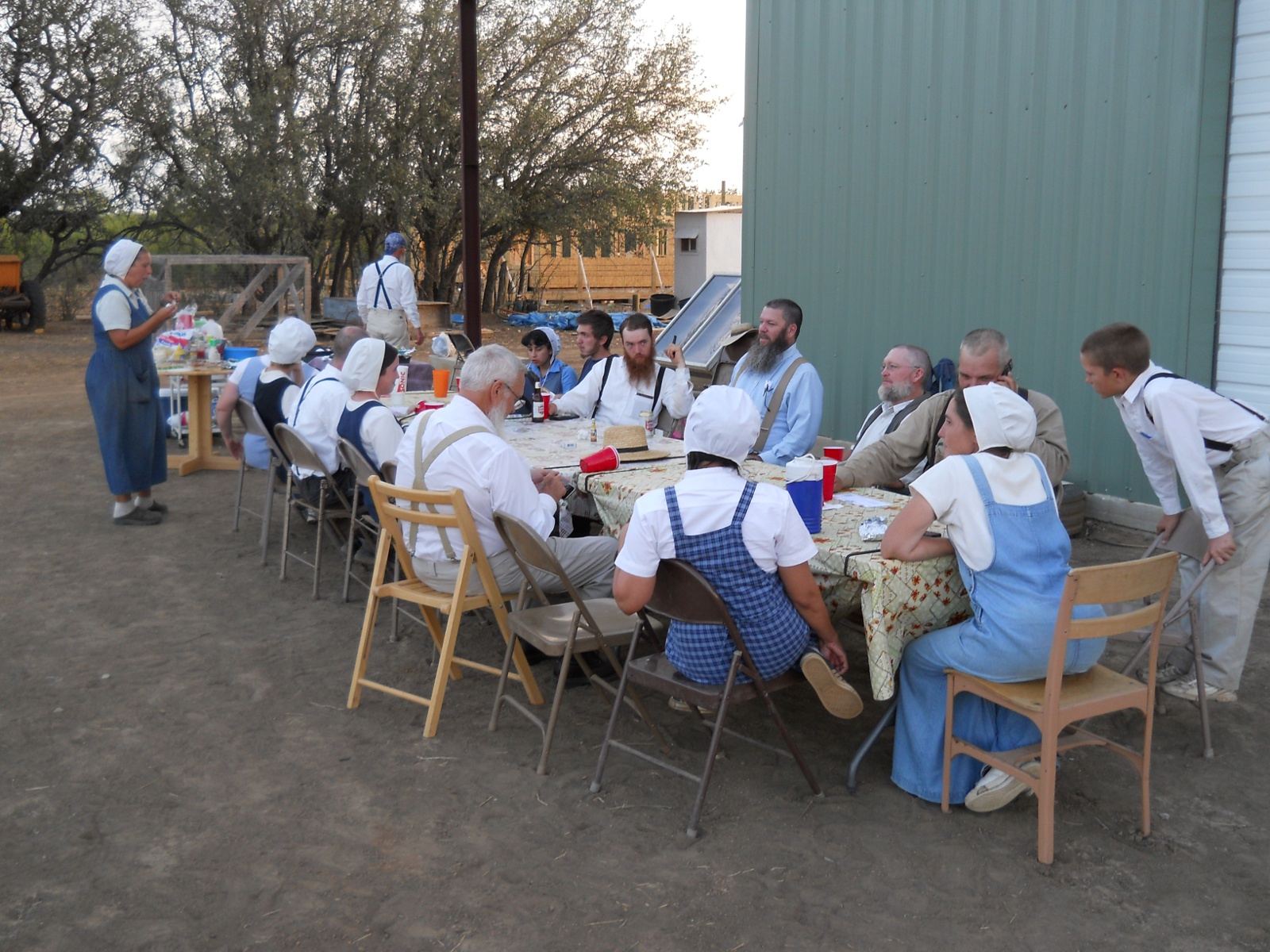
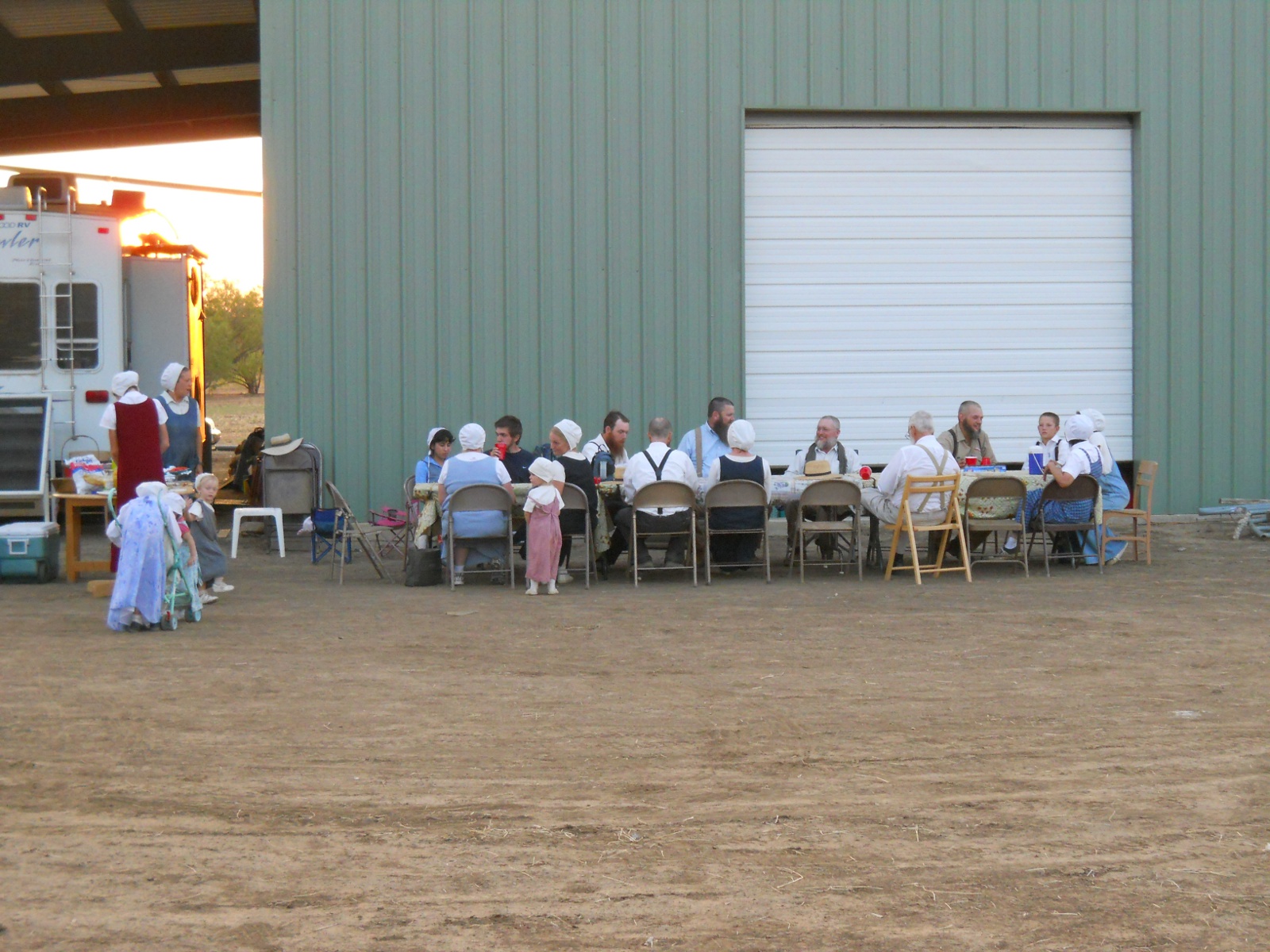
One of the joys of living here is the fellowship, and we wanted to share in the further joy of the providence of the meat with the community. And so, we had Catalina burger night at our place!

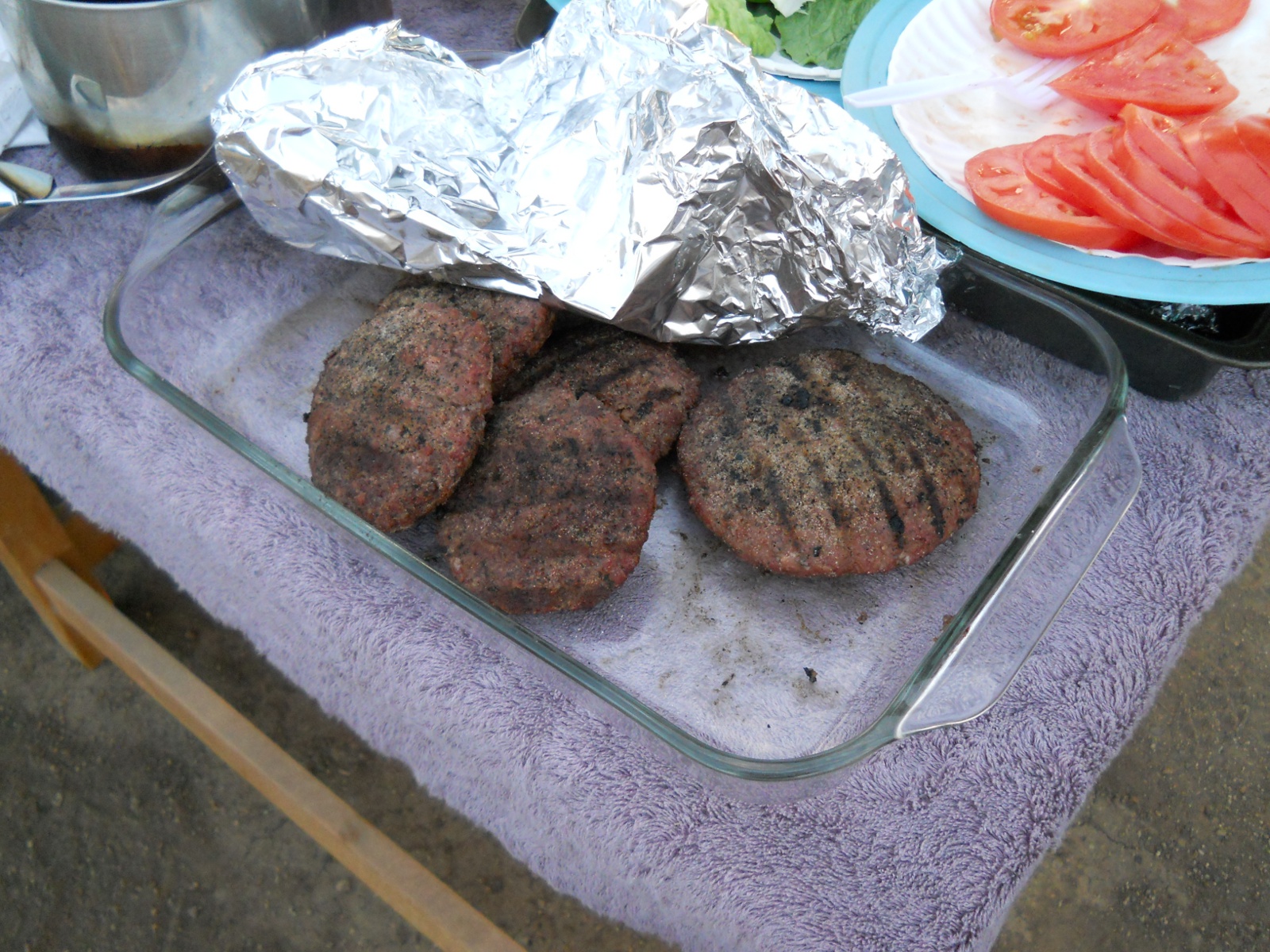
Here are some of the grilled burgers:

Grilled Texas Longhorn Burgers

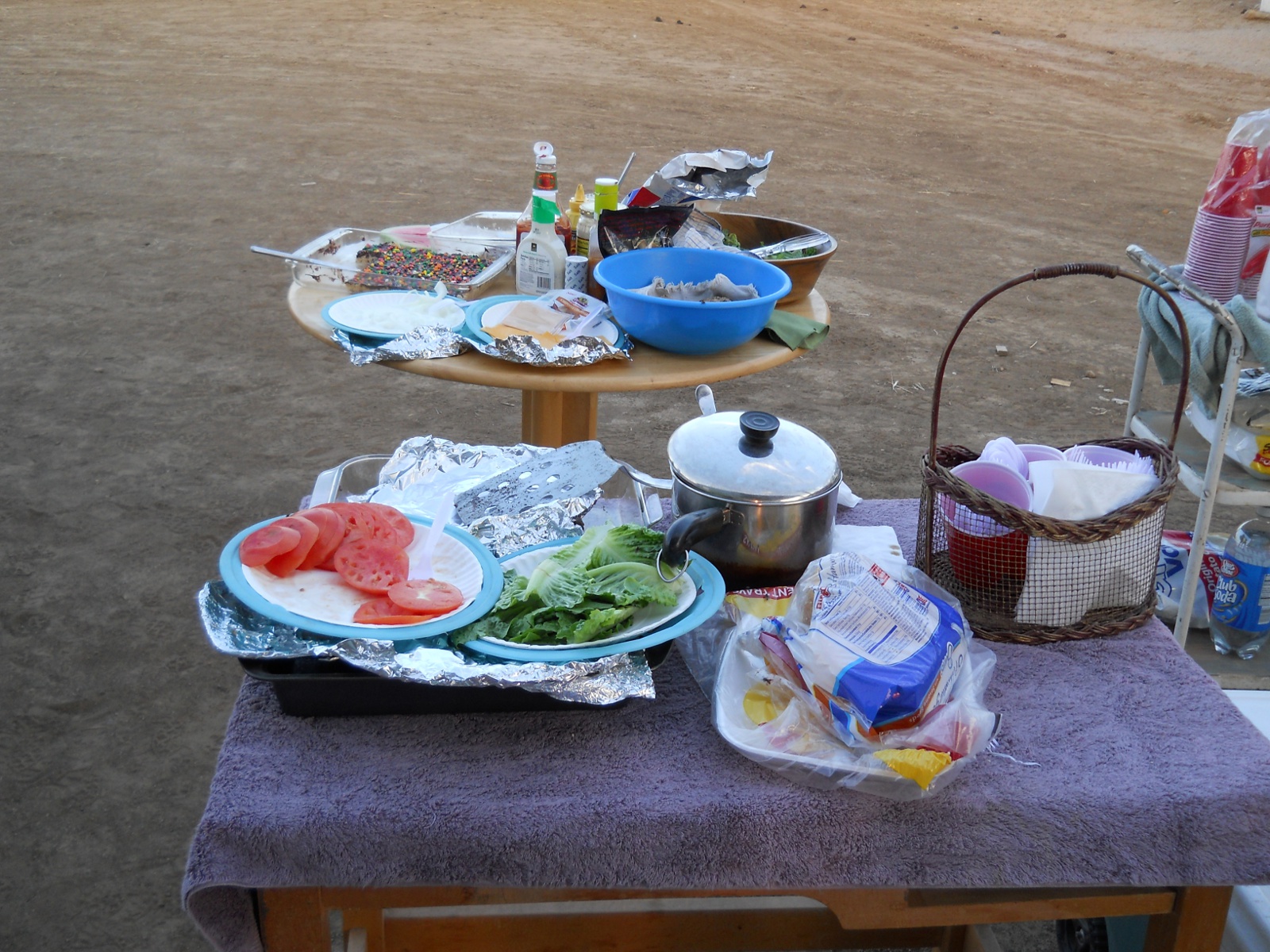
And the trimmings and side dishes, with which several of the ladies graciously helped:

Grilled Texas Longhorn Burgers Fixings and Side Dishes

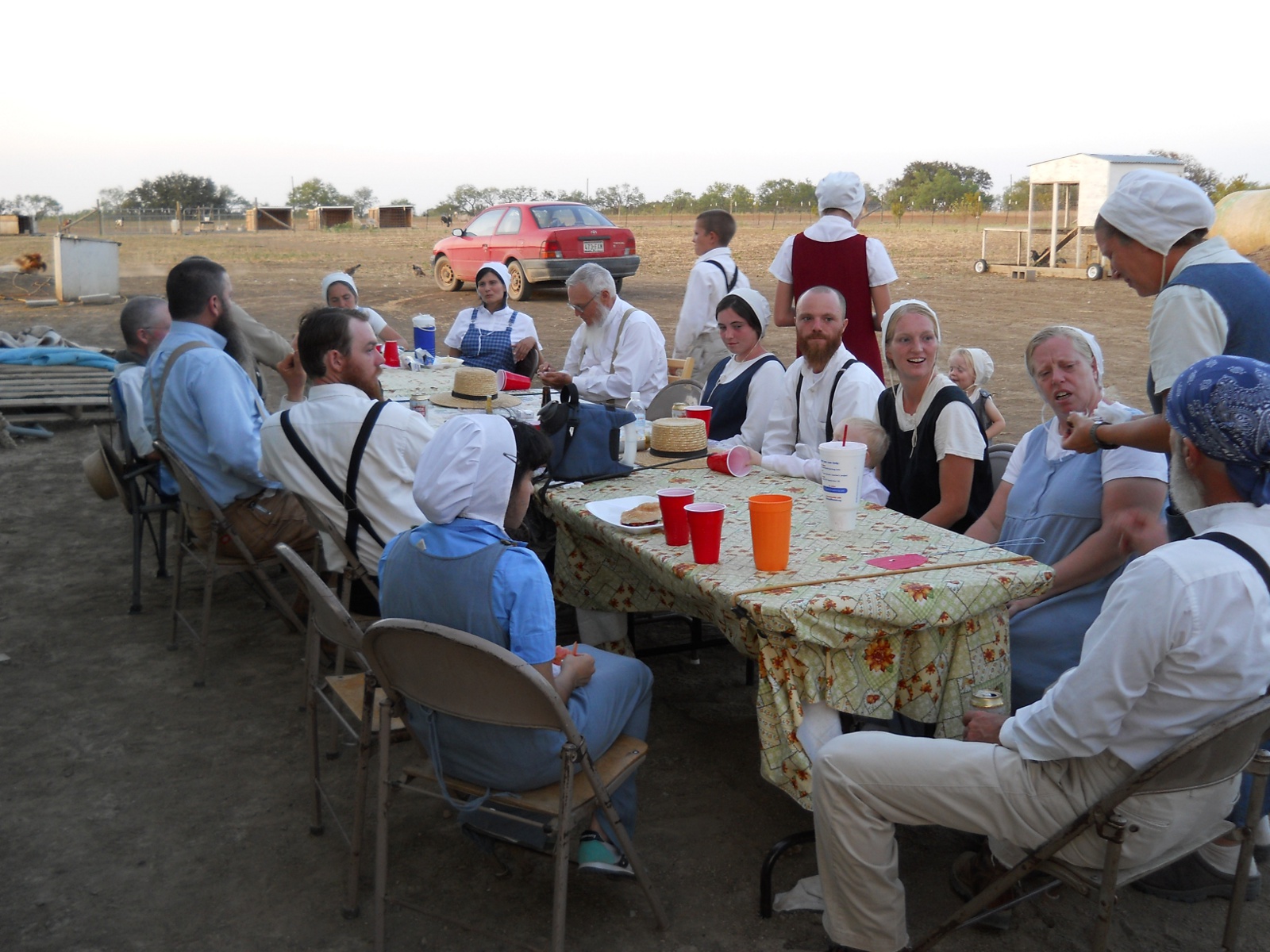
We are very thankful for the grace and mercy the Lord has afforded us in this general time of peace to be able to fellowship together, after enjoying His direct provisions:

Grilled Texas Longhorn Burger Fellowship Night Around the Table
More Grilled Texas Longhorn Burger Fellowship Night Around the Table
And Still More Grilled Texas Longhorn Burger Fellowship Night Around the Table

We are grateful to the God of all providence in allowing us the healthy food from this organically raised, grass-fed cow; and we are thankful to Him for allowing us the fellowship and community He has here.

— David
Garlic 2011 – Update I – Doing Something About Garlic “Breadth”

In our last blog post on our 2011 garlic, we had harvested our first small batch; and I tried my hand at braiding it (which turned out to be very “trying”). Well, since then, we have harvested the remainder of the crop, which we did back in May; and we wanted to share a little more of the garlic processing process.

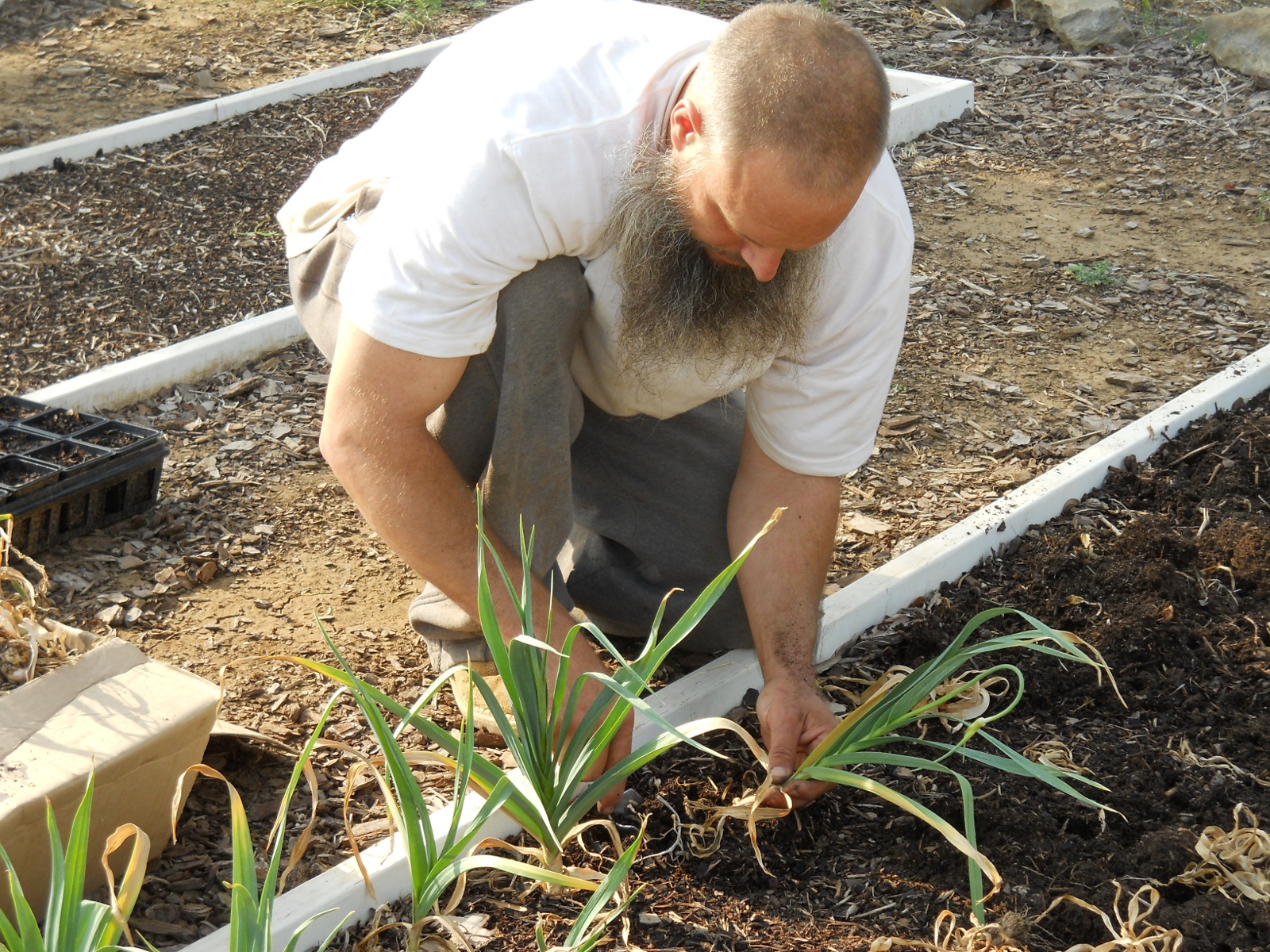
Here is Dave pulling the garlic plants from the beds and placing them in a big box:

Harvesting Garlic

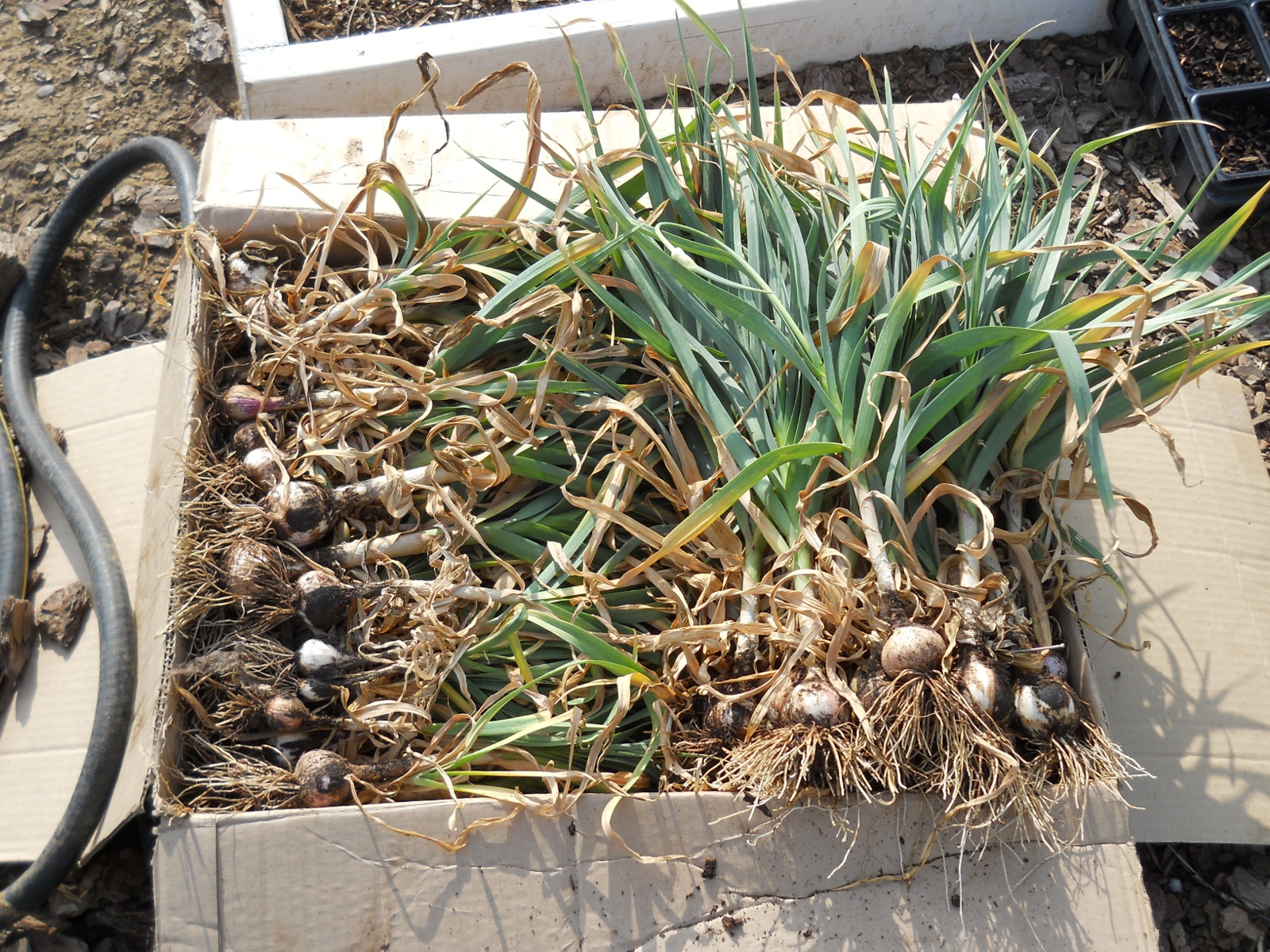
Wow! Our first garlic crop! It sure smelled good:

Harvested Garlic Plants in A Box

This time we did a bit more research before diving into it, which paid off. We laid out all of the bulbs in the indirect sun for a few days on our makeshift food dryer:

Garlic Plants Laid Out to Dry

Here is a closer look:

Garlic Plants Laid Out To Dry

Then we moved it all into our summer kitchen in preparation to be braided and hung:

Dried Garlic Plants

I was successful at braiding the larger garlic plants; but as I got to smaller ones, the leaves were just too dry and difficult to braid and handle. So I started gathering them into bunches and tying them at the top. I actually like this method better; and it works just as well, in my opinion. I then hung them on my garlic hanging stand (aka: clothes dryer). I was pleased with the end result:

Hanging Garlic Plants

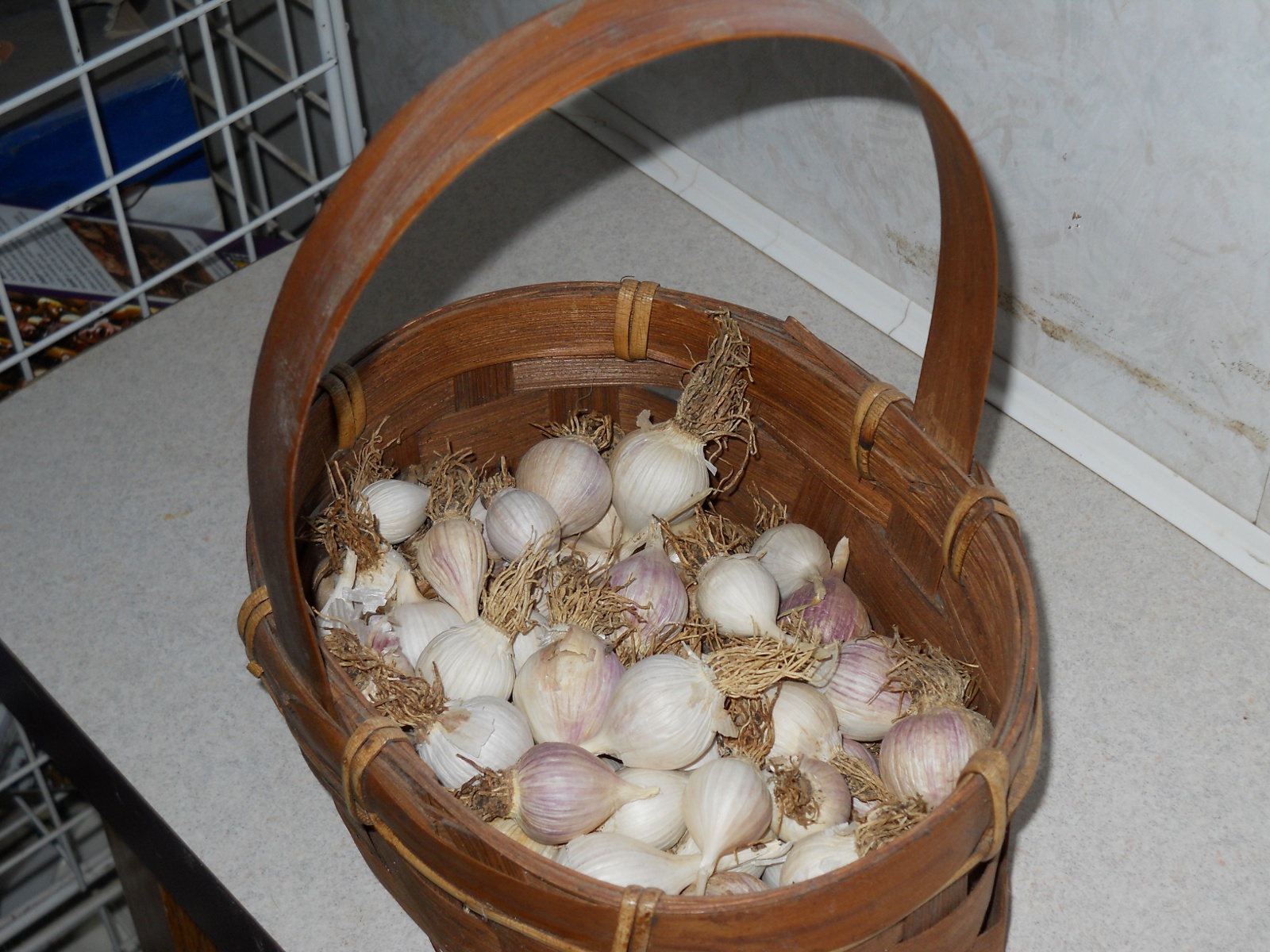
There ended up being many other small bulbs that either lost their leaves or fell off in the process. So I gathered them up and placed them in a small basket. I keep the basket in my kitchen, and it’s perfect for grabbing as many garlic cloves as I need at any given time. And the garlic smells and tastes wonderful!

Basket of Small Garlic Bulbs

Due to the extreme drought we have been experiencing, this is the only garden harvest the Lord allowed us to have this Spring and Summer (in addition to a few tomato plants on which the jury is still out). We are very thankful to God for the gift of this garlic crop and look forward to possibly spreading our garlic “breadth” in the future. 🙂

Susan

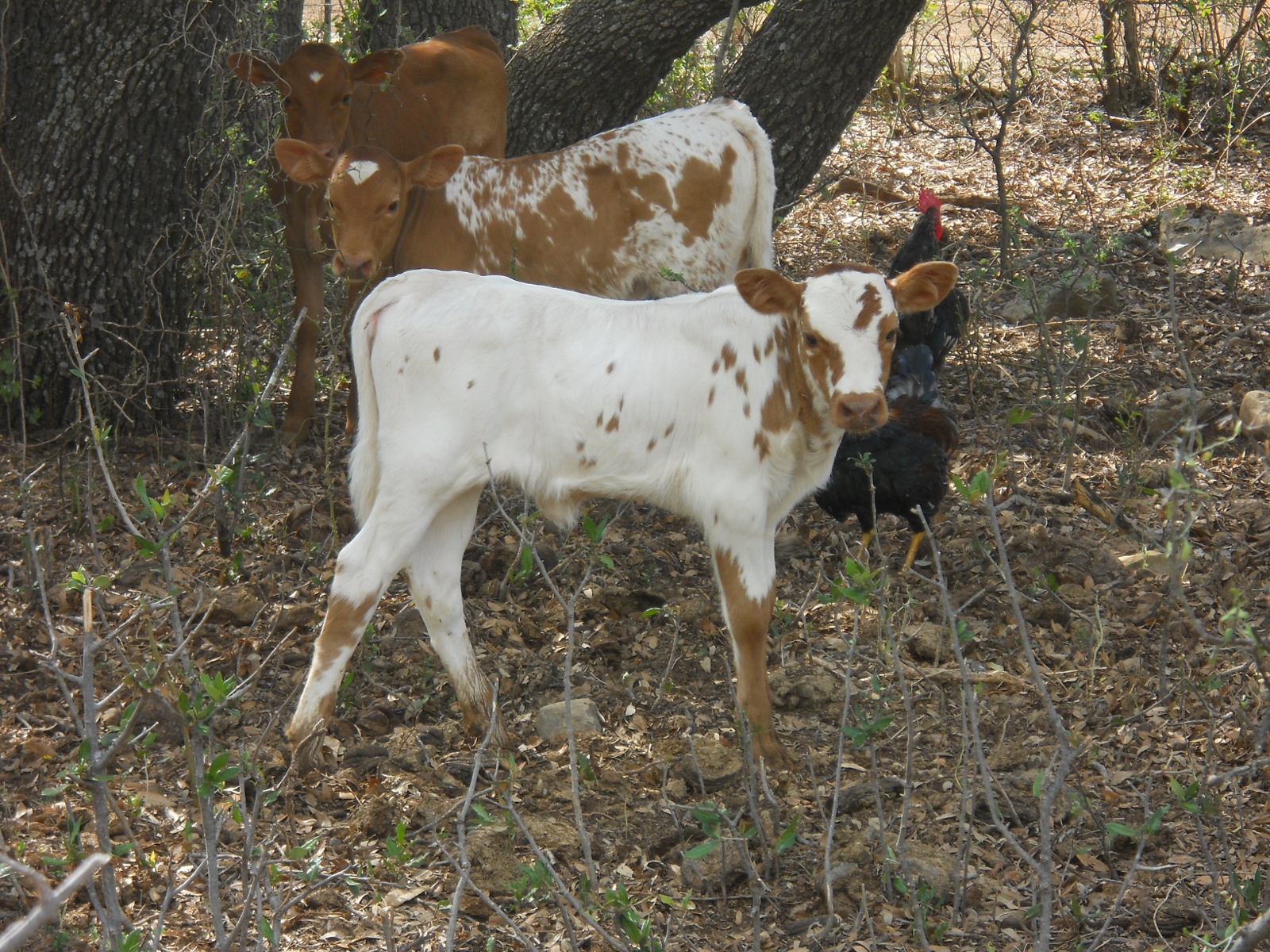
Providence’s Perpetuation Provisions: New Calf “Clara”

And again, the Lord in His graces and mercies granted another calf, this one to our cow Casi Blanca (whose dam is Amistosa); and she too is a little heifer calf. She has a little brown island on her forehead, so we decided to call her Clara, named after Montaña Clara, meaning “light-colored mountain,” which is an islet in the northeastern part of the Spanish Canary Islands.

Here is her picture:

New Longhorn Heifer Calf Clara

And her video:

Video of New Longhorn Heifer Calf Clara

We are continuously grateful for the safe and healthy deliveries of the new calves. And we pray for God’s continued guidance in our lives as we work to separate from the world unto Him and His prescribed way of living — the way of life He invented.

— David
« Older posts Newer posts »