Our journal of what we pray is our sojourn of life along the narrow way, even the old paths, submitting to the Bible as a light unto both.

Category: food (Page 28 of 35)

How To Render Lard

As most of you know recently we had our sow, Missy, butchered. The butcher gave us all of her fat. which I rendered into lard. I thought I would share that process because it’s so easy, and people don’t think of lard as a great source of healthy fats anymore.

The fat usually comes in bags of large, thick, strips:
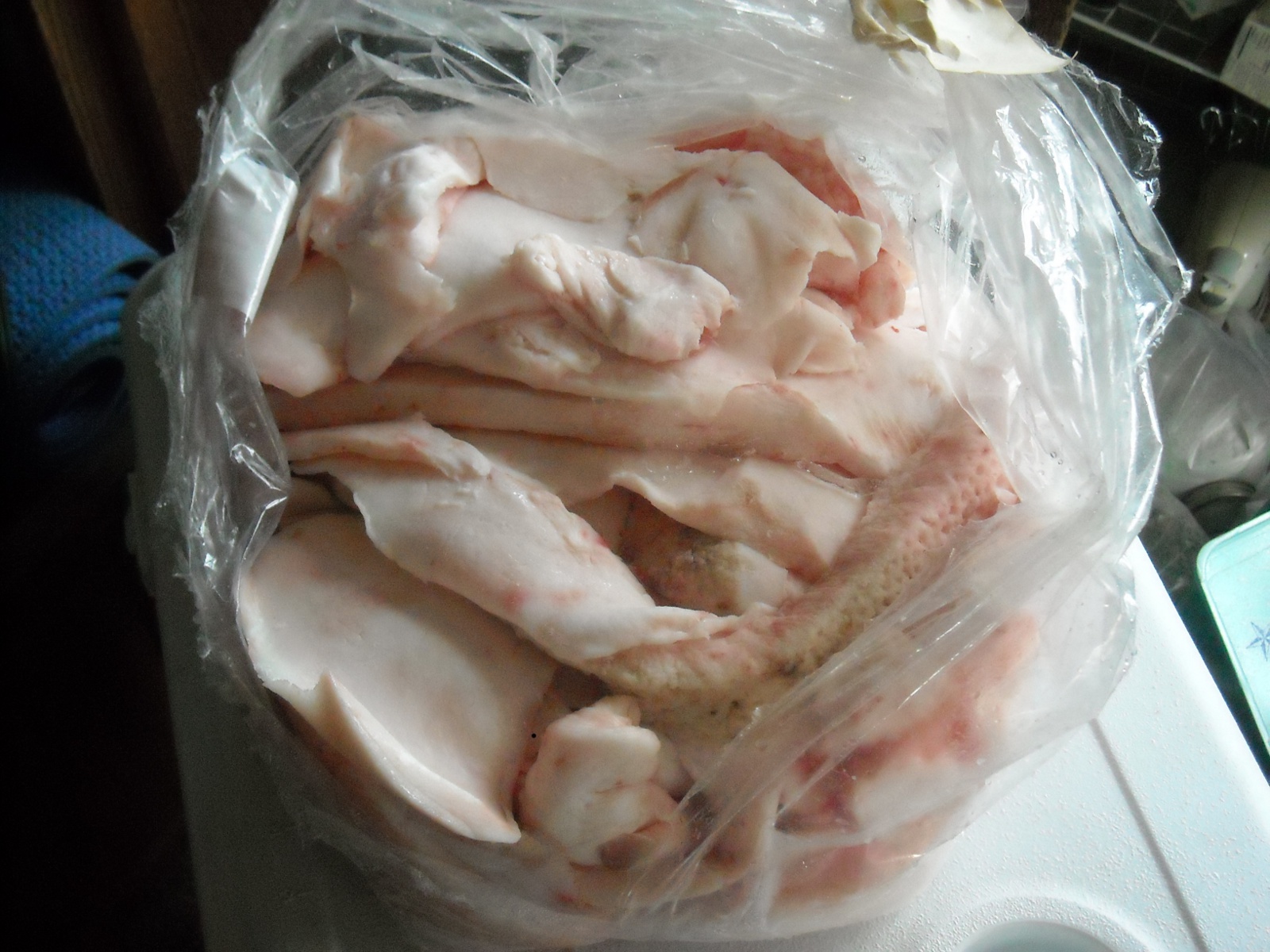
Bag of Pig Fat

To enable the fat to melt quicker, I cut it into 1-2 inch pieces. It seems to cut better and easier if the fat has been chilled and is less rubbery in consistency:
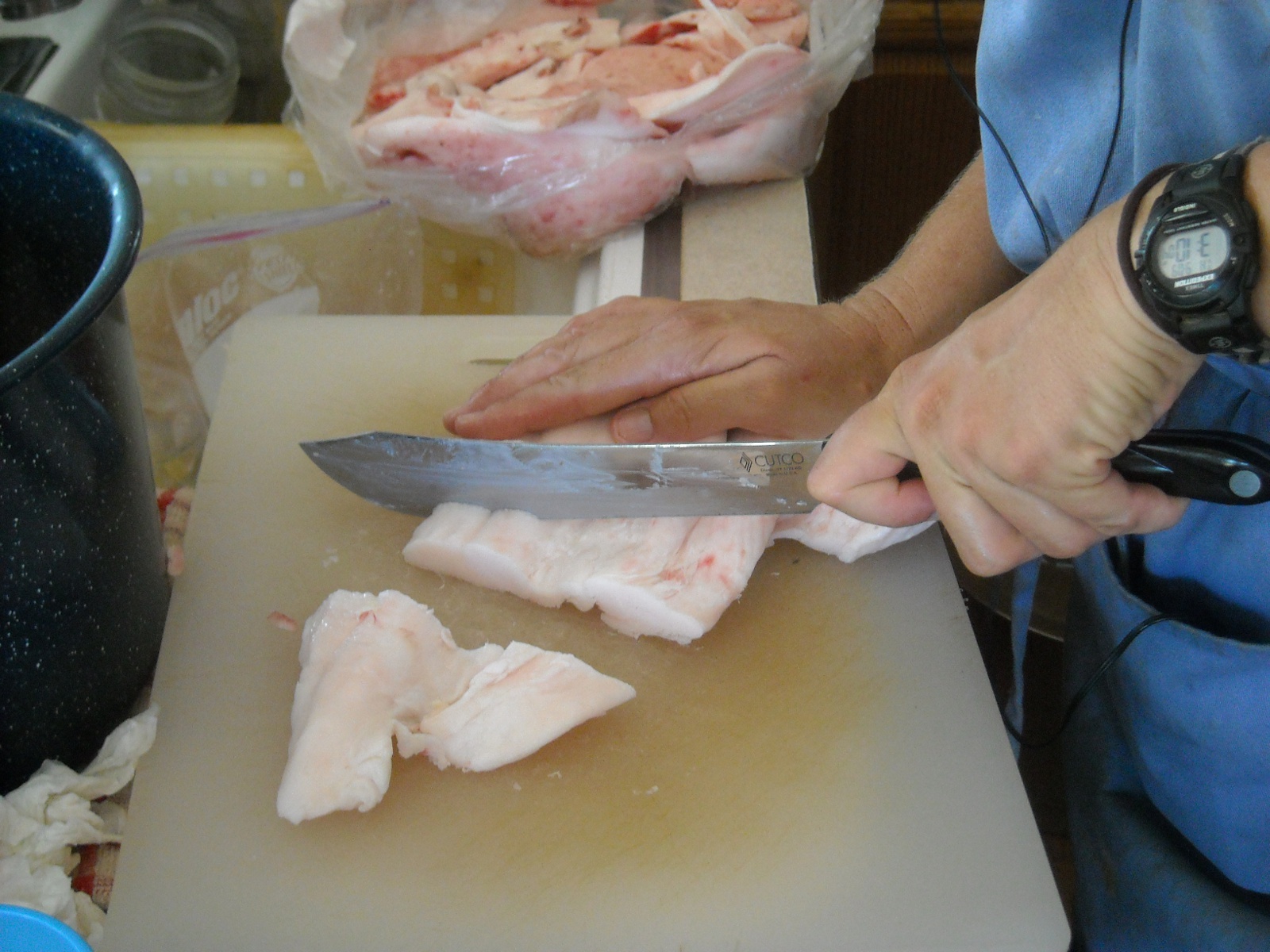
Cut Up Pig Fat

Then I put it all into one or more simmering pots. (Any stock or soup pot or even large sauce pan seems to work fine):
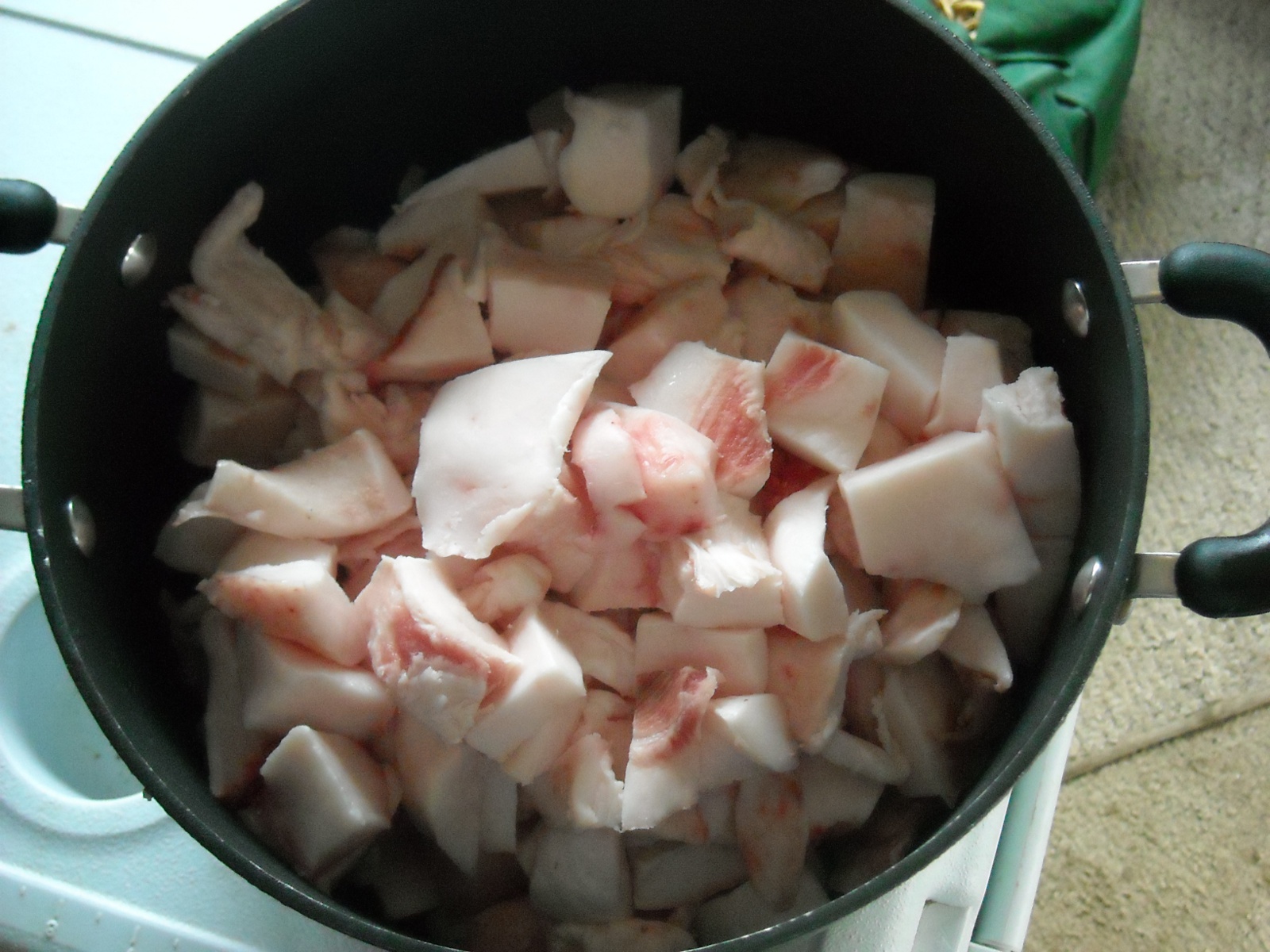
Cutting Up Pig Fat

I place the pot onto a burner and turn it to the lowest setting. Some people might prefer to put a heat diffuser under the pot to more evenly distribute the heat and protect the fat from burning. I don’t have one yet, so I just put the pot right on the burner. As the fat heats up, it will turn rubbery and creamy white in texture and appearance:
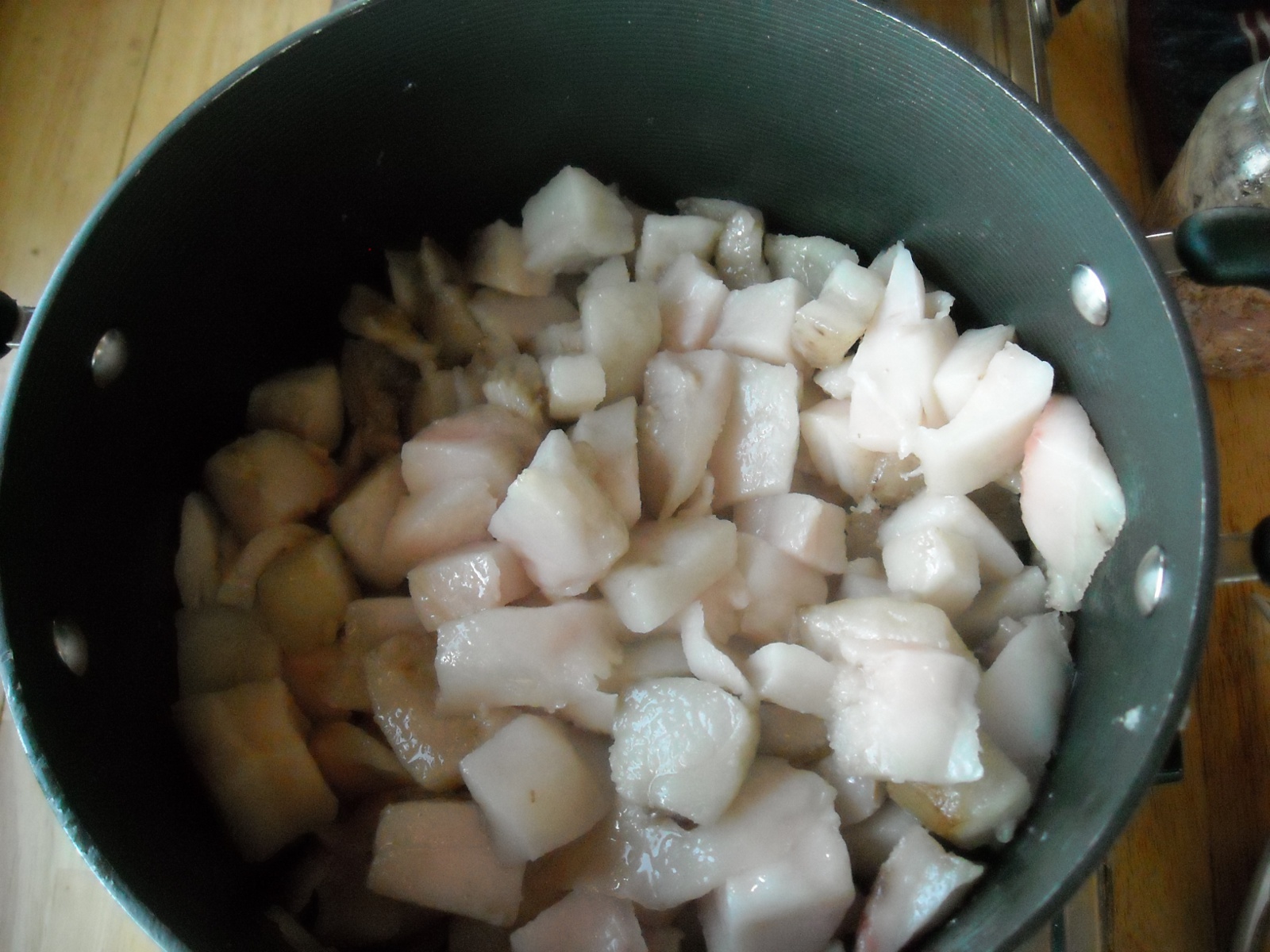
Pig Fat Starting to Simmer

As the fat continues to melt, it will become increasingly bubbly. Rendering fat is not something you can start and come back to in a few hours. Due to the fact that it is very hot and can burn easily, you want to stir it fairly often (not constantly, but you want to be nearby enough to keep an eye on it). Also, please be careful not to look directly down into the pot as the fat is extremely hot and can pop up into your face and burn. I also don’t usually put a cover on the pot, as the condensation drops down into the fat and causes more popping if I do. But do whatever you prefer and feel is safest:
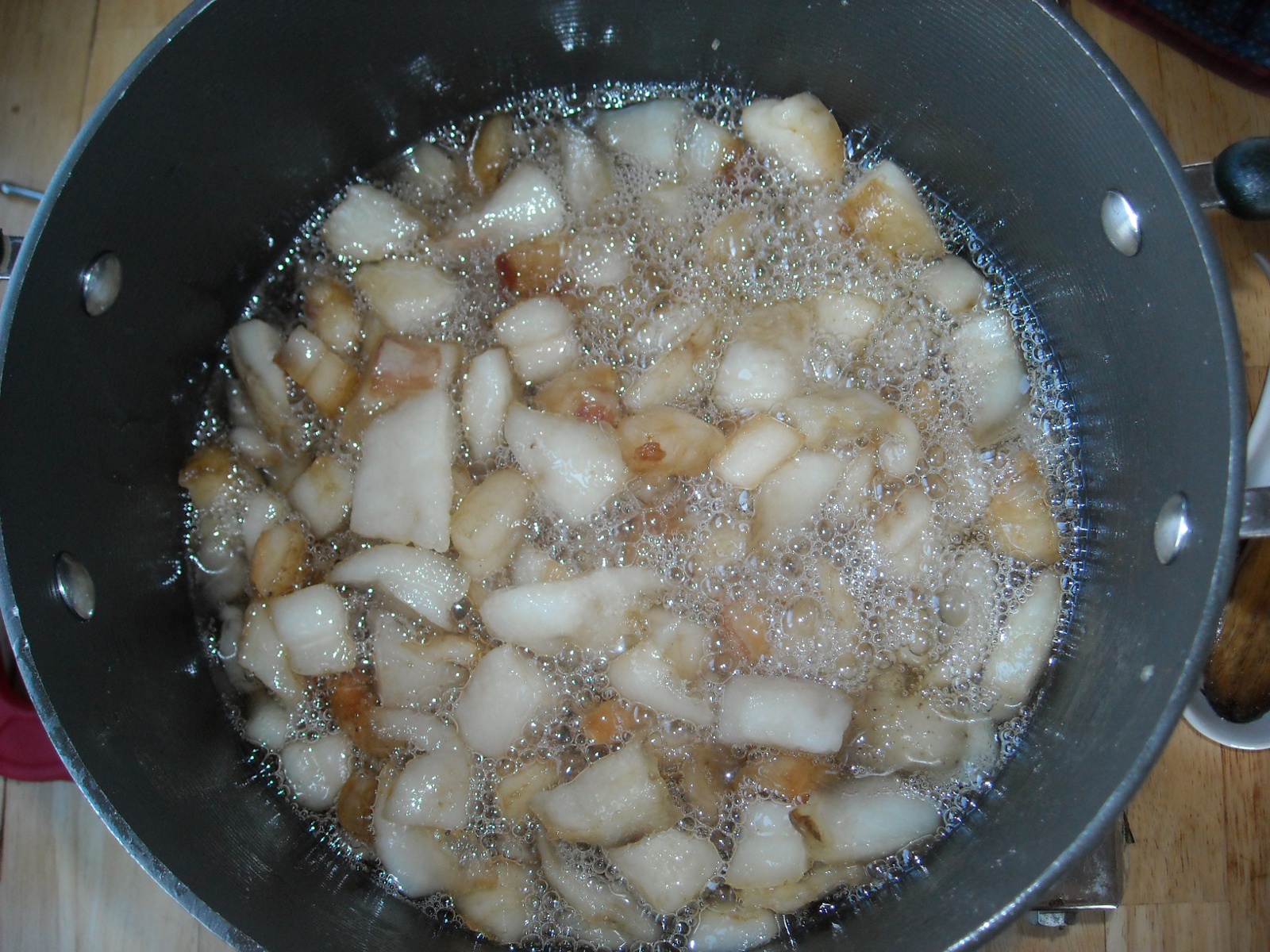
Pig Fat Melting and Bubbling

There will be a point where the bubbling will start to subside after a period of time (a few hours in my experience):
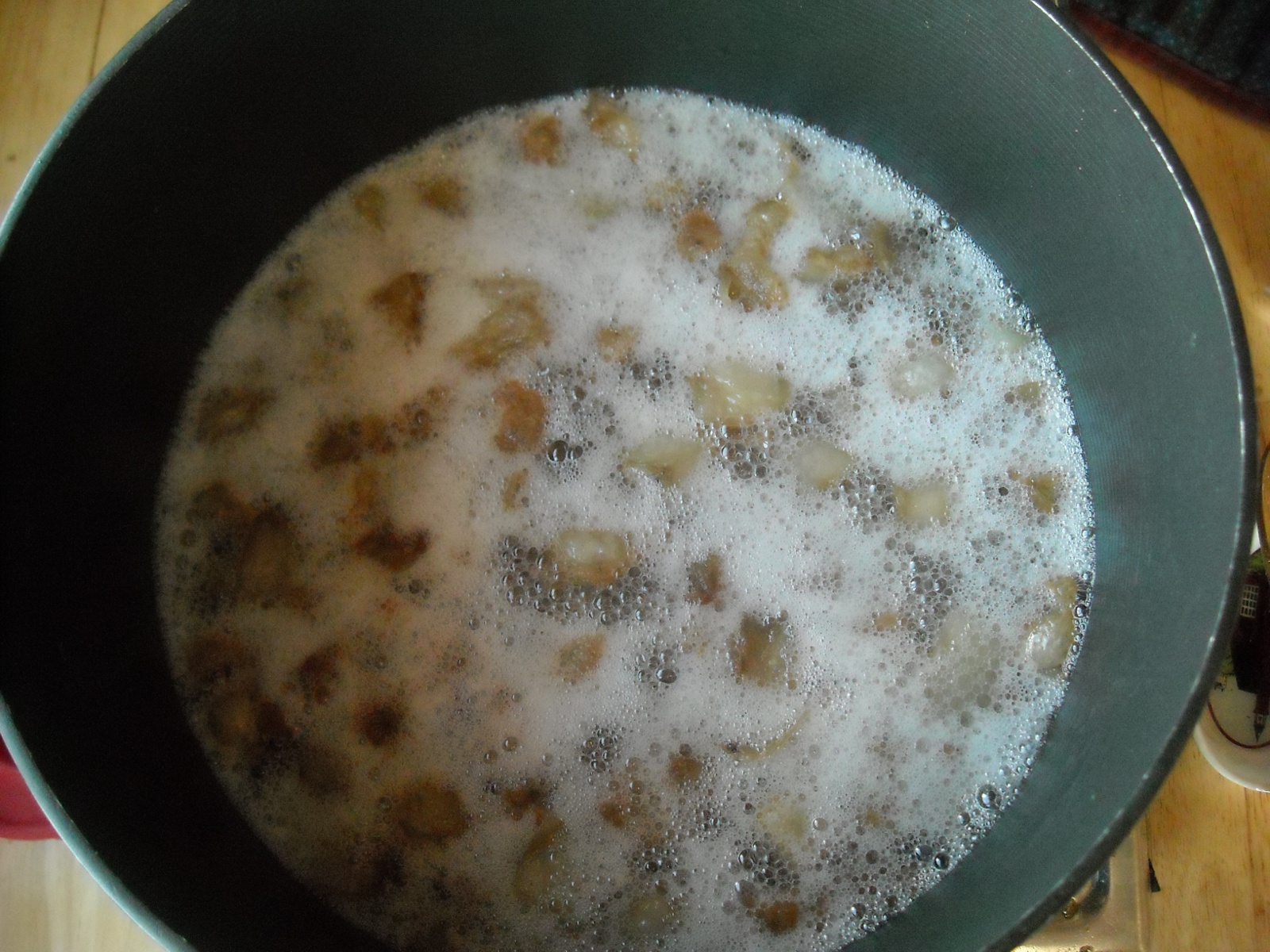
Pig Fat Very Bubbly Melting into Lard

After the bubbling subsides a bit, you will see the pieces of cooked fat called “cracklings” floating in the liquid fat. At this point, the rendering process is close to complete; and you want to watch to make sure your fat doesn’t start to smoke or the cracklings scorch. This makes for burnt lard, which is still usable but not desirable:
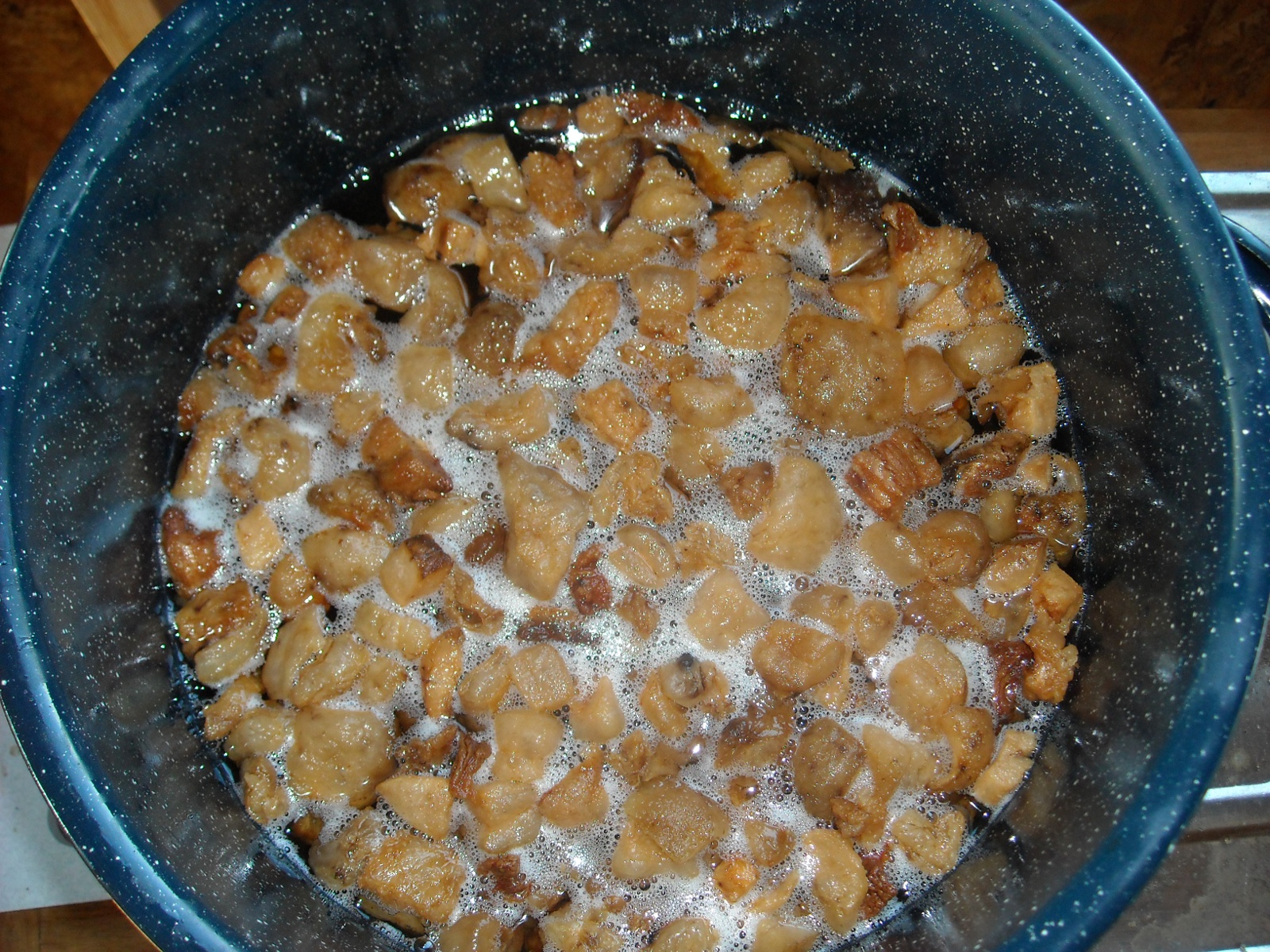
Pig Fat Cracklins Sinking to Bottom of Pot

I have learned it is better to turn off the heat sooner than later to ensure no burning of the lard. When the bubbling has mostly stopped, I turn off the heat; and the cracklings start dropping to the bottom of the pot:
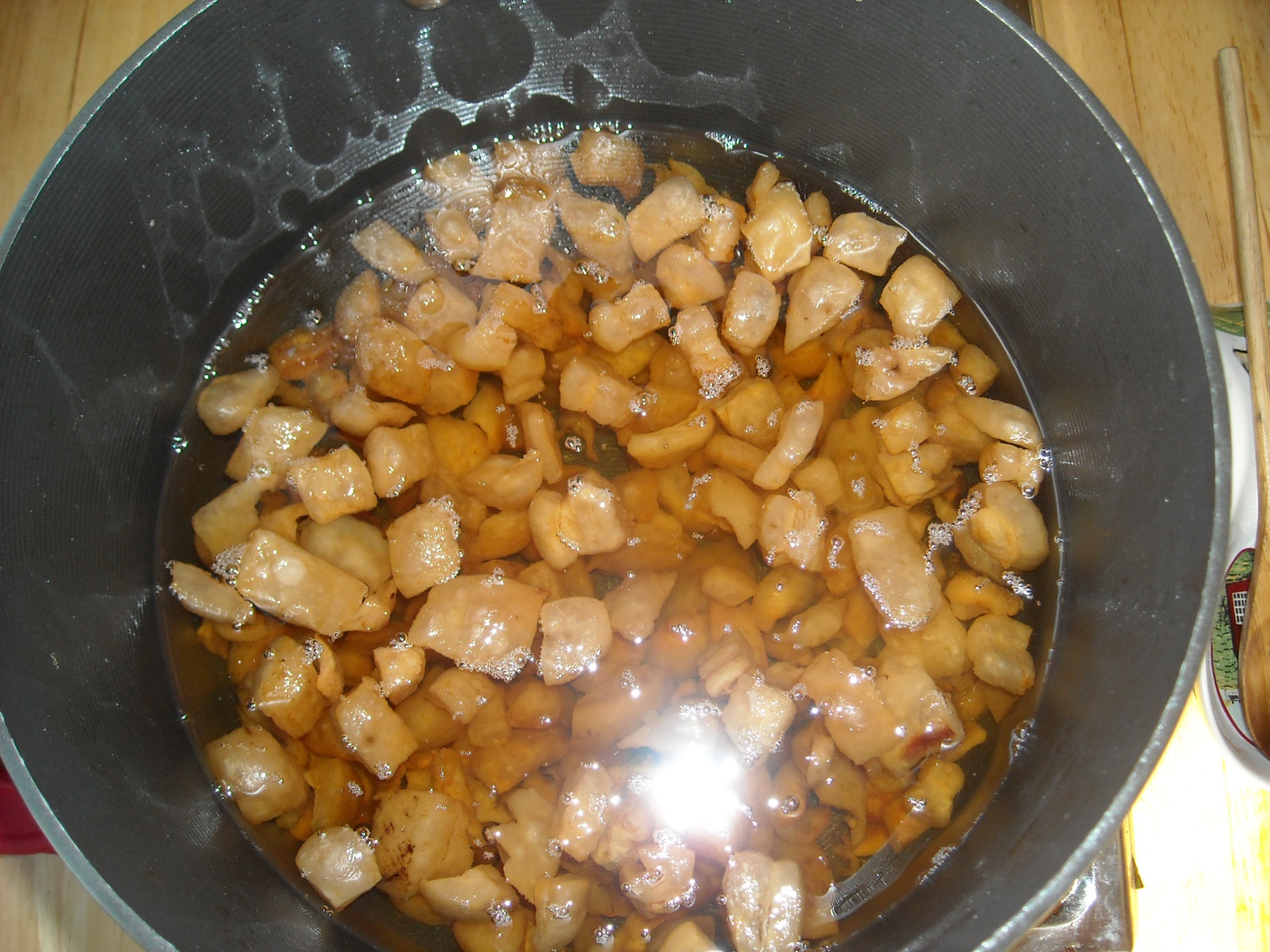
Pig Fat Melted into Lard

After a short time, most of the cracklings should sink to the bottom of the pot leaving pure liquid fat waiting to be spooned out and put into hot jars. Some resources will say this process can take up to 18 hours, and maybe I’m doing it wrong, but the method I use seems to only take a few hours per batch. Perhaps I’m not getting all of the liquid out of the fat pieces, but right now I don’t have the luxury of more time, and I’m not sure how one could get much more from letting it simmer a lot longer. And mine always starts to smoke if I leave it longer anyway. So, whatever method works best for you is the best method!
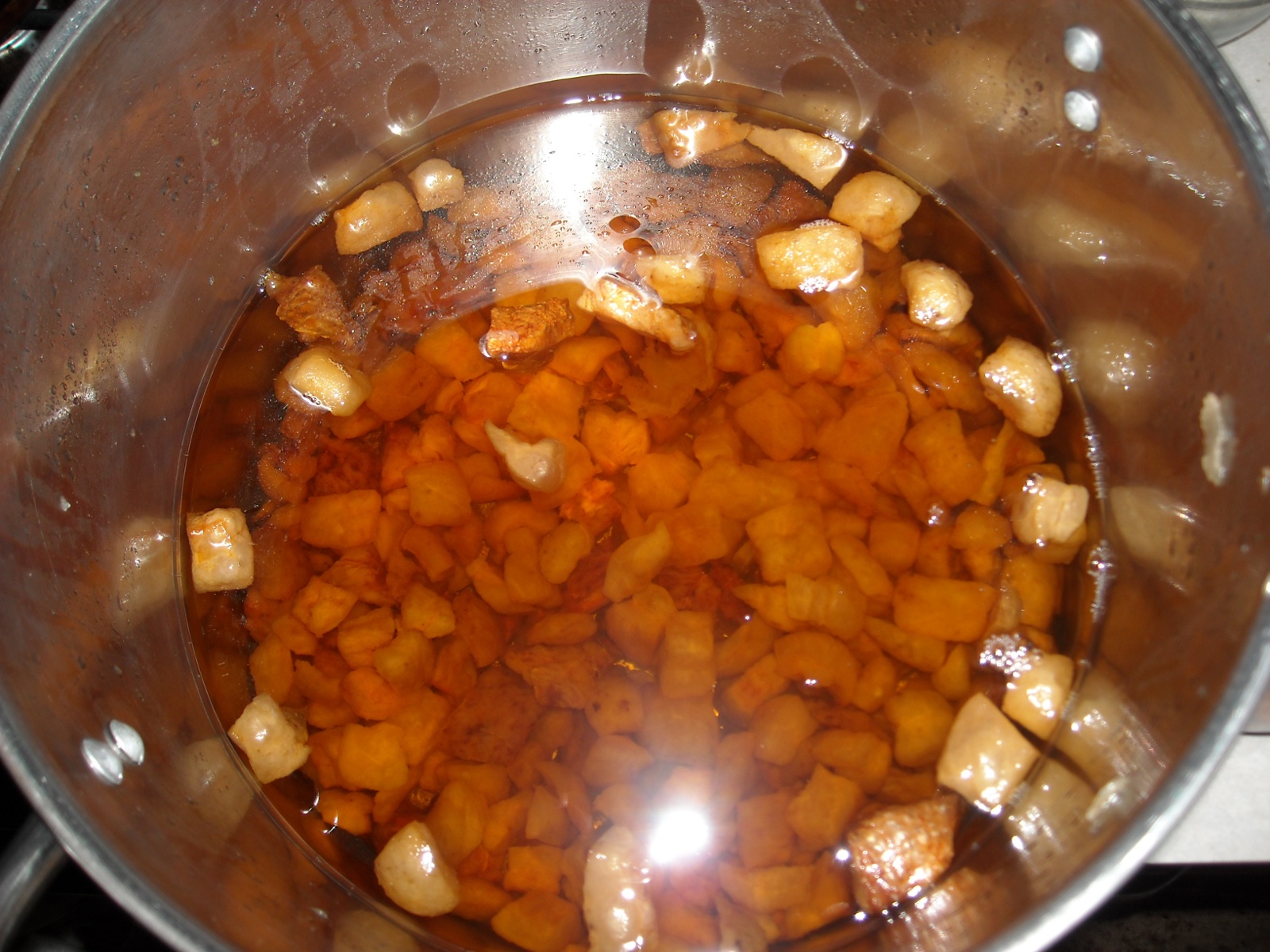
Pig Fat Cracklins Sunk to Bottom of Pot

Since the melted fat is EXTREMELY hot, it is best to heat up your jars before spooning the fat into them. I take clean jars, place them on the rack in the oven, and turn it on to warm or a little higher, and let them heat up while I’m prepping everything else. Then when I am ready for the jars, they will be nice and warm/hot to accommodate the very hot liquid:
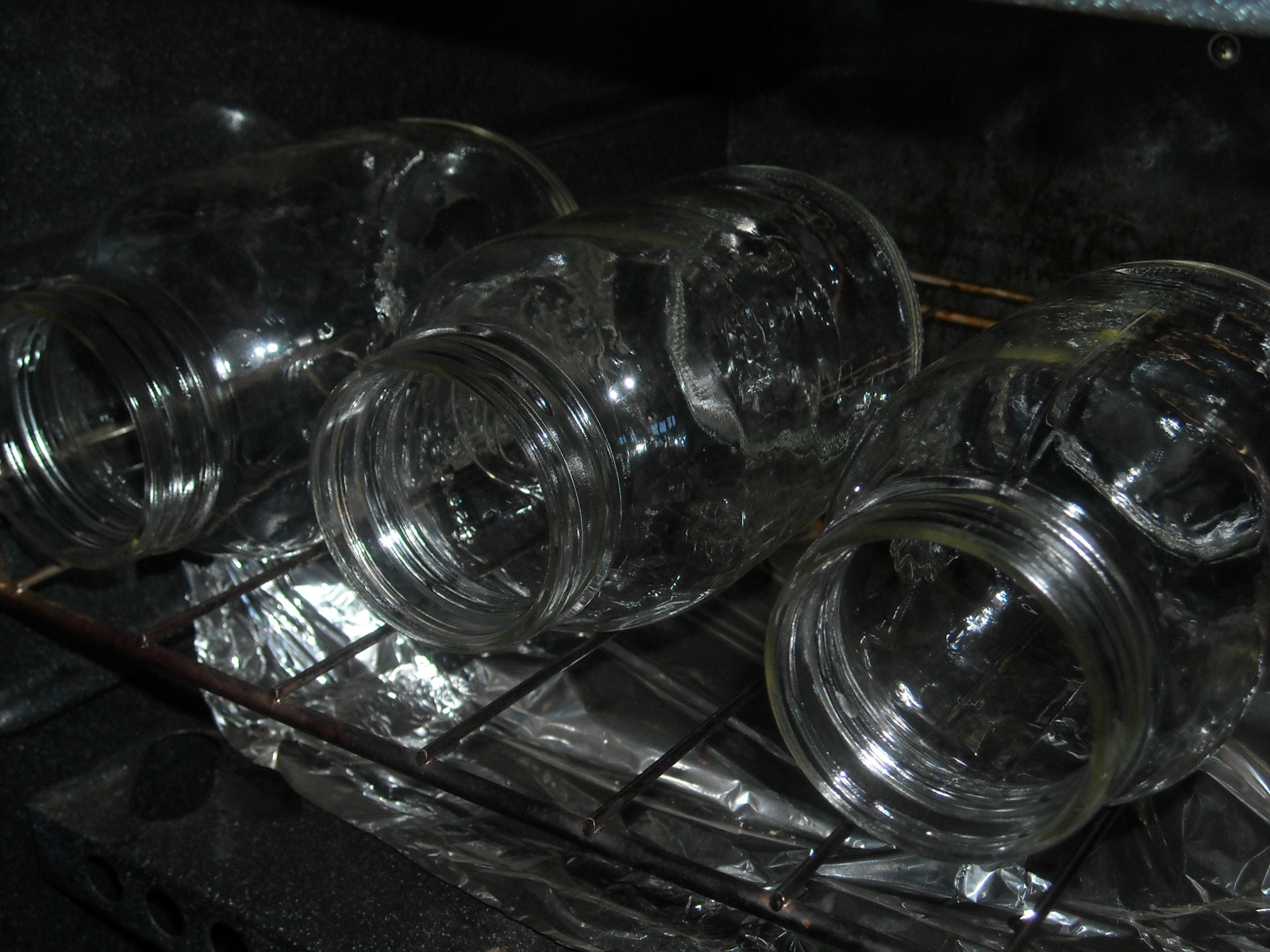
Heating Lard Canning Jars in Oven

To prevent little tiny particles of cracklings to get into the lard, I filter the liquid while spooning it into the jars. You can use whatever method works best for you (cheesecloth, paper towel, mesh strainer with cloth, etc.) I recently found that a goat milk filter works great, so I’ve adopted that method. I place the filter into the canning funnel that fits into the mouth of the canning jar, and it makes a nice filtering setup:
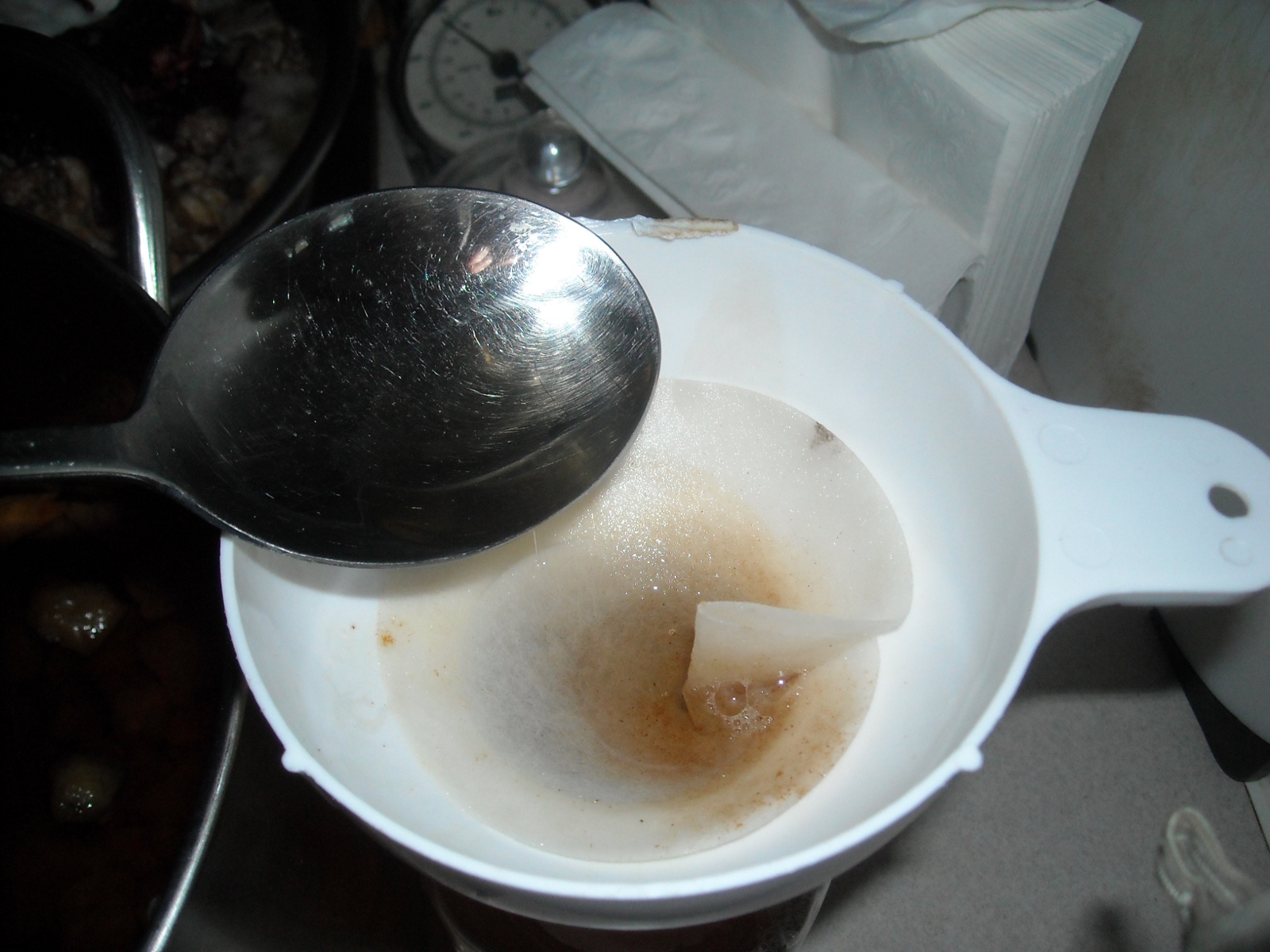
Filtering Setup for Pig Fat Liquid Into Jars

Since most of the cracklings have sunk to the bottom, it is very easy to ladle out most of the liquid fat into the jars:
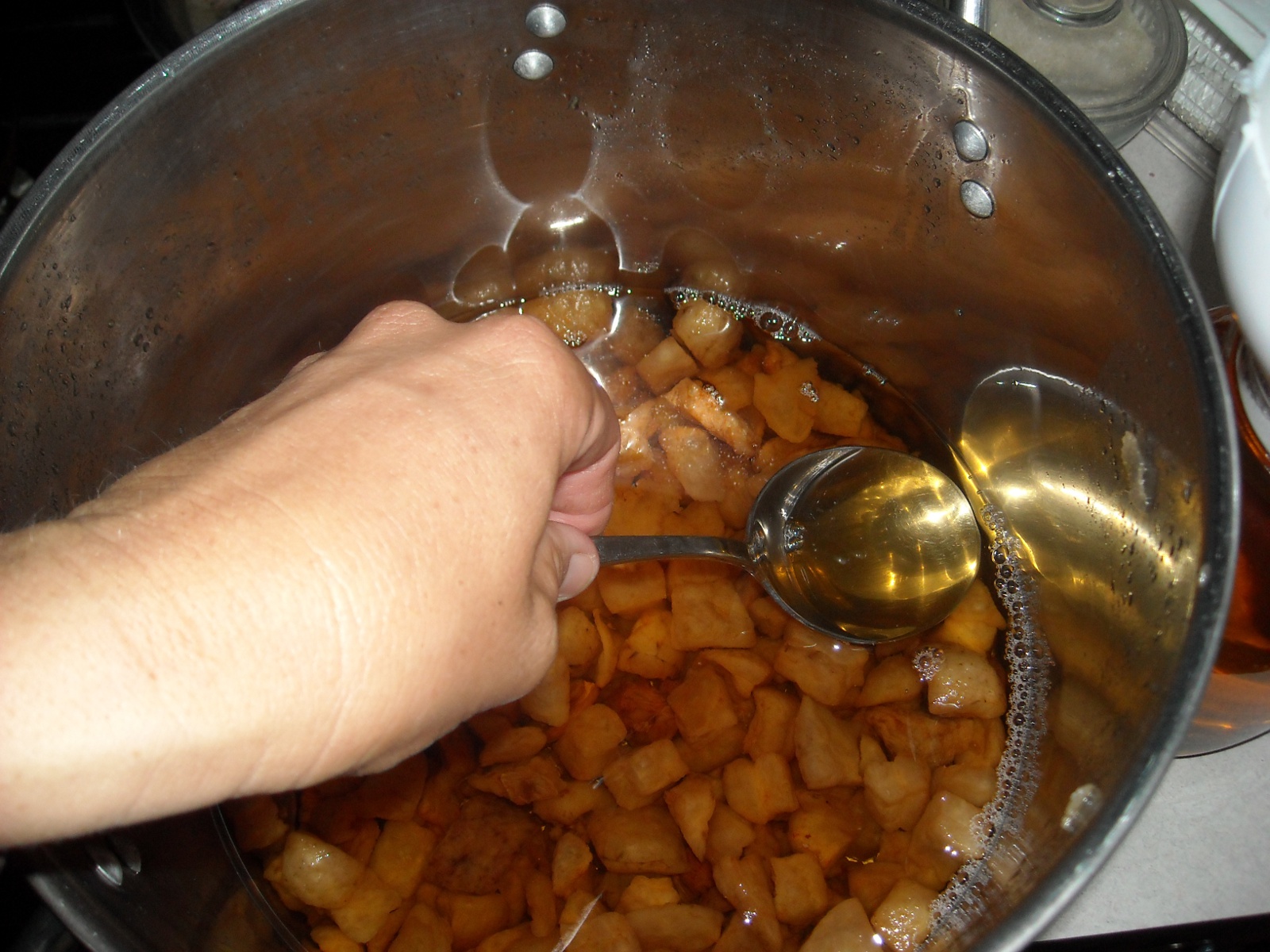
Tilting Pot to Spoon Out Last of Pig Lard

I tip the pot to get the last of the liquid out:
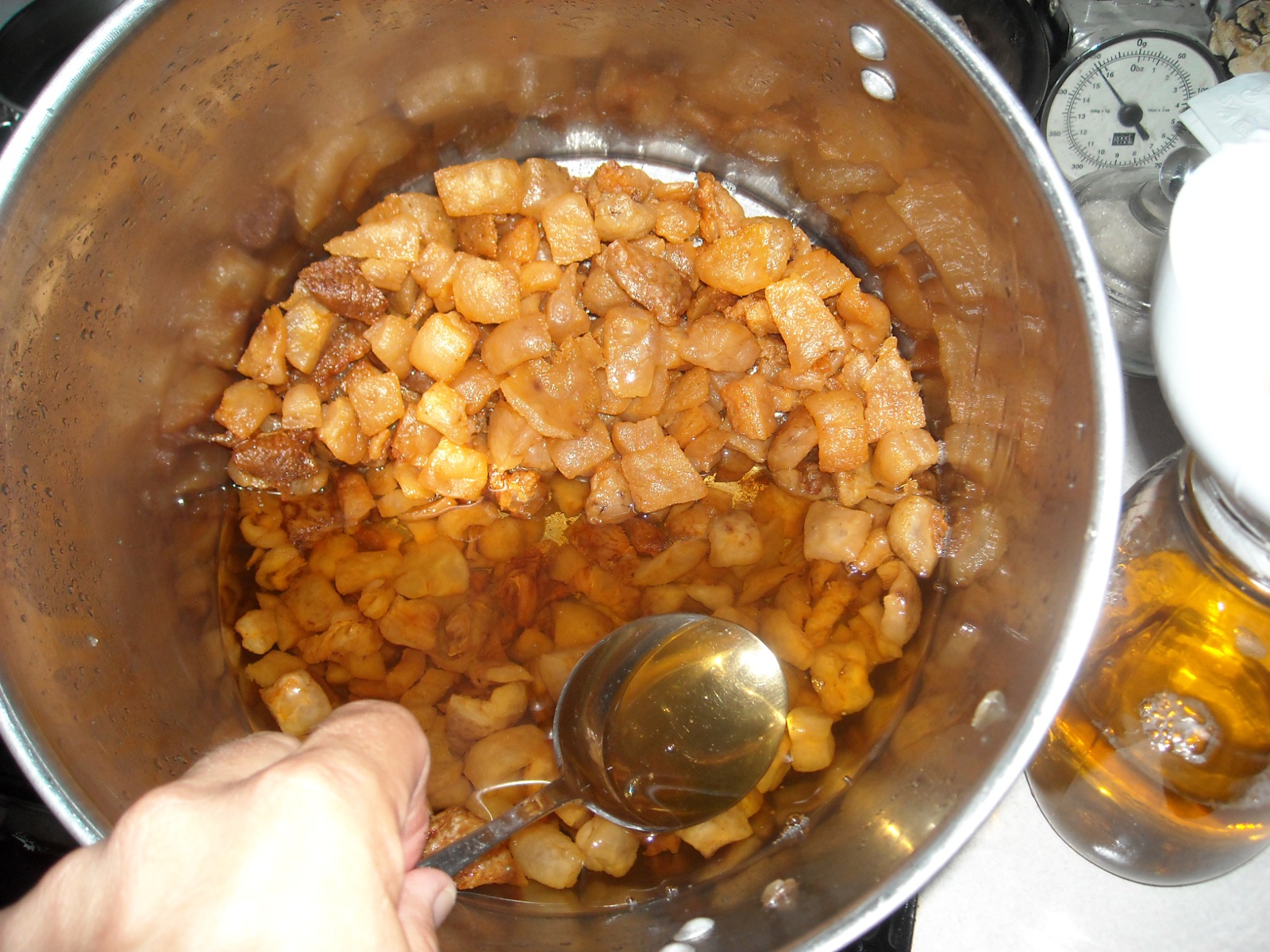
More Spooning Hot Pig Fat Into Canning Jars

All that is left are the cracklings after spooning out the liquid fat. I munch on a few as I process the fat but don’t usually do anything with them except feed them to the chickens. However, some people I’m told put salt and seasonings on them for a tasty treat.

I try to press out as much fat from the crackings as I am able, but there is still a bit left in them. I used an antique lard press a few times but came to the conclusion that the amount of extra fat I was getting was not really worth the mess the press made and the resources required for clean-up. But some people may be very loyal to them. It’s certainly a personal choice:
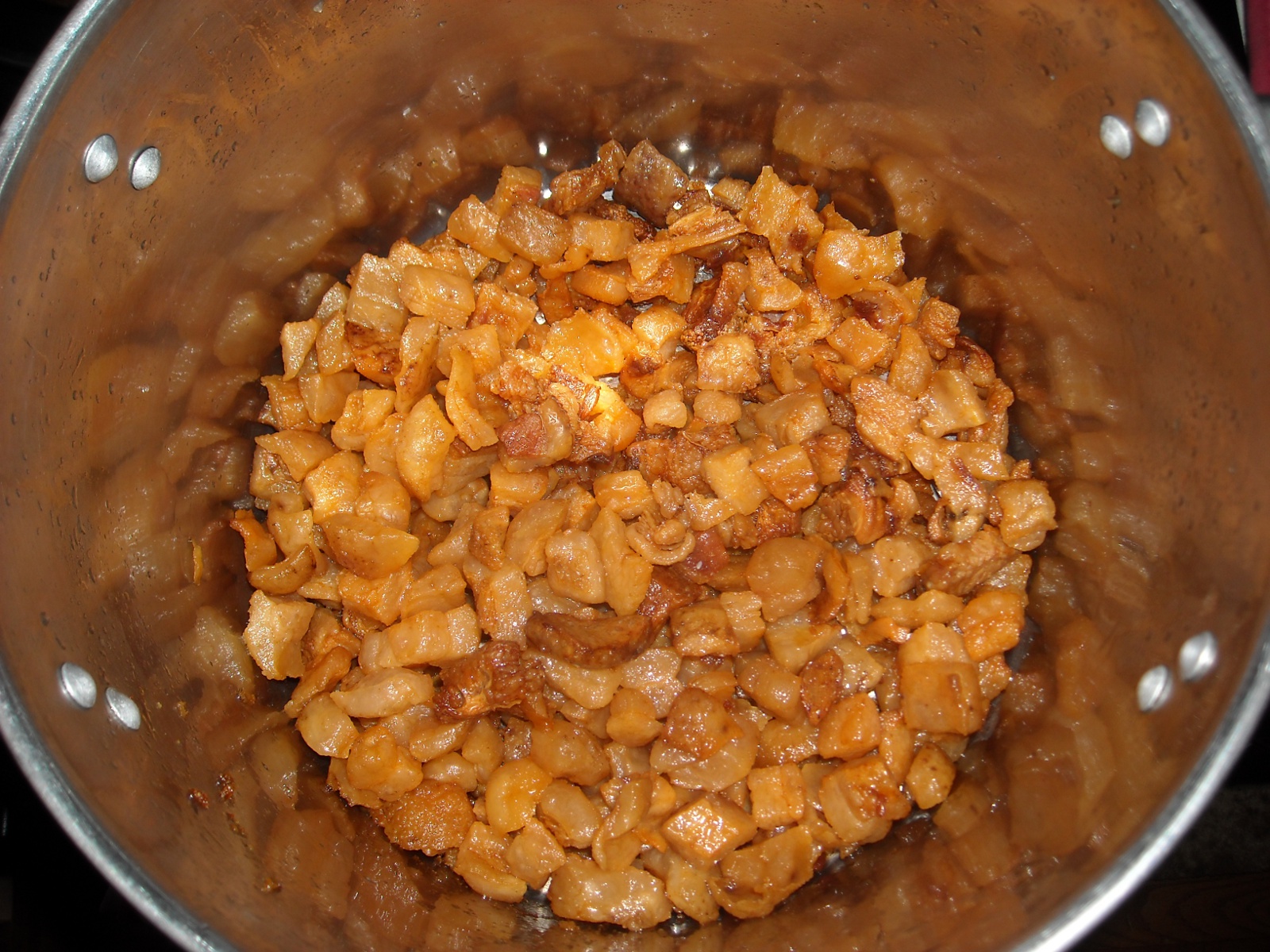
Cracklins Left After Spooning Out Last of Melted Pig Fat

And here is the rendered fat ready to be sealed and either stored in a cool place or canned and stored. I usually end up yielding several quarts of lard when we butcher a pig, and since Dave and I don’t go through it quickly, I like to pressure can it. I was surprised that there is VERY little information on the Internet about canning lard. I probably way overdo it, but I can it for 90 minutes as if I were canning meat, because I can’t find any reliable information otherwise. So I can it a lot to ensure its safety. If you can reliably provide additional information from your own lard canning experience, I am all ears and would greatly appreciate it. Until then, I’ll play it safe. I have not experimented to see how long an uncanned jar of lard will last down in our root cellar but hope to remember to try it next time. But I would hate for all those quarts to go rancid from not canning them before we are able to use them. This way they are good for years.

The rendered lard hardens up and turns white (or a little darker depending on the type of fat rendered and if it got burned in the process). The lard will turn to liquid again if heated:
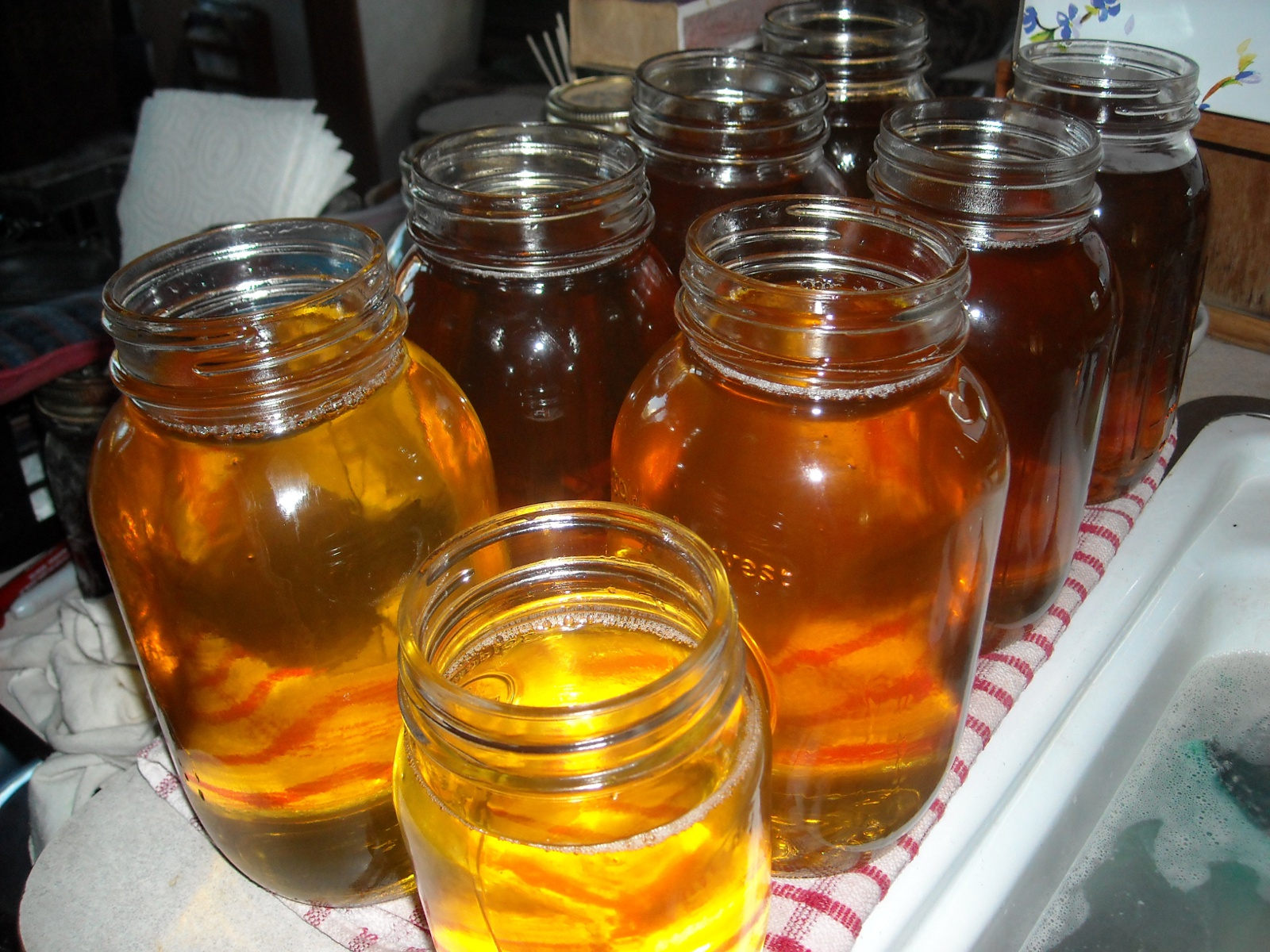
Melted Pig Lard in Jars Ready to be Pressure Canned

I love using lard now for many, many things. I use it to pop popcorn, on bread for grilled cheese sandwiches and toast, as an oil in recipes and baking, etc. It may sound icky but it’s a wonderful and tasty organic animal fat. My friend Shannon, once again, has a great blog post on healthy fats, and lard is right up there at the top of the list. I had to be re-educated on the benefits of healthy animal fats, and I’m assuming most people think it’s very unhealthy, but I believe we truly need these healthy fats in our diets. I hope you take a few minutes to research it for yourself.

Also, I’m sure most people may not have a freshly butchered pig “hanging around,” but I’m told many local butchers and processing places will either give away or sell their fat, so you may want to check that out in your area.

Lastly, if you don’t have a copy already, I highly recommend the Encyclopedia of Country Living by Carla Emery to get you started on rendering lard. It is truly a survival book for those of us just starting out on our domestic, animal husbandry adventures.

We also currently make homemade fat lamps with our lard, and I hope to experiment making soap from lard as well and will let you know how it goes, Lord willing. You can also render lard out of beef tallow (fat), so maybe sometime we’ll be able to butcher one of our Longhorns and I’ll be able to share that adventure as well. As always we are so very grateful for God’s provision to have this homemade healthy fat resource.

Susan
The Orchard – Update II

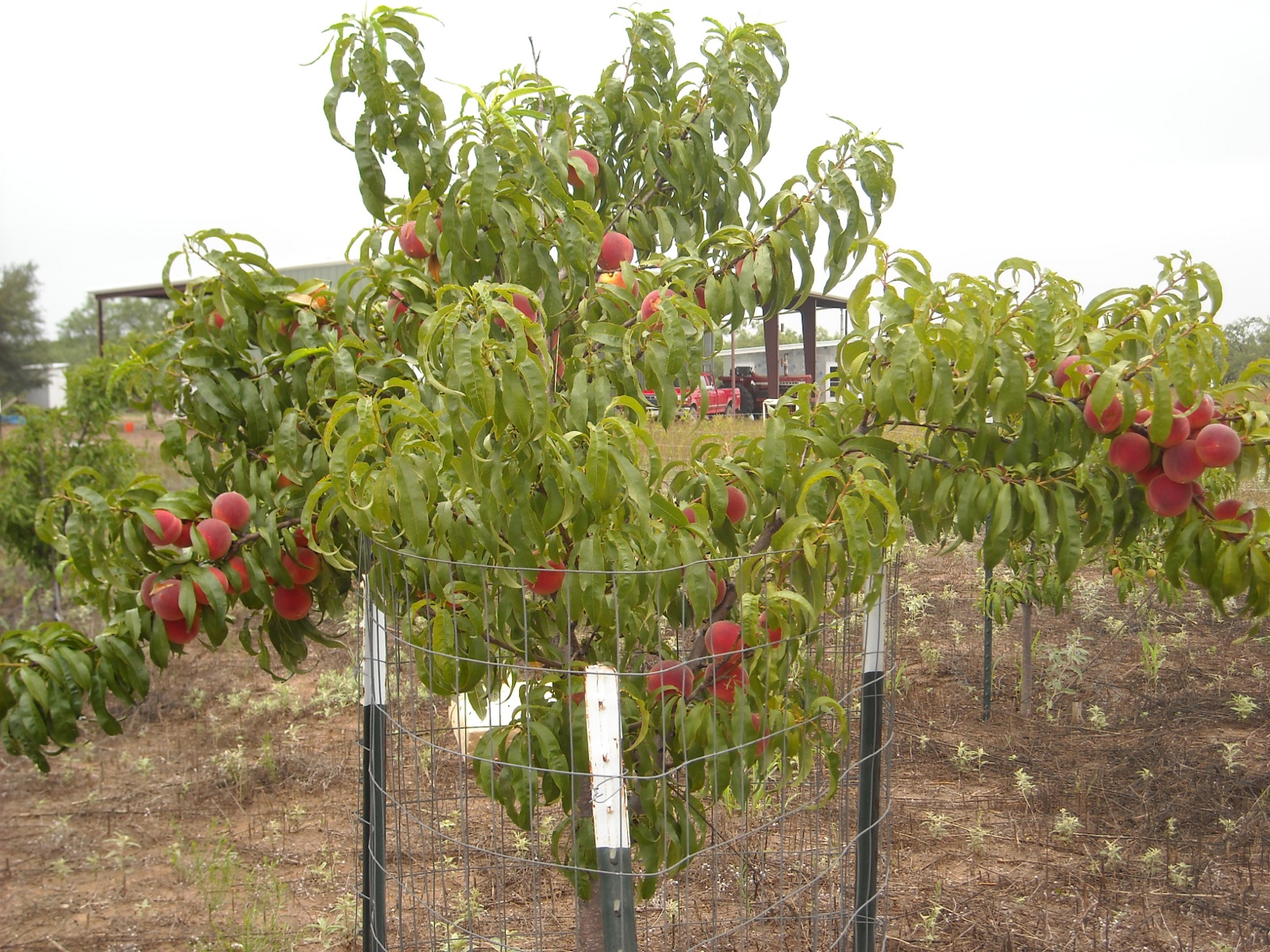
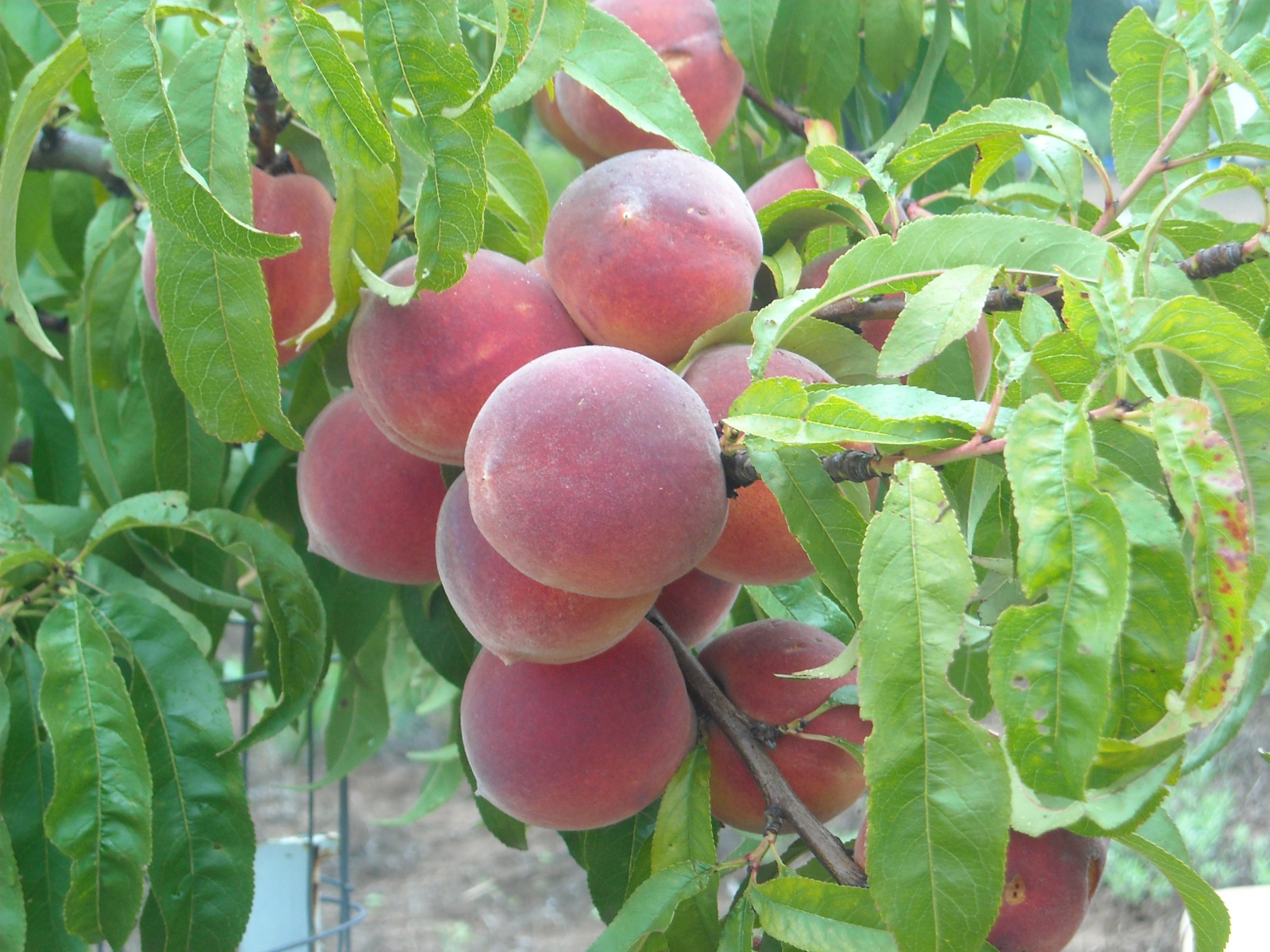
Orchard Peaches Spring 2010
This Spring we were very excited to harvest our first peach crop! It is still hard for me to believe, having grown up as a city girl, that you can actually grow your own “stuff” and not have to go to the store! Sadly, and as silly as that sounds, it is still such a new concept to me.

We currently have four peach trees in our little orchard; and we were so thankful to see the big, colorful, healthy peaches hanging there, each a gift from God:

Orchard Peaches on Tree Spring 2010

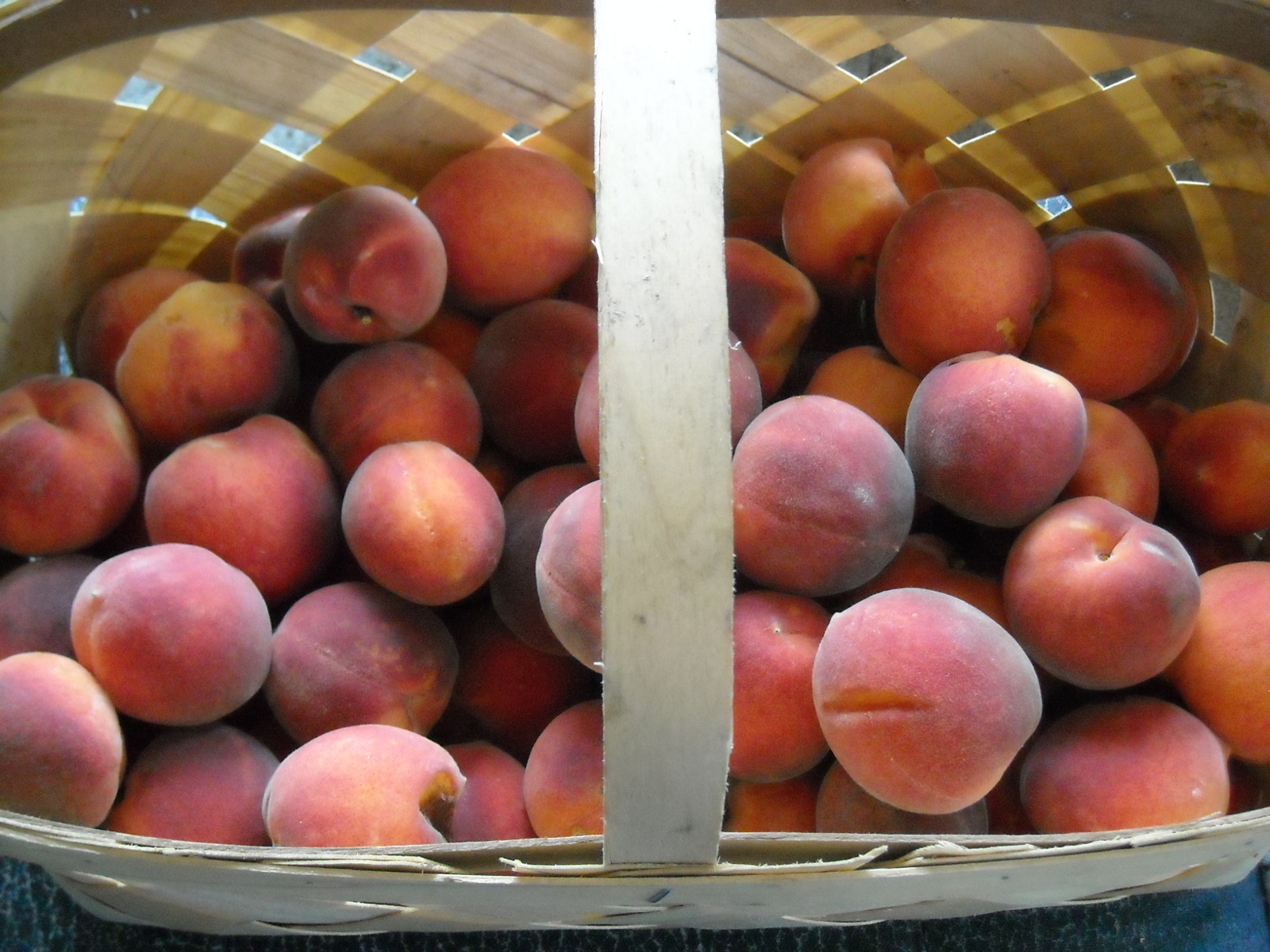
It wasn’t a large harvest, but plenty for us to eat and preserve:

Harvested Peaches in Basket

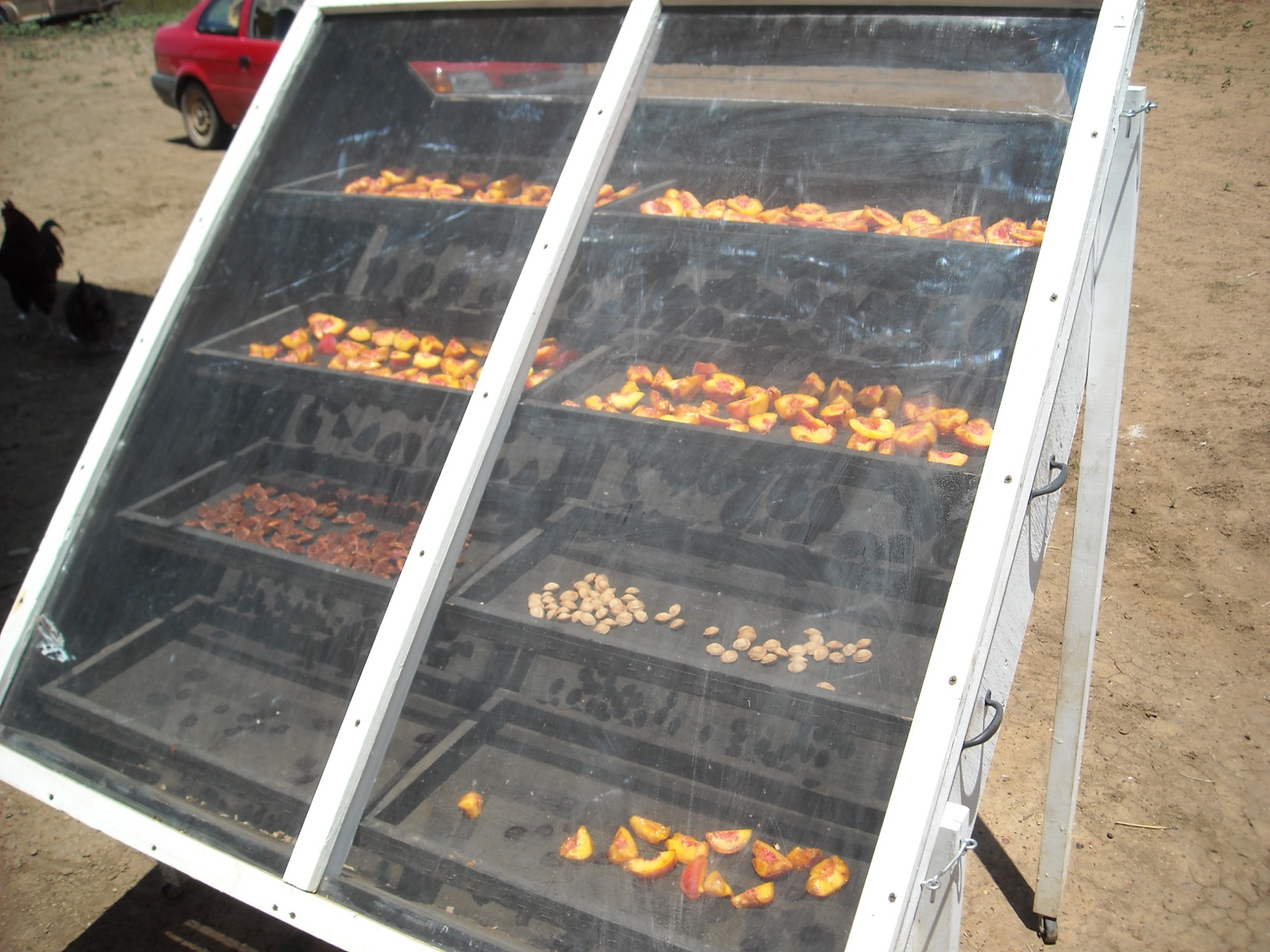
We cut up and placed some on the solar dryer, which turned out great! They are now in canning jars on the counter to grab when we want a snack:

Orchard Peaches on Solar Dryer

I also found a very easy recipe for canning peaches (I didn’t even skin them, and they came out fine). I also used minimal sugar to create a very light syrup instead of the normal heavy syrup. They were delicious, and I still have a few jars down in the root cellar for winter time:

Orchard Canned Peaches

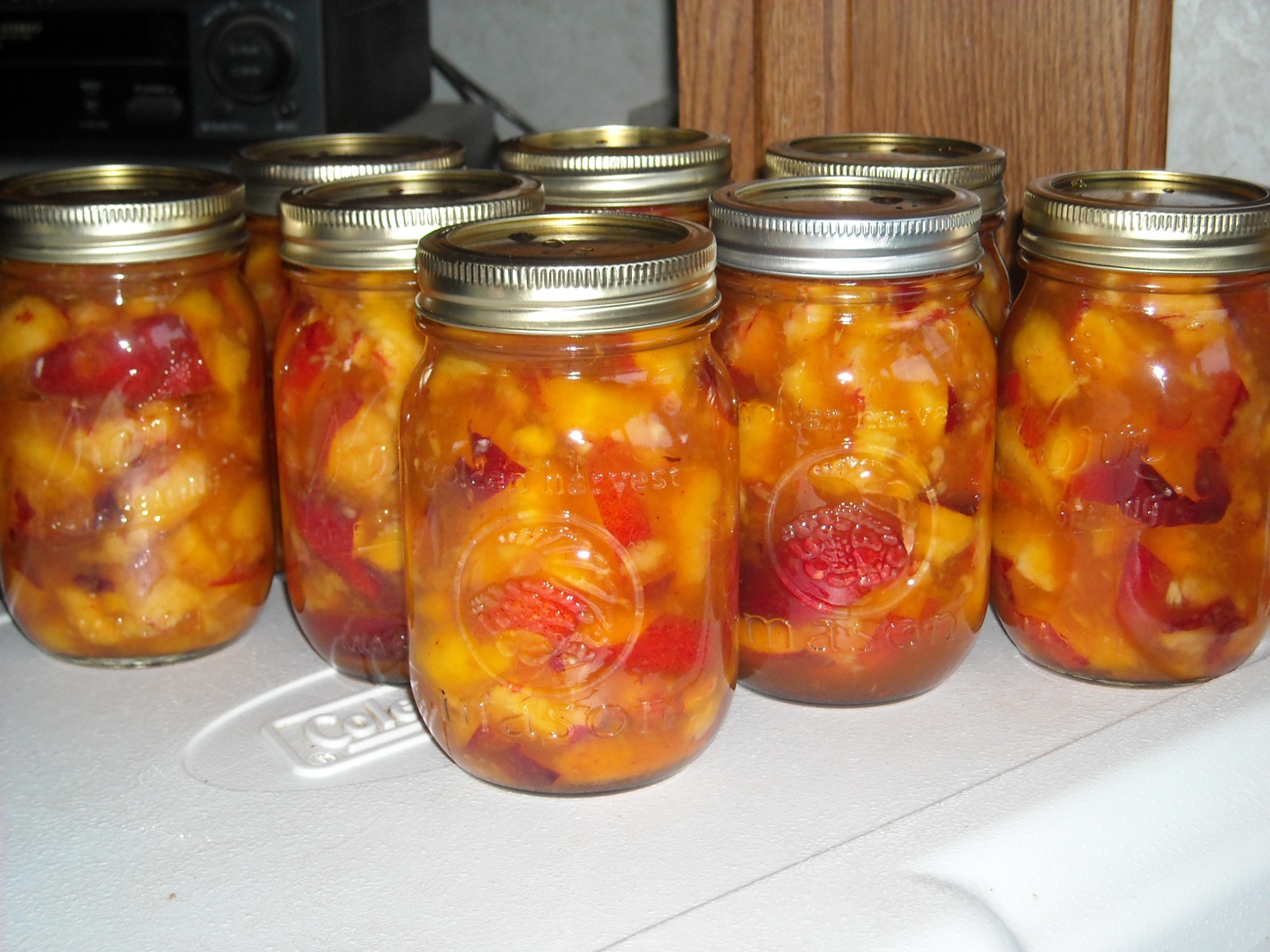
Lastly, but certainly not least, I have been wanting to experiment with making chutneys; so I found a great peach chutney recipe in the Ball Blue Book of Preserving. I recently mixed it in with a chicken and rice dish, and it was delicious! I have since made other chutneys as well, but plan to devote another blog post to that. But, in short, I am SOLD on chutney!

Orchard Canned Peach Chutney

We are so very grateful to God for His gift of these peaches, among all of the other produce from our orchard this year.

James 1:17: “Every good gift and every perfect gift is from above, and cometh down from the Father of lights, with whom is no variableness, neither shadow of turning.

Susan

Mess Hall Missy

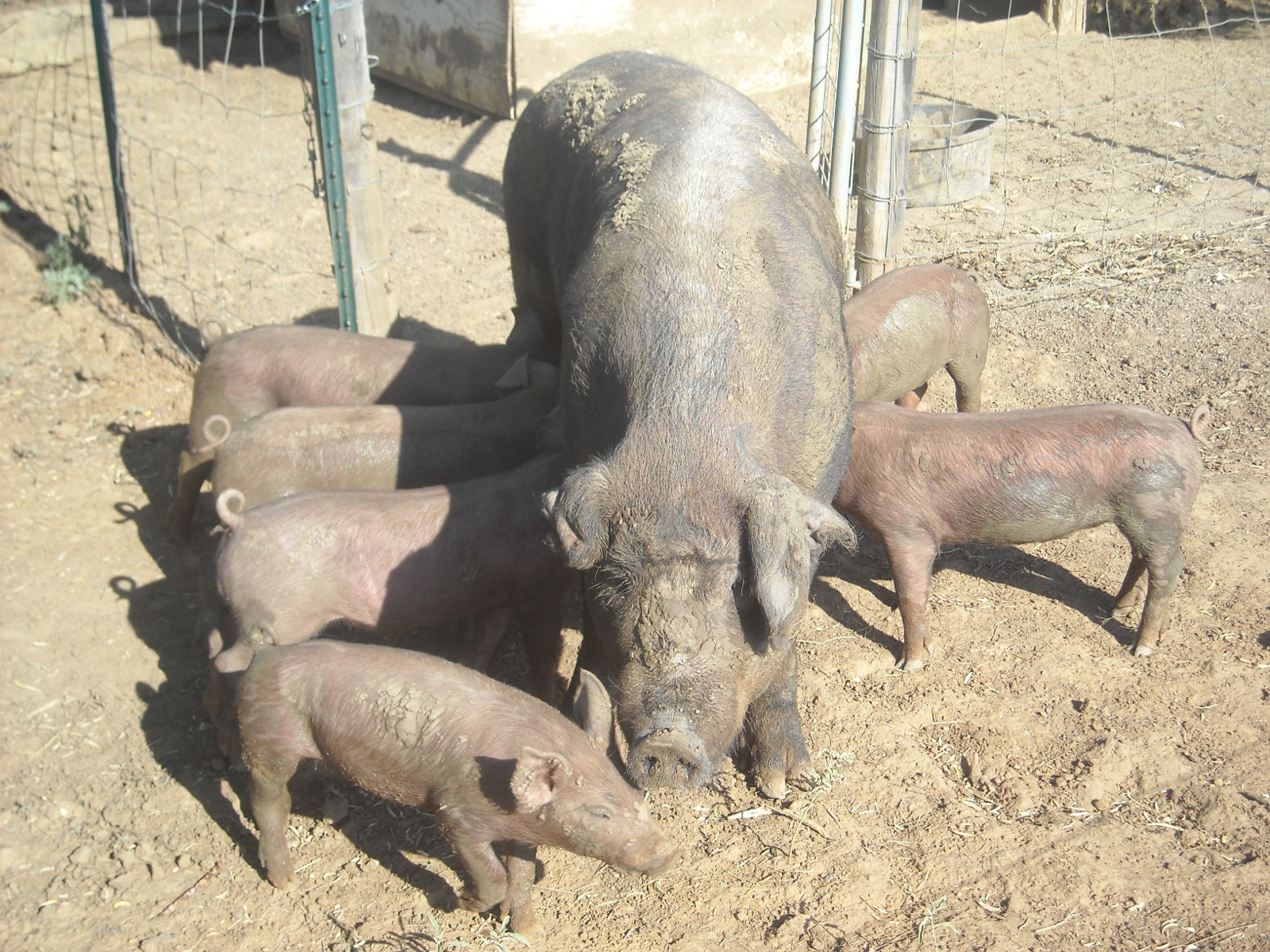
Duroc Pig Missy with Piglets
As most of our regular readers know, this is our sow, Missy. She had a litter of 11 piglets recently, of which 9 survived healthy and strong, thanks to God. Once the piglets were weaning age, we decided to sell all but one Dave currently calls “Runt Girl,” which we hope to mate with a boar traded to us from our neighbor, Michael. Missy also was the runt of her litter and a real survivor, enduring a couple of dandy injuries, so gentle, and a great mom. We debated on possibly putting her through one more round of mating but decided it would cost too much to keep her in food for those several months, and finding a boar her size would be difficult and probably expensive as well. The decision as to how soon to take her in to the butcher was pretty much made for us the day a gentleman and his son came out to buy two of our piglets. Missy turned into a mother bear and was giving Dave a hard time, even to the point of becoming dangerous. So Dave called the butcher and made an appointment to bring her in the next Monday morning.

Little side story, I don’t know if you’ve ever heard a pig squeal while being handled, but it really unnerved me the first few times. You would think they were being skinned alive. One day I was helping Dave capture a boy and girl piglet to be put into the truck cage and delivered to a local man. We both had battled some kind of food poisoning a couple of days before this and were feeling pretty weak, in addition to dealing with the debilitating Texas summer heat. It was very physically taxing for Dave after several tries to capture these little guys. But we finally got a system together where we would funnel them into their pig shed; and Dave would corner the one he wanted, and then tackle it. He tackled one, and picked it up; and it was kicking and squealing; and he turned it backwards and asked over the squealing, “Is this a boy?”; and being that I was so flustered from the noise and commotion and didn’t see the little boy parts, I said “No, it’s a girl”; and as soon as he let it go we could see it was a boy after all. Dave looked at me in disbelief and was so sick and exhausted, I was horrified! I bent down and threw my head in my hands and said, “Oh, I’m soooooo sorry, I thought it was a girl!!!!!!” I guess the way it was being held the little testicle sacks were tucked in somehow. Dave was very frustrated but was gracious with me because he saw how terrible I felt about it. Long story longer, that little boar escaped twice from its cage over the next 24 hours, and we had to do it all over again. But we were finally able to safely capture and sell the remainder of the piglets. Thank God for keeping everyone safe and healthy, and for bringing buyers for the piglets. We learned a lot through that whole experience.

Getting back to Missy: we still miss her; but, as you’ll see below, she continues to be a wonderful blessing from God. She was ready to be taken home from the butcher after about a week. Dave’s job of capturing and selling the piglets had mostly ended, but my job to preserve Missy had just begun. In an effort to keep costs down, as well as processing time, we chose to have much of the meat ground up and cubed. Generally, we do not run our freezer to keep any foods in storage indefinitely; but we did run the freezer just long enough for me to process everything via pressure canning. This time it took me about 2 1/2 weeks to get through it all because I had to miss a few days here and there to take care of other things. We only had to run the freezer about 6-7 hours per day to keep things cold enough; but that meant running the generator also, which can get expensive in a hurry; so I was on a mission to get it done as quickly as possible. I was also able to render all of the fat into lard (blog post coming on that, DV) and make soup stock out of all the bone and rib meat. (Dave has a phobia of getting sticky BBQ sauce on his face and fingers, so I just go ahead and simmer the meat off the rib bones; and it makes for delicious meat and soup stock!)

And here is the end result!

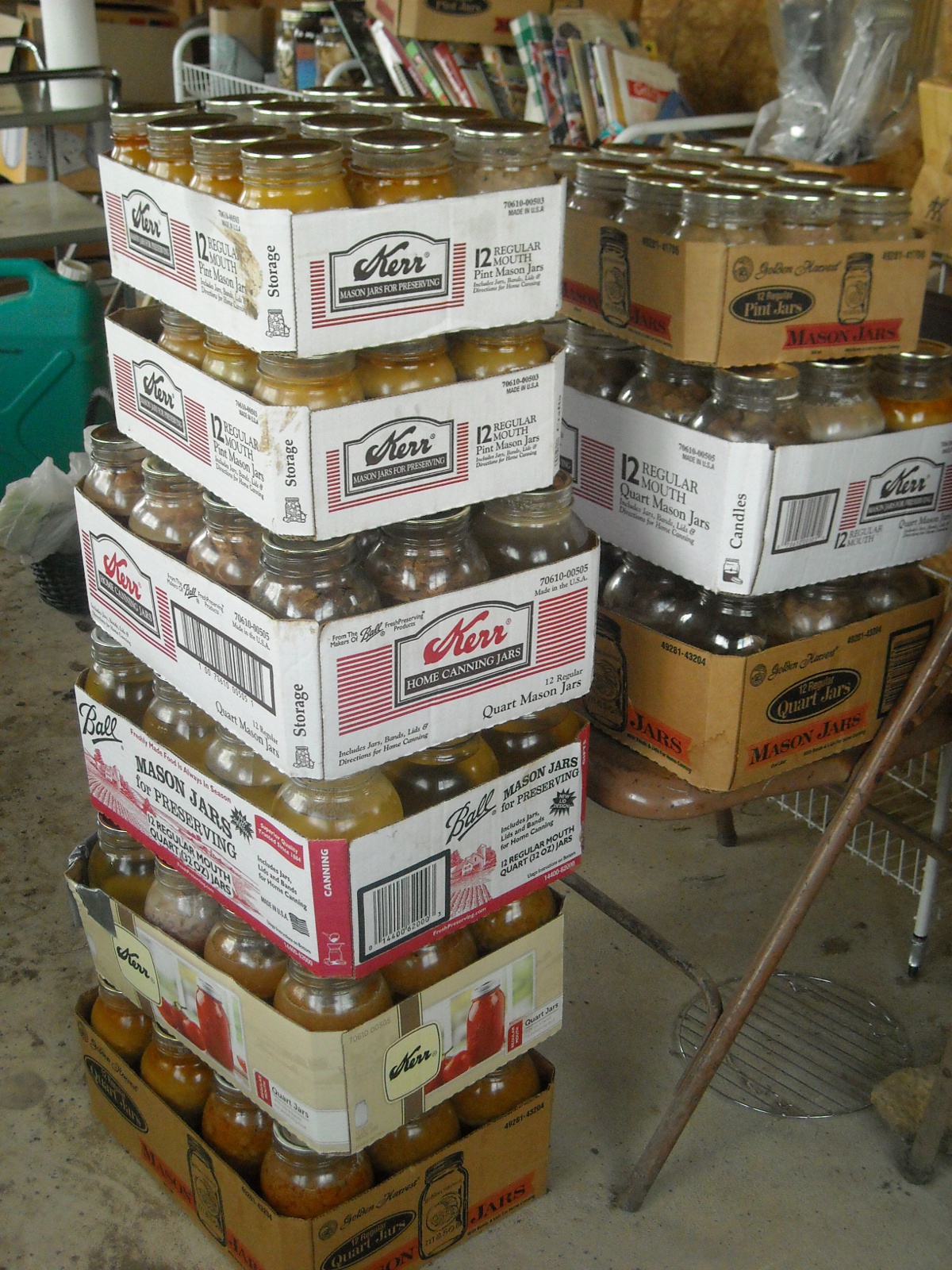
Duroc Pig Missy Preserved by Canning

Included here are ground pork, mild and hot ground breakfast sausage, cubed pork chops, steaks, ham and shoulder meat, rib/bone meat, pork stock/broth and lard. We kept out some pork chops and steaks to BBQ over the couple of weeks I was processing it all. MMMMMMMMM! Delicious! And speaking of soup stock (or pork broth), I wanted to mention two things: I had borrowed a set of these stock pots from my neighbor, Danielle, and was so pleased with them that I bought myself a set. They have proven to be very decent quality and useful for all kinds of simmering/cooking/rendering, etc. at a great price – FYI.

And secondly, my friend, Shannon, wrote a great blog post on making homemade bone broth. In that post, there was another great link to an article regarding the amazing health benefits of homemade bone stock/broth. I highly recommend reading them when you have a moment.

Boy, I sure do appreciate Dave building that summer kitchen. It has made a world of difference in my canning experience, in having more room and keeping heat out of our camper.

So, thanks to God’s direct provisions and resources, we now have many more jars of homegrown pork meat, all processed and down in the root cellar, waiting to be eaten. It’s such a beautiful thing after a busy day on the farm to go down into the cellar and grab some of this and some of that of the Lord’s provisions to fix for supper, or any meal for that matter.

We look forward to many more pig litters and direct provisions from God, according to His will.

Susan

Ice Cream!

I like ice cream! Sadly, the stuff you buy in the store has a lot of junk in it. But really, what is ice cream? In its most basic form, it’s simply soft-frozen milk. Well, it just so happens we have milk coming from our goats! And so, we found a very simple ice cream making recipe using plastic bags, and thought we’d try it. We just needed some ice, rock salt (to super cool the milk), and some flavoring.

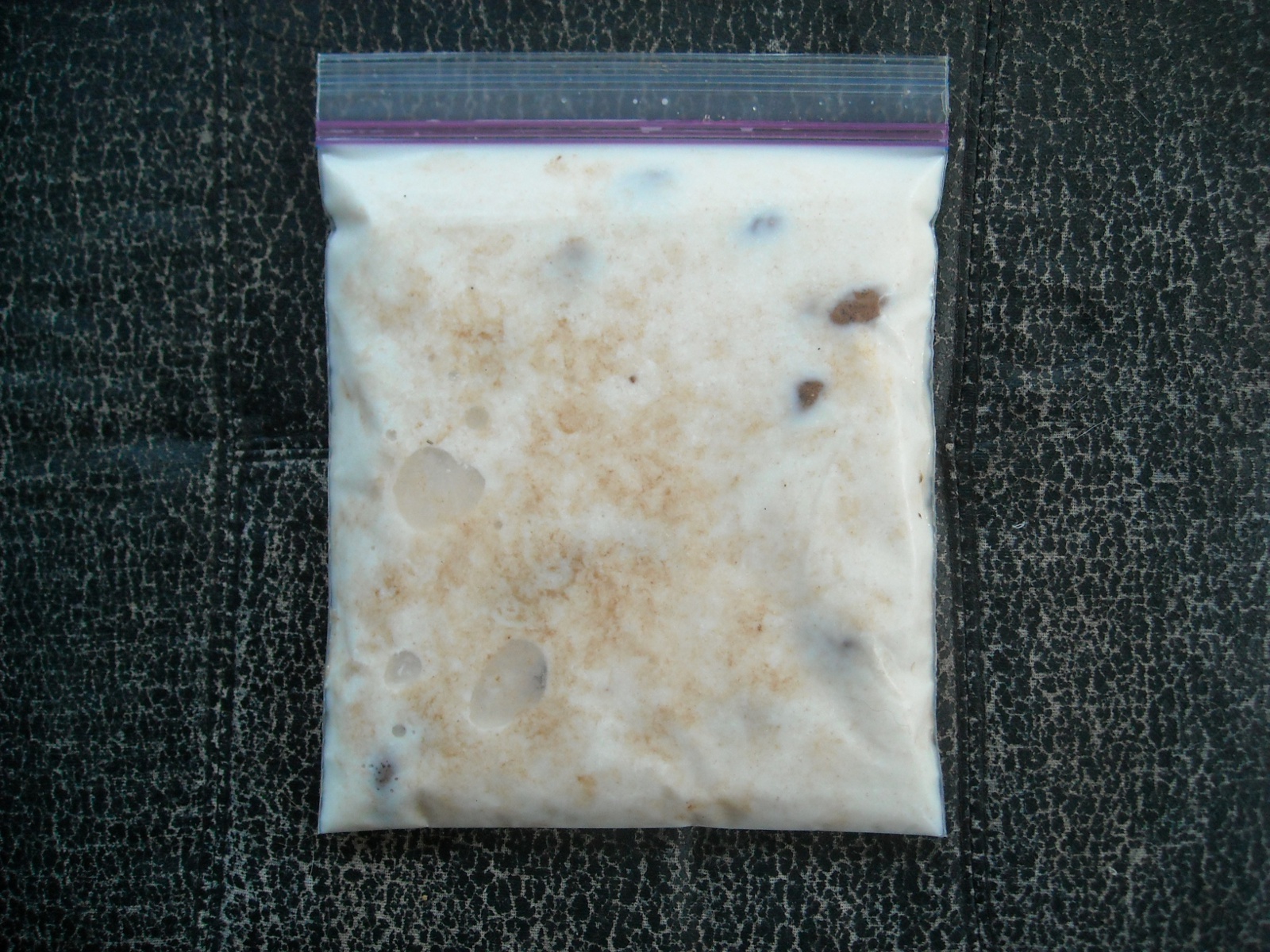
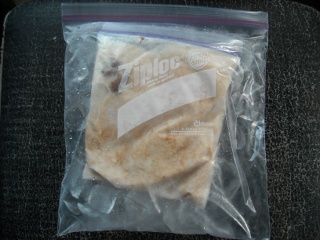
For our version of the recipe, we put a pint of chilled goat milk in a plastic quart-sized resealable bag, with 2 tablespoons of sugar, 1/2 teaspoon of vanilla, and this time also some chocolate chip cookie dough chunks, and sealed the bag:

Goat Milk Ice Cream Mixture in Quart Freezer Bag

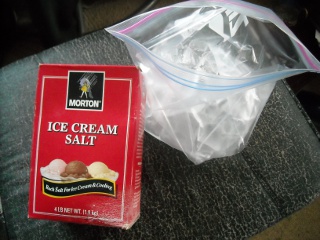
Then we filled a gallon freezer resealable bag about 1/3 full with ice, and added 6 tablespoons of rock salt:

Rock Salt and Ice in Freezer Bag for Goat Milk Ice Cream

And we put the quart bag with the milk mixture in the gallon bag, and sealed that:

Goat Milk Ice Cream Mixture Gallon Freezer Bag with Ice and Rock Salt

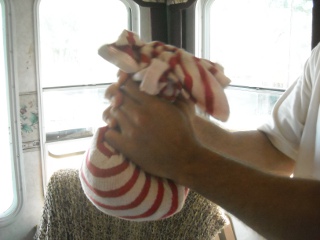
And then started shaking. We usually put a towel around it because it’s very cold:

Shaking Up the Goat Milk Ice Cream Mixture

We shook it a couple of minutes longer than the recommended 5 minutes, as it seems to help things freeze better. Et voila! Ice cream!

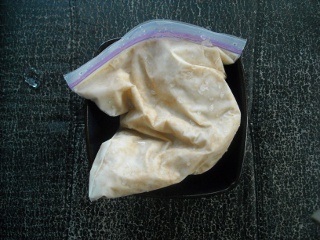
Here it is frozen in the bag, just after taking it out of the ice and salt:

Frozen Goat Milk Ice Cream Mixture

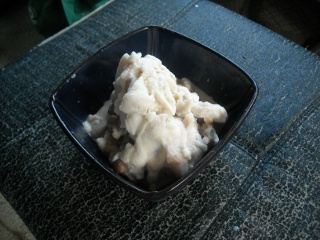
And then in the bowl:

Goat Milk Ice Cream in the Bowl

And then in our tummies!

Goat Milk Ice Cream Mixture in Our Tummies

While this is something of a luxury, it’s nice to be able to luxuriate generally from the provisions of the land, and in a much more healthy way. As always, we thank the Lord for His provisions!

— David

Hens and Hannah

Hens

Our chicken flock has been dwindling over time, due mostly to them just getting sick or dying, or getting crittered; and so we’ve been looking to find some adult hens or were planning on buying some chicks to get raising while it’s still Summer hot here, since the chicks would not have feathers yet and would hopefully be able to make it without special heating. But, the Lord granted we find someone from the local town selling her hens for a fairly good price; and we jumped on it.

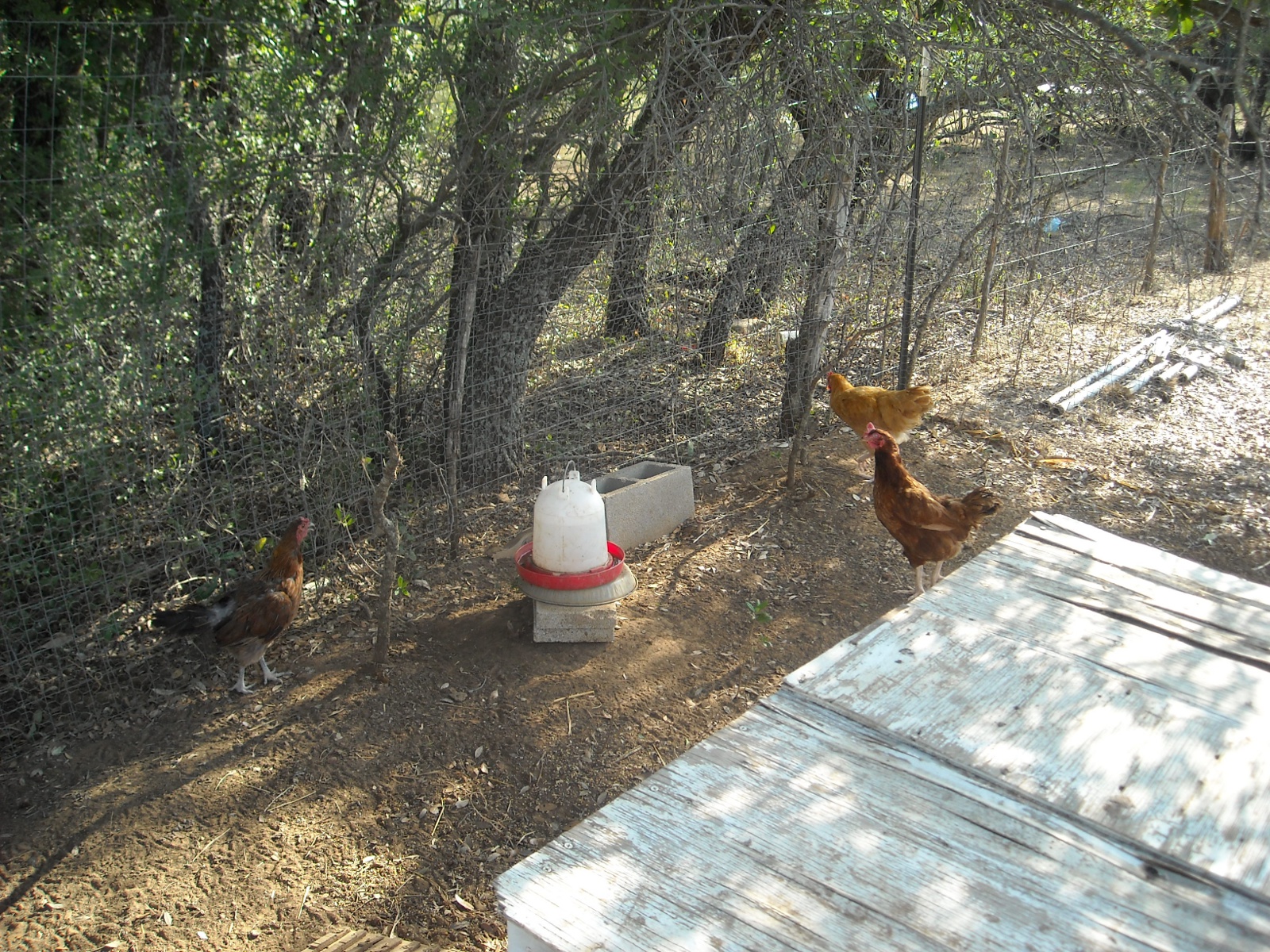
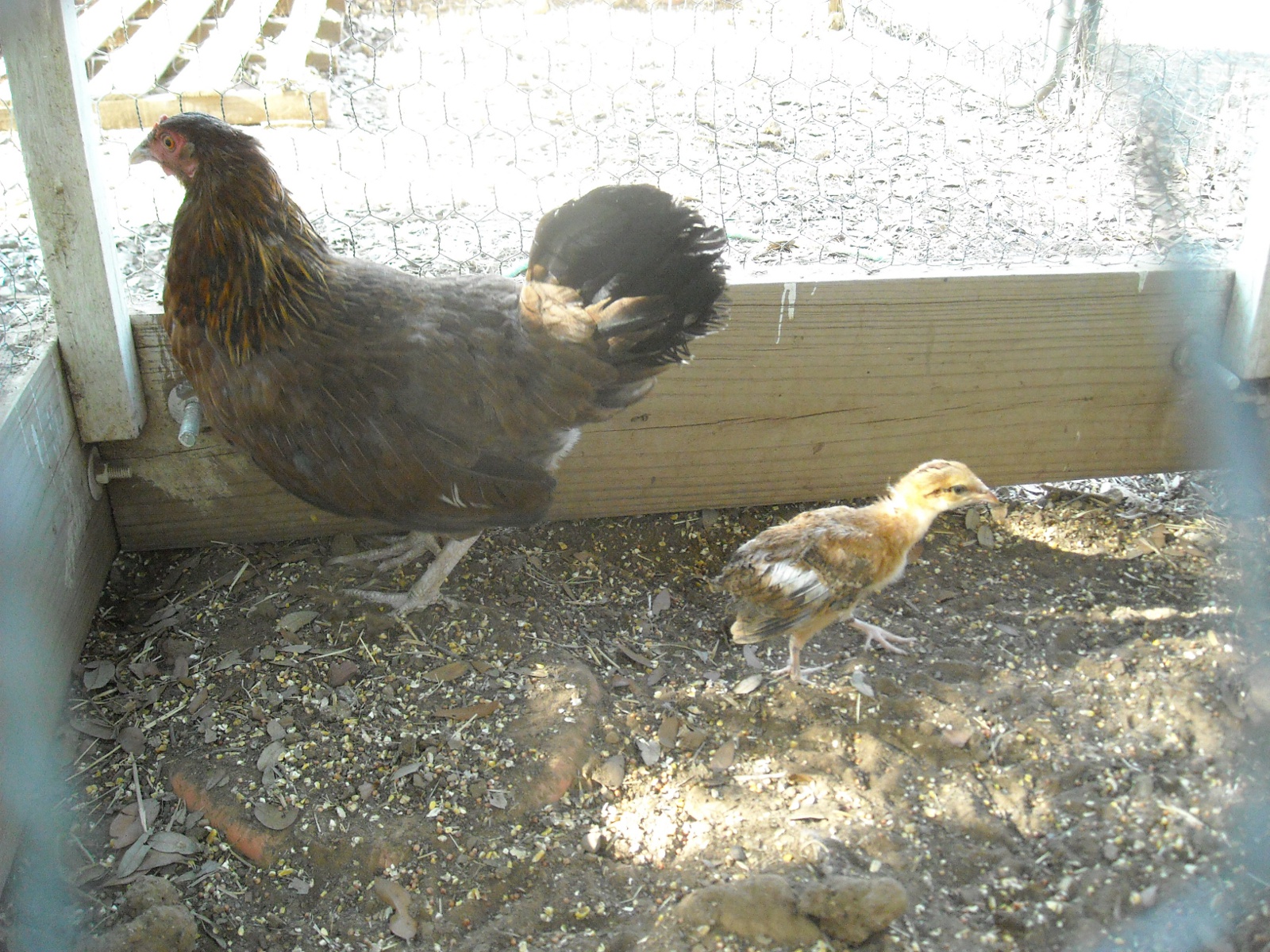
We ended up with a Buffy (Buff Orpington), a Rhode Island Red, two Game Hens, and a chick that one of the game hens was raising. Before we had a kennel for the dogs, we had kept them in our chicken pen area, which was our staging area for chickens we would raise that were too large for the chicken mini tractor but too young to be with the main flock. Sadly, the dogs had pretty much torn up the fencing; but I was able to add some chicken wire and do a little repair work and get it at least workable for the new chickens:

New Laying Hens Summer 2010
New Game Hen and Chick Summer 2010

Soon we hope to start putting them in with the main flock at night so that the main chicken tractor will become their home.

Hannah

We’ve also been looking to sell most of our goat bucks; and in someone responding to our ad about them, initially wanted to trade a buck of theirs for one of ours, as I had also indicated in the ad that I was willing to do so for our outbreeding purposes. Well, by the time we communicated further about it, they had sold all of their bucks. But I thought, maybe they have a dairy doe they would trade one or more of our bucks for; and so I asked; and they were indeed willing to trade their supposedly pregnant Lamancha-Saanen doe for our pure Nubian buck Donny.

Here is the link to the blog post we did on Donny when he was first born.

And here he is now:

Pure Nubian Goat Buck Donny

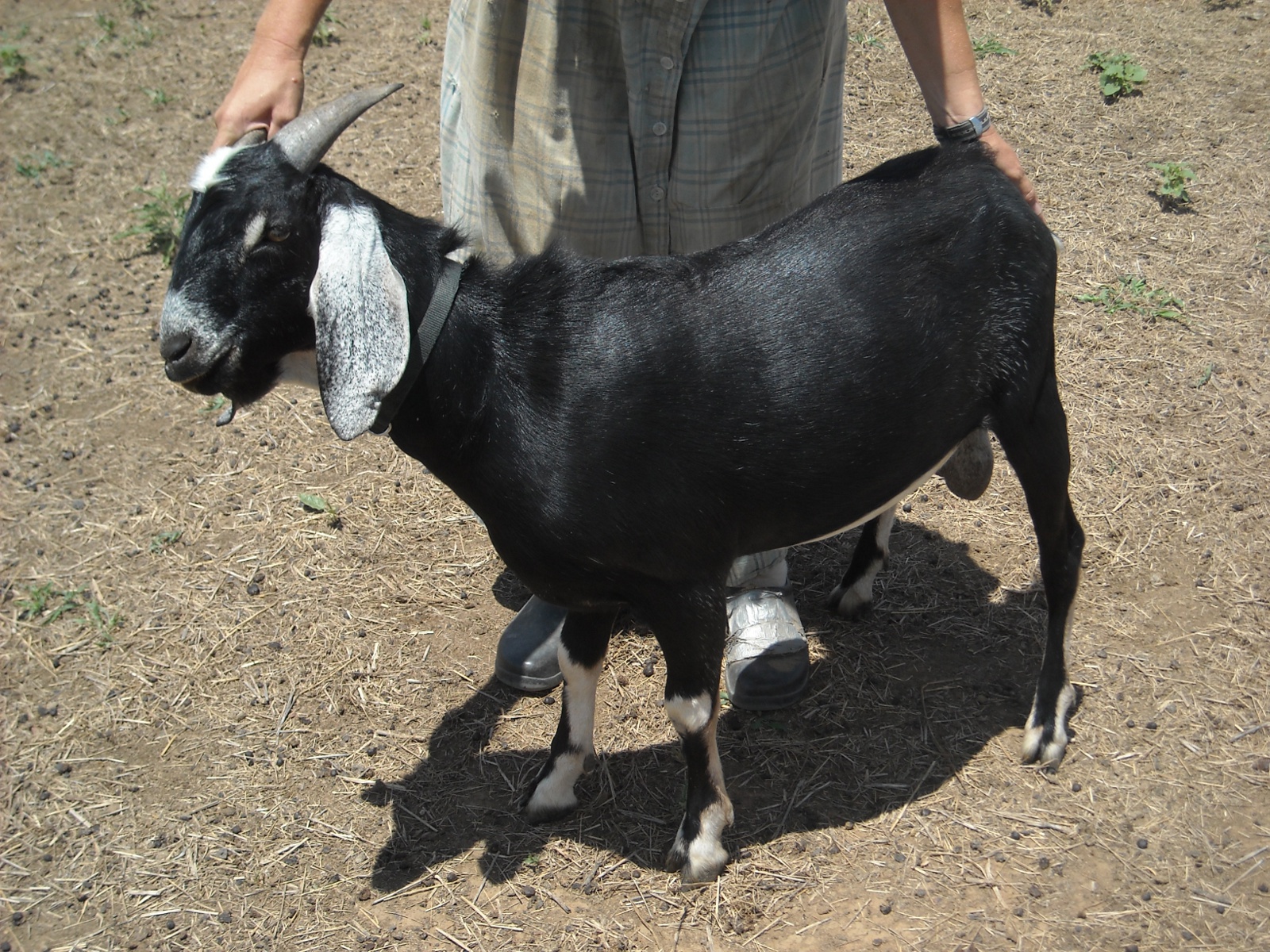
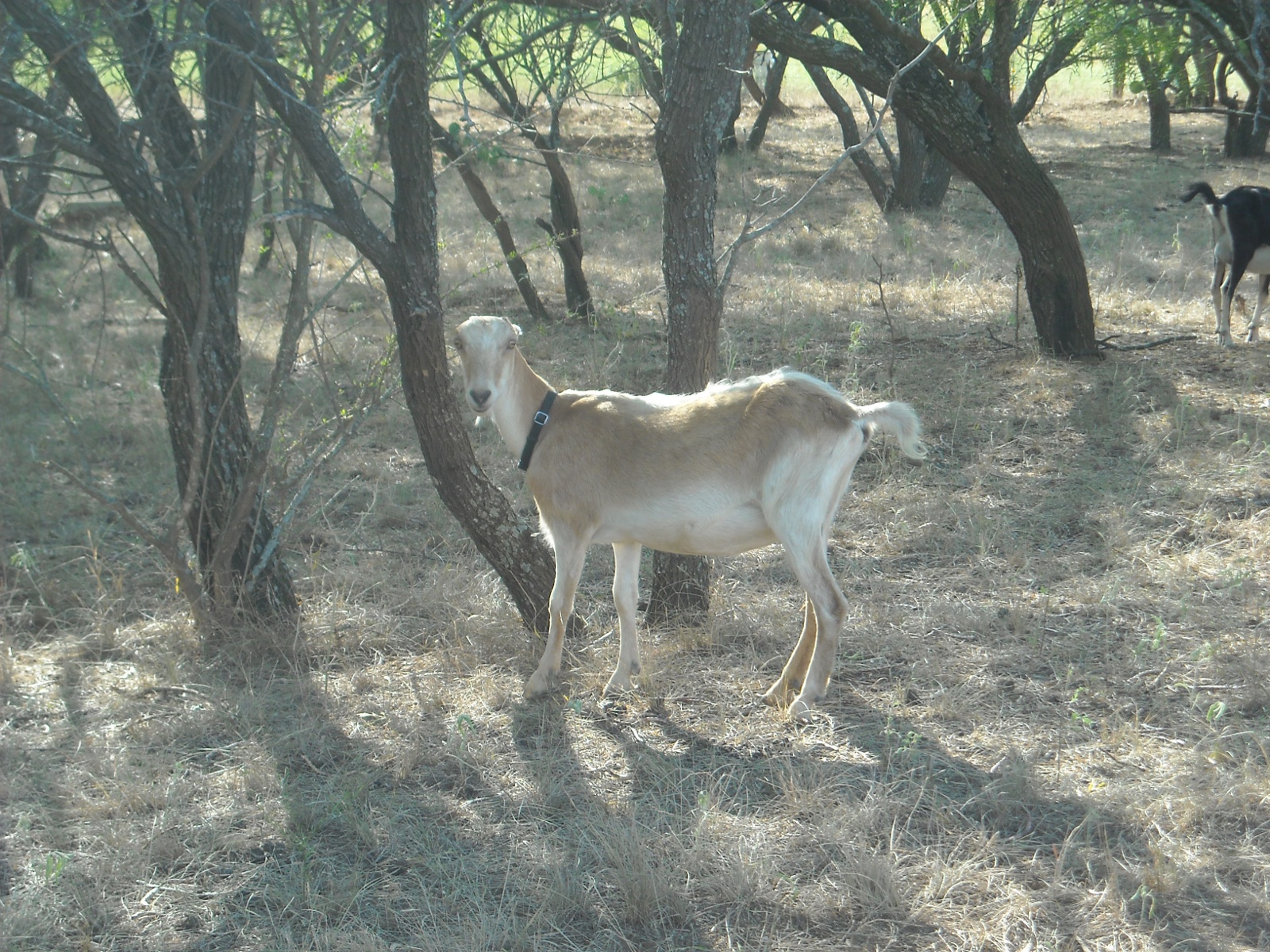
And here is our new doe Hannah. I’m pretty sure they disbudded the horns; and Lamanchas have the tiny ears, although hers are really small:

New Lamancha-Saanen Goat Doe Hannah

We thank God for His provisions of the new chickens and goat, and pray He grant them to serve their purposes here in bringing forth sustenance.

— David

Providence’s Perpetuation Provisions: New Kids “Desi” and “Lucy”

Our goat Minnie (see Minnie in the middle of this blog post when she was first born) didn’t get pregnant when she was with our buck Eastwood during the Winter (Eastwood died during that time). And so, we borrowed a buck from our neighbor Chris, a Spanish billy (see him at the top of this blog post); and lo and behold, new kids!

Please meet Desi and Lucy (we named them that because Desi Arnaz was kind of Spanish-ish 🙂 ):

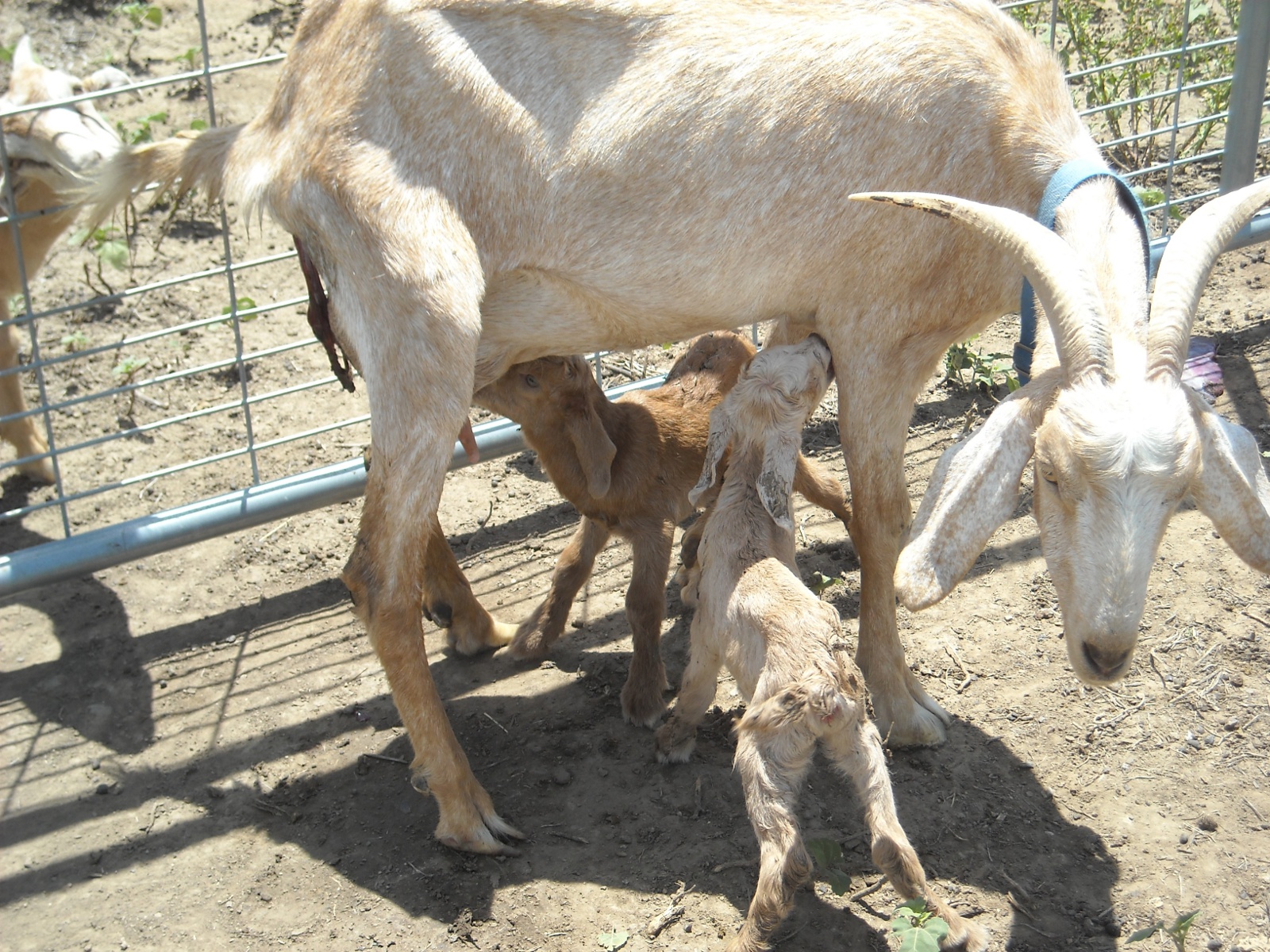
New Goat Kids Desi and Lucy

Here they are just shortly after birth:


And here they are today, three weeks later:


We are grateful to the Lord for the increase of the herd.

— David

Providence’s Perpetuation Provisions: New Calf “Nohemi”

Our last cattle update mentioned our new heifer calf Celestina. Well, we recently saw all of the herd together, except for her; and we’ve come to realize that she is probably gone. We don’t know what happened to her, but the Lord in His wisdom and of course since they’re His anyway (Ps 50:10) determined He would have this one removed. But we praise the Lord for His infinite goodness!

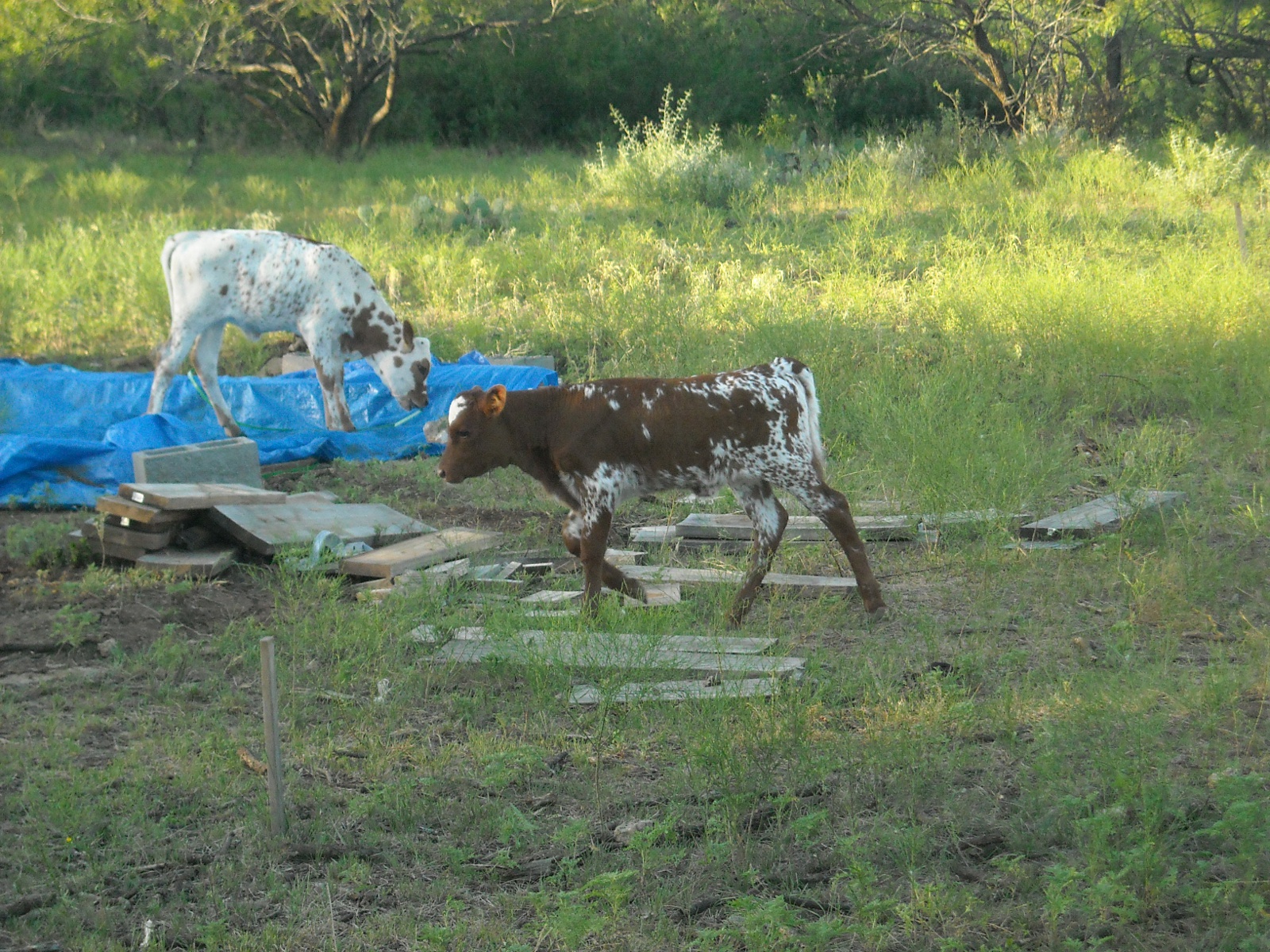
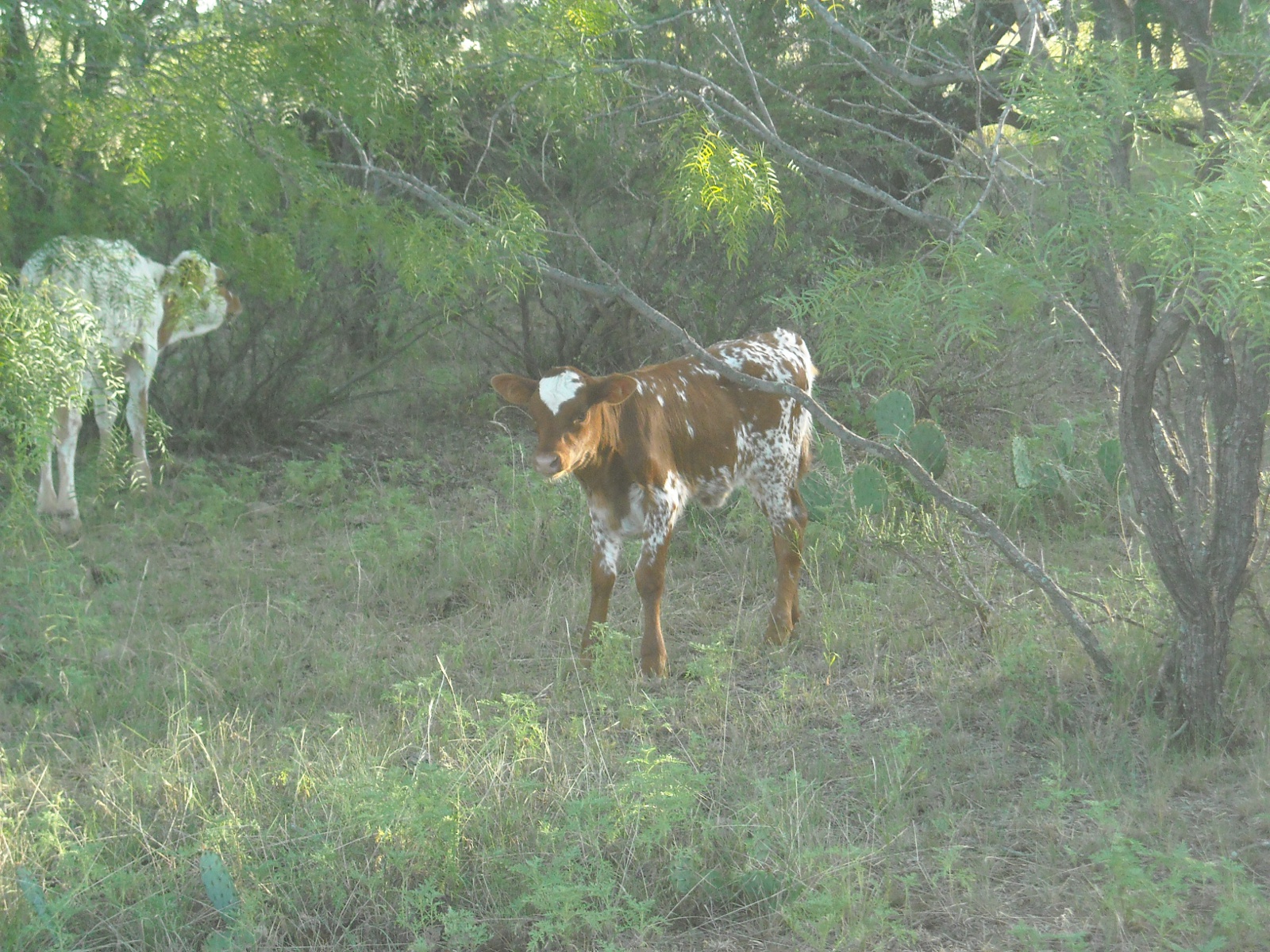
And He continues to be gracious and merciful, and has granted us another calf, a heifer to our cow Catalina. We don’t have a story for the name on this one — we just liked the name itself: we decided to call her Nohemi, which in Spanish means “my pleasantness, my delight.”

Here are a couple of pictures:

New Longhorn Heifer Calf Nohemi

And here’s her moving picture:


Here is a little something we thought you might like on what is apparently herd culture:


We thank the Lord again for His perfect wisdom in all things, and for granting the provisions of this new heifer calf.

— David

« Older posts Newer posts »