Our journal of what we pray is our sojourn of life along the narrow way, even the old paths, submitting to the Bible as a light unto both.

Category: food (Page 27 of 35)

Providence’s Perpetuation Provisions: New Kids “Adeline” and “Nellie”

Well, it’s about that time! Almost 150 days ago, we started putting our older does in with Shatner, our billy goat. Actually, Sue put Winnie in with him a little earlier than the rest because she looked like she was in heat; and apparently she was, because she just “dropped” (slang for giving birth) two new kids — two females.

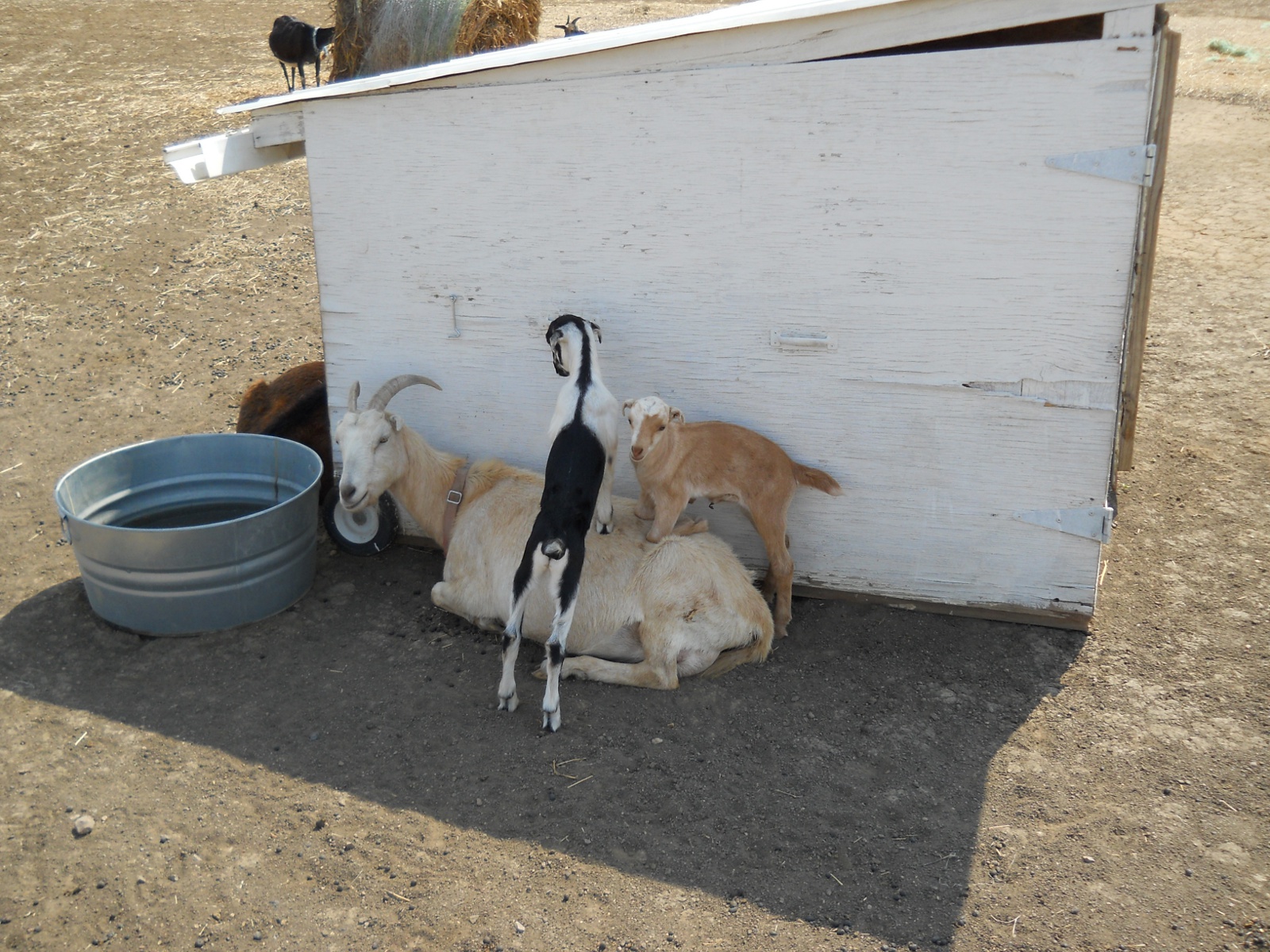
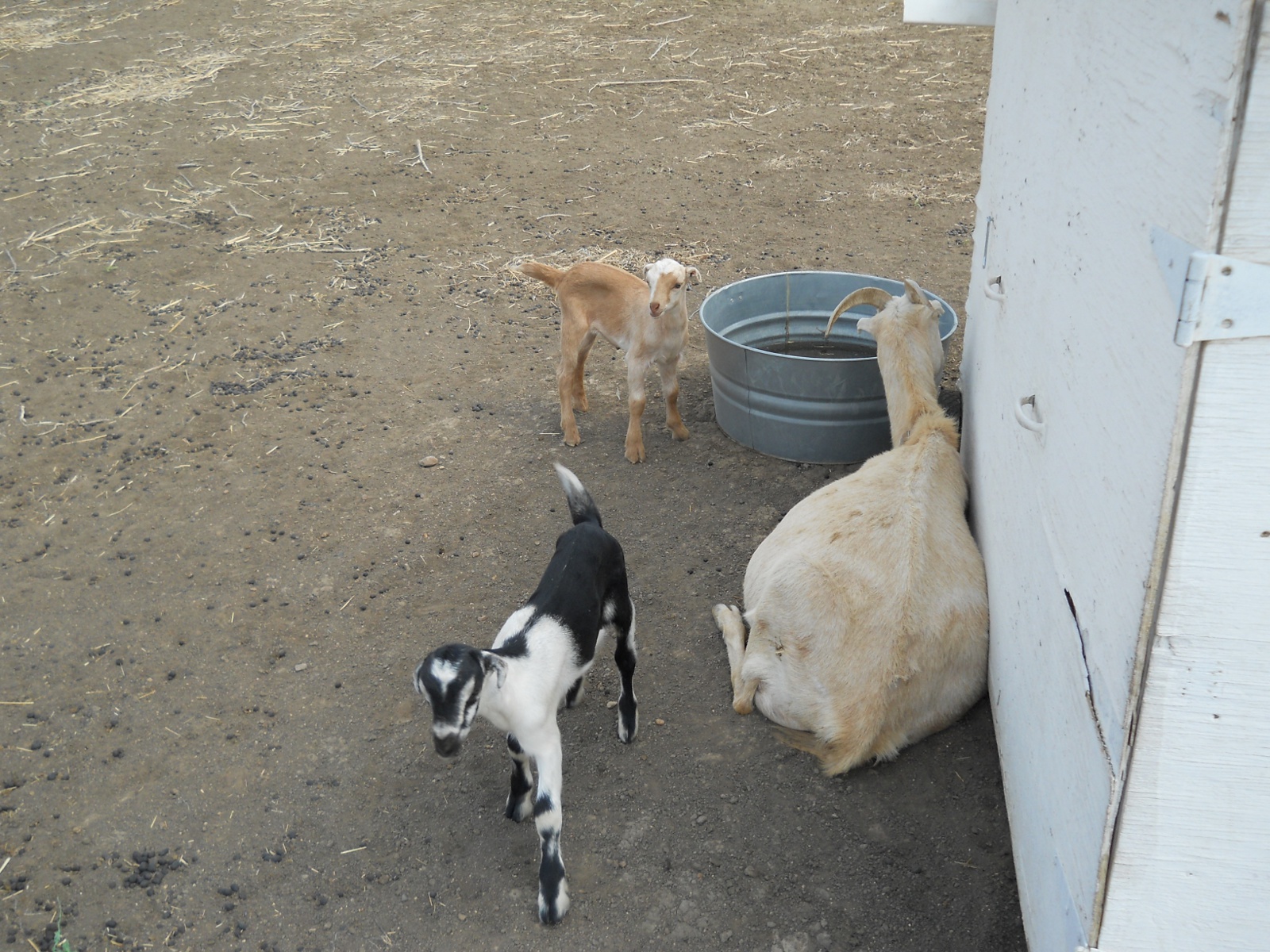
Sue and I have both sung in barbershop quartets in the past, and so we thought we’d call them Adeline and Nellie. (Can you guess the songs?) And so, here is Adeline on the left and then bottom, and Nellie on the right and then top, in the two pictures, respectively:

New Goat Kid Does Adeline and Nellie Playing on their Dam Winnie
New Goat Kid Does Adeline and Nellie Next to Winnie

And here’s a video of them (they’re about a week and a half here):

Video of New Goat Kid Does Adeline and Nellie

Once again, we are grateful to the Lord for granting this provision, and a safe delivery; and we look forward to any goat milk He grants from Winnie once we start milking her.

— David

Providence’s Perpetuation Provisions: New Chicks

When we bought some new chickens late last year, two of them were game hens. Well, apparently they’re good setters, because we’ve now had a second one go broody (here was the chick from the first hen); and the Lord graciously granted some new chicks to be hatched!

And here they are:

Newly Hatched Out Chicks Spring 2011

This is something of a big deal to us, because, in our desire to separate unto God and His direct providence, if we’re to have animals and their products, we need them to perpetuate; and having chickens that do that has been spotty at best, because most of the ones we’ve had don’t sit.

And so, we are thankful to the Lord for His granting of these new chicks and hens that are good setters; and we pray the female chicks pick up the sitting trait so they can continue to propagate here on the farm, according to God’s will.

— David

Providence’s Perpetuation Provisions: New Calf “Caramela”

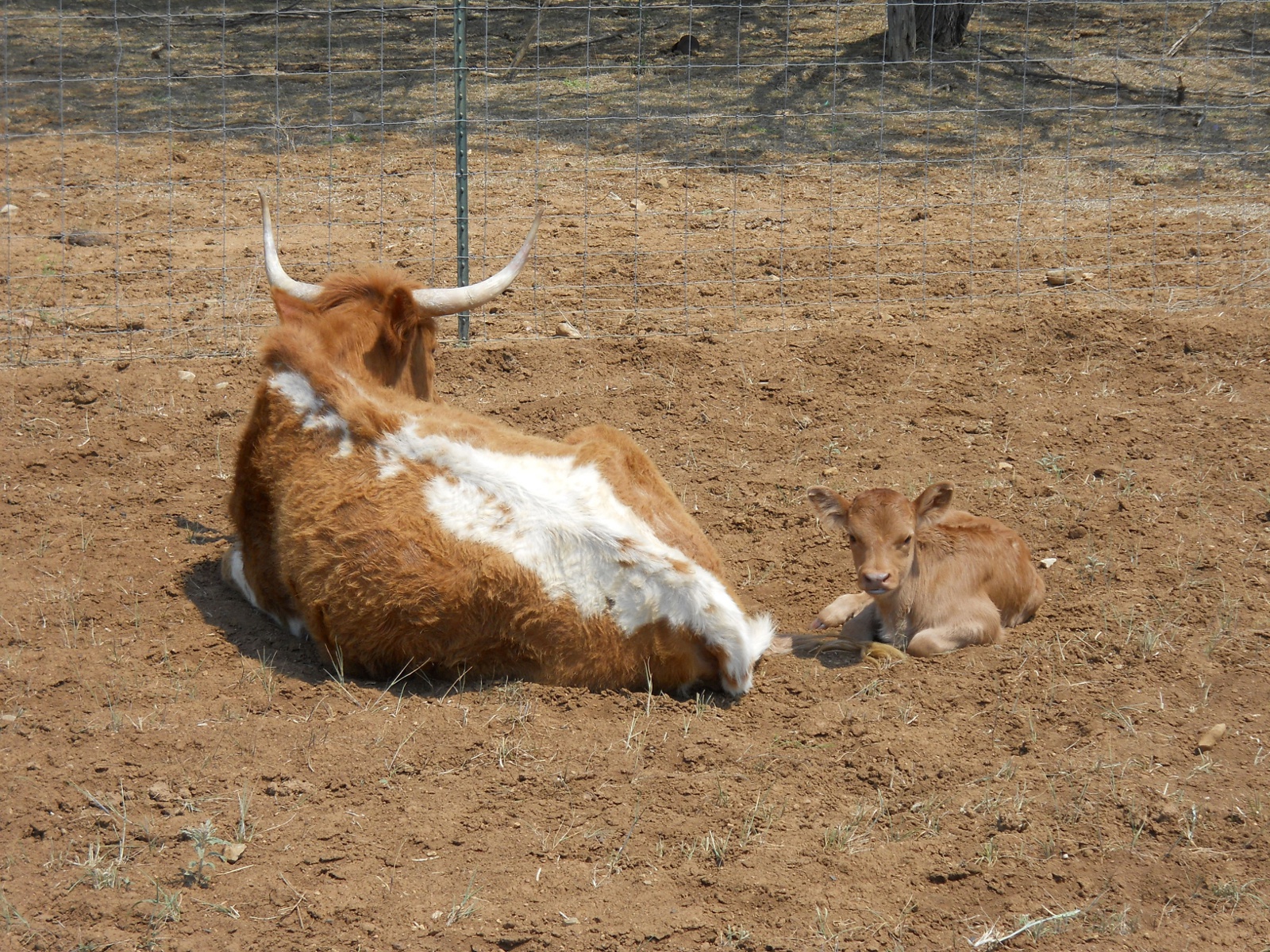
The Lord granted our first calf this year, a little heifer calf, to our cow Carlita. As you can see, she’s a light tan, and so we’re going to call her Caramela, which is caramel in Spanish:

New Longhorn Heifer Calf Caramela

And here is a little video:

Video of New Longhorn Heifer Calf Caramela

We are grateful once again for God granting continued perpetuation of the cattle here, and for the granting of this new heifer calf. We pray for God’s glory in her, and wisdom in raising her.

— David

End of the Garden Tomatoes (Red and Yellow, Green and Bright, They Are Precious in Our Sight)

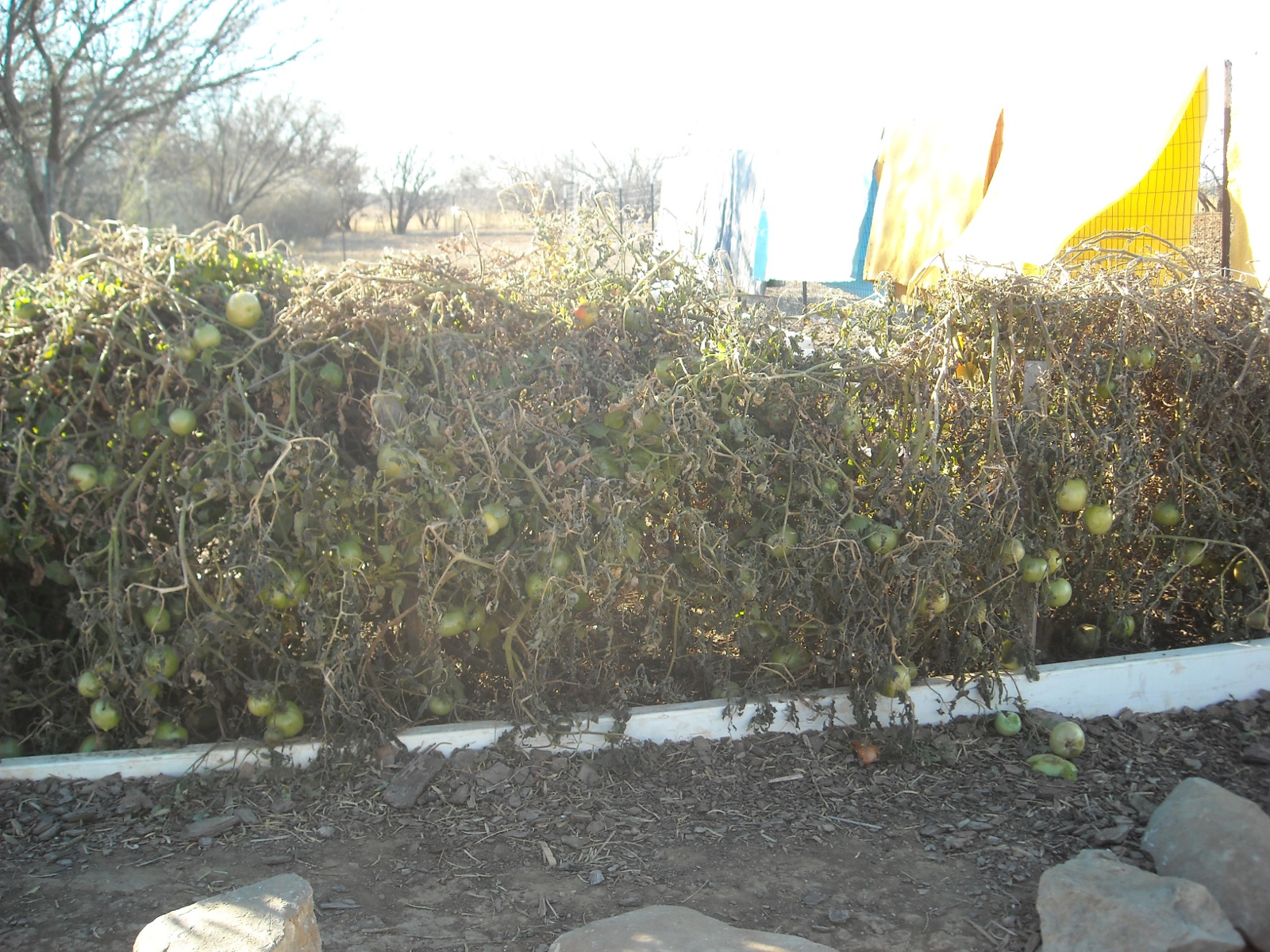
Our 2010 Spring garden was faced with much adversity, in that, it was plagued with grasshoppers and overcome by drought. We had very few tomatoes to harvest over the entire Spring and Summer months. But thank the Lord for His graces and mercies: come Fall, the grasshoppers began to die out, cooler temperatures came, and God sent a couple of good rains. We were thrilled when we started to see flowers start to bloom and eventually grow fruit all over our six, overgrown, previously empty, tomato plants:
Spring Garden 2010 Fall Tomato Crop on the Vine

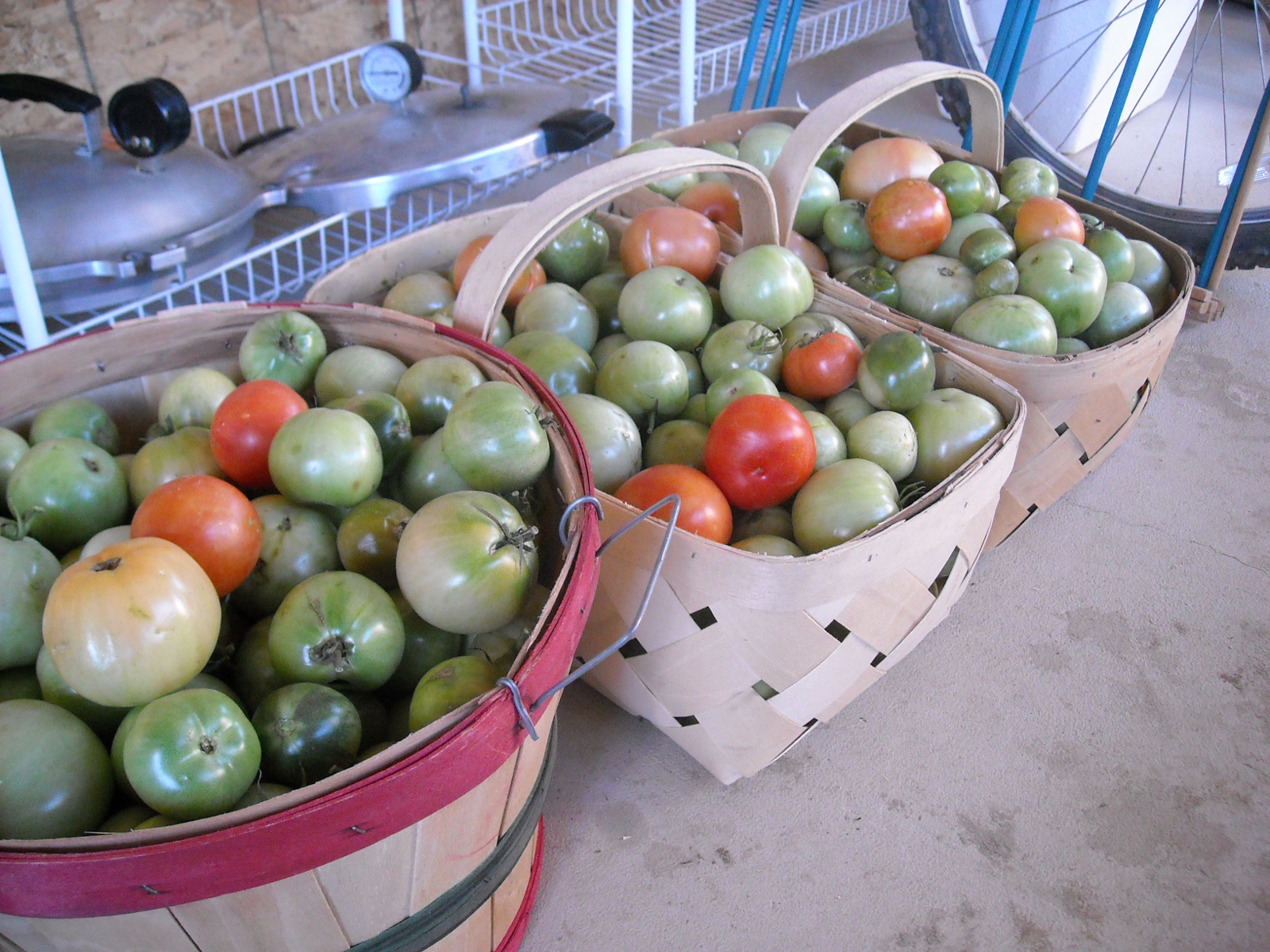
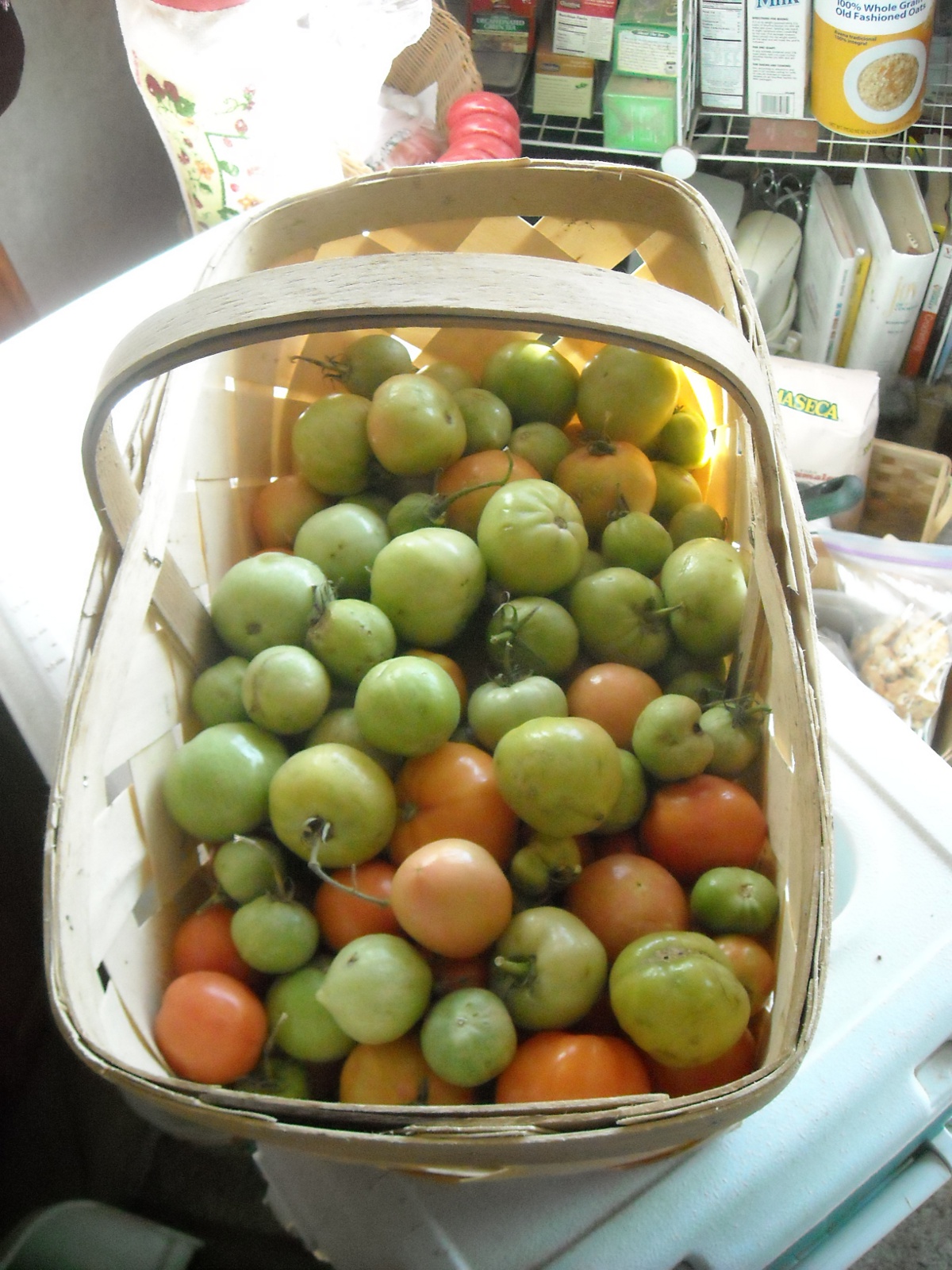
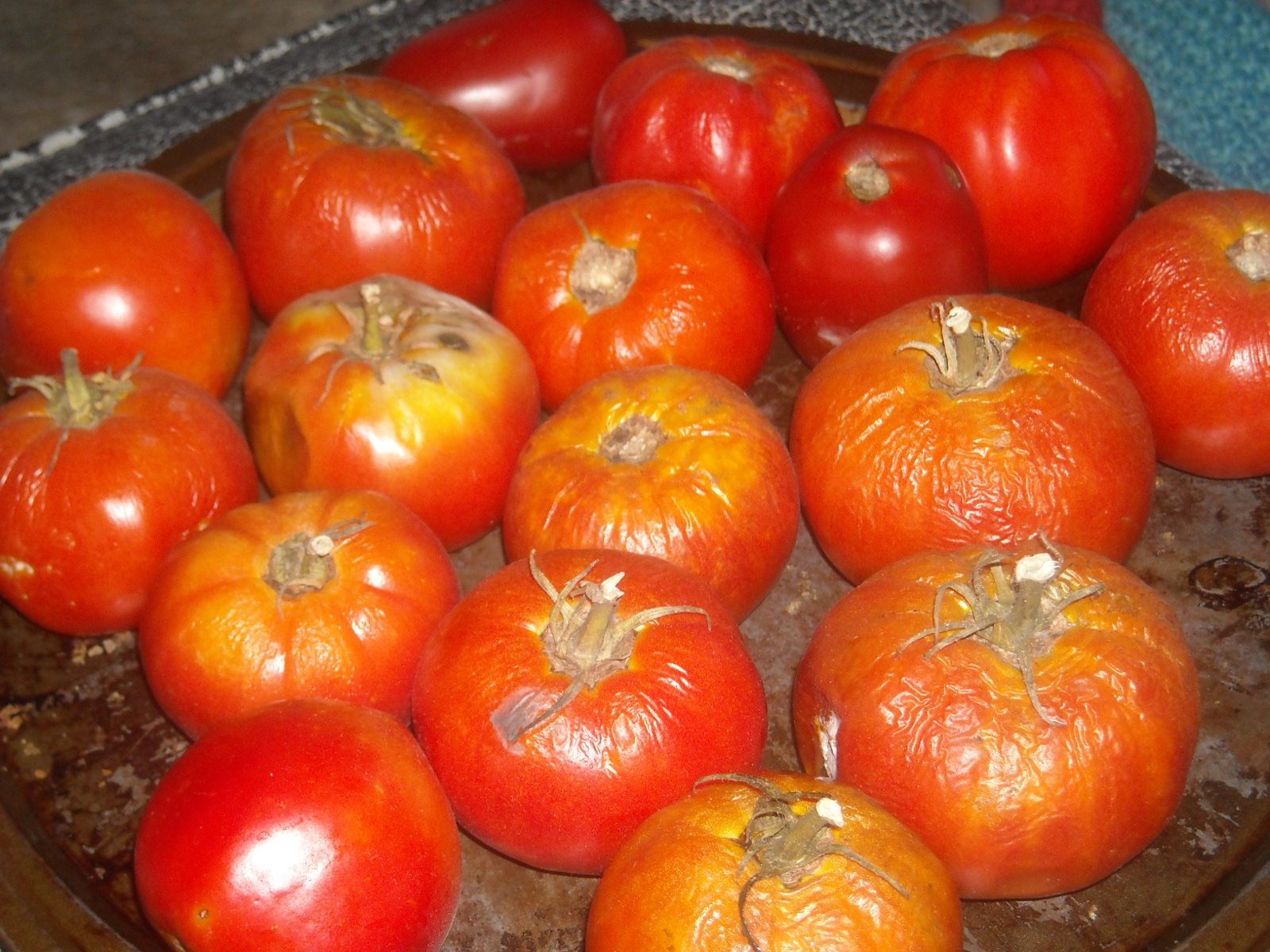
As Autumn progressed, we started to put blankets over the tomato plants but could tell they were probably not going to be able to ripen on the vine with the prevalent cooler weather patterns. I was able to harvest three large baskets of unripened tomatoes and put them in our summer kitchen building:
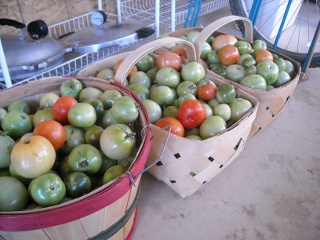
Spring Garden 2010 Fall Tomatoes in Baskets

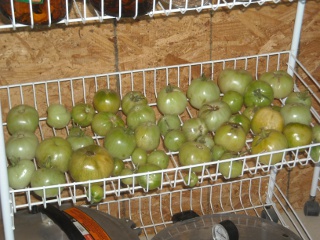
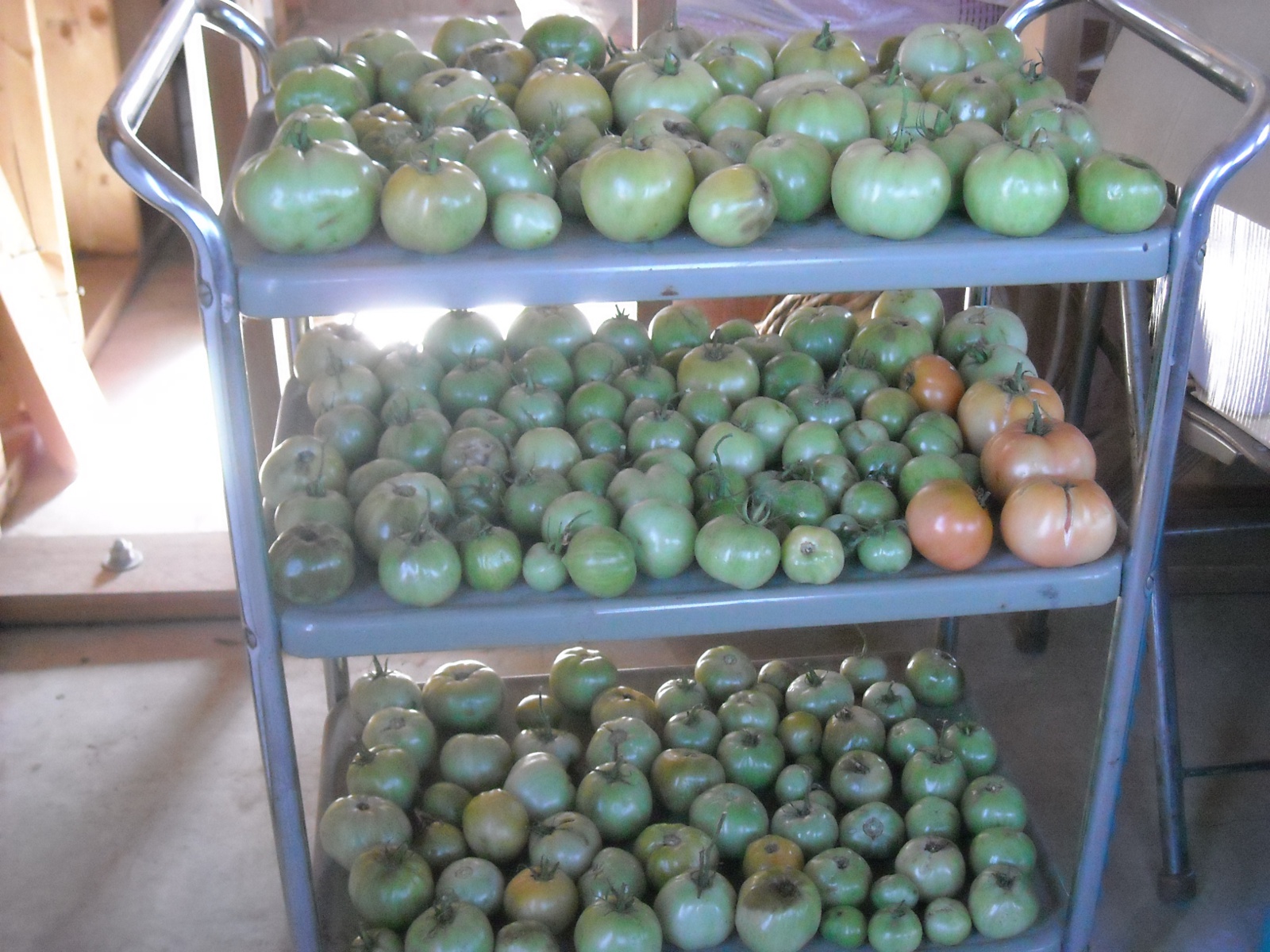
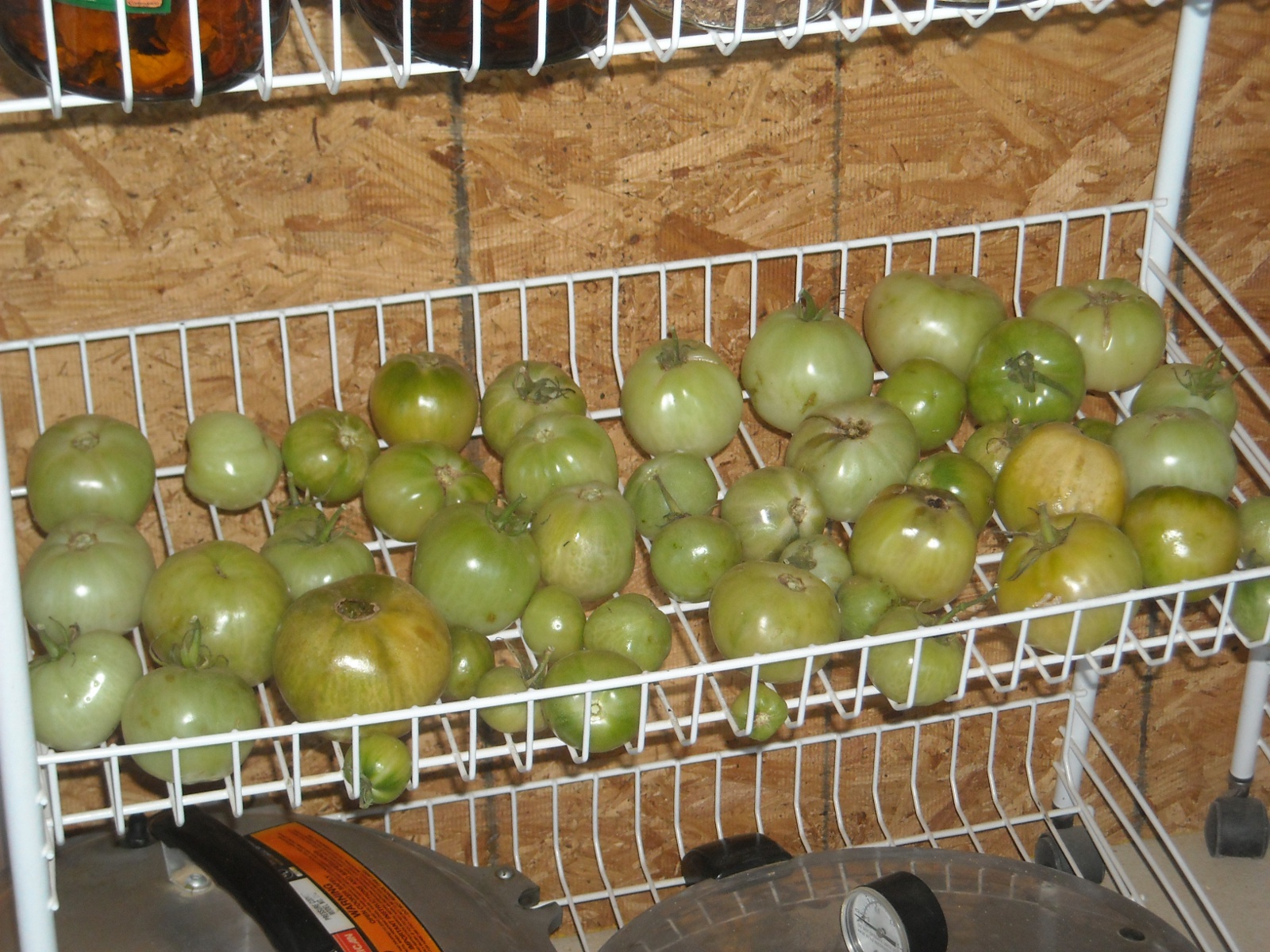
I knew they would rot if I left them as-is in the baskets, so I spread them out wherever I could find room. Here…….
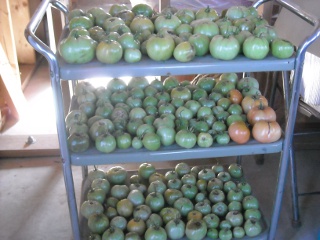
Spring Garden 2010 Fall Tomato Crop on Rolling Cart Shelves

Here……

Spring Garden 2010 Fall Tomato Crop on Another Rolling Cart Shelf

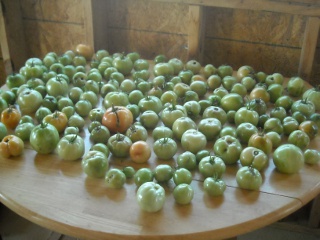
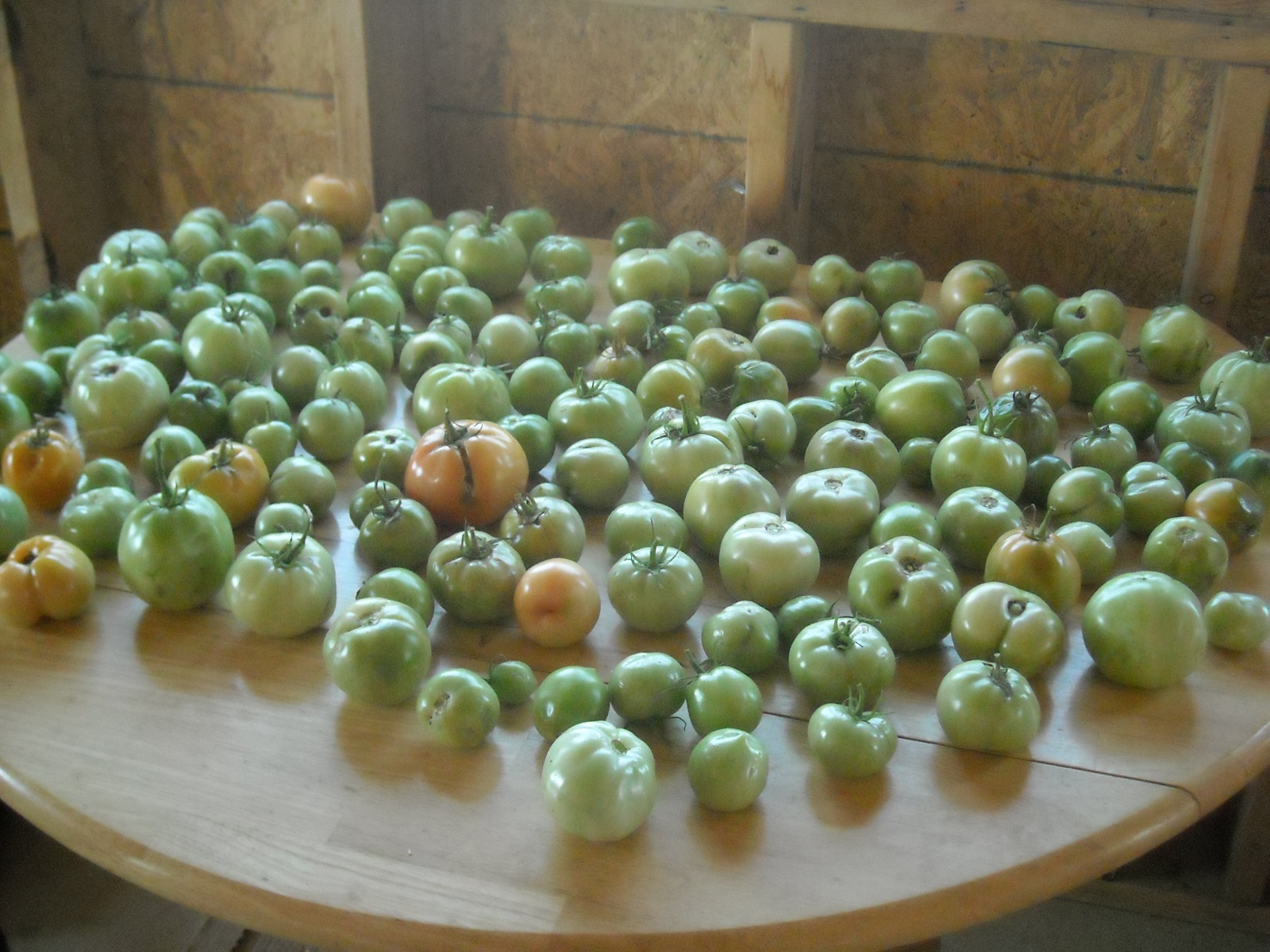
And more here!

Spring Garden 2010 Fall Tomato Crop on Table

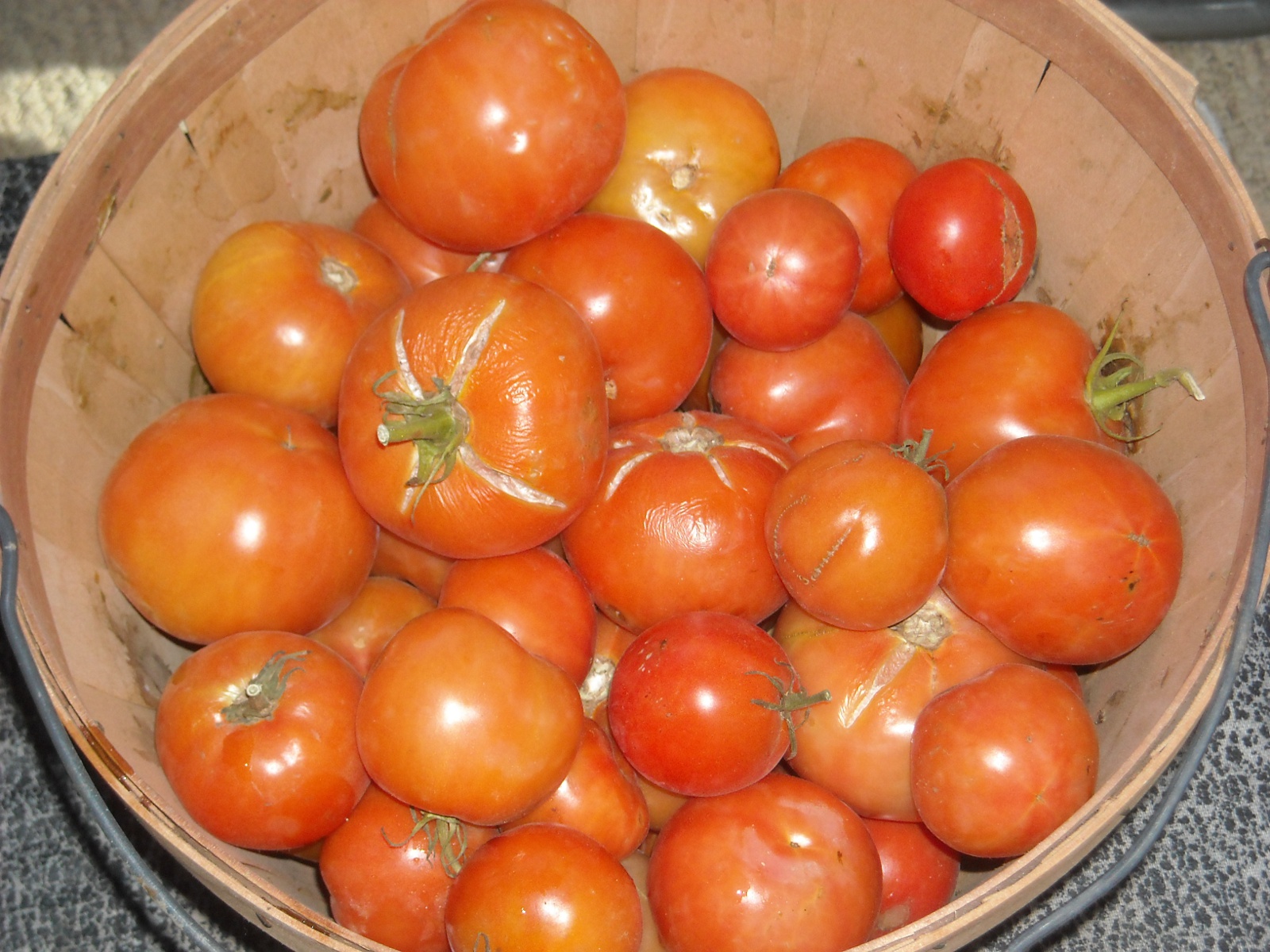
I checked on the tomatoes pretty much daily and grabbed the ripened ones to use in salads, sandwiches and other dishes. Man, there is nothing like the taste of a garden tomato! I had to keep a close eye on them because they can rot when you blink! And if they are touching in any way, it seems the rotting can be contagious. Our pigs ended up eating their share of rotten tomatoes, but at least they didn’t go to waste:
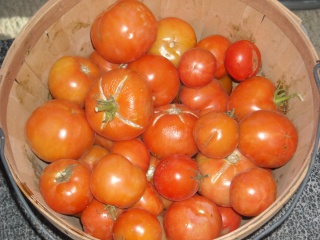
Spring Garden 2010 Fall Tomatoes Ripened in Basket

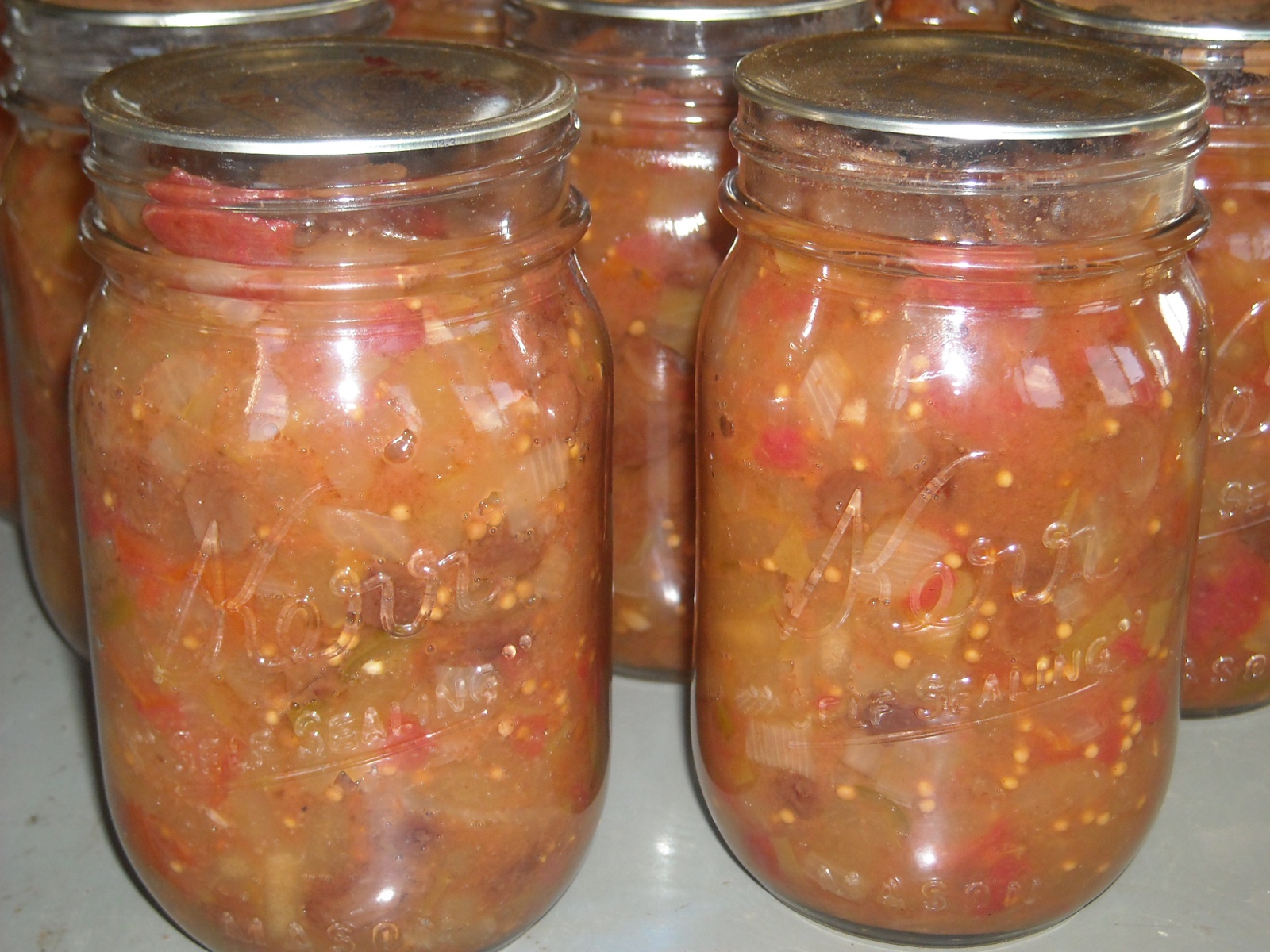
When I had a goodly amount of ripened tomatoes, I went ahead and preserved them by making some tomato-apple chutney. Yum! For anyone who is interested, here is the easy recipe from the Ball Blue Book of Preserving:

Tomato-Apple Chutney (yields about 6 pints, but you will probably yield more if you are generous with the ingredients)

2 1/2 quarts (about 12 large) chopped, peeled, cored tomatoes (I did not peel or core mine)
1 quart (about 5 medium) chopped, cored, peeled apples (I did not peel mine)
3 cups brown sugar
2 cups (about 1 large) chopped cucumber
1 1/2 cups (about 1 1/2 medium) chopped onions
1 1/2 cups (about 2 medium) chopped sweet red peppers
1 cup raisins
1 hot red pepper, finely chopped (I used a jalapeno pepper)
1 clove garlic, minced
1 tablespoon ginger
1 teaspoon salt
1 teaspoon cinnamon
3 cups vinegar (I used apple cider vinegar)

Combine all ingredients in a large sauce pot. Simmer until thick. Stir frequently to prevent sticking. Ladle hot chutney into hot jars, leaving 1/4-inch head space. Remove air bubbles. Adjust two-piece caps. Process 10 minutes in a boiling-water canner. (Be sure to check for any time or weight adjustments based on altitude)

(Recipe variation: For a milder chutney, remove seeds from hot pepper)

(Note: When cutting or seeding hot peppers, wear rubber gloves to prevent hands from being burned)

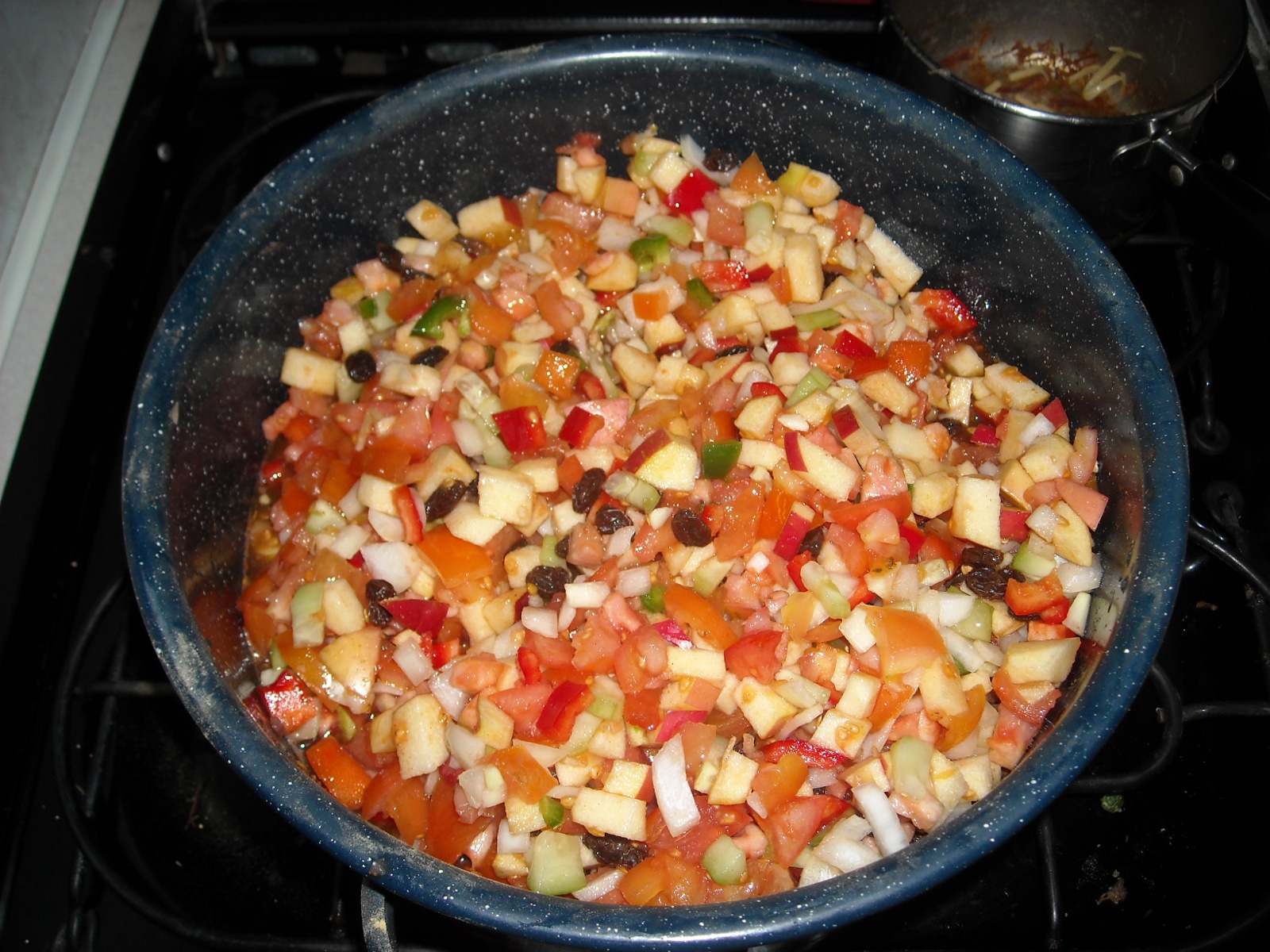
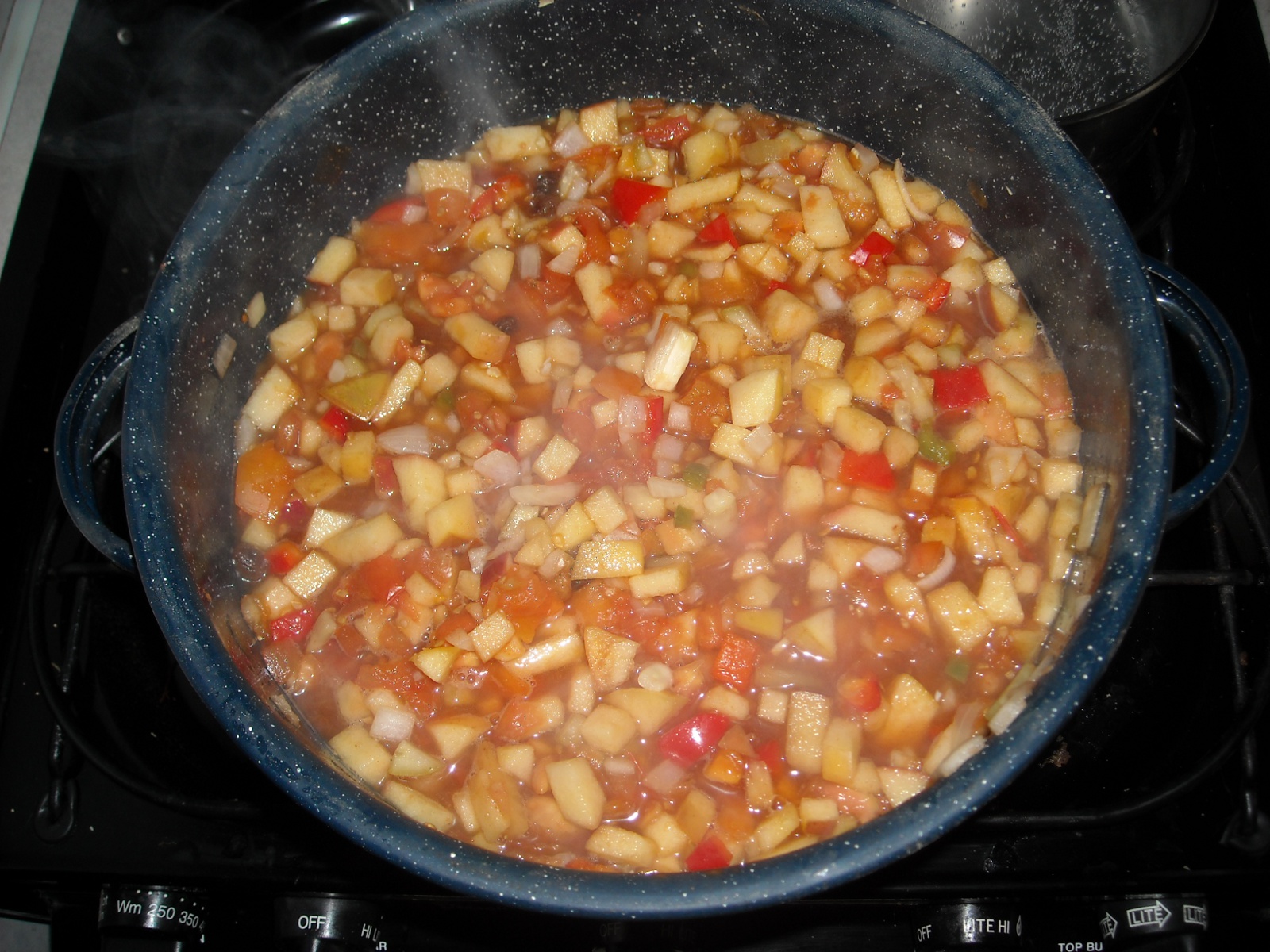
Here are all the ingredients combined and ready to be simmered:
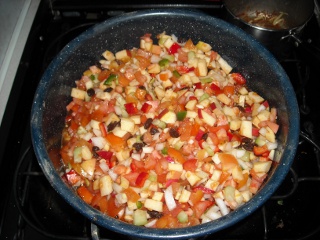
Tomato-Apple Chutney Ingredients Ready for Cooking

And here it is after simmering, ready to be poured into clean, hot canning jars.
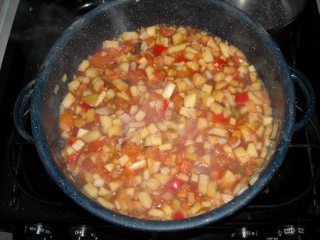
Tomato-Apple Chutney Simmering in Pot

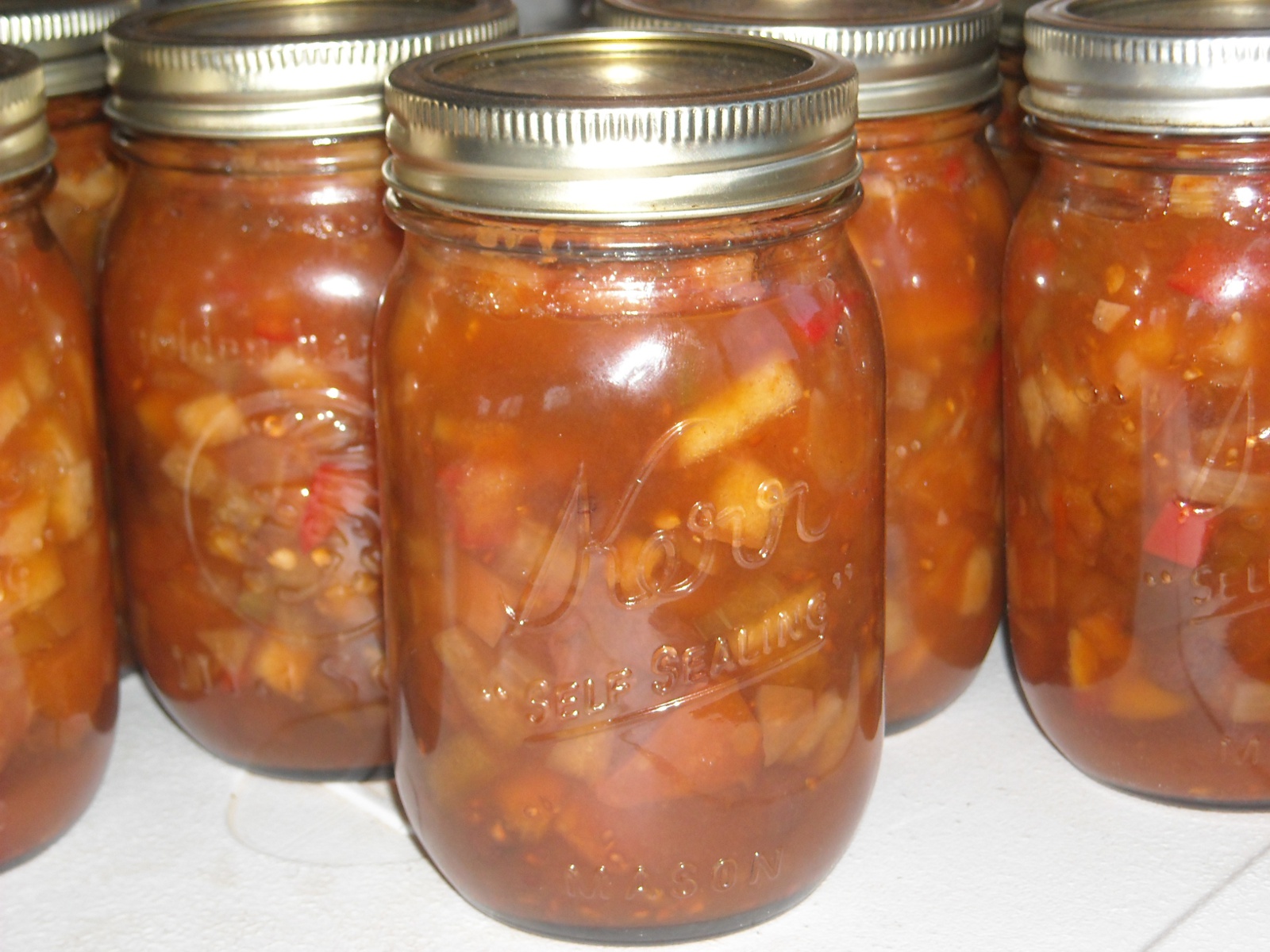
I have found chutney is really tasty with rice dishes, as a garnish or topping to meat or anything to which you want to add a sweet/sour savory tang or “pizazz.” I am thankful to have found these chutney recipes to assist in preserving many of our garden veggies and orchard fruits:
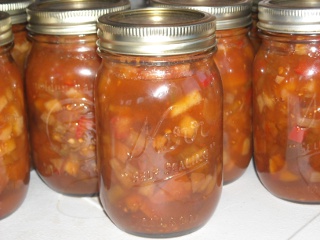
Tomato-Apple Chutney Preserved in Jars

There came a point in the Winter where the rotting was increasing and the ripening was taking a long time, so I decided to attempt lactic fermentation with the remaining green tomatoes:
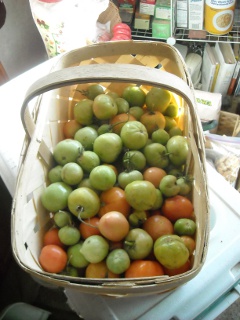
Spring Garden 2010 Fall Tomatoes Unripened

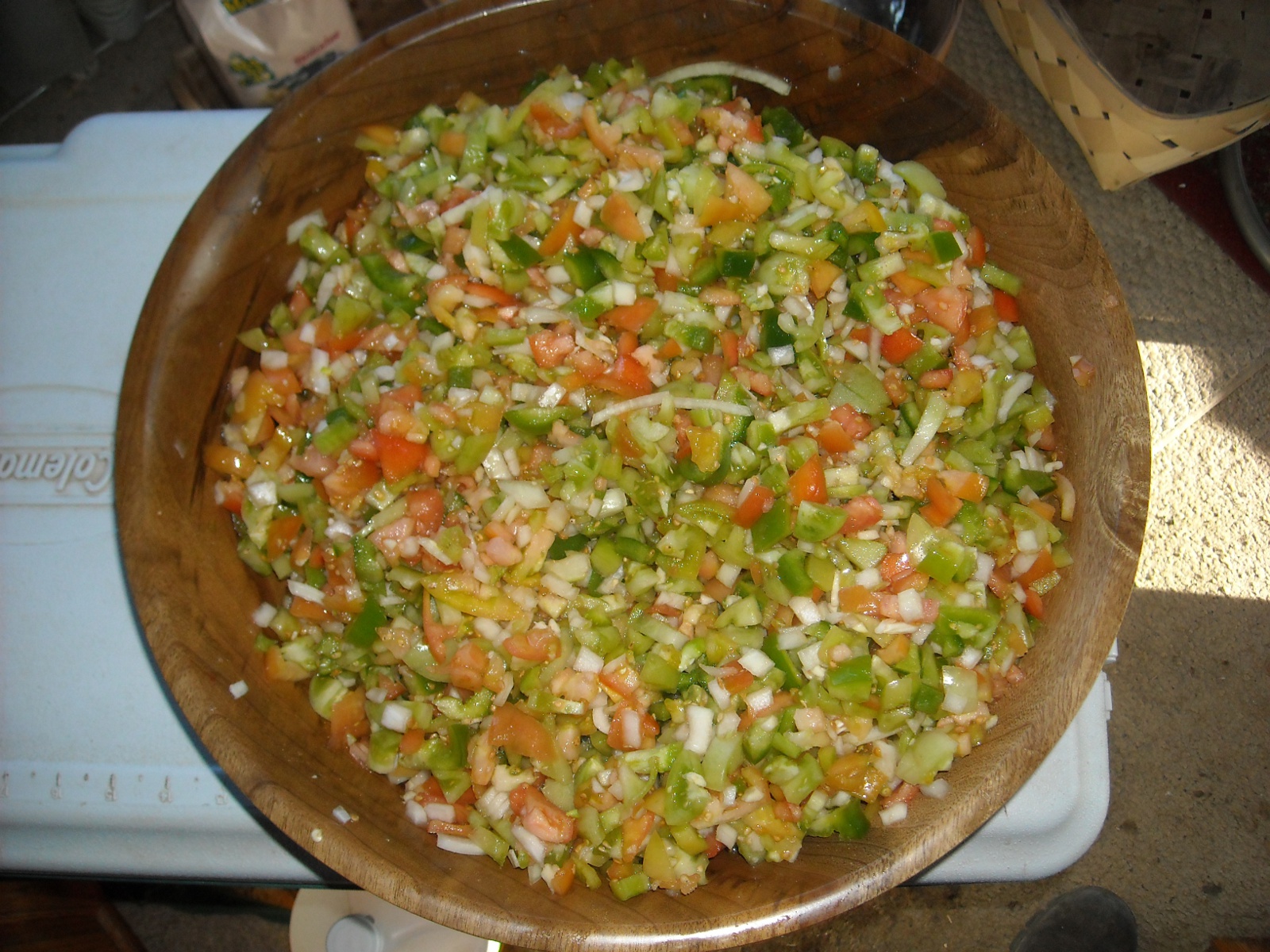
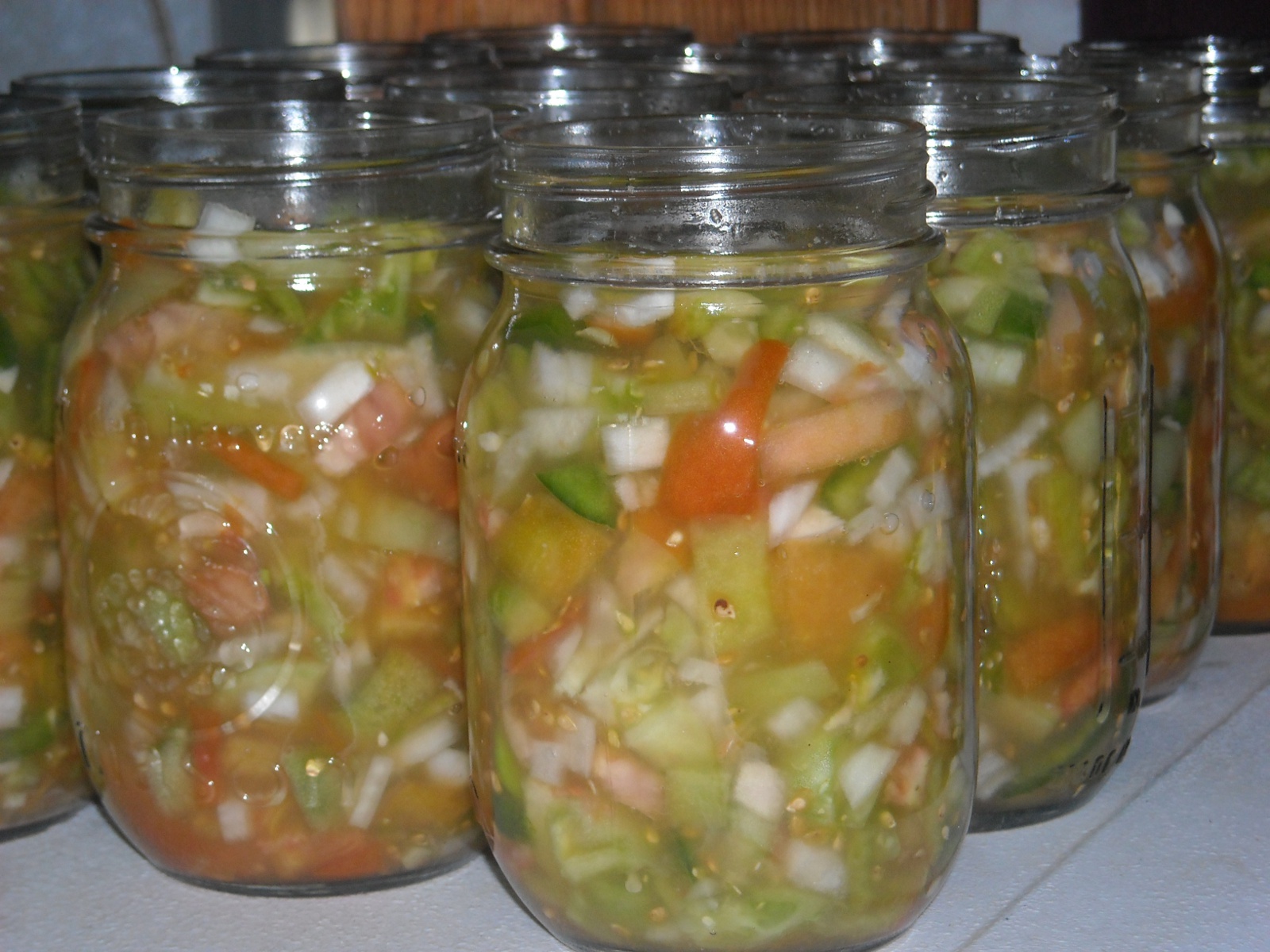
I combined the green tomatoes, chopped onion, chopped garlic and chopped green peppers (I think those are all the ingredients I used). You can put most any combination of garden veggies together for lactic fermentation:
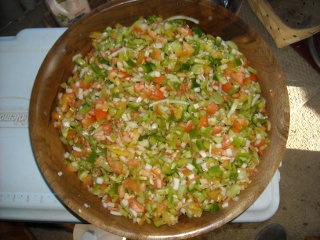
Spring Garden 2010 Fall Green Tomatoes and Vegetables Chopped Up for Lacto-Fermentation Preservation

I put it raw in canning pint jars, along with two teaspoons of canning salt in alternating layers, and filled the jars to within one inch head space with water. Then I put the tops on and……..that’s it! Lastly, I placed them down in the root cellar. Over the course of days to weeks, it develops that tangy fermented taste that is sooooooo good for your gut. It actually makes a great salsa, and we also put it on our salads.

We thank God for His perfect timing in providing this late tomato harvest and for His faithful provision:
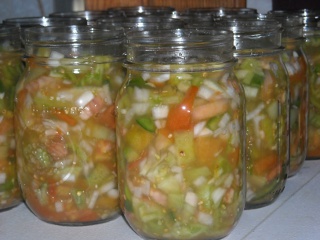
Spring Garden 2010 Fall Green Tomatoes and Vegetables in Jars for Lacto-Fermentation Preservation

Susan
Garden – Spring 2010 – Update I

You may be wondering why I’m talking about our 2010 Spring garden now instead of several months ago. Well, our garden seemed to have a mind and time line of its own this past year; and I just recently finished processing the last of our tomatoes. I plan to write a separate blog post on those but am just now getting down to chronicling the rest of the garden in an update. I figure for us gardeners, what better time to dwell on Spring, gardening, new growth and warmth than in the thick of Winter!

Onions

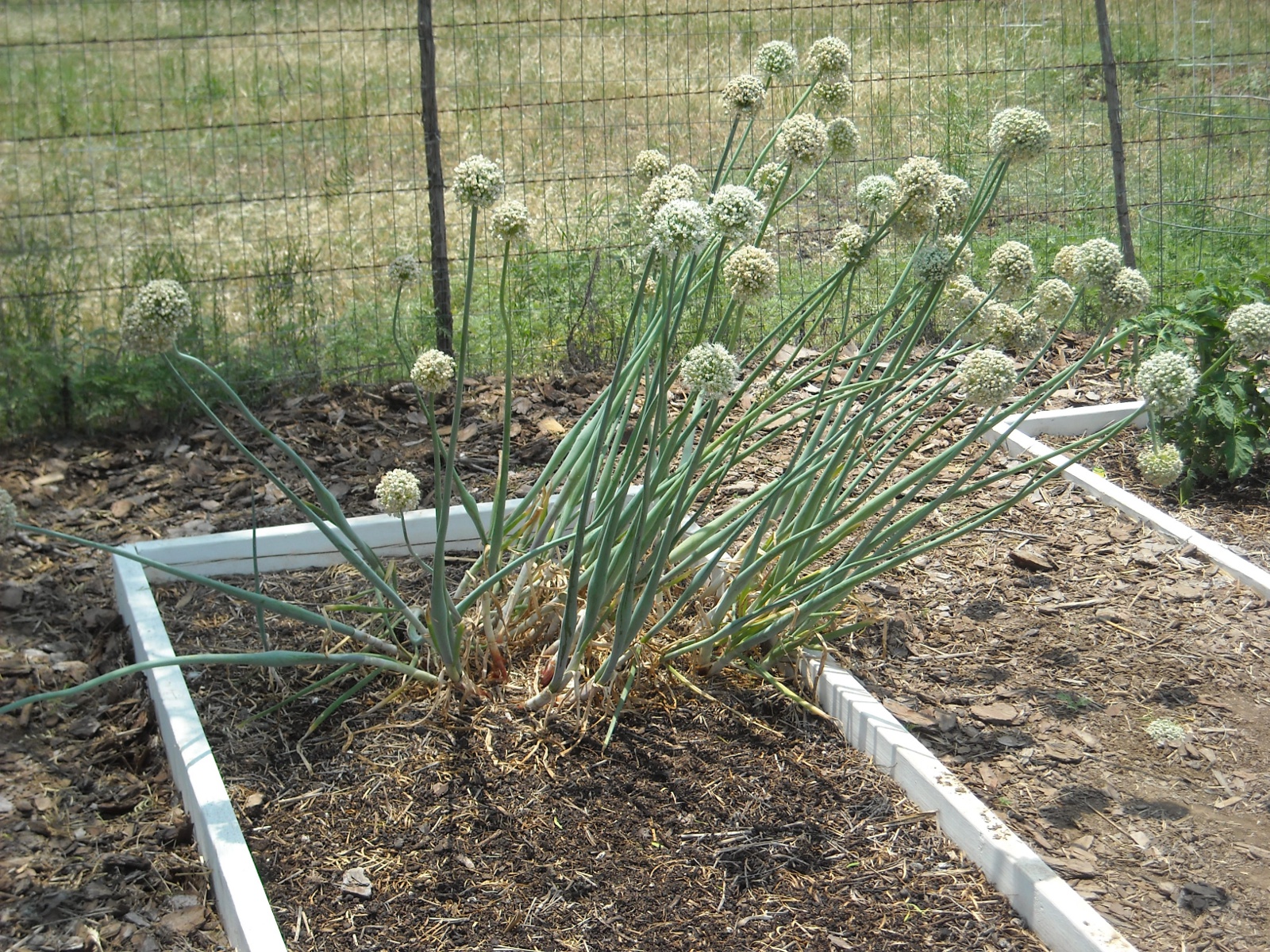
Believe it or not, these onion plant blossoms are from our 2009 Spring garden! But they have faithfully kept producing, so we decided not to pull them and continue to let them grow. The underground onion bulbs are rather small, but I have been able to pull and use them in many meals over the past couple of years:

Spring Garden 2010 Mature Onion Plant

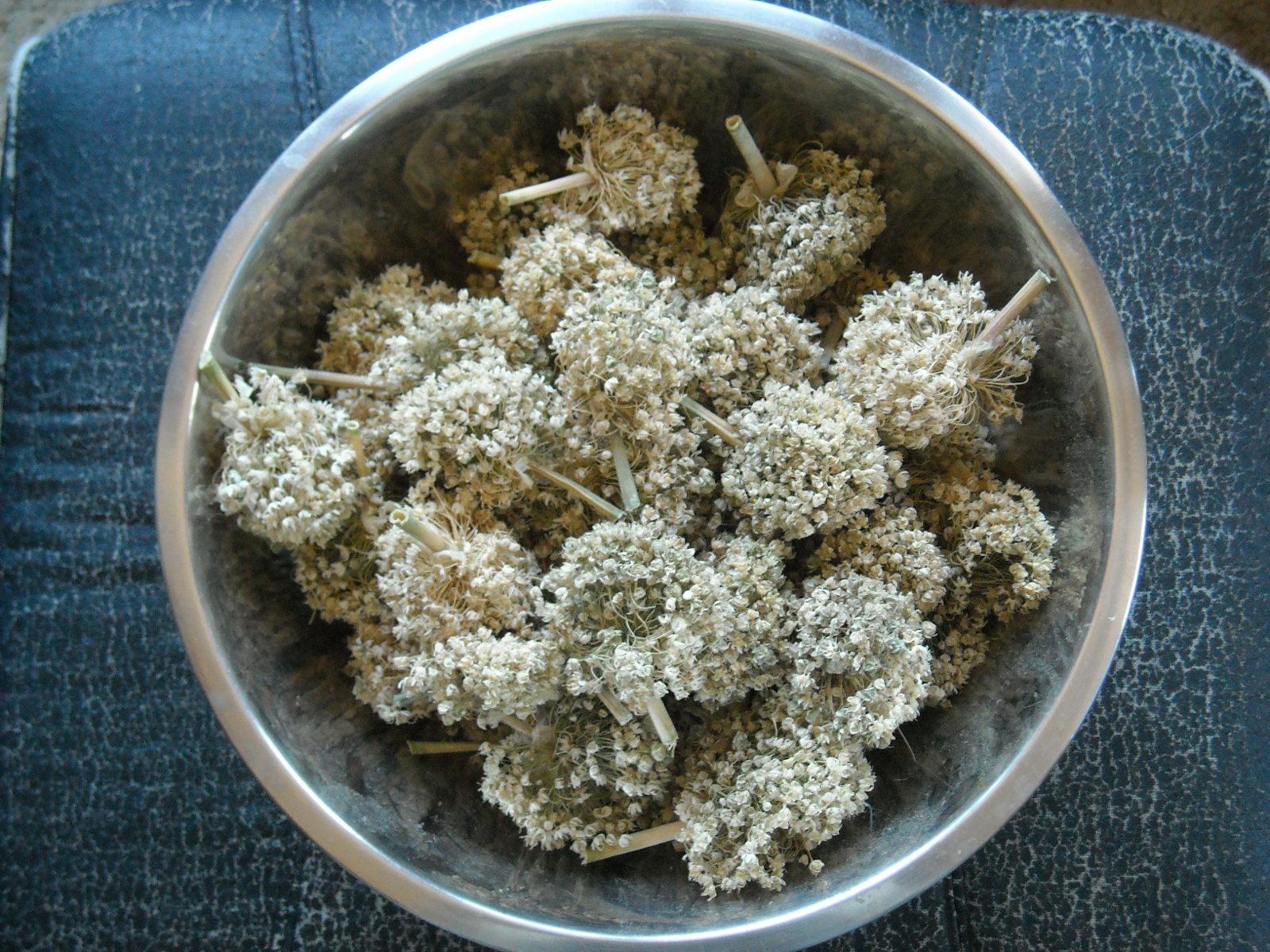
I clipped the plants down to the ground but left the bulbs in case they would continue to produce green onions (which they have as of this update). Here is a bowl full of the blossoms I am saving to plant again in our Spring 2011 garden to see if they will reproduce:

Spring Garden 2010 Onion Plant Blossoms

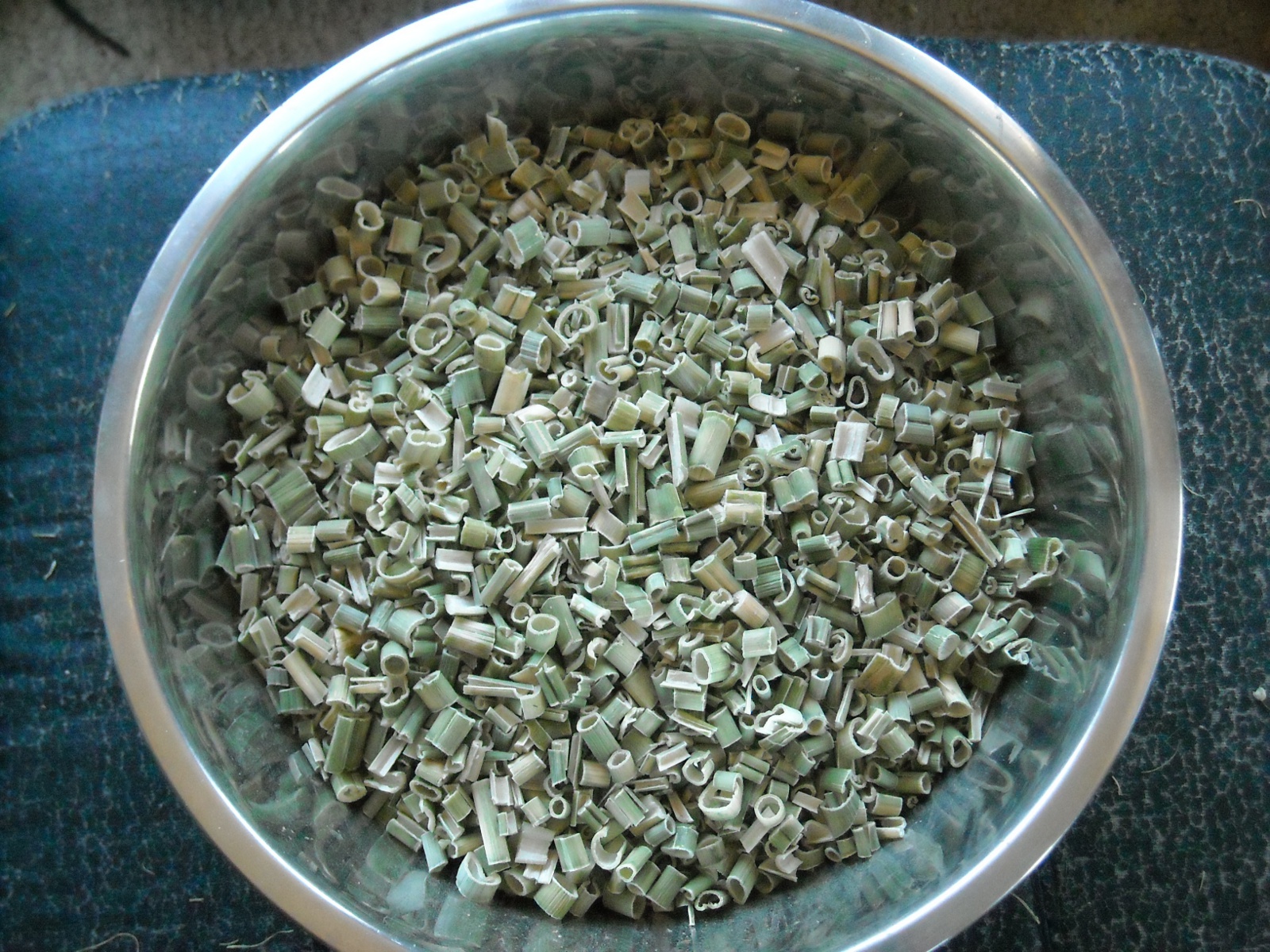
I cut up and dried the stalks in our solar food dehydrator, but they came out unusable in my opinion. I let them get too fibrous and leggy before picking them. Note to self: Don’t do that!

Spring Garden 2010 Dried Green Onions

Zucchini

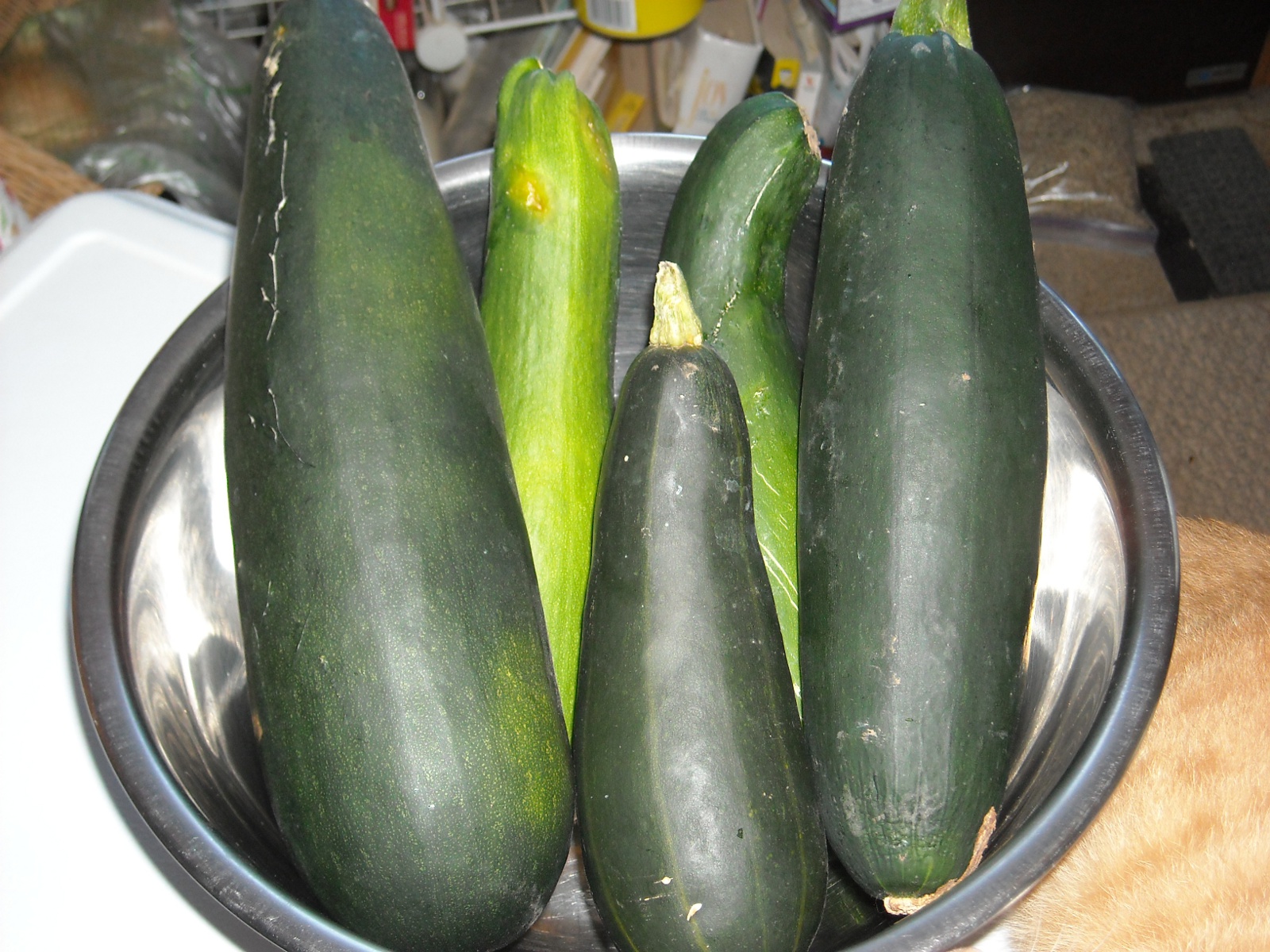
Due to a drought and large numbers of grasshoppers, our zucchini harvest was a fraction of the size of years past; but I picked these last few:

Spring Garden 2010 Zucchini Harvest

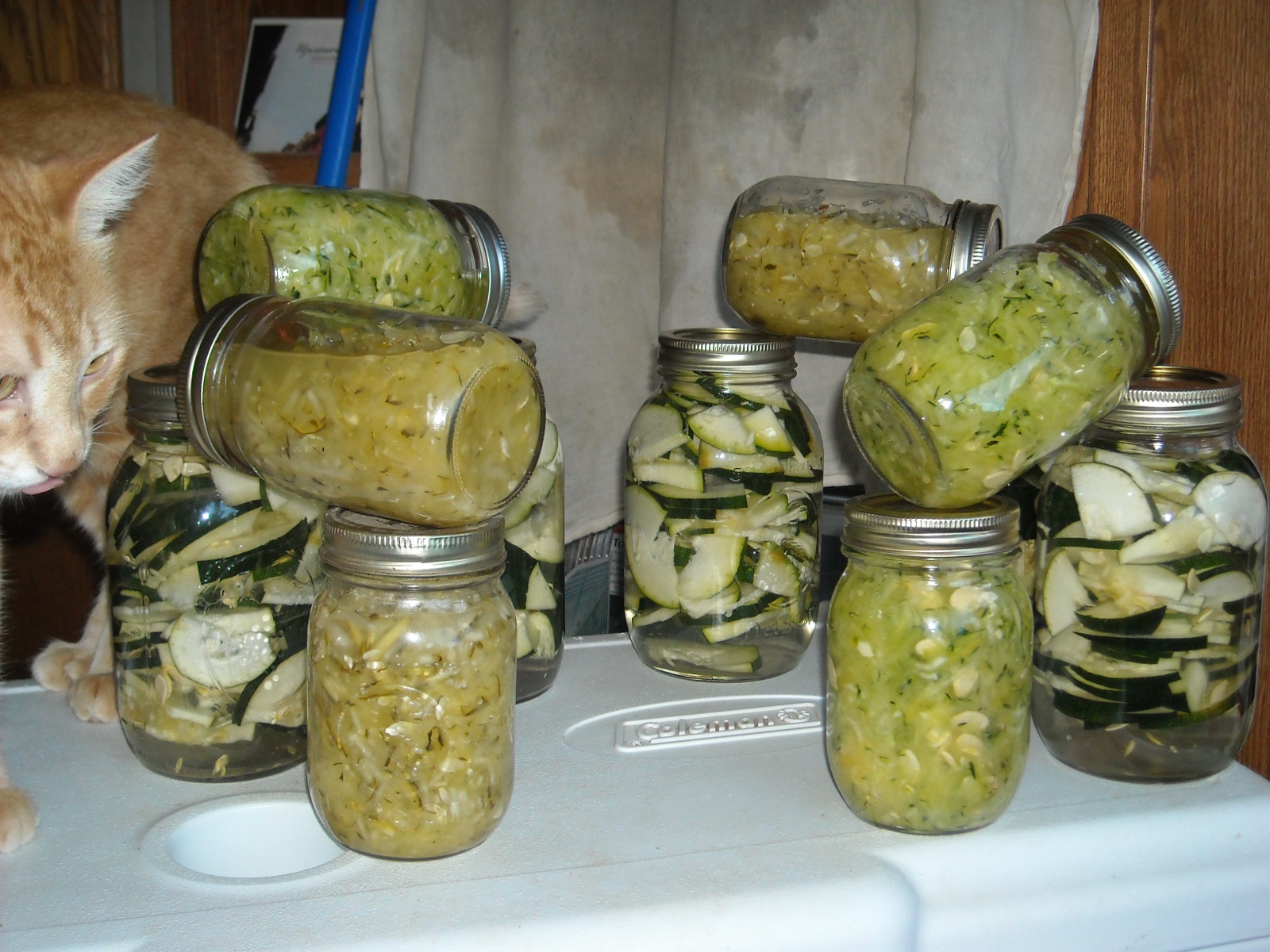
I decided to go the quick and easy lactic fermentation route and made some zucchini pickles and relish. I can’t believe how easy it is to preserve by lactic fermentation. You just add about two teaspoons of canning salt per pint in alternating layers with whatever vegetable you are using; fill the jar to about 1/2″ head space with water (preferably not tap water but distilled or filtered rain water); close with lid and move to a cool, dark place to ferment and develop those wonderful bacteria and enzymes for your gut and digestion. Once done, I put the jars all down in our root cellar. Due to our interest in zucchini, we traveled across the globe (ie: to the other side of our RV) to see the eighth wonder of the world, “Zucchini-Henge.” We were startled when we witnessed a rare sighting of the gargantuan feline monster on the left!

Spring Garden 2010 Zucchini-Henge

End of the Garden Pickles

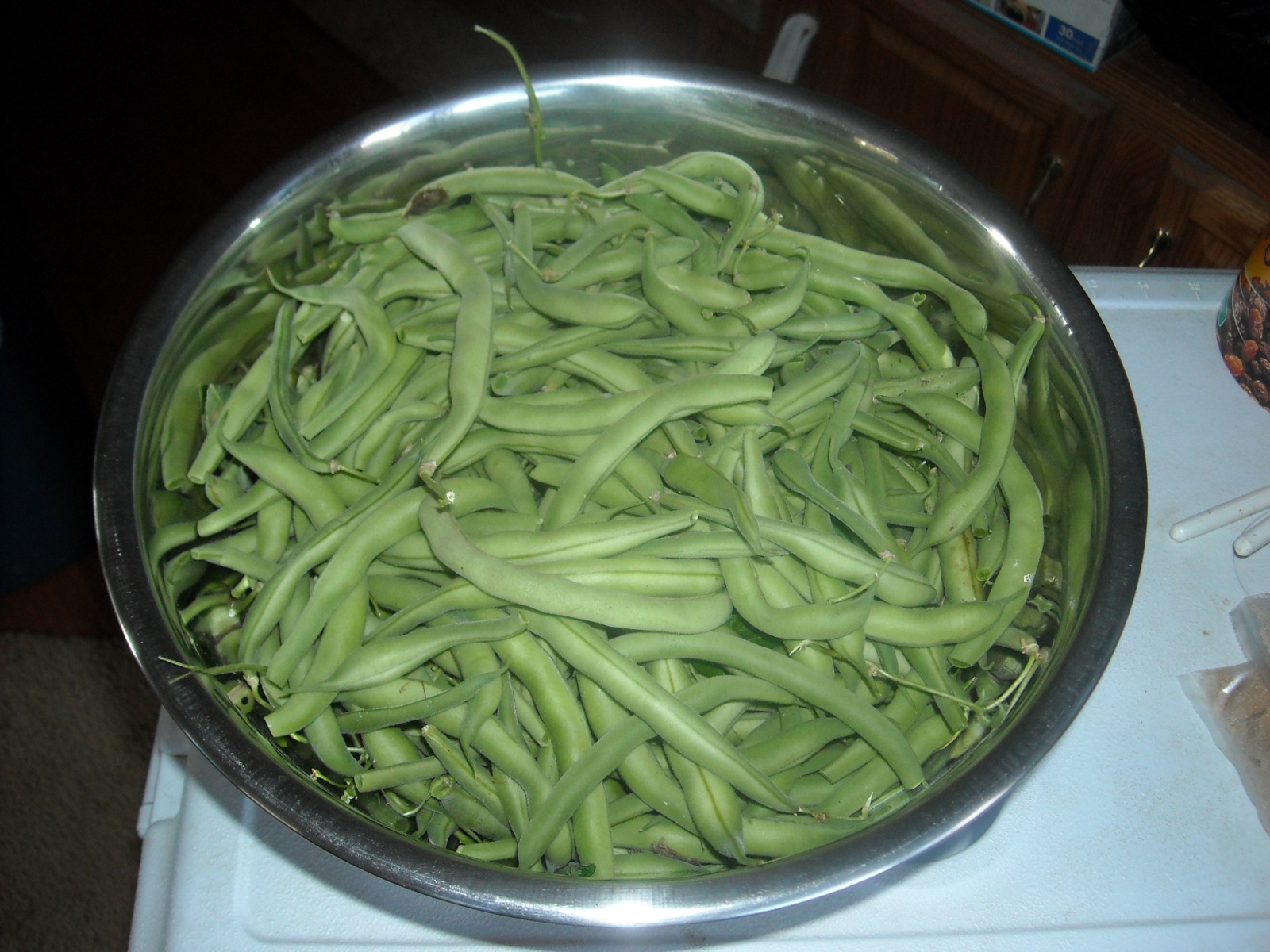
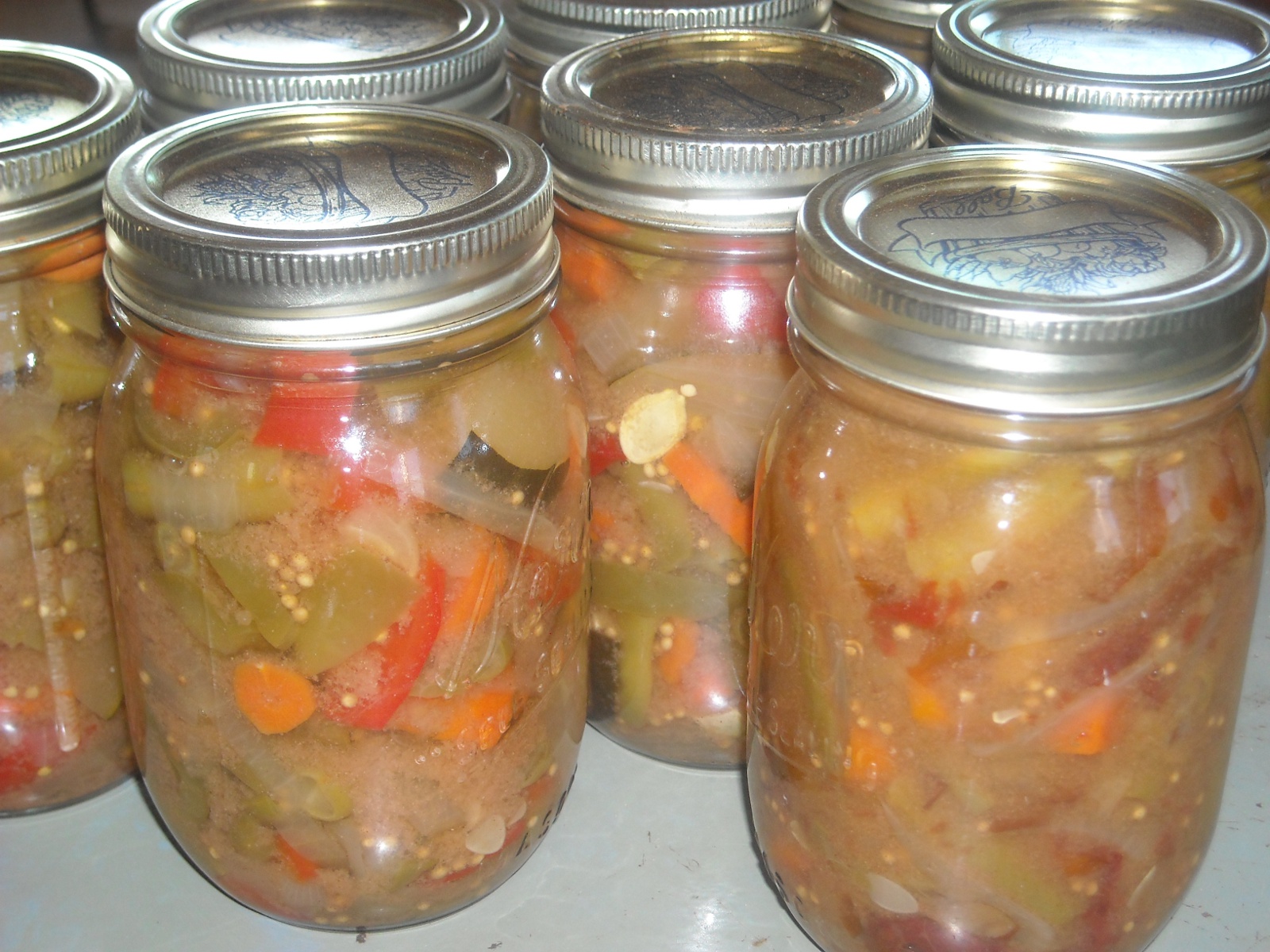
Here is our last harvest of green beans for the season. Since there weren’t that many, I decided to experiment with lactic fermentation with two pint jars full of beans, water and salt, combining the rest with other garden vegetables to make some “End of the Garden Pickles” from the recipe in the Ball Blue Book of Preserving:

Spring Garden 2010 Bowl of Freshly Picked Green Beans

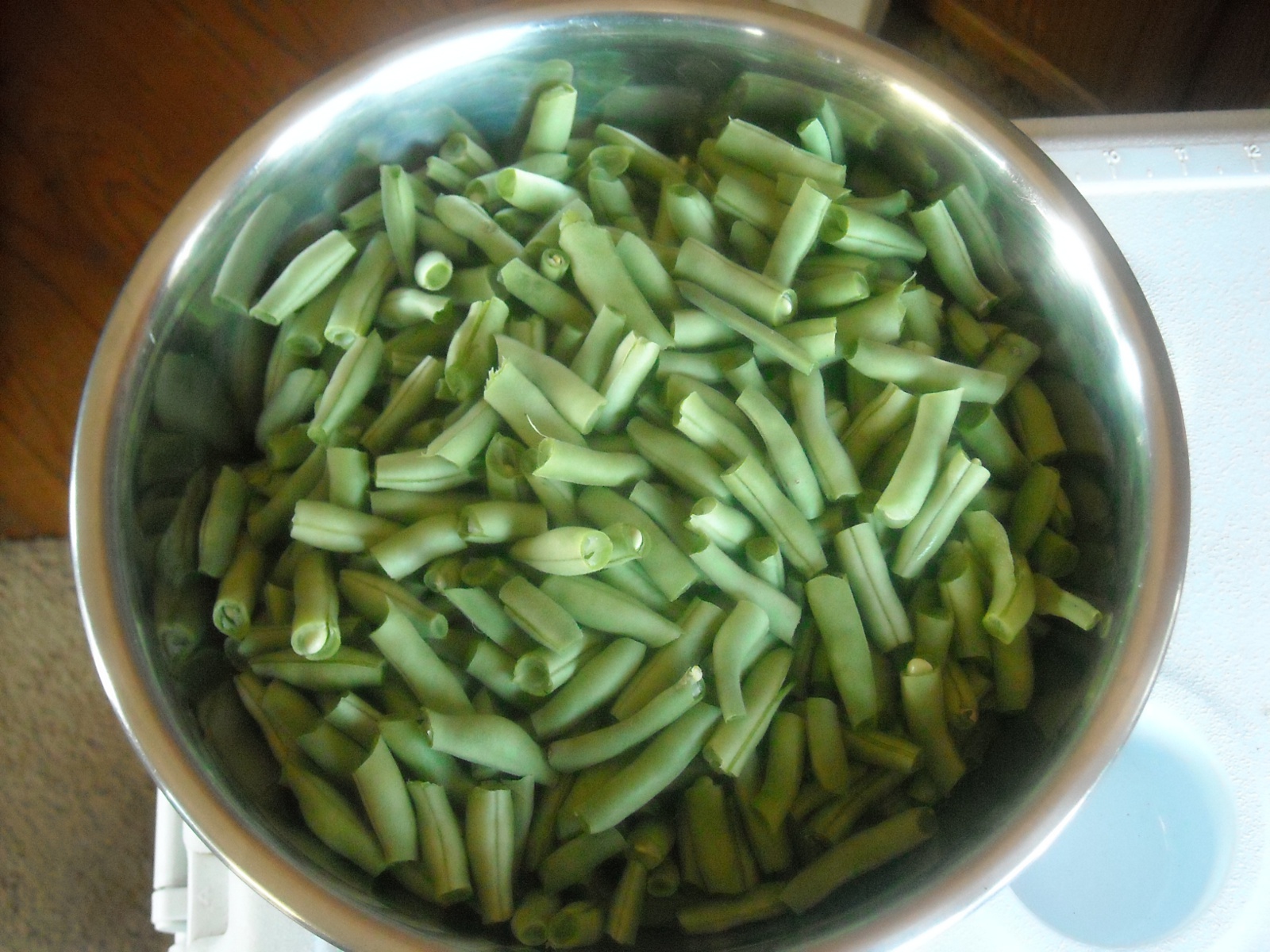
Here are the green beans all washed, cut and ready to go:

Spring Garden 2010 Bowl of Cut Green Beans

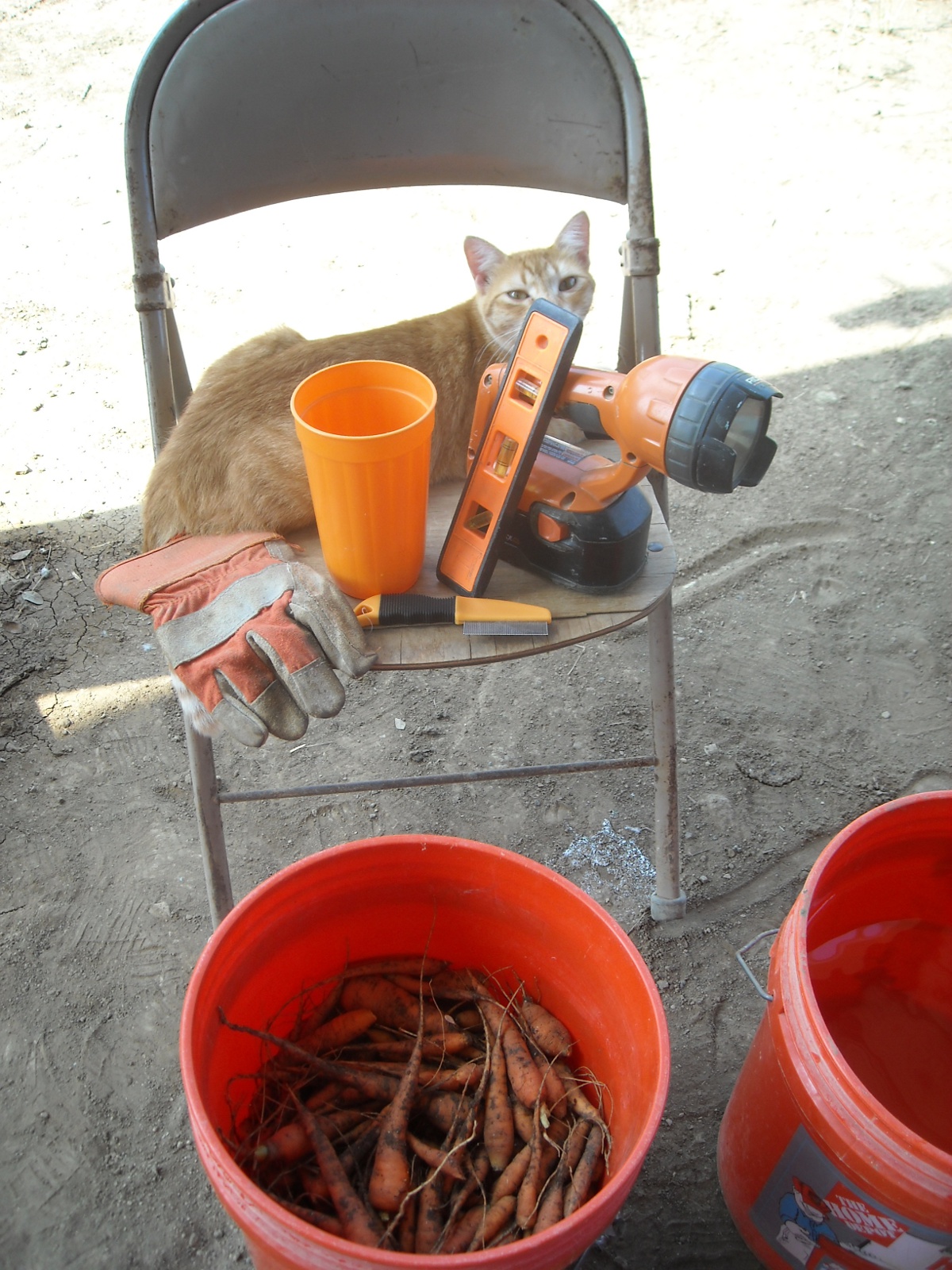
Can you find our freshly picked garden carrots in this picture packed with all things orange?!

Spring Garden 2010 Freshly Picked Carrots

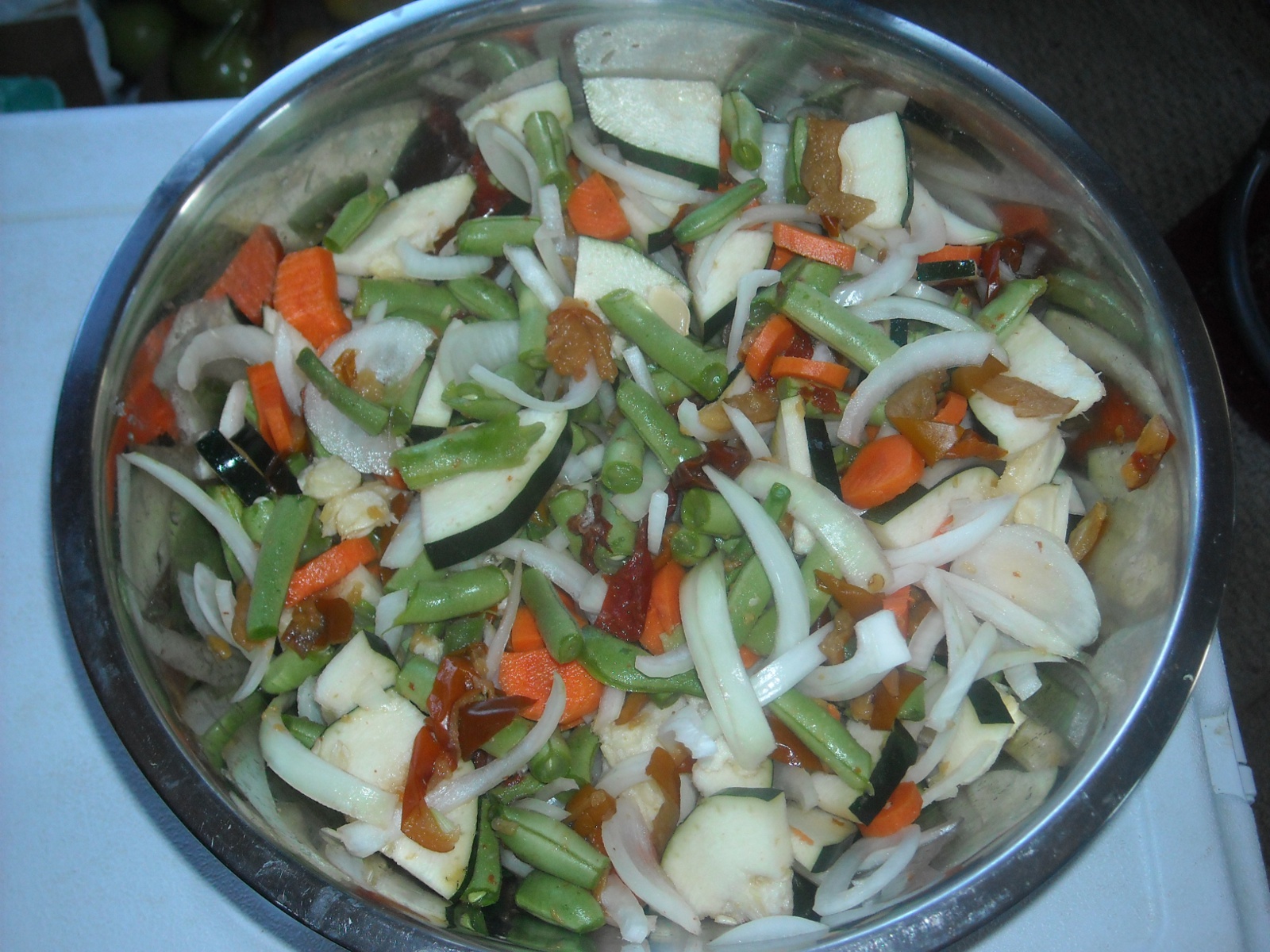
Here are all the ingredients ready to go for the “End of the Garden Pickles” recipe. In this batch I included green beans, zucchini, carrots, peppers and onions:

Spring Garden 2010 End of the Garden Pickles

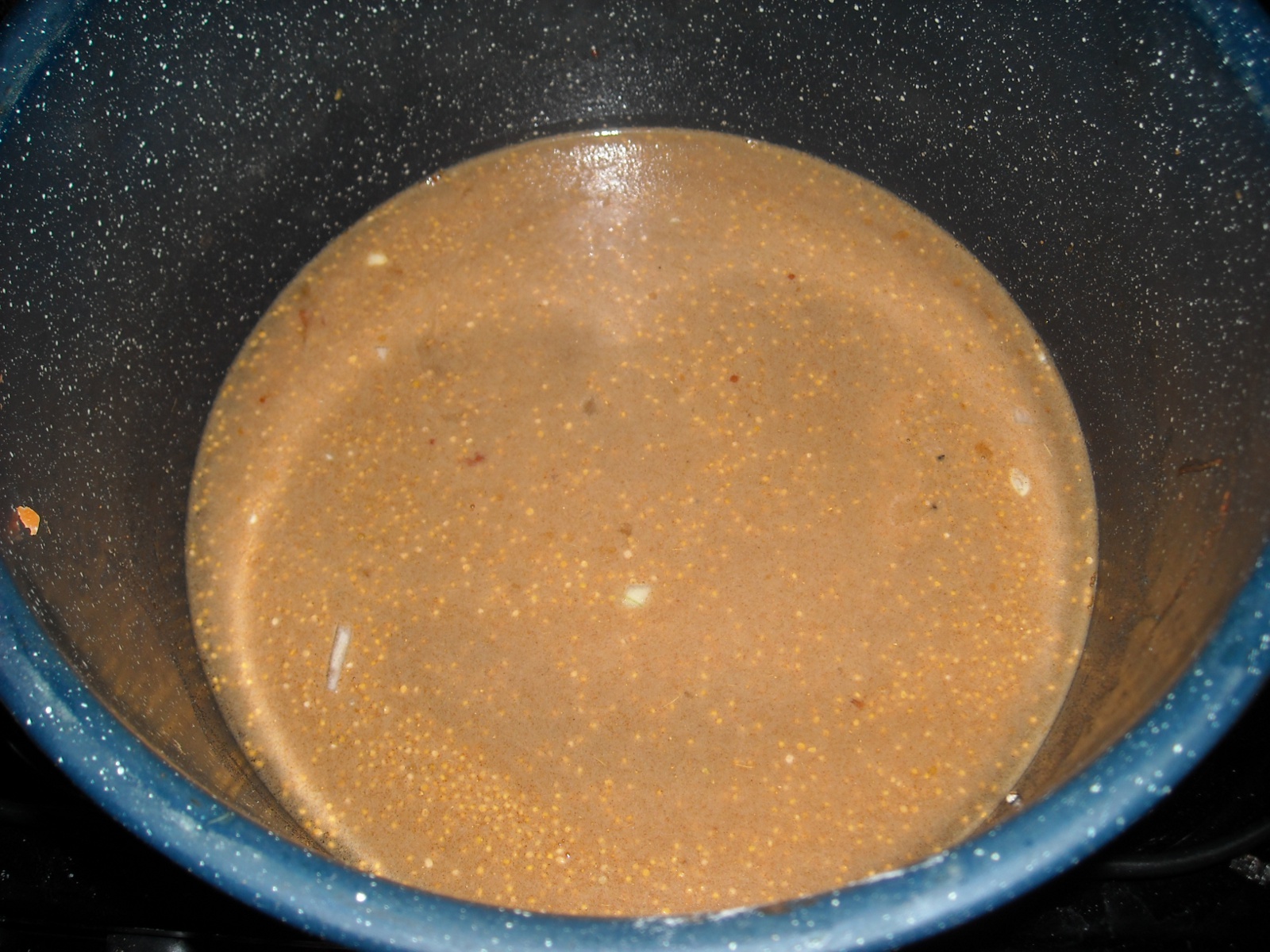
And here are sugars, spices and vinegar combined and ready to be mixed in with the vegetables:

Spring Garden 2010 End of the Garden Pickles Sauce

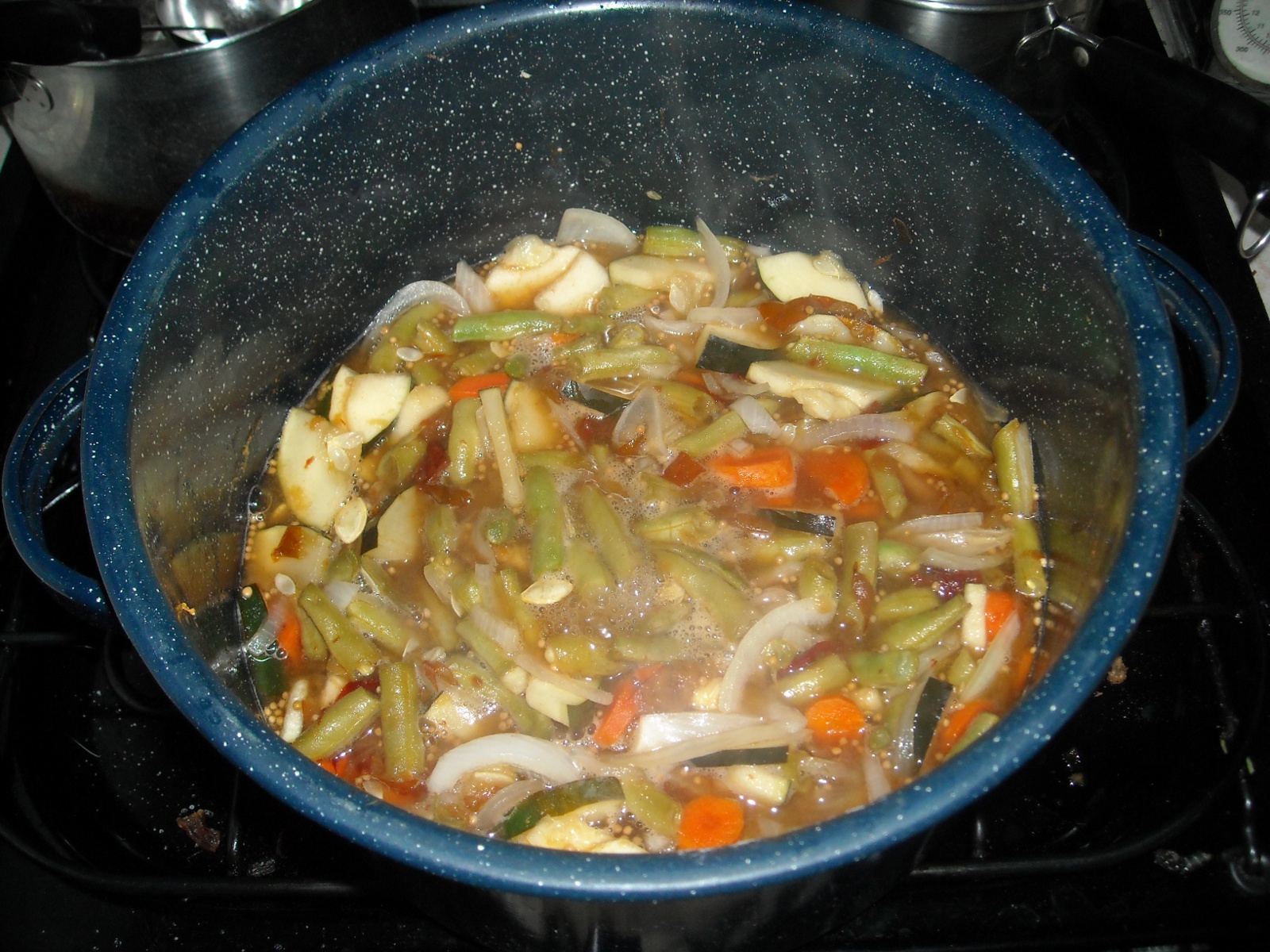
I brought the liquid to a boil and then added the vegetables and brought it to a boil again. Then I turned down the heat and let it simmer for about 15 minutes:

Spring Garden 2010 End of the Garden Pickles cooking

It was then ready to be ladled into hot jars and pressure-canned! How easy is that!

Spring Garden 2010 End of the Garden Pickles in Canning Jars

Tomatoes

Here are some tomatoes given to us by a neighbor. As I hinted at above, our own tomato crop didn’t produce until November, so we were very thankful to have received these:

Spring Garden 2010 Tomatoes

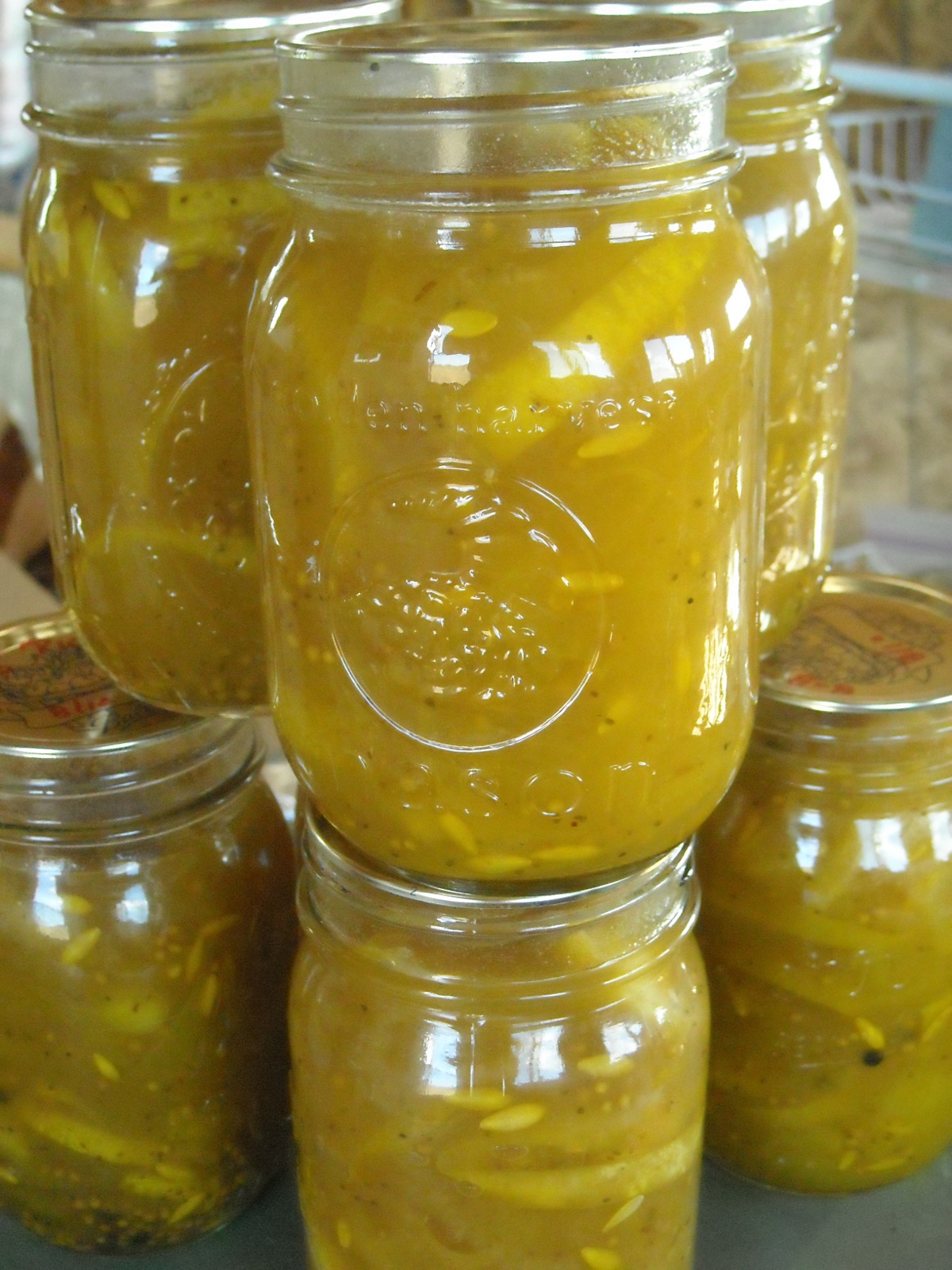
I decided to make some Sweet Yellow Tomato Chutney out of these tomatoes. All my chutney recipes so far are taken from the Ball Blue Book of Preserving. I think these recipes are top notch and delicious. A friend suggested putting some tomato chutney in with pasta sauce. I have done that many times and find it adds a delicious “tangy twist” to traditional pasta sauce:

Spring Garden 2010 Canned Tomato Chutney

Bread and Butter Pickles

Lastly, I honestly can’t remember where I got the cucumbers to make this batch of “Bread and Butter Pickles” (page 47 from the Ball Blue Book of Preserving). The cucumbers from our garden just did not do well, but someone must have given these to me, or I got them on sale or something. Another delicious recipe!

Spring Garden 2010 Canned Bread and Butter Pickles

Thanksgiving

We are thankful for this late harvest from our garden, and once again are very careful to thank our Creator for His direct provision. It is now Winter, and we have accessed and incorporated much of the above from our root cellar into our meals. We are also looking forward to the opportunity to do it all again this Spring, Lord willing!

Susan
That’s Berry Nice!

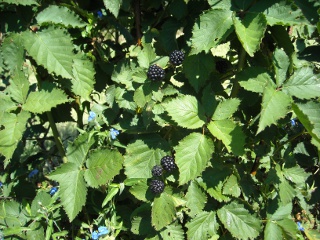
Blackberry BushIt was about 25 degrees outside this morning, so I thought no better time to think of the warmth of the sun and our trip to a blackberry farm last Spring!

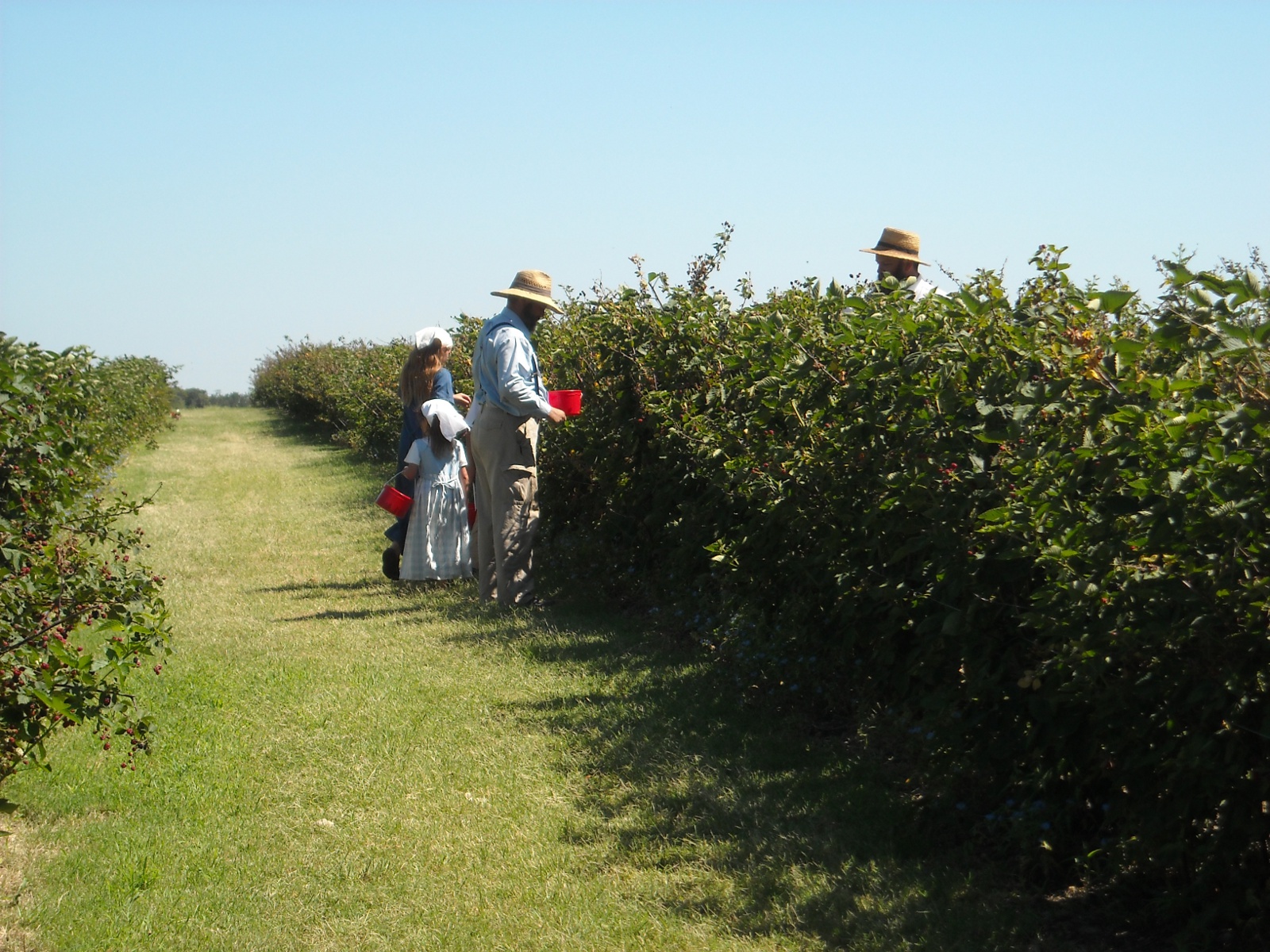
Most of us from our community one day drove in a caravan to a local pick-your-own blackberry farm in Cottonwood, TX. Neither Dave nor I had ever been berry picking of any kind before, so it was a new experience for each of us. Here are some of our community leisurely strolling down one of the rows picking blackberries as they go:

Community Folks Picking Blackberries

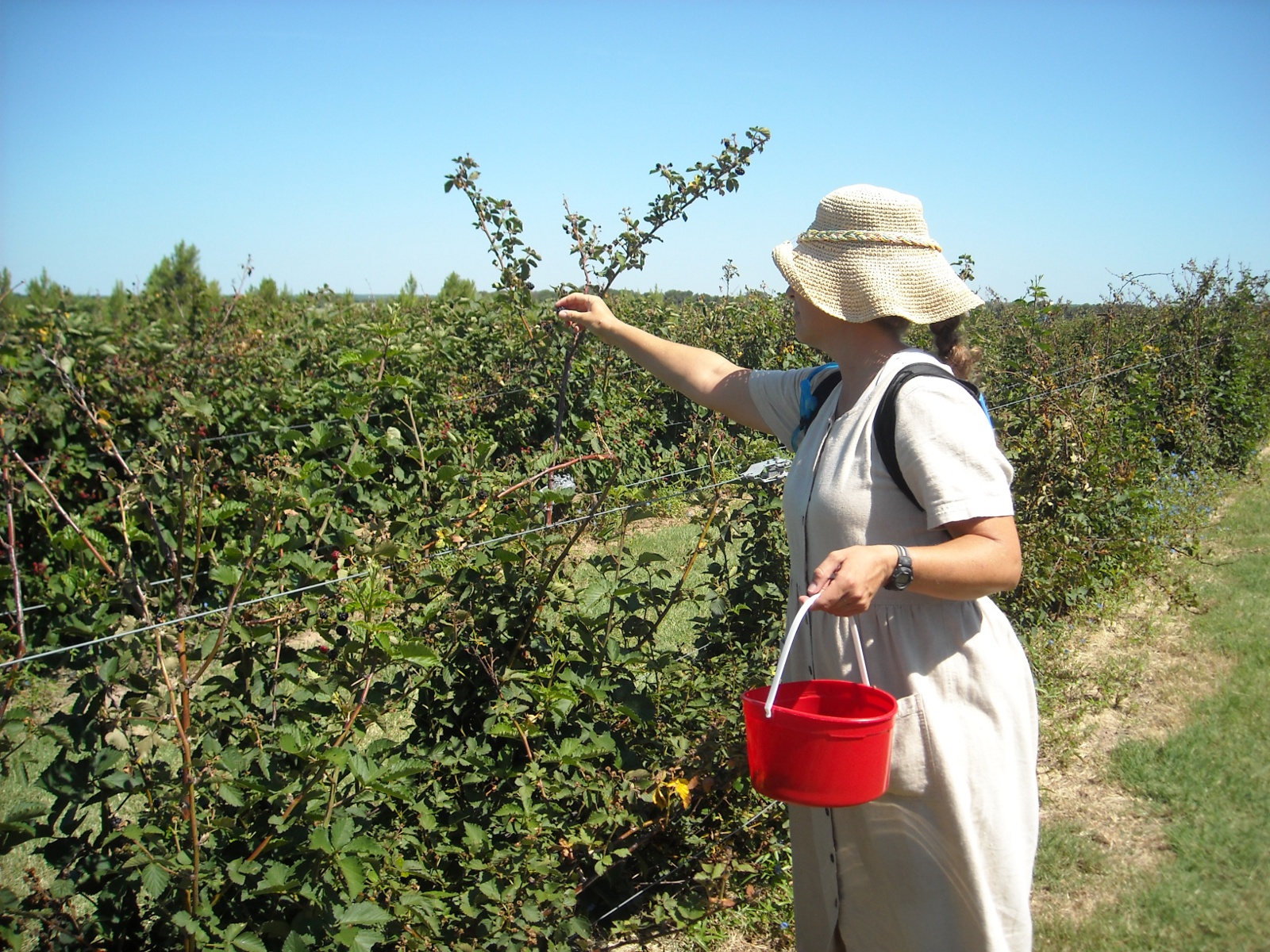
I was pleasantly surprised at how relaxing it was. Some of the bushes, however, didn’t relinquish their berries without brandishing their thorny weapons; but I prevailed and took the valued treasure with just a little blood shed (ouch!) But it was well worth it: 🙂

Susan Picking Blackberries
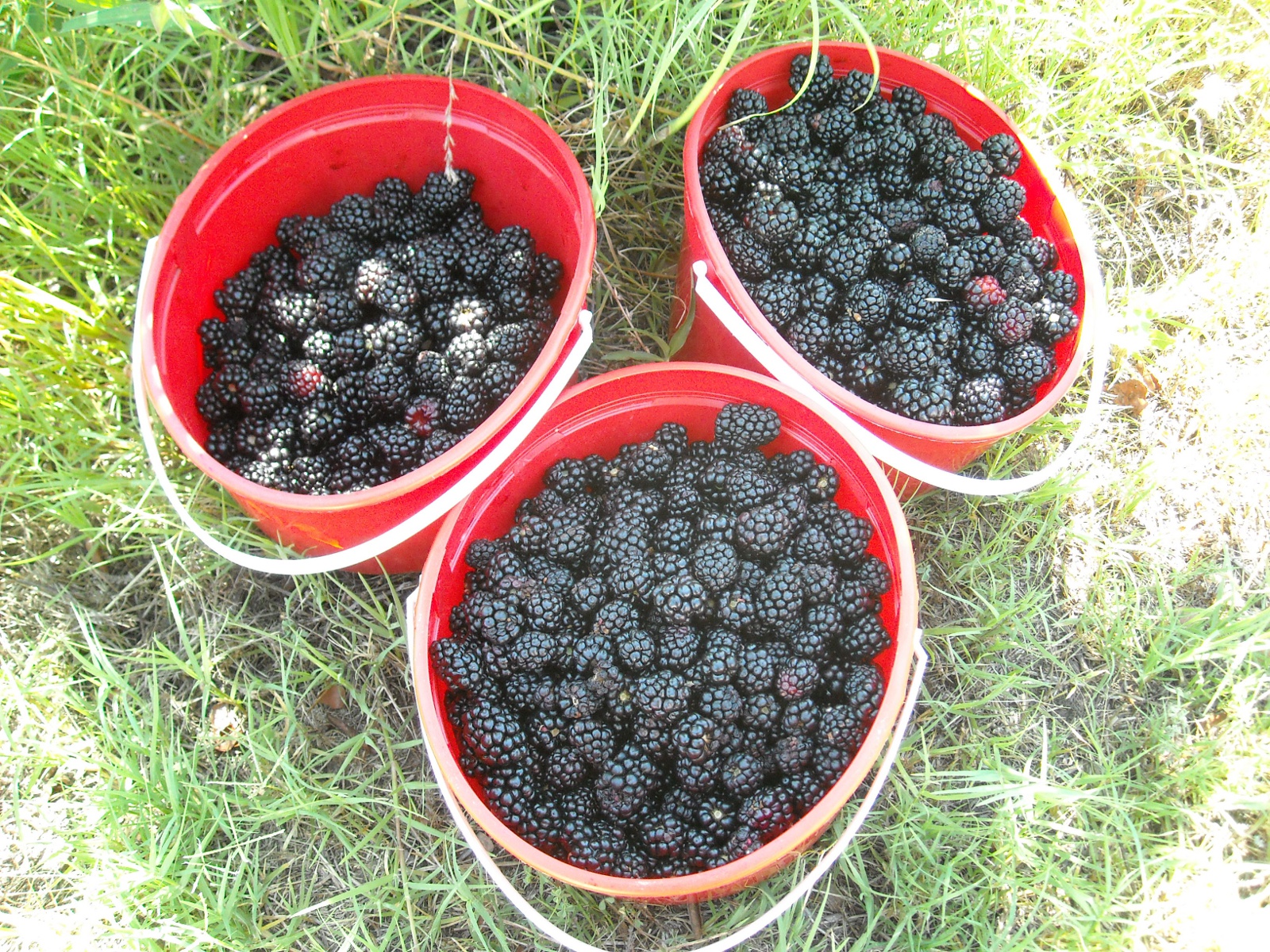
After a couple of hours, we had filled our buckets; and the farm owner and his wife weighed our haul and charged a very reasonable fee. Apparently, they also open their farm at other harvest times (eg. pecans, black-eyed peas, other fruit trees, etc.), so we look forward to perhaps returning again:

Buckets of Picked Blackberries

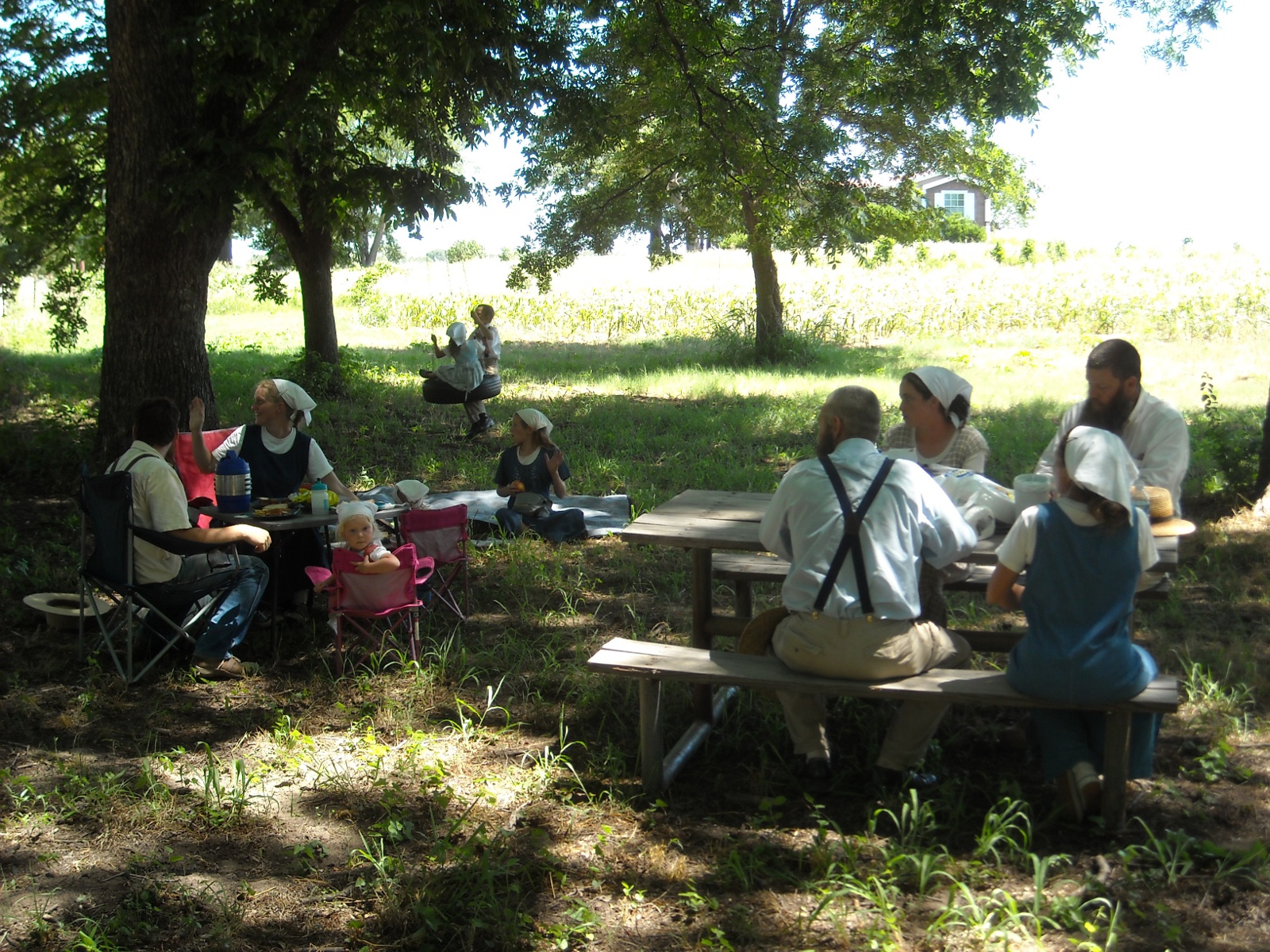
Afterward, many of us stopped at the farmer’s little picnic area and had a nice time of food and fellowship in the cool shade:

Blackberry Farm Picnic Area

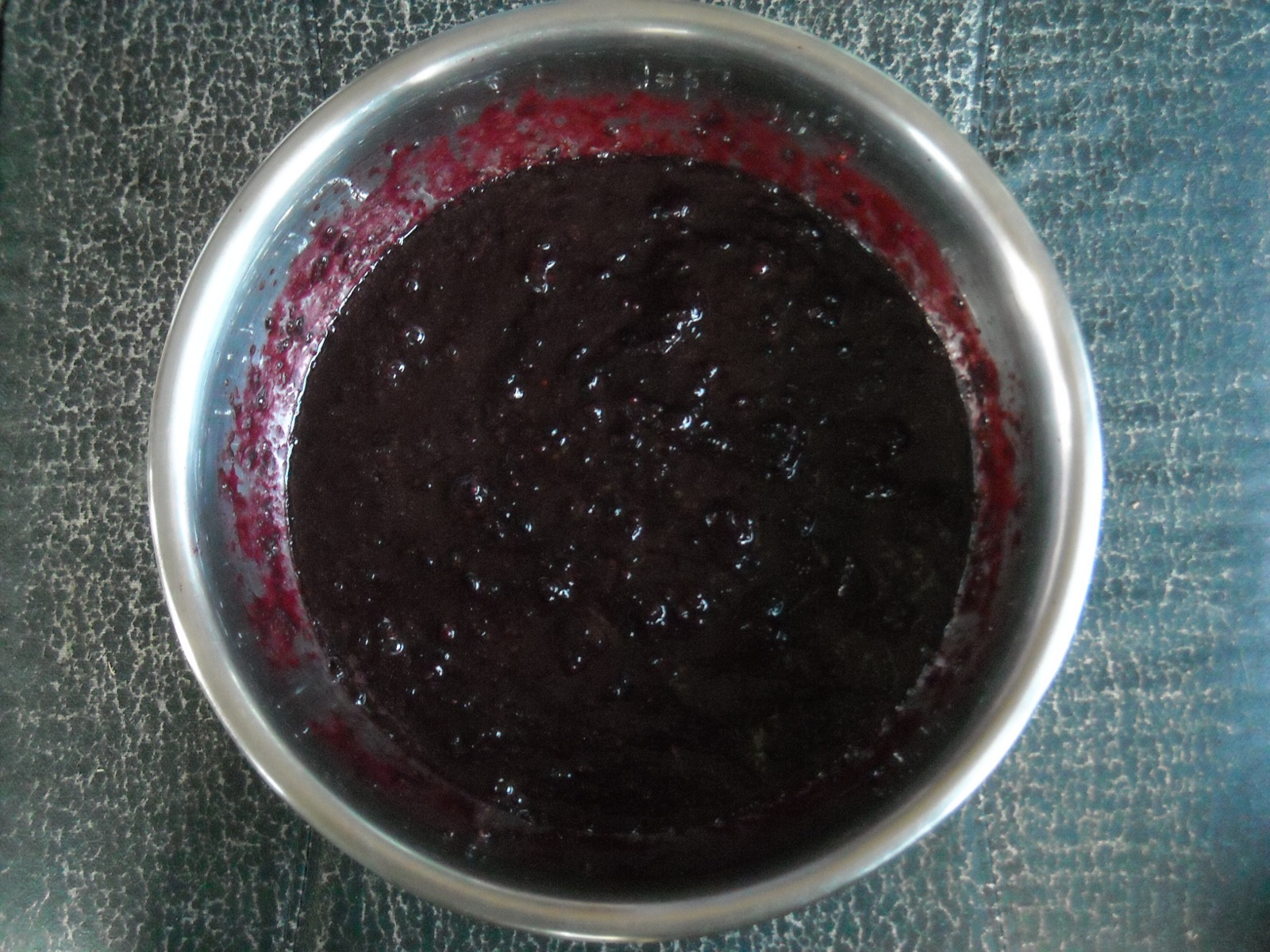
When we returned home from our lovely outing, reality set in; and it suddenly occurred to me that I had no idea how to make anything from berries; and we would probably get sick if we tried to eat them all before they went bad. Dave recommended doing something with them in the solar food dryer; and sometime just previously to that, one of our neighbors had suggested making fruit leather. Capital ideas!! So I did a little research online and gave fruit leather a try. First, I pureed some blackberries:

Pureed Blackberries

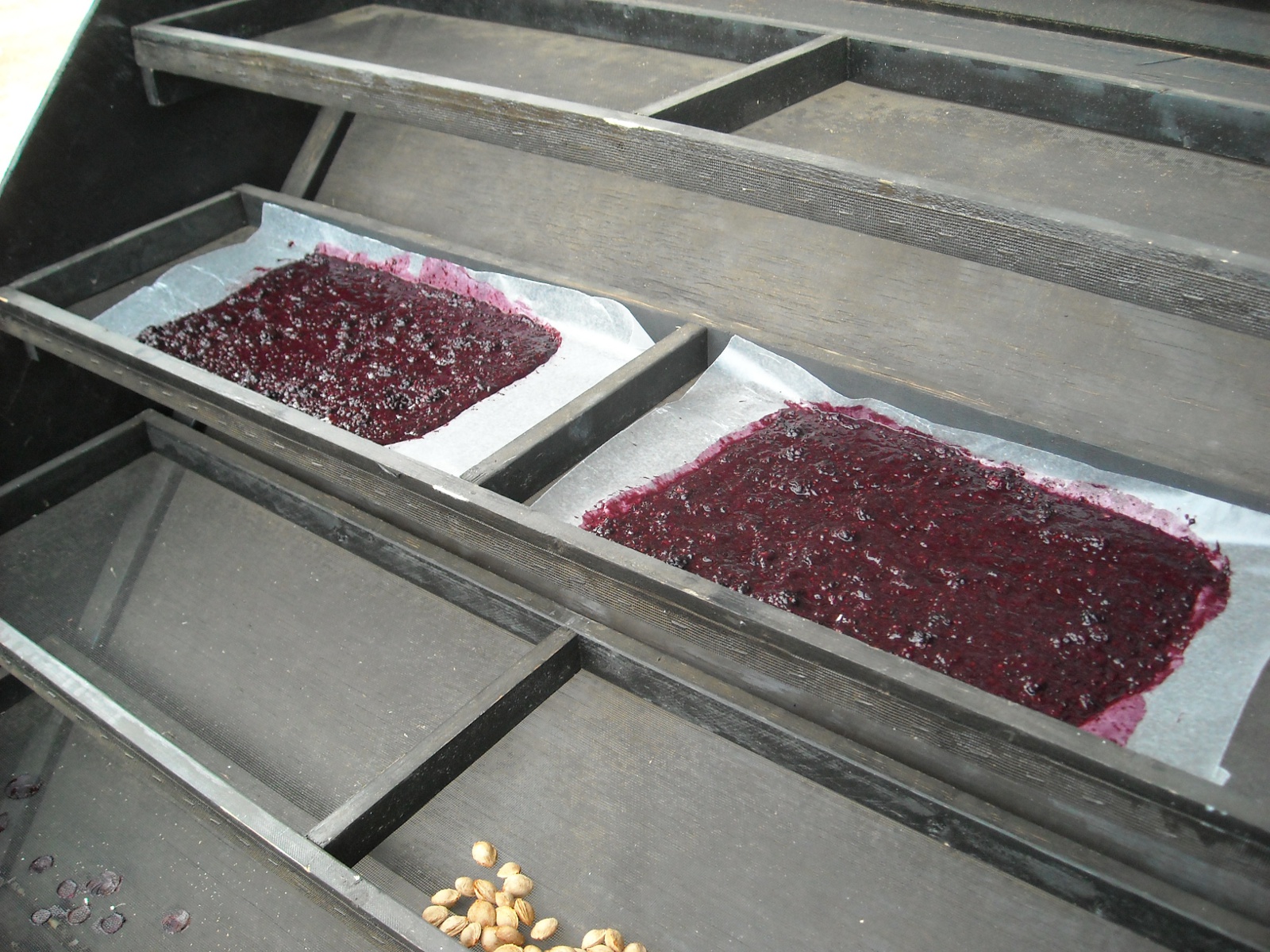
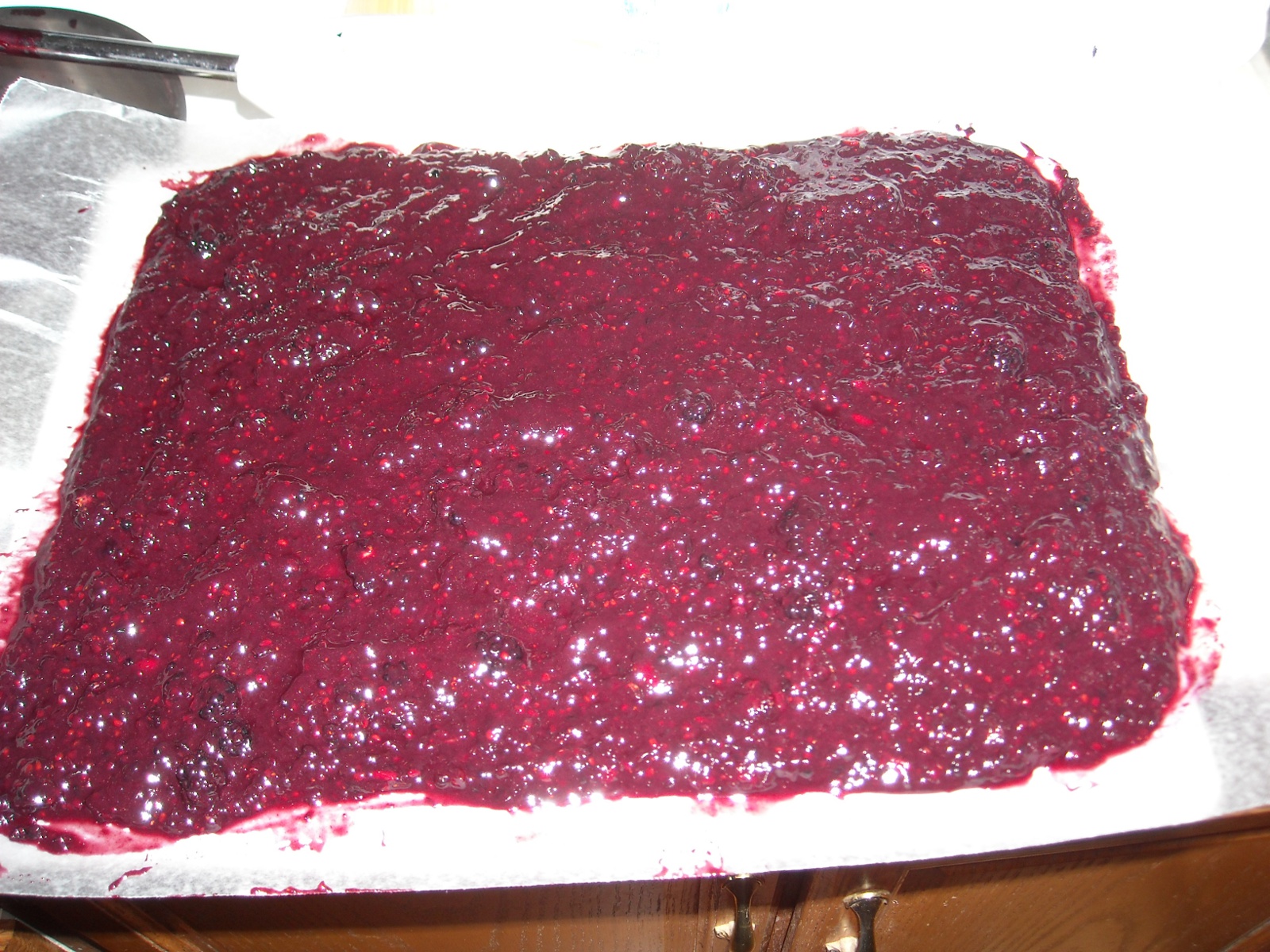
Then I poured the pureed mixture onto two sheets of waxed paper and shaped it into a thin layer on each sheet:

Blackberry Fruit Leather on Wax Paper

Then I placed the sheets out in the solar food dryer:

Blackberry Fruit Leather on Solar Food Dryer

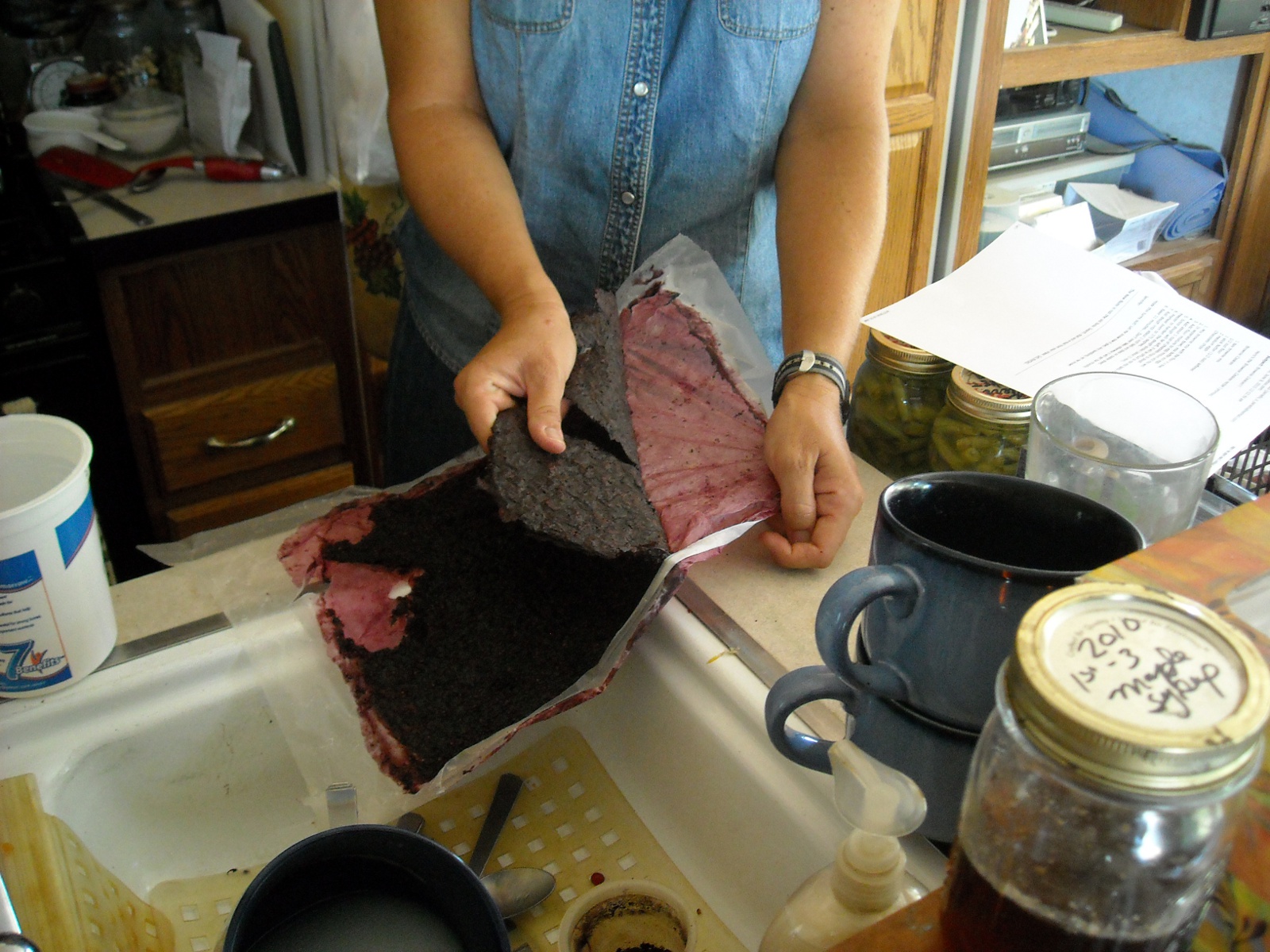
I can’t remember exactly how long it took but not long (a matter of a couple of days in the hot sun), and the consistency of the blackberries was a bit sticky but dried where I was able to peel it off of the sheet. I then broke it up into small pieces to store in glass jars. It is December now, and I ate a piece yesterday that tasted fresh just like when I first stored it!

Removing Dried Blackberry Fruit Leather from Wax Paper

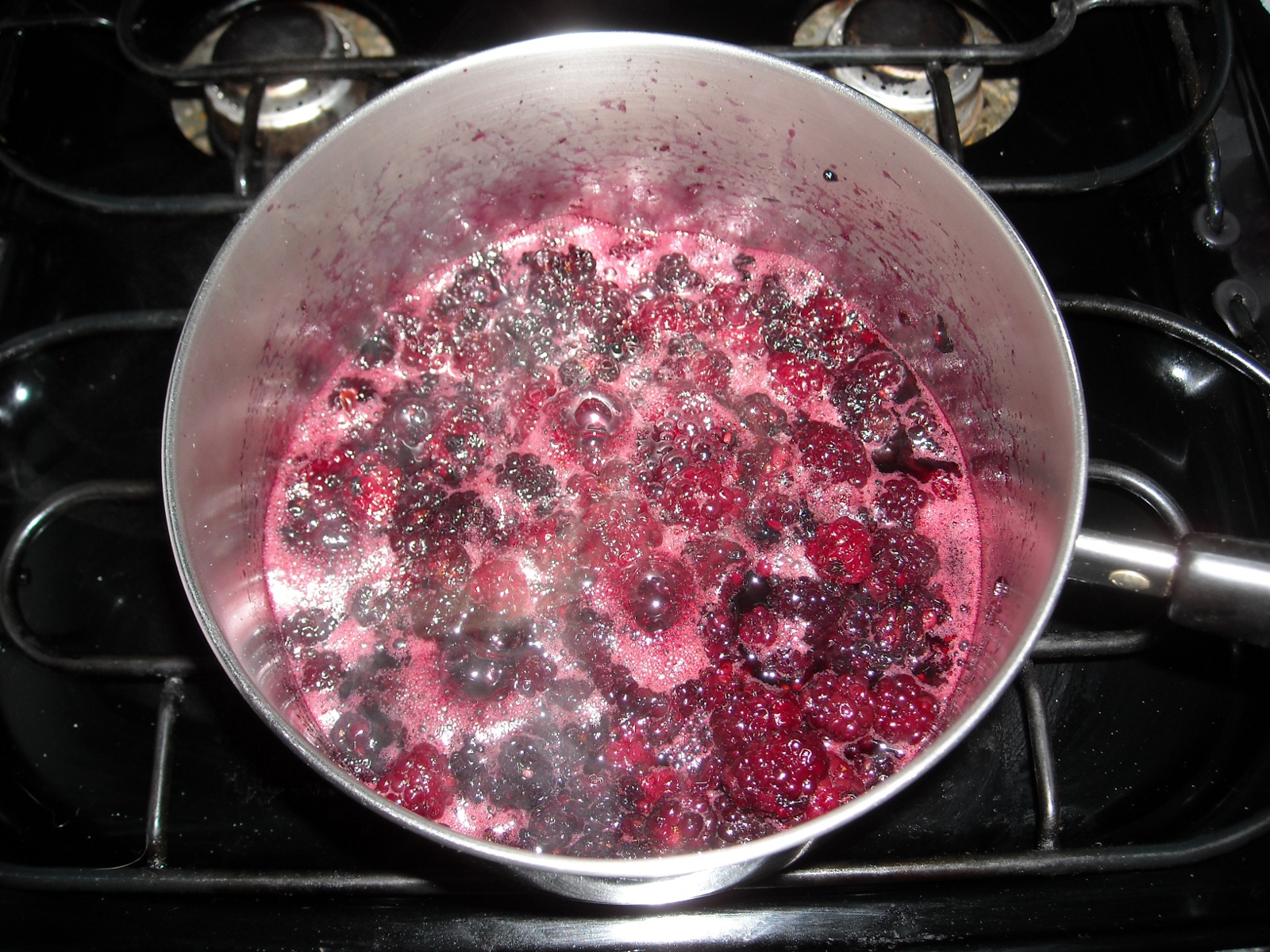
Then I took the remainder of the berries we hadn’t eaten or dried and followed a simple blackberry syrup recipe using very little sugar:

Simmering Blackberry Syrup

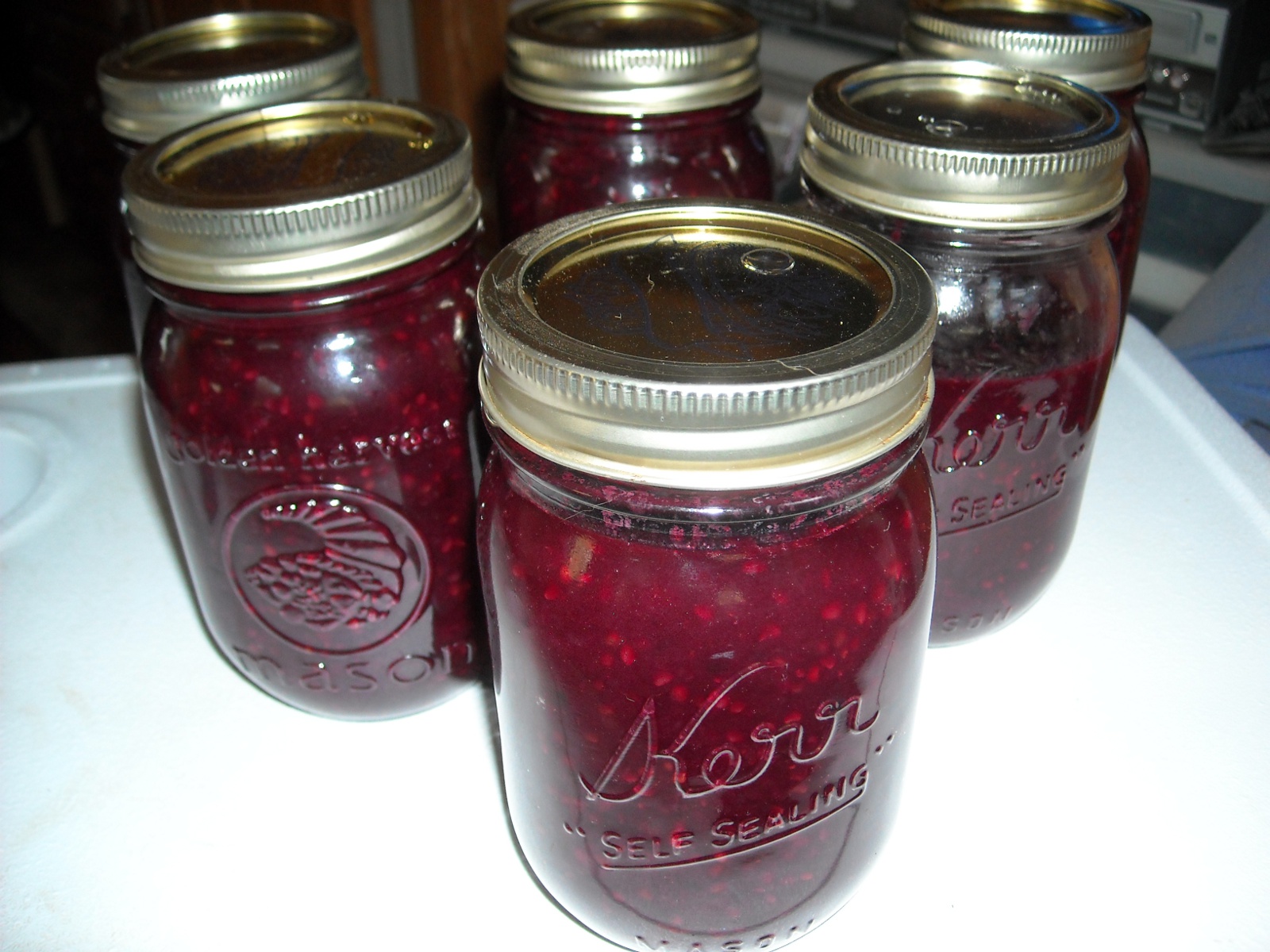
I was able to make several pints, and went ahead and pressure canned it (I forgot about the water bath option because I’m so used to pressure canning – oh, well 🙂 ). But it turned out fine anyway:

Pint Jars of Canned Blackberry Syrup

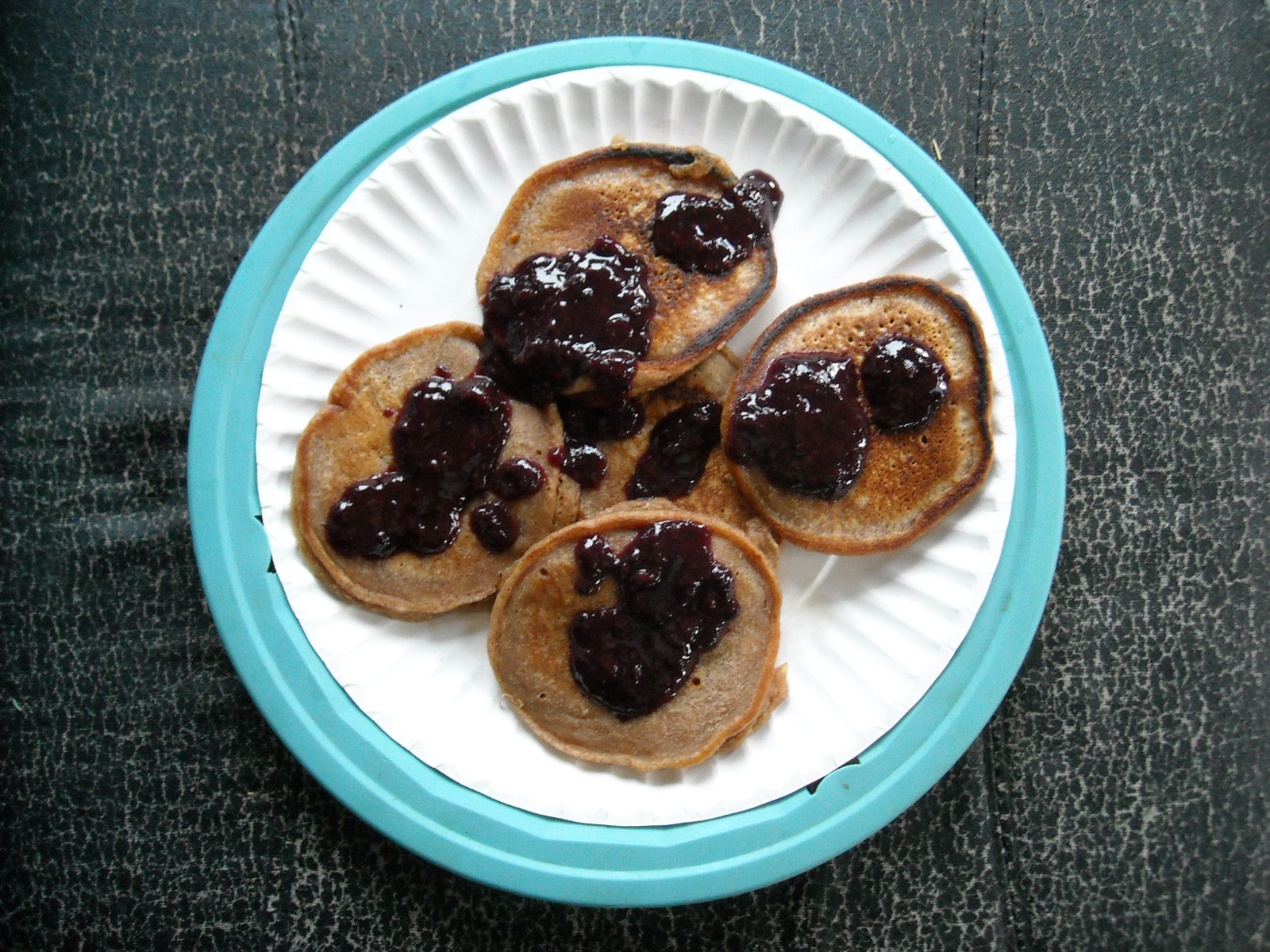
And we were able to have it on our whole wheat pancakes soon after. Delicious, and what a healthy change from the “faux” maple syrup sold in stores these days. It was more of a topping than a syrup but still delicious:

Pancakes with Blackberry Syrup

There is one thing I would do differently in retrospect. I was just trying to go the easiest and quickest route, and I didn’t take time to extract the seeds. The fruit leather and syrup taste fine but are obviously a bit “crunchy.” So I would definitely recommend removing the seeds; and I plan to do it next time, Lord willing. But we are thankful for such a wonderful opportunity to capture and learn to preserve more of God’s harvest bounty.

Susan
The Great Black-Eyed Pea Adventure

Our neighbor, Mr. Bunker, planted his large field (about 5 acres) in black-eyed peas this past Spring. It was no small amount to purchase the seed and pay to have the ground plowed and planted. He had every right to keep it all to himself for his family and to have a cash crop. Instead, he graciously opened up the field to our community to come and tend it and reap its harvest together along with his family. We greatly appreciated his offer and spent many hours over several weeks in the Summer sun weeding and then picking the beans when they grew to maturity. It was a great opportunity for our community to learn what it means to come together for a common cause and share God’s bounty as a group. It was also the first major crop for the community to cultivate, so this was a new experience on multiple levels.

I learned many things through the experience. The women and children devoted several community work days towards weeding and tending the field, which turned out to be rich times of work, fellowship and getting to know each other better. Working in the field introduced me to the joys of blisters from the Blister Beetle; and I received my first wasp sting, not to mention the potent burning sting of the Stinging Nettle plant. It also forced me personally to come out of my own little homestead world to focus on a larger cause, and required additional discipline to go out into the field even when I didn’t “feel” like it or when I was really busy with other things.

The Lord did a little weeding of my own heart during this process as well. The Bible says we are to mortify (kill) the flesh (Rom 8:1-13), the carnal (non-spiritual) man of sin, which means we need to examine ourselves for sins of the flesh. At times when I was tired or really hot and sweaty wanting to quit, I had to reel myself back in and remember to be thankful for this opportunity and provision, and to work for Christ’s sake and as unto Him and nobody else. Just as with God’s grace, this provision was being offered undeserved as a gift; but I still had to beat down the flesh and submit myself to what was required to persevere to the end (the harvest). The field was so big it felt very overwhelming at times, when the weeds were growing so fast it was impossible to keep up with them. I could usually only get through one half to one row in a one to two hour time period. During the times when it was just me in that big field, my flesh would say, “It’s just too big. You’re not making a bit of difference. The weeds are going to take over this field, and there won’t be any beans left to harvest.” It was easy to forget that other members in the community were out there at different times doing the same thing, and we were all in it together. I also found myself at times to be even a little resentful that the entire community couldn’t put in more time and were jeopardizing the crop and some deserved more than others because of the different investments of time. The Lord had to remind me (strongly) that this was a REALLY good opportunity to step outside of myself and practice meekness and selflessness. I had to repent of that and remember it was not for myself but for the good of the community. I was saddened and surprised at how quickly my flesh had wanted to take over my spirit.

When it came time to harvest, there was plenty for everyone; and I learned the beans that weren’t picked could be turned back into the soil to nourish it. So no part of the whole process was wasted — another reminder that even when I don’t see the big picture, God does, and is in control and all knowing of every aspect of the situation. I believe the spiritual weeding of my heart truly paralleled the physical, and I praise the Lord for His patience with me to teach me these things. It was a valuable lesson in so many areas of my life, and I’m grateful to Mr. Bunker for his personal sacrifice in order for our community to grow spiritually and physically on individual and corporate levels.

I had not eaten black-eyed peas much growing up in California; it seems like more of a southern food. But I am now sold on growing them to harvest and preserve. Did you know it is a three-for-one crop: in that the first harvest produces long, tasty green beans; the second when they are a little dry, the moist bean could be shelled and preserved; and then at the end of the harvest when the bean pods have all dried up, you can go through again and pick the dried pods to shell and keep the black-eyed peas as a dried bean until you’re ready to cook them, or use them to re-plant. Wow!

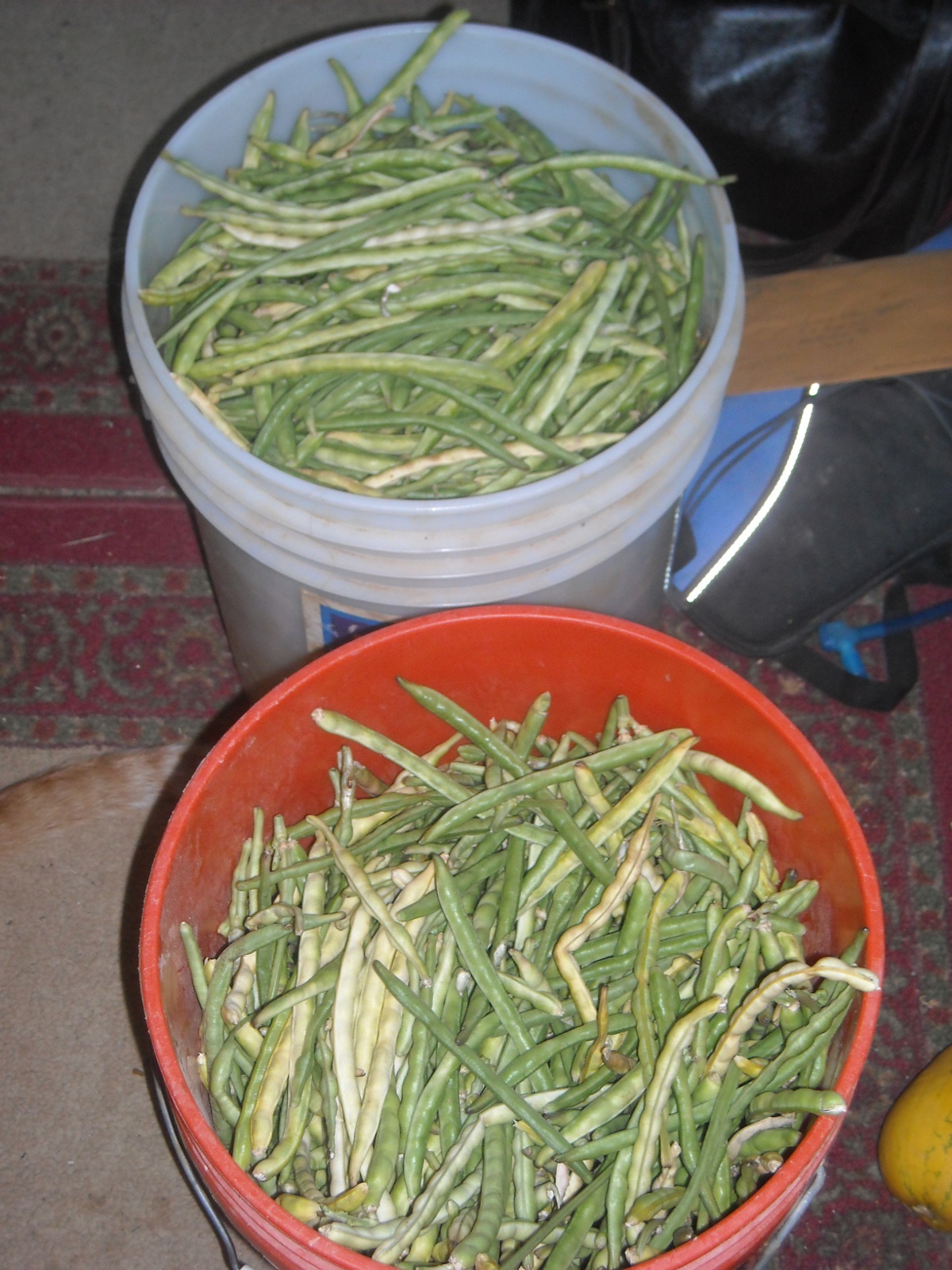
Here are a couple of five-gallon buckets from the first green bean stage harvest:

Black-Eyed Pea Green Beans

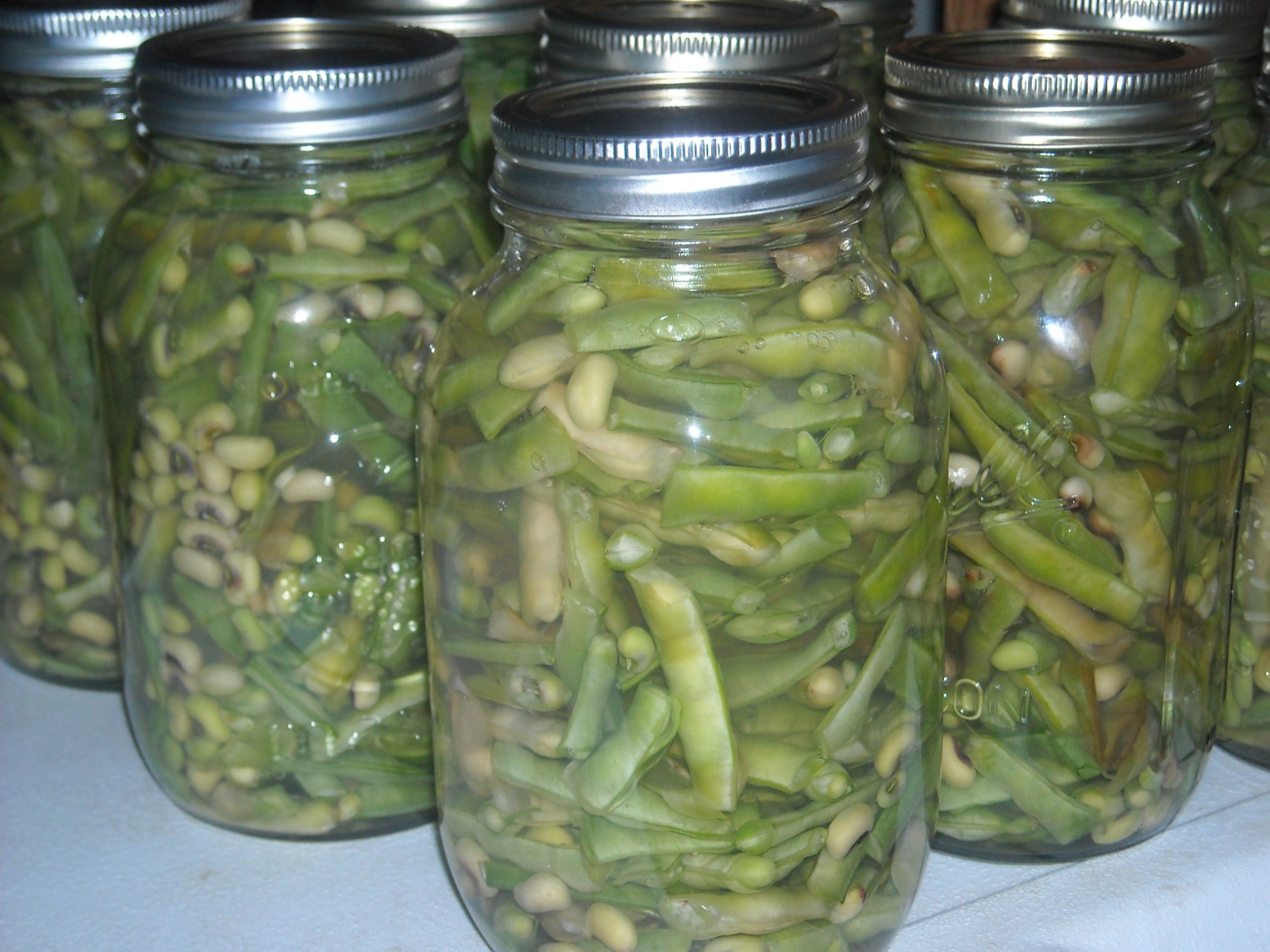
I was able to pressure can over 20 quarts:

Canned Black-Eyed Pea Green Beans

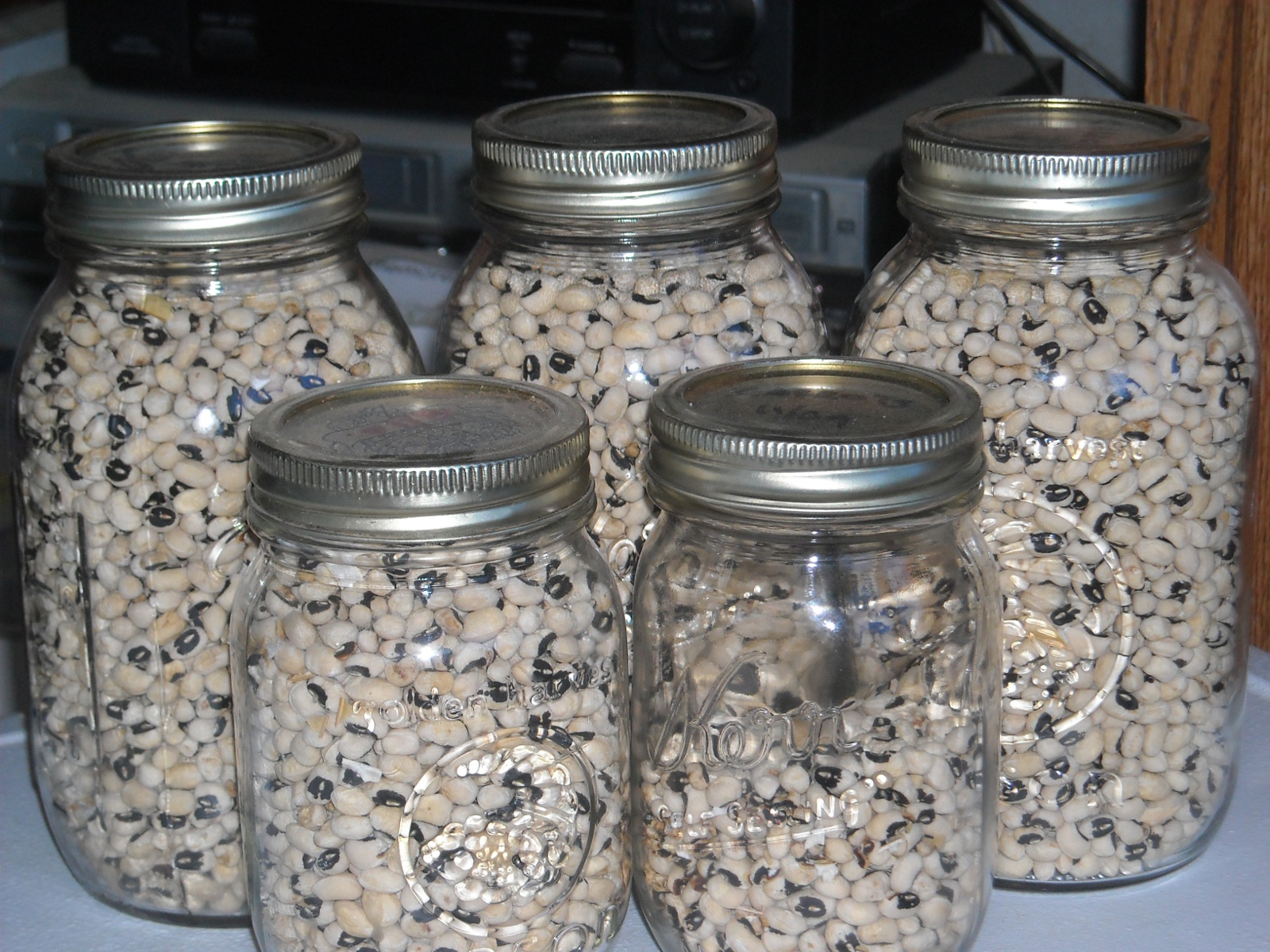
And here are the dried beans we harvested. It doesn’t look like much, but this represents a lot of food for the two of us:

Dried Black-Eyed Peas in Jars

We thank the Lord again for His direct spiritual and physical provisions and lessons from the experience of this first community crop. I hope I will have grown in spiritual maturity the next time, Lord willing, and pray for God’s blessing on Mr. Bunker and his family for their sacrifice and love for the community.

Susan
« Older posts Newer posts »