Our journal of what we pray is our sojourn of life along the narrow way, even the old paths, submitting to the Bible as a light unto both.

Category: goats (Page 8 of 9)

Farmer’s (Goat) Cheese aka Neufchatel

I just finished eating a few crackers topped with my first (successful) attempt at Farmer’s Cheese, a soft “cream” type cheese.

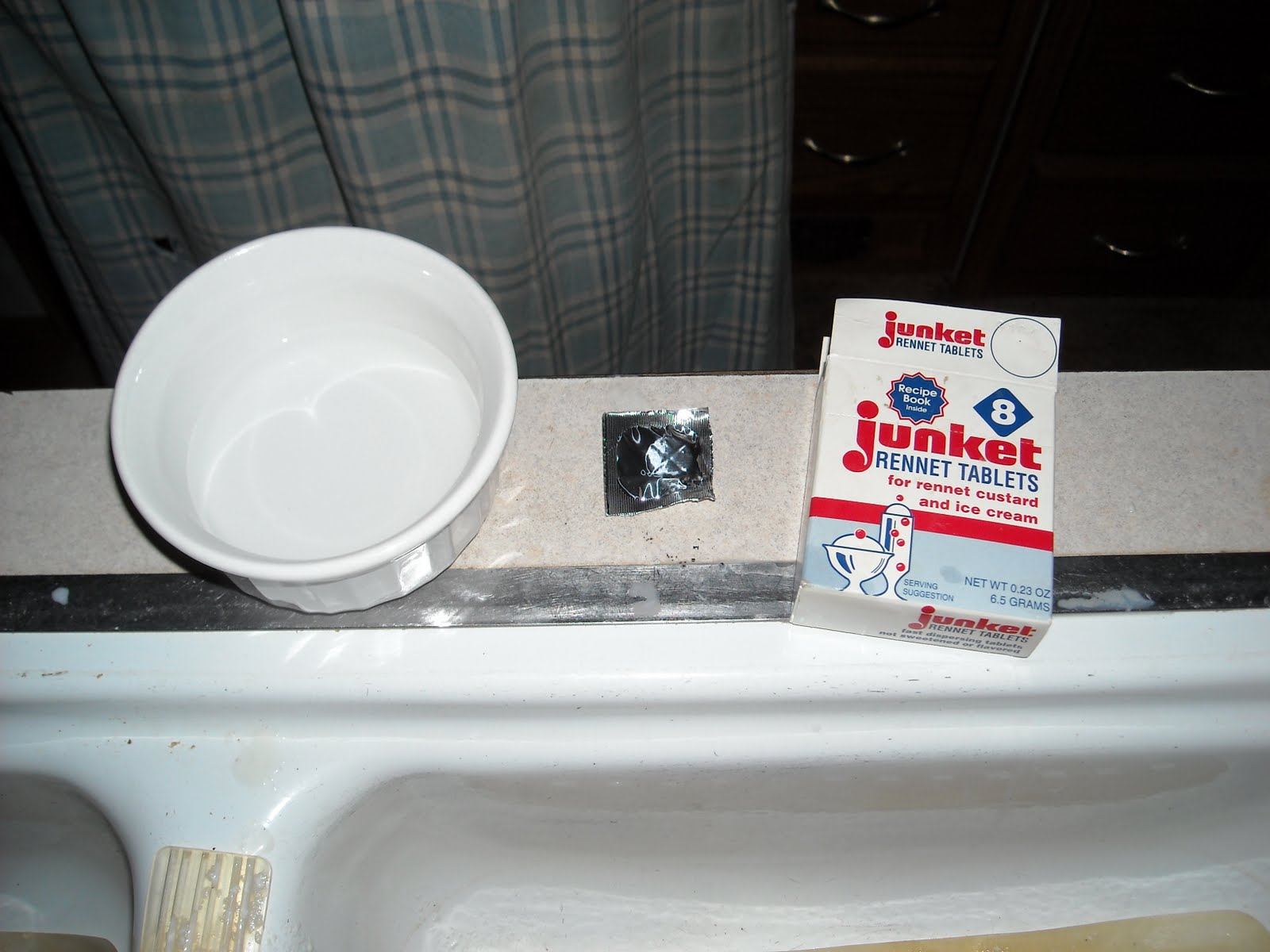
A neighbor said she had made some Farmer’s cheese with the inexpensive Junket rennet tablets found in the local grocery store, so I thought I would try that first. An online cheese making blog said not to use Junket rennet because it is not the same as cheese rennet. But it was here and within my budget, so it was cheese rennet to me! 🙂
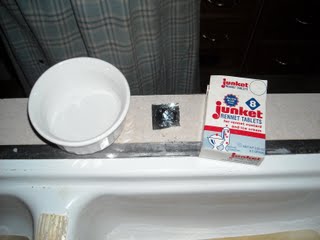
Goat Milk Cheese Rennet

My “first” first attempt was a bust, using the original recipe from the Junket instructions. Not to say it doesn’t work, but that my attempt didn’t work. The recipe calls for buttermilk, which I didn’t have; so I looked online and found you can substitute with milk and lemon juice. So I did that, along with adding 1/4 tablet of rennet dissolved in a little water. In hindsight, I don’t think the combination of those was enough to coagulate the milk. I heated the milk to 65 degrees F according to the recipe, added the “buttermilk” and rennet, and left the covered pot out overnight per the instructions. It was supposed to solidify overnight; but it just never did, even after I left it another 12+ hours. So that went to the chickens.

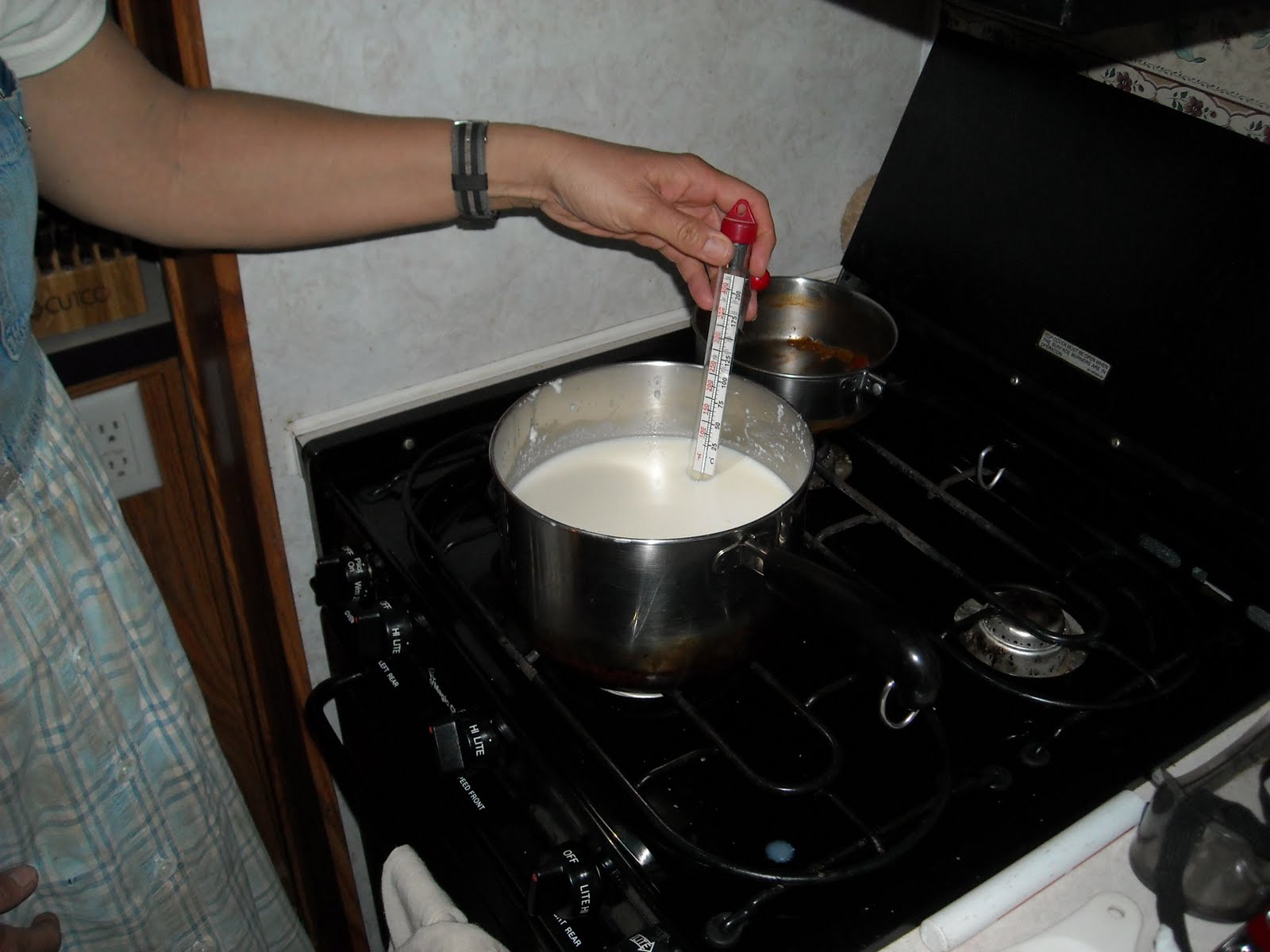
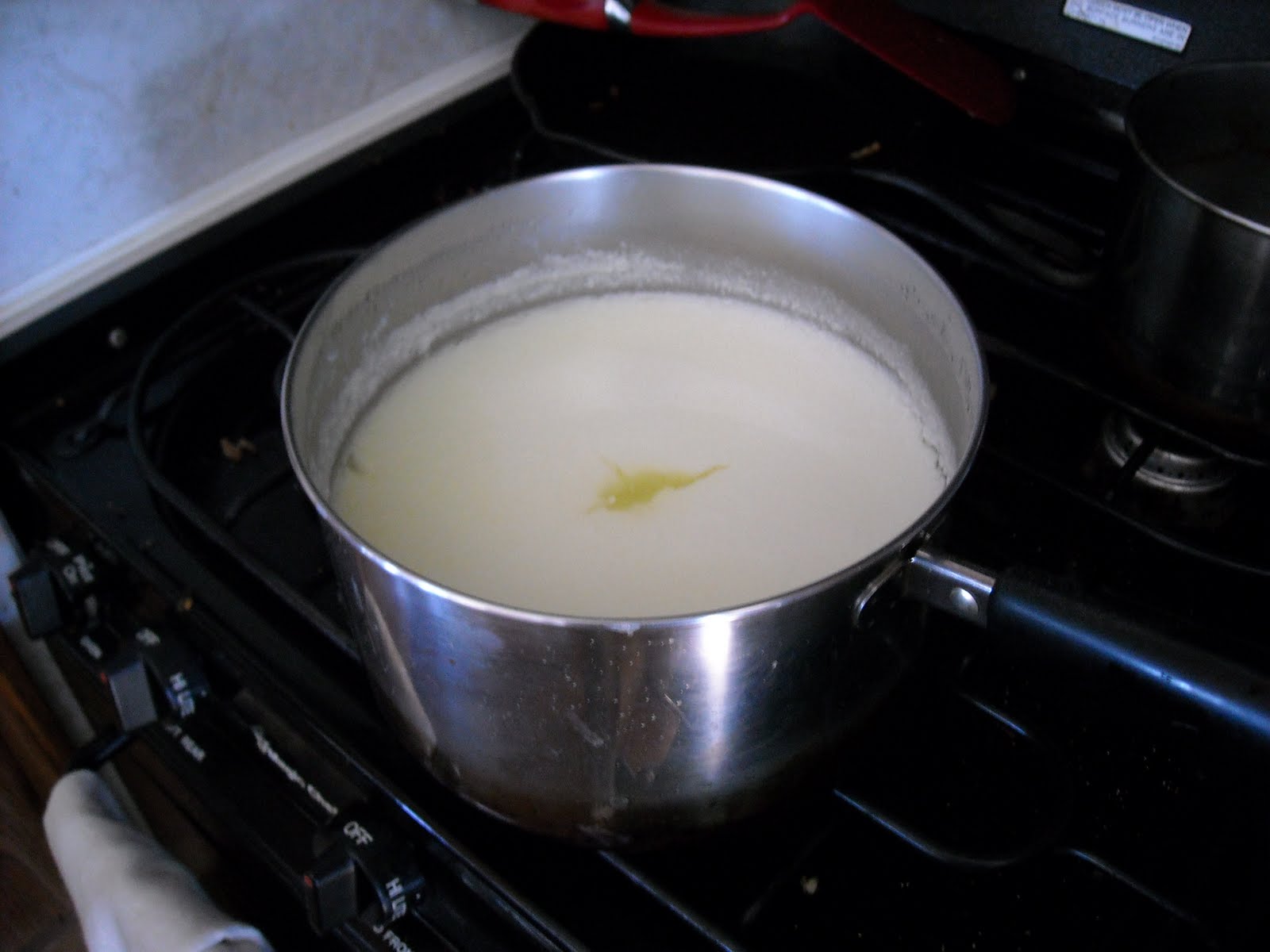
My next attempt was a conglomeration of a couple of recipes. This time I heated two quarts of our raw goat milk to just below boiling, and added two generous tablespoons of white vinegar (one per quart) and 1/2 tablet of the Junket rennet dissolved in a little water. Since this was previously frozen milk, it was a bit watery; so I decided to err on the side of caution and add too much vinegar and rennet rather than too little. The last thing I wanted was to ruin another batch:
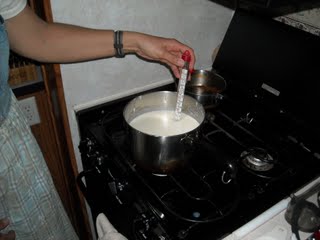
Goat Milk Cheese Milk Heating

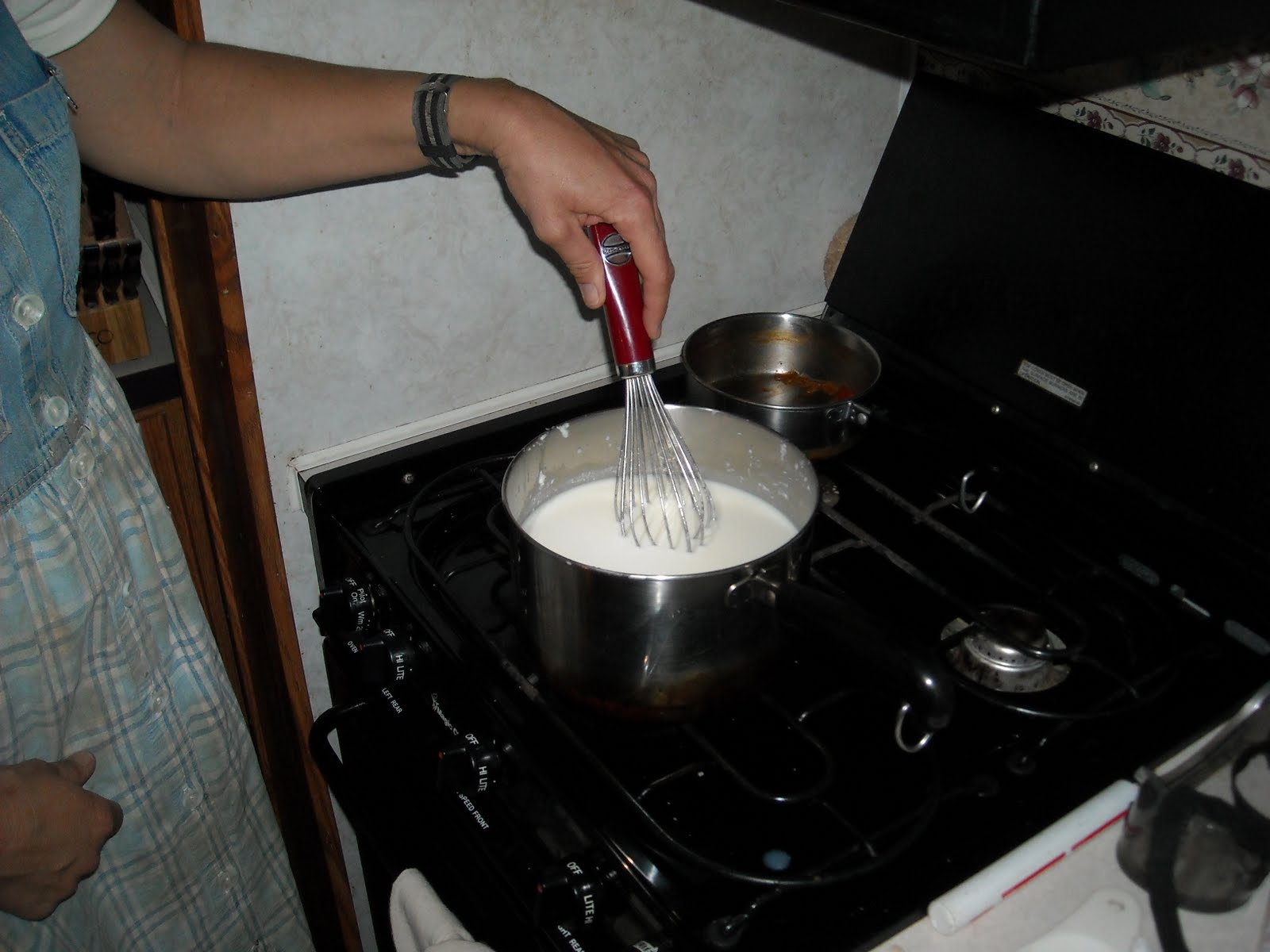
I whisked it all together, covered the pot, and hoped for the best. Well, this time it started to coagulate much more quickly, which gave me hope. By the next day, it was not as solid as I imagine a really good cheese probably would be; but it was close enough!
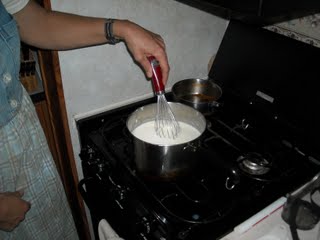
Goat Milk Cheese Milk Whisking

According to the recipe, the cheese is ready when you can poke your finger in and lift the top, gelled layer cleanly from the lower, liquid layer:
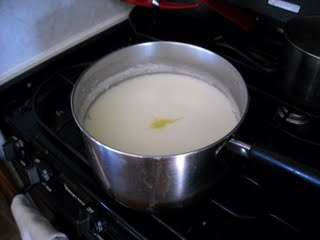
Goat Milk Cheese Curds

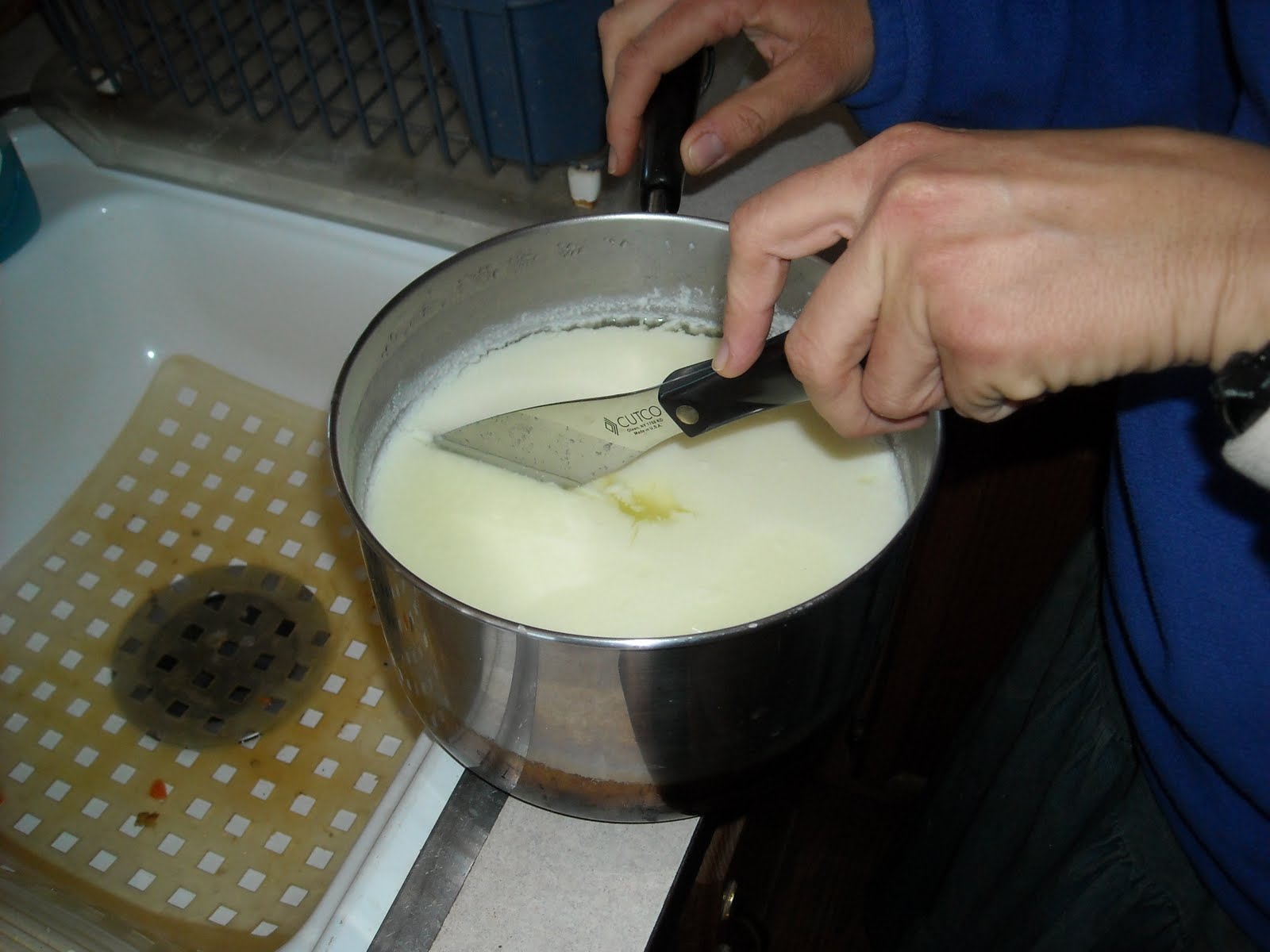
Then, you are supposed to cut it into 1/2 to 1 inch cubes in order to assist with the “draining of the whey” (sounds like a ceremony). The instructions call for the first cut starting down the middle, holding the knife at a 90 degree angle, and then each subsequent cut tilting the knife a little until you get to 45 degrees by the time you reach the side of the pot. You turn the pot 1/4 turn, and repeat the process, which eventually makes a grid of curd cubes. I forgot to tilt the knife as I cut — oh, well. But, it came out okay anyway:
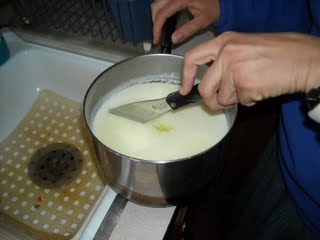
Goat Milk Cheese Cutting Curds in Pot

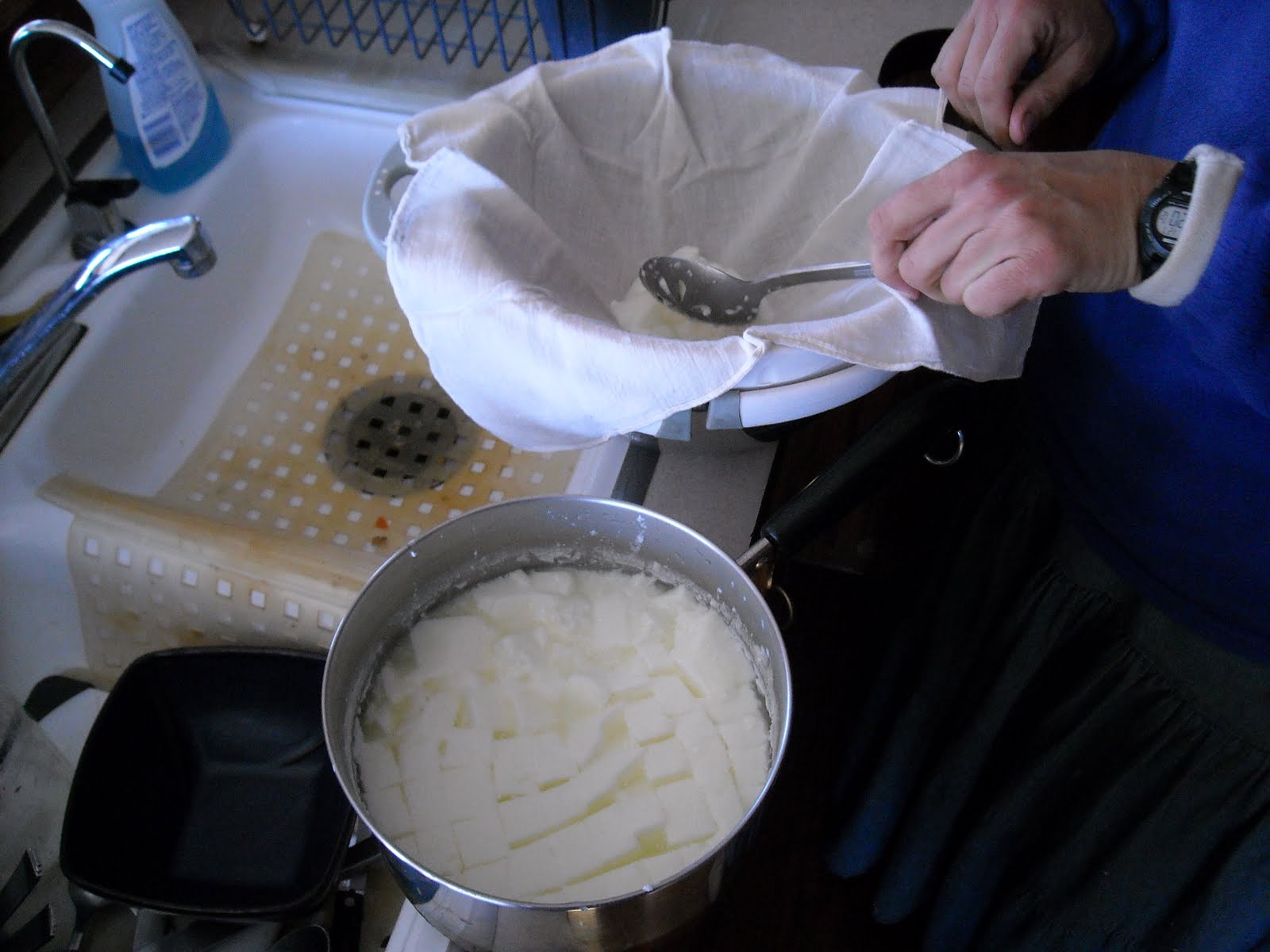
Then, I spooned out the cubes of curds into a handkerchief-lined strainer with a bowl underneath to catch the whey drippings. They say to use cheesecloth, but it just seemed too loose of a mesh, and the handkerchief worked very well for this type of cheese:
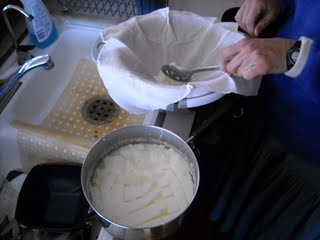
Goat Milk Cheese Spooning to Handkerchief

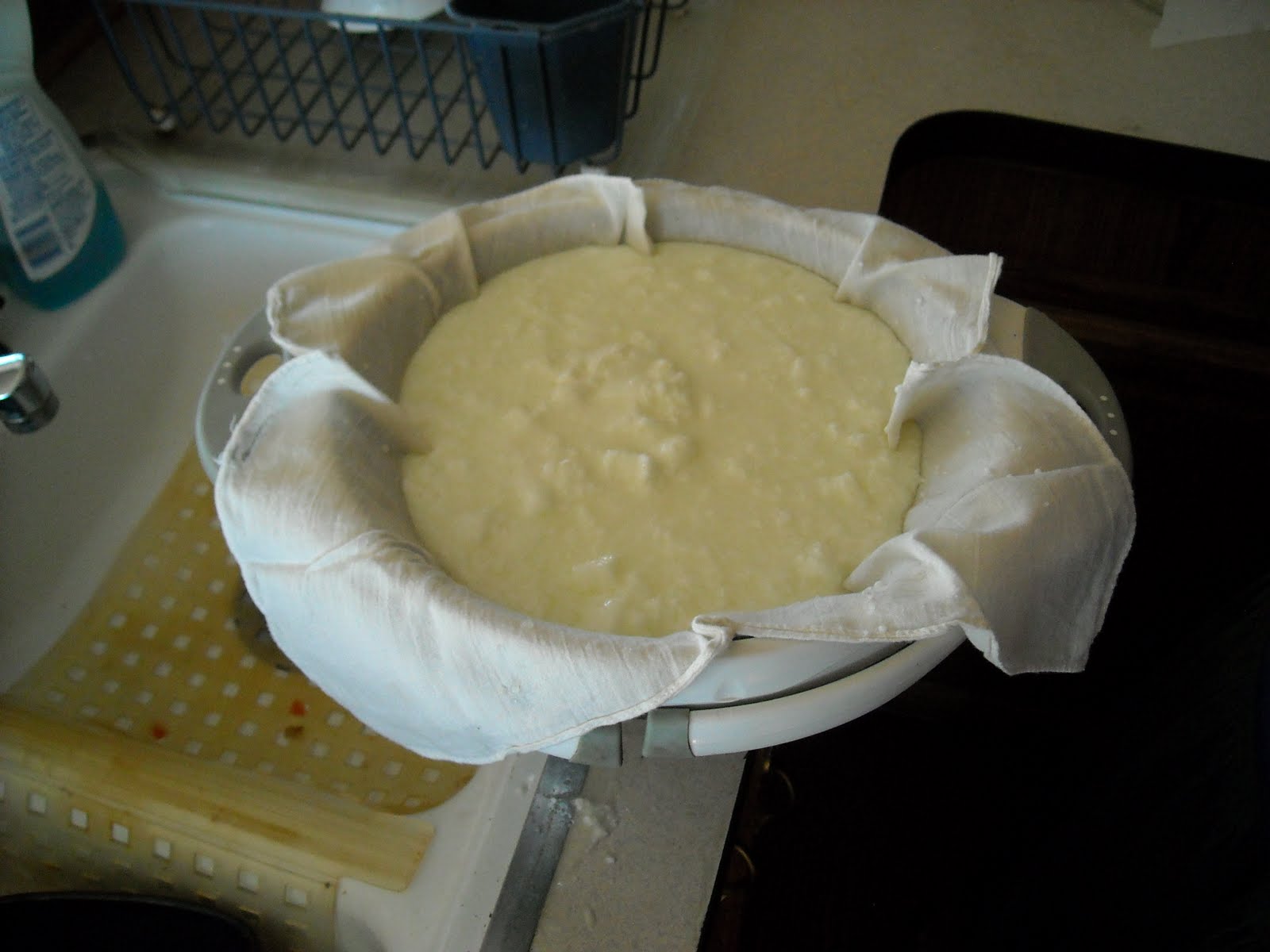
Here it is all spooned into the strainer. You can’t tell here, but it’s draining like crazy underneath:
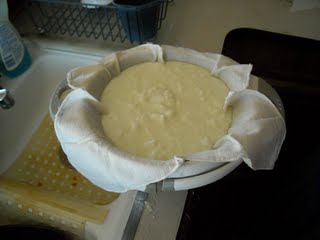
Goat Milk Cheese Whey Draining

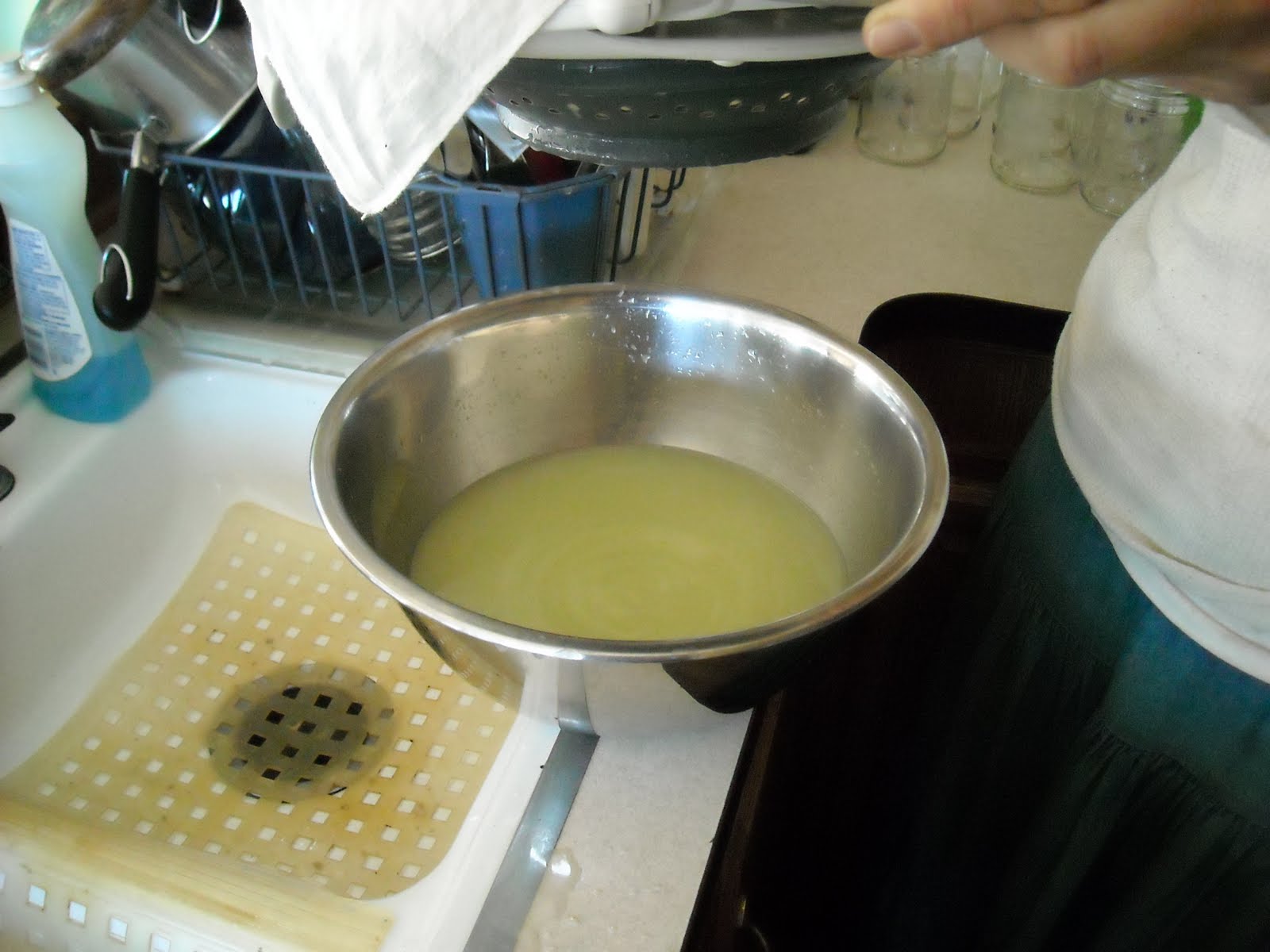
Quite a bit of whey drained quickly, but it takes 2-3 hours to fully drain:
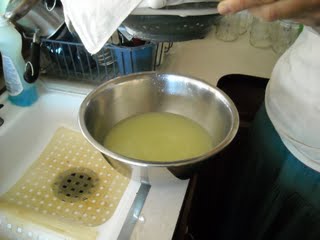
Goat Milk Cheese Whey

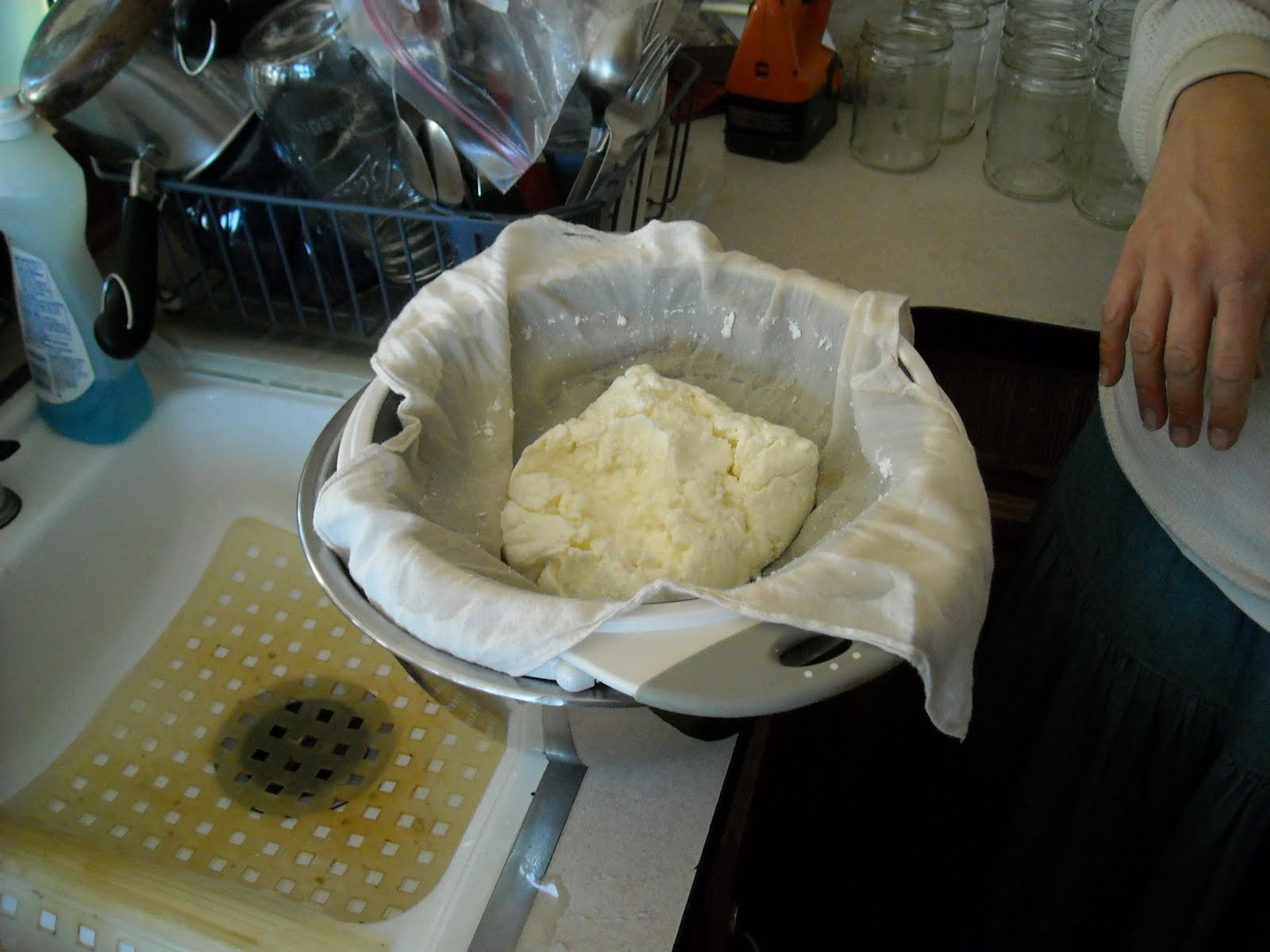
Here are the curds with the majority of the whey drained. Pretty cool, huh?!
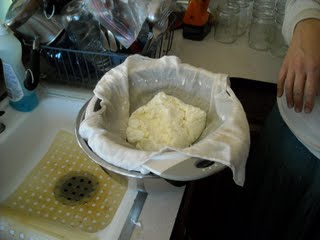
Goat Milk Cheese Curds with Whey Drained

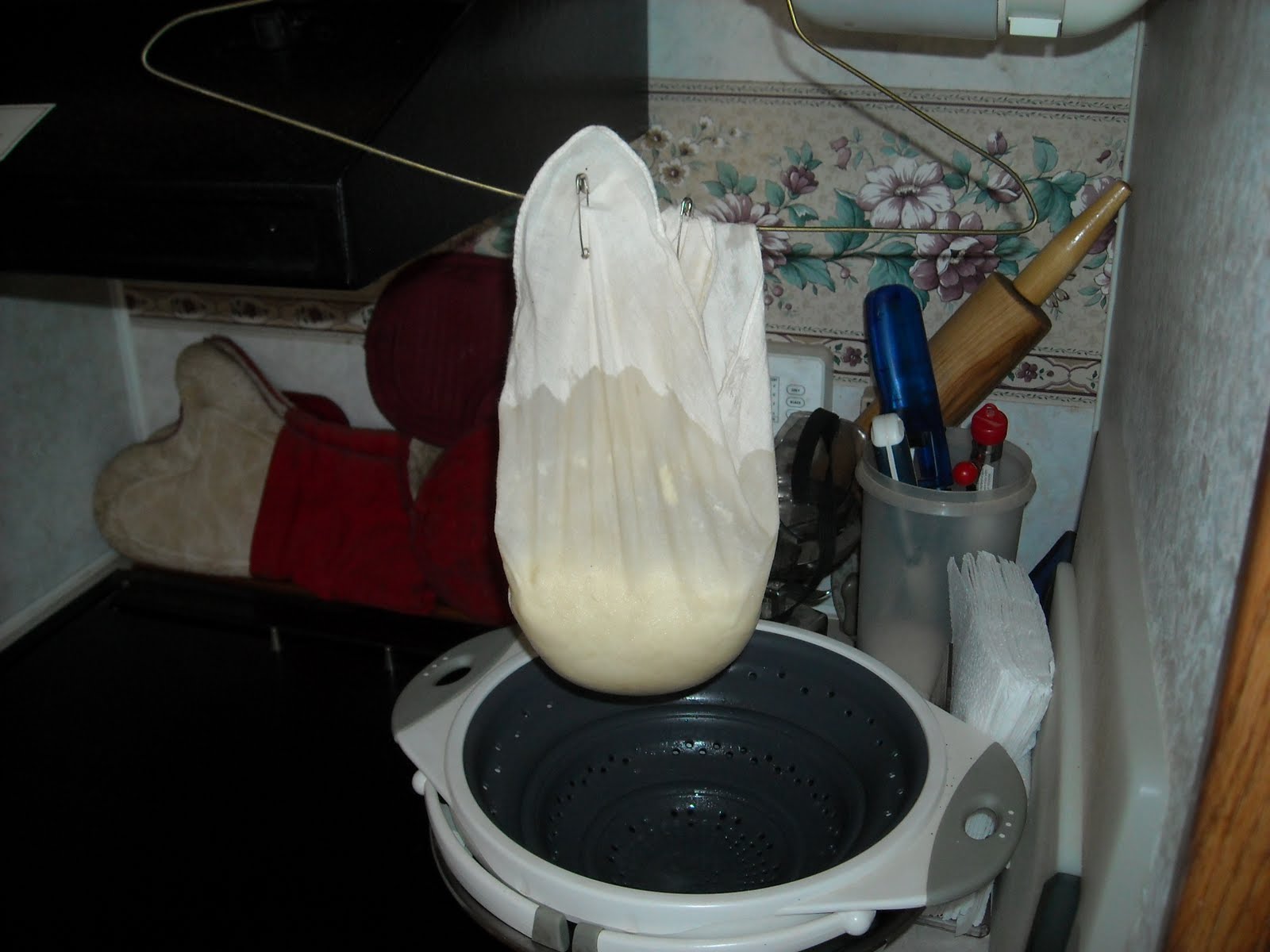
After the main draining, I hung up the handkerchief to draw out the rest of the whey with the help of a bit longer exposure to gravity:
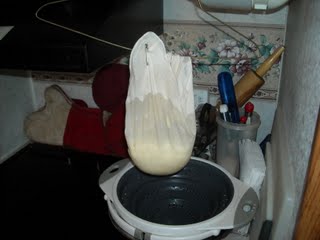
Goat Milk Cheese Curds Drip Draining

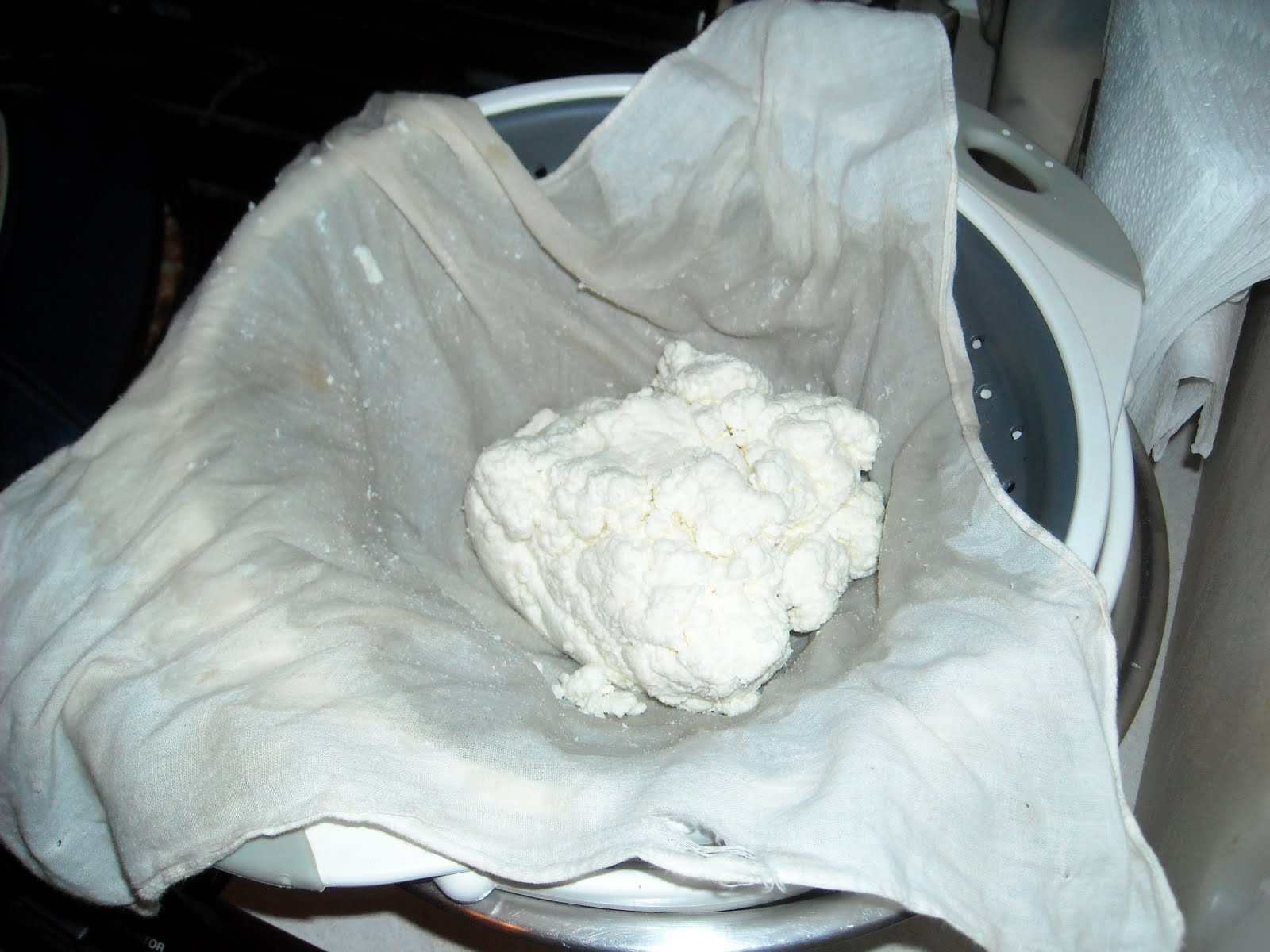
Well, this looked like it might resemble Farmer’s, or some kind of cheese, and not too much like a train wreck:
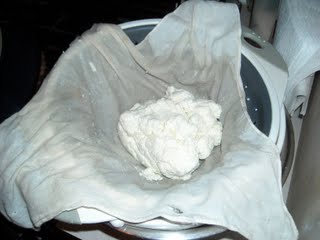
Goat Milk Cheese

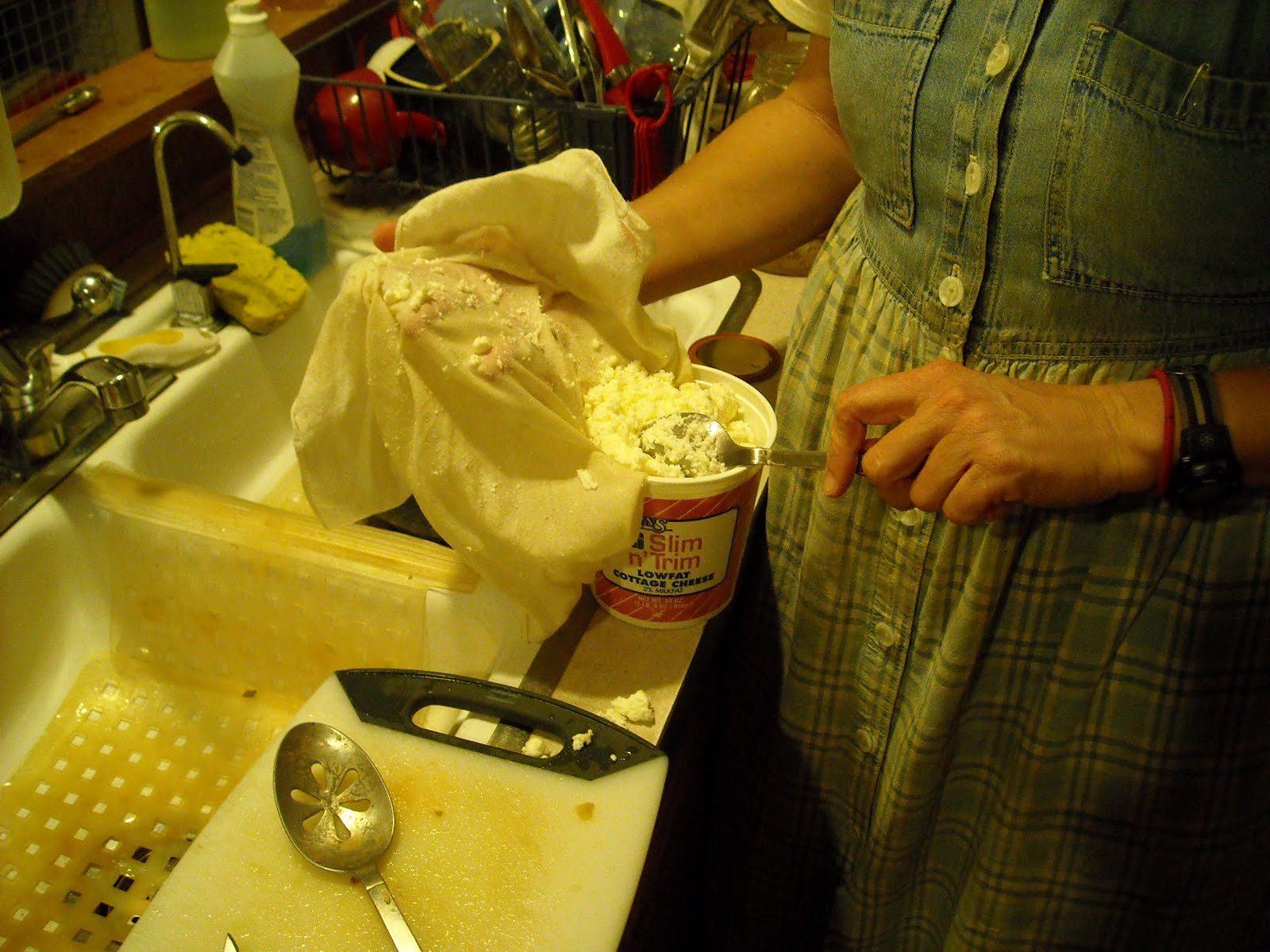
So I seasoned it with a little salt, garlic and onion powder, spooned it into a container and put it in the refrigerator overnight. Using two quarts of milk is supposed to make approximately 3/4 lbs. of cheese, and this looked about right:
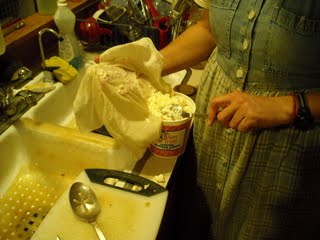
Goat Milk Cheese Storage

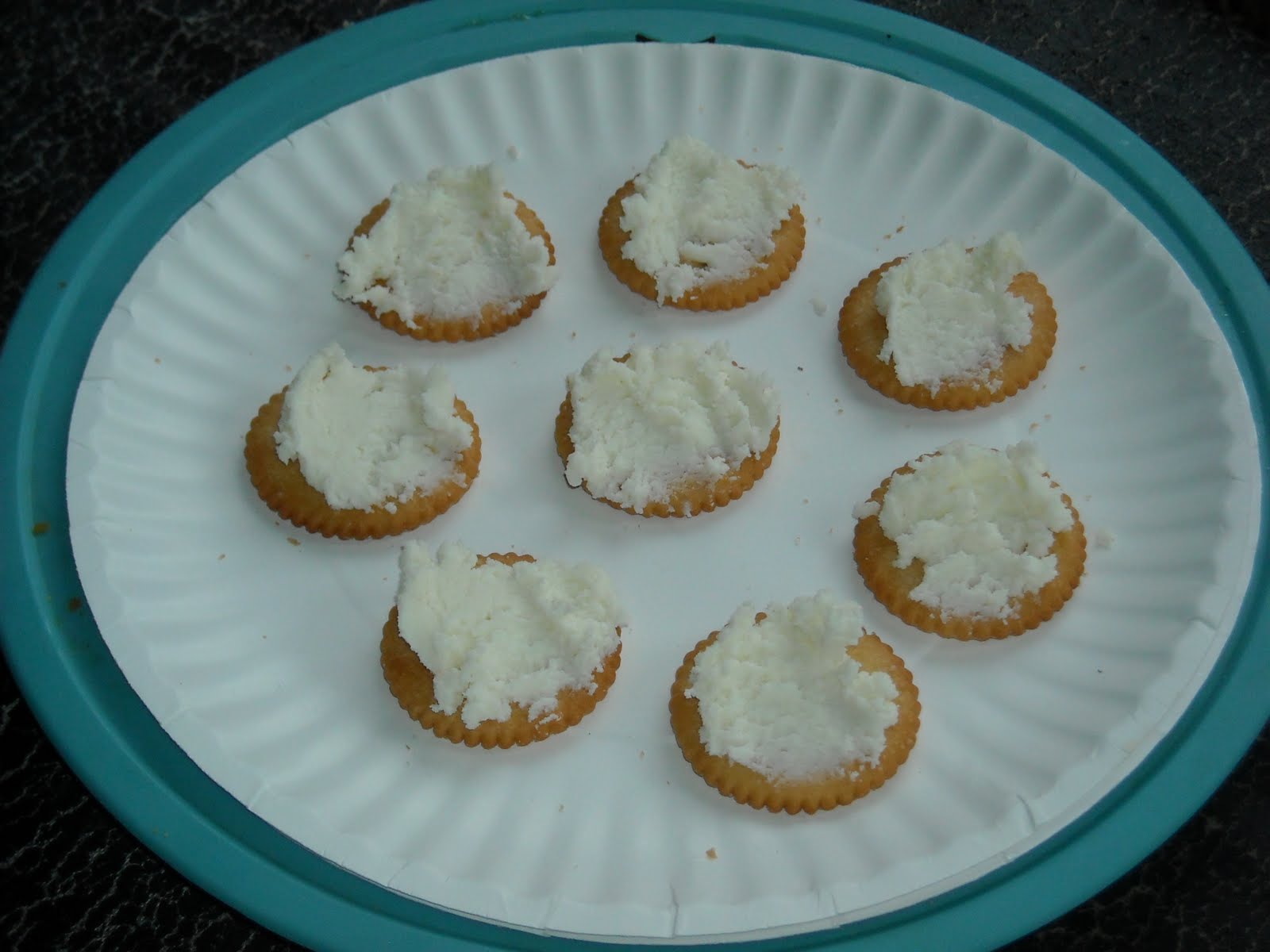
I’m very pleased with the mild, seasoned taste. It has been too easy to eat a lot of crackers topped with the cheese at one sitting! But I’d rather have to combat will power than have to hold my nose closed and gag it down 🙂
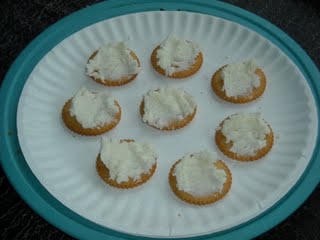
Goat Milk Cheese on Crackers

All of our does have dried up in preparation to deliver more kids in the Spring, if the Lord wills; so this was my last opportunity to attempt making goat cheese until then; and I’m very thankful it turned out. I’m excited (and not as scared) at the future possibilities! What a great way to preserve milk; and we are, as always, very thankful for God’s direct provisions. Believe me, I know I probably could have done this much better and more “properly;” but, hey, it worked for me; and it’s food! I hope to continue to improve with more practice and maybe somebody out there can learn from my mistakes. Bon appetit!

Susan
Kids’ Graduation 2009

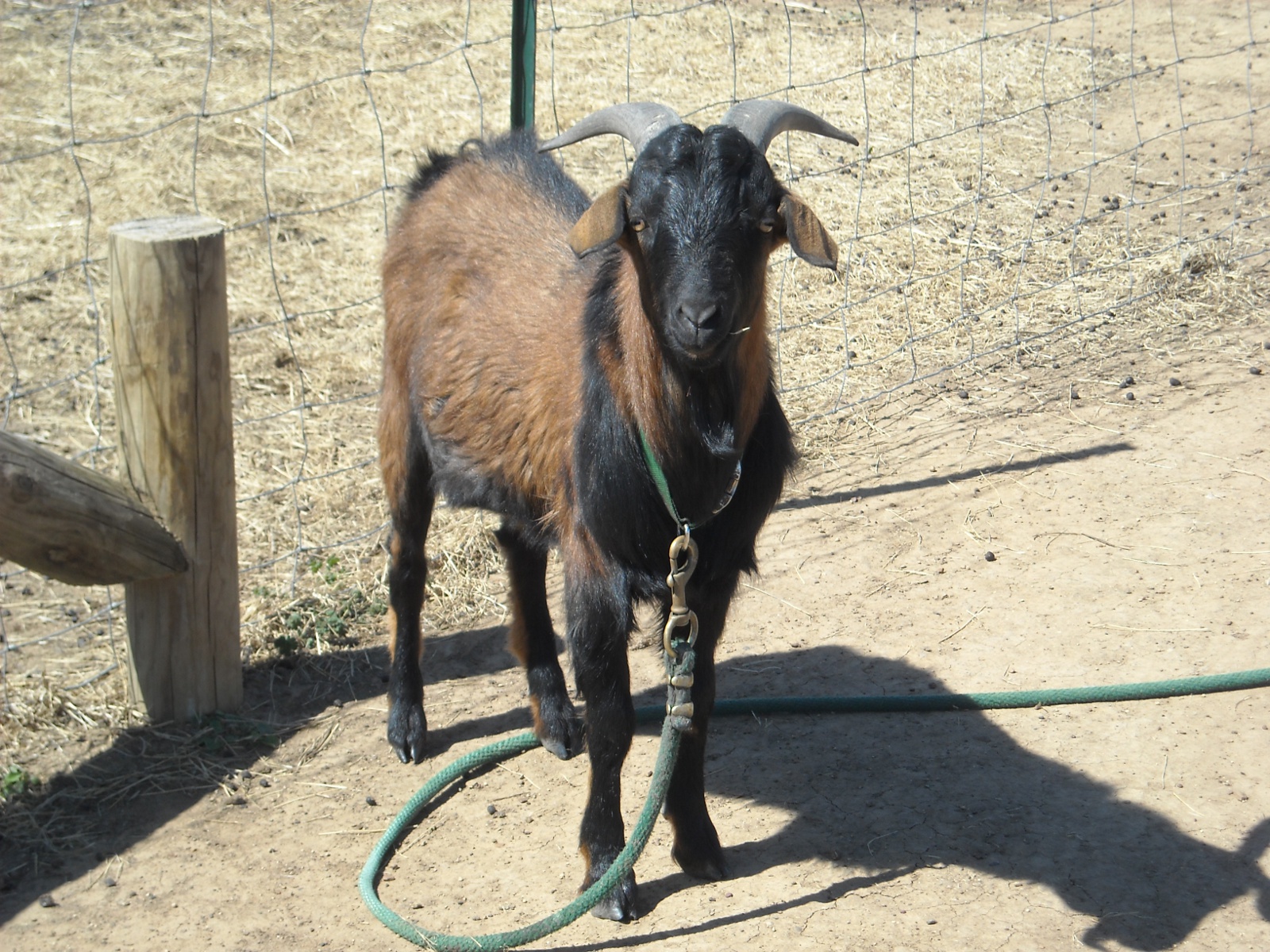
So that they don’t have any kids until after most of Winter has past, we waited to put our bucks Shatner and Eastwood with their respective does until now, as the gestation period of goats is around five months.

And so, this past Lord’s Day was the time!

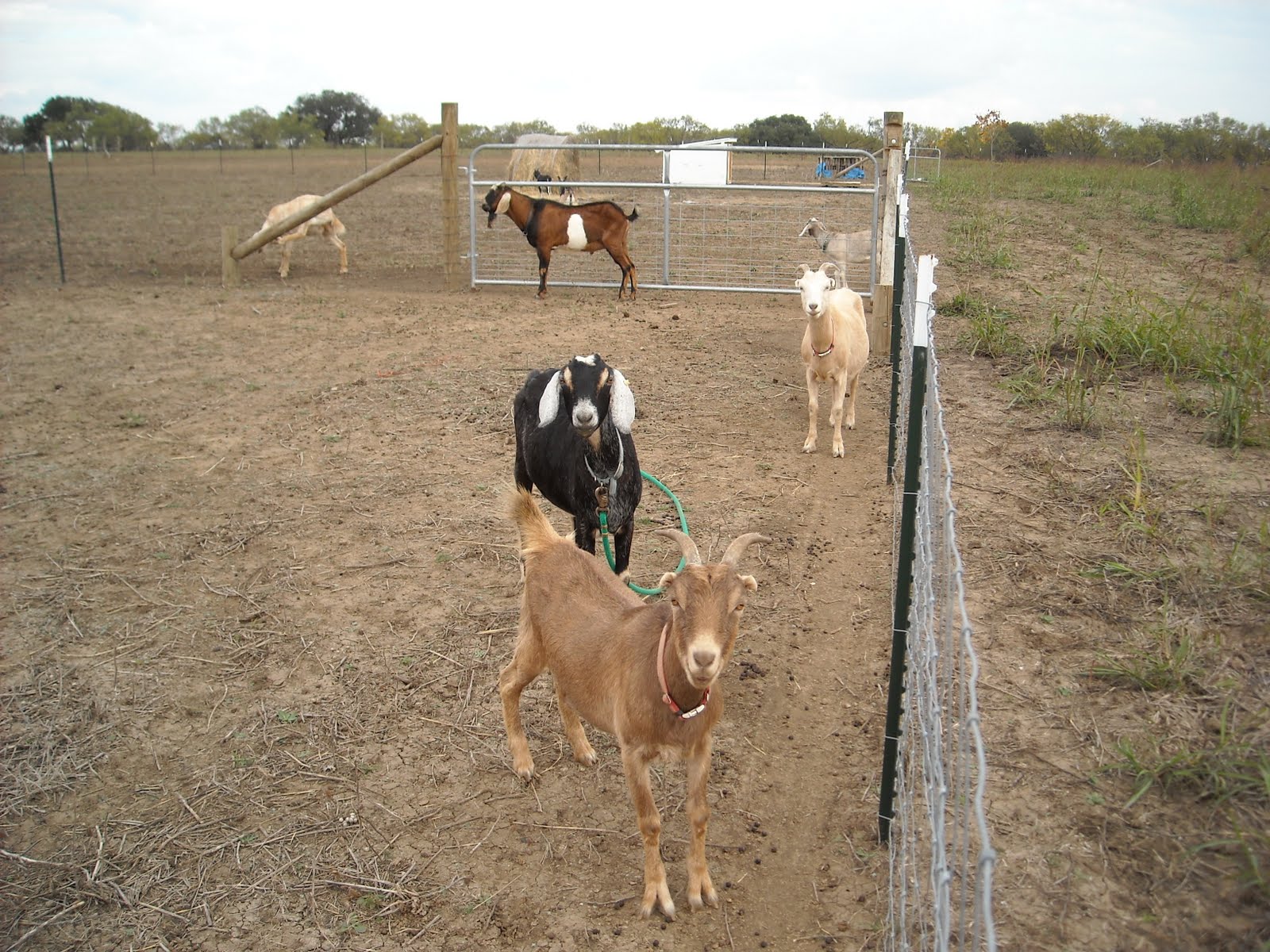
We put Shatner with Winnie, Betsy and Pammy (shown back to front):

And we put Eastwood with their daughters Minnie, Tapioca and Marie (shown left to right, with Eastwood between Minnie and Tappi). Any kids God graciously grants will be their first ones. They’ve now graduated into being a part of breeding process! (They grow up so fast! 🙂 :

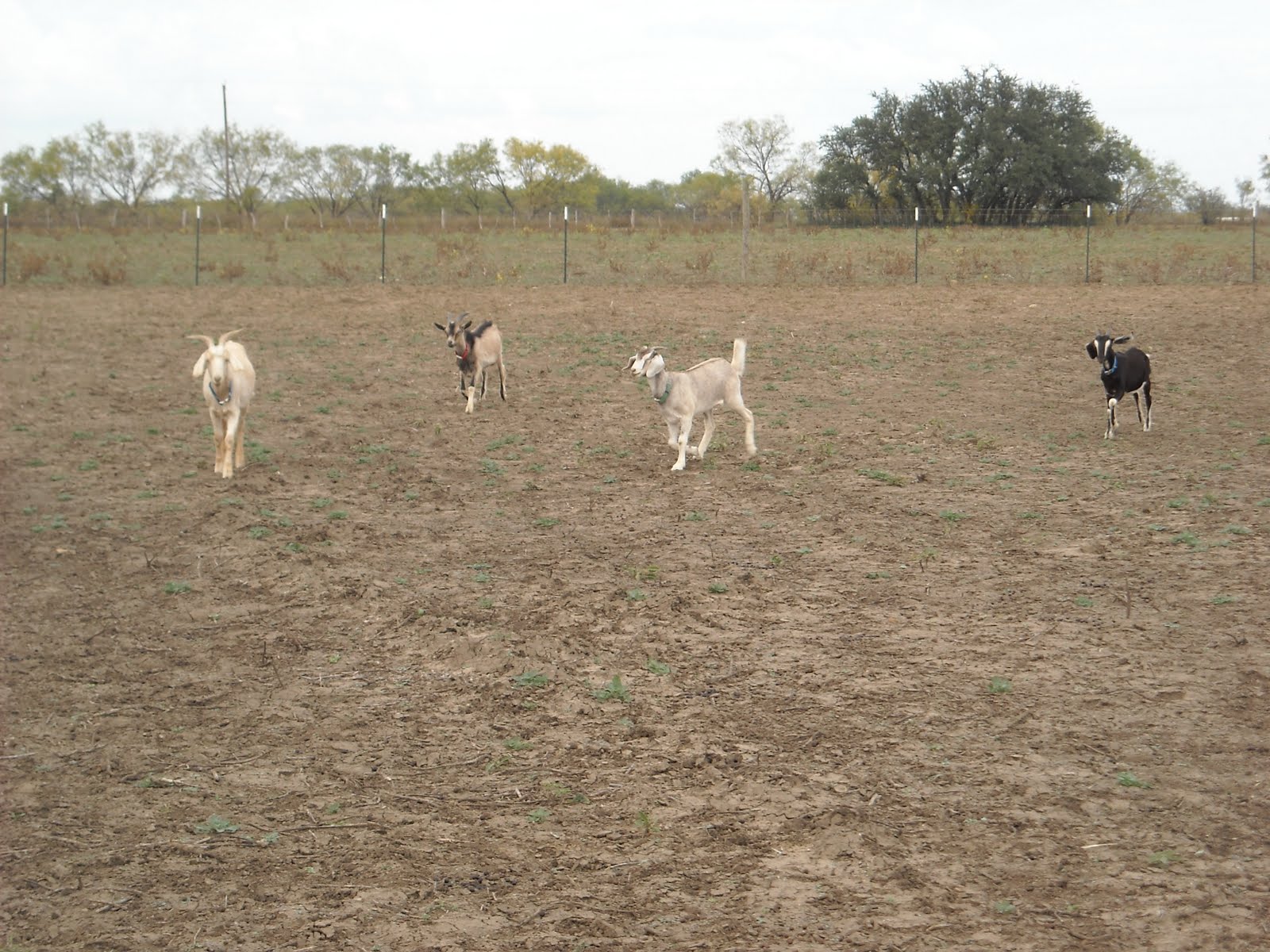
And here are Aramis and Porthos (left and right), and Donny (center), which, with Shatner being gone, are now kings of their castle:

We pray the Lord perpetuates the herd, in accordance with His will and divine wisdom; and we thank Him for the opportunity and resources to be able to set apart the goats for breeding.

— David

New Goat “Piney Tim” – Update – Name Changed to “Eastwood”

Well, because of some character traits we picked up on, and because the previous name is too much associated with Charles Dickens’ “A Christmas Carol,” which celebrates Christmas in a way, which is something that we reject, thus causing us a conscience problem, and because we were probably just going to be calling him Timmy anyway, we are changing his name to Eastwood, because he seems to often give us those squinty eyes saying, “Go ahead…make my day!”

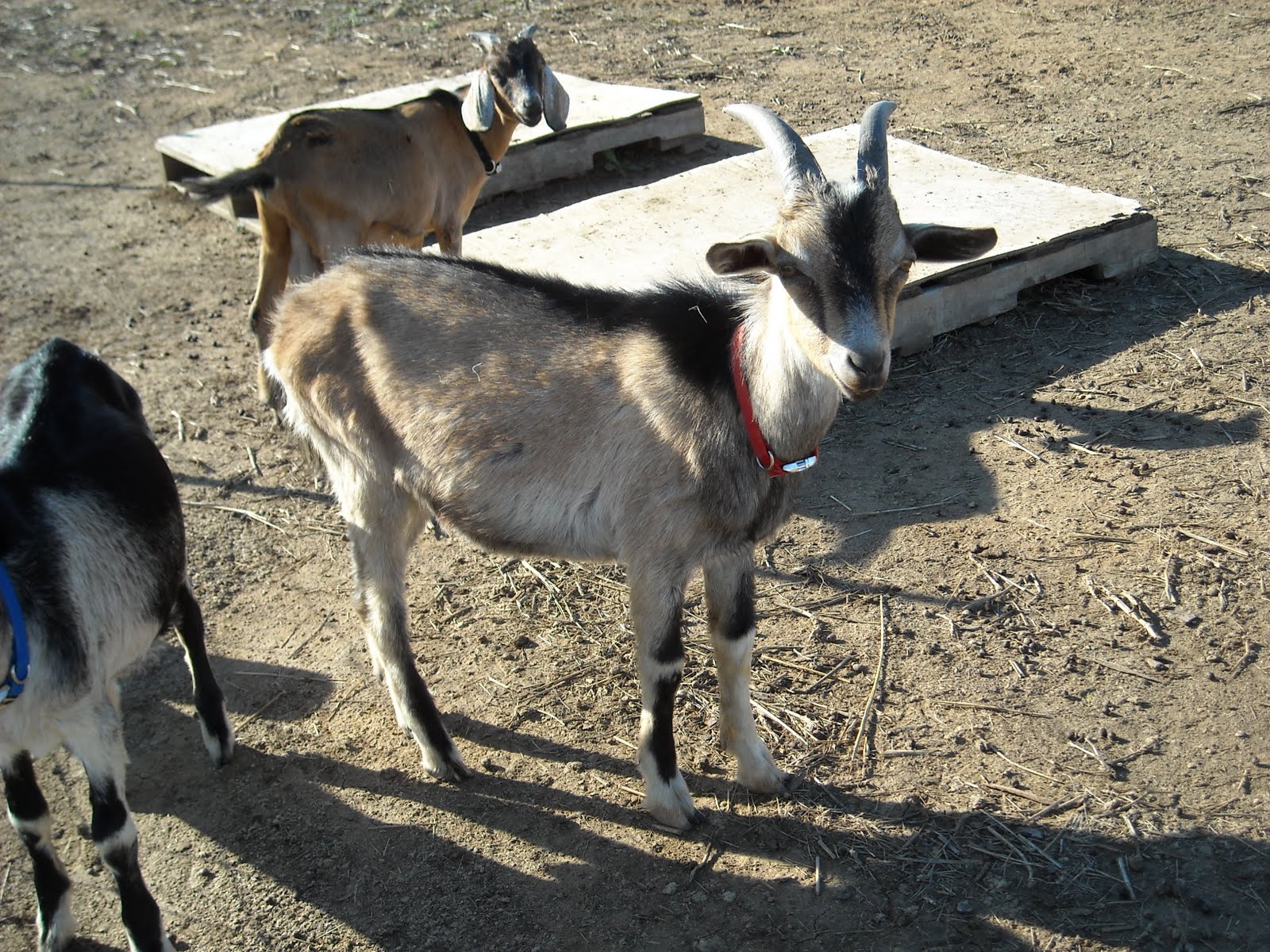
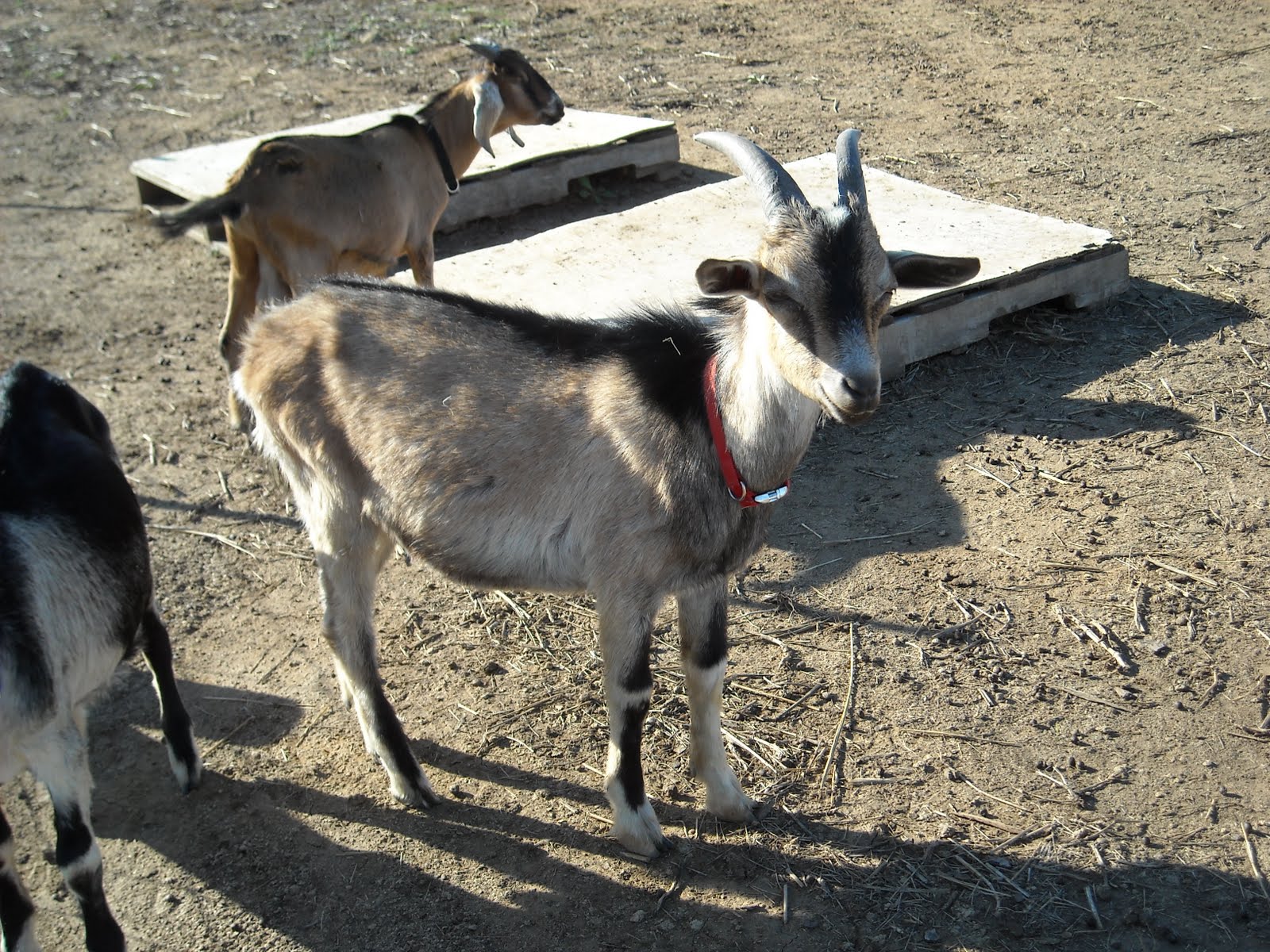
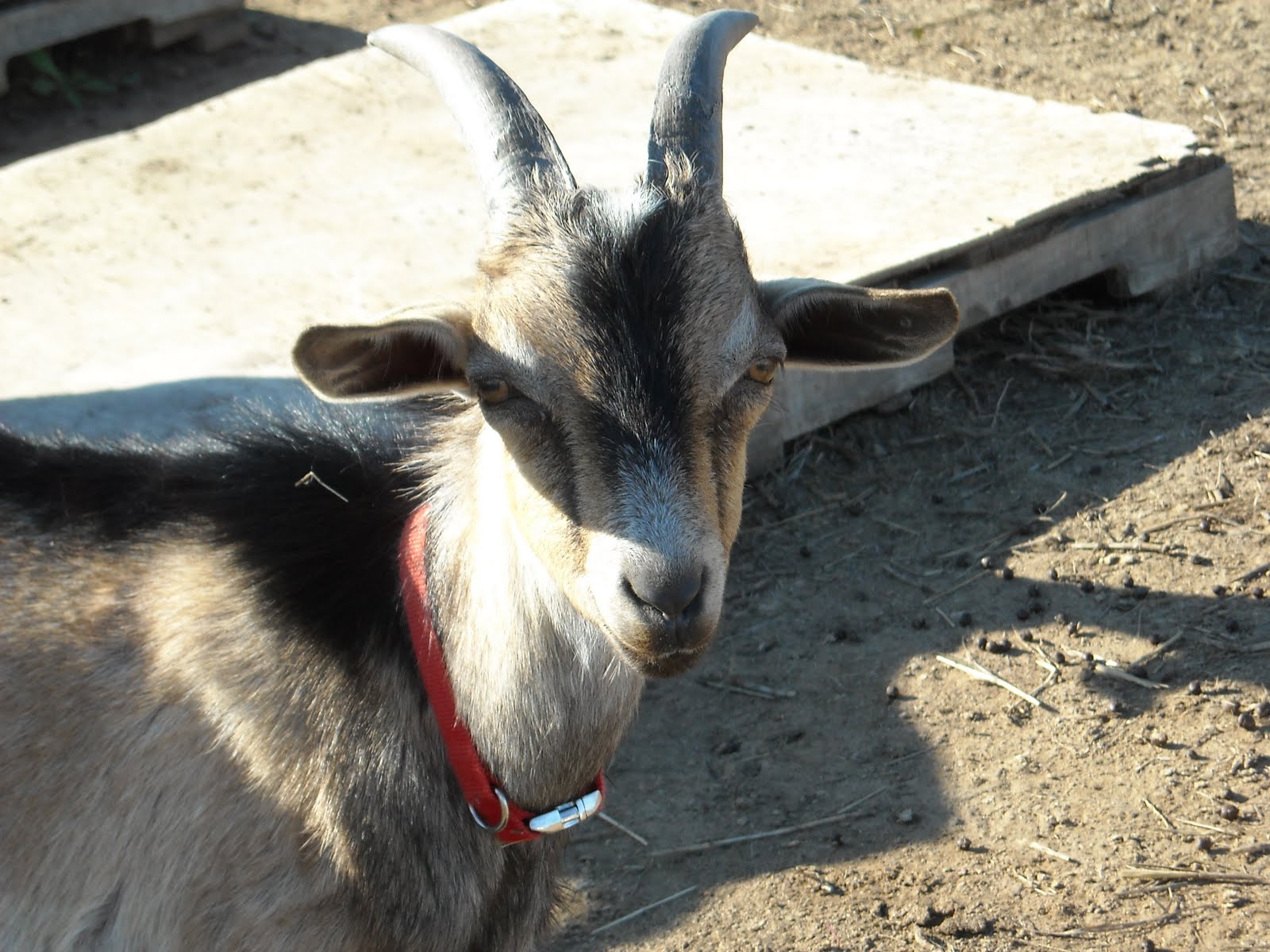
You can see it in the difference between these two pictures. You’ll probably have to click on each picture (and maybe enlarge them from there) to be able to see it; but in the second one, he’s giving “the look”:


We probably spend a little more time than is necessary on our animals with this type of stuff (naming, etc.), but we also like to try to be cautious and consistent with what we do.

— David

New Goat “Piney Tim”

Although apparently inbreeding goats is a defined method for increasing a herd, we decided to use outbreeding instead, as inbreeding can bring to surface undesirable traits (as well as desirable ones, which from what I’ve read is why people inbreed); so our plan is to trade our males born here with other folks who are raising dairy goats. Our neighbors the Sustaires are doing just that, and the Lord had granted them twin bucks around the same time as He did our triplet bucks, which are half Nubian and half what Winnie is, which is part LaMancha. We also had Donny available, who is a little older and full Nubian. Theirs are Alpine-Nubians, and so we agreed to swap goats. They chose to take Athos, the first born of the triplets, partially because of how well Winnie is producing milk vs. how well Betsy, Donny’s mother, is; and we chose the one of theirs that had horns (one of theirs was born without them) so that he could compete with our other males since we are not de-horning our goats.

Since he’s part Alpine, that makes him rather “Piney,” and so we decided to name him Piney Tim (we’ll probably call him Timmy for short). And so here he is:


We’re thankful to the Lord for allowing the perpetuation of the animals for all of the families here on the land, and for allowing us to have this opportunity with a local family to husband the animals in this outbreeding way.

— David

Goat Milk?

The background music came from fiddle champion Tony Ludiker’s free mp3s page. The recordings have Terry Ludiker and Darin Meeks on guitar.

This was fun to do. Here’s a bit of raw footage, some of which hit the cutting room floor.

In this first one, I held out as long as I could, until the end:


I almost didn’t get the part after this take. Also, based on the last few seconds, it appears that for some reason eating cookies makes me think I’m playing Hannibal Lecter:


Here, finishing up after getting the last goat back into the pen didn’t work out quite as expected:


And just for the record, the milk I drank was from a previous day’s milking that had been kept very cold. Apparently, it’s better tasting and lasts longer when the goat milk is chilled well right away.

There is a lesson in the main video, in case it wasn’t evident: most people go to the store for their provisions; agrarians go straight to the source, which is provided by God directly in accordance with His will, without the need for the world and its government approval, degrading pasteurization, shipping companies, grocery stores, and all of the other in-between means the industrial system requires for sustenance to go from where it’s produced to where it is used or consumed.

Which way is the proper way for a Christian to live?

We are thankful to the Lord for the provisions of our goats and the milk He is allowing us to have.

— David

P.S. In case you weren’t aware of the TV commercials, etc., our video is a take off of the California Milk Processing Board (and then licensed by others) ad campaign, “got milk?”


Animal Update

We thought it might be nice to post an animal update from around here at our homestead.

And so, here we go…..!

Brodey and Nessa

If you haven’t seen the introductory post on Brodey and Nessa, it might be nice to take a look at it before watching the following video so you can get some perspective on their growth:

Cattle

This was taken before the birth of the latest calves:

Chickens

Gary and Gigi

Goats

Pigs

We are grateful to the Lord for the provisions of these animals, and may we use them for His glory.

— David


Shack Caddy

The initial plan for our goat sheds was to make them portable. On one I put some wheels; but on the subsequent ones, I decided it wasn’t worth the time nor expense. I am able to lift one side and shuffle them along, which is fine for moving them around inside an individual pen; but moving them from pen to pen would take some effort. I thought it might be nice to inexpensively throw together something on which to haul them around.

Here’s what I came up with: essentially it’s a shed tote made of landscape timbers, bolted together in a square, with the back cross timber on top of the skid timbers, and the front cross timber below, which would angle the skids up allowing for it to be more easily dragged along.

And here it is:

The next pictures show the process of a move:


And the goats check out the “new” place!

Thanks to the Lord for this idea and for the resources to be able to put it together.

— David

« Older posts Newer posts »