The Sifford Sojournal

Our journal of what we pray is our sojourn of life along the narrow way, even the old paths, submitting to the Bible as a light unto both.

Page 95 of 96

The Orchard


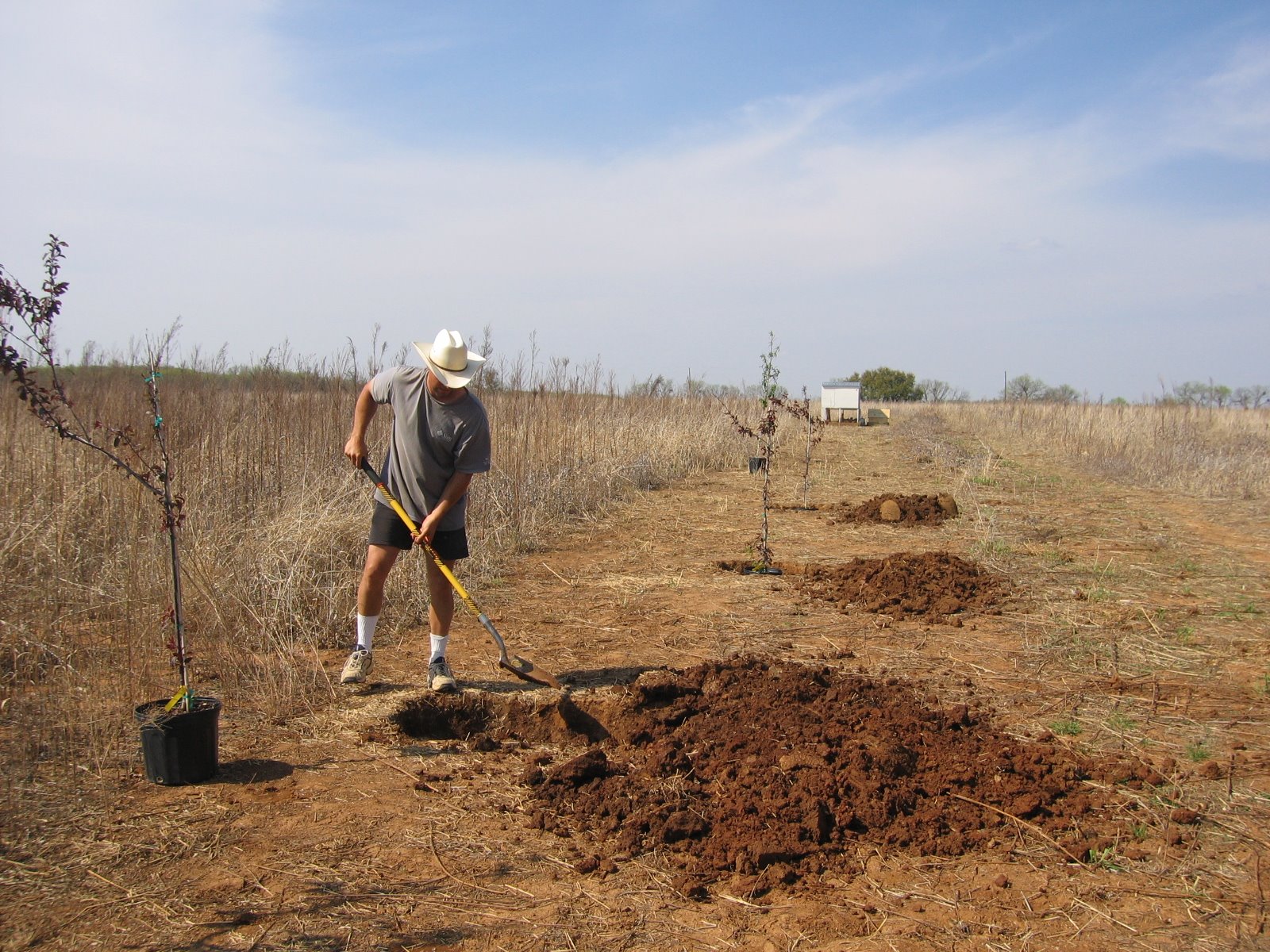
That first Spring we also began planting fruit trees: 3 apricot, 3 plum, 3 peach and 3 nectarine. Sadly though, the cows (to be mentioned in a future post, Lord willing) got to them and ate them back, and so they were set back probably a whole season.

Last year we planted 3 more apricot, 3 pear, 3 more peach and 3 apple. 2 pear and 2 peach didn’t make it into this season, and so they were replaced with another plum, another pear, and 2 more apple trees. And another pear and 2 persimmon trees were planted just the other day. We plan to add 5 grape vines and 3 pecan trees this year as well.

One thing we didn’t know about but have since learned is that some of these fruit trees require another species of the fruit tree or a special one to be pollinated themselves, or they won’t be pollinated. Apparently a Yellow Delicious apple tree is a “pollinator.”

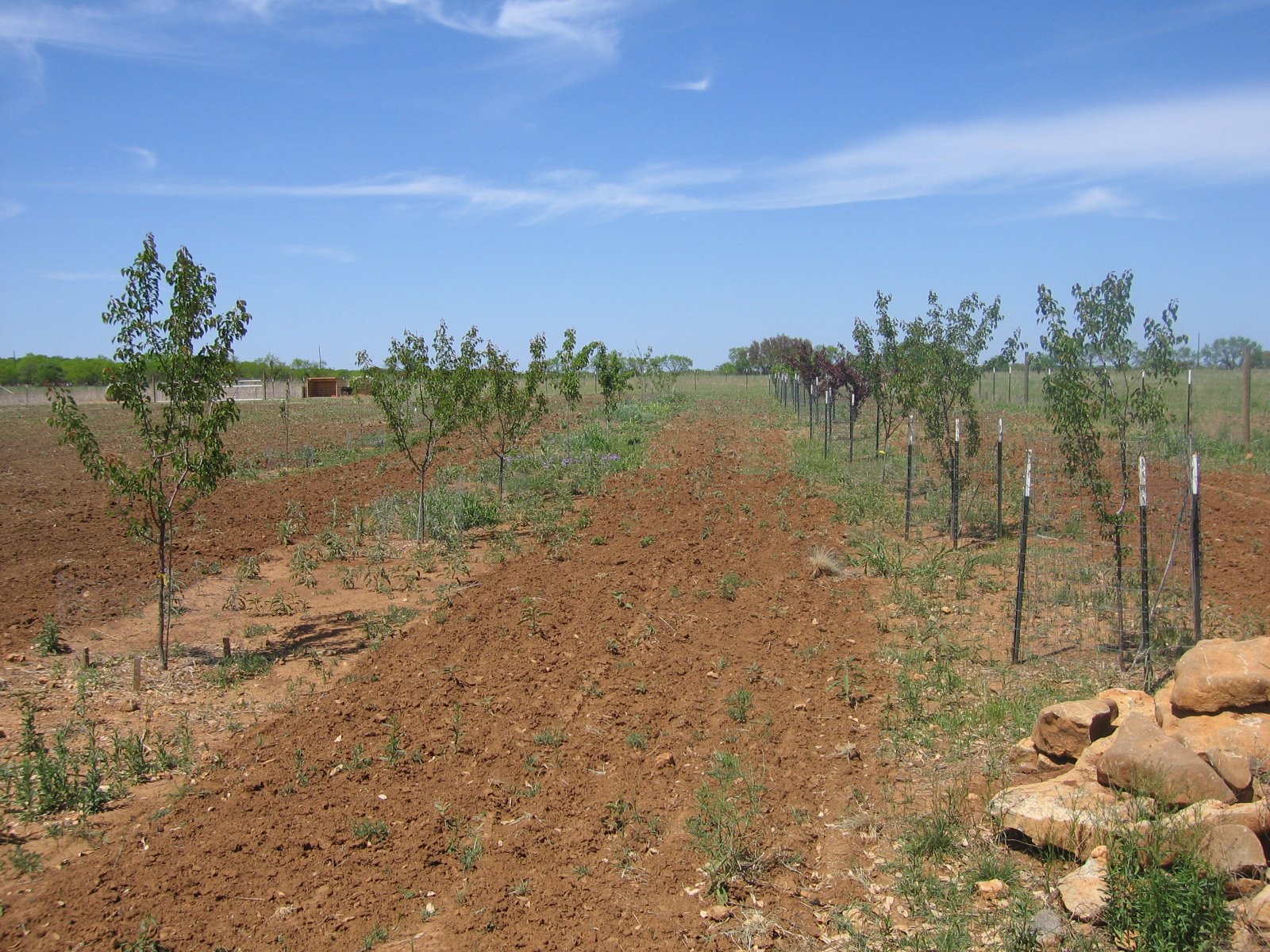
Here what the orchard looks like now:

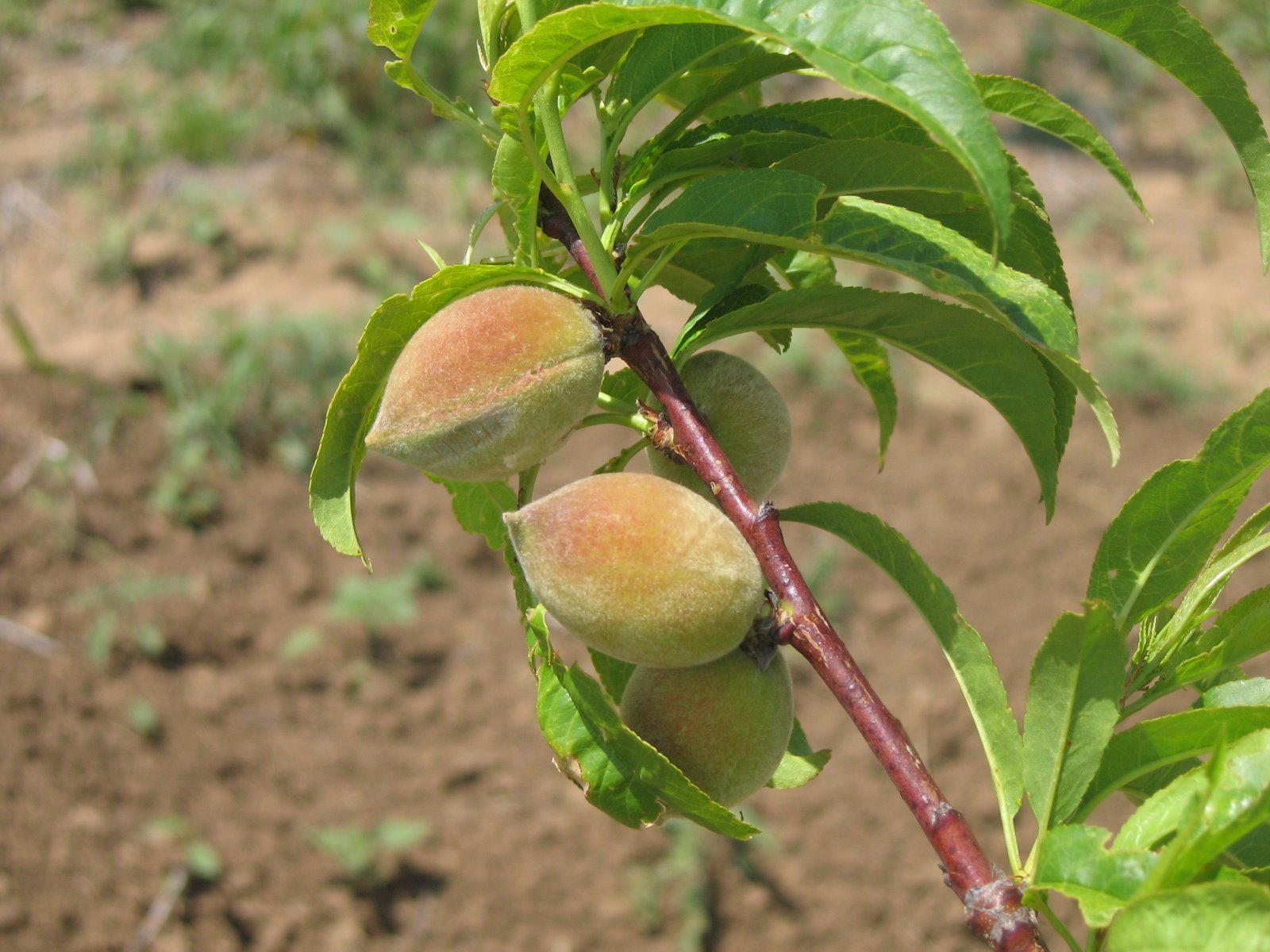
And here are some beginnings of fruit graciously granted by the Lord so far this year (2008)!

— David

Our First Garden

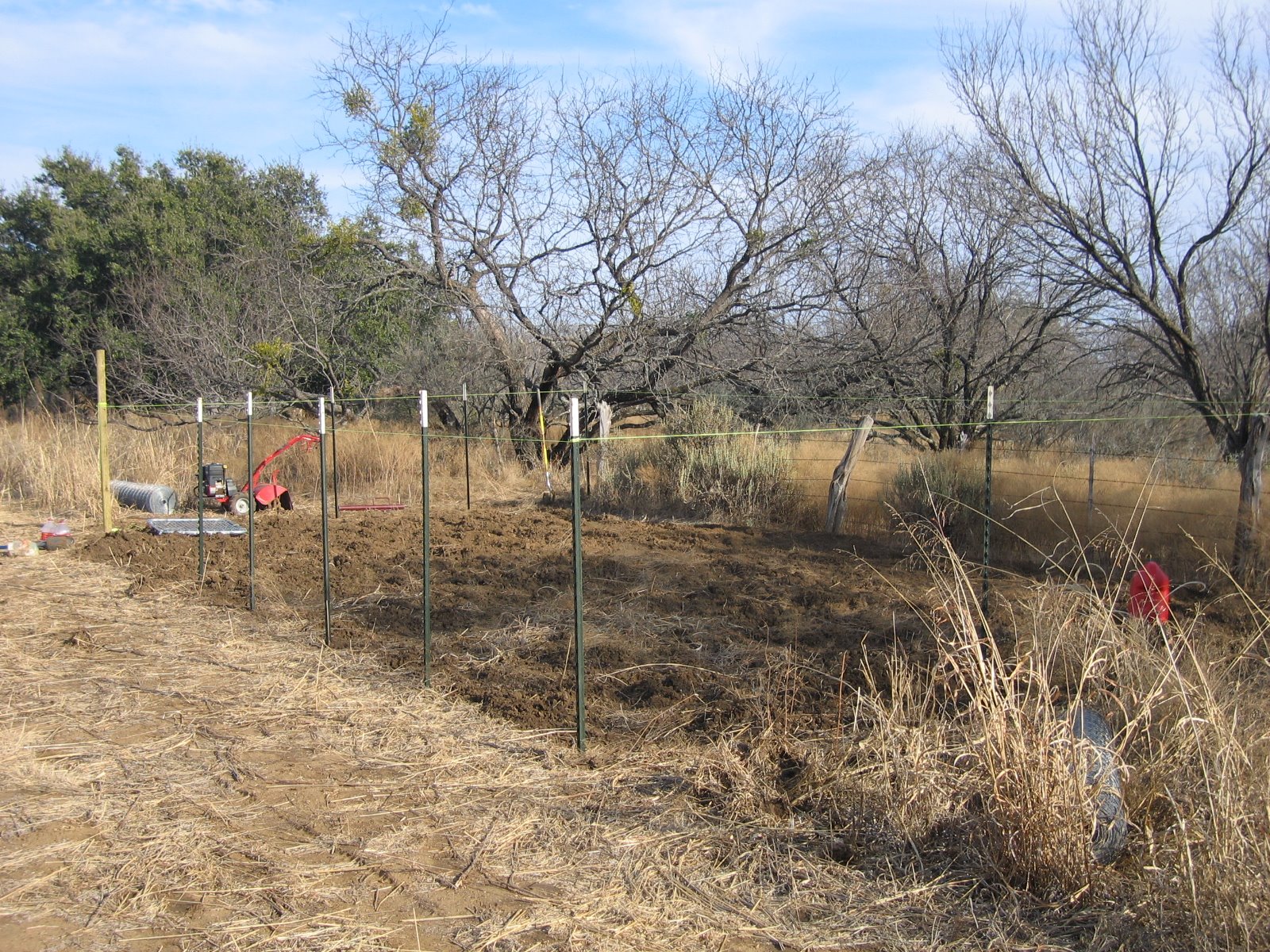
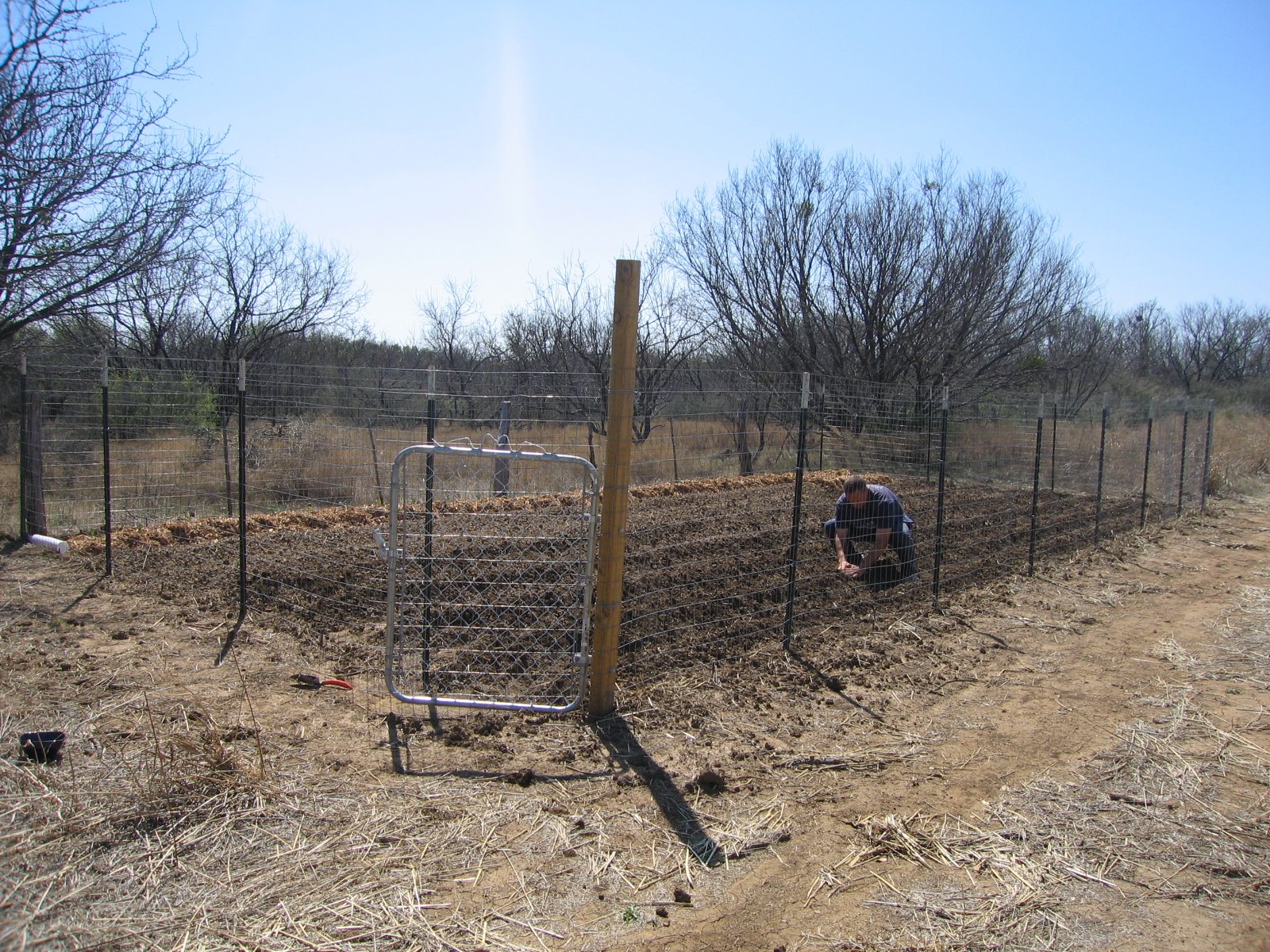
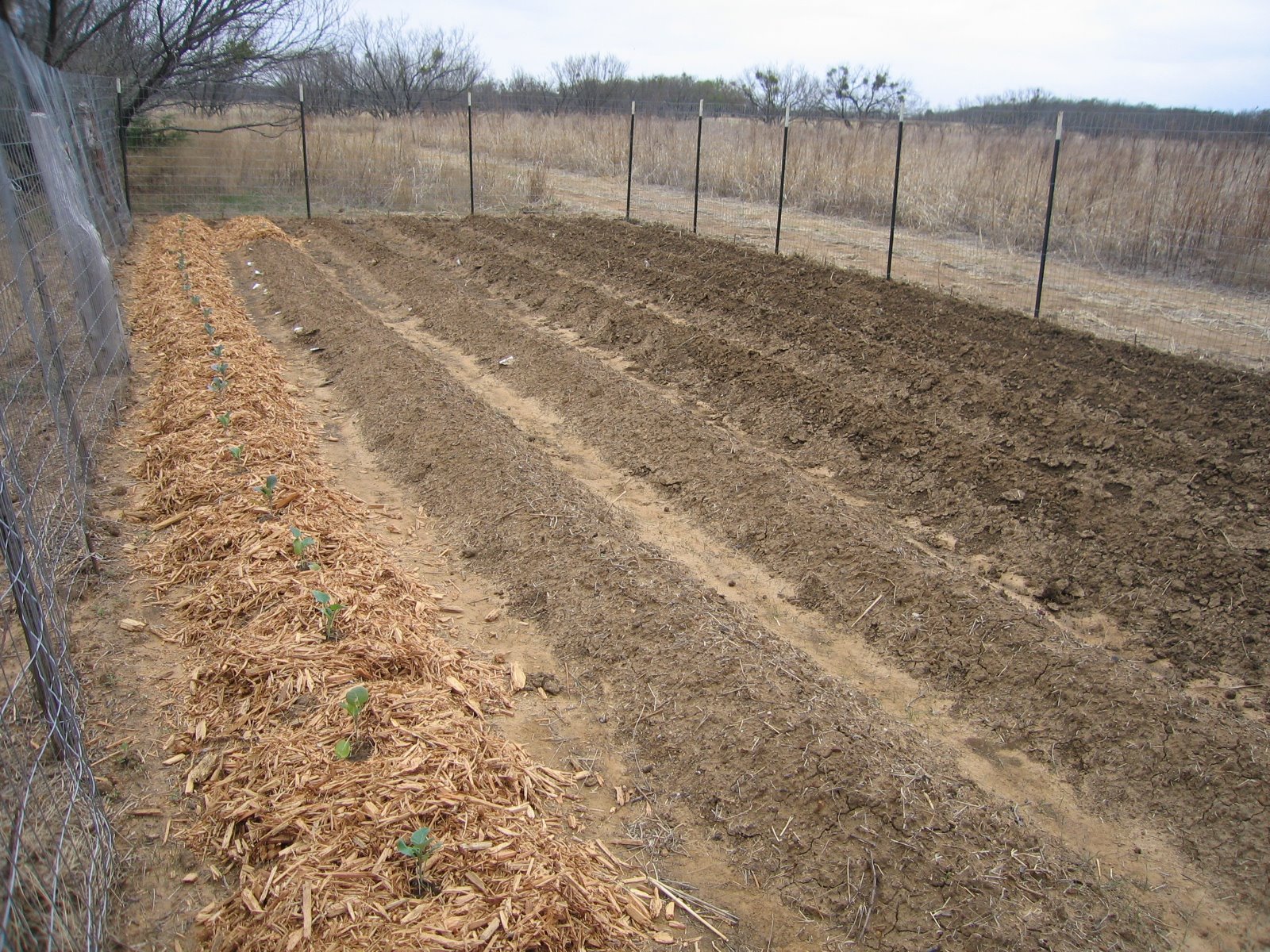
Well, it was Spring time shortly after we moved here, and it was time to plant a garden, which neither of us had done before. We fenced off an area, tilled and manured it, and raked it into rows. I can’t remember all we planted, but nothing really grew other than just a few things. In looking back, some things that hindered it was the huge drought we had that year (3 1/2 months of nearly 100 degree temps), and when I did the rows they were rounded at the top so a lot of the water just ran off.

Here are a couple of pictures:


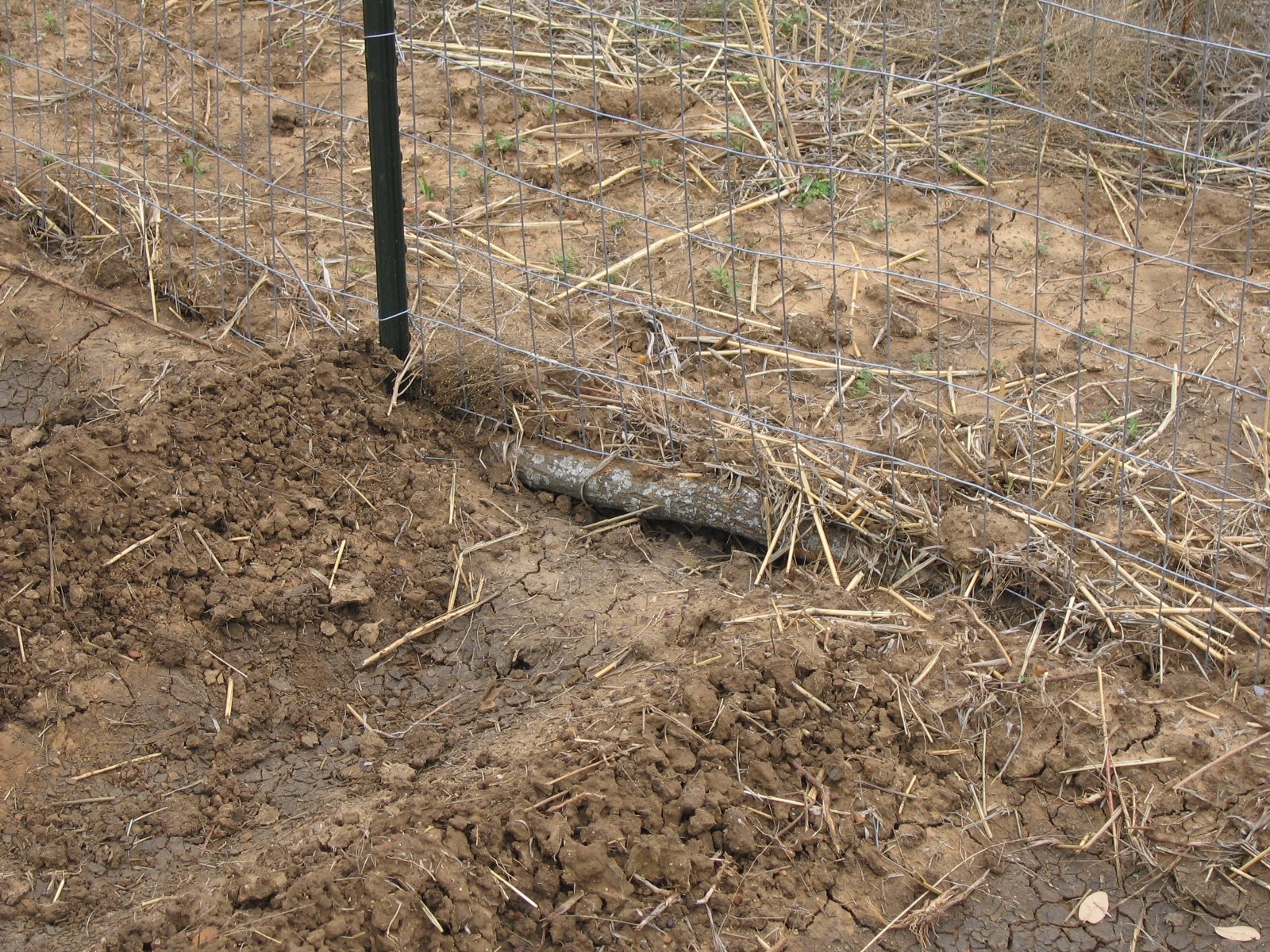
Here I buried mesquite tree branches under the perimeter of the fence to add a barrier against critters that might try to dig under the fencing. I’m not sure it was worth the effort, but I did notice a dig hole at one point, and the varmint almost certainly wasn’t going to get around that extra distance:

Although nothing really happened as a result, the process of planting and watering reminded us of the many examples of sowing seed in the Bible, including that God is the initiator of life in the garden as He is the initiator of life in one’s soul. And we were thankful for being able to live out those examples.

We tried a Fall garden later that year, but as soon as things started to sprout, grasshoppers ate them down to nothing, and so that didn’t work either.

We pray we learned from those things and that God would grow our faith and eventually grant provisioning from our future gardens, according to His will.

— David

Chickens


Before we even left California but with the intent to come here, the neighbors graciously bought some chickens and raised them for us in preparation for us having some once we moved here. Farm fresh chickens make farm fresh eggs, and in the opinion of most people who have tried the difference between them and store bought ones, farm fresh eggs are MUCH better, in taste and in health (because we know what they’re eating!).

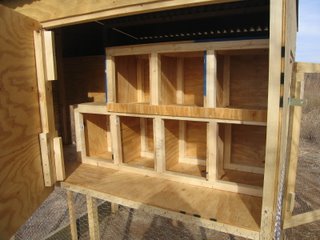
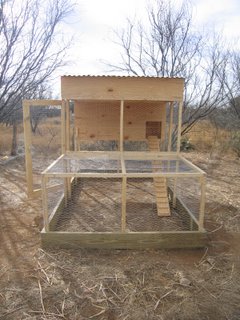
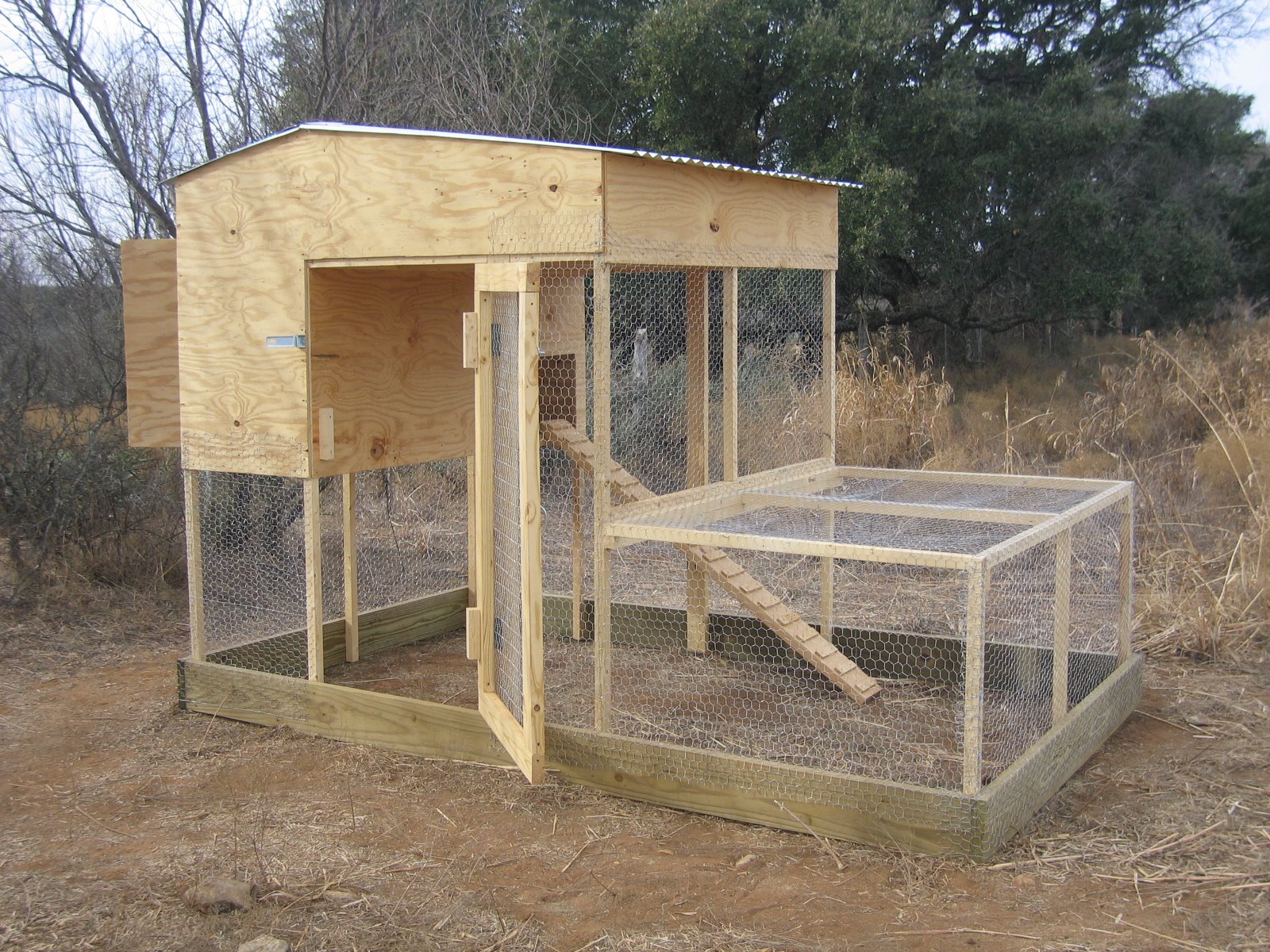
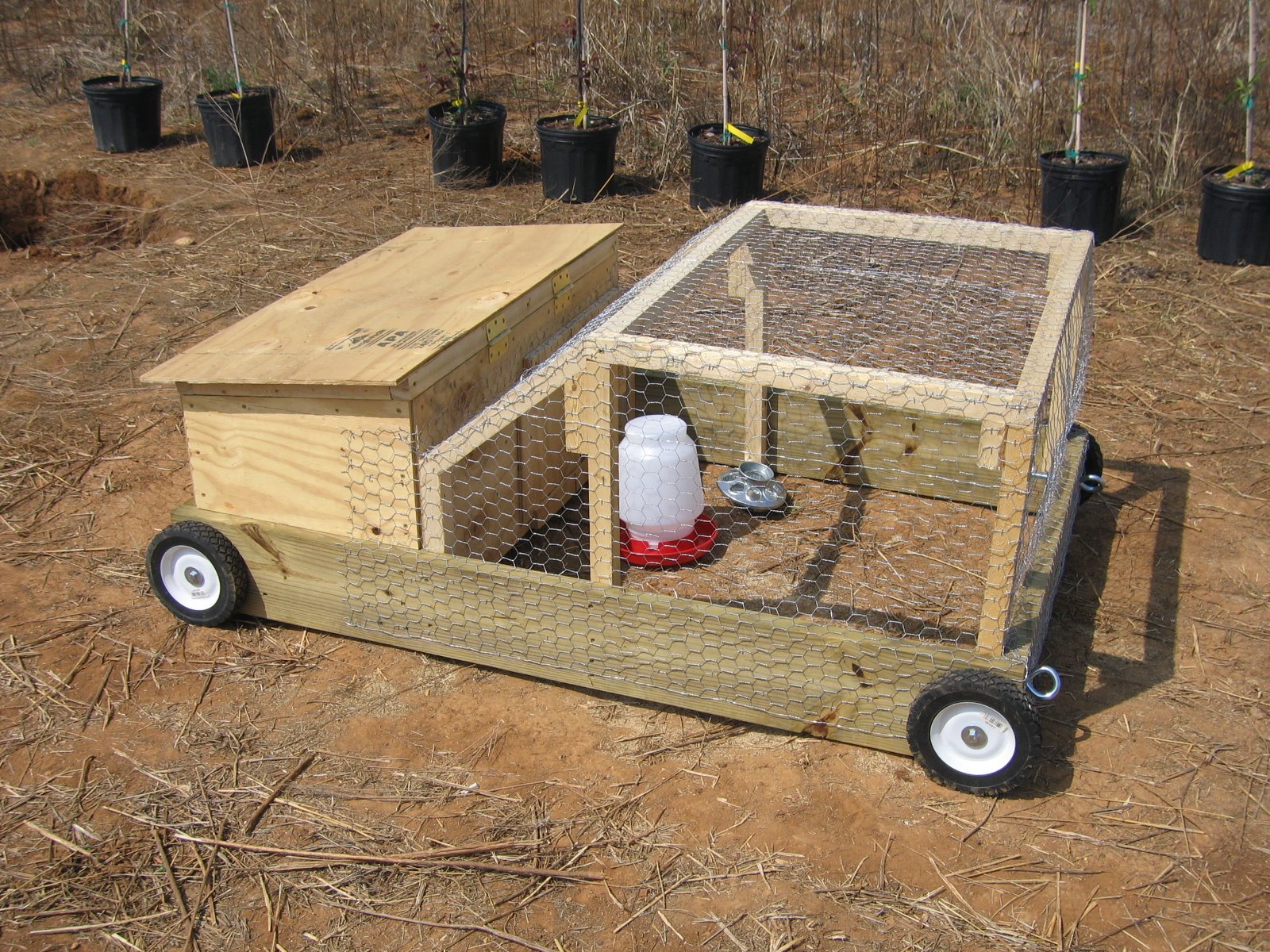
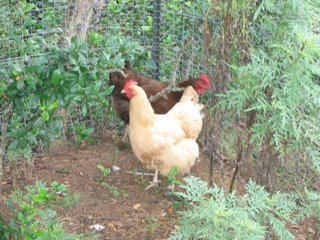
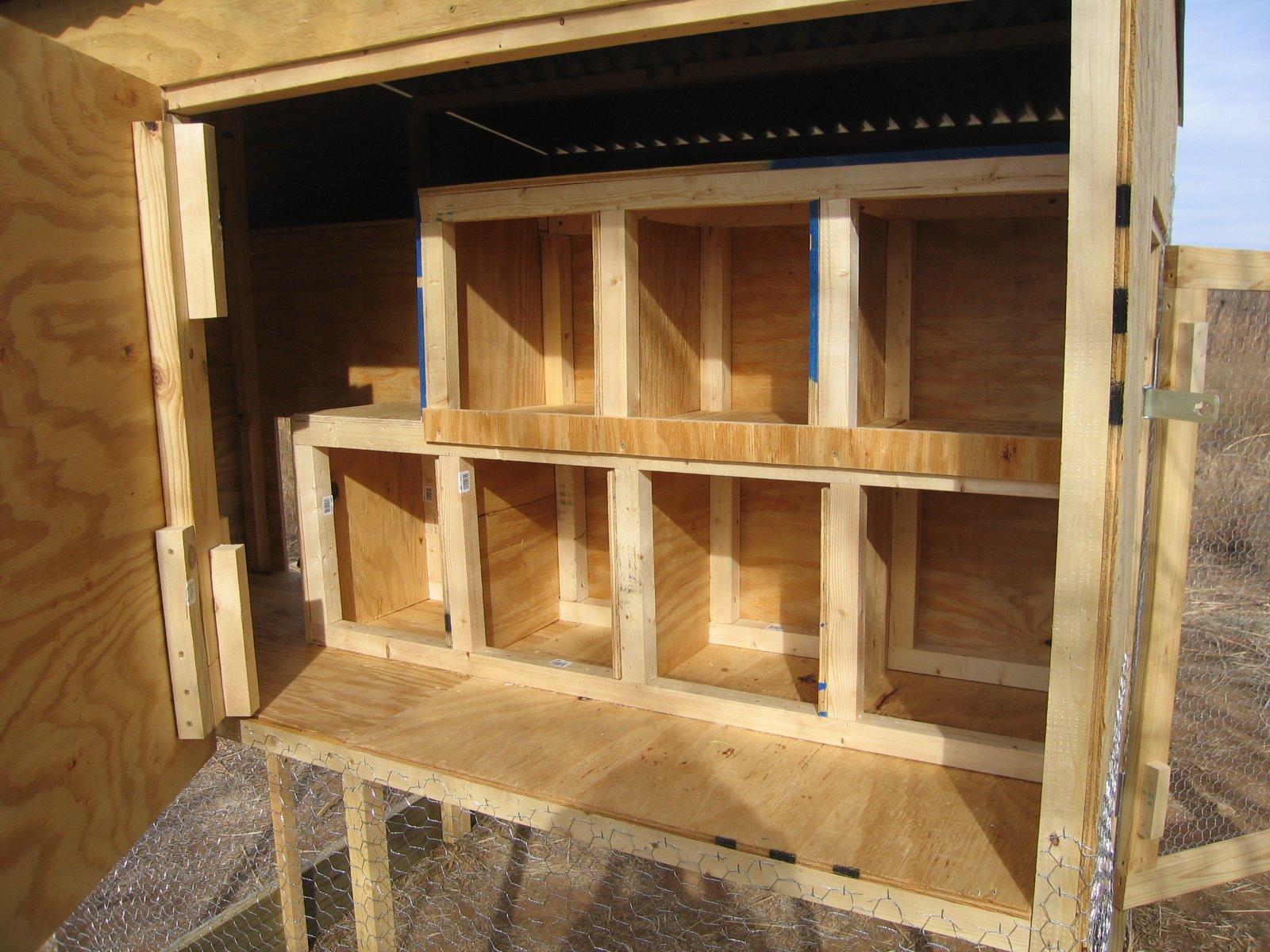
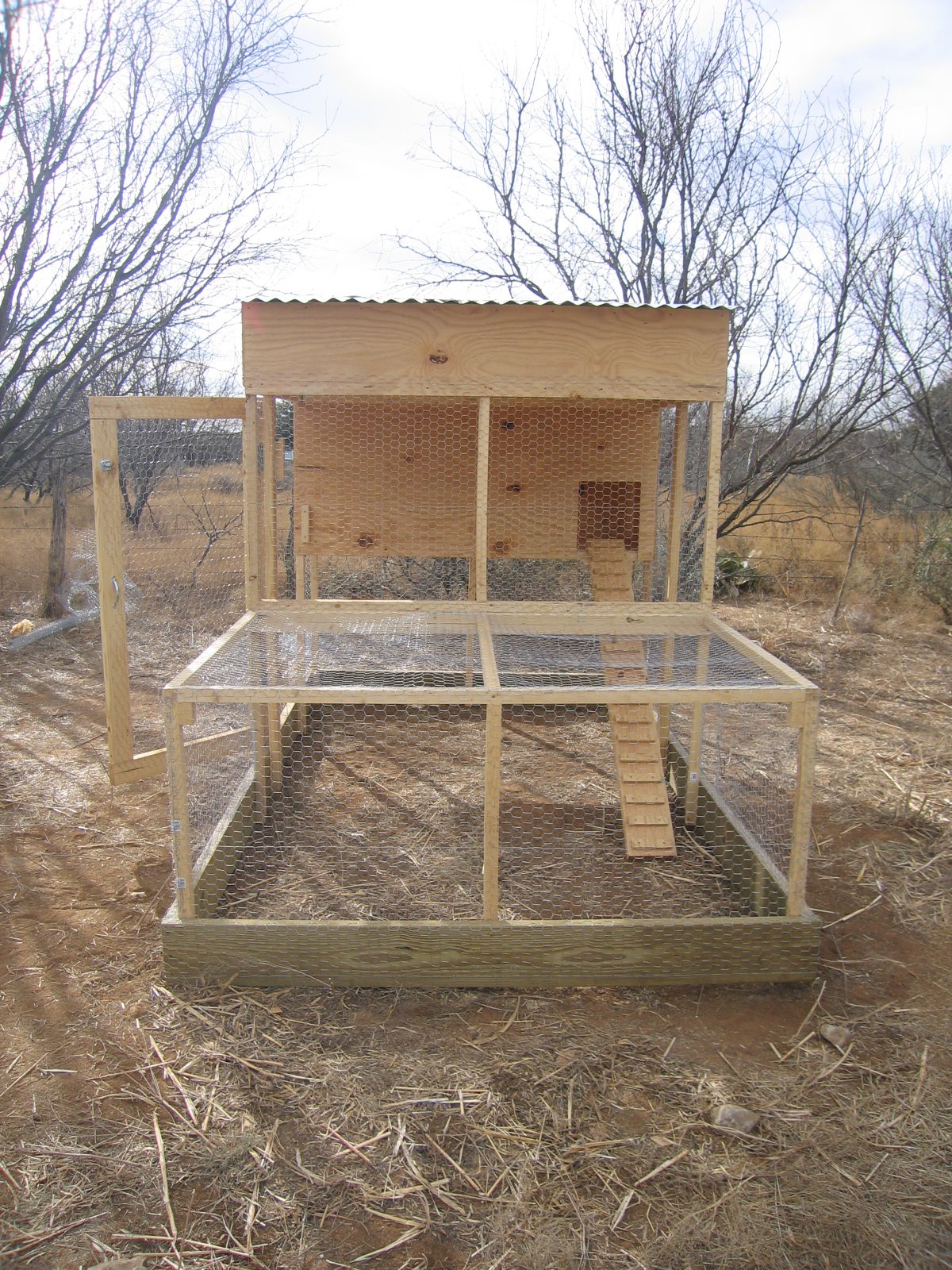
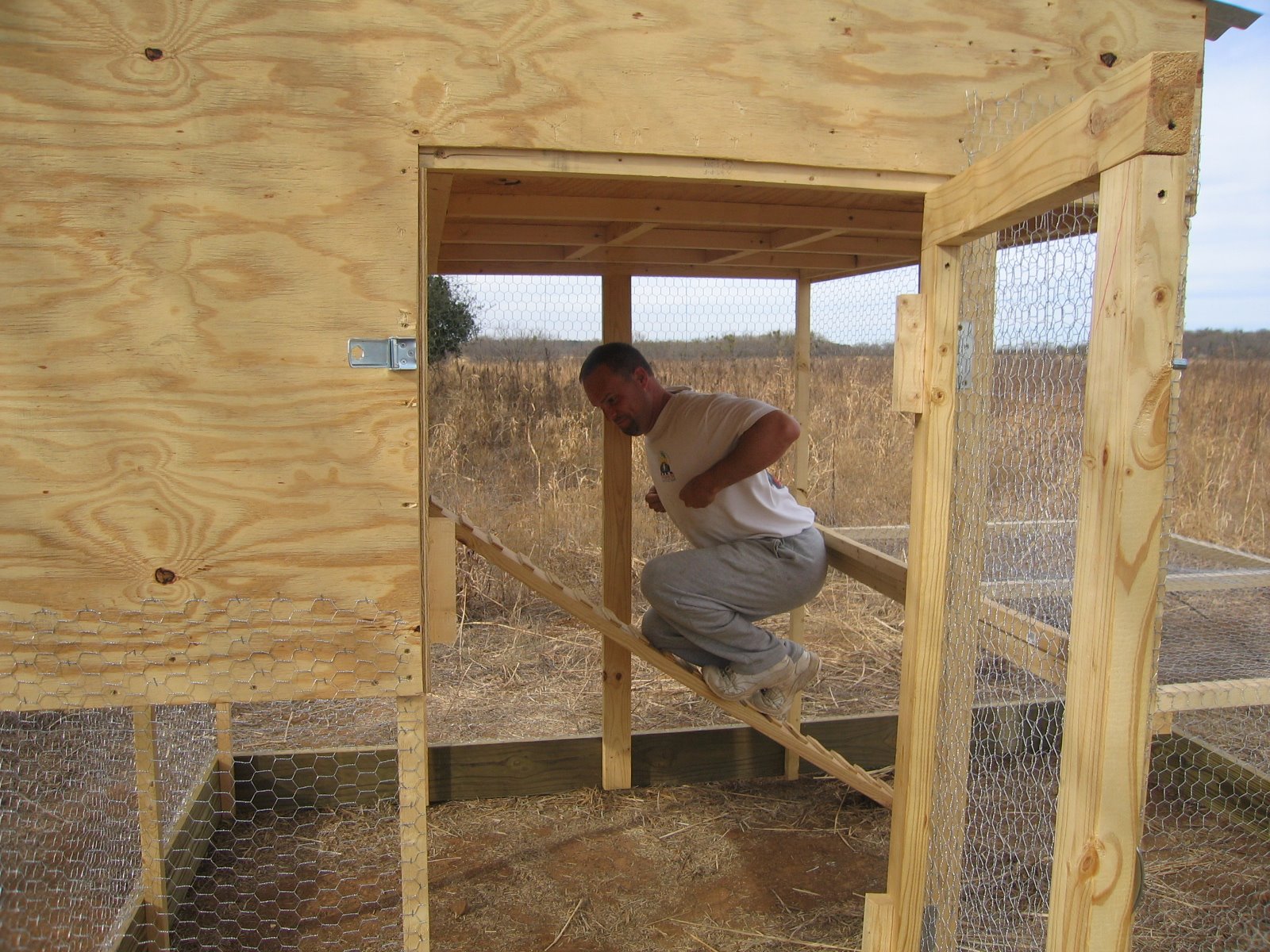
And so, with our chickens here on the land but being tended by the neighbors, we needed a place for them. I had a subscription to Countryside magazine at the time, and in one of the issues is plans for what’s called a “chicken tractor,” which essentially is a movable chicken coup, which conveniently includes fertilization of the area on which the coup is sitting at any one time. It had explicit instructions (which with my zero years of construction experience was drawn to 🙂 ), and so I proceeded to try to put one together.

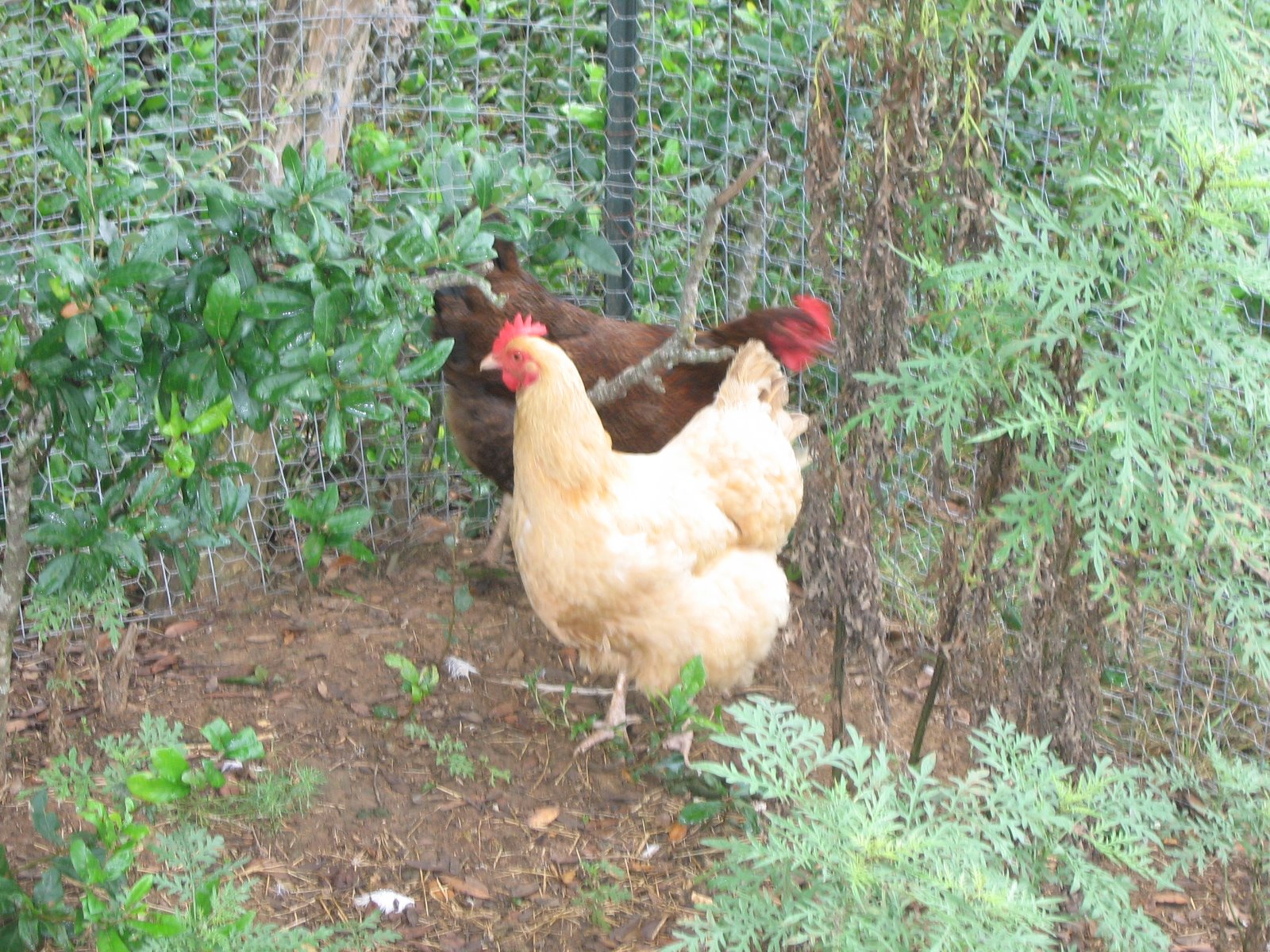
Here are some pictures:
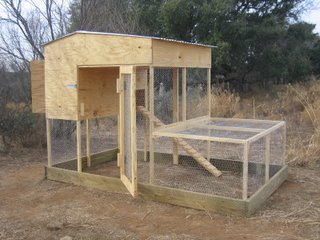


Hey, I had to make sure it worked!!
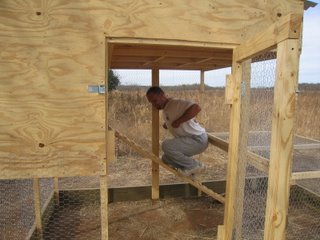
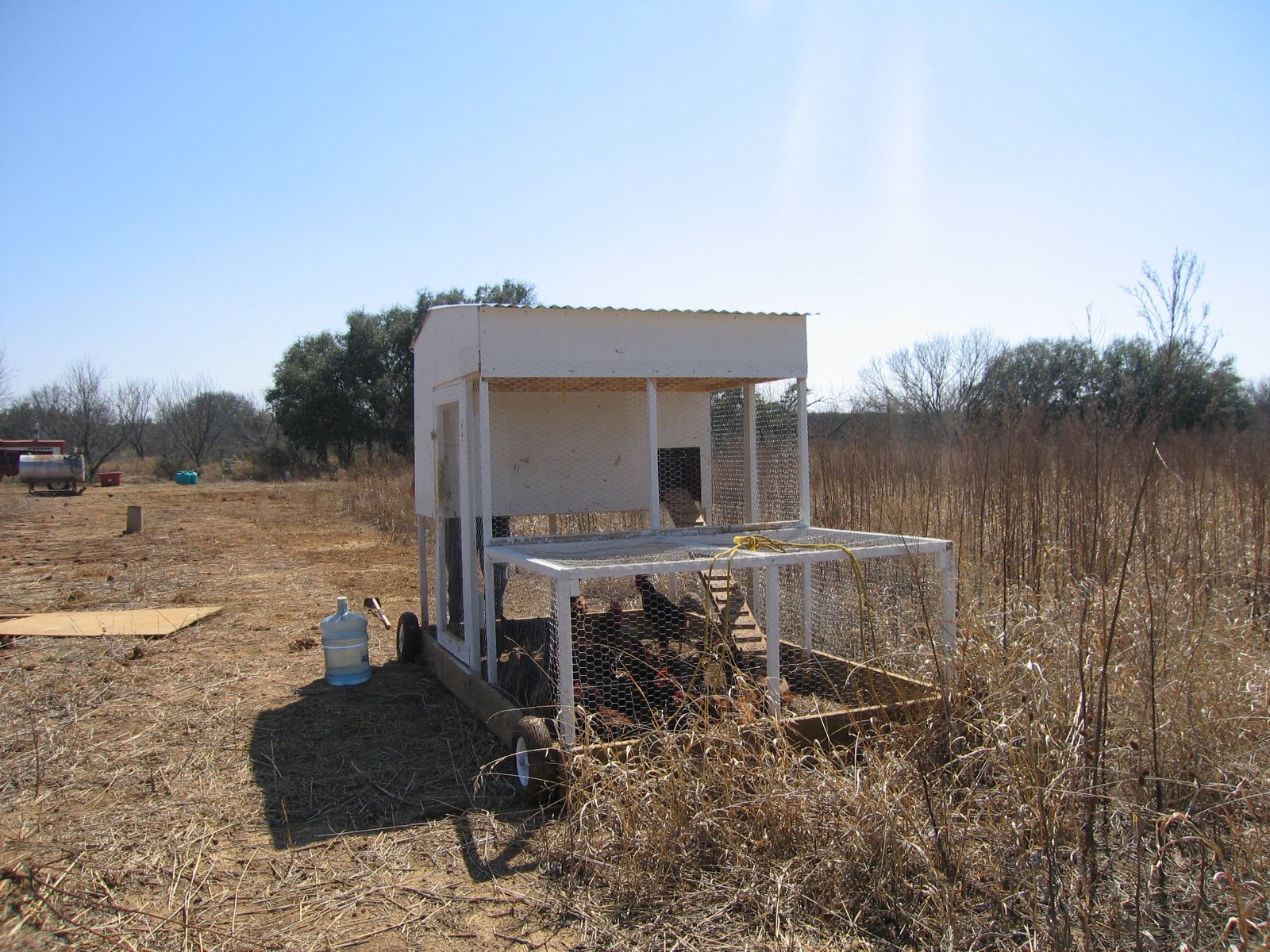
Here’s a final version picture:
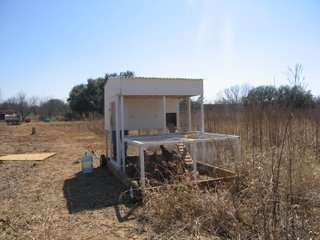
While the idea of fertilizing an area with this chicken tractor is nice, it hasn’t been too practical for us, in that, 1) the area is a little small for the 20-25 chickens we have; and 2) we let the chickens free-range as much as possible (which we believe is better for them and takes less feed too), and so their fertilization ends up everywhere they go (and I mean everywhere!). Still though, the chicken tractor has been a nice chicken coup; and we can move it to anywhere we might need to as our homestead grows.

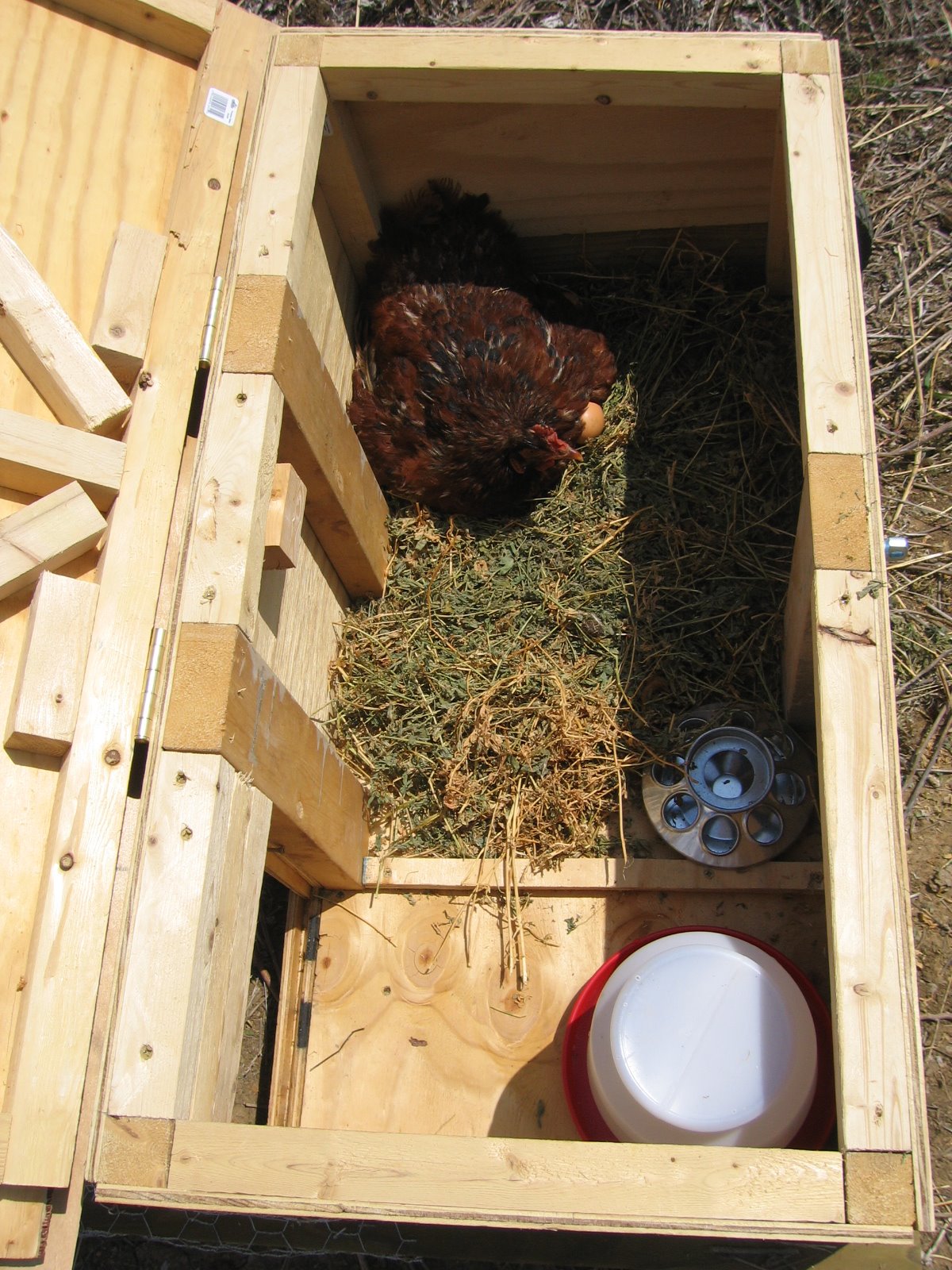
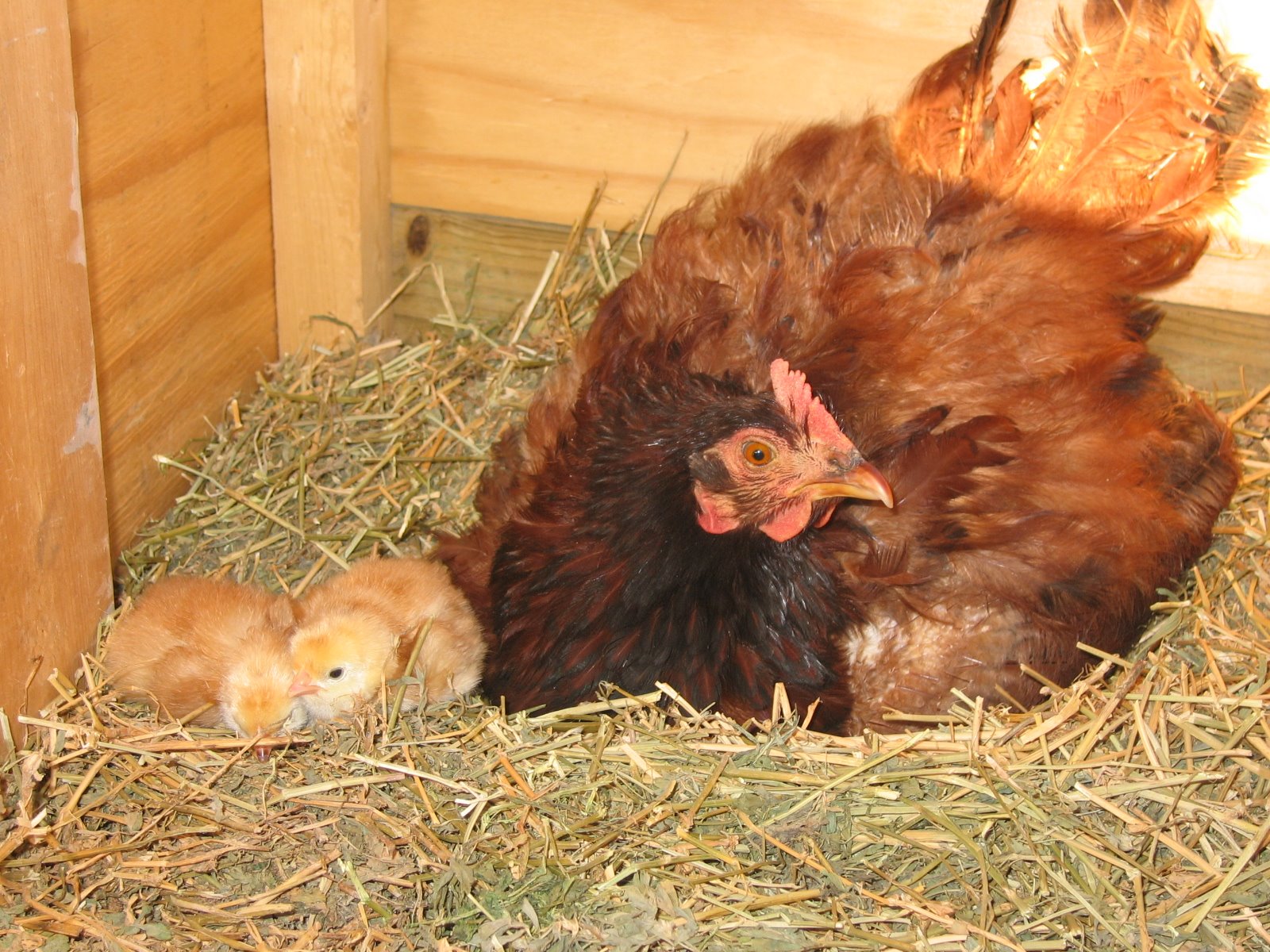
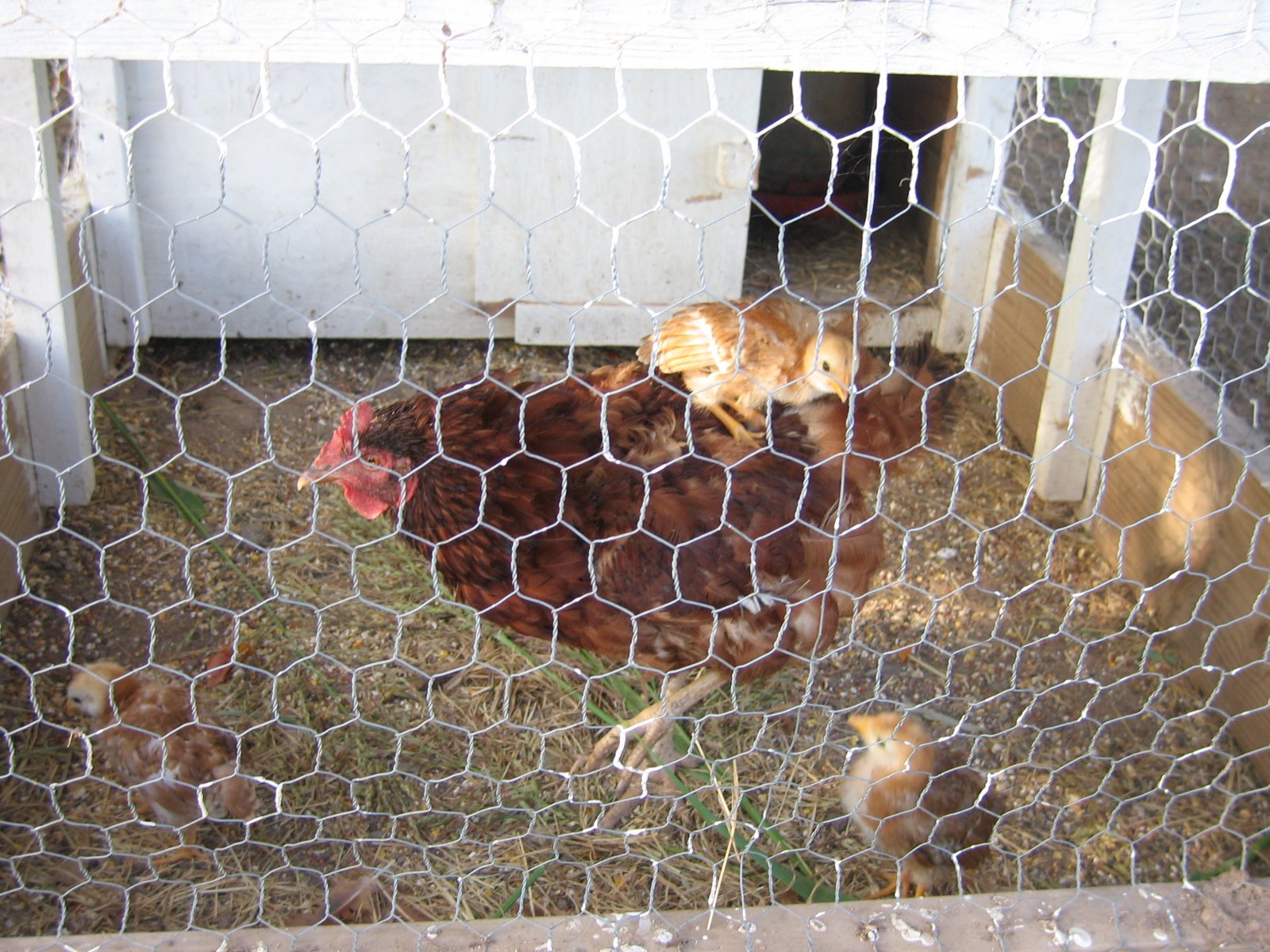
Over the last two Springs, the Lord has granted that some of our hens get “broody”, which means they want to sit on eggs to hatch them out. Our first year we had 5 chicks hatch; 3 made it to adult chicken status, and only 1 hen remains. From last year, all 3 hatched are still alive, thankfully to God for His mercies and provisions.

With having a broody hen and eggs to sit on with the possibility of new chicks, we needed a place in which to separate them out away from the other chickens. And so, I put together a mini-tractor for them:
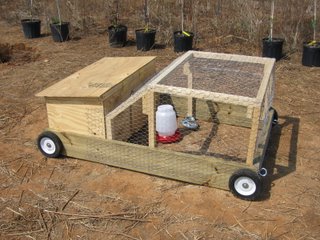
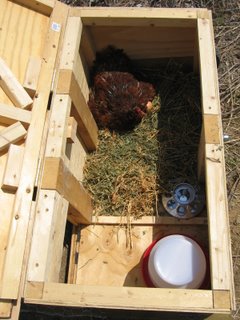
Chicks!
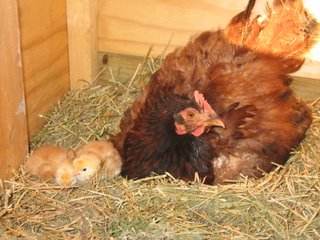
Takin’ a ride on the Mama Hen Express!
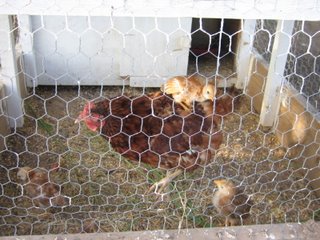
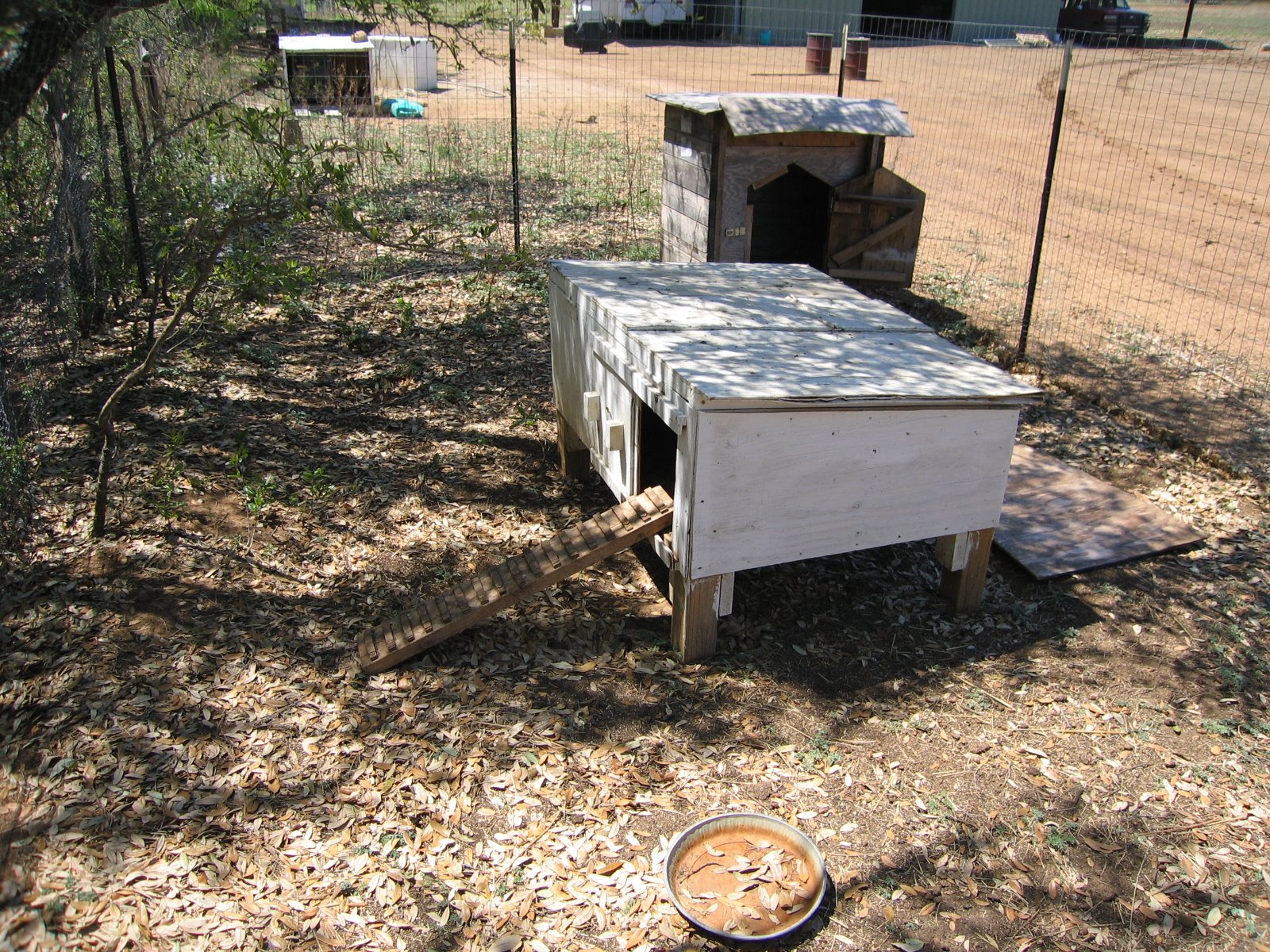
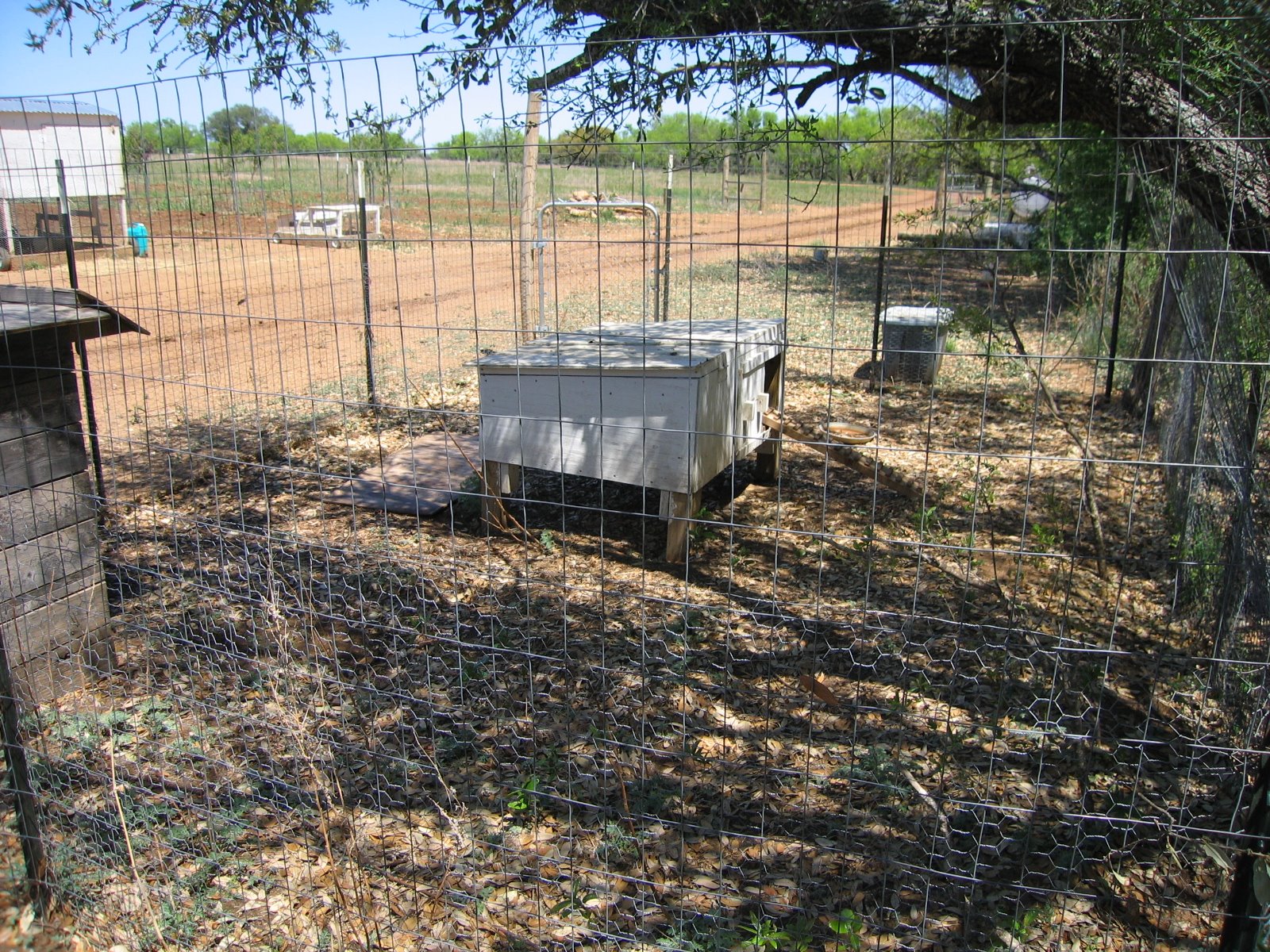
Also, once they outgrew that area and became pullet size, we needed another area; and so, we put up this pen area with its own coup:
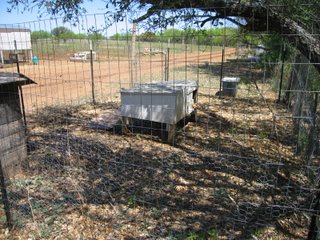
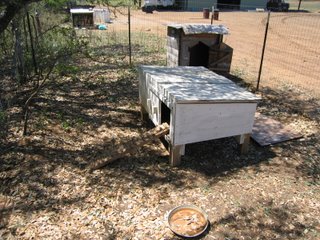
Now, beside eating chickens as food (which with ours we haven’t done yet), as I mentioned, chickens lay eggs.

Here is our first egg!

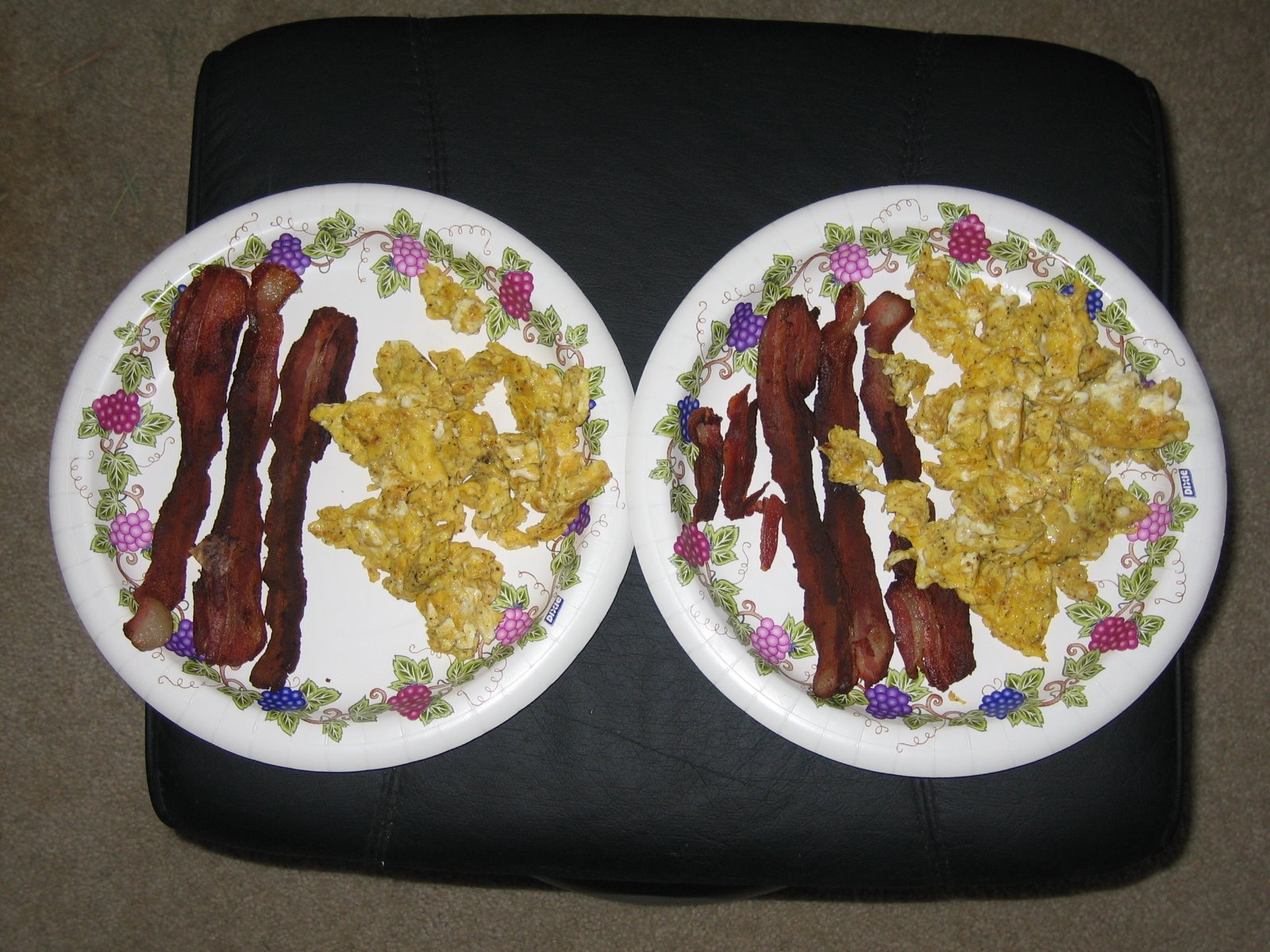
And here’s our first meal with our first eggs:
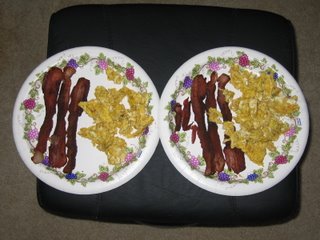
What has been interesting to watch is some of their behaviors. Every night the chickens, like clockwork, “come home to roost”, literally. Regardless of where they traveled during the day, they end up coming back to their “home”, whether that’s a chicken tractor or a chicken pen.

In moving the young chickens to a pen area, they and the older chickens can get a little more used to each other, with the idea that eventually the young ones will be merged in with the main flock. Getting them used to each other is somewhat important, in that, chickens are apparently pretty territorial, and “new” chickens to their area typically need to be shown whose turf they are on; and so, there is often fighting among the hens, and if you have an alpha male rooster with a younger rooster being introduced.

Now, what we’ve done in the merger is take the new chickens from their coup in the pen area and put them in the main chicken tractor at night to let them come down from it in the morning. This helps to old flock get used to them when they’re more calm, and helps to new ones get used to their new “home.” We leave the pen area open so they can go to it for familiarity. This can go on for several days, but eventually the new chickens start to get the idea that their new “home” is in the chicken tractor; and they head there, instead of the pen, when it’s time to roost.

Another behavior that I’ve found interesting is the following: if you throw feed on the ground in one place, and they run to it there, and then you throw feed down in another place, almost invariably they run to the last place you threw feed, even though they had perfectly good feed right where they were: they seem to need the “next thing.” It reminds me of a couple of articles regarding how people often do things because they are attracted to the “change” aspect of the thing, for various reasons and in actuality not be led by the proper motivations.

God has been gracious with the provisions of the eggs during our time here so far. We are very grateful for what He teaches us daily through His creation and how He provides for us daily in accordance with His will.

— David
Storing Rain

After our previous attempts at drilling a well with no success, having water on the land became a focus of primary importance. We had been buying water from purifying stations, but that obviously wasn’t a long-term solution.

If you ask the typical person today where they get their water, they’d say the tap. I’d bet though most of those people never really consider from where THAT water comes. Well, when you have no water on your land, and you need some (because generally a person does 😉 ), you need to consider ways to have it available.

On land that is not hooked up to a paid water supply, there are typically 3 ways of getting water: ground (well), surface (ponds, streams, etc.) and rain (it is also possible to get water out of the moisture in the air, but the amount of water from that is quite a bit less from some of these other ways, and often times require electricity). Many country folk might typically think of well water or pond (tank, in Texas-talk) water as sources for themselves and animals, but many don’t consider “rain harvesting” as an option. What they probably forget is that possibly their well and surely their tank are filled from the results of rain falling, and the land area that feeds their well or tank is basically a large catch-water system with the water table or tank being the storage facility.

We decided that eventually, Lord willing, we would like to have all 3 sources of water, mostly because of the importance of water. And so, the first water supply on which we concentrated was putting up a catch-water system.

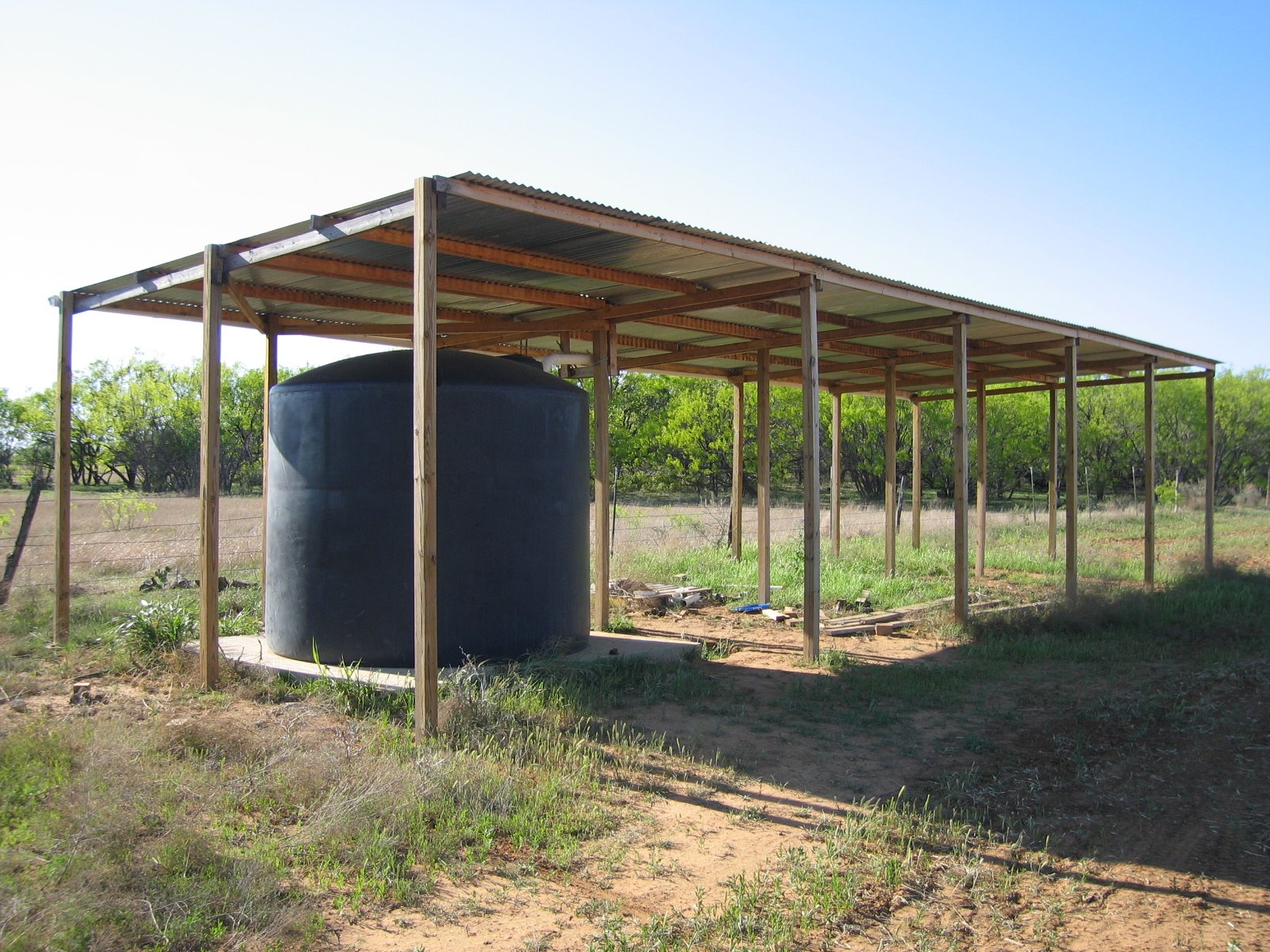
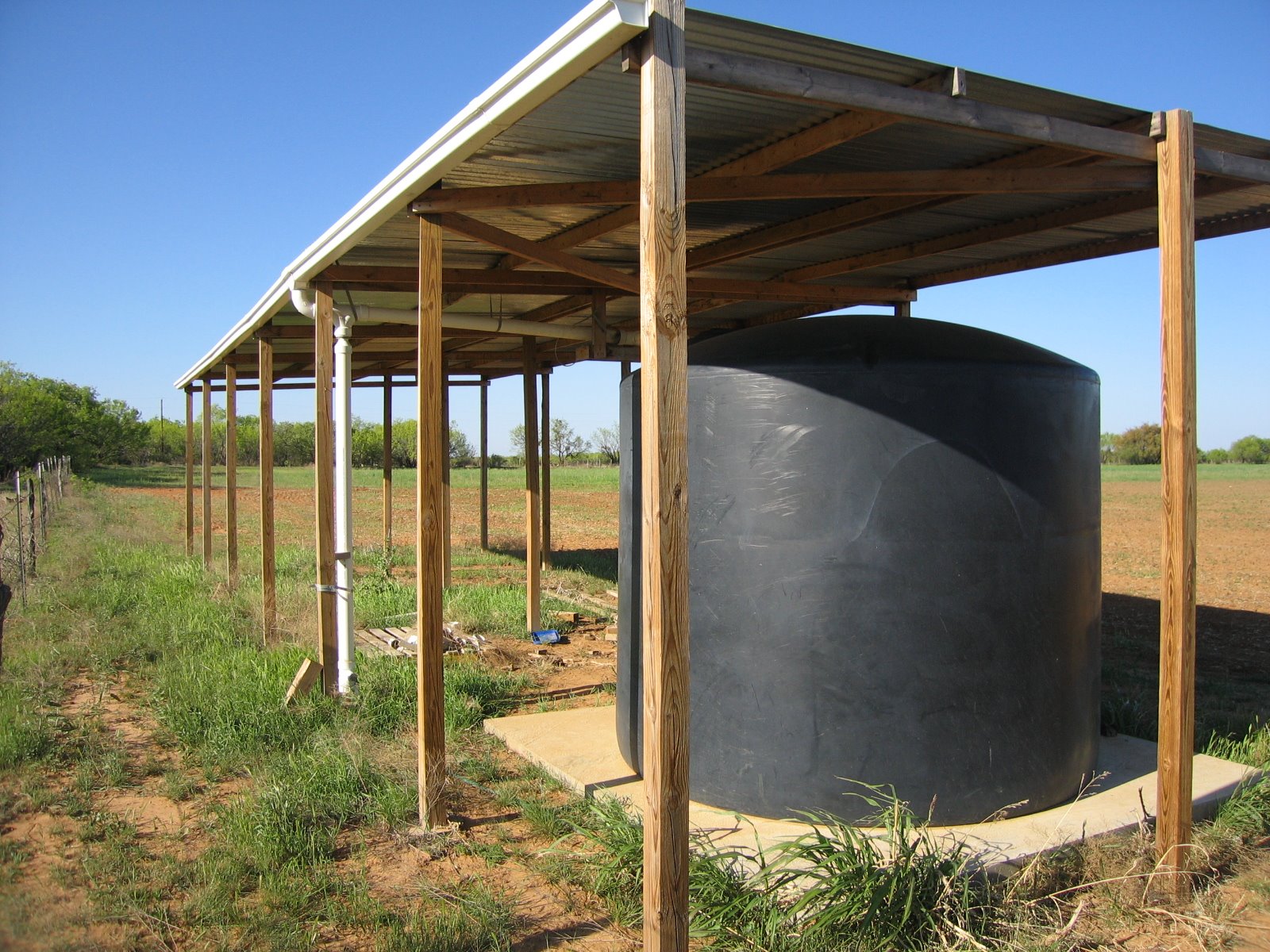
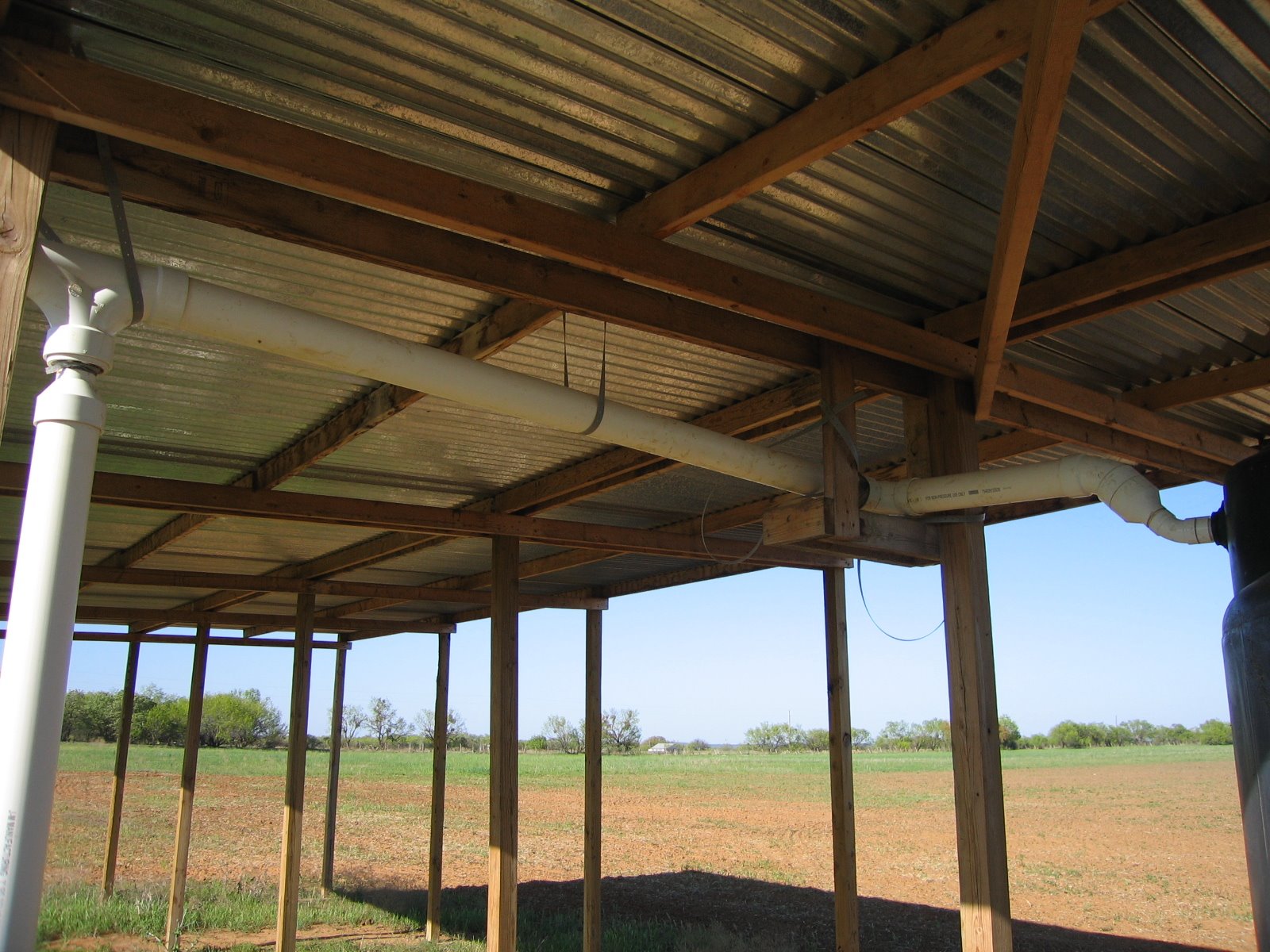
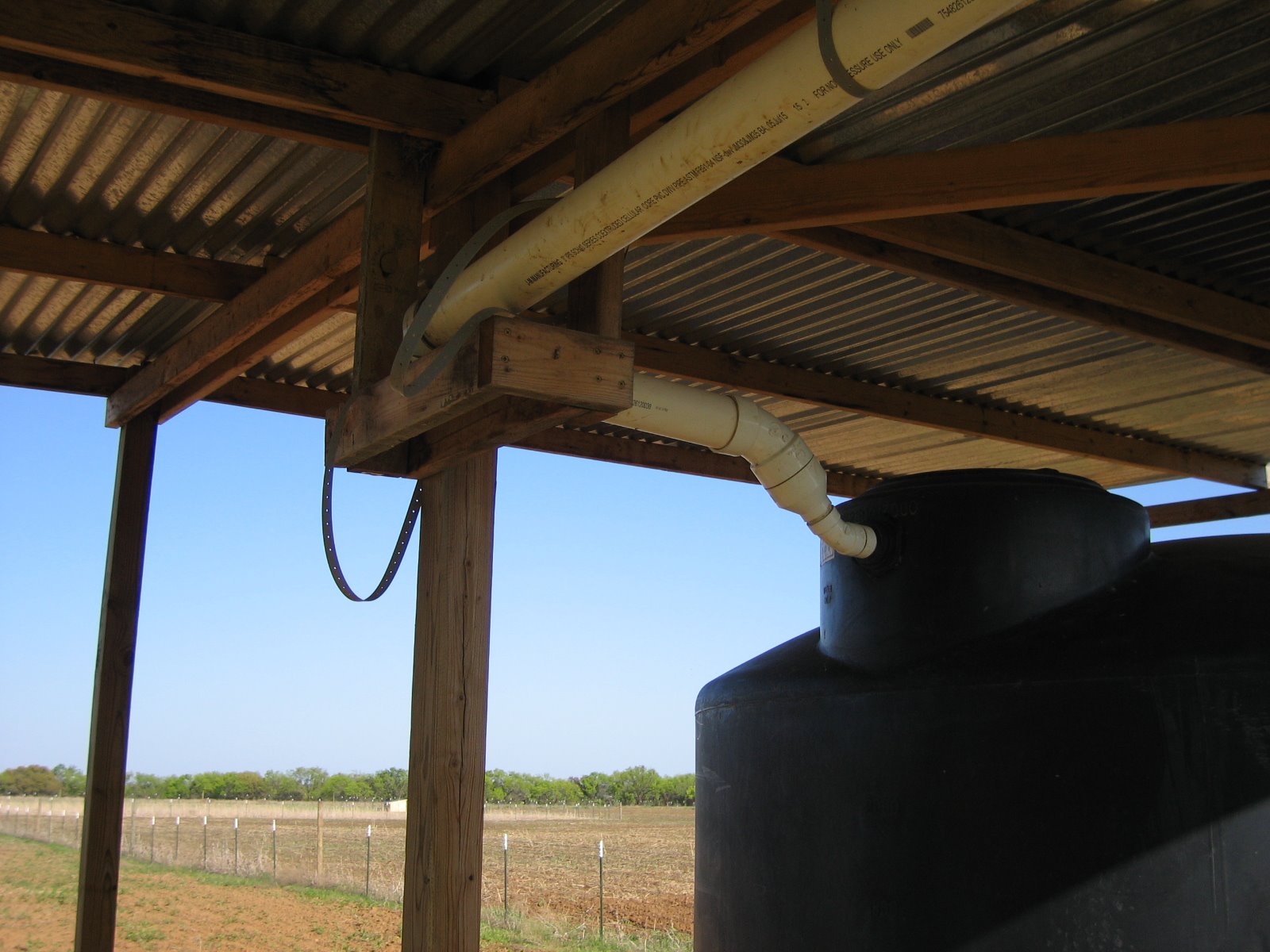
In concept, it’s actually very simple. You need a flat surface to “catch” the rain water, and then some way of diverting it into a storage unit. Since we had no buildings available with roof lines and weren’t at the point of being ready to build something with one yet, we decided to just put up a very simple shed roof that would feed an above-ground water container, which we chose to be a black (to keep the sun out so algae and the like won’t grow easily thus avoiding chemical treatments) 2500 gallon polypropylene tank (which apparently holds up well against the sun’s deteriorating rays).

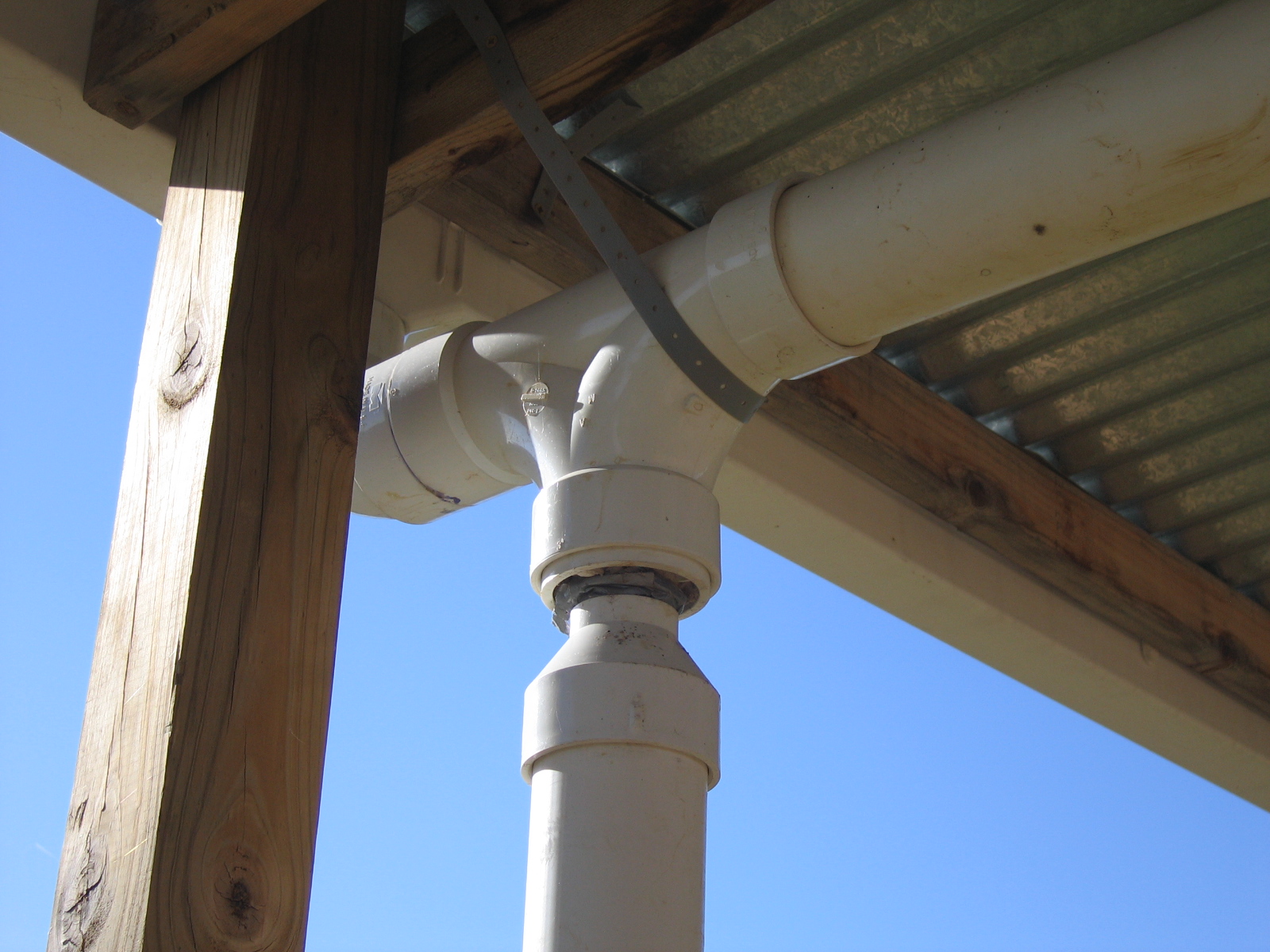
Here are some pictures of our shed roof catch-water system:


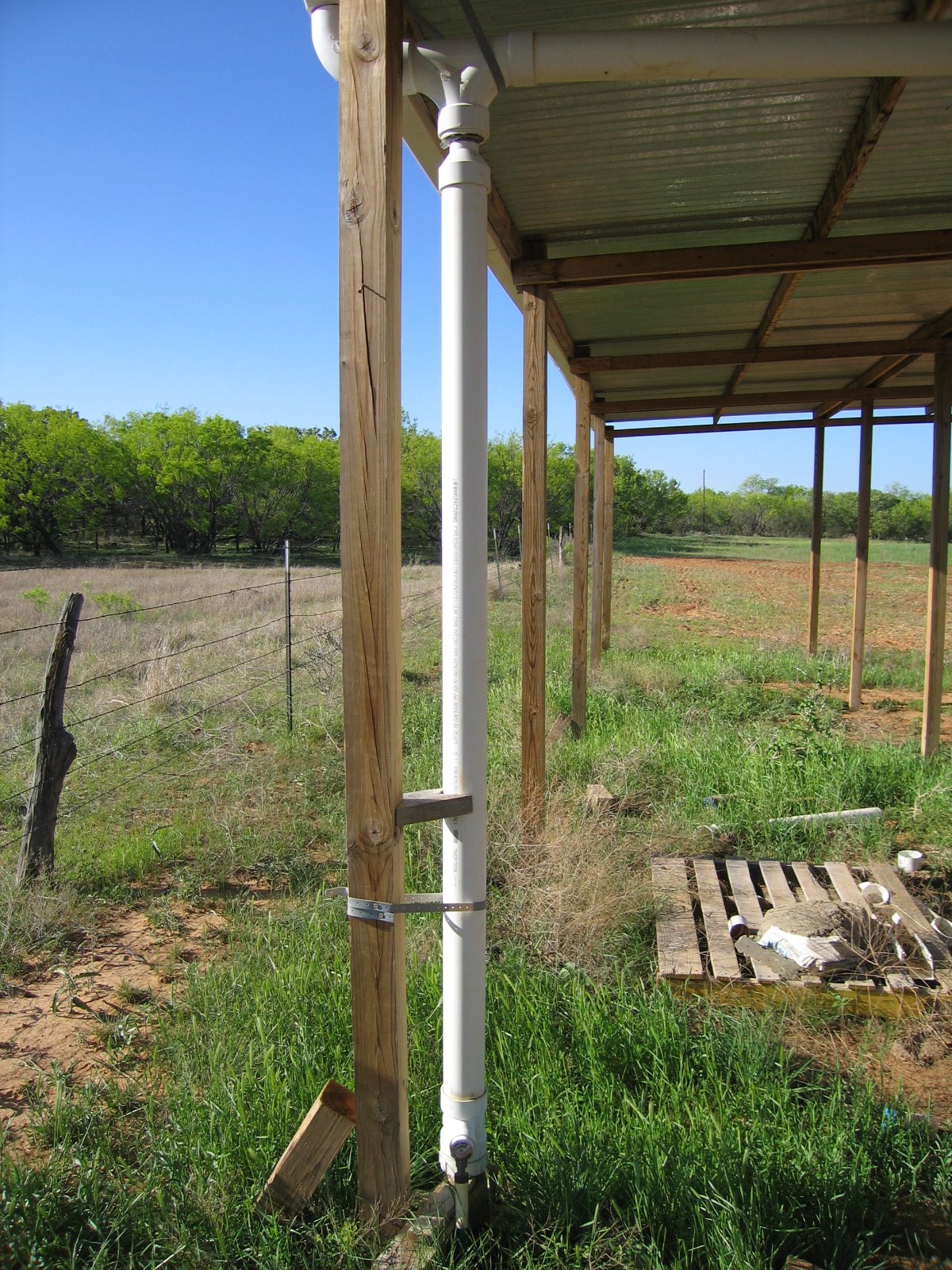
On these notice the down spout. When rain hasn’t fallen for any length of time, dirt and other potential contaminants collect on the roof. When it begins to rain, those contaminants are carried along with the first amounts of water coming off of the roof. And so, this down spout is called a “first-flush diverter”, and it is for catching that first amount of water. There is a racket ball in the tube which, as the tube fills with water, floats up and then wedges against the reducer at the top, thus stopping any more water from going into the tube. From then on, the water coming off of the roof bypasses the down spout heading for the black tank.


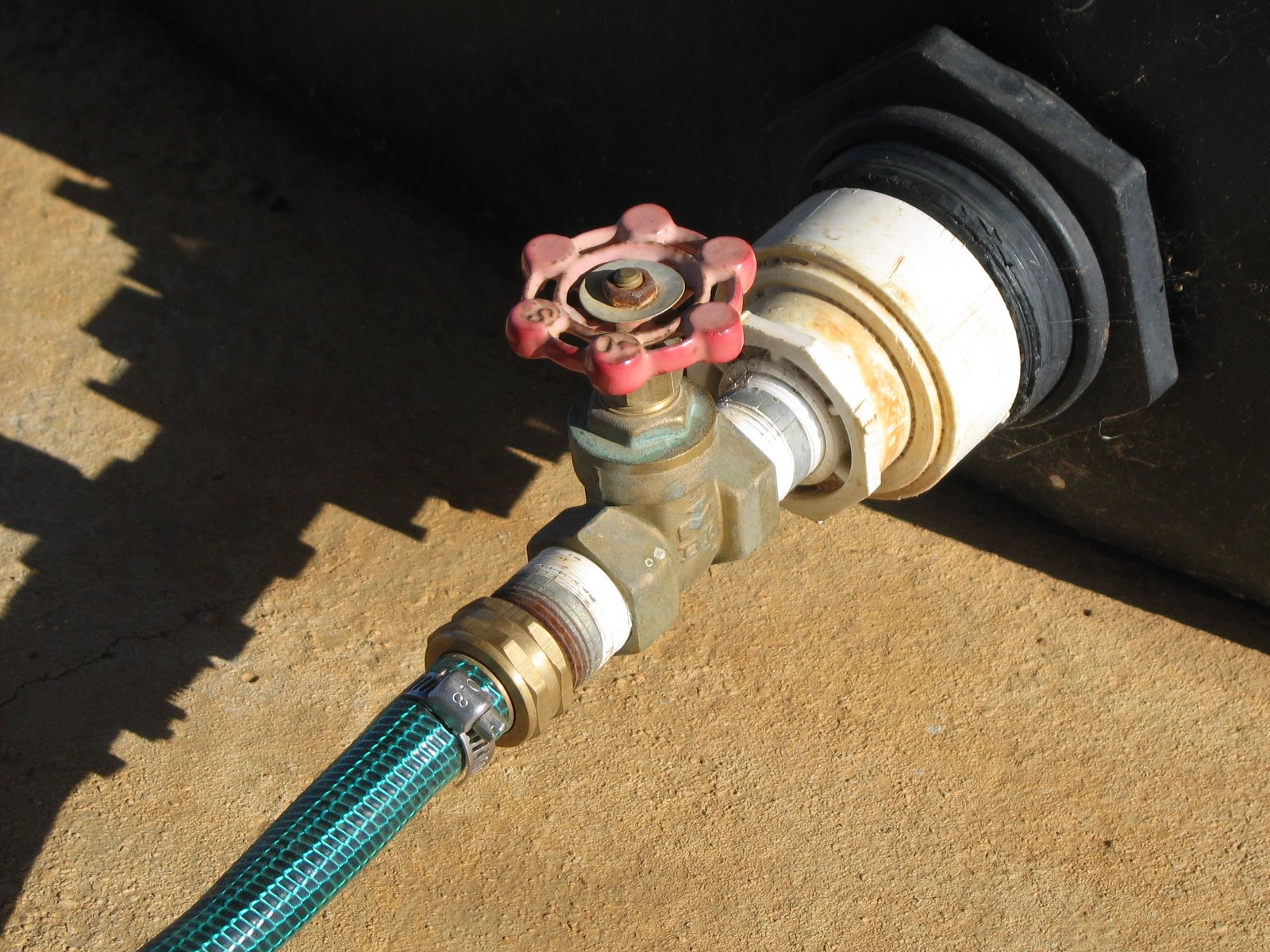
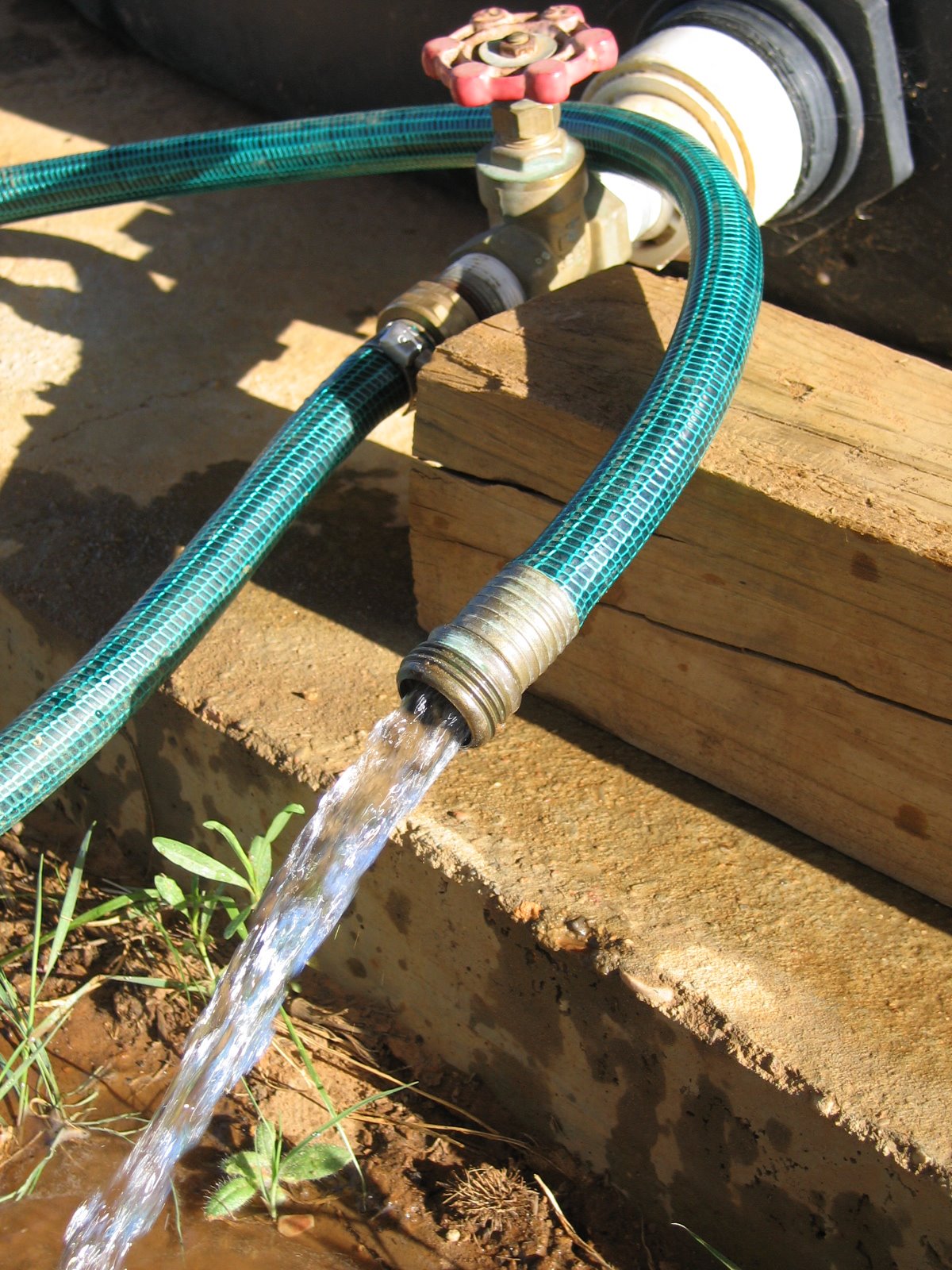
At first we had a nozzle on the output end of the tank that was a typical external water faucet, but it only allowed a small amount of flow coming through it; and so we installed a 3/4″ valve that essentially lets the water straight through to the garden hose.

And there is our water, graciously and mercifully granted according to God’s providence!

From there we add a 1/2 teaspoon of bleach (to kill bacteria; I read somewhere that it needs to be Clorox, but other Web sites don’t indicate that: use at your own risk) to our 6-gallon water containers (the typical dose is 1/2 teaspoon for 5 gallons) for the water that is to be used in our camper’s water system (for brushing our teeth, etc.), and from there we filter the water through our British Berkefeld Berkey water purifier for drinking. The bleach treatment is probably not needed, especially since we have a Berkey and everything could be filtered through it first. Still though, the Clorox method can be used to purify water if another filtration system is not available. Of course there are other ways to purify water, like boiling, or making your own activated charcoal filter, etc. that would be considered more long-term solutions (ones that don’t require perpetual maintenance).

The Lord has continued to be very gracious with our catch-water. Since it was installed and began to be filled, it has never been empty.

One thing we have learned, and is the type of thing we had hoped to learn moving out here, is a greater appreciation for God’s providence. In this case, every time we go to fill up containers out of our catch-water, we try to say a “Thank you” to the Lord for allowing us that provision of the water.

And sometimes, and we try to learn to do this more, we try to focus on the spiritual aspect of the type (or shadow) that many (if not all) of the temporal things around us point to. While we need water temporily to survive or we’ll die, the Lord Jesus says He gives water that gives everlasting life (John 4:13-14), and ONLY He can give it (John 14:6), and He does so according to His will (John 1:11-13; Eph 1:5,11), and if He doesn’t we will remain spiritually dead (Eph 2:5).

We are grateful to the Lord for His spiritual provisions of Himself and His giving of spiritual life to sinners (1 Tim 1:15), and we thank Him for His temporal provisions of the harvested rain water and the means of storage He has graciously allowed us.

— David
Storing Light

Coming from the city and being used to being able to flip on a light switch and have light appear, and having those things in our camper, we wanted to have electricity available; however, the plan for the land was to never be hooked up to the power grid. Also, at the time, we wanted to be more “agrarian” with things like utilities, and so solar and/or wind seemed promising. Michael found a fellow online who makes portable solar trailers, and so we decided to go that route and purchase one. Here is a picture of ours on the right:


The following might not make a lot of sense to some or most people reading it, and when we got the solar trailers this information didn’t mean much to us either, but I’ll explain the setup briefly: Each panel I believe is 110 watts; and there are 10 battery banks, each bank with 2 6 volt golf cart batteries hooked together in parallel, and each pair run in series to create a 12 volt system, which is the same voltage as our camper’s and is typical of many direct current systems. There is also a charge controller to only allow a maximum of 14 volts into the system via solar so as to not overcharge the system. Lastly, attached to the system are 2 3000 watt continuous inverters, which turn the 12 volt direct current into 110 volt alternating current (AC) (which is what comes out of a normal wall plug). And voila! Electricity!

The setup works pretty well when it’s sunny and we’re not running a freezer, but needs external charging when it’s not sunny or the freezer is being used. This we do with a generator and a battery charger, which can input 60 or more amps into the system when charging (which our battery bank can indeed handle).

We also tried our hand at adding a small wind generator, but it ended up not working very well as it really needed a pretty strong and constant wind to put out any real amount of current.

Now, having electricity is fine and dandy, but in the end this really isn’t a long-term solution, nor does it fit into how we see ourselves living in the future. First, parts will perpetually need to be replaced; and second, we desire the old paths, which includes getting away from things like electricity and doing things in a more truly agrarian way. Light could be daylight, or candle (made from animal fat or bees wax) light; freezing meat could be replaced by cold smoking, or drying; etc. These things we hope to implement and are what we are working toward as we progress here in building our homestead, with God’s help and provisions.

For further insight and discussion into off-grid living, including this area of electricity and food, please see Michael’s “Off-Grid Living Series” located at his Center for Agrarian Homesteading Education site.

— David
Texas Or Bust!

Well, after wrapping up at our corporate jobs and packing up all of our stuff with the help of our families back in California, the sojourn began. The date was Sept. 20, 2005. David was driving the moving van, and Susan was following in our Tercel with our pet fishes in the front seat and our pet rabbits in the back seat. We made it to the edge of the California border by the first day, into New Mexico by the second, and into Texas by the third. We decided to stop about 4 hours or so out from our land (as we had driven 8 or so hours already; plus we thought it would be better to arrive in the morning when Michael and the guys could help us unload), and then on into Brownwood where our storage facility was located. The guys helped us unload there, our unloading continued at a storage container on the land, and we spent the first night on the 23rd on the land.

The drive was an interesting experience for both of us in different ways. We had walkie-talkies and head sets with which we communicated the whole way, so that was nice.

From David: My driving of the moving van put me up in the air where the truckers are, and so I got “Keep on Truckin” signs from some as I or they drove by. I also learned some trucker etiquette: after passing a truck and if they flash their headlights, that means you are clear of their front end (because right side mirrors show objects farther than they actually are); however, I didn’t learn about that until later, and so I wondered why they were flashing their lights at me — I thought maybe I might be doing something wrong! 🙂 Also, I noticed as I drove how the big trucks (of which I was one on this trip) sort of have an ebb and flow about them as they are driving, allowing those on the on-ramps to merge nicely without having to slow down, and them maneuvering their trucks in and out of traffic like a ballet. It was quite an experience.

From Susan: It was a very surreal yet exciting feeling pulling out of the driveway that first morning. A real sense of one book, not chapter, being closed and another being opened. With everything we had been learning and the changes God was making in our worldview, I realized life as we knew it was not an option anymore. But there was a real peace that came along with that as well because I had learned as long as you are living your life in obedience to God, He will handle the rest, and He is in control, no matter what happens. With the headset walkie-talkies and pets (our fishes, Barry and Sushi and our rabbits, Buttercup and Derby) with me in our little Toyota, I didn’t feel alone at all. 😉 My mission was to just follow the big yellow moving truck, and I am thankful there wasn’t a decoy that distracted me where I would end up in North Dakota or something, although I did have to really focus on keeping up with Dave a few times. He got in a real groove moving in and out of the big trucks, and I would sometimes lose sight of him. He was up there at the same height with all the truckers, and I felt like this ant in a land of giants. It was quite intimidating at times, but I learned “the highway ballet” fairly quickly and discovered the truckers were very nice and looking out for us, for the most part. God protected us the entire time, and we didn’t have any car or health problems whatsoever, for which we were very thankful. When we passed the “You Are Now Entering Texas” sign I gulped but knew this was where God wanted us. By the way, I can now verify and have seen first hand that the stars at night are not only big, but they ARE bright deep in the heart of Texas. 🙂

And so, there was no looking back! We had arrived at our new home in Texas!

— David & Susan
Shelter

Now that we had the land, we started to consider the fact that we had no place in which to live once we got there. Dave began a series of trips to go and prepare the land for our permanent arrival.

He flew to Texas the first time to search for a good farm truck to have as transportation and to be able to haul anything we might need, including where we were planning on living (see below). (His convertible just didn’t seem very practical for this new lifestyle — we tried to make it work in our minds by envisioning the top down on his convertible and cows in the back seat with the warm summer breeze blowing through their horns, but then we realized the “cleanup” would just be too much. So he had decided to sell his car in California and leave it behind when we moved and that a farm truck towing a cattle trailer behind it might be a better idea.) After much searching by Dave and Michael, they couldn’t find the right truck. Dave’s time was almost up there (he needed to catch his flight back), and on the return drive of the last time they would be able to look, the Lord granted they run across a nice, sturdy Red Ford F250 diesel truck at the right price. And right there on the car lot another redneck was born – YeeeeeeHawwwww!! (That’s Michael to the left side of the truck.)

After much thought, we had also decided it would be better to concentrate on getting our homestead up and running; and a house then, should the Lord ever allow us to build one, would be lower priority. So we decided a camper would probably be our best option since we knew we may end up living in it for several years, and it would provide immediate shelter upon our arrival. So Dave took his second trip to Texas, and he became the best friend of most every trailer salesman in the greater Dallas/Fort Worth area looking at all kinds of travel and fifth wheel trailers. He finally narrowed it down to one within our budget that he knew I (Susan) would be able to call home. He did a great job (and almost three years later now it continues to function beautifully and be a wonderful and warm shelter). We were living in a little cottage in California before we moved, so this was very comfortable and spacious to us. It’s like a little apartment. What a huge blessing. Here are a few pictures – welcome to our home!!


Dave’s third and final preparatory trip was to try to drill a well on the land with a home driller we were able to get. After three weeks of working at it, the guys were still not able to get a working well; and so they decided to stop and look at other possible water sources instead (which we plan to discuss in a future blog post, Lord willing); and Dave headed back to California.

Dave said during the times he was gone (which were the longest we had been apart since we had been married) that he sort of felt like a bridegroom going to prepare a place for his bride, as the Lord Jesus mentioned in John 14:2-3.

Finally, we have learned that we are told in the Bible to be content with food and raiment (1 Tim 6:8), and even the Lord Jesus had no place to lay his head (Matt 8:20) as He was probably the epitome of a sojourner on this earth. And so, we just wanted to say that we are very thankful for the Lord’s provisions of the truck and shelter that He has allowed us.

— Susan

« Older posts Newer posts »