The Sifford Sojournal

Our journal of what we pray is our sojourn of life along the narrow way, even the old paths, submitting to the Bible as a light unto both.

Page 88 of 95

Air It Out

In trying to continue to get away from dependency on the world, we have looked into preserving food without canning or freezing. One of the methods for doing this with fruits and vegetables is drying. There are food dehydrators available for purchase, some electric, some solar; but it seemed to me this would probably be pretty easy to construct. And so I searched for plans on the Internet and settled on these solar food dehydrator plans (originally available from North Dakota State University), partially because the design was very specifically laid out (which I need), and also because it appeared to be the most compact for the process behind the drying and still large enough to be able to dry quite a bit of food.

Here are some pictures of ours as I built it:


I decided to use 1″ wood screws and 2″ coarse drywall screws for most of it, and 1 5/8″ deck screws for the legs. I found that a 1/8″ pilot hole worked best with the 1x2s.

On the top I didn’t use a miter joint on the ends; I simply used butted joints and alternated them for the vertical vs. the horizontal frames. Also, for strength and longevity, I decided to use .93 plexiglas instead of 4-6 mil clear plastic sheeting. I tried to find a 48″ x 48″ piece but couldn’t; and so I thought I would use two 24″ x 48″ pieces with a support in the middle, but the store I was at was out of them. I went to another store, and they didn’t have 24″ x 48″ pieces; and so, I had to buy 30″ x 60″ pieces and a scoring tool. However, that was good because the distance from edge to edge of the top was for me 49 7/8″ (which means the other sizes would have been too small); and so, I was able to cut each piece to fit very nicely. Before I did that though and because of the extra plexiglas I had, I was able to practice scoring and drilling the plexiglas so as to not crack it when setting the real pieces in place. This was good because my first attempts did not work well. After practice though, I was able to get the hang of scoring and drilling, which worked pretty well on the final product:

I learned a few things with plexiglas: the scoring tool would cut into my 4′ level when using it to guide my scoring, and so I switched to a straight piece of wood; I would score only a few times with the wood guide in place and then would do it free hand as I was able to apply much more pressure causing the scoring process to be finished quicker; and I found that quick speed and light pressure was the best way to drill a hole. Also, the drilled hole should be at least the full diameter of the screw so the screw doesn’t put pressure on the hole, which I believe can cause the plexiglas to crack.

After the dryer was completed, I let it sit in the sun with the top off for a couple of days before putting food on the trays to allow the paint to bake in so the fumes would be hopefully removed.

Here is some food drying in it:

I added casters (swivel wheels) on the bottom of the legs to make it easier to move, and also added some handles which I attached to the sides where the inside food frame supports where located so that the handles would be more firmly secured and the handles’ screws wouldn’t be poking through the plywood siding:

And here are the banana and apple results. Quite tasty!

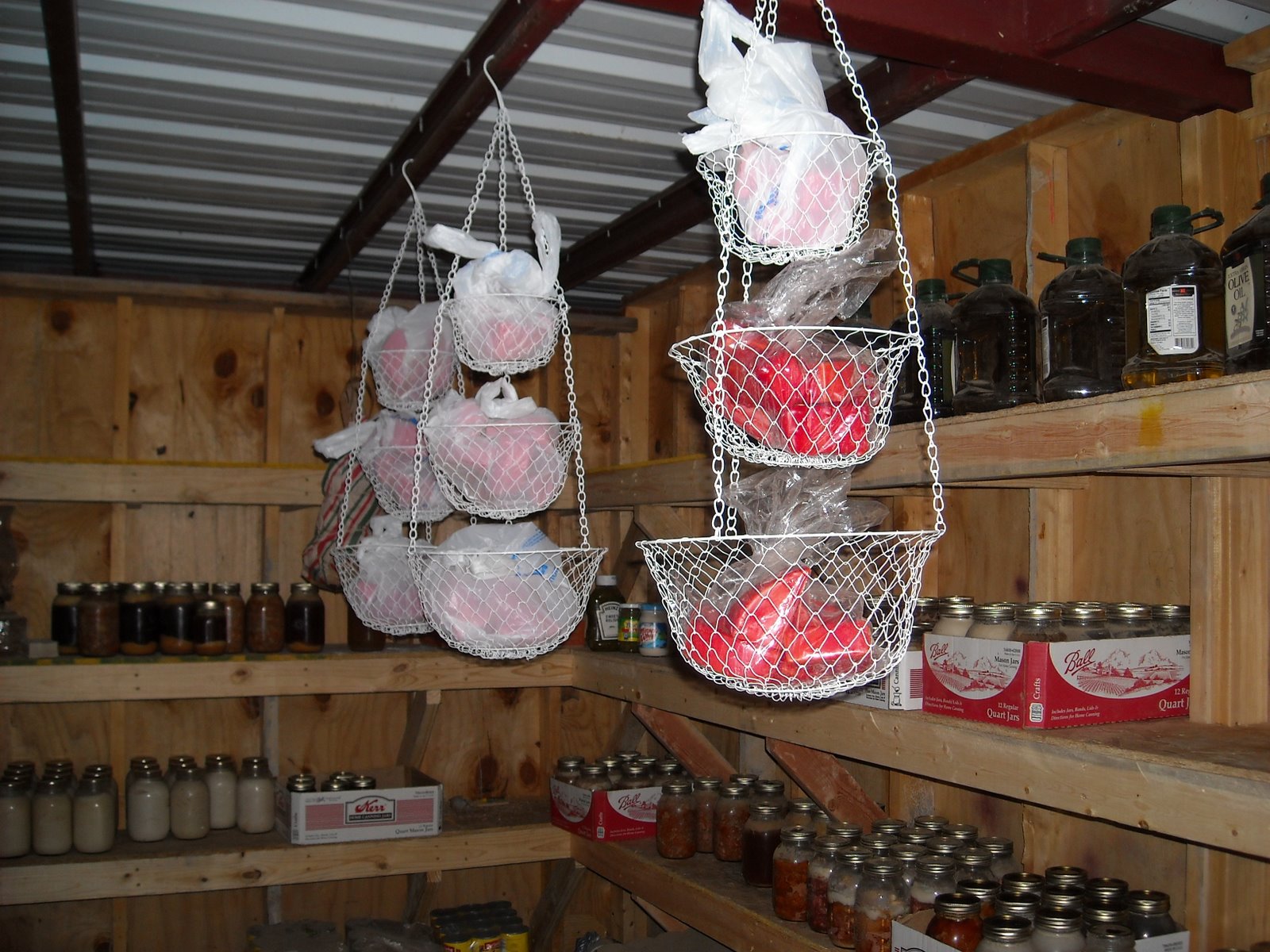
At this point they can be bagged and stored in the root cellar, and should last for some time.

We thank the Lord for His provisions in being able to make this food dryer, and for His provisions in creation to allow us to preserve in this way the food He grants us.

— David
Providence’s Perpetuation Provisions: New Kids “Donny” and “Marie”

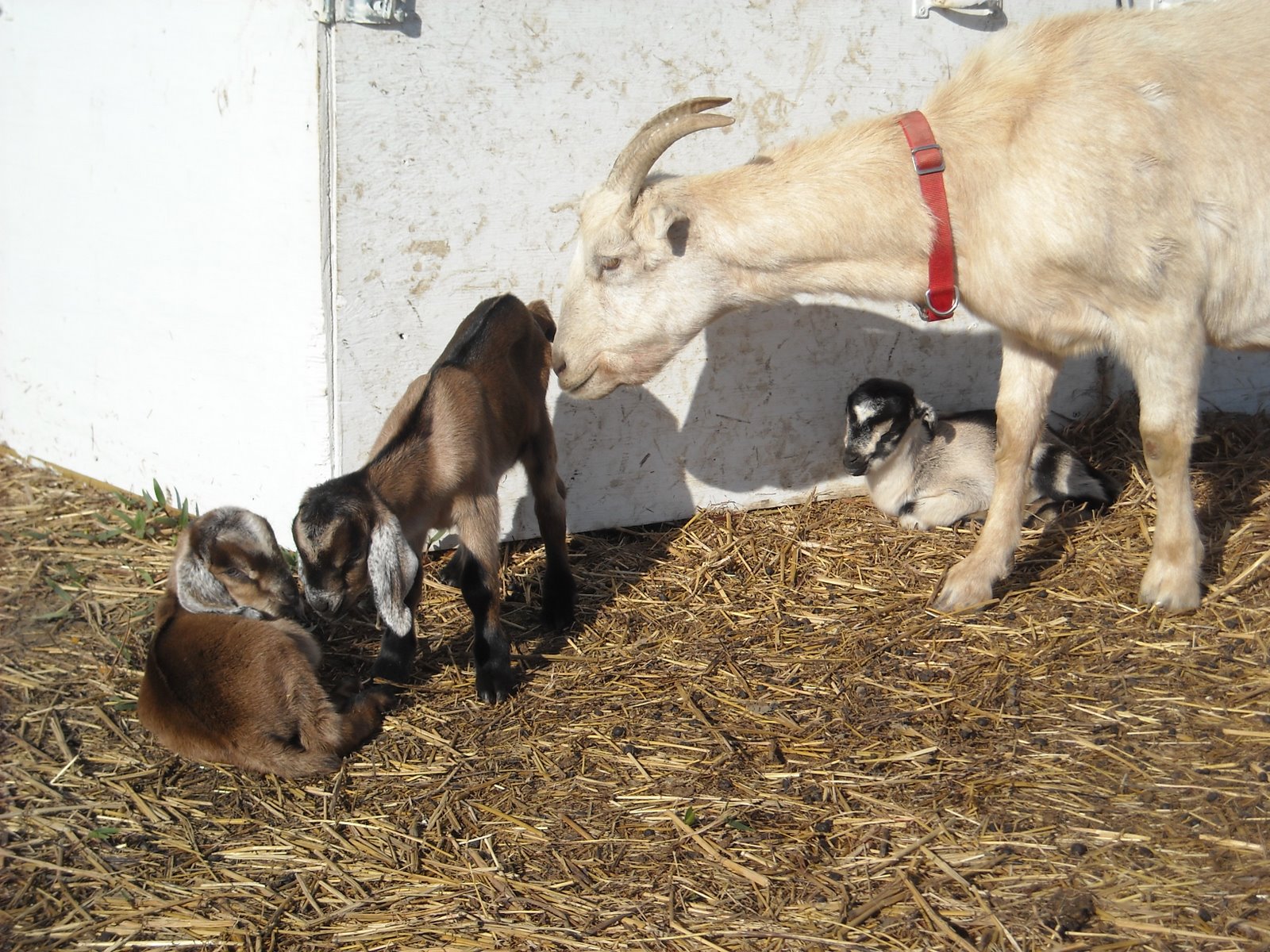
The Lord graciously granted Betsy, one of our nanny goats, to give birth to twins. They are pure Nubians. One is a male, the other a female; and so, please meet Donny and Marie. Here is a picture (Donny’s on the right, Marie’s on the left):

And here is a video:


They were born just before sunrise on a near freezing morning. Due to some confusion in our understanding of when new-born goats need to be up, around and suckling, we let them be for several hours. Well, for some reason Betsy didn’t clean them off, and when we checked on them again, they were still laying down, one struggling to get up stuck in the birth wetness. Needless to say, we got them up and cleaned out their little shed and put fresh hay in it. We went and looked up some new-born information in our goat books, and they indicated they needed to be up and suckling within 30 minutes. Sigh. They looked very weak, weren’t really up and about, and weren’t eating; and so, we decided to milk Betsy for her colostrum and bottle feed them. We did this a few times throughout the afternoon. Before our community meeting that night, we closed them into the shed because it was going to be a cold night again. After the meeting we checked on them, and they appeared to be walking around a bit and even latching on to Betsy’s teats a little, and so we decided to not interfere for the night. And we prayed.

Well, God was merciful, and in the morning they were up and standing when we let them out. We watched them throughout the day and saw that they indeed were suckling. Since then they’ve only gotten stronger and are now getting around quite well.

Here is another video:


We are thankful once again for the Lord’s provisions, and his mercies in allowing the new little ones to live and begin to grow healthy.

— David
David’s Digest: The War of the Weeds

From the moment we got out here, there have been some things that have been ever present, and all around us; and for those of you who have dealt with the soil at all, you understand. Those things are weeds, and they are everywhere.

Here are some things I’ve discovered about them:

They grow without planting. They are just there.

They grow back when you cut them down, especially if you don’t pull out by the root.

They grow in whatever soil, around anything in their way, and through it if possible.

They can often be attractive. Notice here the pretty flowers:


Or the field of green:

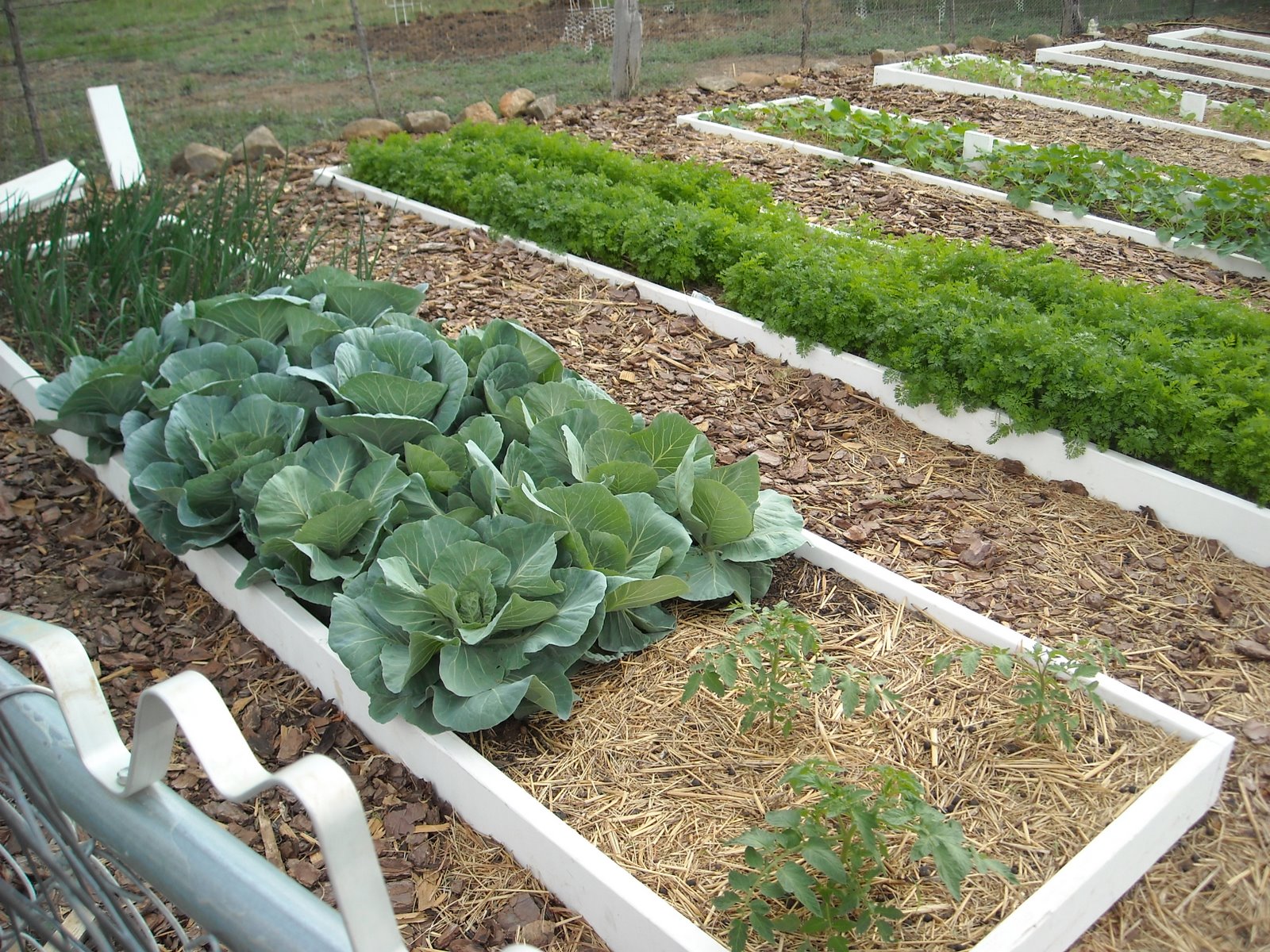
They grow even when it doesn’t rain. Here is a picture of one of our garden beds after we were unable to water it. Notice what is green and living:

They grow even where they shouldn’t be able to grow, as this little one was in our root cellar:

It seems that there is no way to get rid of them entirely, and I believe this to be generally true based on the curse (Gen 3:17-19). And it seems like all there is to do is try to control them, and in my opinion, this means WAR. They must be cut, hacked, pulled, chopped, and sometimes even burned in order to get the better of them. Everything must be done to keep them down, and this is a constant struggle, one that I believe won’t end until the Lord returns.

If they are not removed, they reproduce themselves exponentially. One cocklebur plant will reproduce itself many times, as this picture shows:

Other have even more seeds:

We have also discovered that in the planting of “good” seeds (oats, for example), and if they are able to germinate and grow, these new plants will suppress the weeds, keeping them more at bay, and choking them out.

The point is that they need to be combated constantly in order to maintain a footing against them. Otherwise, they take over.

Now here is the important part in all of this. It is our prayer the Lord teach us His ways and His spiritual lessons from the temporal world around us. In watching and pondering weeds, by God’s graces it seemed to me that there is a similarity between them and something in the spiritual realm. And so given the above observations about weeds and the actions necessary against them, we pray, with the granting of the Father, the power in the blood of Christ, and with the indwelling help of the Holy Spirit, that God gives us the desire and strength to wage the battle daily against the weeds of sin in the carnal-man fields of our souls.

Rom 8:13 – “For if ye live after the flesh, ye shall die: but if ye through the Spirit do mortify the deeds of the body, ye shall live.

Col 3:5-6 – “5 Mortify therefore your members which are upon the earth; fornication, uncleanness, inordinate affection, evil concupiscence, and covetousness, which is idolatry: 6 For which things’ sake the wrath of God cometh on the children of disobedience:”

For more on mortification, please read this.

With God’s help, we need to give constant attention to our souls, and not only work on mortifying our flesh, but filling ourselves with God’s Word, so that He, the Lord Jesus Christ, the Good Seed, is the predominant Life that is growing within us.

— David

Homestead Development

Slowly we have been building a fenced in area that is essentially a controlled environment, set apart for most of our homestead endeavors and free from roaming cattle, which if given the opportunity get into everything, and will eat other animals’ feed, fruit trees and other planted vegetation. At some point we hope to allow the cattle to free range the entire land, which would require each homestead to fence off areas they do not want to allow the cattle access. For us, the final section of fencing that we needed to close off was behind the barn, which was originally a complete fence; but I opened it up so we could drive through the woods to one of the public roads so that we didn’t have to go through several other gates to get to that road. Also, we hope to put a house just behind the fence; and so, I thought we would add a couple of 12 foot gates in that opening, which together would span the road nicely and would allow for large equipment and the like to get through.

Once again, we hired our neighbor Kelly to work on this. Here are some pictures of him working on the project, and finally the gates set in place:


Once again, we thank Kelly for his work; and we are grateful to the Lord for allowing us to be able to complete the enclosing of our main homestead area.

— David

Animal Rotation Pens Expansions

Part of our plan for our animals was to rotate them through a set of pens, which would provide various types of fertilization in an effort to revitalize, improve and maintain the efficiency of the soil. Also, with the need to separate out our male goat from the female goats to control the breeding process, I decided it was time to add a couple more pens to our current set of two pens. Our neighbor Kelly was looking for some work, so we hired him to build these for us.

Before starting on the new pens however, some work needed to be done on the previous pens to bolster the support structure of the wood posts. On a few of them I had hoped to get away with just a single post without supports. Even though I didn’t stretch the fence that tightly, it still had been putting enough pressure on the posts to begin to pull out of the ground a little. And so Kelly added some “kickers” (the diagonal posts) and “dead men” support (the small posts to which the lower part of the diagonals are attached) to help with that problem. This also would set a better design precedent for the new pens. Further, in the way I designed the first two pens, I had the entry gates for each pen (which were 12 foot gates in order to allow for the driving through of the tractor and disk plows) next to each other so they would share a common post to which the opening side of the gate would latch. This was in order to try to use fewer posts. Although not perfect, this has seemed to work fairly well in being able to move animals from one pen to the other:

However, in adding the next two pens, we could use this same design between them; but if we were going to be able to move animals from pen 2 to pen 3, it would need to be done through gates that would be nearly 200 feet apart, which would probably require a pathway between those two pens. And so instead of that, Kelly added a gate to the side of pen 2 that would allow for free movement between it and pen 3:

Then he set to work on replicating pens 1 and 2 as pens 3 and 4. We plan on adding a 5th pen at some point, so he implemented the same pass-through on pen 4 that he added to pen 2:

We thank Kelly for his work, and once again for the Lord for His resources and provisions. We pray that God always guide and direct us in our decisions in how to build our homestead; and that, despite ourselves and any lack of understanding or foresight, He lead us to do the right things and to those that will work well in the future, for His glory.

— David

A Tail of Two Puppies


When we attended the Homestead Heritage Craft Fair this last November, I had the opportunity to observe their sheepdog demonstration. Needless to say, I was impressed with their ability to round up animals. With our attempts at rounding up animals either gruelingly on foot or industrially with trucks, I thought that having sheepdog capabilities around the land would be of great benefit to all involved for all of the various animals we have to sometimes corral and/or separate. The Homestead Heritage folks had decided on Border Collies for their herding breed, and so I figured I would follow suit at some point.

Well, that some point came quicker than I had expected. Recently, an ad was placed in the local classifieds paper for registered border collie puppies. Even though they were pricey as registered dogs, I called, in case the owner had or could recommend non-registered ones which would cost less. When I talked with the owner and explained what I was looking for, it so happened she was moving and was willing to sell one or both of the remaining registered pups from the latest litter for 40% off. We thought that was just too good to pass up. At first I thought we’d only get one, but then reconsidered, given the deal she was offering, that the two dogs would have each other, and to allow us to potentially breed them; and so, we decided to get both the male and female she had left.

And here they are. We decided to give them Scottish names because Border Collies originate from the border area of England and Scotland, and we named them different sounding names to help them differentiate between themselves when being commanded. Please meet Brodey (pictured to the right above) and Nessa (pictured to the left above). They’re quite playful and friendly, and we look forward to being able to train them to be functional animal members of the community:


Here is a video of them just after arriving here on the land:


The Lord is gracious in granting us these animals, especially in the way He did; and we pray for guidance in training them.

— David


Gary the Gander Gets Gigi the Goose


When the offer from Mrs. Judy came for Gary to have a potential mate, as much as it is fun to have him hang around me, I figured it would be great if he could have his own goose; and so, we accepted her offer of bringing one down during this last Fall’s Ranchfest.

At first, we didn’t know what to name her. But I kept calling her “Girlie Goose”, because, well, she sort of is. That led to us thinking about the first initials of that name; and so, we decided to call her Gigi, which also sounds nice with Gary’s name :).

Here is a video of their introduction and other times together. At one point on intro day, they went off into the woods together; and so we had to chaperone them back. The video ends with our nightly walk back to the barn where they spend the night:

This video has Gary bringing me back from work so he can show off for and try to impress his “lady”:

While Gary still follows me around if I am in the area; all of the rest of time, he sits with Gigi, mostly next to the goat pens. I am hoping he makes the switch to her at some point to make her his mate. Mrs. Judy said perhaps this might happen during her “cycle”, perhaps in Spring.

There have been signs of her wanting to be around him as well, shown in a couple of ways. One has been what seems like her sometimes squawking when Gary is not visible to her. Another has been that she is often hesitant to come into the barn at night unless she knows Gary is already in there. Gary will squawk at someone making a coughing noise; and sometimes when she is undecided about whether to enter the barn or not, I will fake-cough enough to get him to squawk several times; and she will turn from where she is going and then come into the barn.

We’re thankful to Mrs. Judy for giving us Gigi, and to the Lord for granting Gary hopefully a mate (even though I’ll miss his company 🙂 ).

— David

« Older posts Newer posts »