Throughout the summer, even with us entering into a drought situation again, the Lord has granted that we be able to keep the garden going, sometimes by watering from the cistern, and now watering by bucket bailing and hauling pond water in a cattle trough. While the pond water process takes some effort, God has granted, by His mercies, that it start to pay off.
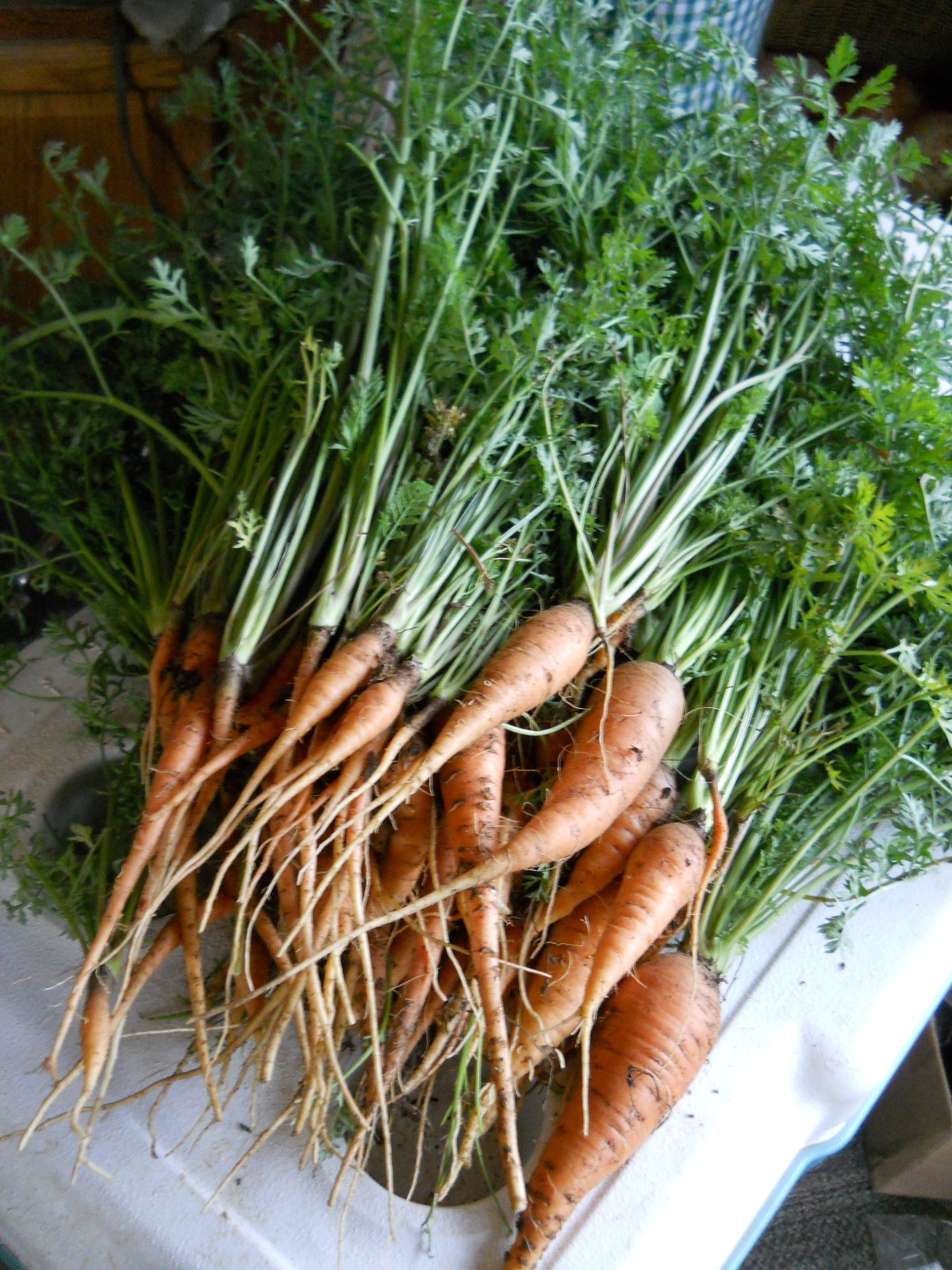
Here is our carrot haul from this year from earlier in the summer. For some reason, the carrots just didn’t work out too well this year. Not sure what the difference was, but we are thankful to have received these:
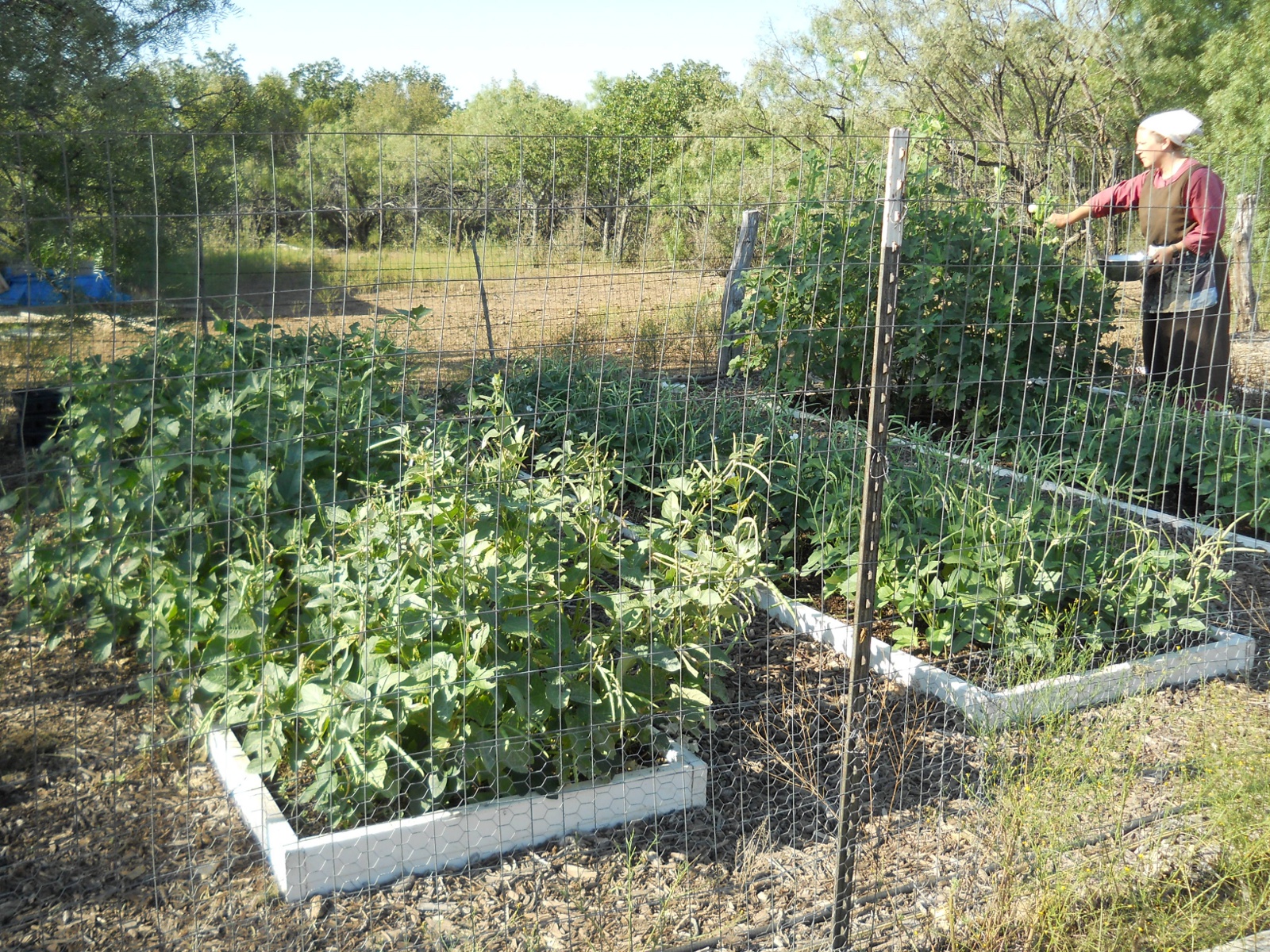
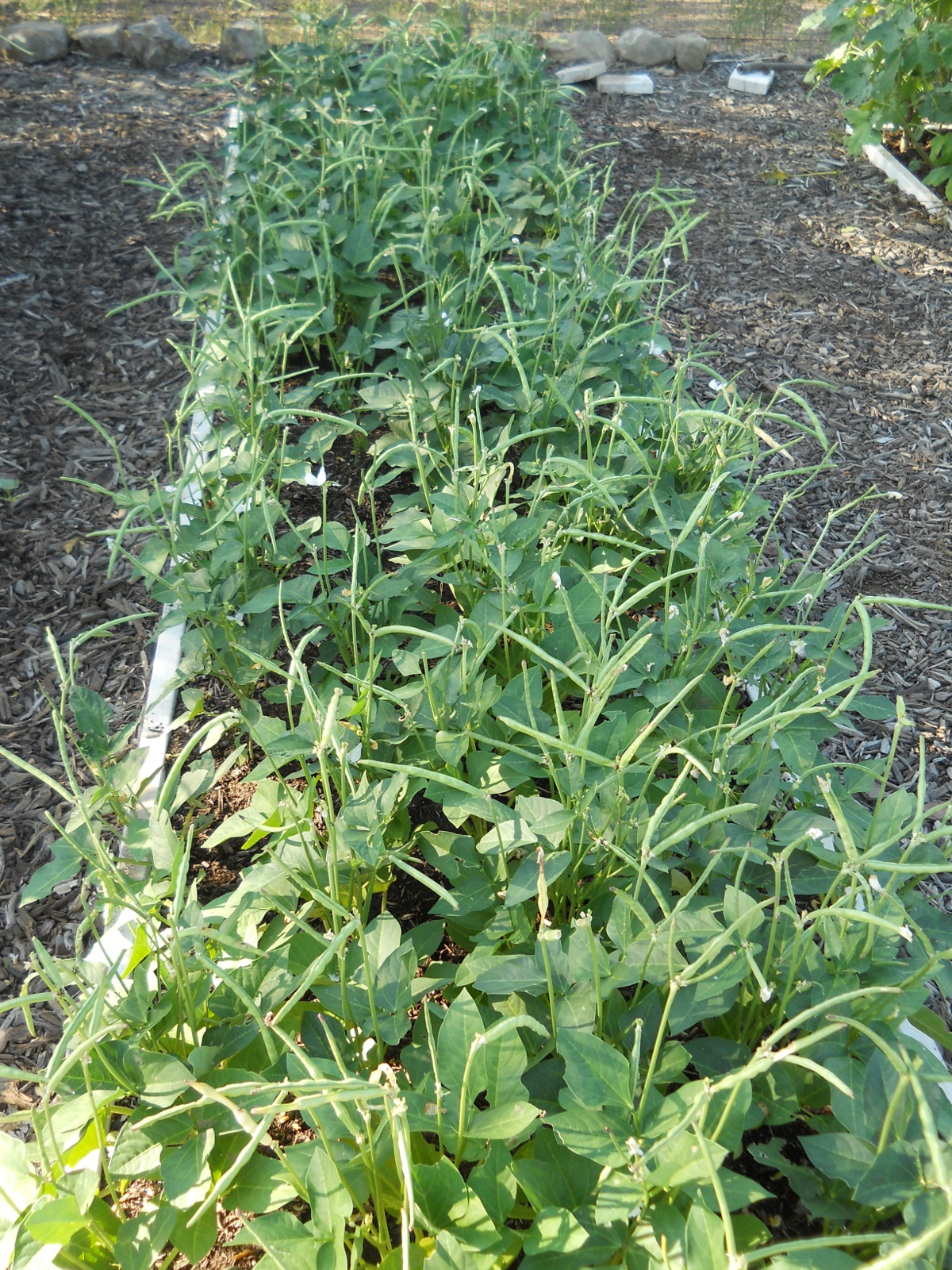
And here is where things are now approaching the end of summer. These are the black-eyed peas:
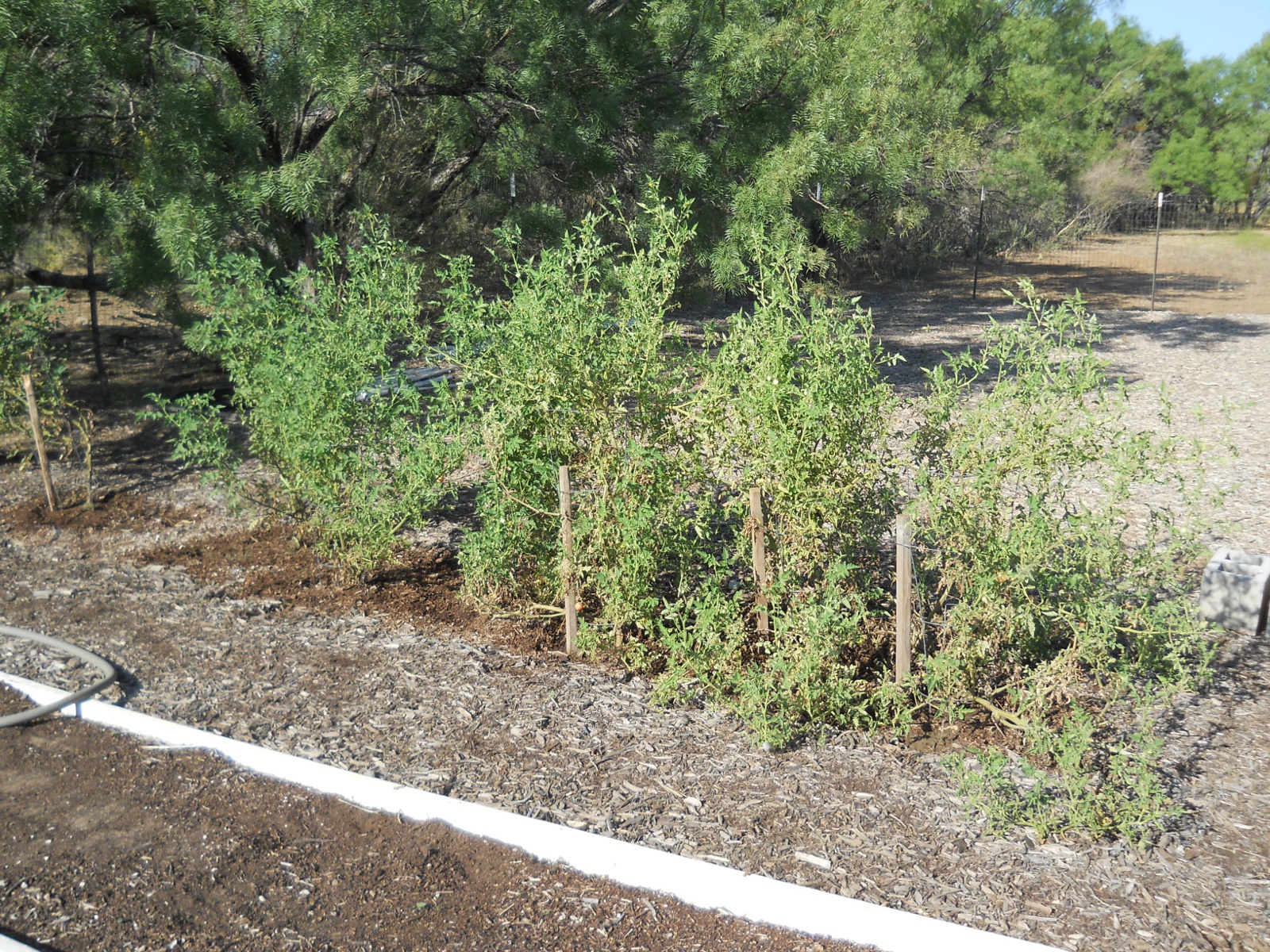
And here are the tomato plants. We’ve had a decent amount of tomatoes come from them throughout the summer, although they ended up being cherry tomato size…it could be due to the lack of rain, but I suppose I might have accidentally bought cherry tomato plants. 🙂 However, they’ve just started to blossom and start to show fruit again, so we are looking forward to those, if the Lord wills:
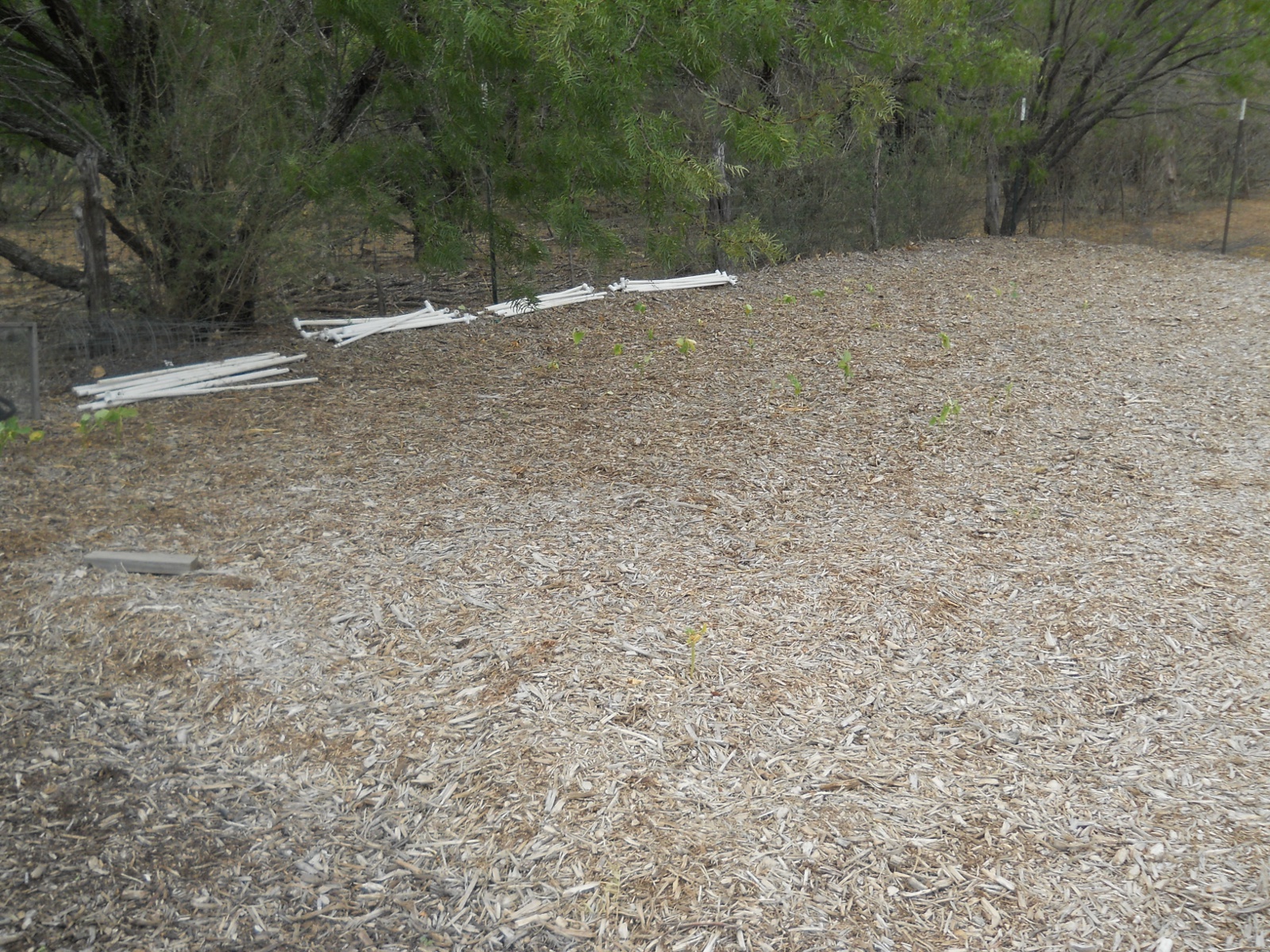
Finally, here is the mulch gardening bed I planted in black-eyed peas and I mentioned in our last garden update. I tried watering them for a while, but just couldn’t continue to spend the time or water resource on them. There are a few there, but I don’t believe we’re going to see any beans from them:
We are very thankful to the Lord for granting the provisions for the garden and provisions from the garden this year, and we pray for those continued through the fall, according to His will.
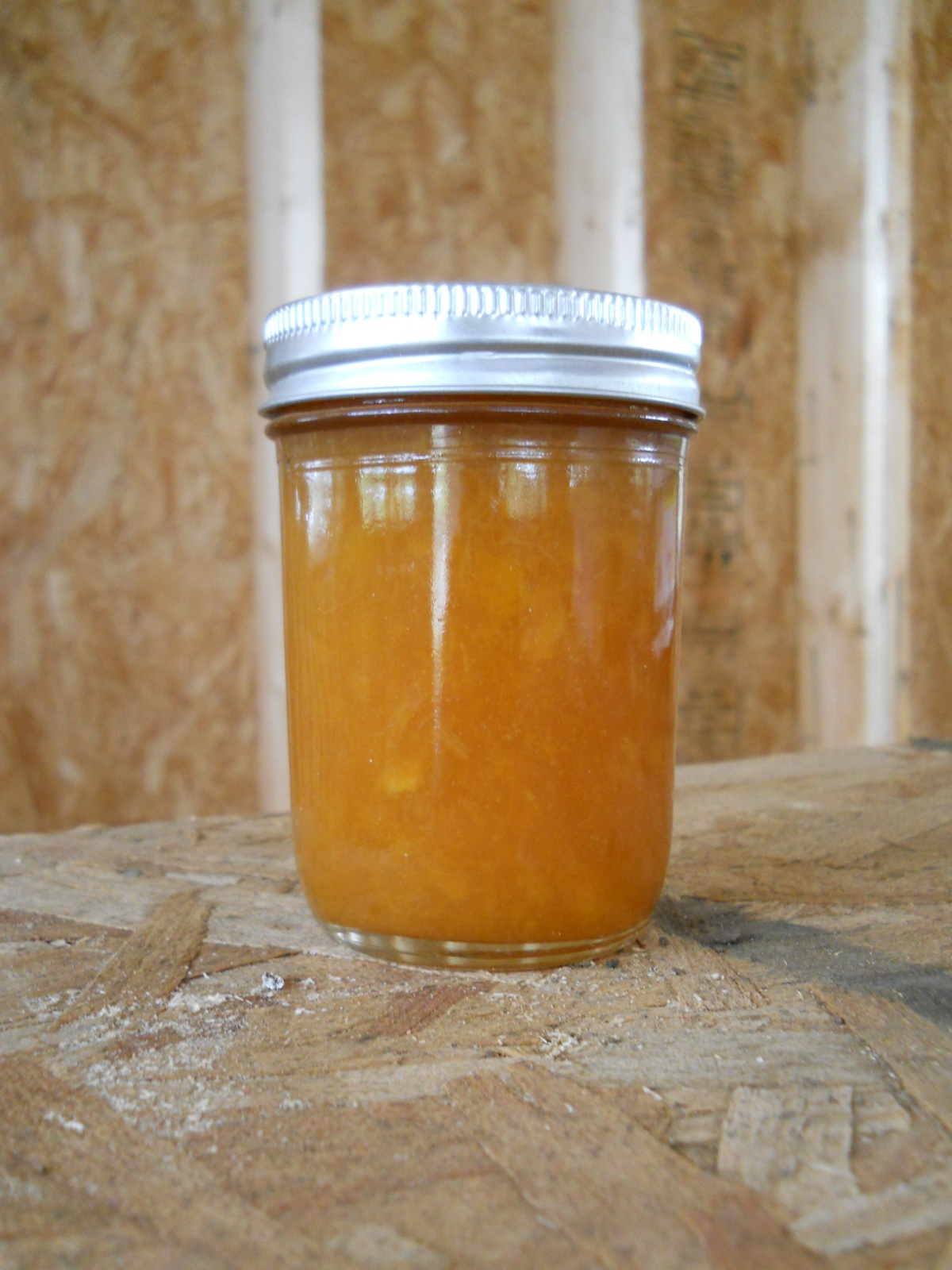
And here is some peach jam Sue made, ending up with about 12 1/2-pints worth:
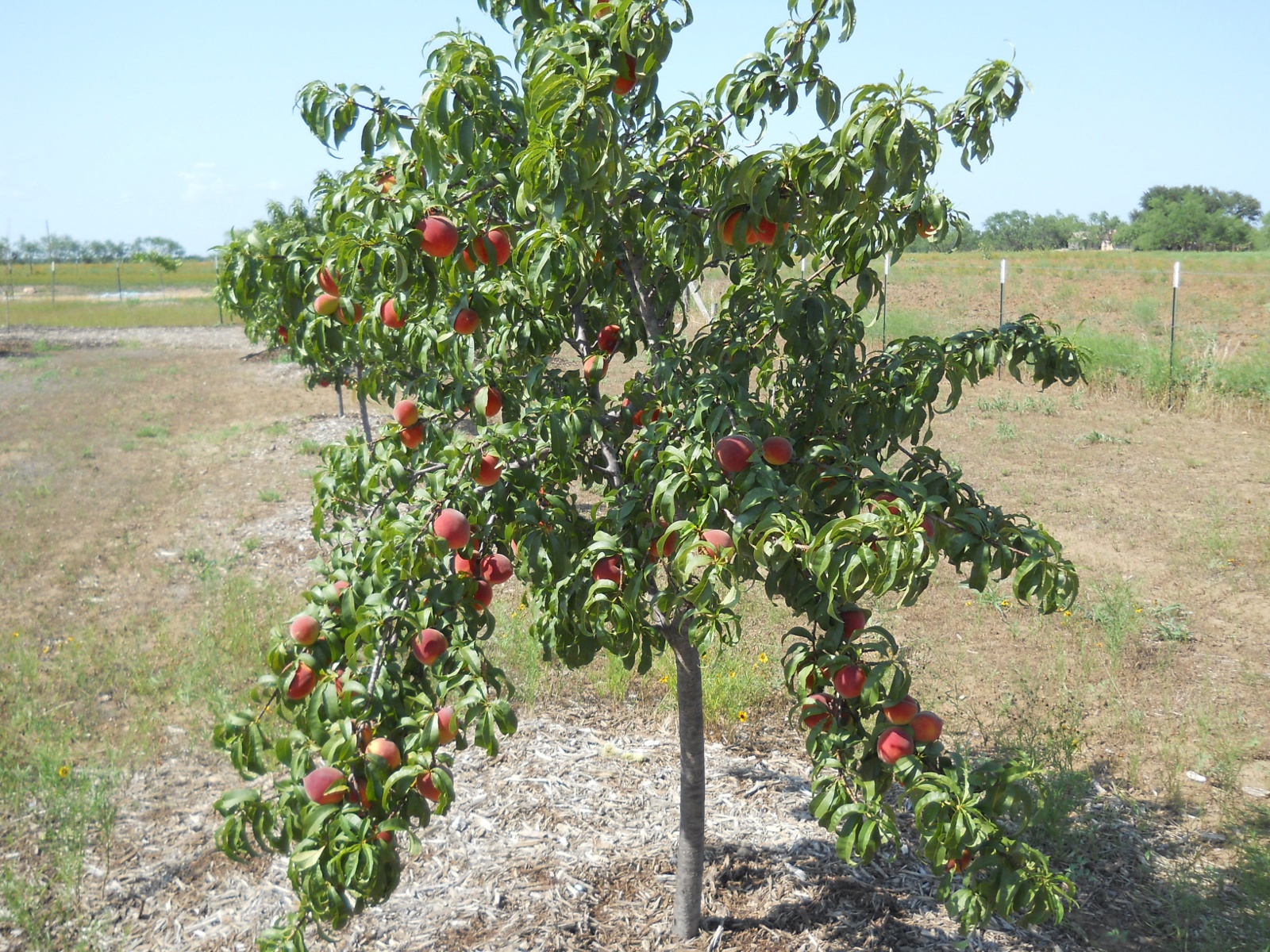
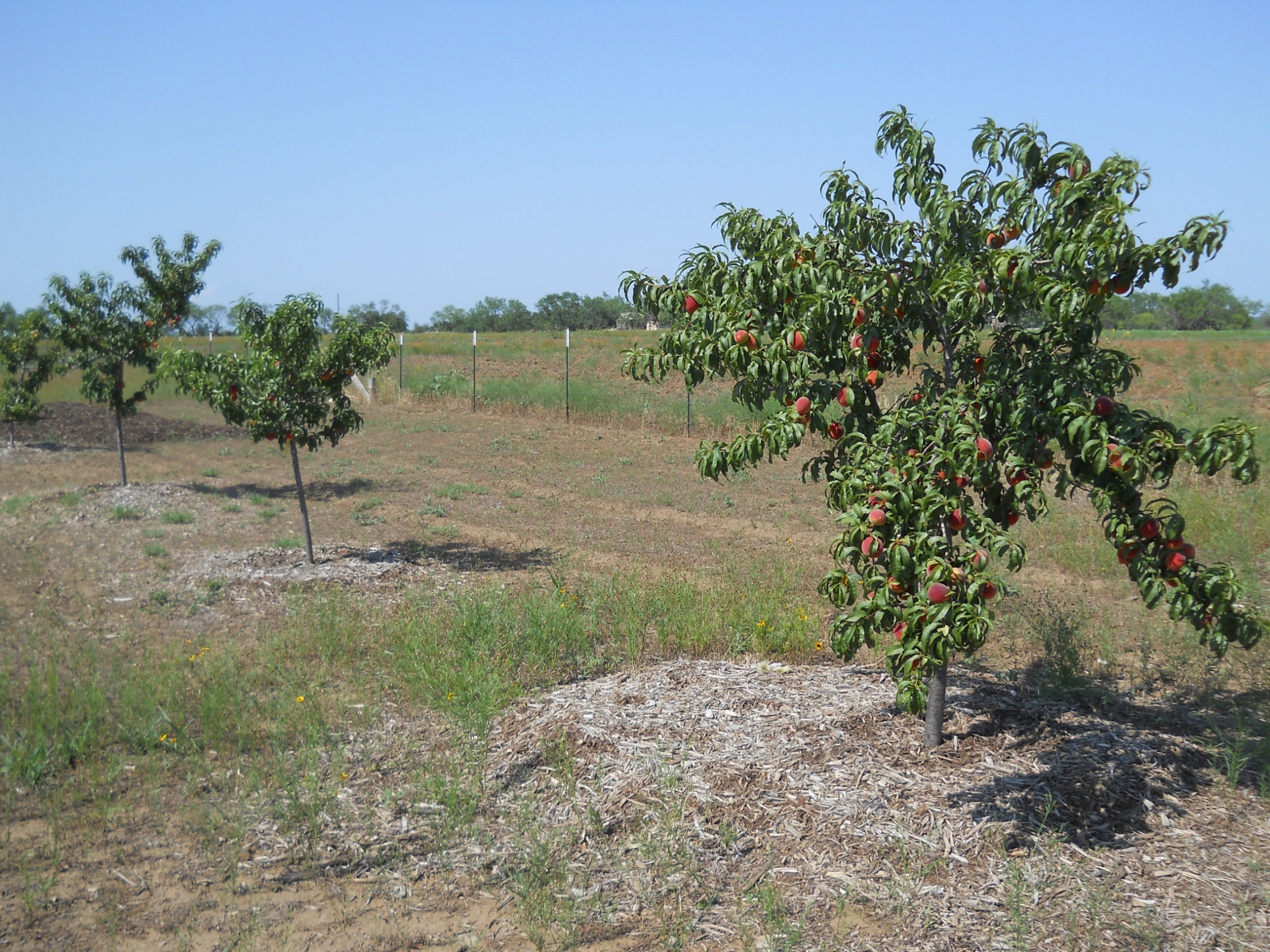
Some time later, the nectarines started coming in. The first picture above and this one are the nectarines:
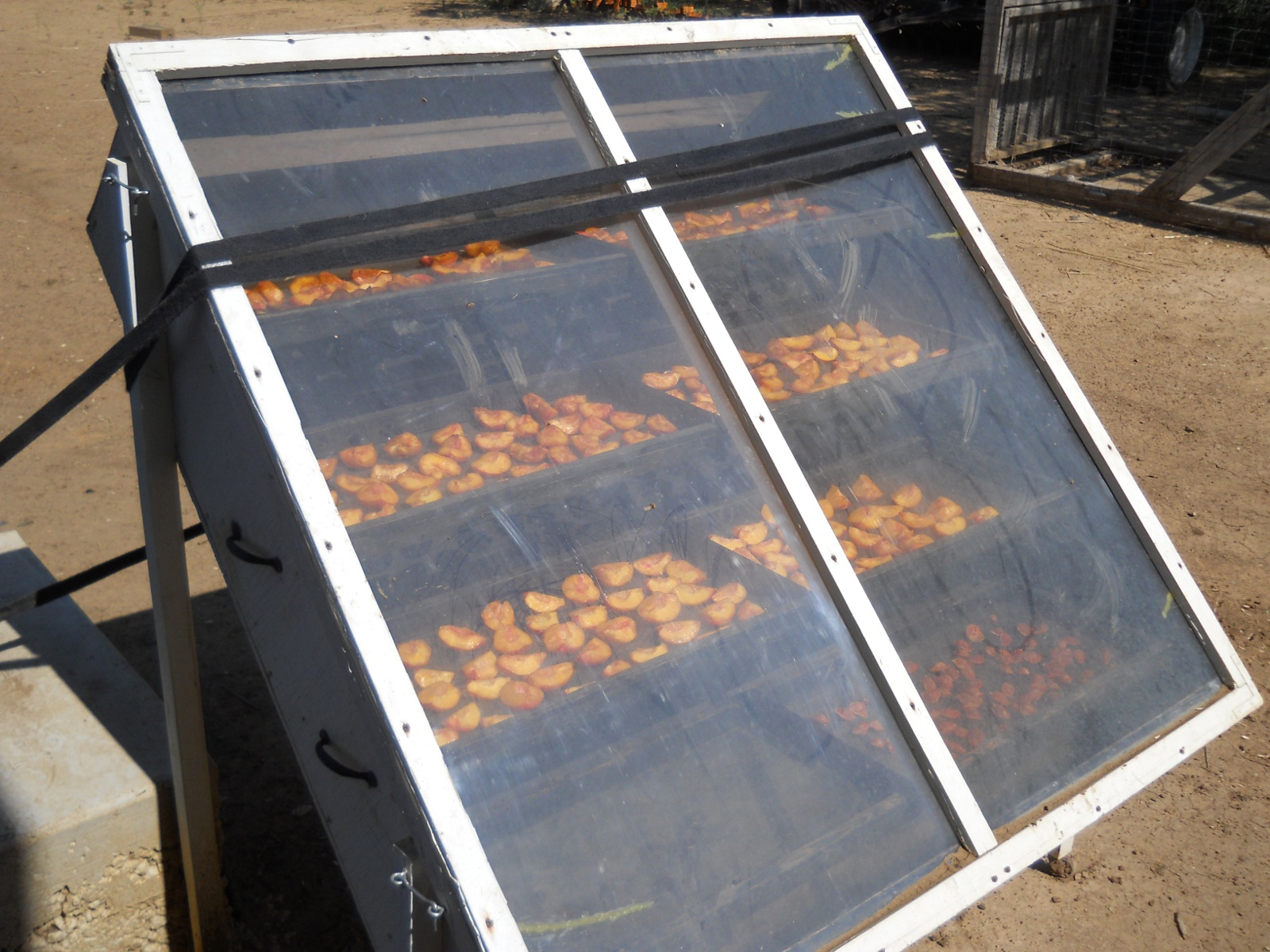
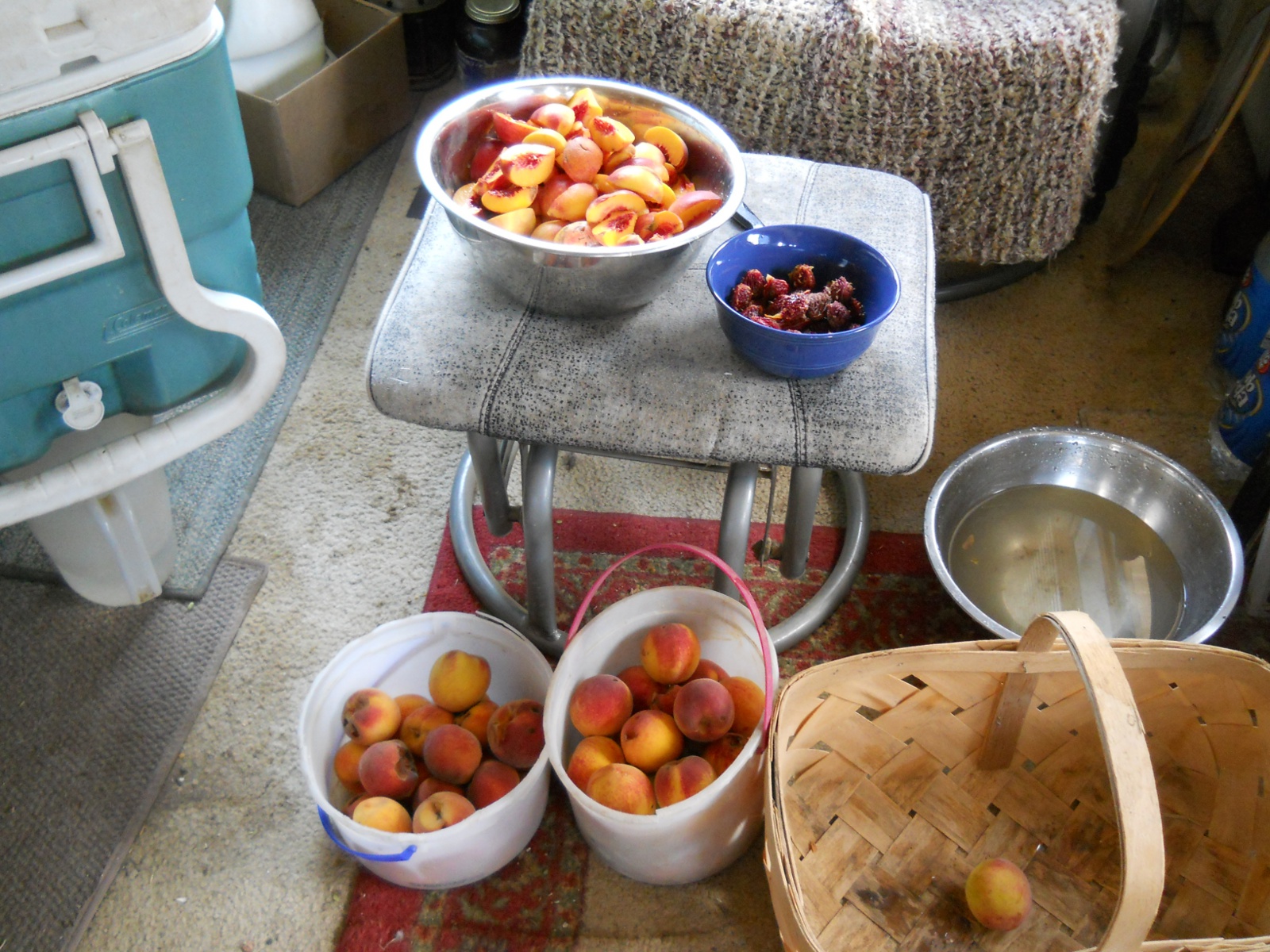
And here are some of them cut up (along with some plums in the bucket), ready for the dehydrator:
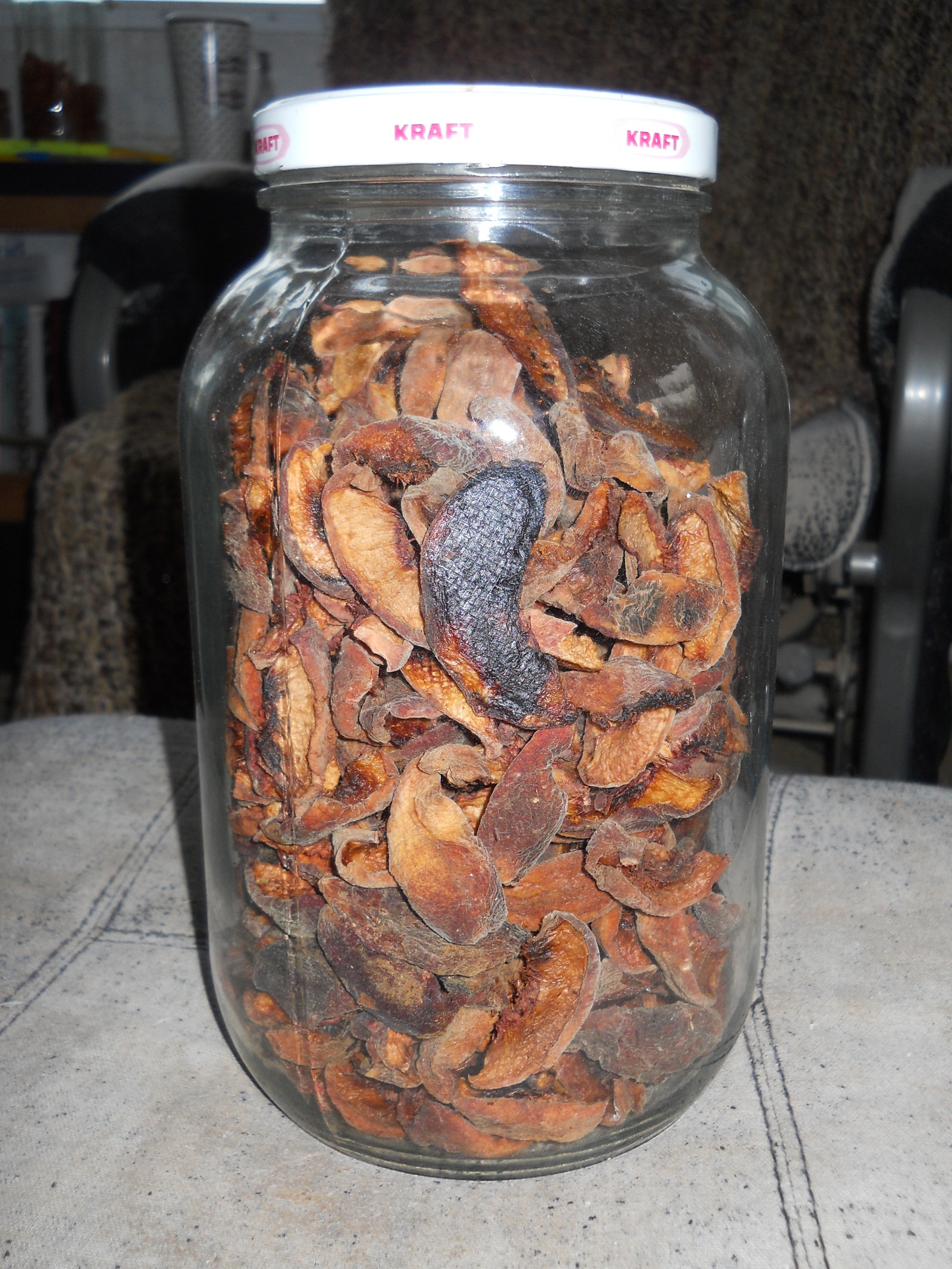
And here is some of the dried fruit. We ended up with around three large containers full:
Sadly, with drought conditions returning this summer, it looks like we’re starting to lose a few of the trees again, even after putting large piles of mulch around them. But, we’ll see how many make it in the end, and we pray for the Lord’s mercies on the rest of the trees, and rains to recover, according to His will.
We’re very grateful to God for granting this perennial food this year, and for allowing us to tuck it away for long-term storage without the use of worldly means of food preservation.
It’s been several months since our last blog post about all of the chicks the Lord has been granting us this year; and in that blog post, there were some in the pipe line, which the Lord graciously granted the hatching of more chicks! And He kept going and going….and we are very thankful for the abundance of these provisions!
And so, here we go……
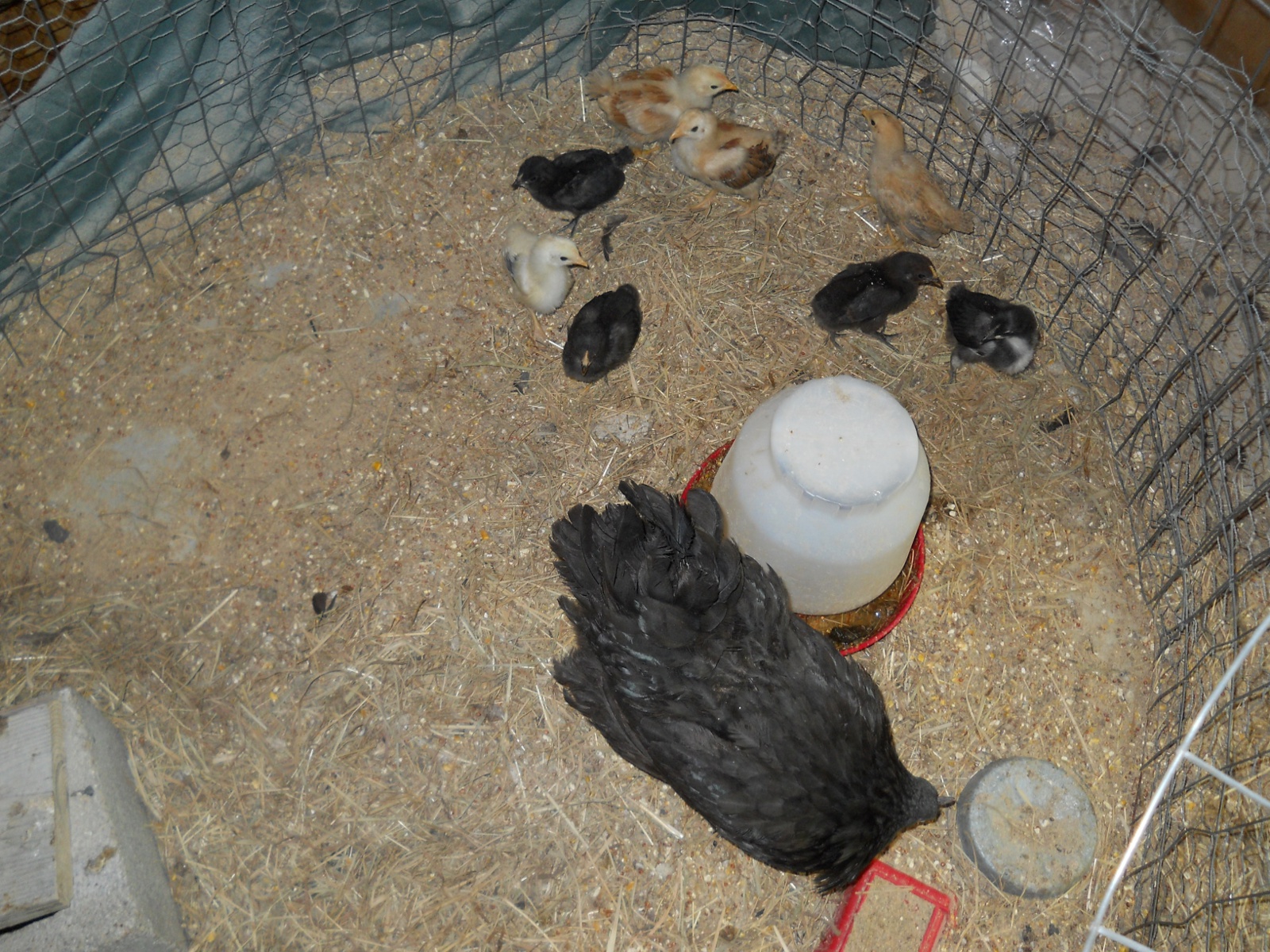
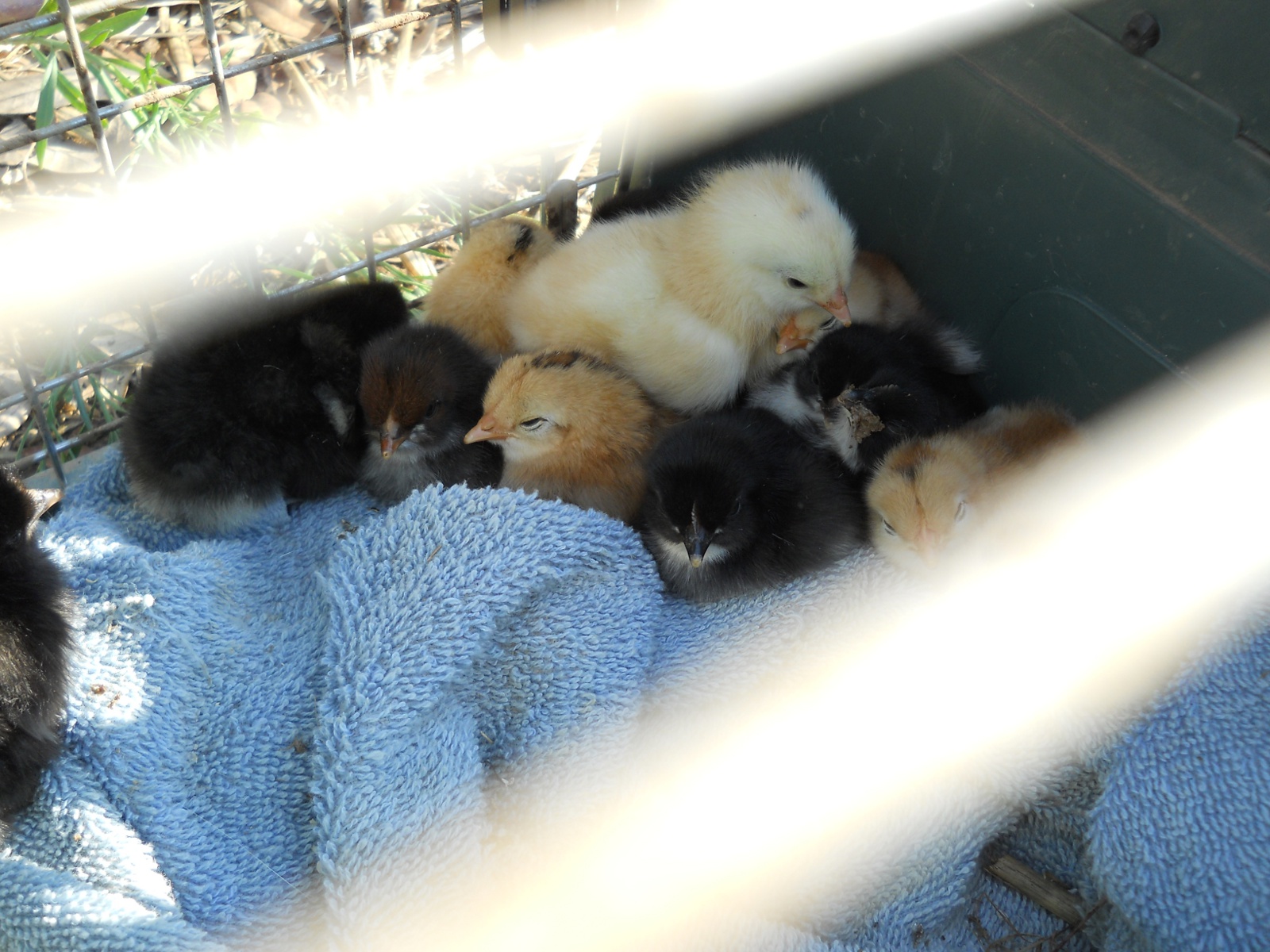
We’ll call this one Group 7. This was the hen sitting on eggs in the garbage can at the end of the previous blog post:
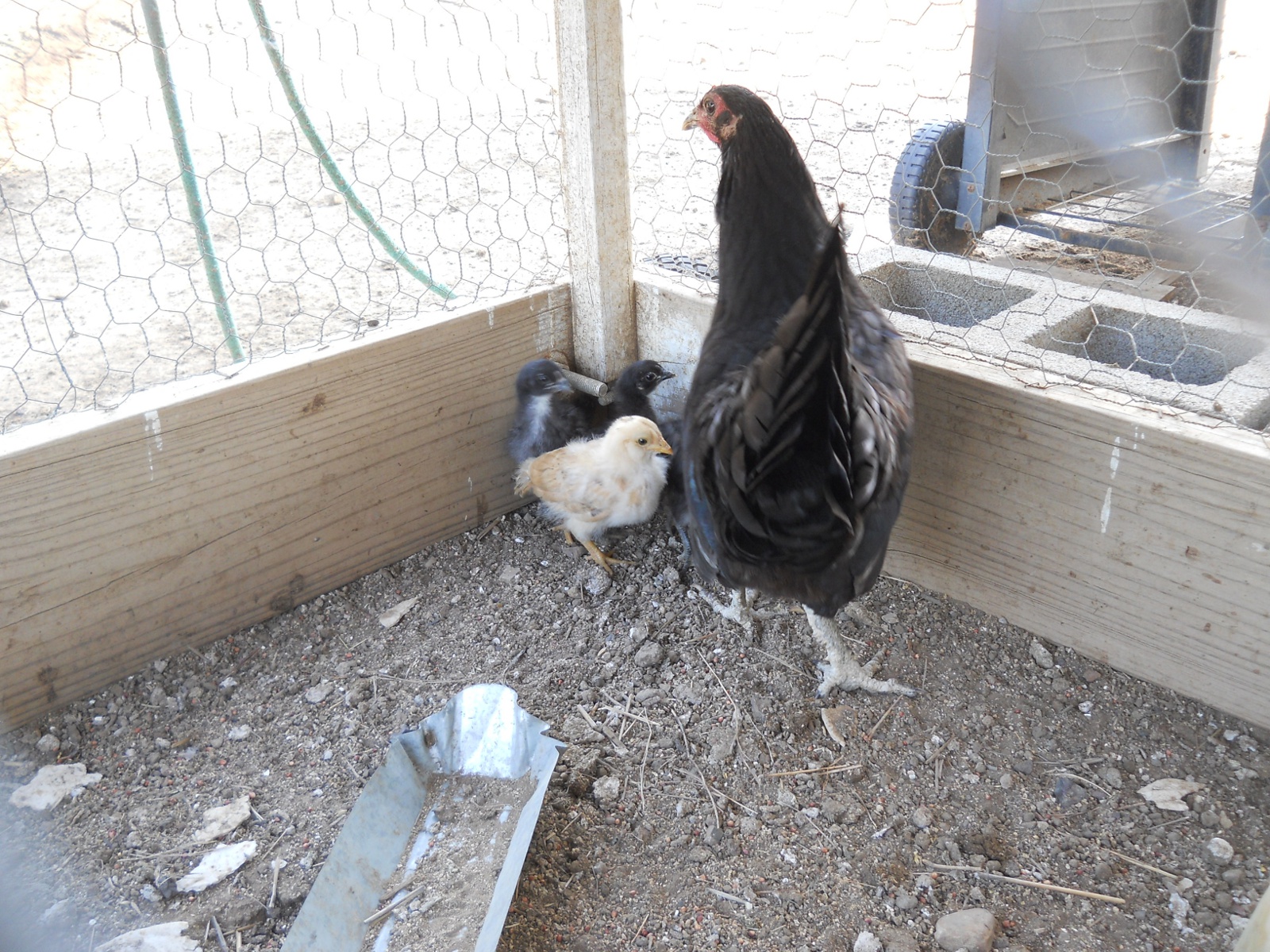
And this is Group 8:
And here is Group 9:
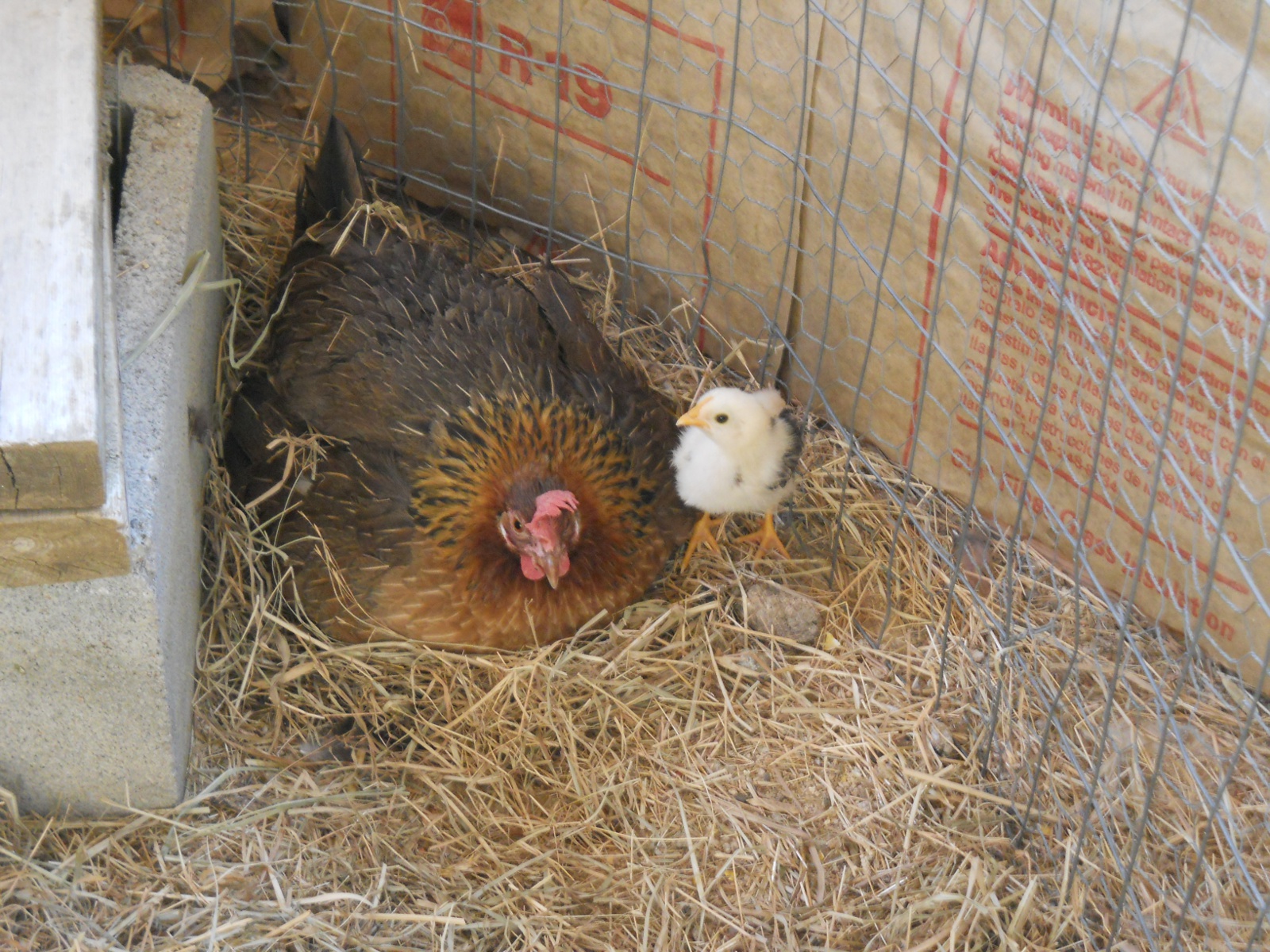
And here is the one chick that this hen hatched out (Group 10). She diligently kept sitting on the eggs, for some time, but this was the only one meant to be:
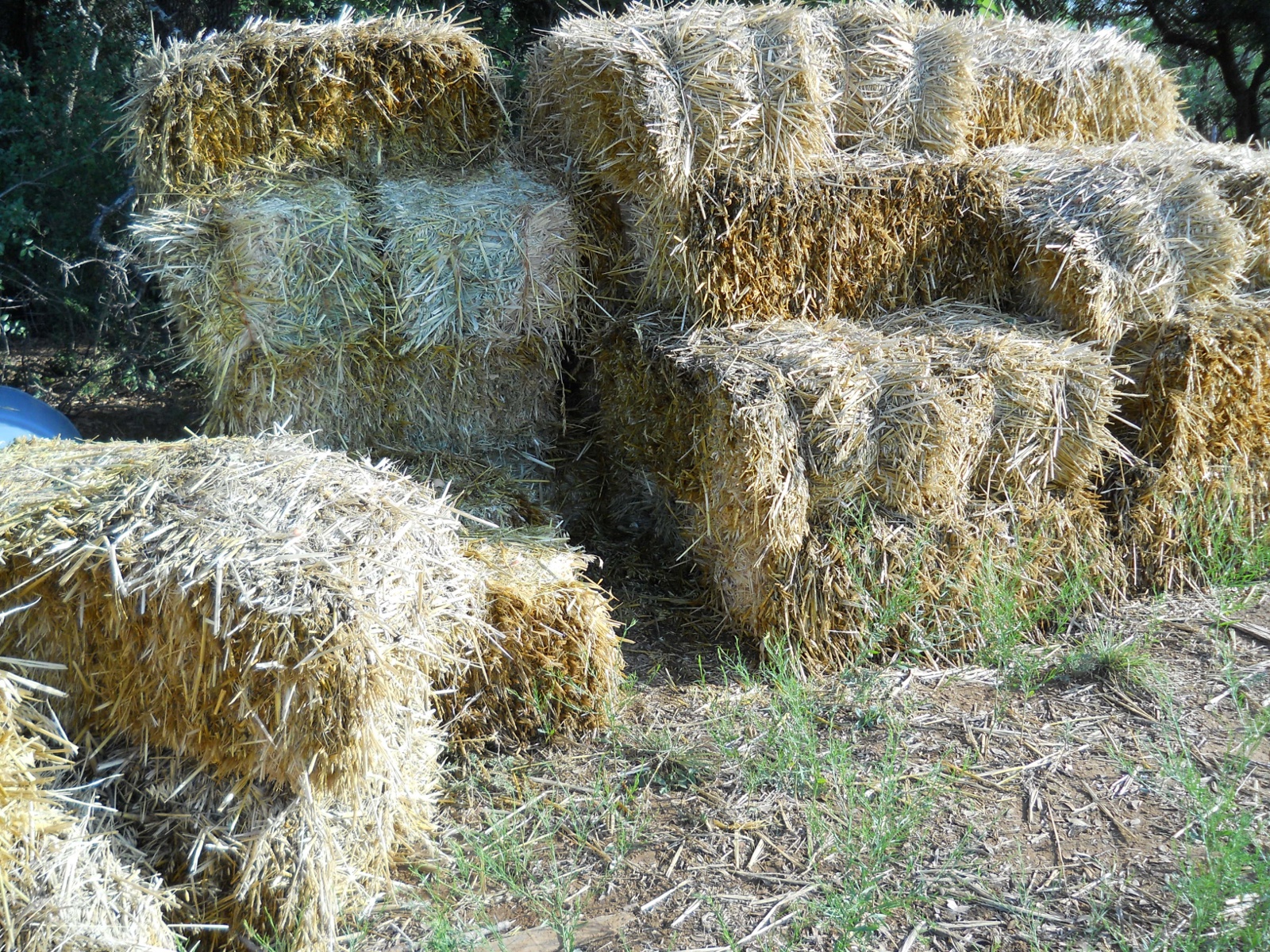
One day I was around the chicken pen, and a hen strolled up behind it with 15 chicks in tow! Wow! What a surprise that was. Come to find out, she had hatched them out in a stack of square bales of oat hay we had:
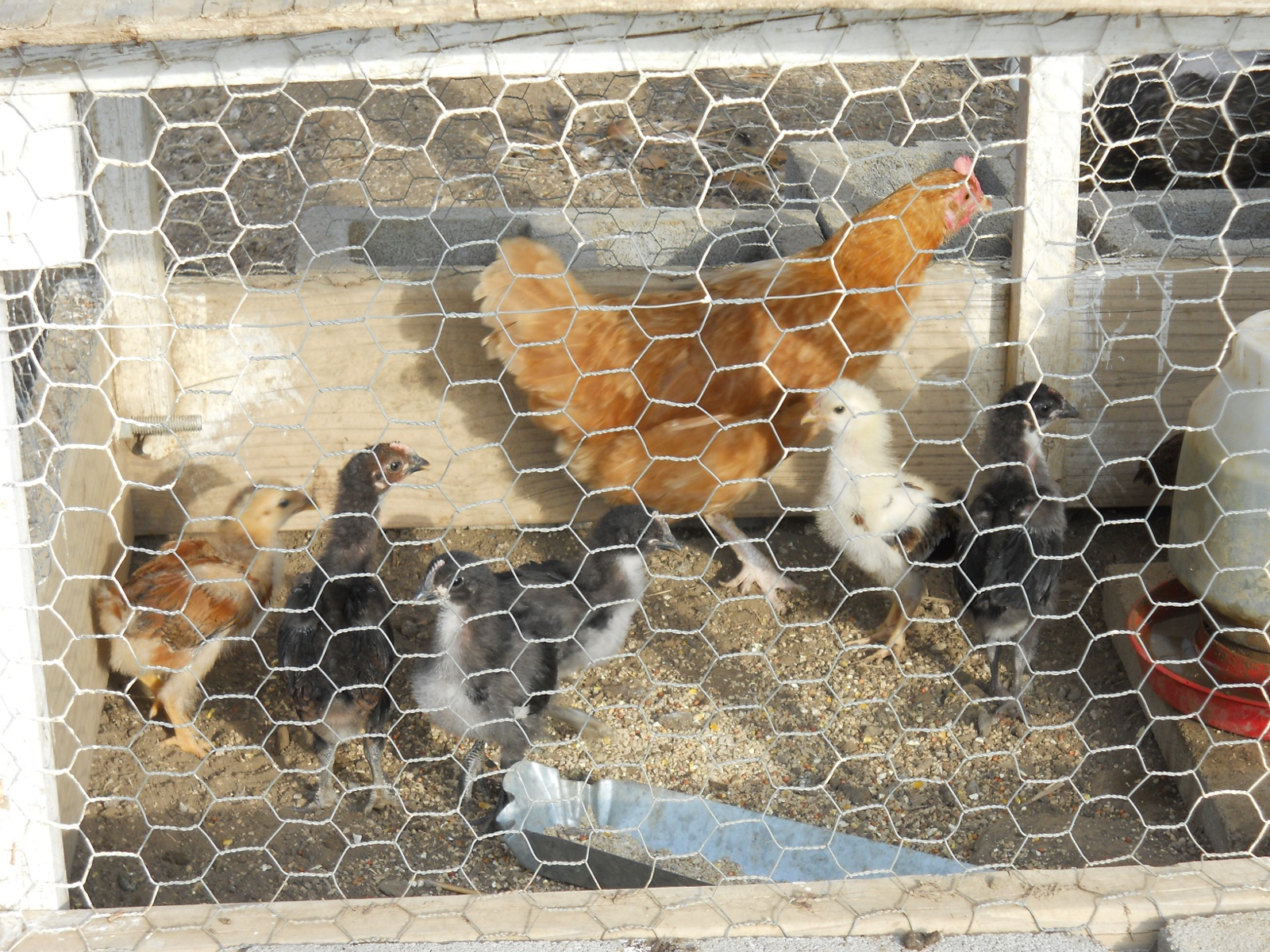
And here those chicks are after we were able to catch all of them (Group 11):
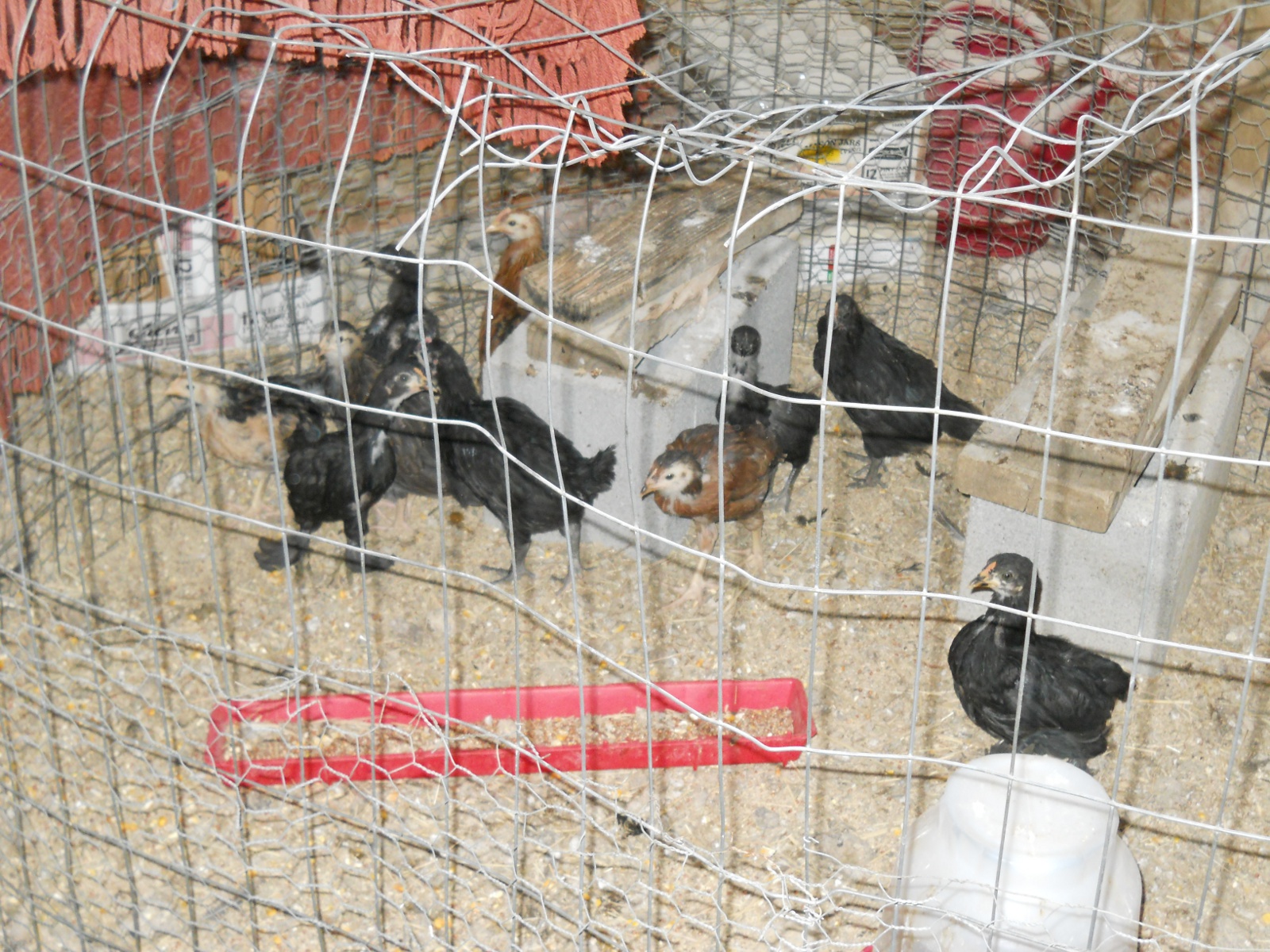
This is Group 12:
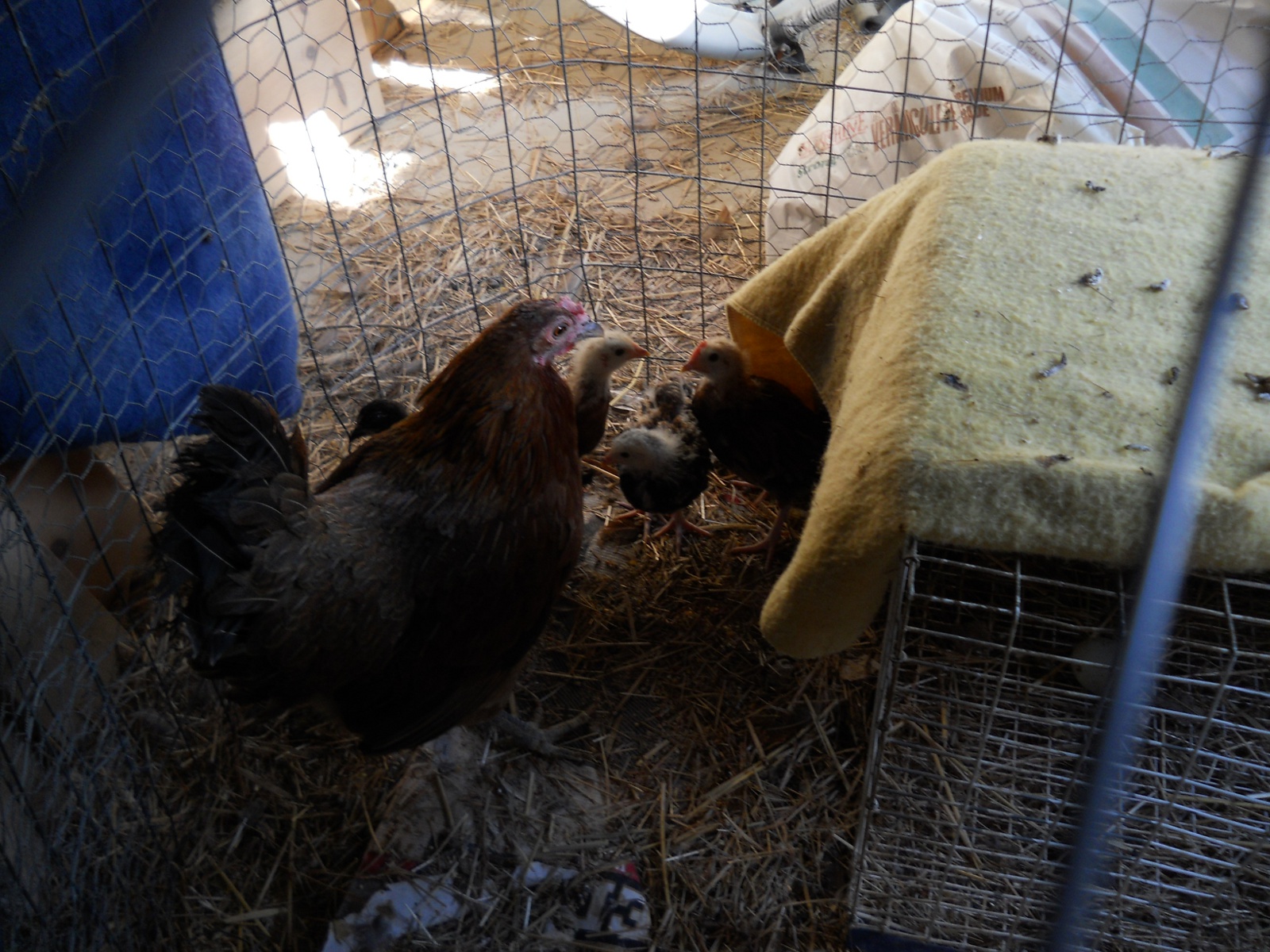
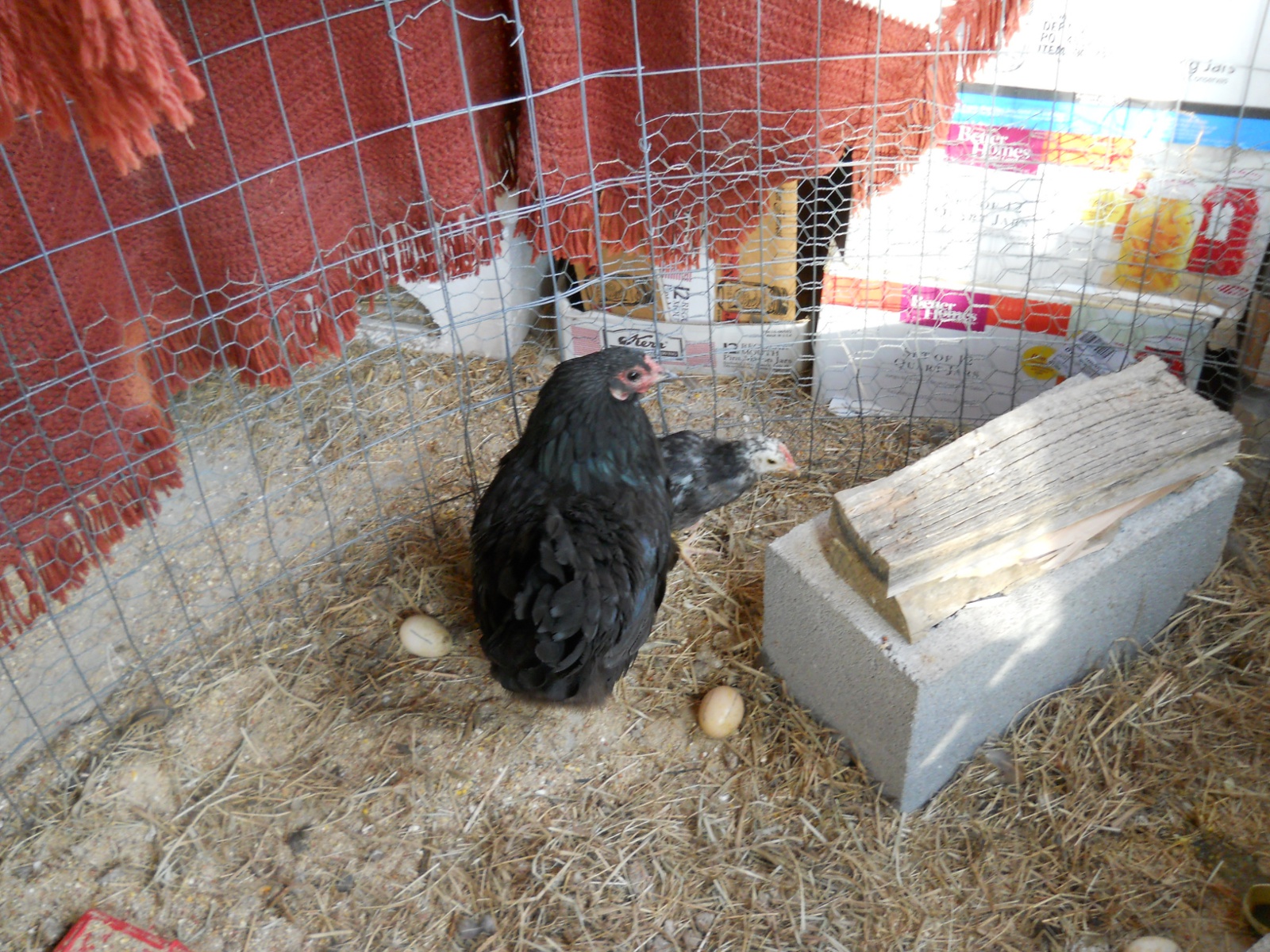
With the single chick from Group 10, I had tried to put it in with other groups of chicks around his size, but he kept getting picked on and was basically running around scared, and didn’t appear to be eating or drinking. And so, I thought I would put him with a mother who was close to hatching some out, so he would be larger than them, and then hopefully would learn to adjust to being with other chickens. That was about a week before the hen was due to hatch out her clutch. Well, all putting him in there with her did was bring her out of her broodiness — I guess she figured she had hatched one out when I put him in there; and so, she ended up hatching out none of hers. He is in the next picture with her.
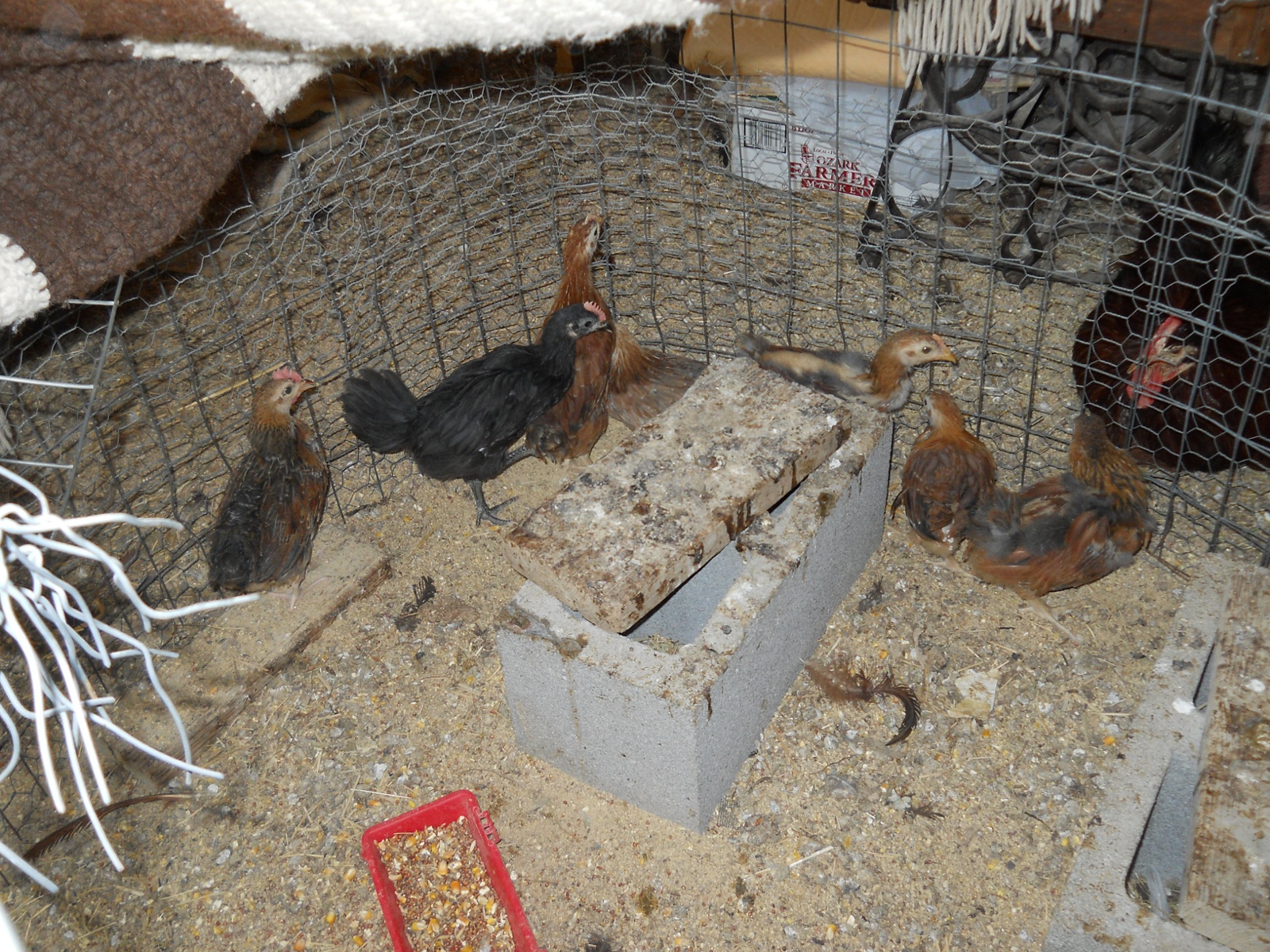
What I ended up doing was when they were old enough, I put him in with those 15 rogue chickens that were hatched out in the hay bales, after pulling the mother hen; and he did very well in there, being a little bigger than them all:
Next is Group 13:
And group 14:
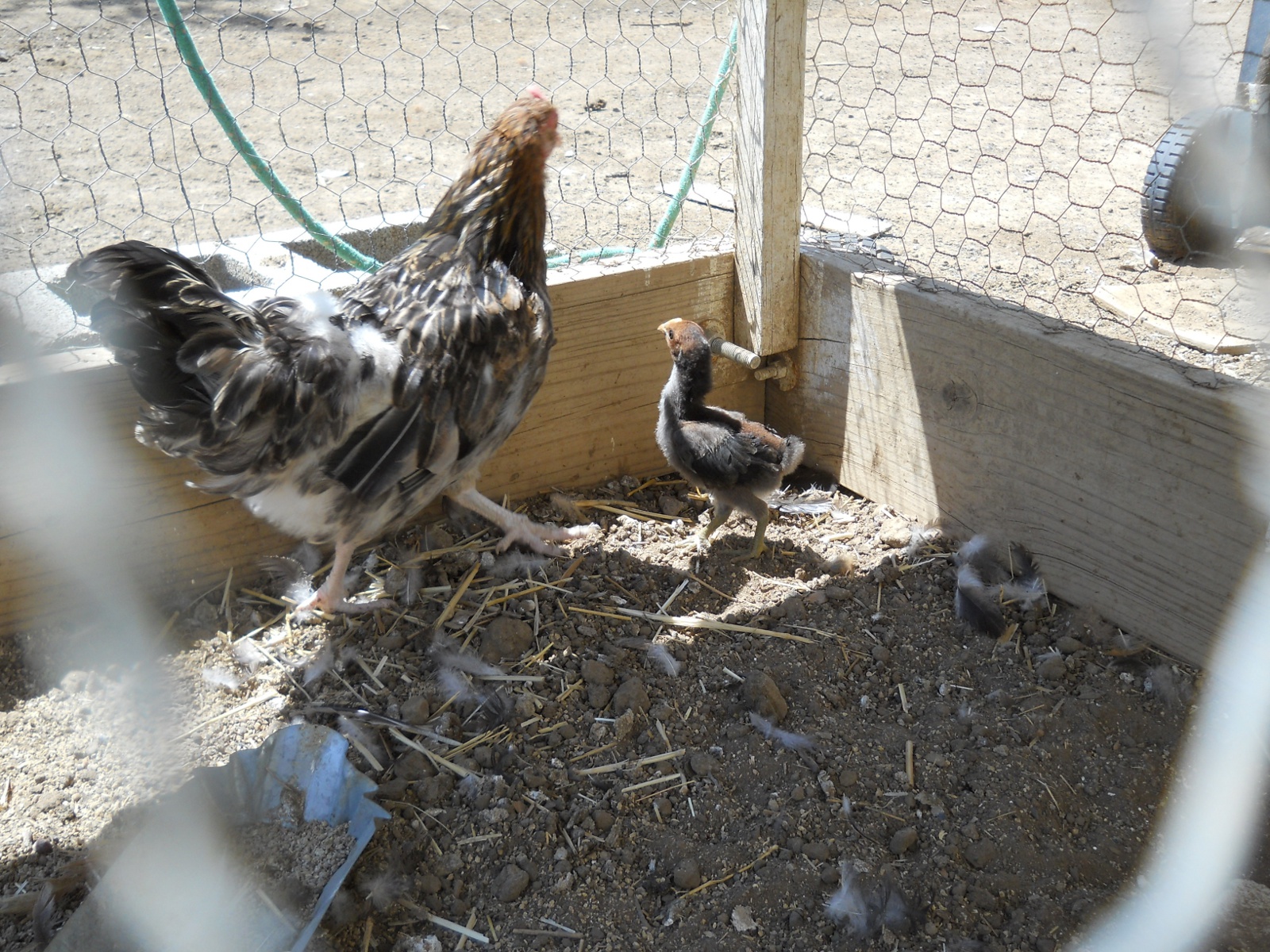
And then one day, another hen rolled out of the woods with a chick in tow; and here they are, just the two of them (Group 15):
Finally, here is a video recap of all of these latest hatchings:
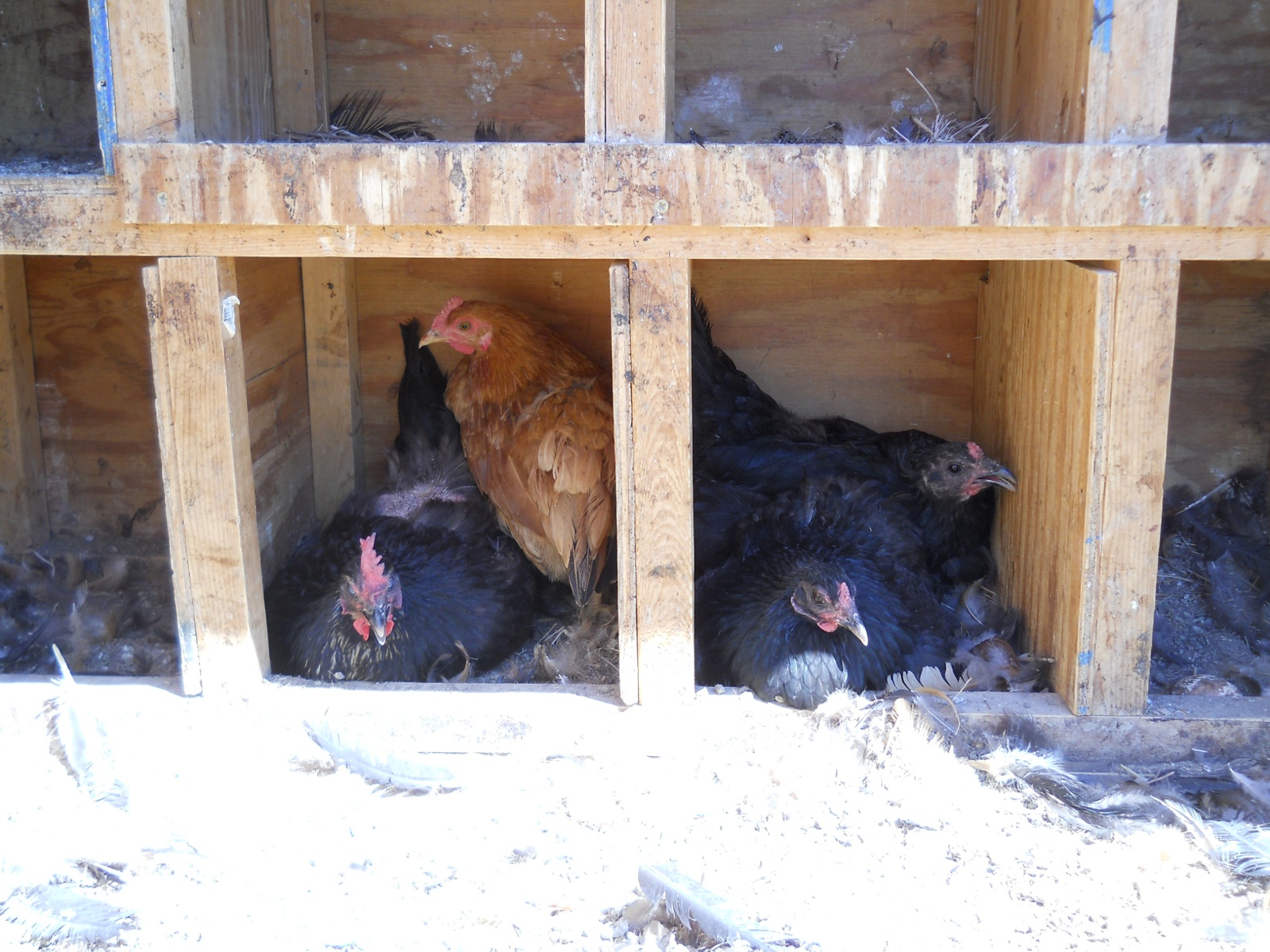
But wait! Perhaps the Lord is not done…the Australorp in front in the right nest started acting broody yesterday:
Wow! God has been very gracious in granting these provisions. Although several died, most of the hatchlings have made it through to now. We have found the Australorps to be great sitters, most of them sitting at some point, hatching out eggs, with some doing more than one round. We are grateful for the sitting hens, and the new chickens, and we pray God glorifies Himself through the granting of them.
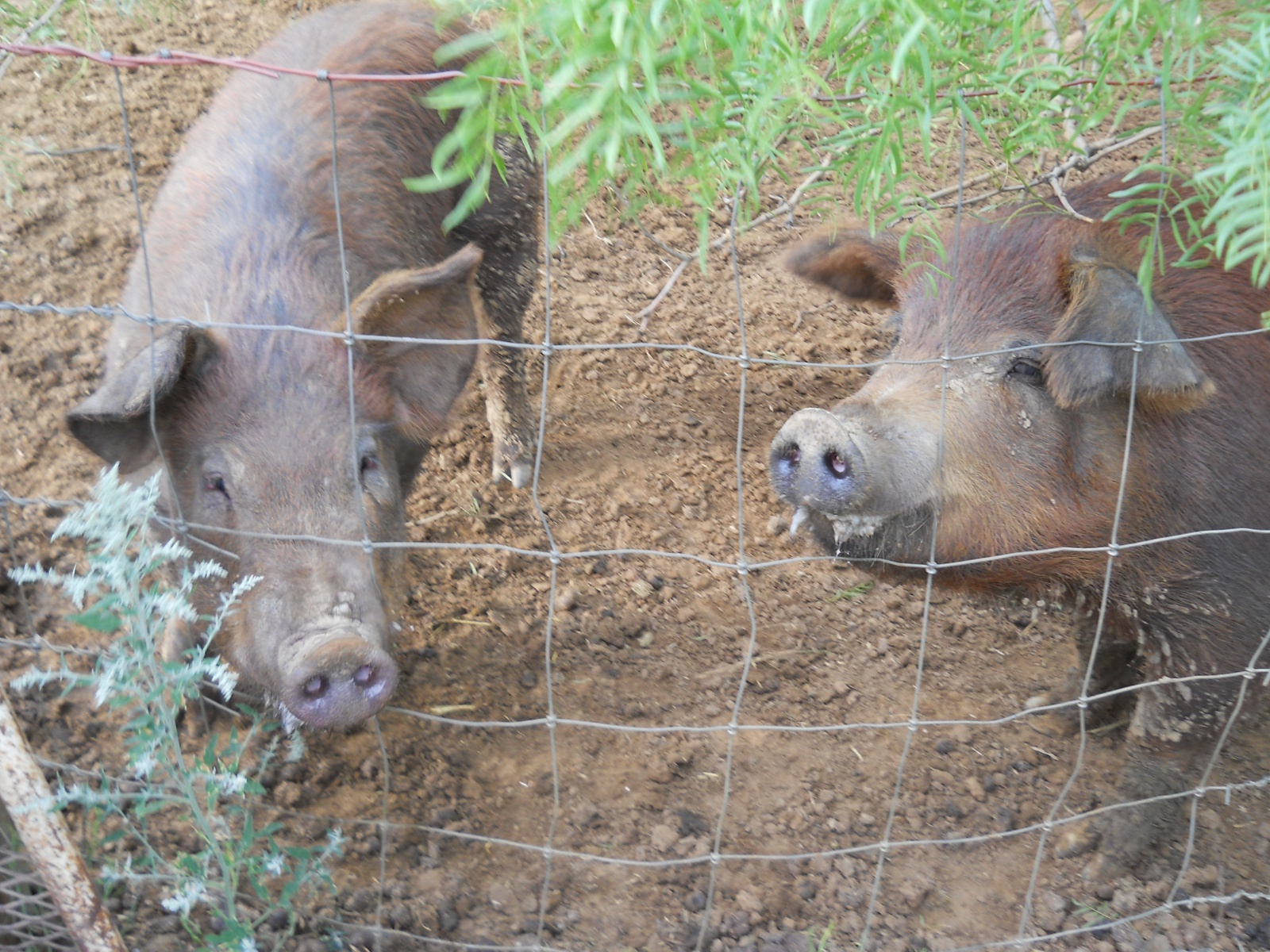
It’s been over a year since we did our last animal update on our pig Pebbles. As you can imagine, she has grown up quite a bit; and so, it was time to continue our normal cycle and get her a mate. We bought a medium-sized male from Mr. Bunker, and of course, had to call him Bamm-Bamm.
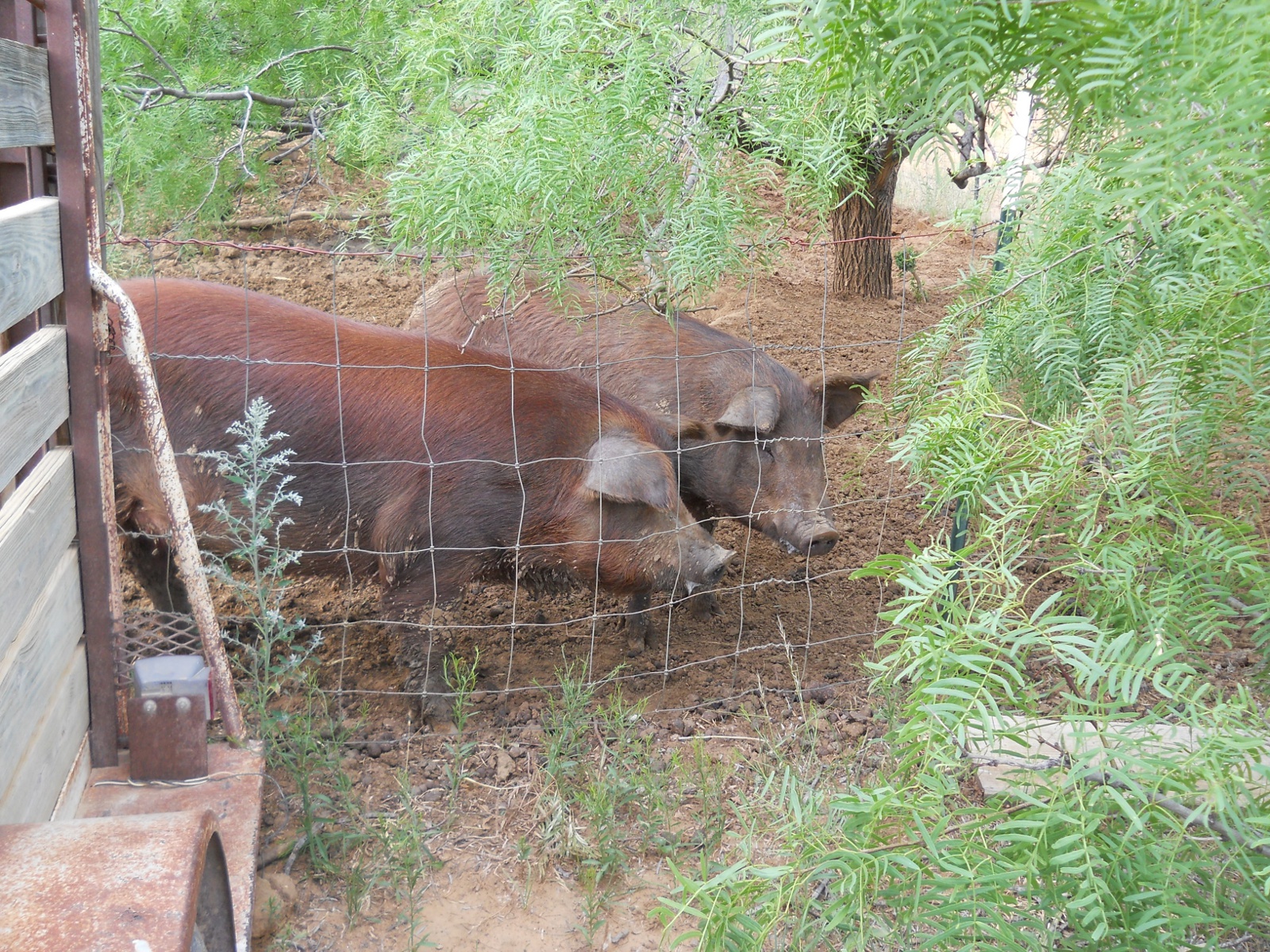
Here are Pebbles (left) and Bamm-Bamm (right) back in May:
And again, Bamm-Bamm (left) and Pebbles (right):
We thought, based on “action” we saw from the two that she was about ready to give birth late-April or so, but it ended up two estrus cycles past that.
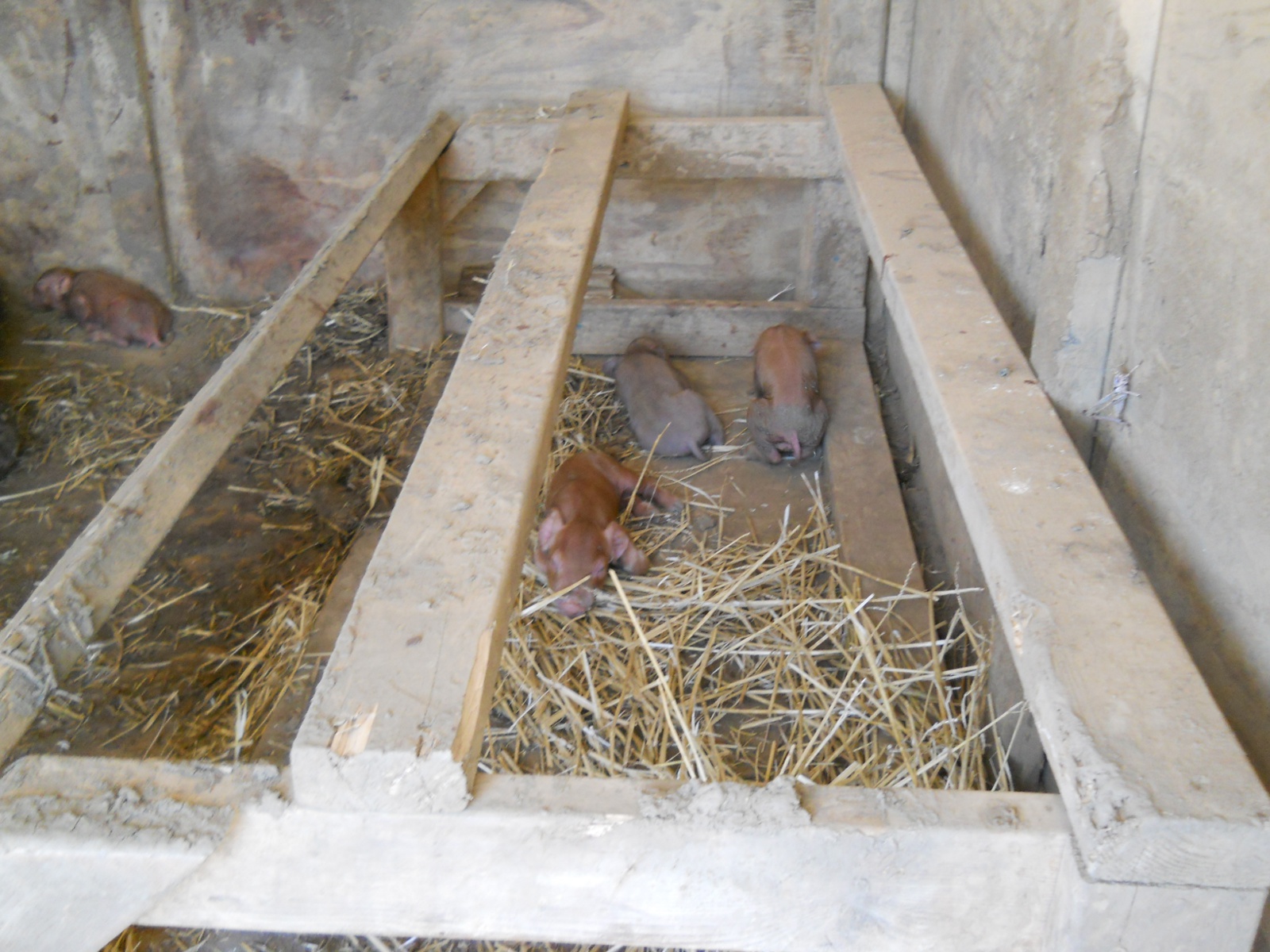
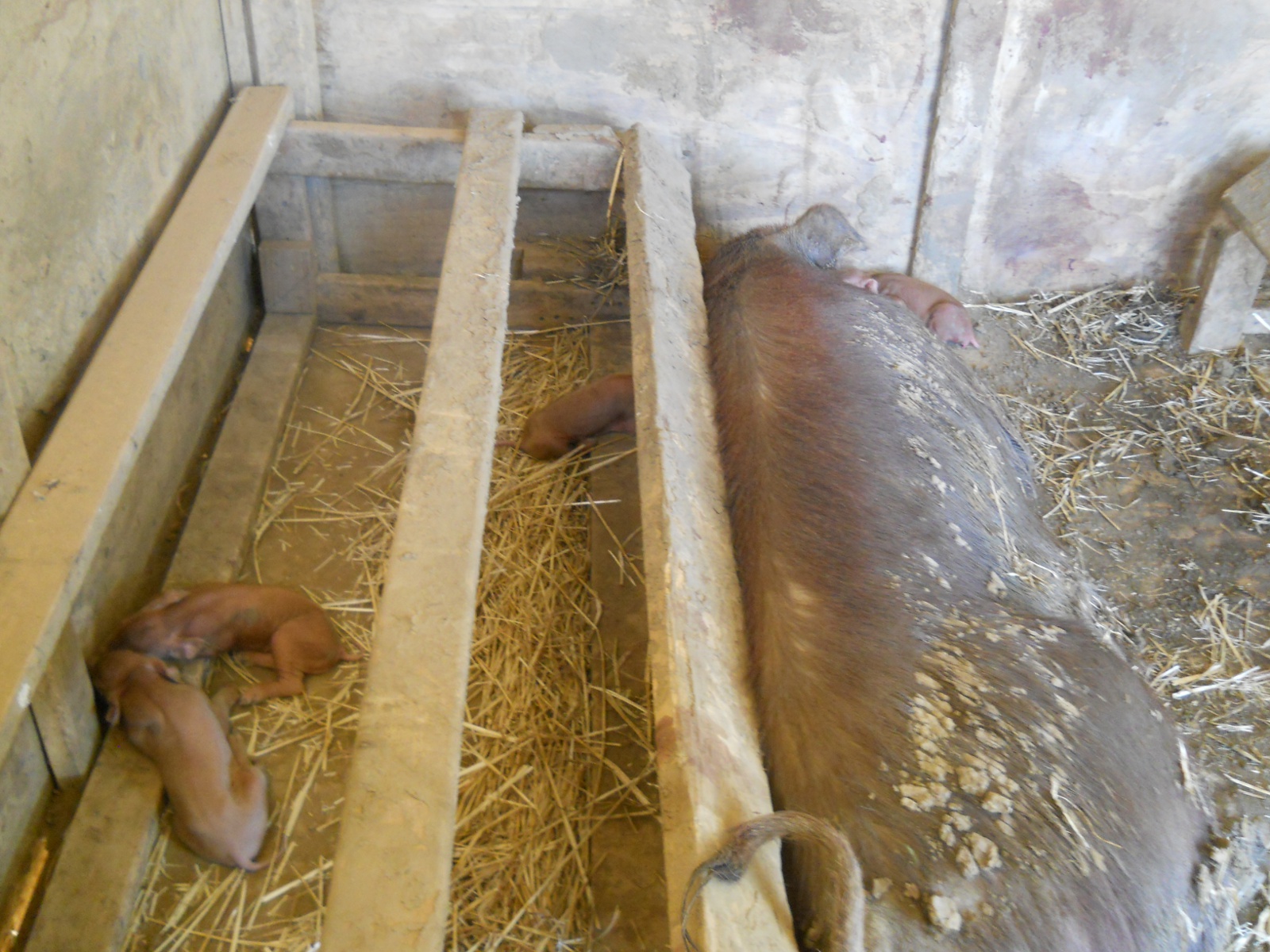
And by God’s graces and mercies, she successfully gave birth! — a litter of nine, with two dead, and one little guy that just could never get walking properly, and he died as well.
After last year’s difficulties with Pebble’s mother’s delivery, we were really praying this one would go more smoothly; and the Lord was gracious in granting that to be so; and we are very thankful!
Here they are not too long after being born:
And here is a video of the journey of Pebbles and Bamm-Bamm, from meeting last December to piglets in June (it’s a little long, but to me, kind of fun to see the progression). Bamm-Bamm has since been “processed” as our food provisions:
We are very grateful to God for granting these new piggies to be born, for the safe delivery for Pebbles, and for the meat from Bamm-Bamm we have been able to store away.
Since our last update on our turnips and wheat, the turnips basically dried out; but we are grateful to the Lord for what He granted in them in being able to feed our pigs with them.
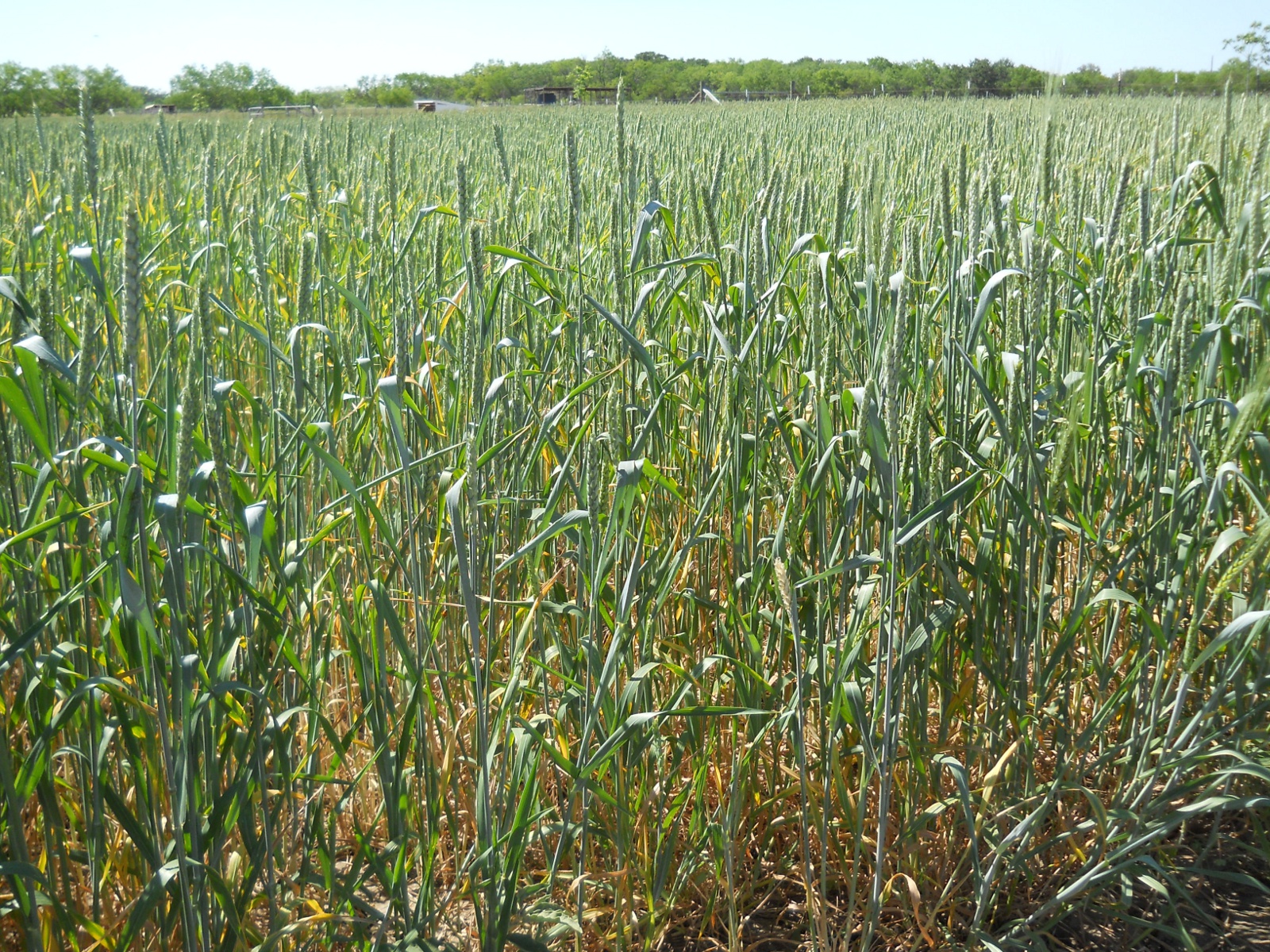
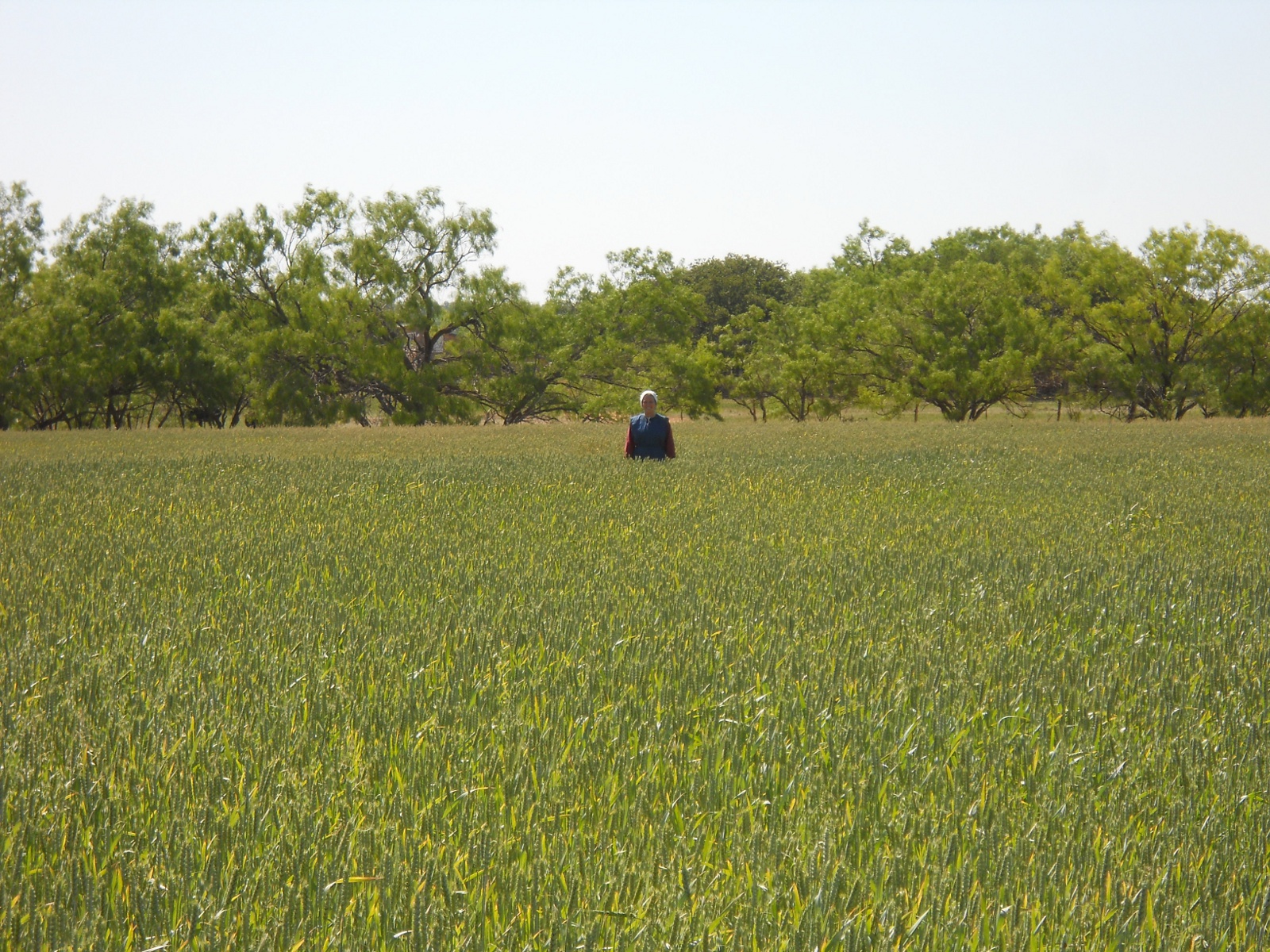
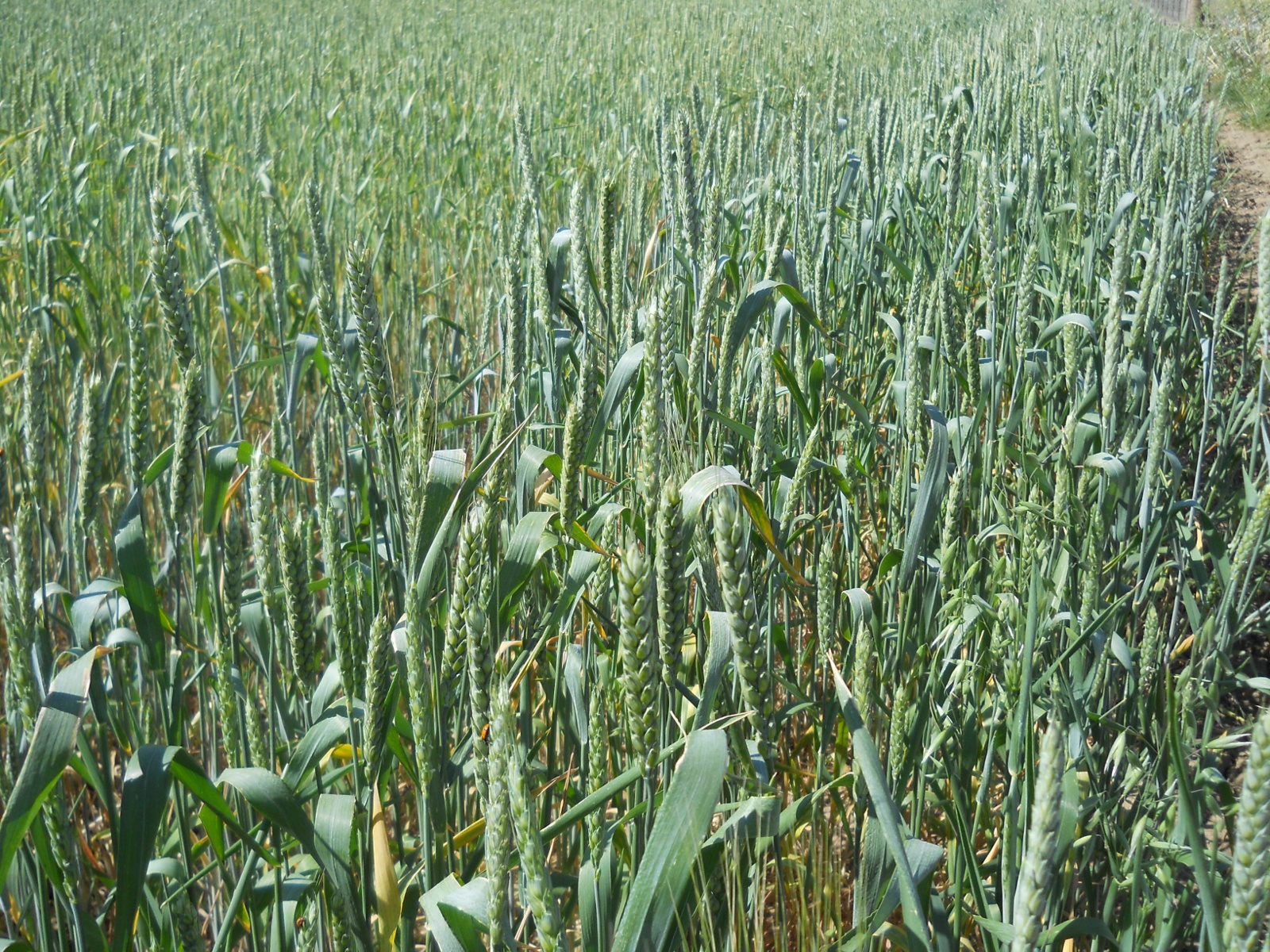
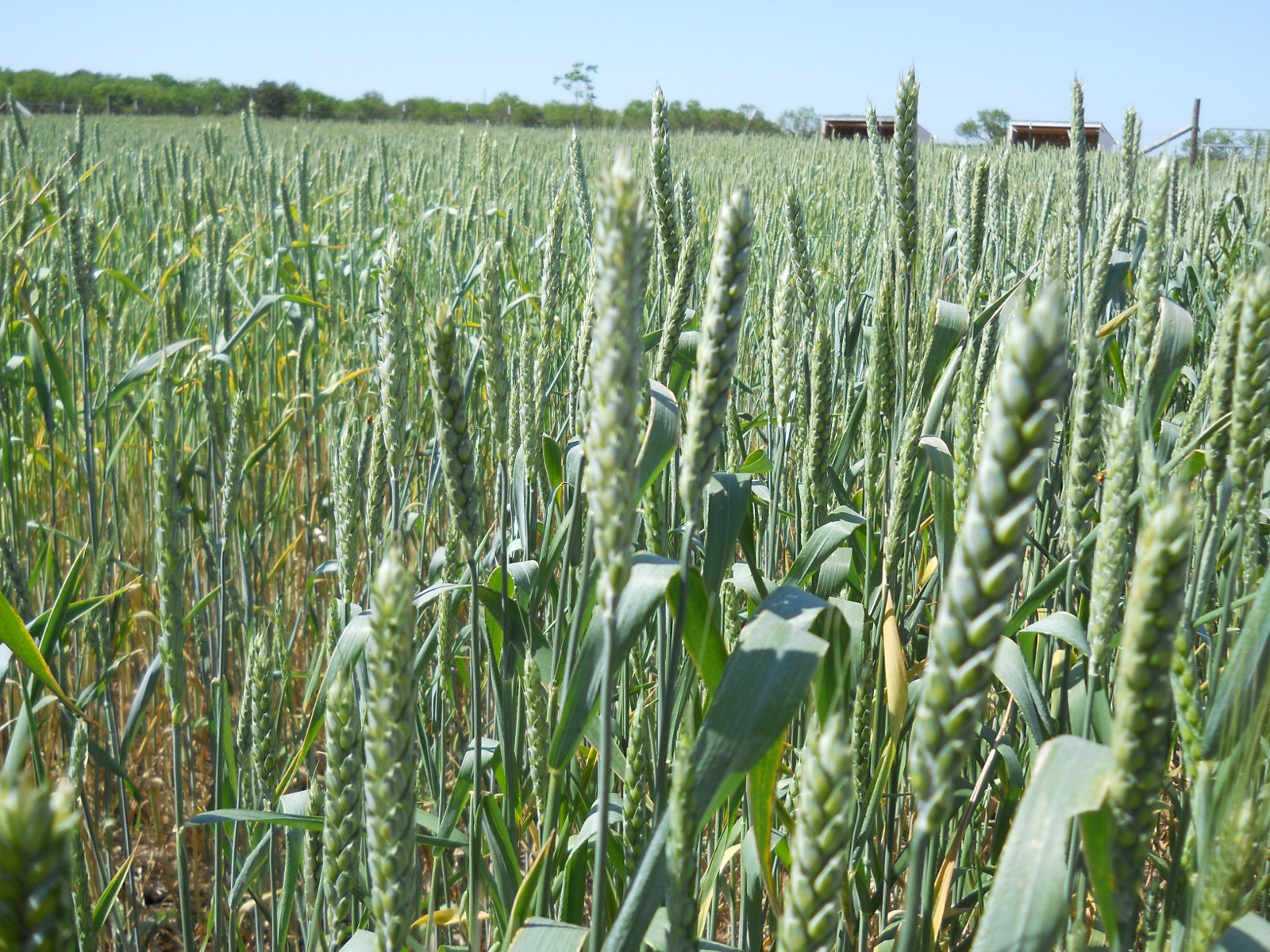
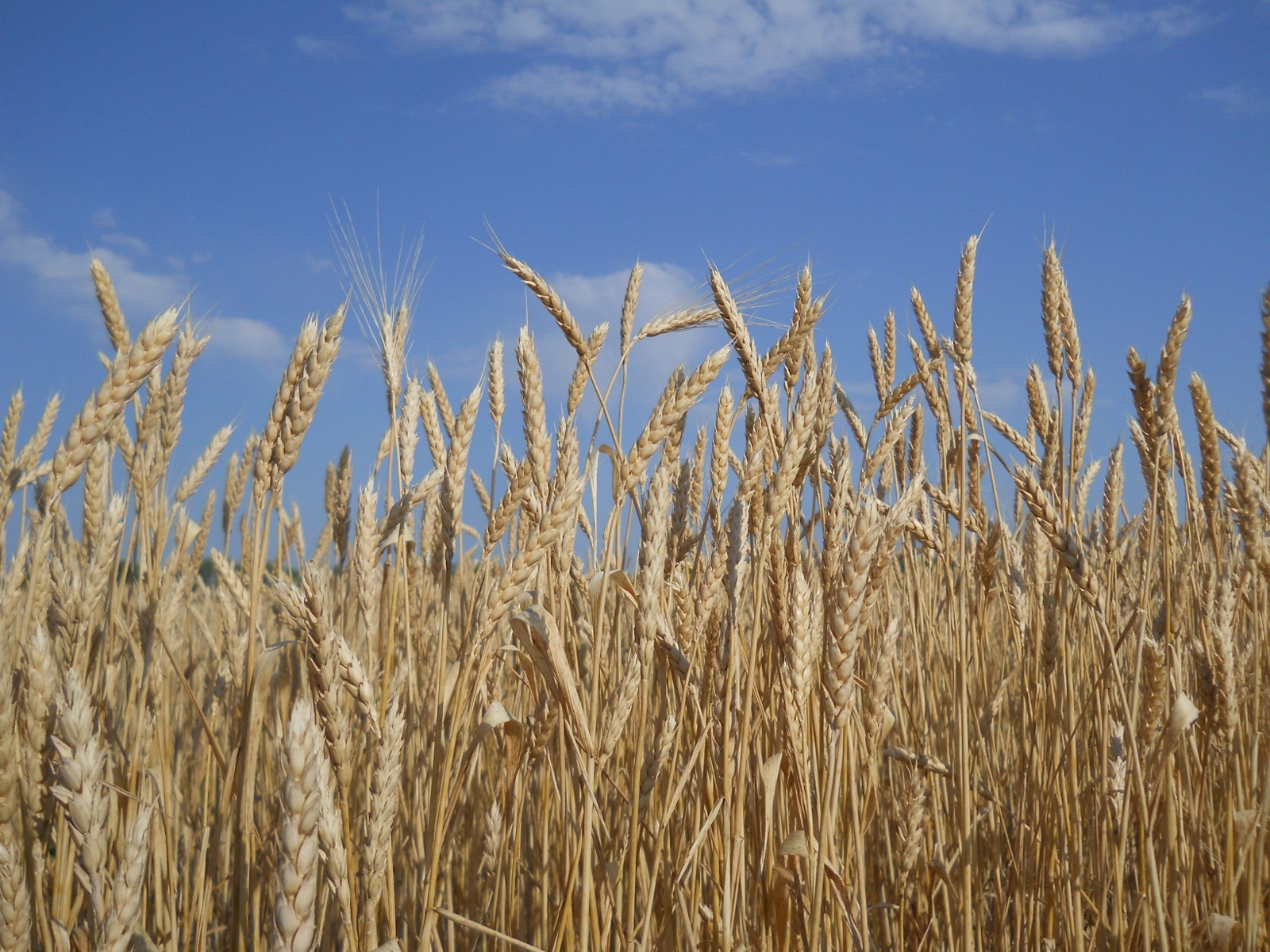
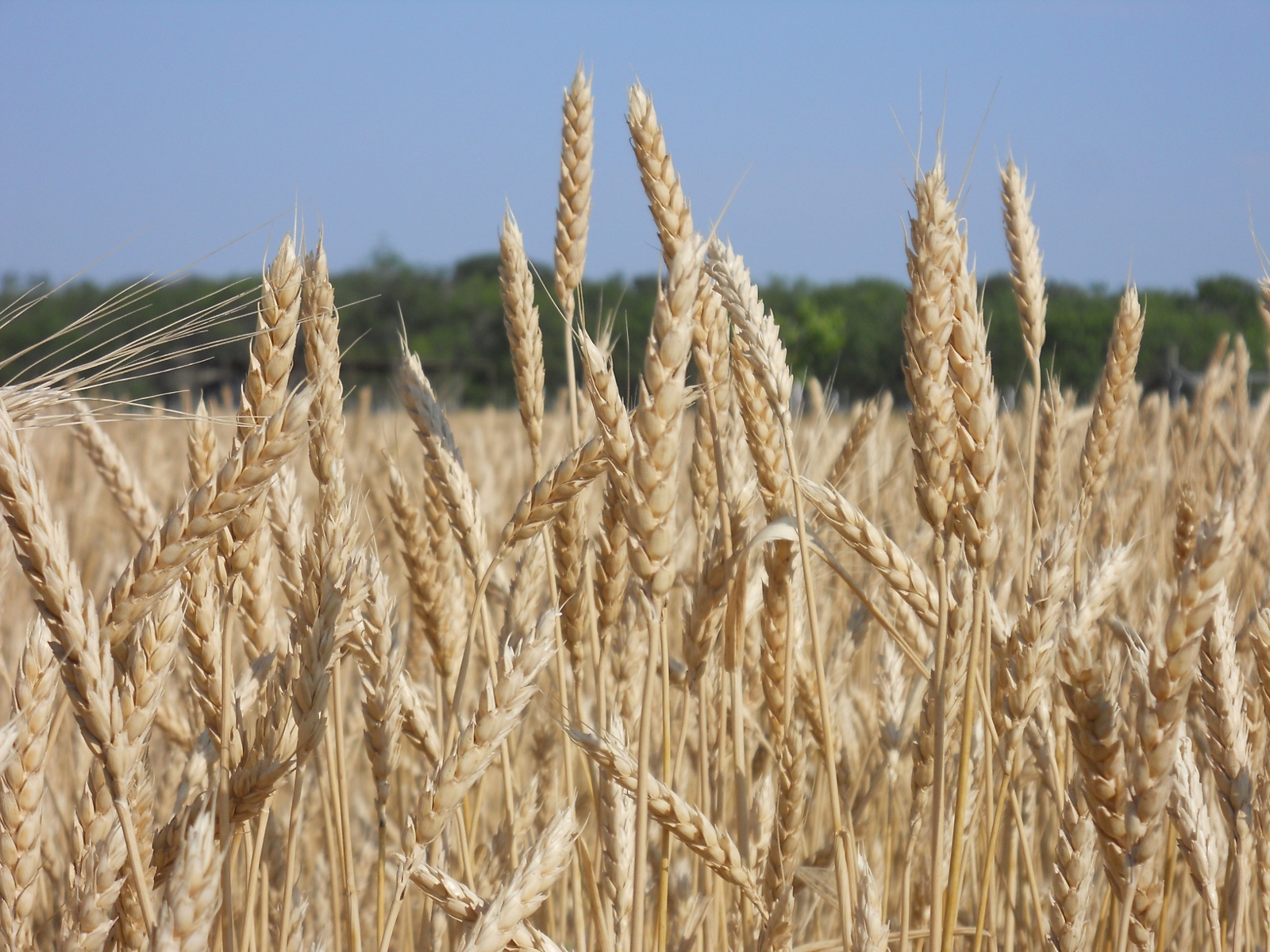
But the wheat continued on its process. Here is what the wheat field looked like back in April. You can see how high it had grown in the second picture:
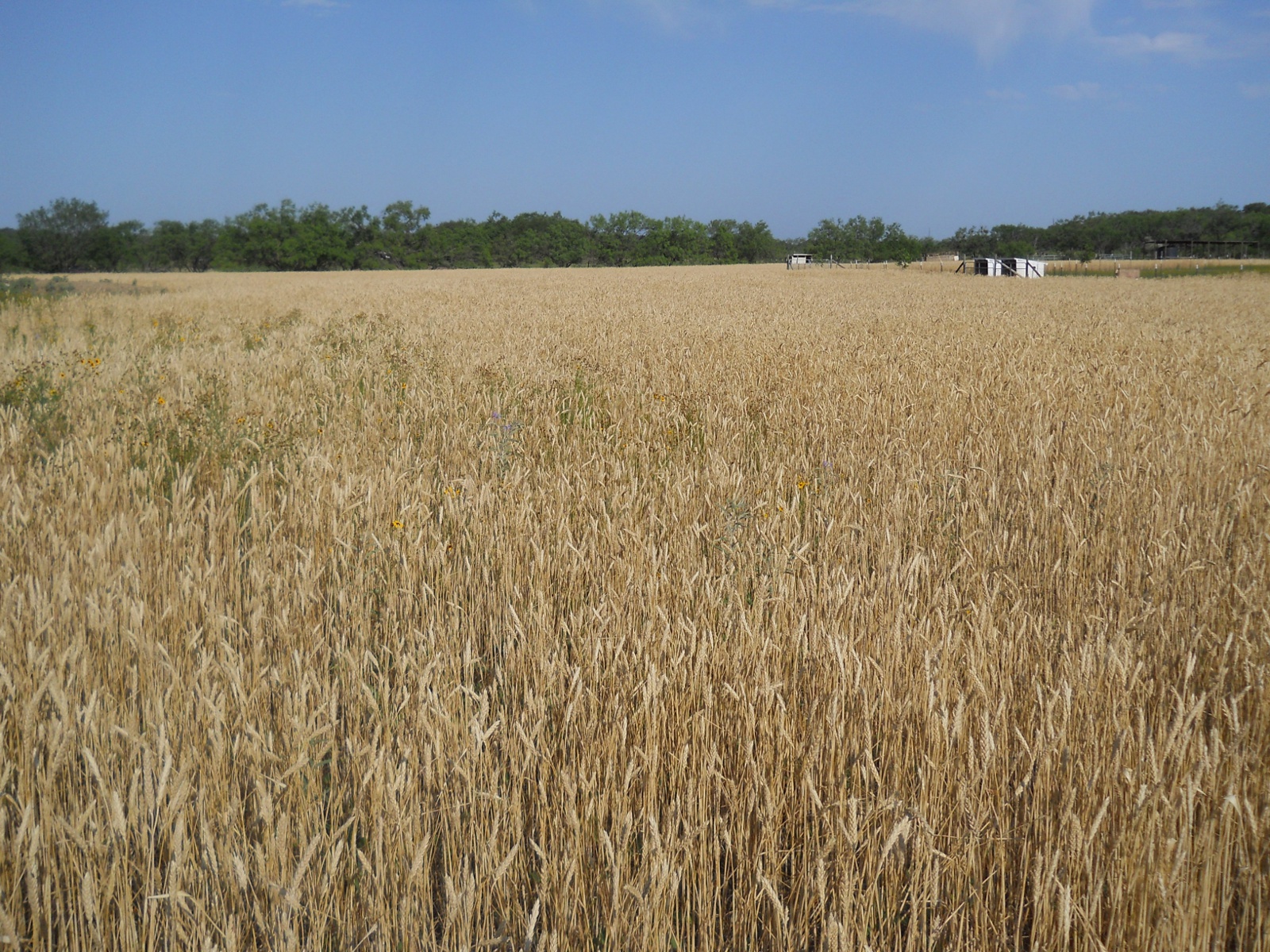
Fast forward a little over a month, and here is what it looked like. A beautiful gift from God!
And then it was time! The harvest! This is something we had been looking forward to basically since we moved here — being able to harvest a crop. There is also much to learn spiritually from the wheat harvest, the wheat being the saints of God.
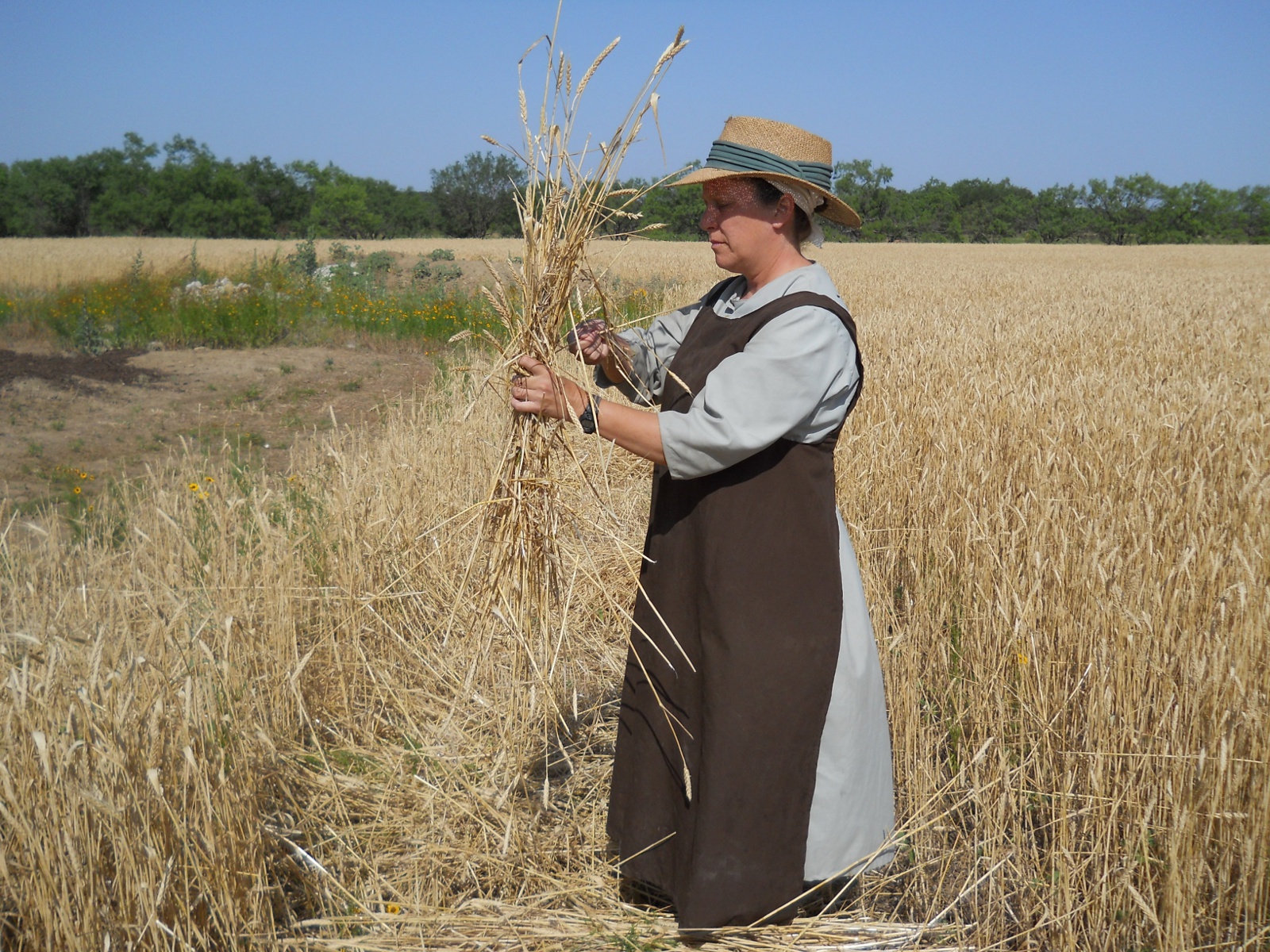
First was to cut it and tie it into sheaves. I tried using a scythe for reaping (God harvesting the souls of His people); but it ended up leaving the wheat on the ground in somewhat of a chaotic fashion (which could just have been a lack of technique); and we found that having all of the heads together in one place is better for the threshing process; and so Sue used a sickle, which worked well. We tied them using weeds or twine. The whole time out there are got “Bringing in the Sheaves” stuck in my head:
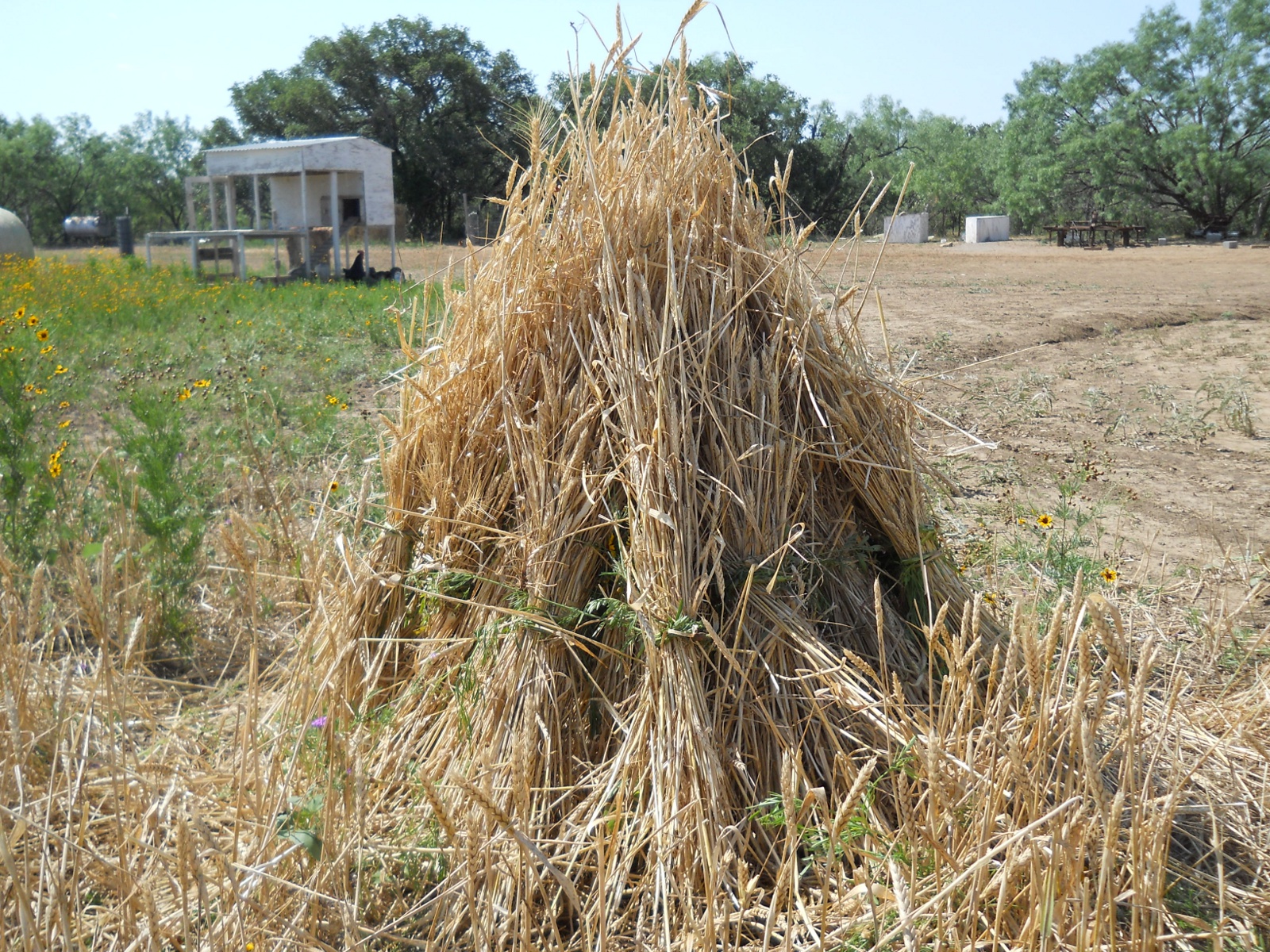
And then stacked them into stooks to dry (God gathering His saints together):
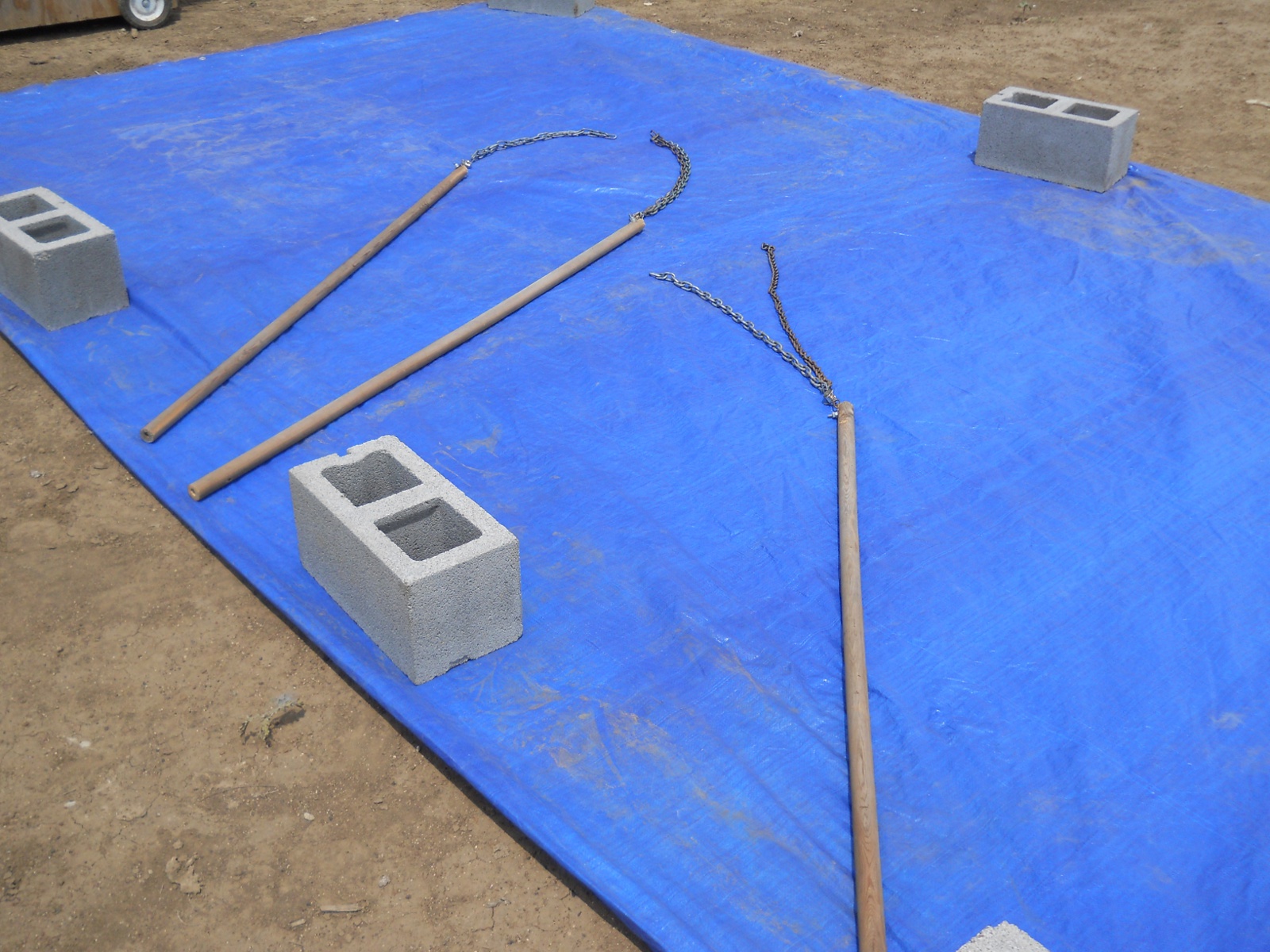
Once ready, it was time to begin the threshing process (God breaking down the carnal, selfish man of His chosen with trials and chastisements). We laid out a tarp, and borrowed some flails from one of the folks here. He attached some chains on the end of closet dowels — we thought the loose, heavier chains might do well with the flailing:
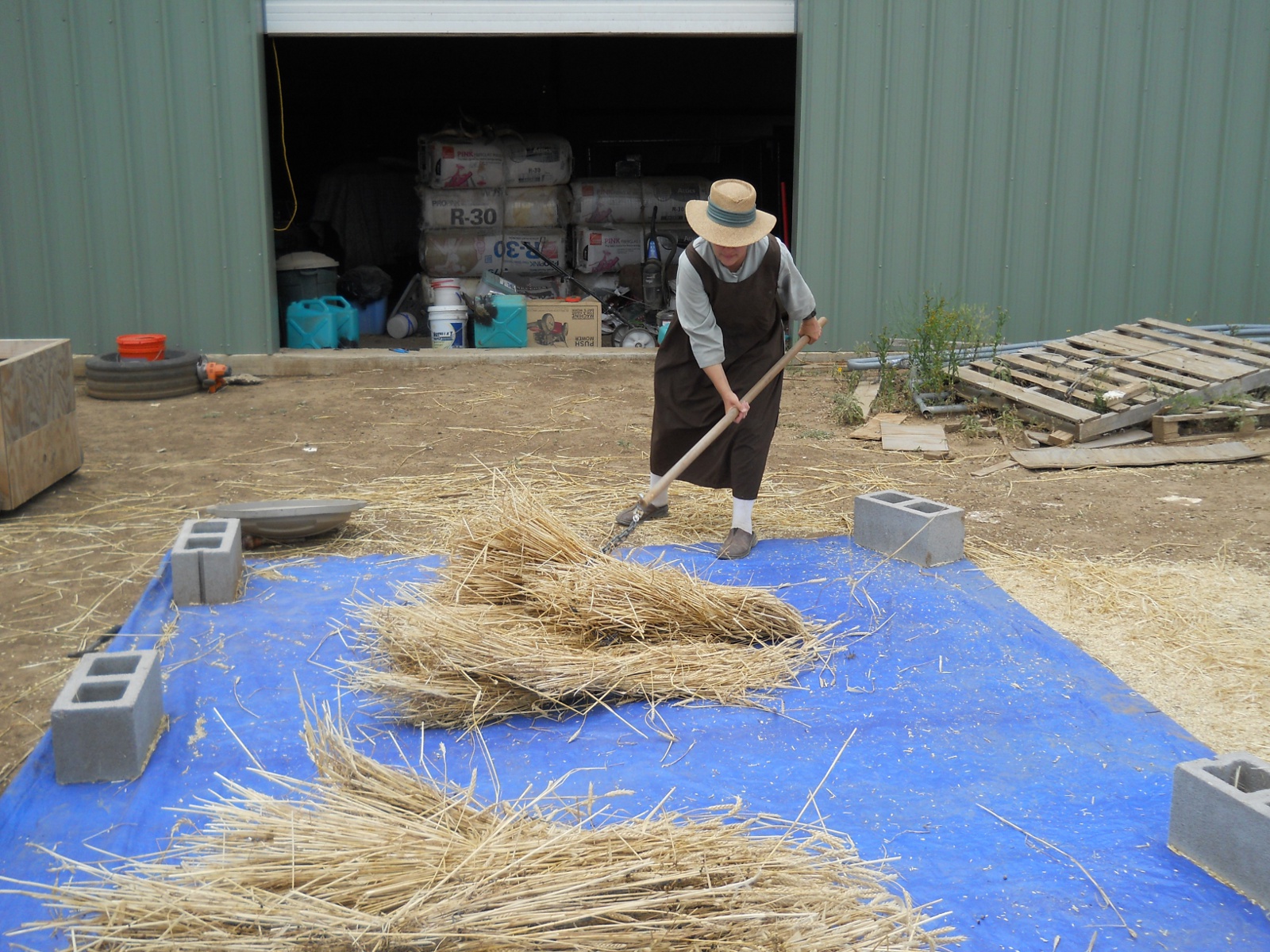
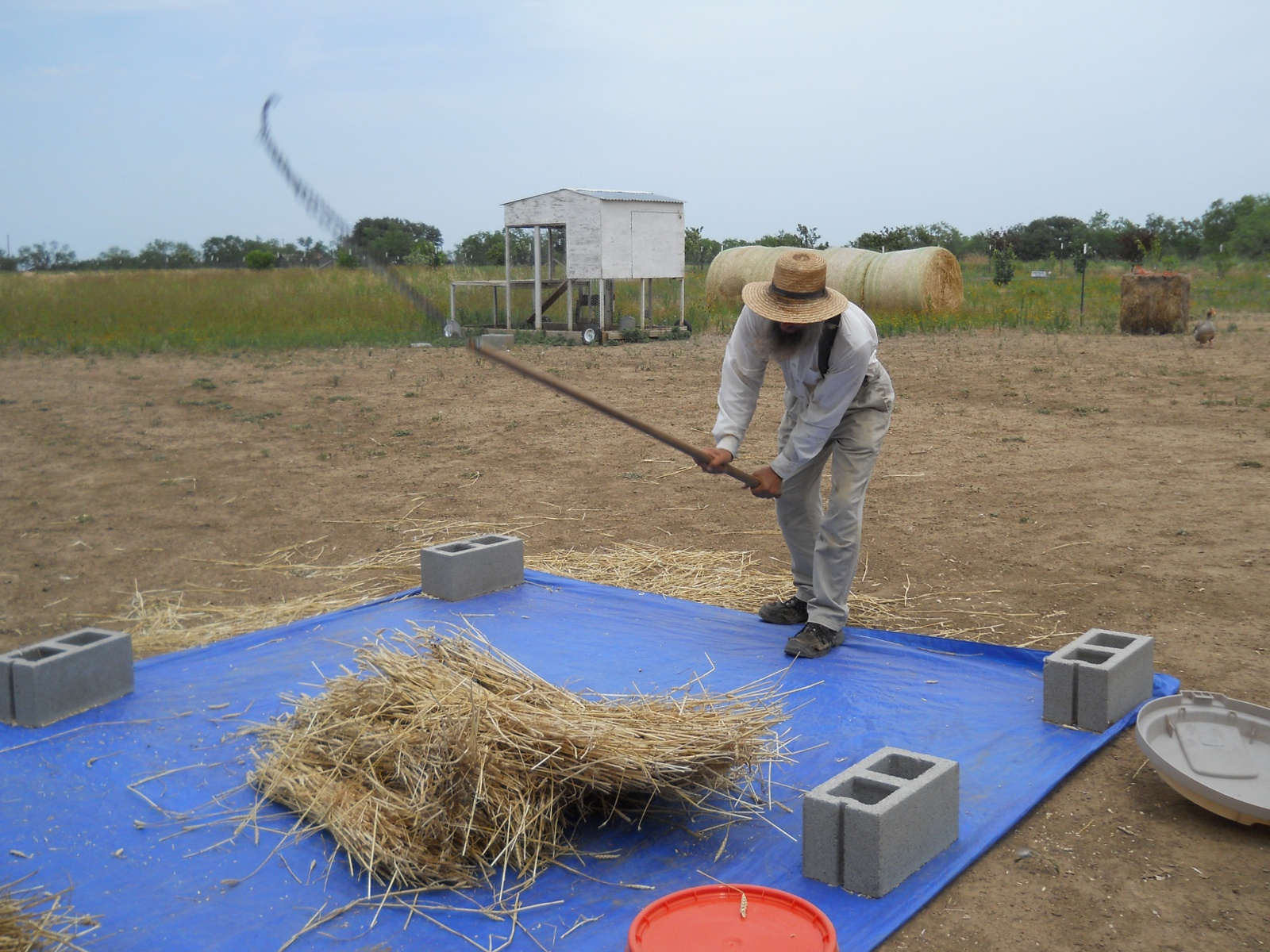
And here is Sue and myself flailing away. It’s something of a violent process (sometimes God needs to be a little “violent” in the breaking down of our pride):
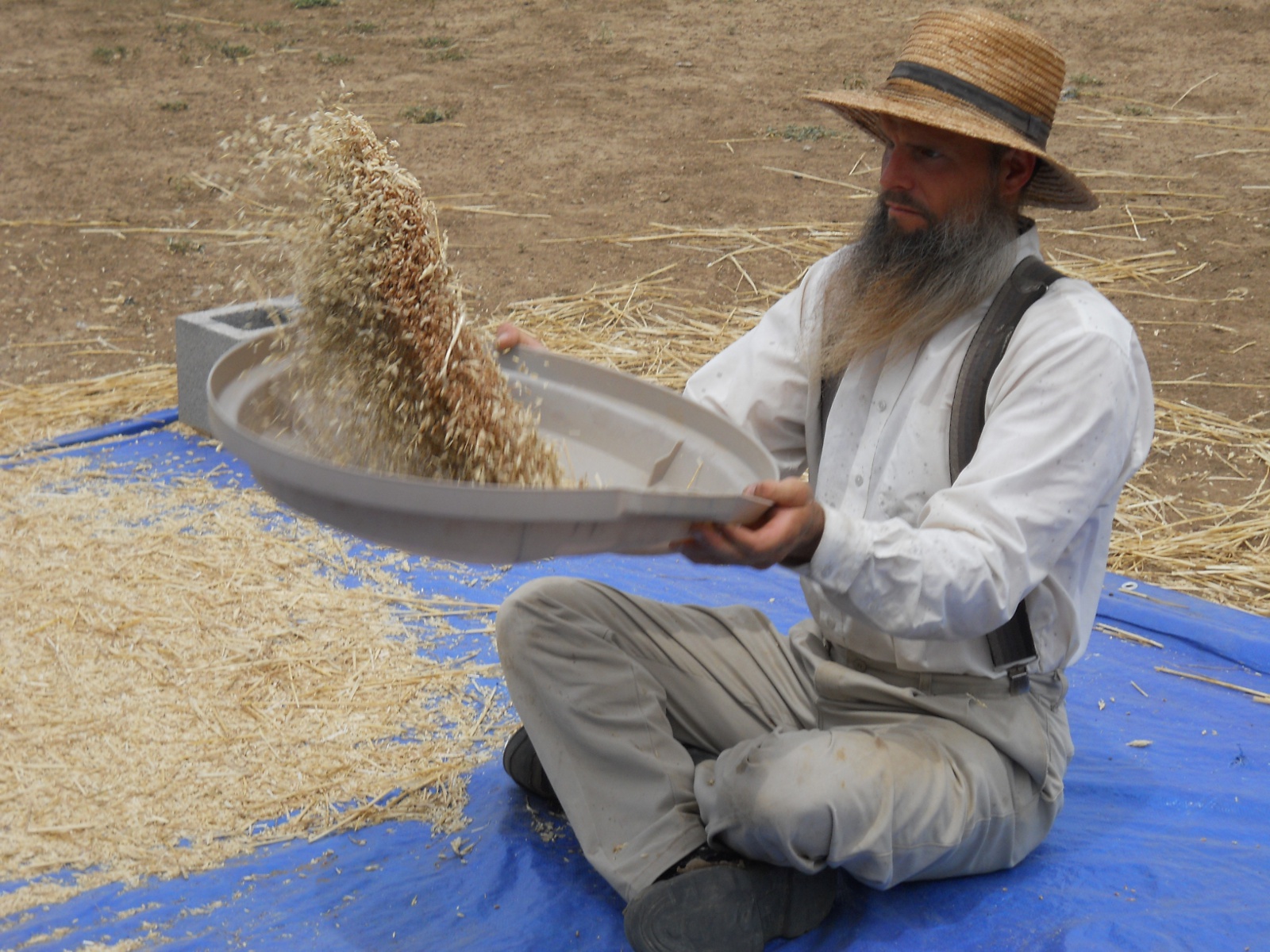
And then it was time to winnow the wheat, separating the chaff from the wheat berries (God further refining the souls of His children). We used a garbage can lid, which didn’t work too badly:
After several hours of work, here is the finished product — the mostly cleaned wheat berries (God’s gathered in, sanctified people):
We were thankful to be able to go through the process of hand-harvesting and processing the wheat.
It happened though that a fellow from town we know had an old grain combine that he wanted us to have to use, if we wanted, and he had a backup one for spare parts. After the Bunkers got done using it, and graciously going through all of the headaches and replacing of parts needed to finish their fields, it was our turn to use.
The “combine” is a machine that does all of the processing we described above all at one time. Of course, it’s much faster, but you also have to maintain it (which causes dependence on the world), you don’t get the experience needed to learn how to harvest wheat by hand should the mechanized methods be no longer available one day, you don’t think about the spiritual aspects of the harvesting process because you’re not intimately involved, and you don’t get the benefits (spiritual and temporal) of performing work in God’s way, all of which are why we wanted to process at least some of the wheat by hand.
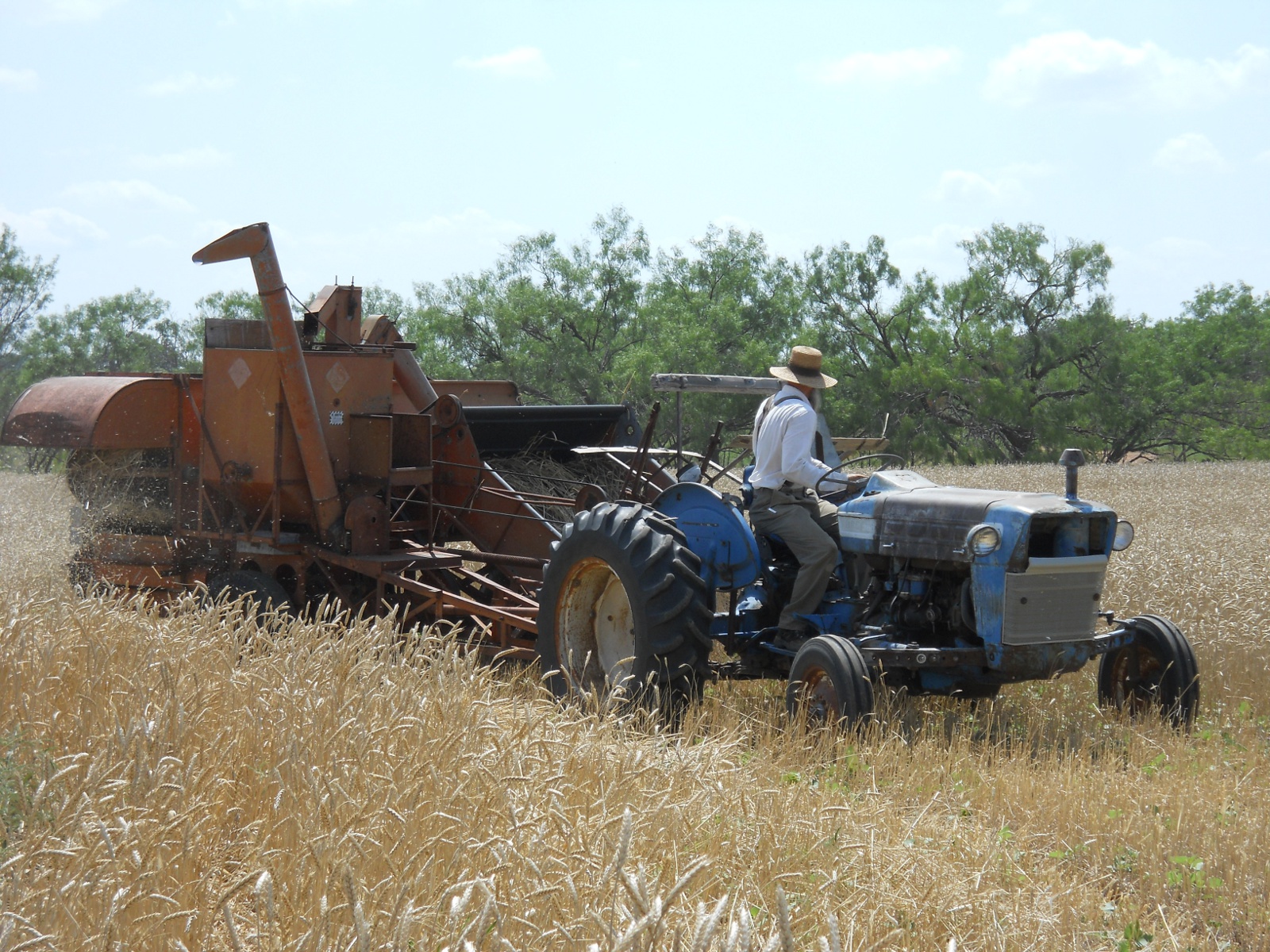
Still, I wanted to be able to make sure to get all of the wheat harvested and stored before we lost the crop from being in the field too long; and so I decided we would use the combine on the rest of the field. And here it is a-harvesting:
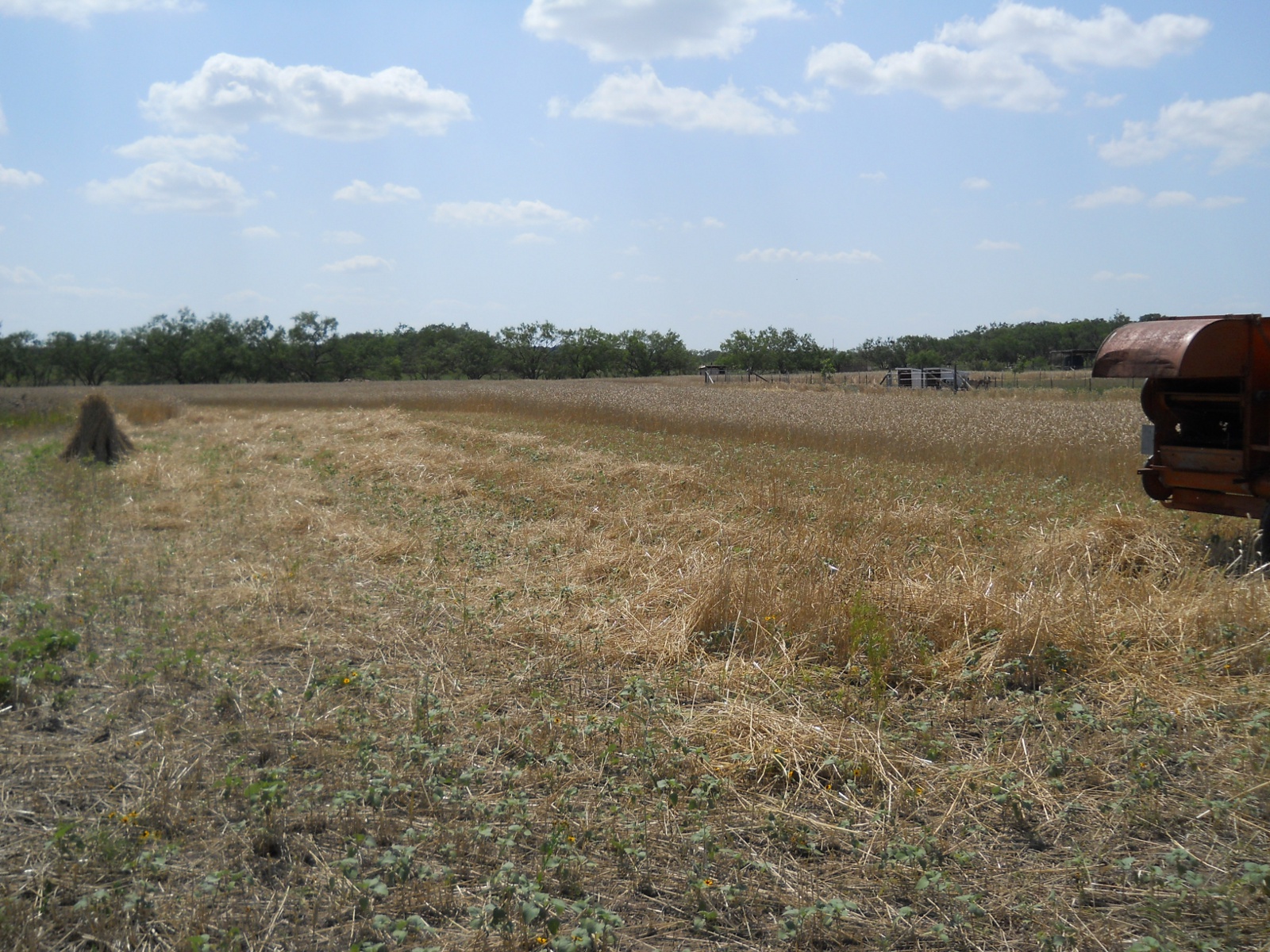
And a completed row:
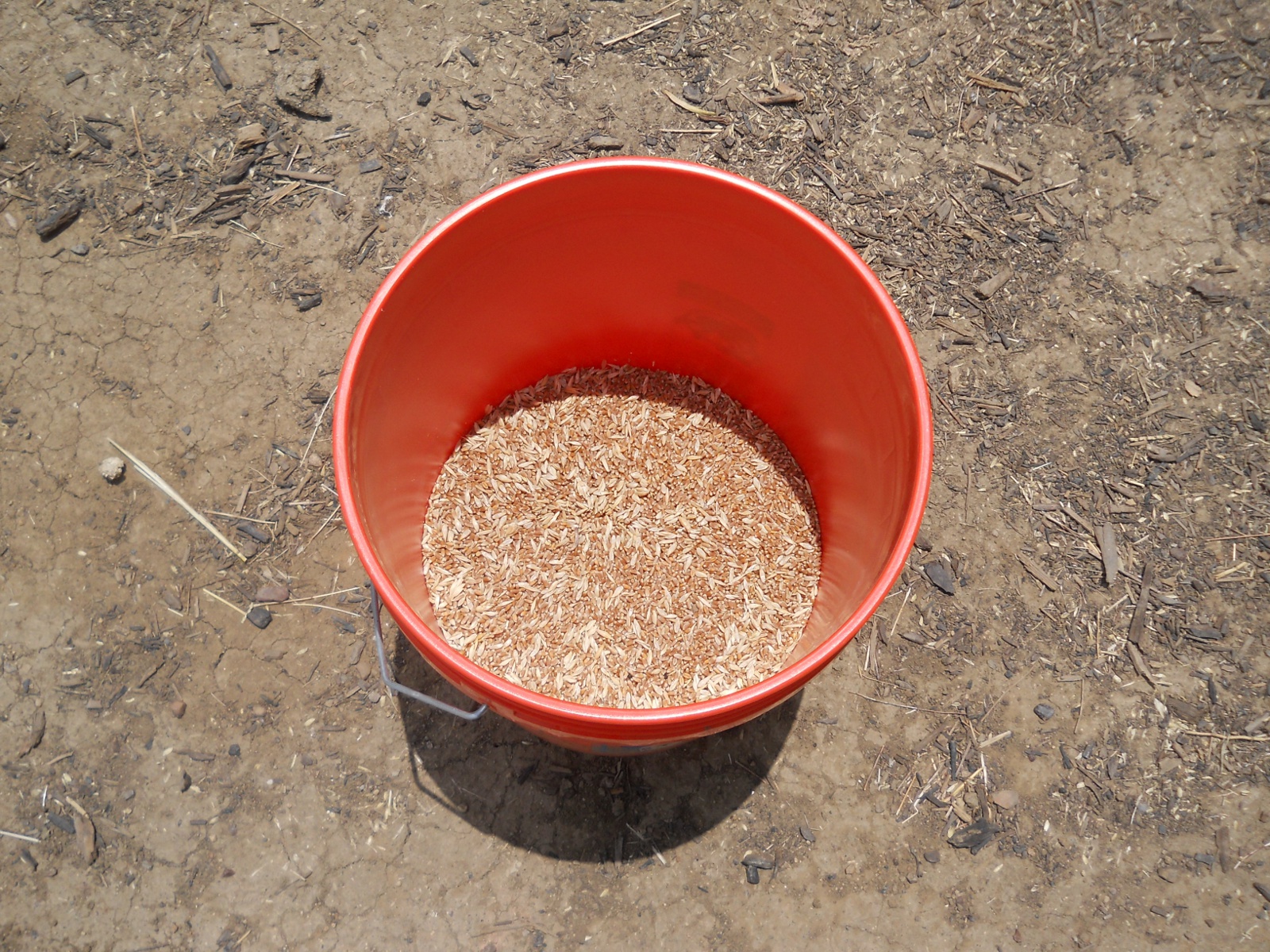
You can see the difference in amounts between the picture above of the hand-harvested in the bucket vs. what the combine collected after just a couple of hours. I can understand the temptation of the carnal man that caused him to desire and then over time find and eventually implement, through industrialism, what appeared to be easier ways to do things, and how easily it can be to get sucked into the industrial trap, which actually leads to slavery — you become dependent on the industrial machine (as a system), and then MUST do things the worldly way to survive). This is something we try to remember and keep in perspective, even if we use something like a combine for now:
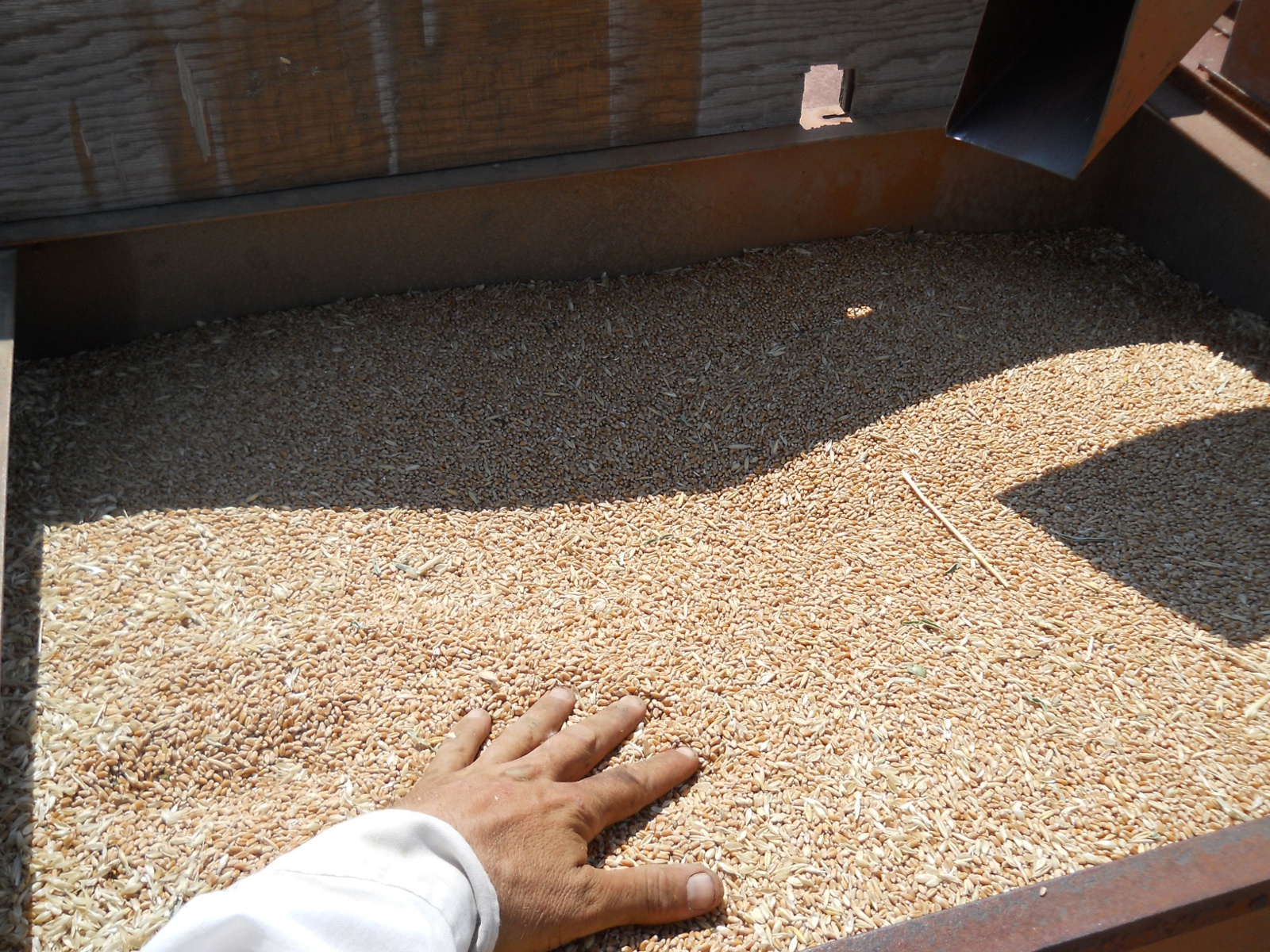
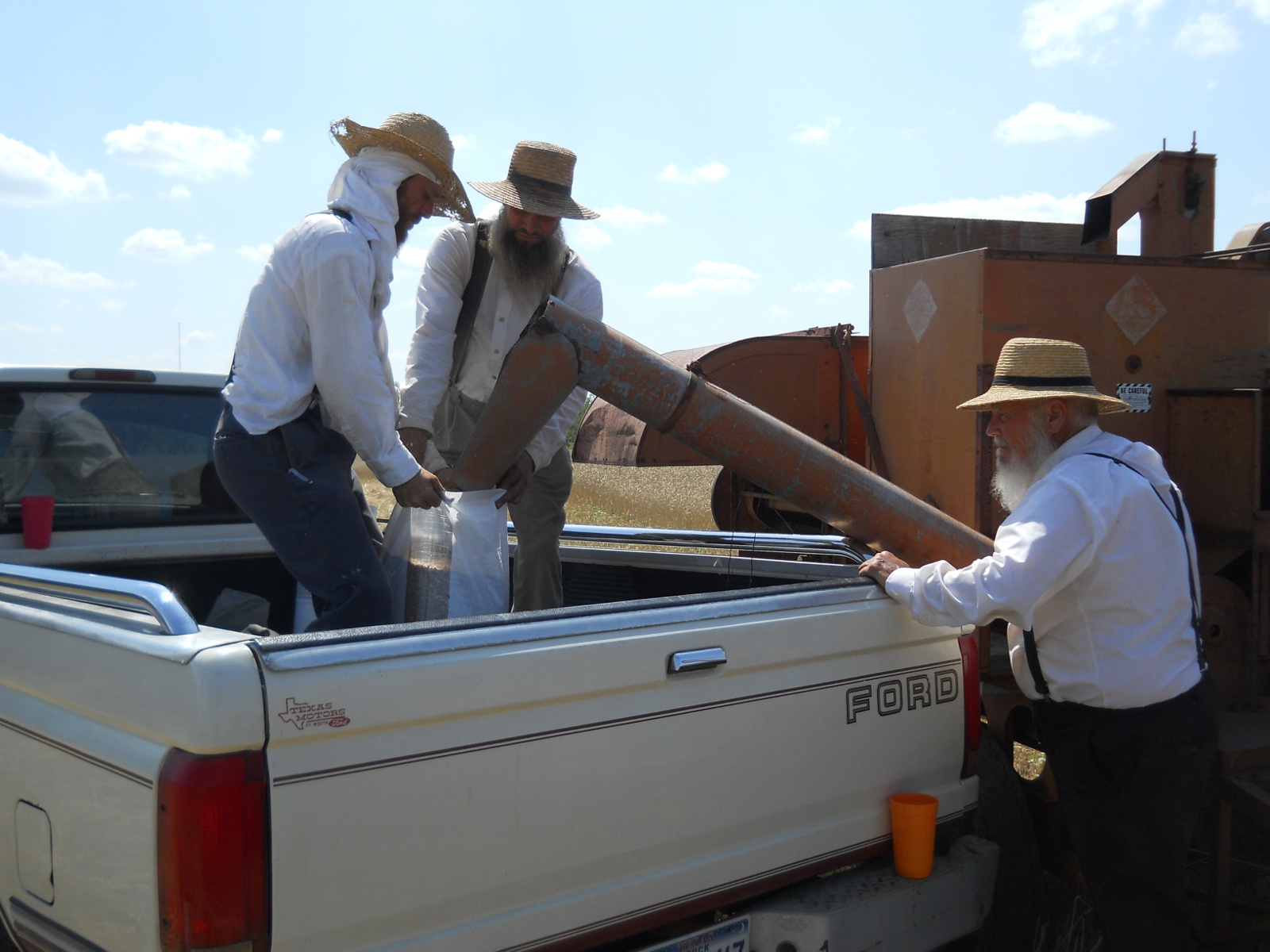
With the combine’s grain bin full, with the help of some of the men, we unloaded it into sacks for storage:
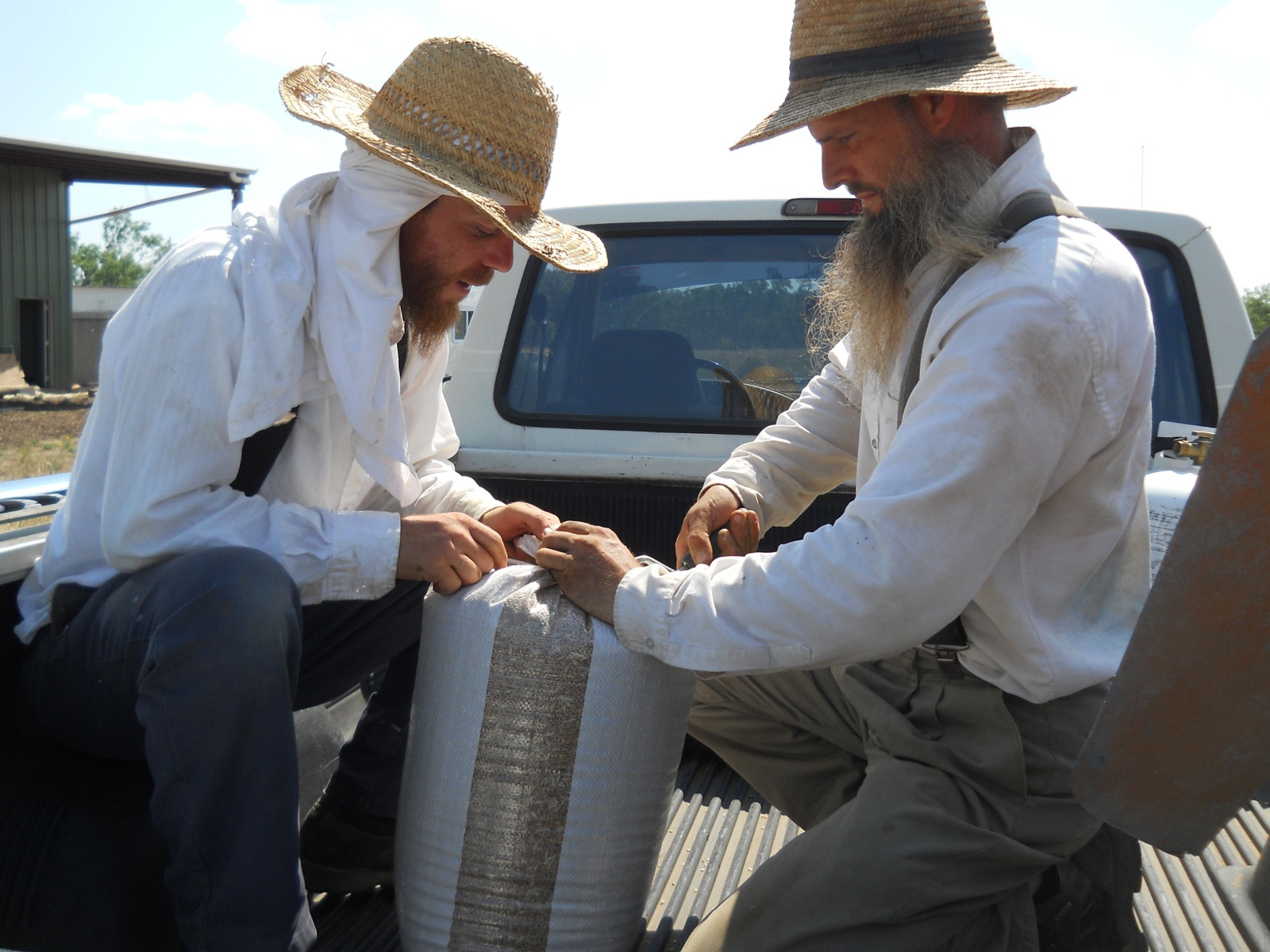
And used rebar ties to tie them off:
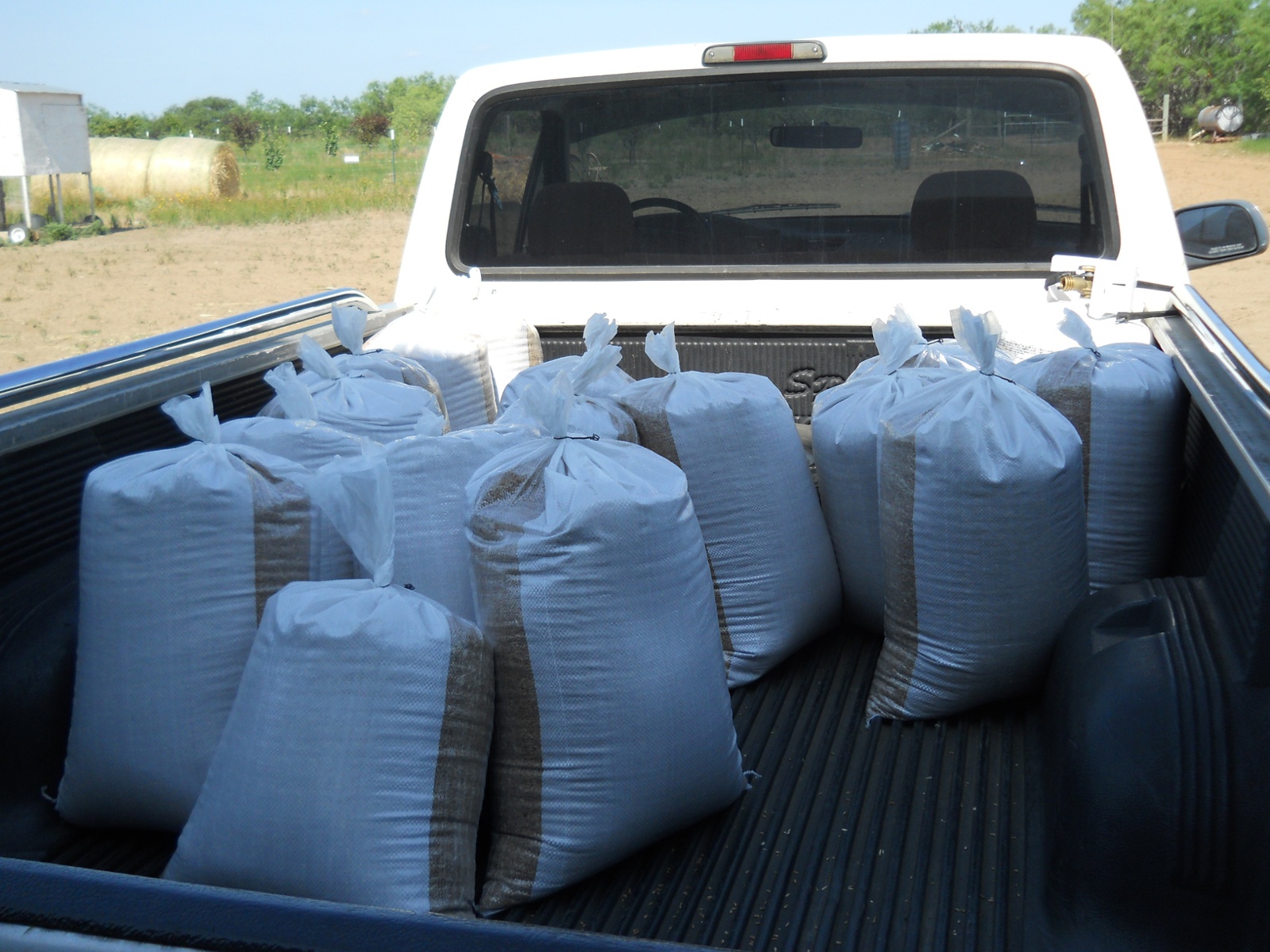
Here is the first haul from that first bin:
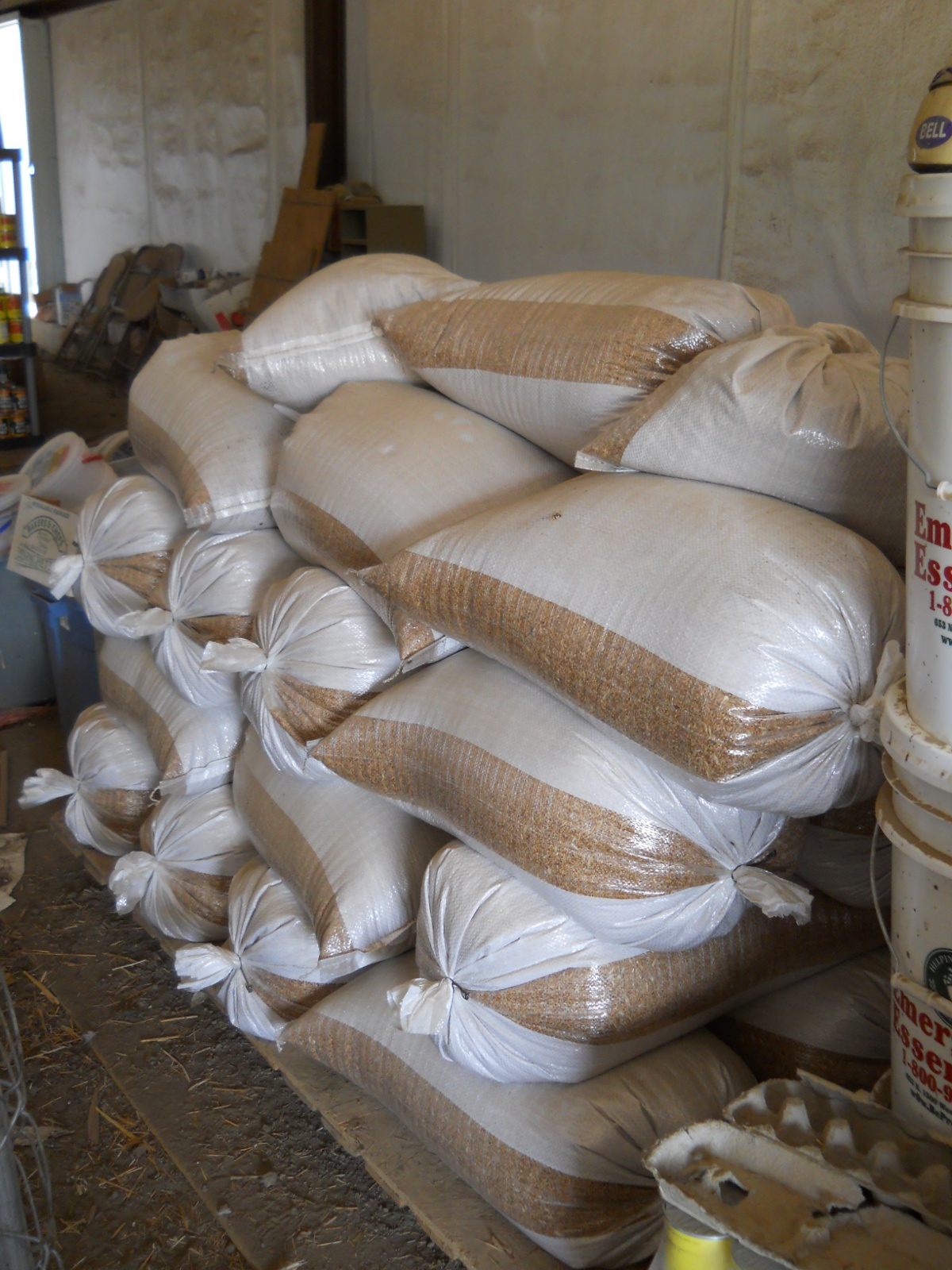
And here is the final stack of wheat sacks:
If you’ve never seen a combine in action, it is pretty amazing the amount of “work” it does, when it’s working and not broken down:
We are so very thankful to the Lord for His granting of a wheat harvest — our first real crop, besides the turnips this year as well. We thank Him for the lessons He teaches us in His word and through work, and we pray He leads us into work that is worship unto him. We pray He thresh and winnow us in purity, and that He help us through that when He does; and we pray we will be presented to His Son one day, a “cleaned” and holy bride.
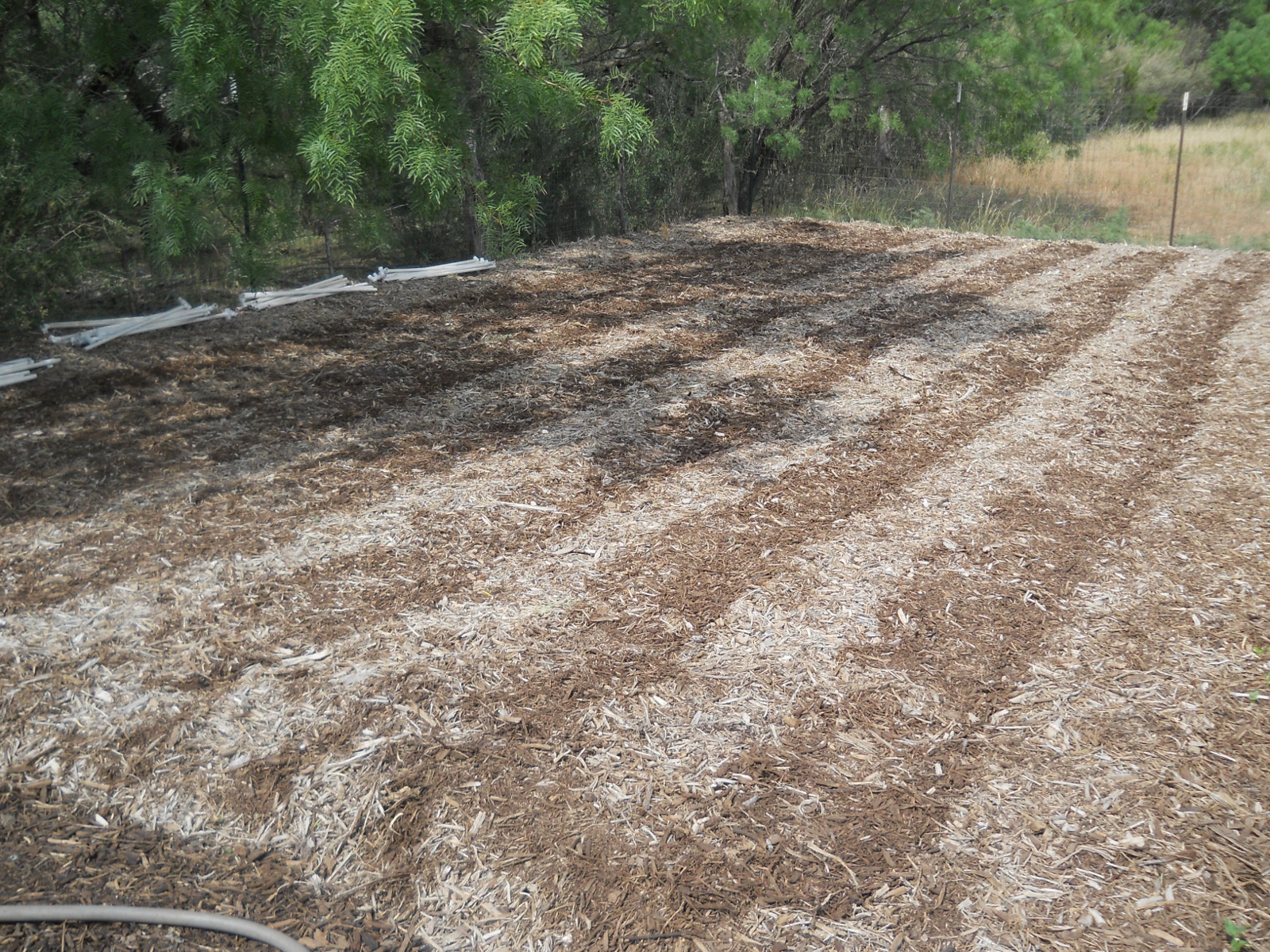
But, the garden beds needed to be prepared with some new soil. We’ve recently started using mulch for actual garden beds, but, even though the mulch we get has composted dirt in it, it also has too many larger wood chips; and so, other folks around here have been sifting their mulch to remove those larger chips; and I decided to follow suit.
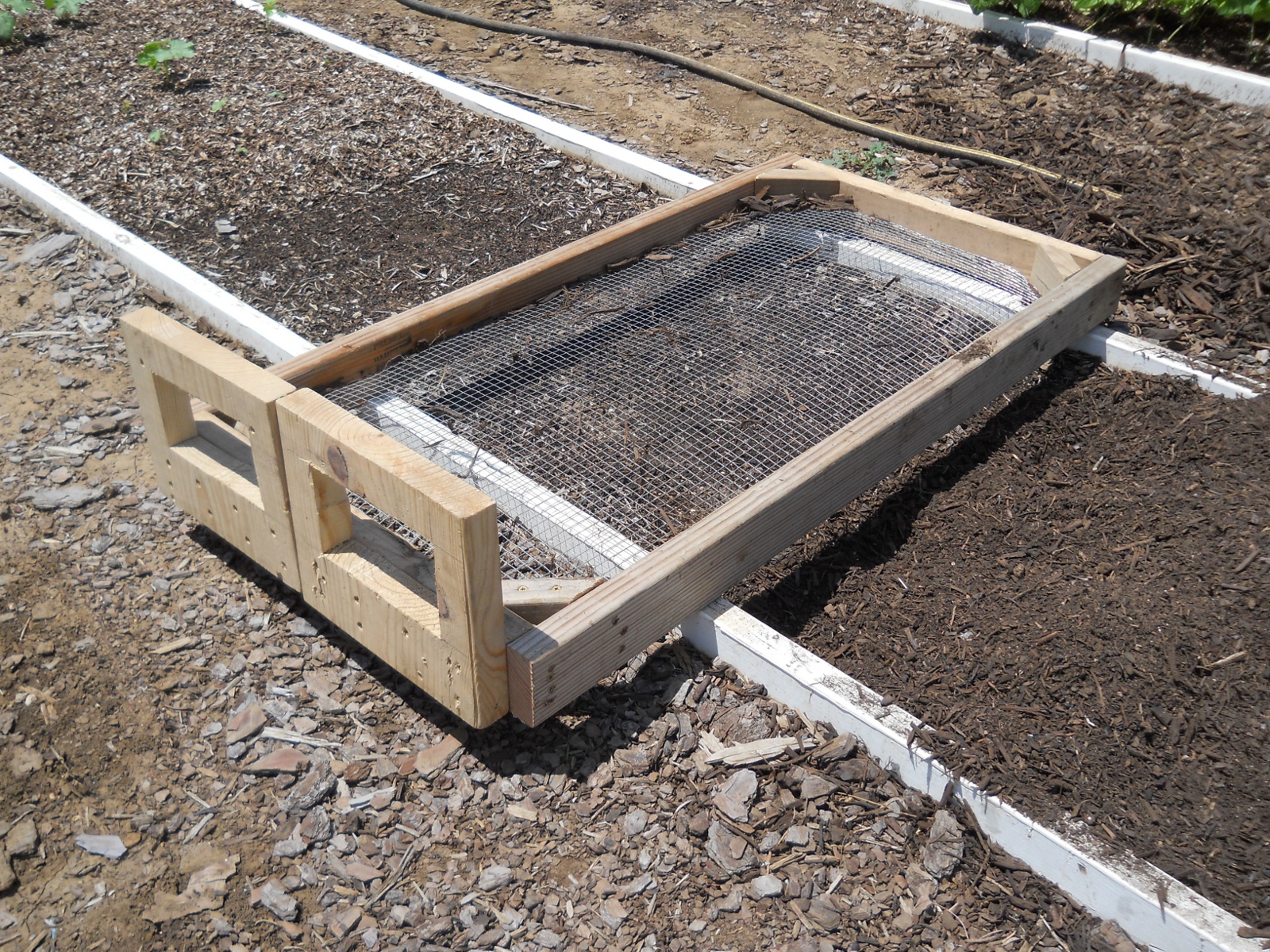
Here is the mulch sifter I put together with scrap stuff I had laying around:
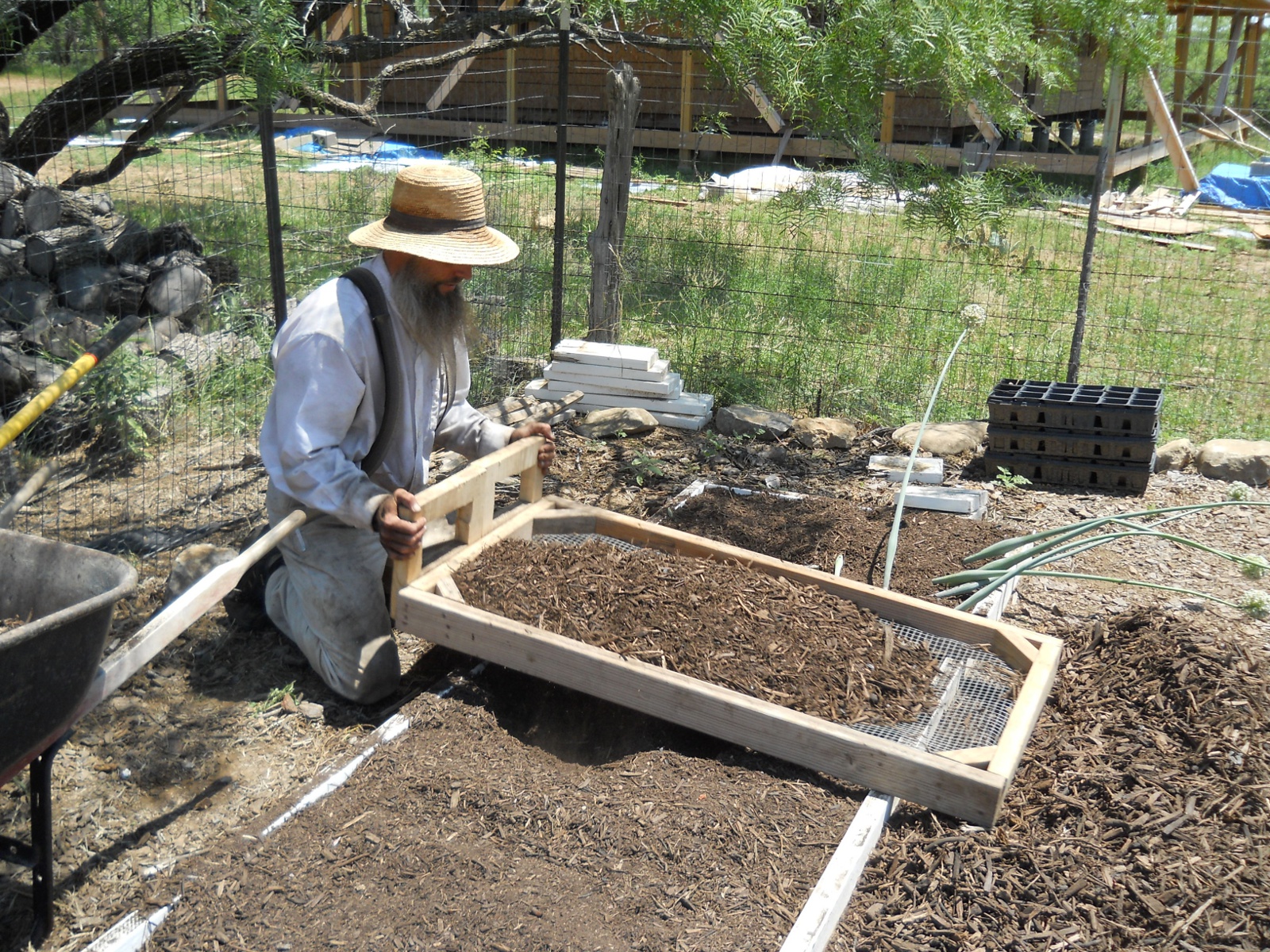
And here I am doing the sifting:
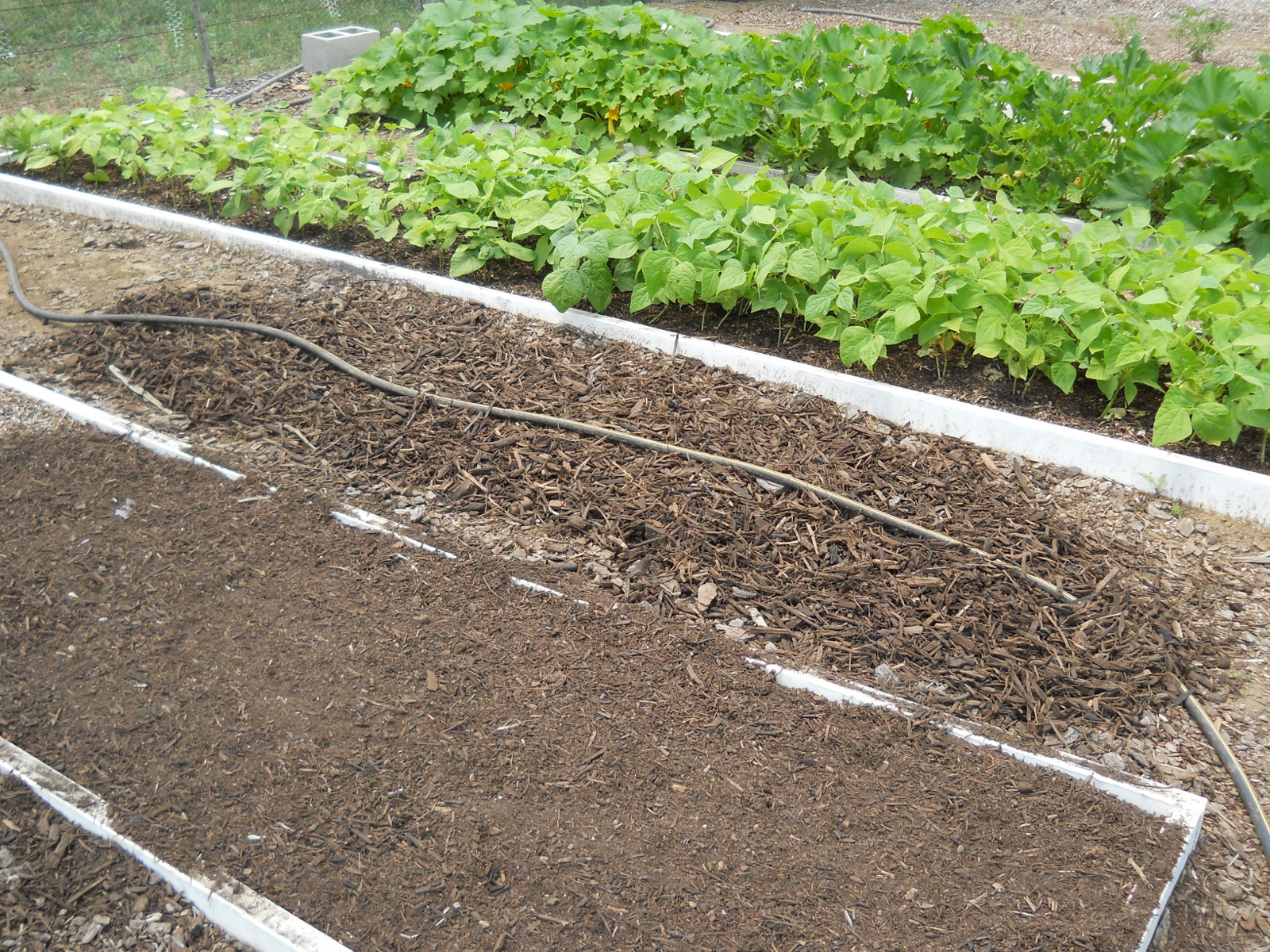
Here, you can see the results in the raised bed; and the left-over wood chips can be used for walkway covering:
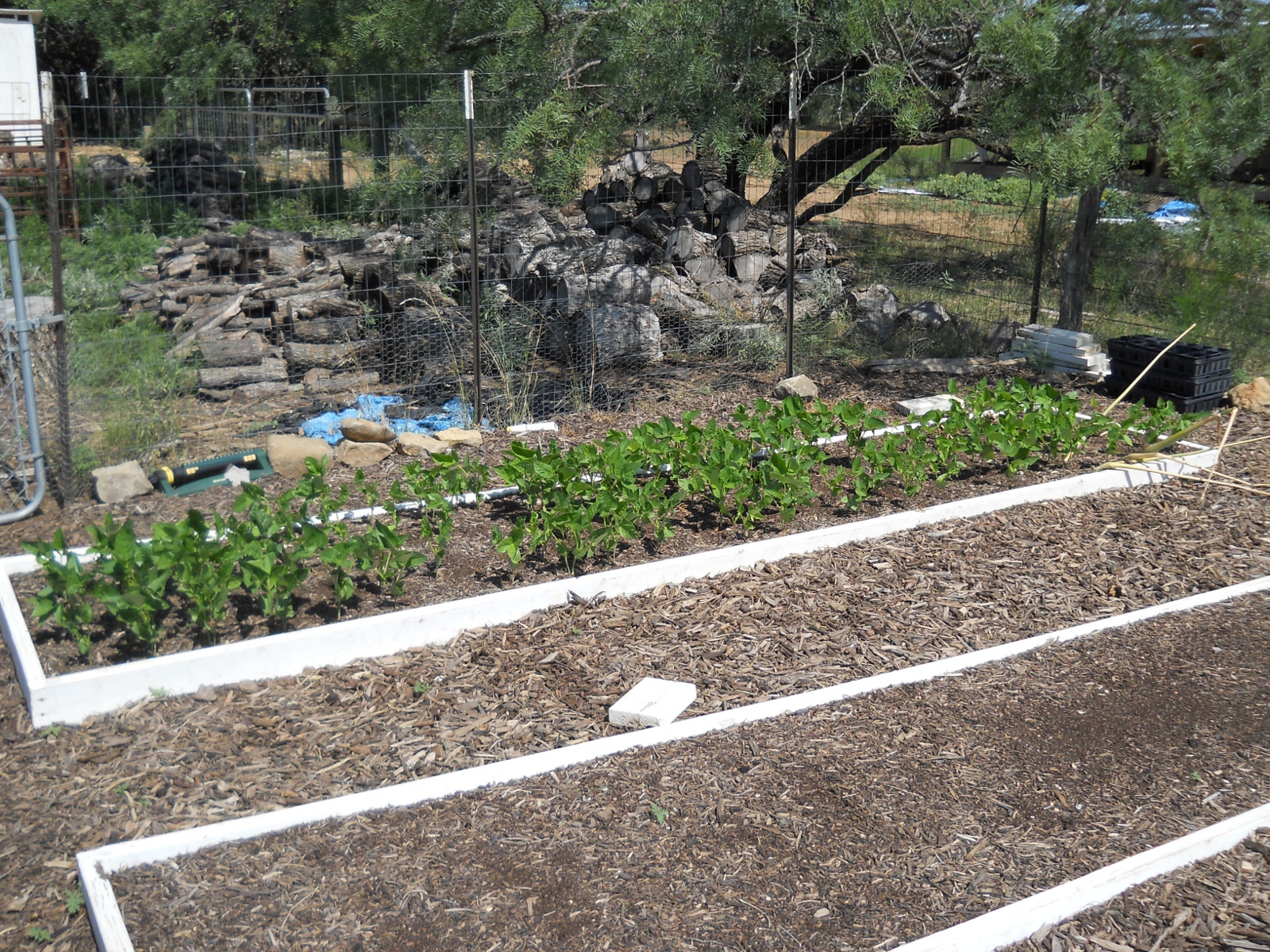
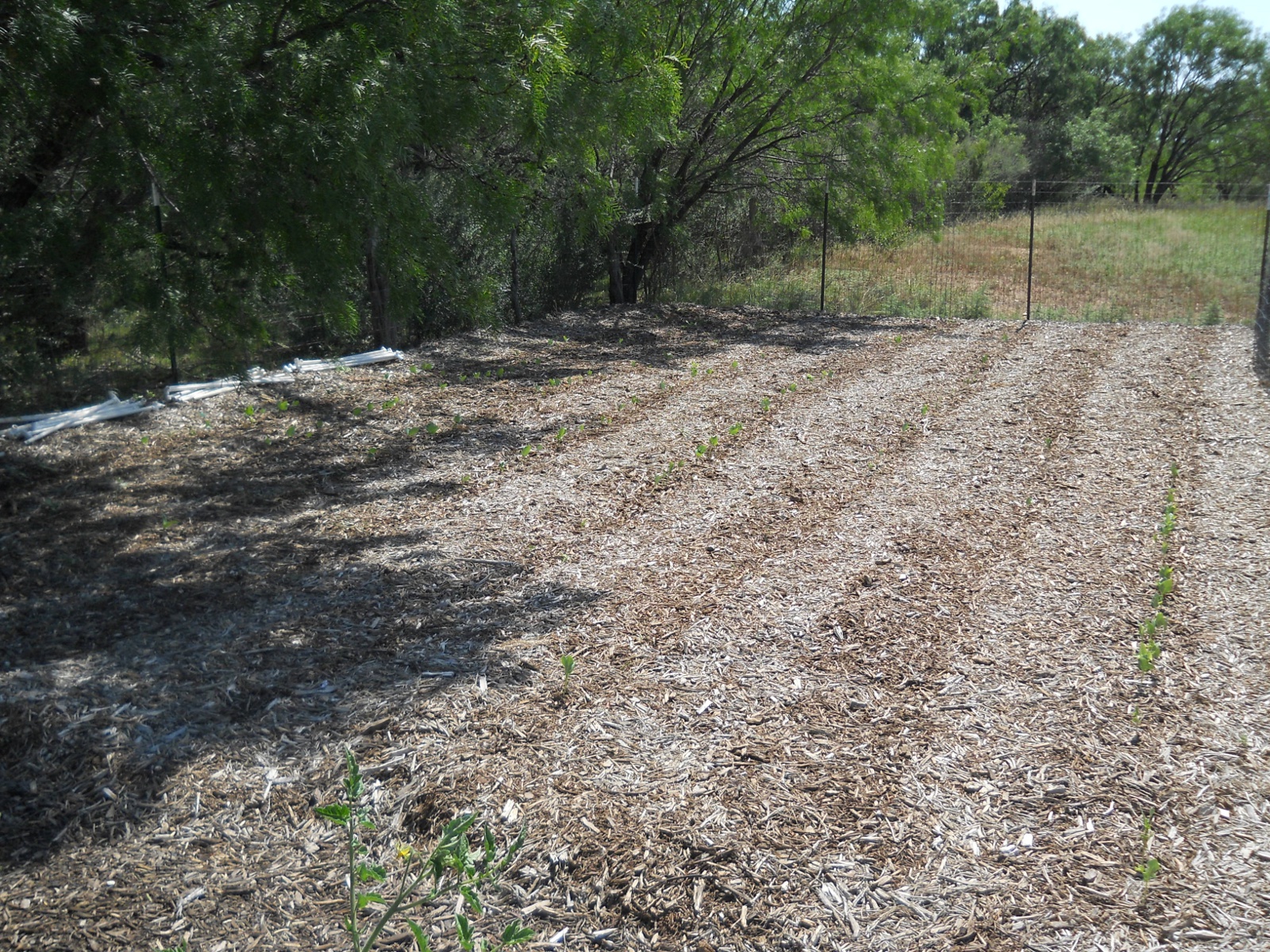
And here are the black-eyed peas growing after being planted!
So, going around the horn, here is how the garden now looks….
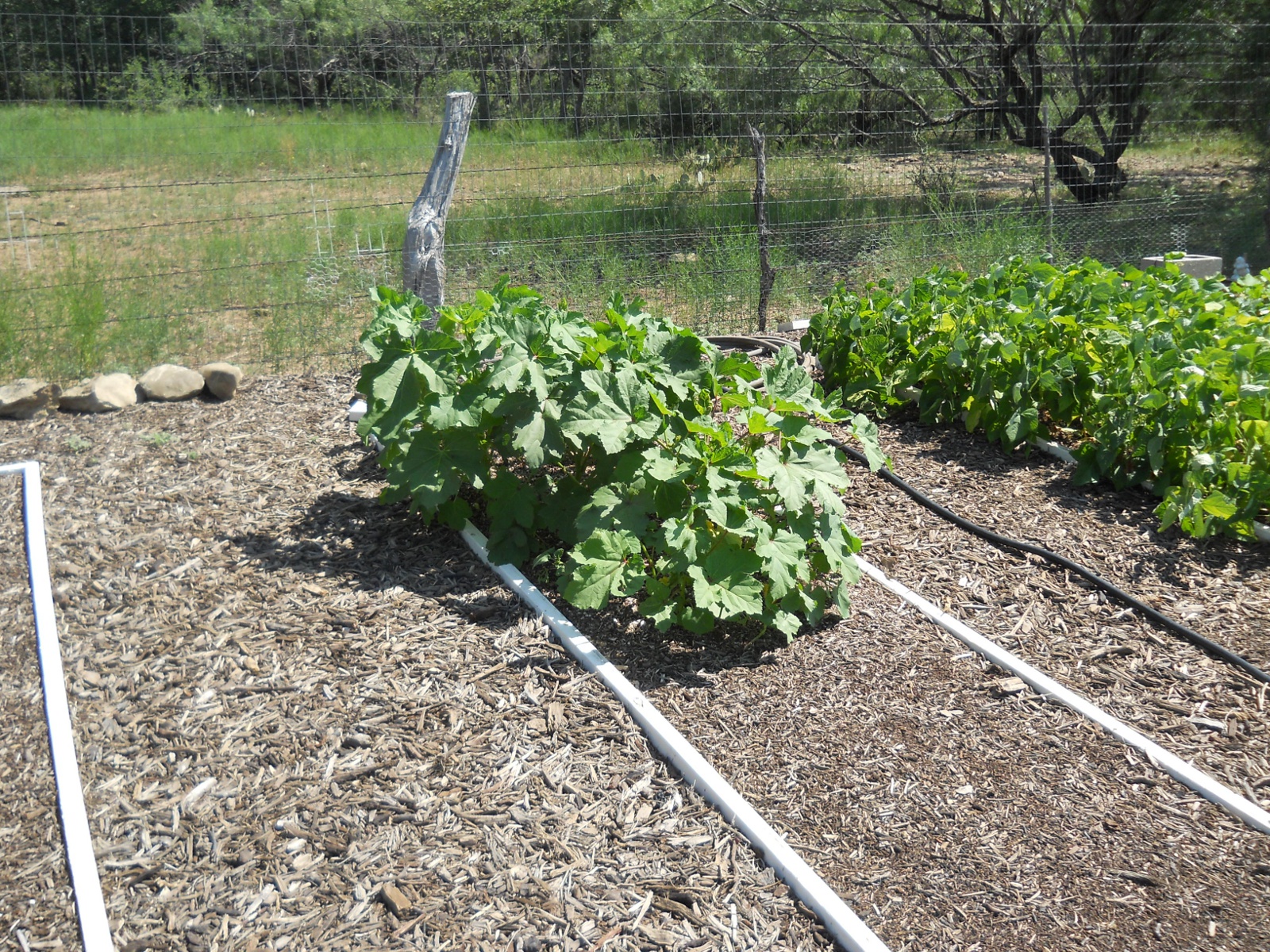
This is the okra:
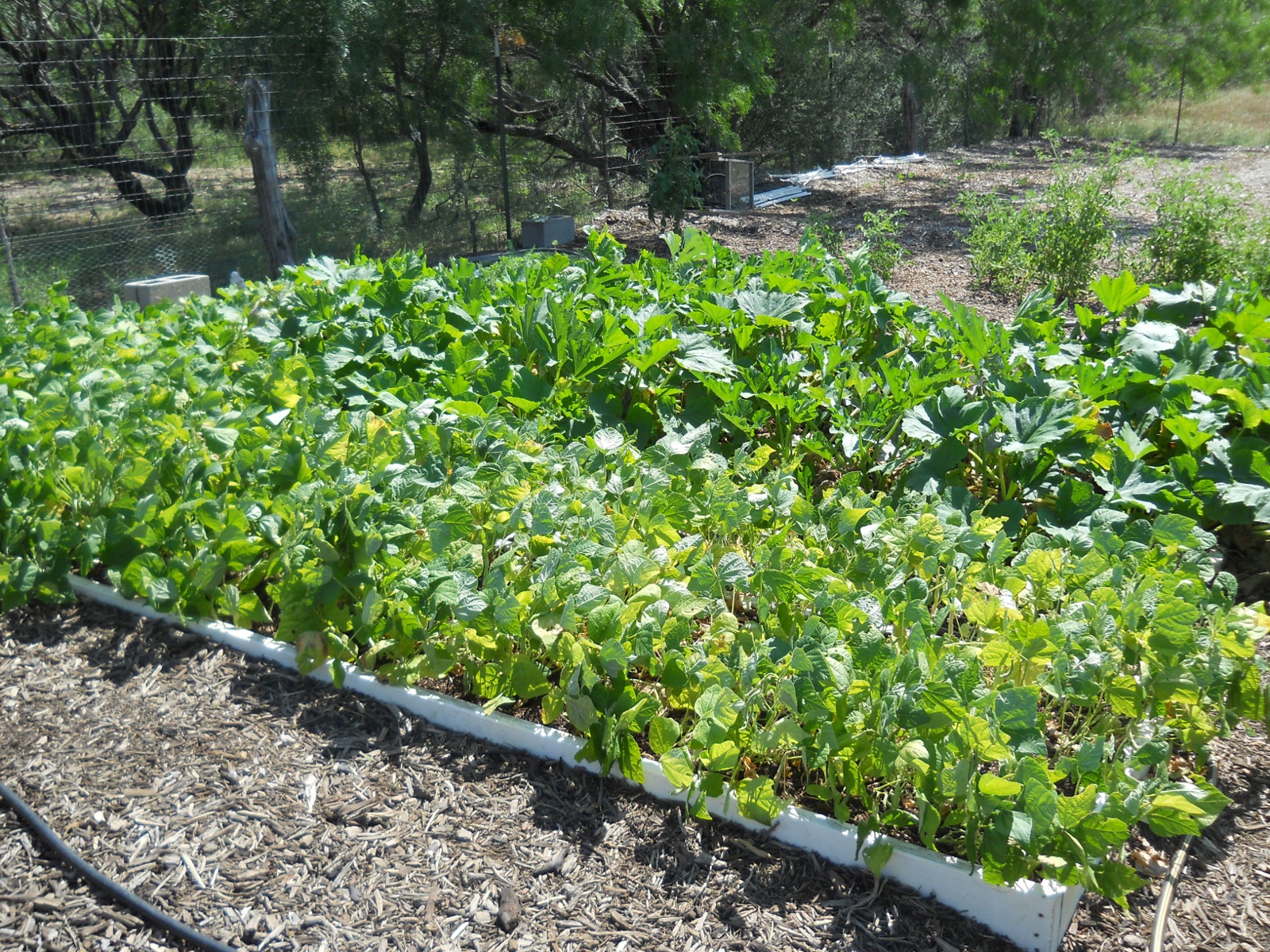
And the green beans (in the front bed) and the squash and zucchini (in the bed in back):
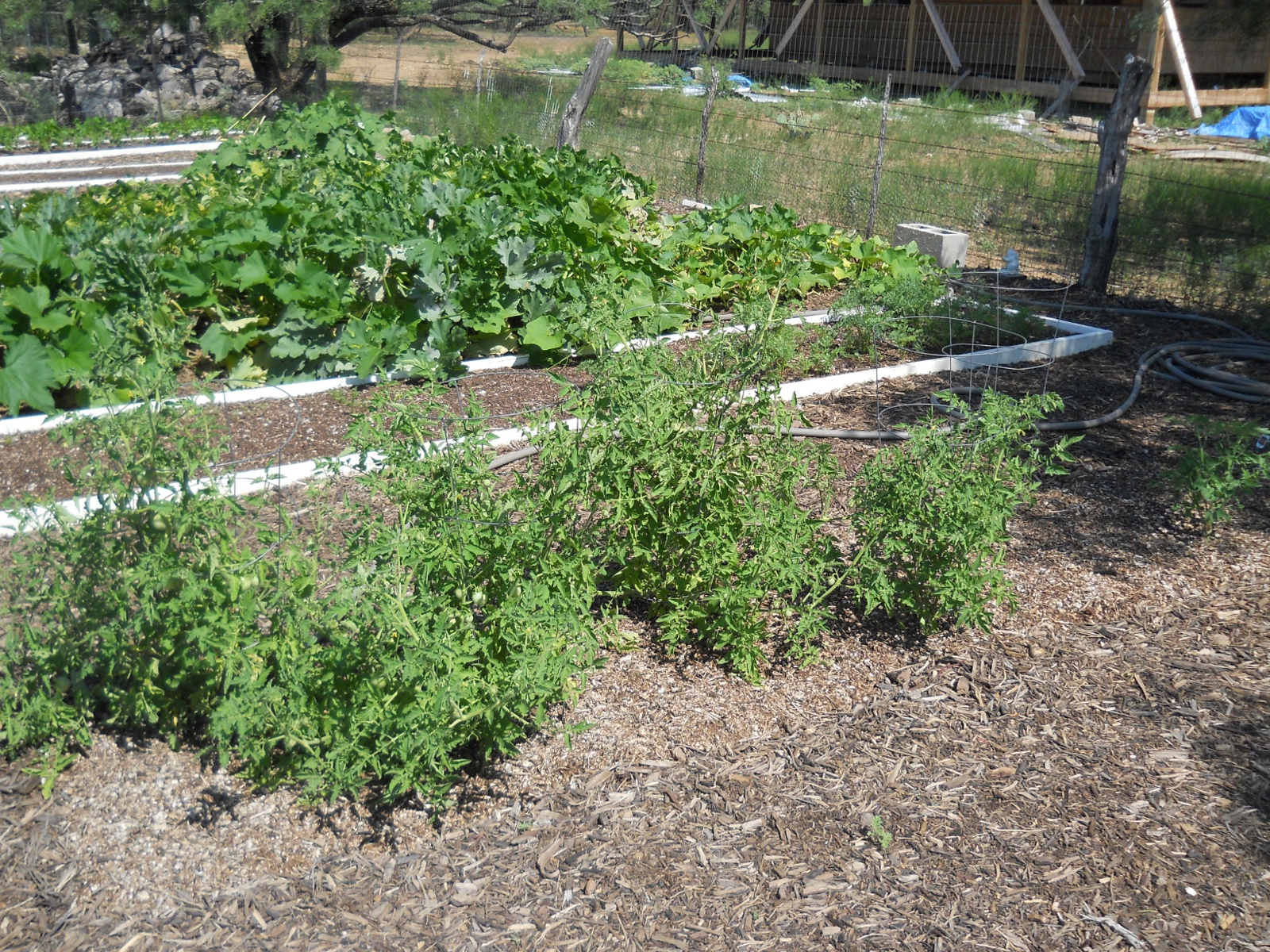
And the tomatoes (in the front bed) and the carrots (in the bed in back). Usually, our carrots do really well; but for some reason this year, not too many grew. I did try planting a little scarcely, because usually the carrots are very packed and smaller; and I ended up trying to replant a couple of times too; but it just wasn’t to be this year:
Now, in that previous blog post above about the new mulch gardening, one of the folks here had already tried planting in their mulch-gardening area with some success; so I thought I’d give it a whirl too, to see if anything might grow. I planted some more of the black-eyed peas in half a row as a test case, and lo and behold they started growing!
With those results, I went ahead and planted the whole area:
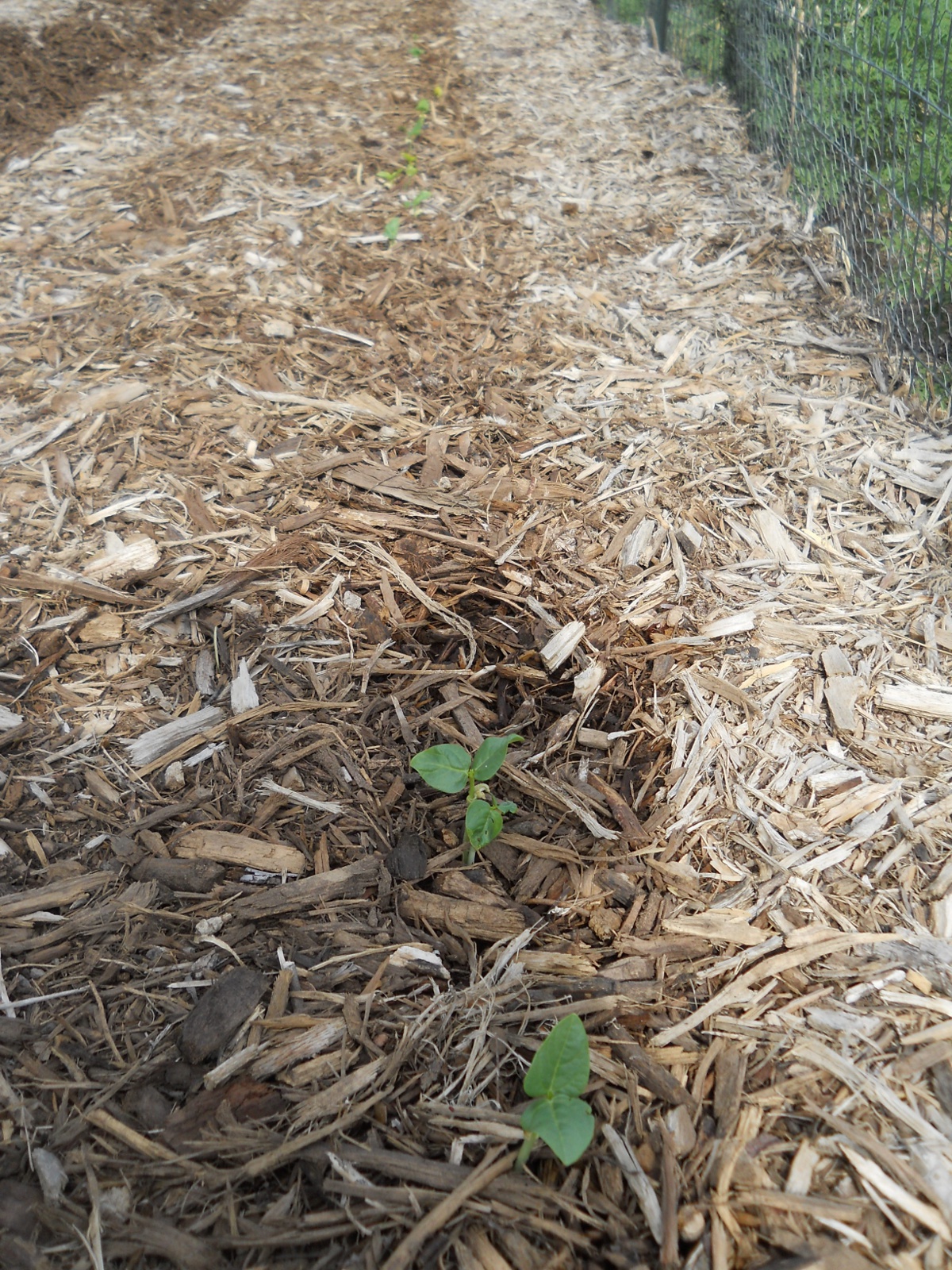
And here, if you look closely (you probably have to click the image), many of them have started to grow too:
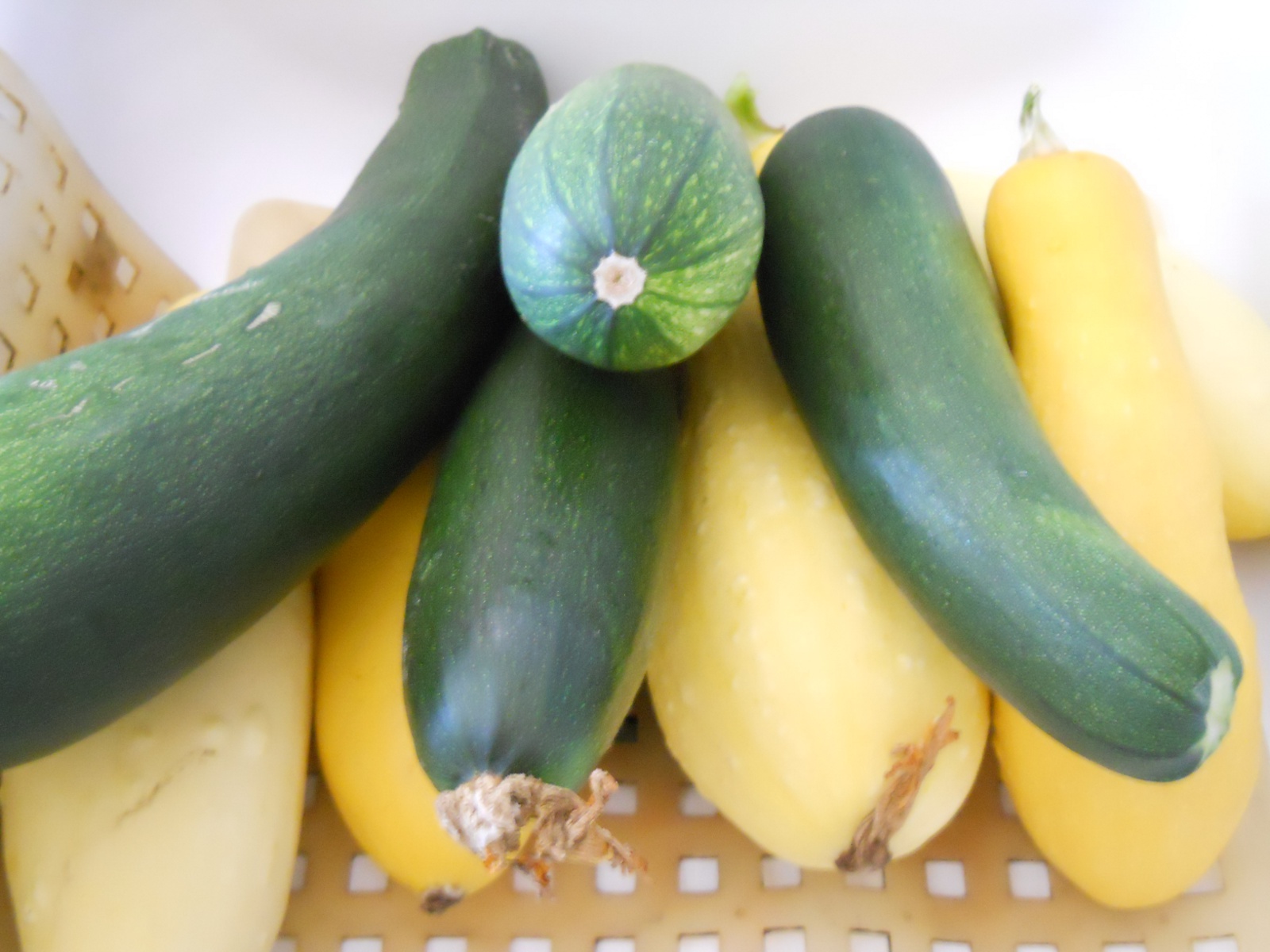
Here is some of the produce the Lord has graciously granted:
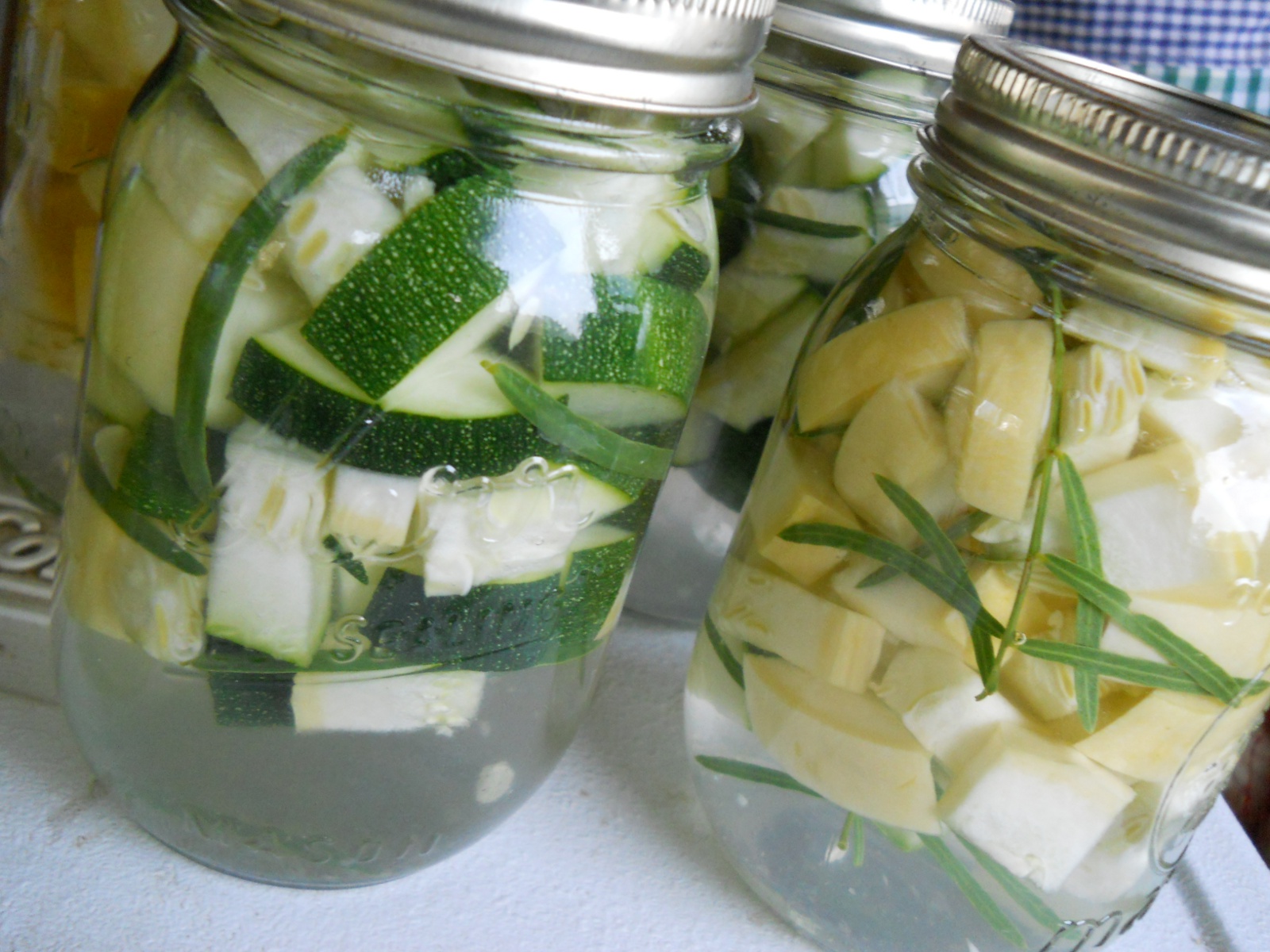
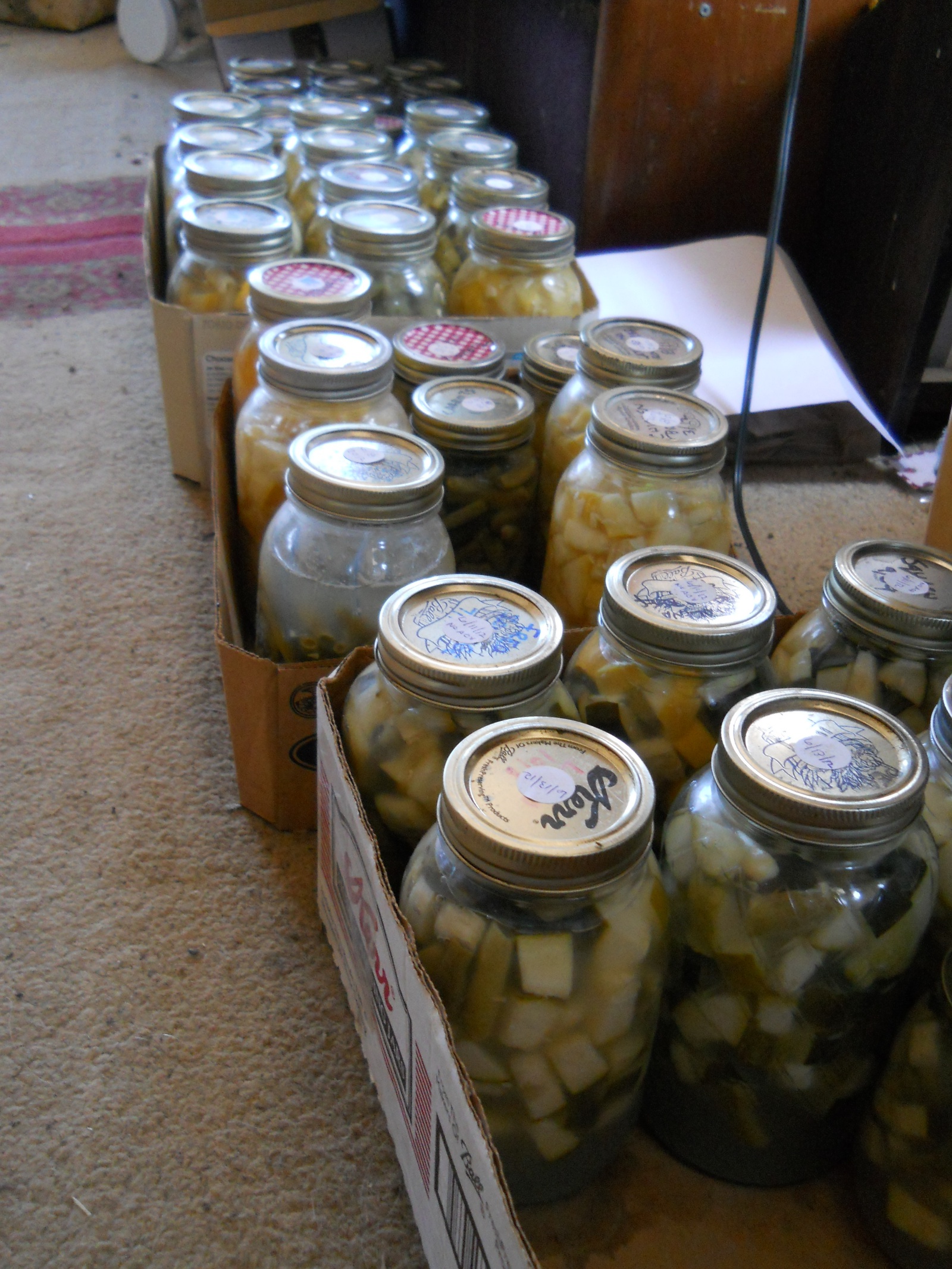
Instead of pressure canning it, we’ve wanted to try to use the more healthy preservation method of lacto-fermentation. Here is some squash and zucchini in a brine solution, with some mesquite tree leaves that are supposed to help keep the vegetables crunchier:
And here is our lacto-fermenting section in the camper. We initially put the jars down in the root cellar, but the lacto-fermenting process actually needs a warmer environment to process correctly. Also, the vegetables would float in the brine. And so, we figure with the combination of the cooler temperatures of the root cellar, and the floating vegetables, they started to mold on top. Well, we picked off the moldy pieces from off the top, brought them into our very warm camper, tried weighing the vegetables down but didn’t find a good way to do that, and instead began to turn the jars upside down and then back right side up every 12 hours, burping them at the same time (to release the gas build-up from the lacto-fermenting process):
Once again, we are very thankful to God for the provisions from the garden He has granted, and for the processes He built into His creation to preserve the produce without man-made methods of preservation (like canning, which destroys nutrients, or freezing, which causes dependence on the world for electricity and freezers).
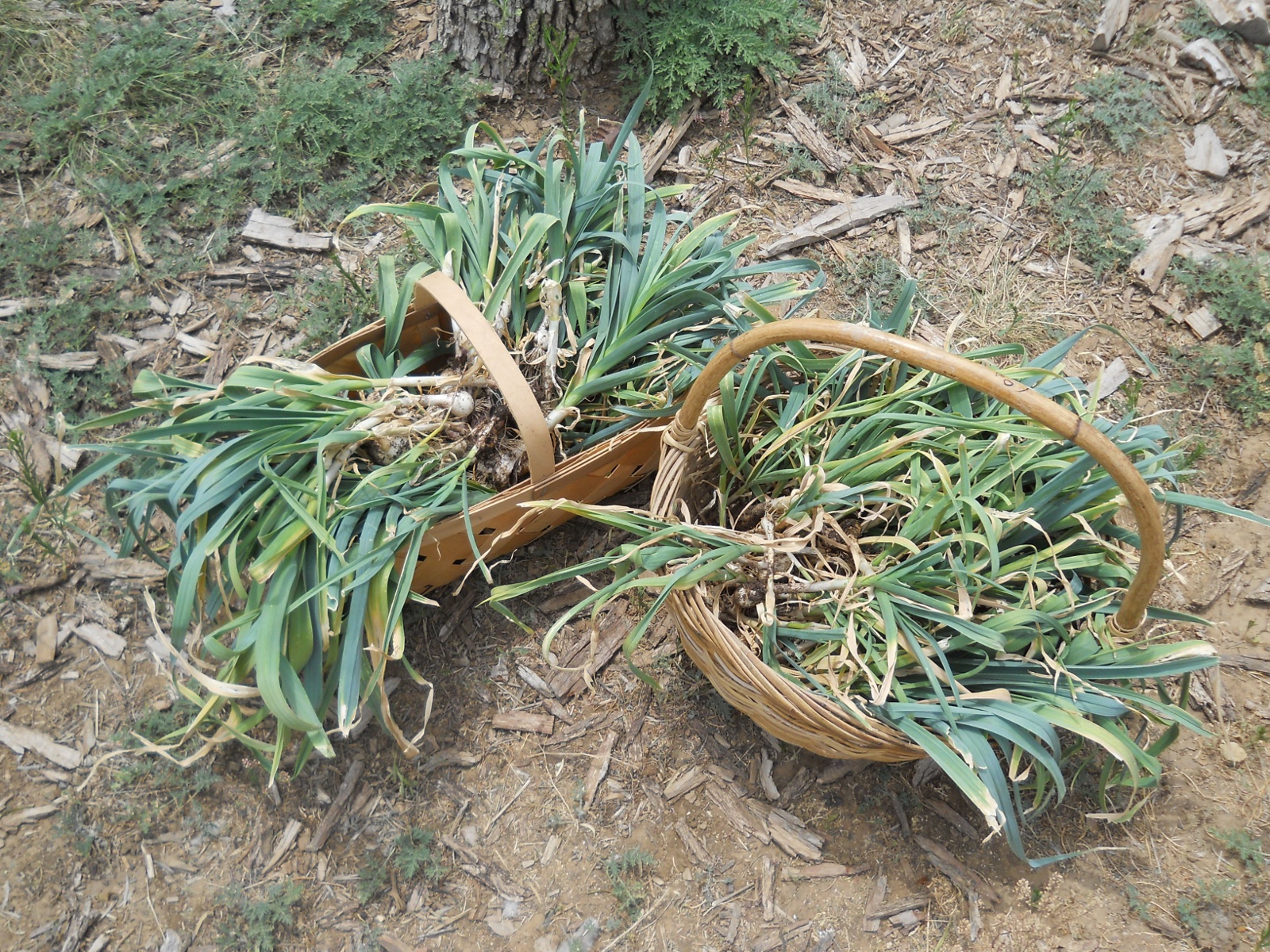
As the the garlic-growing season went on, it became apparent it was time to pull the garlic. Last year, I believe I waited a little too long, and some plants started to wither; and so, this year, we tried to get them a little earlier. But to me, with some of the leaves yellowing, and a couple of the plants starting to lay over, it was time to get harvesting.
Here is the garlic haul for this year:
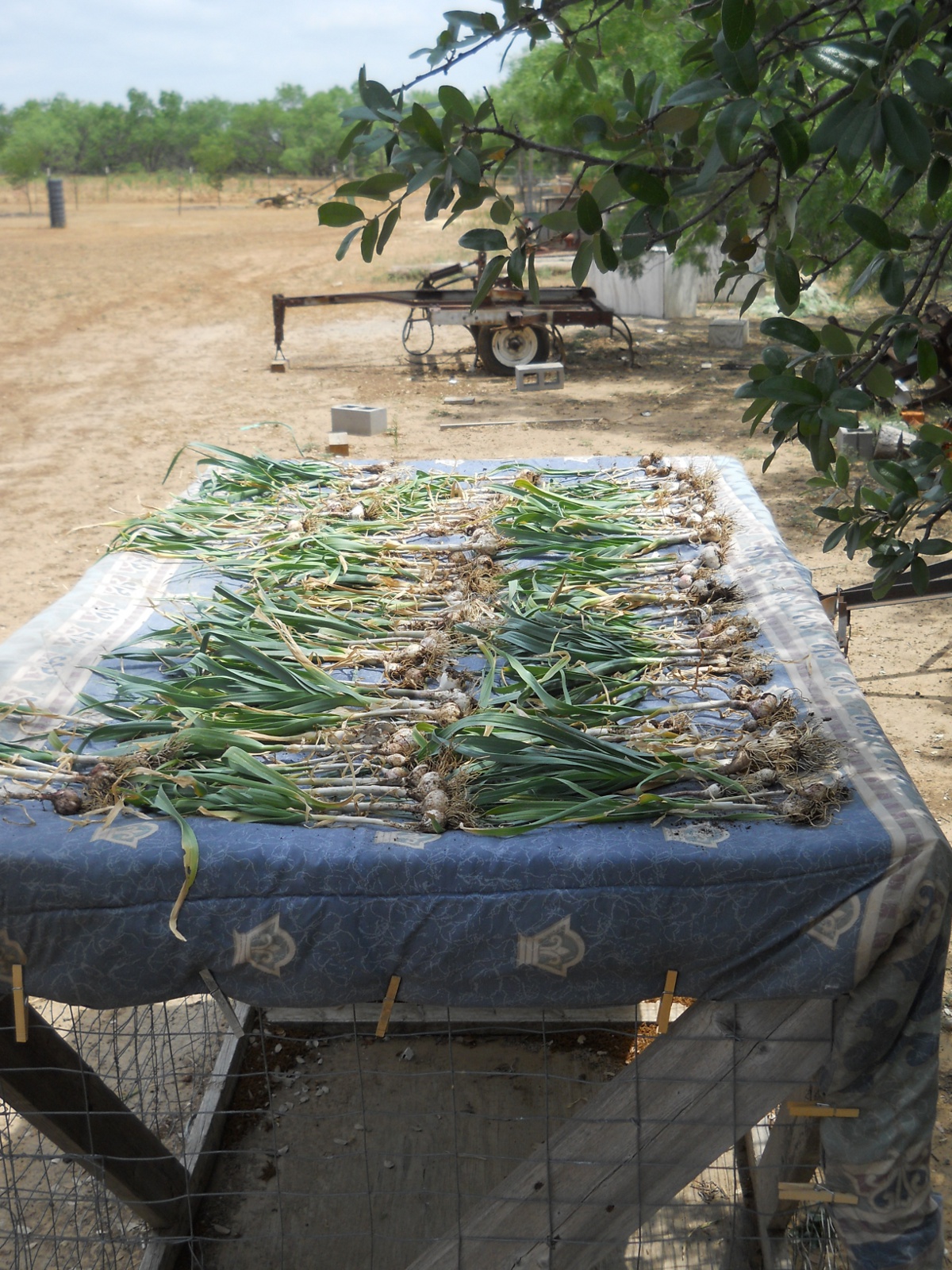
And here are the plants drying. We let them dry for about a week, although we had to roll them all up and get them out of the rain a couple of times:
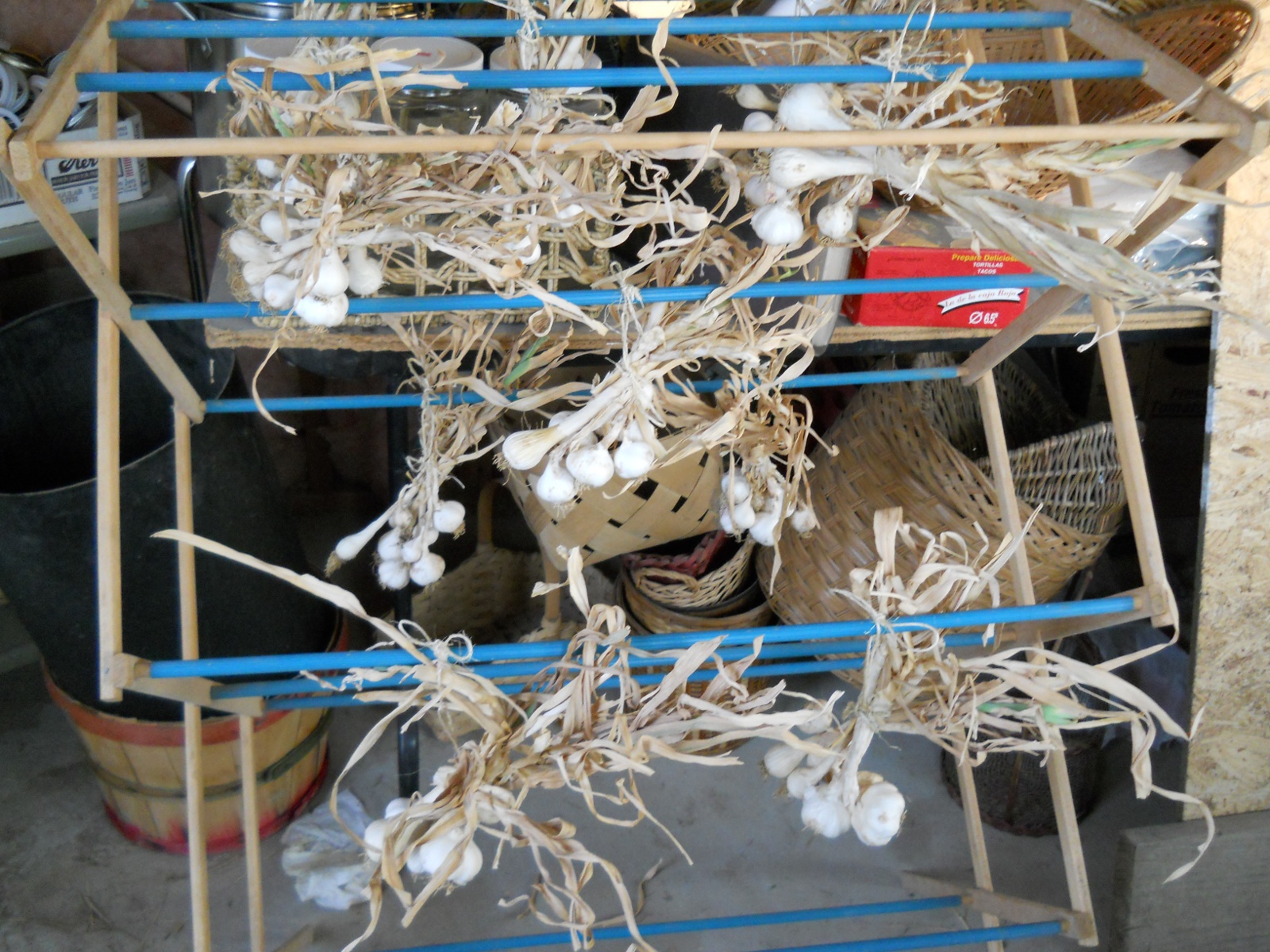
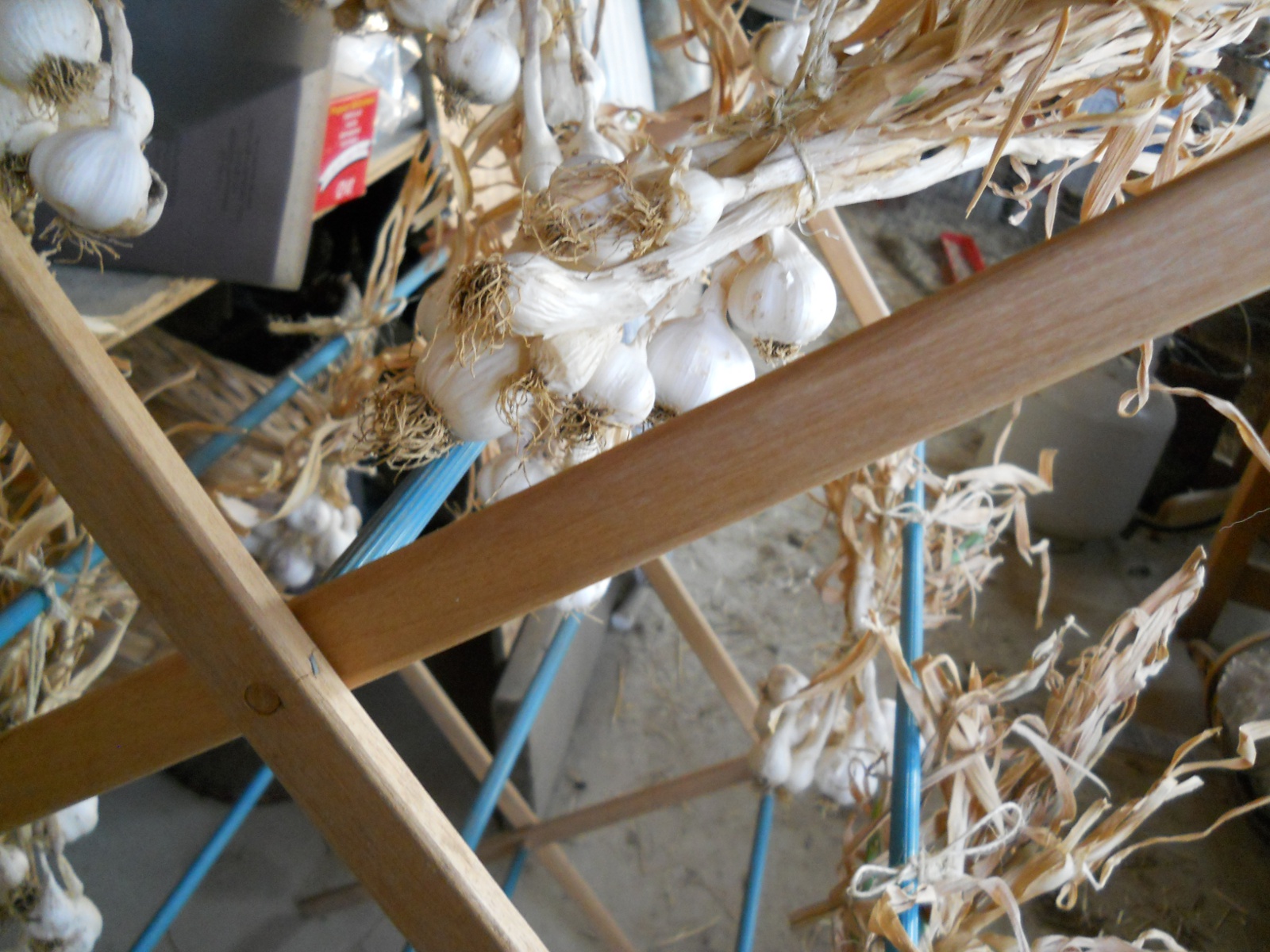
After the drying, it was time to tie them up and get them hanging for the curing process. I think we might have ended up with at least a little more than we used for planting. Some of last year’s garlic ended up being rotten and dried by this year; and so, I’m hoping pulling them a little earlier will help against that:
We are grateful to the Lord for granting the garlic He did, and we pray for a granting of the health benefits from it that can come with garlic.
Heb. 11:8-10 - "By faith Abraham, when he was called to go out into a place which he should after receive for an inheritance, obeyed; and he went out, not knowing whither he went. By faith he sojourned in the land of promise, as in a strange country, dwelling in tabernacles with Isaac and Jacob, the heirs with him of the same promise: For he looked for a city which hath foundations, whose builder and maker is God."
Receive New Blog Posts by Email
Usually only 1-3 a month. We will never share your information nor solicit you.